
[Travelogue] 2024 Second Visit to Kyushu 9-Day Free Travel via Busan → Hakata Cruise Entry
From Busan, South Korea, take the New Camellia cruise ship to enter Hakata, Japan, and travel through Yufuin, Oita, Fukuoka, Shimonoseki, Itoshima, and Sasebo; a total of 11 days.
Background
Taking advantage of the short break between finishing a project and starting a new job, I went to Japan to relax; I resigned on 5/30, departed on 6/3, returned on 6/13, and started the new job on 6/24. The timing was perfect, allowing for a longer trip (11 days total) during the job transition. This was a pseudo solo trip, teamed up with James Lin, who joined me on last year’s Tokyo trip (Ex-Binance Android Developer, feel free to refer job opportunities to him) ; this is my second visit to Kyushu. Last September was my first time in Kyushu, visiting must-see spots in Fukuoka, Kumamoto, and Nagasaki. This time, I mainly covered places I missed before, so my itinerary differs from James’s, and we split up.
The following are the places I visited last time and may not visit again this trip. For those interested in learning more about Kyushu, please refer to my previous travelogue “2023 Kyushu 10-Day Solo Trip”:**
-
Fukuoka: Mojiko, Kokura Castle, Kushida Shrine, Sumiyoshi Shrine, Nakasu Yatai, Fukuoka Tower, PayPay Dome, Tenjin Shopping, Hakata Canal City, Lalaport, Yanagawa Boat Tour, Dazaifu
-
Nagasaki: Chinatown, Glover Garden, Mount Inasa Night View, Atomic Bomb Museum, Peace Park
-
Kumamoto: Kumamoto Castle, Aso Nakadake, Aso Shrine, Suizenji Jojuen Garden, Tsurumai Department Store, Kamitori Shopping Street, Shimotori Shopping Street, Kato Shrine, Sakuramachi Department Store, Kumamon Square (Director’s Office)
For more details, please refer to 2023 Kyushu 10-Day Solo Trip.
Lessons Learned on This Trip
Summarize the lesson learned at the beginning: “Independent travel means constantly paying the tuition (in time or money) to learn. With more experience, you will encounter fewer pitfalls.”
-
At JR stations without electronic boards, check the timetable on the platform notice board to confirm the train’s stopping platform. ⚠️
-
At small JR stations without a stationmaster, to get off you must go to the first car (the conductor also acts as the stationmaster, similar to getting off a bus).
-
JR Limited Express tickets are separate from regular tickets. After buying a regular ticket, you need to purchase a Limited Express ticket to ride the Limited Express train; boarding without it requires a fare adjustment. (With a JR Pass, you don’t need to worry and can board freely.)
-
JR Limited Express trains almost always have ticket inspections. If you take an unreserved seat, the conductor will usually ask your destination for record-keeping.
-
If you book the JR Pass online in advance (credit card payment required for seat reservation fee), you must present the same credit card used for payment when exchanging the JR Pass in Japan. So be sure to bring that card with you. ⚠️
-
If you book the New Camellia cruise too late, only economy dormitory beds are available (8–11 people, mixed gender, Japanese-style public bath only, lights out at 11 PM).
-
Yufuin no Mori was fully booked due to late reservation, so I had to take the regular Yufu JR train.
-
Booking ahead is required for boating at Takachiho Gorge.
-
Two Shinkansen trains are not covered by the JR Pass: “Nozomi” and “Mizuho”; tickets must be purchased separately.
-
The JR Pass entry and exit gates for the Shinkansen at Hakata Station sometimes get stuck and require manual assistance (since the two mentioned trains are not allowed, as long as you confirm you are not taking those trains, the staff will let you through).
-
Always double-check your bookings. This time, there was a gender error when booking the New Camellia ferry, so I quickly contacted customer service to fix it on the day. ⚠️
(Later found out mixed-gender accommodation was probably fine, but it was still quite a shock.) -
Buses in Kyushu are not always on time, and Google Maps directions may not always be accurate.
-
Japan Luggage Storage Coin Lockers Inquiry and Reservation ( But not all locations are listed; many places with storage are not shown )
-
Adapter needed for Korea.
-
Korean won can only be exchanged at the counter.
-
In Korea, you can just buy a Tmoney transportation card without needing a Wowpass.
KKday Promotion
-
Japan JR PASS|Kyushu Area Rail Pass|Northern Kyushu & Southern Kyushu & All Kyushu|E-ticket
-
Japan Nagasaki \| Kyushu Huis Ten Bosch Ticket Huis Ten Bosch
-
Japan Fukuoka \| Hakata Port - Busan Port Cargo and Passenger Ferry “New Camellia” Camellia Line
-
Japan eSIM Card|Daily High-Speed, Total Data, Unlimited Data Plans
Preparation Work
Joy
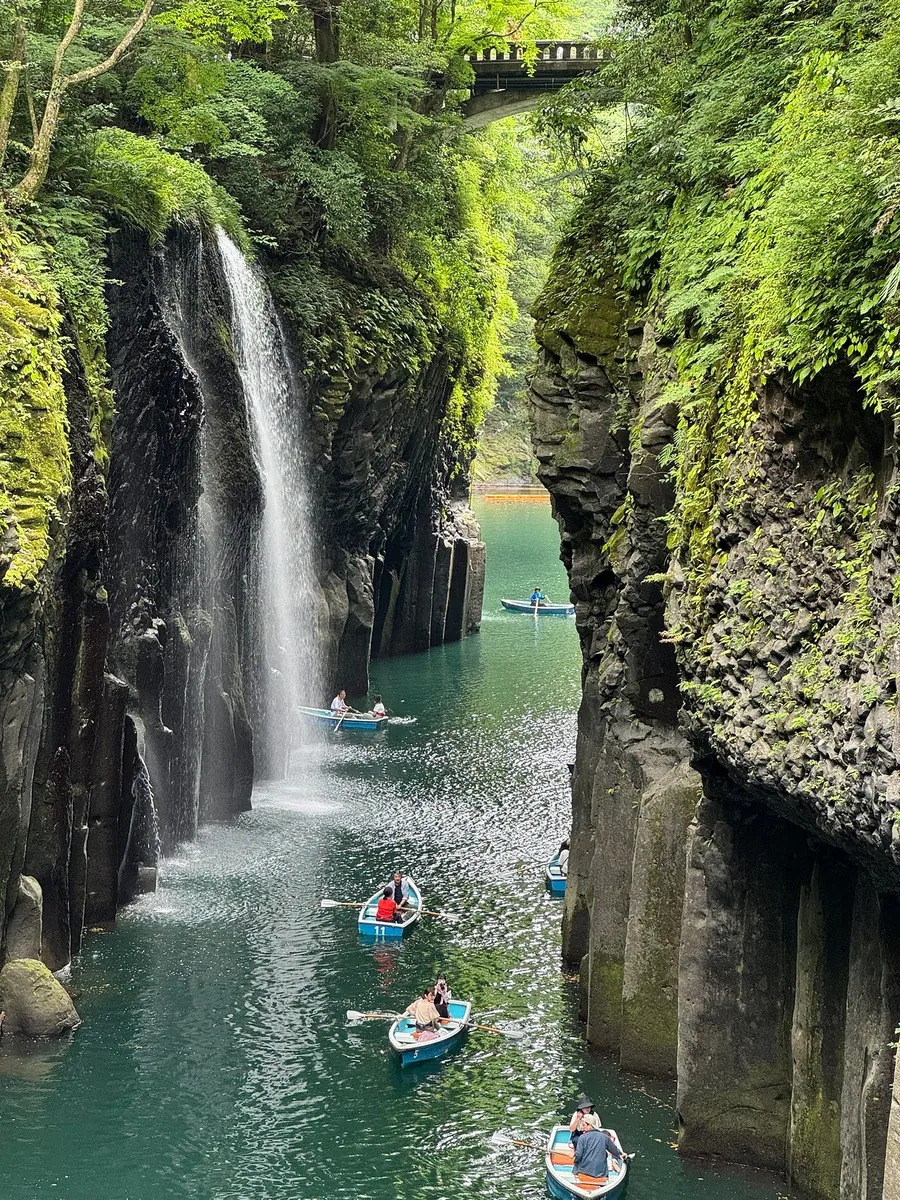
This trip mainly tested the New Camellia Ferry from Busan, South Korea to Fukuoka (Hakata), Japan route, along with Yufuin (Yufuin), Oita Beppu, and Takachiho in Miyazaki Prefecture.
The pre-trip plan is as follows: (Planned just one day before departure, the actual order may not follow the plan, and we later skipped Minami Aso because it was too far)
-
6/3 Around 19:00 Arrive at Busan - Gimhae Airport, 20:00 Arrive at Busan Station, check in at hotel, find food nearby
-
6/4 Haedong Yonggungsa Temple, Haeundae, evening departure from Korea, take the New Camellia Ferry
-
6/5 Arrive in Fukuoka, go to Karatsu and head up to Nanatsugama, head down to Yutoku Inari Shrine, Oya Shrine’s torii in the sea, return via Lalaport
Actual: Only visited Yutoku Inari Shrine -
6/6 Morning: Take JR to Yufuin, afternoon: head to Oita
-
6/7 Oita and Beppu Hell Tour
-
6/8 Moji, Shimonoseki, Karato Market
Actual plan: Visit Karatsu Castle more -
6/9 Minami Aso, Shirakawa Spring, Kamiirokami Kumanoza Shrine
Actual: Changed to Sasebo (Kujukushima Sightseeing Boat), Takeo Onsen -
6/10 Review the missed itinerary from 6/7: Ōhama Shrine’s Torii in the sea, Yutoku Inari Shrine, Lalaport or shopping
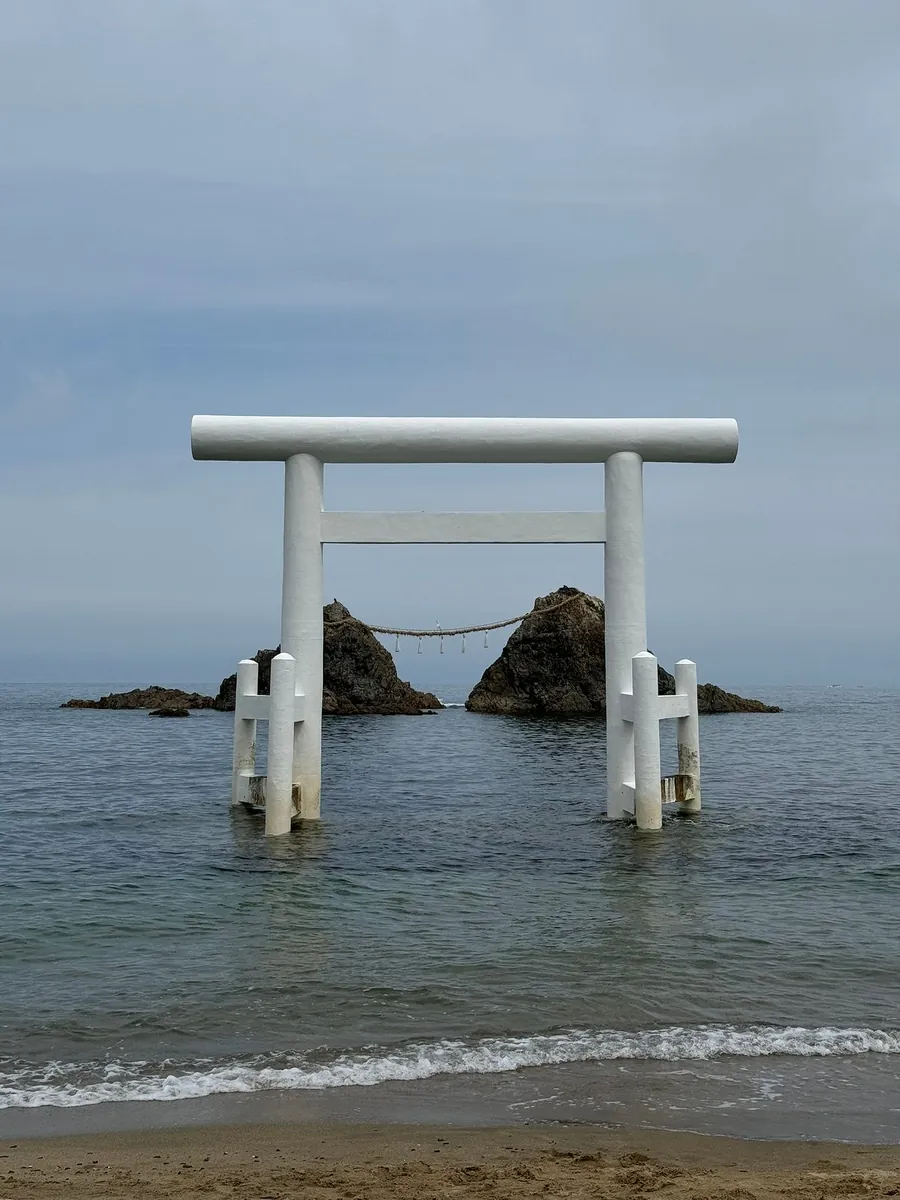
Actual: Visited Sakurai Futamigaura Meoto Iwa (Married Couple Rocks), Nanzōin Temple, and toured Hakata -
6/11 KKDAY Takachiho One-Day Tour, Takachiho Shrine, Takachiho Gorge, Amanoiwato Shrine, Amano Yasugawara
-
6/12 Sasebo, Kujukushima, Huis Ten Bosch or Baseball
Actual: Went shopping in Hakata, shopping in Tenjin, watched baseball at PayPay Dome -
6/13 Shopping in Fukuoka city, flight back to Taiwan at 21:00
Actual: Visited Lalaport more often
This time I bought DJB again, with 2 days 2GB in Korea and 9 days unlimited data in Japan, totaling NT$1,250.
Takachiho is very difficult to reach from Fukuoka, so I directly booked the KKDAY Takachiho One-Day Tour, which includes private transport, lunch, and a Chinese-speaking guide. The price was NT$2,272 per person.
Trip
✈️ Flight
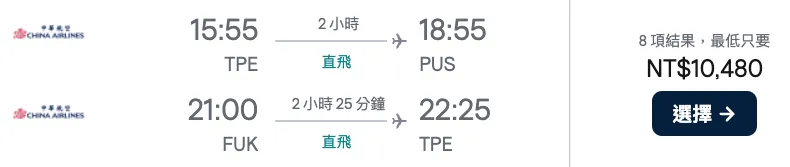
-
Outbound: China Airlines Taipei Taoyuan TPE 15:55 -> Korea Busan Gimhae International Airport PUS 18:55
-
Return trip: China Airlines Japan Fukuoka Airport FUK 21:00 -> Taipei Taoyuan TPE 22:25
-
Round trip including checked baggage (23 kg per piece)
Price: NT$10,480
🛳️Cruise New Camellia
-
Departure: 18:30 Check-in at Busan Port International Shipping Terminal
-
Arrival: 07:30 Hakata Port International Terminal
Price: Economy/2nd Class Cabin: Shared Cabin NT$1,450 per person
🚅 JR Pass Northern Kyushu Rail Pass (5 Days)
Price: NT$3,042
This time in Kyushu, I took limited express trains whenever possible using the JR Pass. Except for Yufu, which required a reserved seat, I used non-reserved cars for all other rides (there were few passengers, so seats were available).
The Yufuin no Mori train from Hakata to Yufuin was fully booked, so I could only reserve a seat on the Yufu 1 train.
Please note that “Yufuin no Mori” is different from the regular train (Yufu X). When making a reservation, be sure to confirm you are booking “Yufuin no Mori.”
Booking Method:
You must buy the JR Pass first before booking, as the travel agency options only include KLOOK. There is concern that other agencies may not be able to reserve seats (the page states that customers with MCO issued by agencies other than those mentioned should not make any selection. It should still be possible), so I purchased the JR Pass through KLOOK.
1. Access the JR Pass reservation homepage:
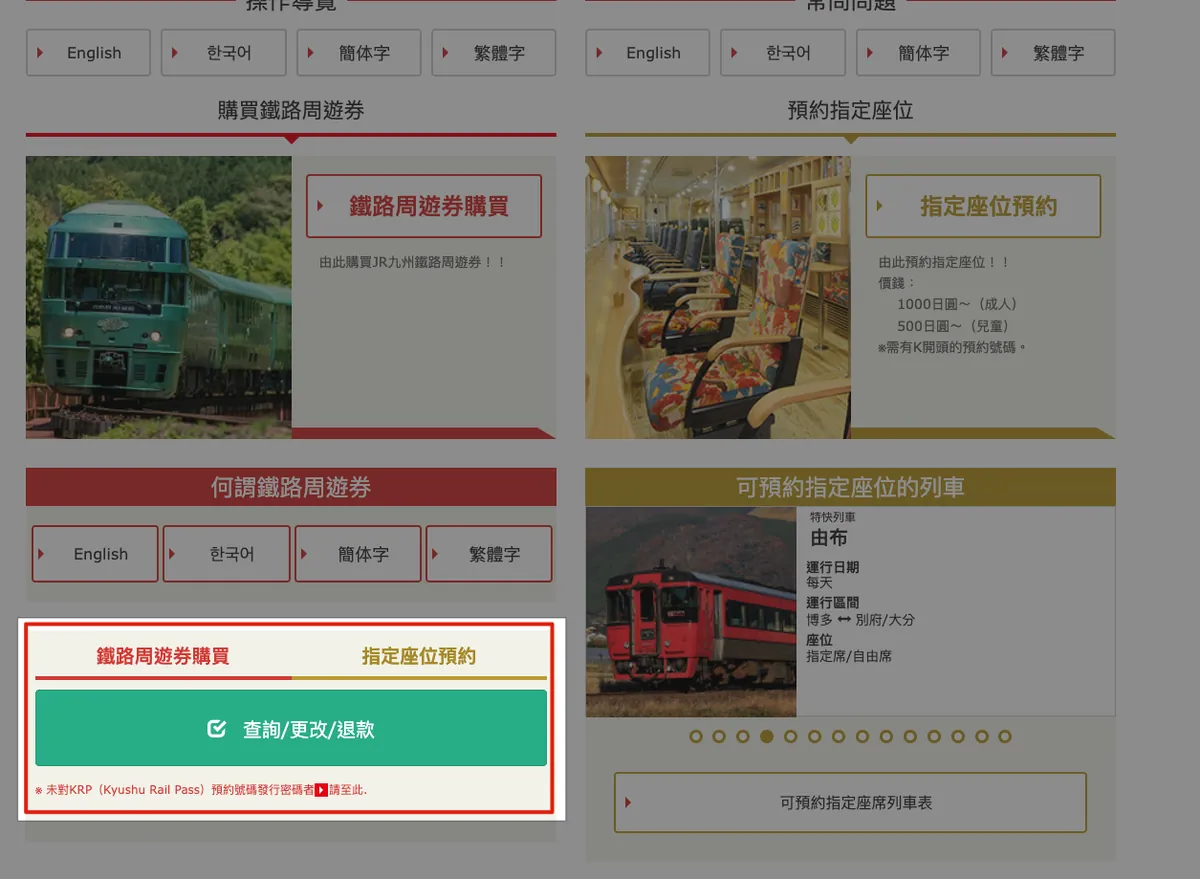
Scroll down to find “Rail Pass Purchase” -> “Inquiry/Change/Refund”
2. Go to the JR Pass reservation page :
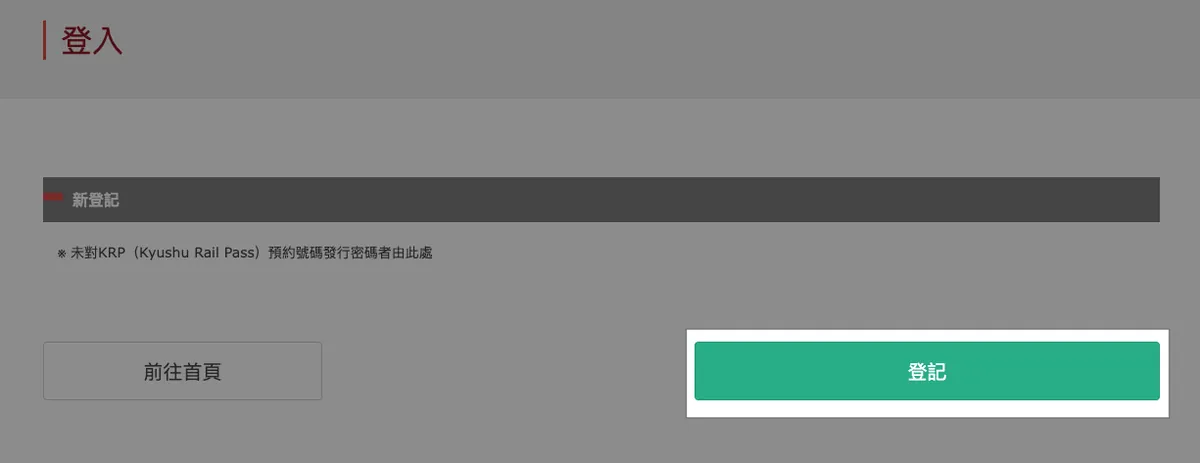
Select “Register”
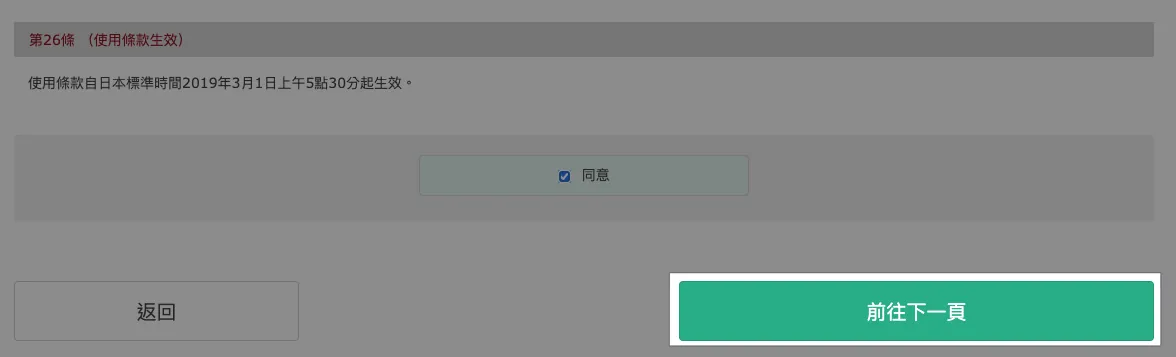
Read and agree to the terms, then click “Go to Next Page”
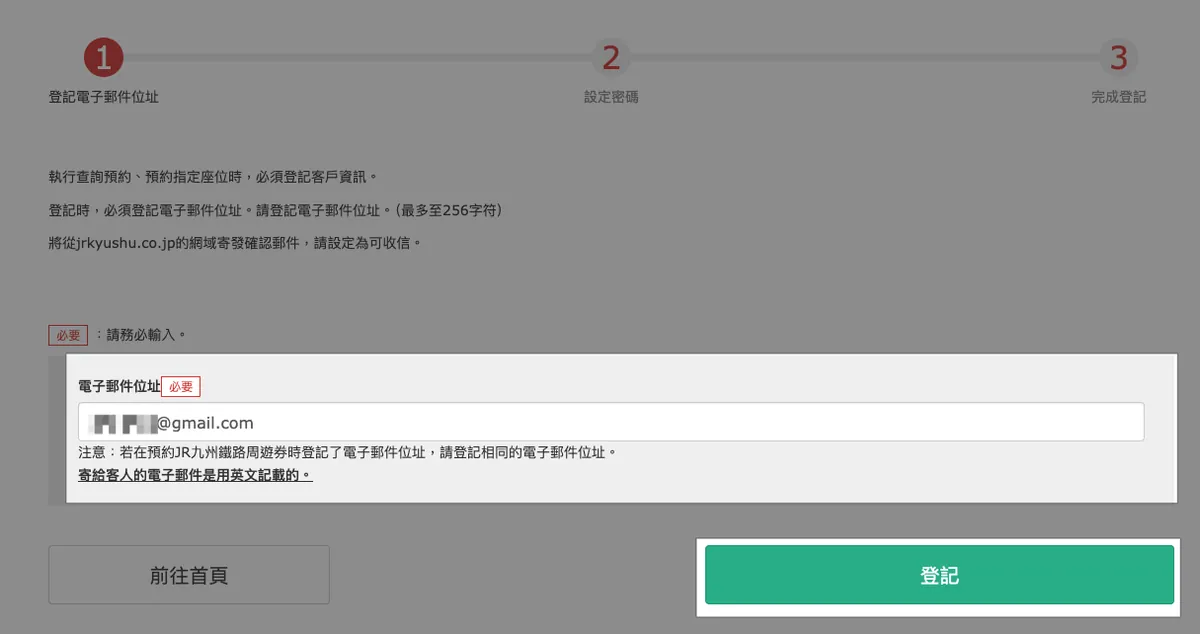
Enter the email you want to register and click “Register.”
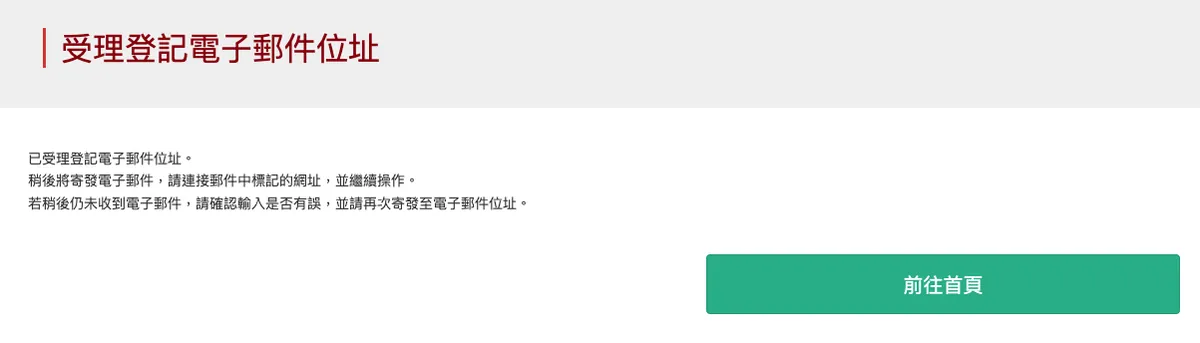
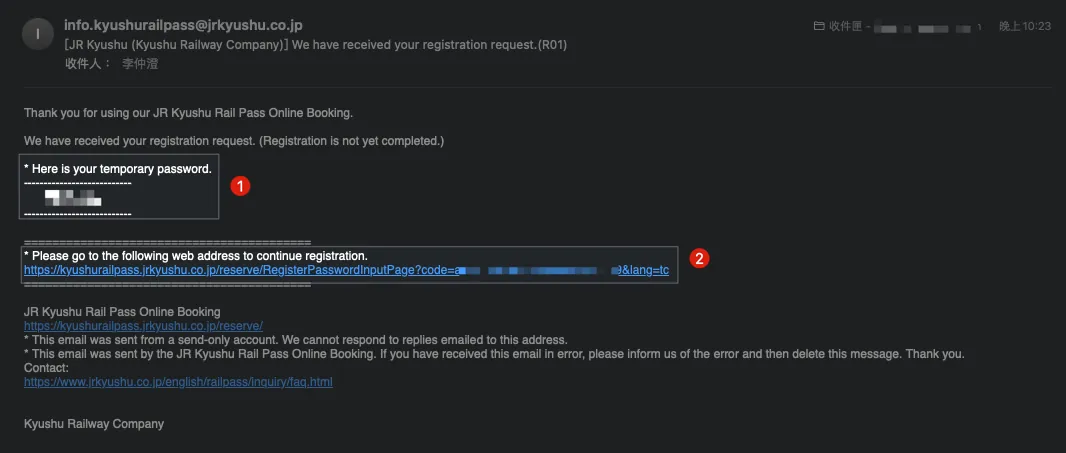
Check your inbox for the email, note the “temporary password,” and click the continue link.
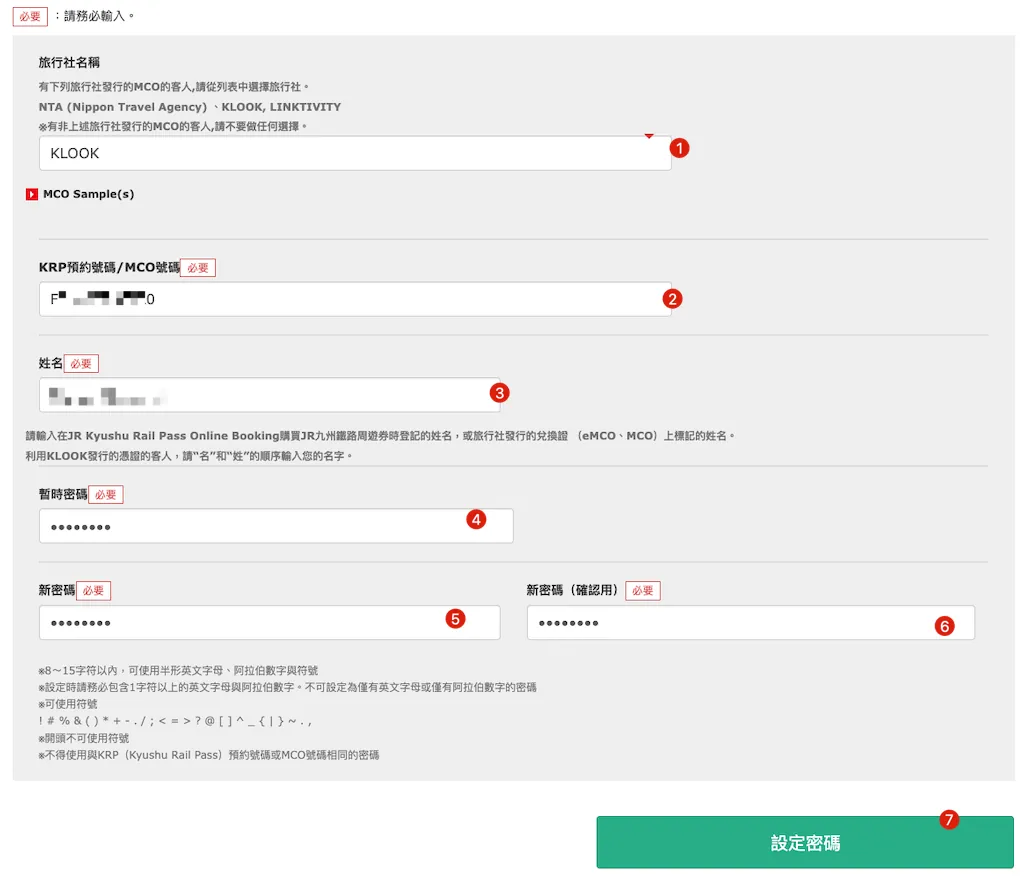
- Travel Agency Name Choice: KLOOK
- For guests with MCOs not issued by the above travel agencies, please do not make any selections.
- KRP Reservation Number / MCO Number
Go to KLOOK to view the JR Pass voucher, then copy and paste the following voucher number.
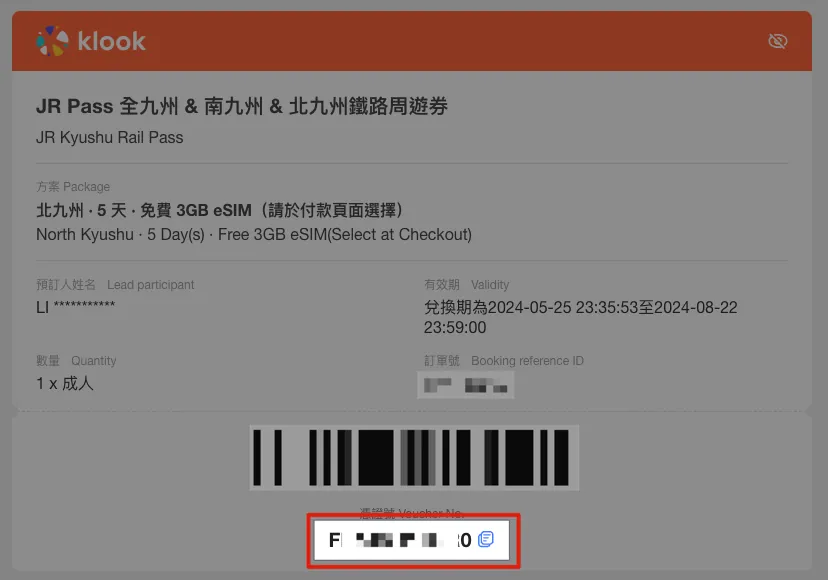
- Name
Enter the name on the JR Pass order. According to the instructions, if the voucher is issued by KLOOK, you need to enter the given name + surname. My voucher shows LI ZXXX CXXX, but here you should enter ZXXX CXXX LI.
-
Please enter the name registered when purchasing the JR Kyushu Rail Pass on JR Kyushu Rail Pass Online Booking, or the name printed on the exchange certificate (eMCO, MCO) issued by the travel agency.
-
For customers using vouchers issued by KLOOK, please enter your “First Name” and “Last Name” in the correct order.
- Enter the temporary password from the email
5.6. Enter the password you want to set for login
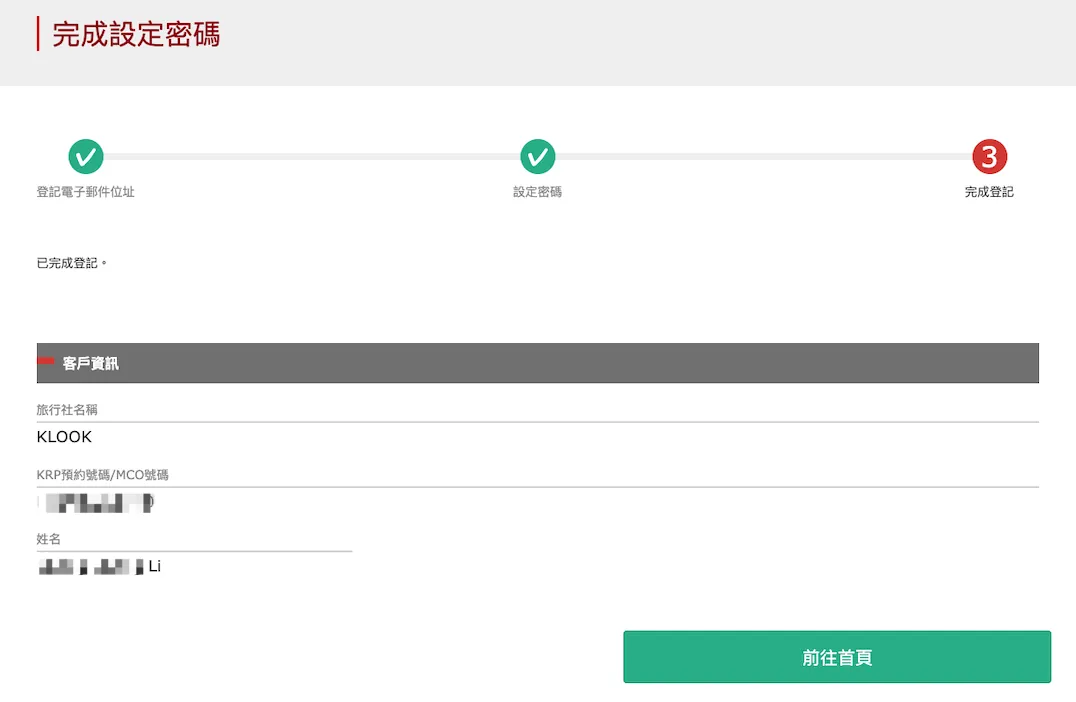
After setting the password, you can check and book reserved train seats on the homepage during the available booking hours (Japan time 05:30~23:00); booking is not available outside these hours.

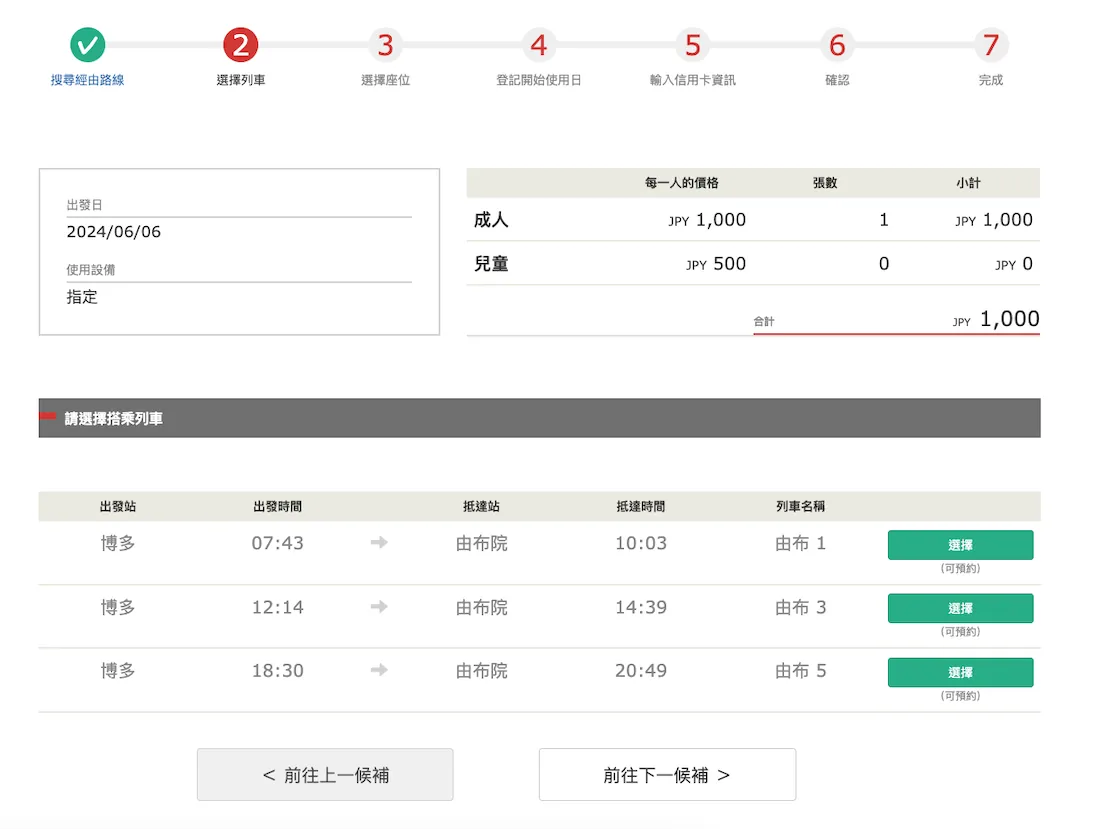
-
Departure Day
-
Departure Station: Hakata
-
Arrival Station: Yufuin
Yufuin no Mori is fully booked, so only the regular train Yufu 1 can be reserved. The earliest departure is at 07:43, arriving at 10:03.
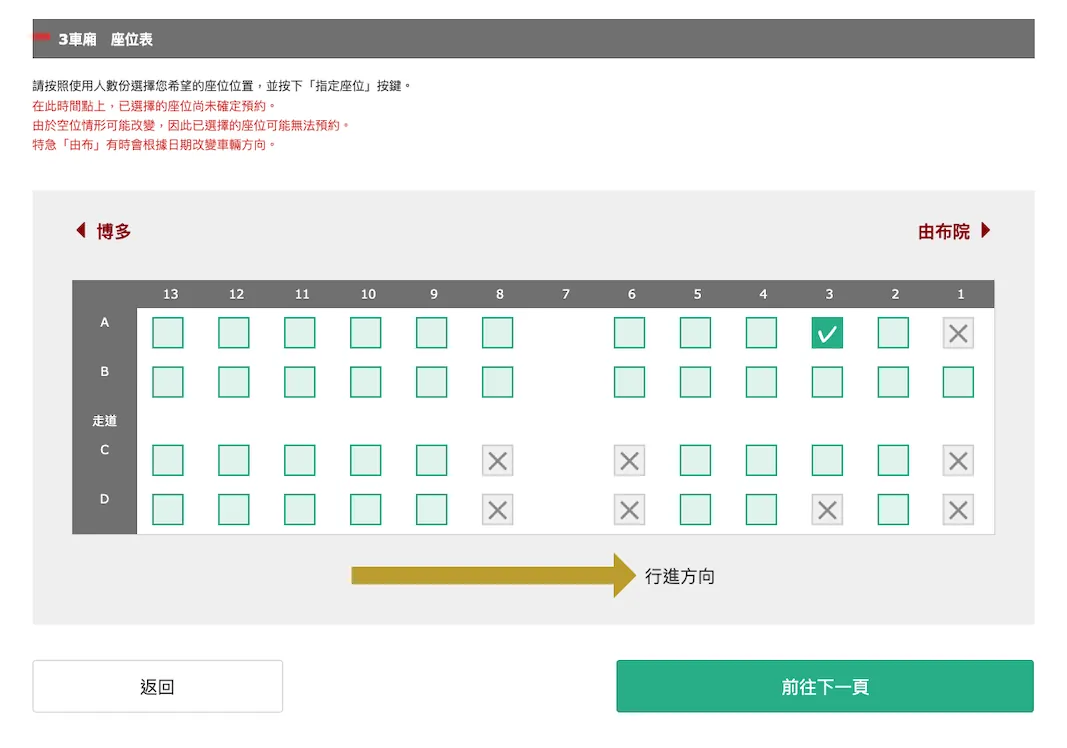
- Continue to the next page to select seat preference, location, and car number.
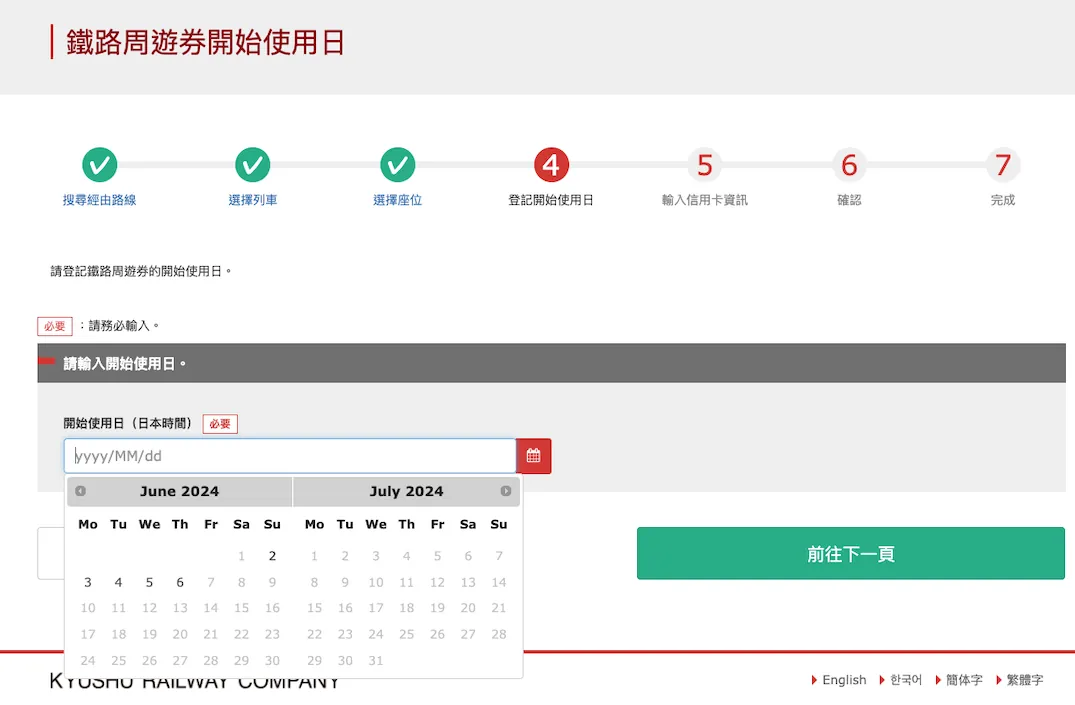
Enter the start date of the pass.
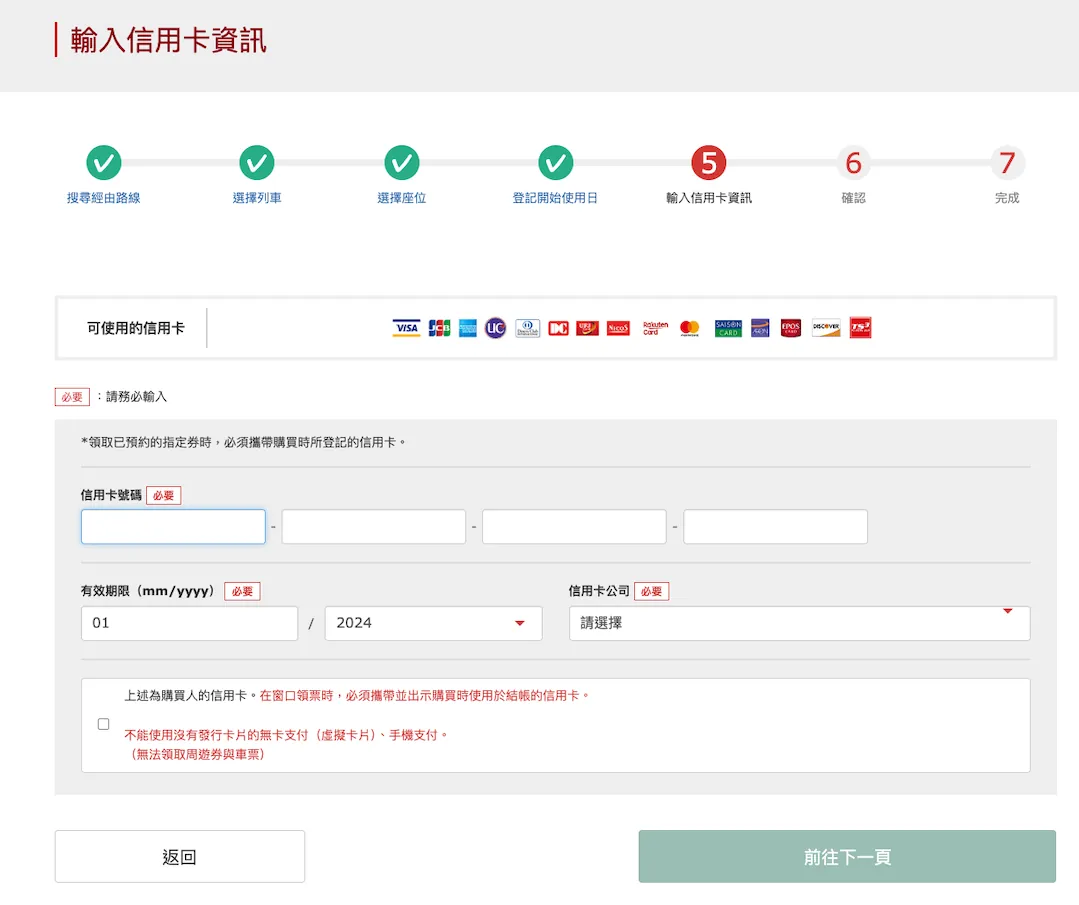
Enter credit card information to pay the reservation fee (1,000 yen per adult / 500 yen per child).
The above is the purchaser’s credit card. When collecting the ticket at the counter, you must bring and present the credit card used for payment.
The above is the purchaser’s credit card. When collecting the ticket at the counter, you must bring and present the credit card used for payment.
The above is the purchaser’s credit card. When collecting the ticket at the counter, you must bring and present the credit card used for payment.
⚠️ Please make sure to bring the credit card used for booking when picking up the tickets ⚠️
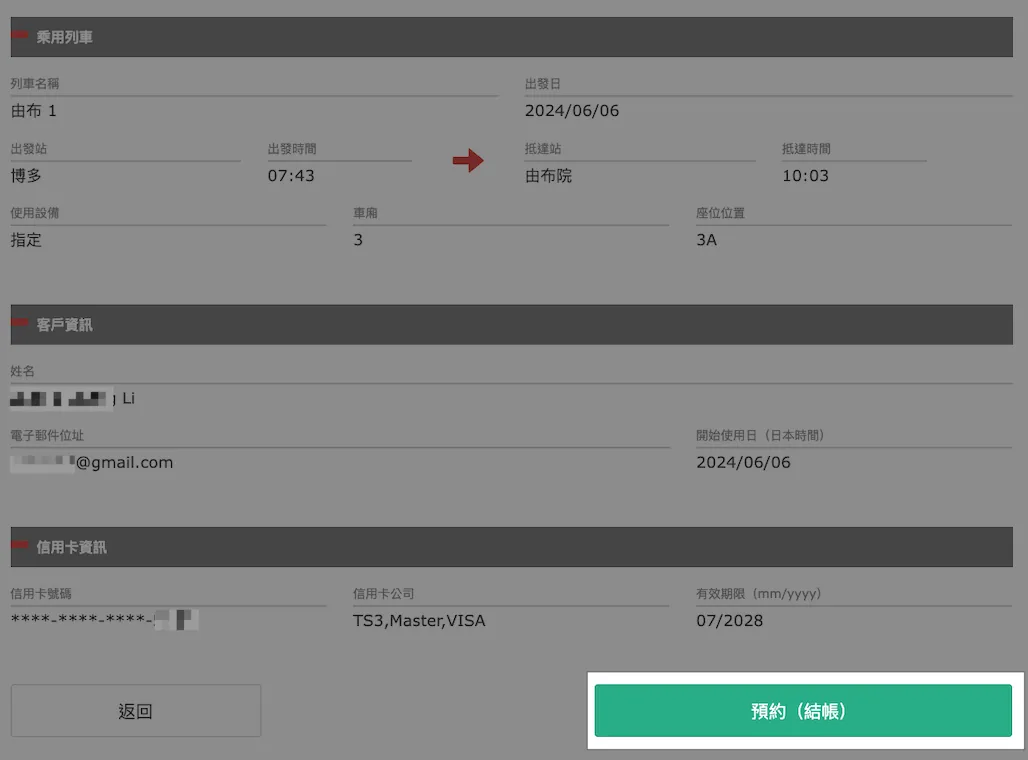
Checkout complete, reservation confirmed!
Accommodation (10 nights, including 1 night on the cruise)
-
[6/3] Toyoko INN Busan Station No.1 (1 night)
The location is excellent, right outside Busan Station. Walking back leads to Busan Port International Ferry Terminal, making arrivals and departures convenient.
Price: NT$1,940 for a twin room for two people -
[6/4] New Camellia Ferry (1 night)
Price: NT$1,450 per person -
[6/5] Toyoko INN Hakata-guchi Ekimae (1 night)
About a 10-minute walk from Hakata Station.
Price: NT$2,911 for a twin room for two people. -
[6/6, 6/7] Toyoko INN Oita Ekimae (2 nights)
About a 10-minute walk from Oita Station.
Price: NT$4,389 for a twin room for two people -
[6/8, 6/9] APA Hotel Fukuoka-Watanabedori EXCELLENT (Fukuoka Watanabedori Station Front) (2 nights)
About a 5-minute walk from Watanabe-dori Station.
Price: NT$9,311 for a twin room for two people -
[6/10, 6/11, 6/12] Toyoko INN Fukuoka Tenjin (3 nights)
About a 10-minute walk from Tenjin Minami Station.
Price: NT$7,131 for a twin room for two people
Total: $14,291, averaging $1,400 per night. This time, I finally kept it under $1,500 per night. Thanks to Toyoko INN!
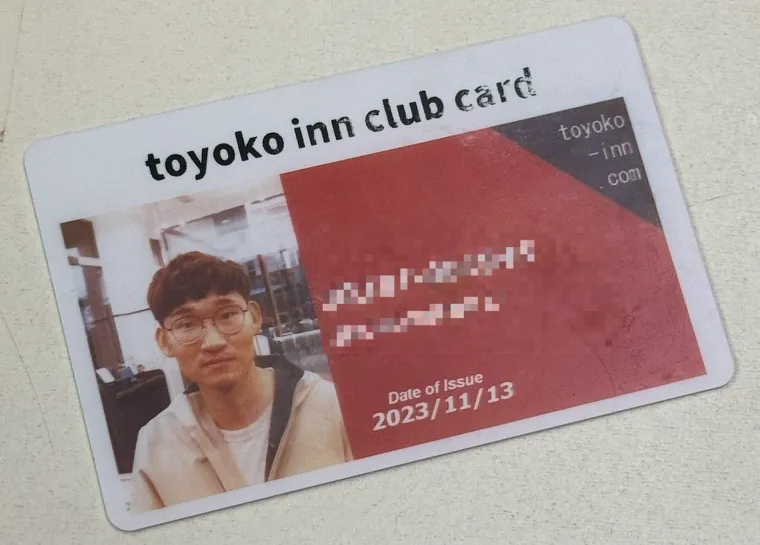
Last time I stayed at Toyoko INN in Hiroshima, I signed up for their membership. Just tell the front desk you want to join when you check in, fill out a simple form, pay a one-time membership fee of 1,500 yen, get your photo taken, and receive your card on the spot. You can use it from then on.
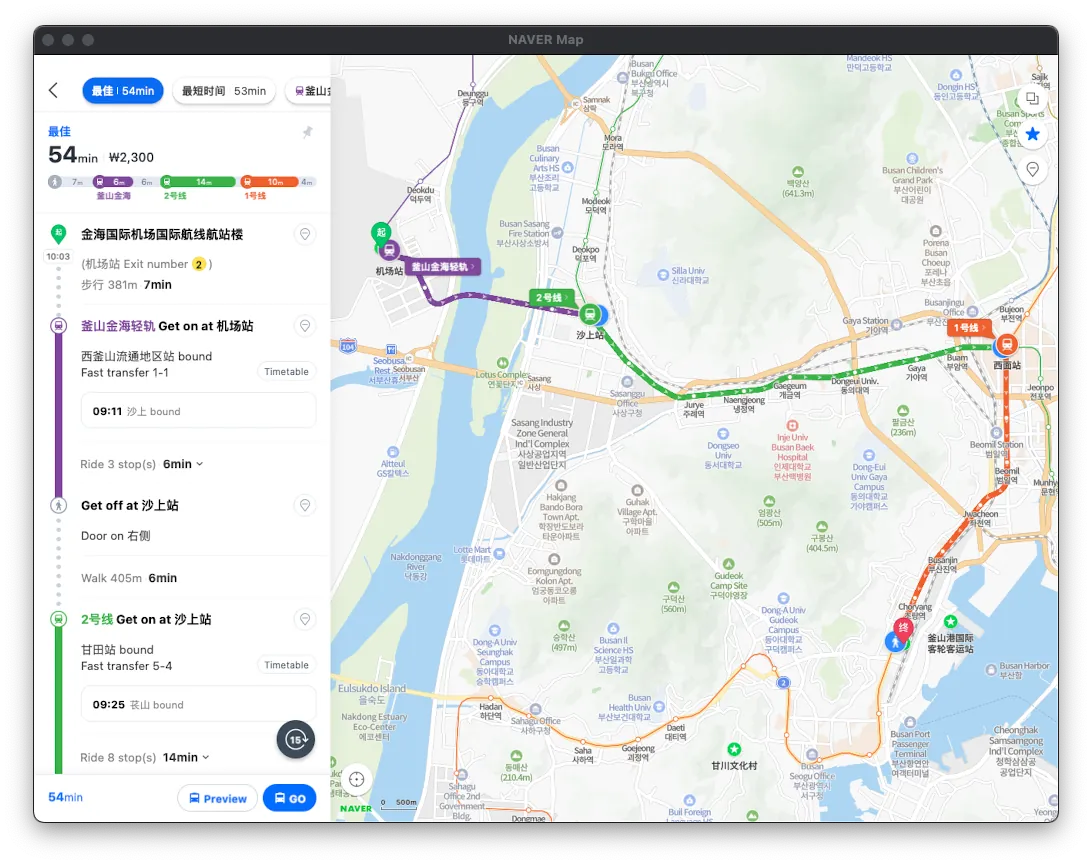
In Korea, use Naver Map to plan your itinerary and routes in advance for easy reference:
-
I find it more useful than Google Maps for travel maps!
-
You can log in directly with Line
Go!
Visit Japan has now combined into one QR code for both immigration and customs.
Day 1 Departure
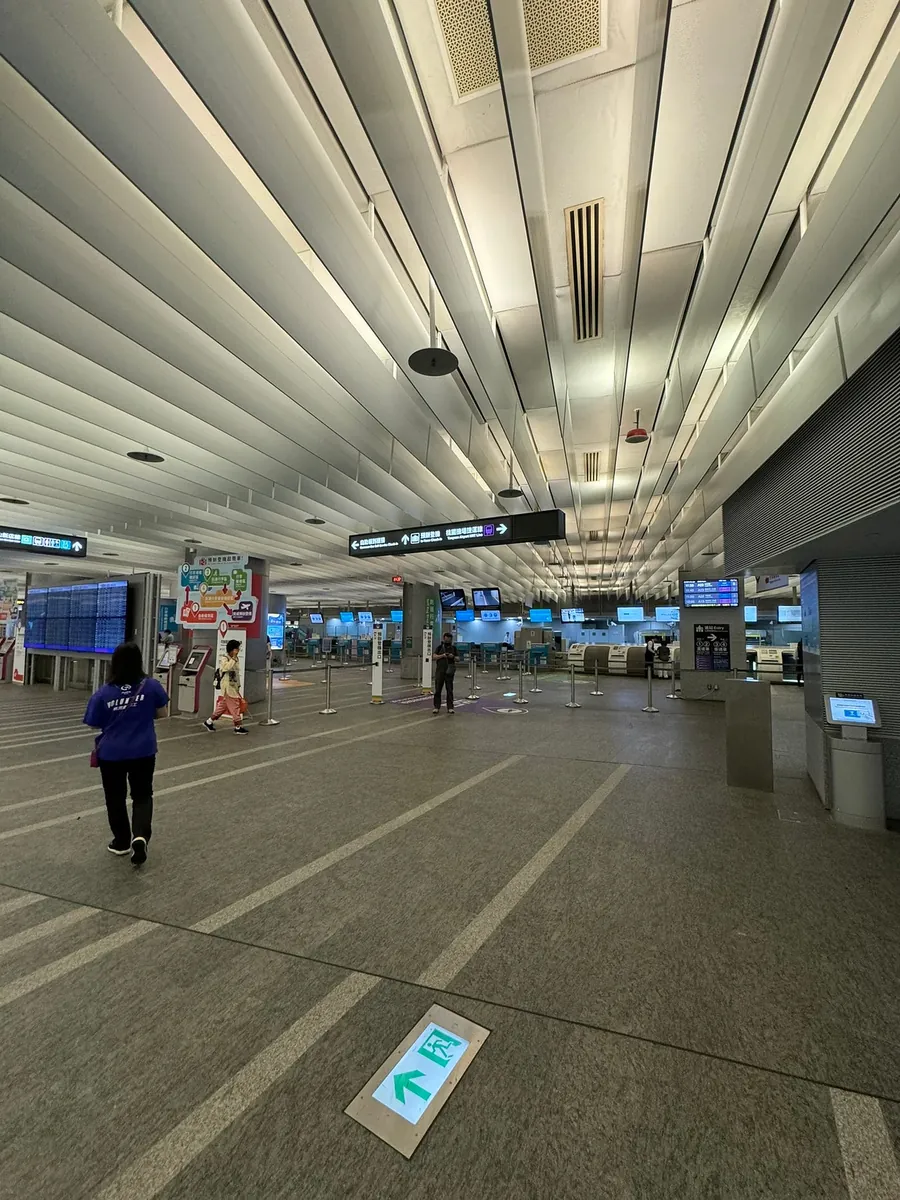
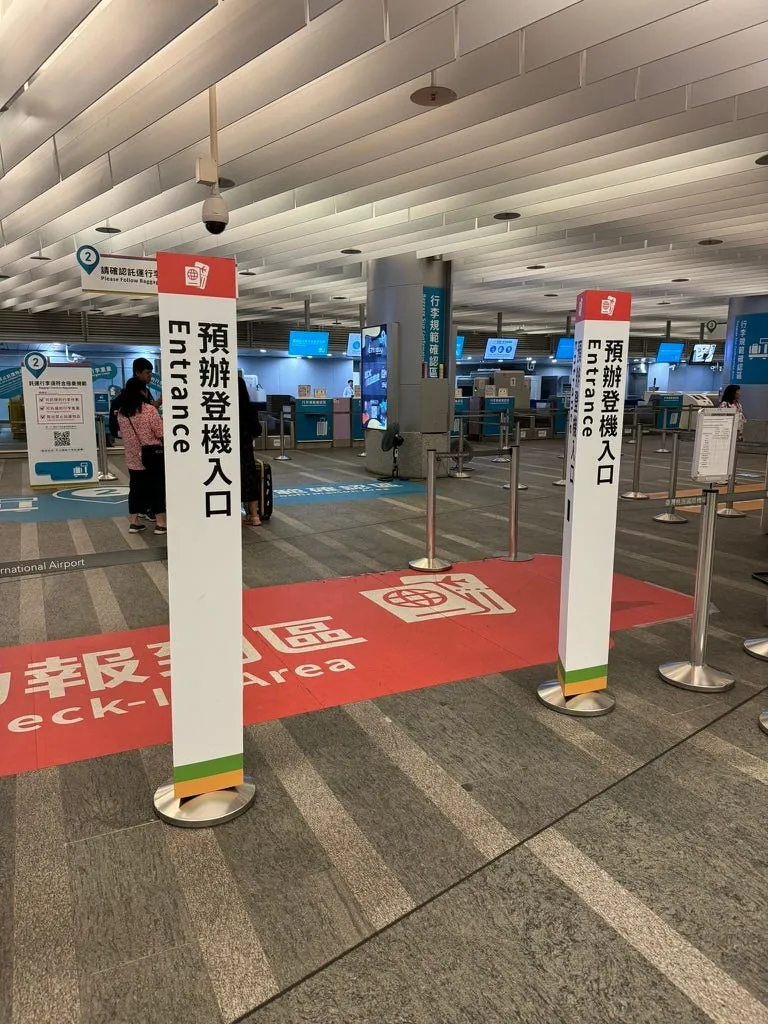
As with previous trips abroad, when arriving at Taipei Main Station A1 on the Airport MRT, first complete the pre-check-in. This allows you to proceed directly to immigration at the airport. ( For flights eligible for pre-check-in and regulations, please refer to the official website ).
I originally planned to take the Orange Line to Sanchong to transfer to the Airport MRT, but the other check-in station for the Airport MRT is at A3 New Taipei Industrial Park Station, not Sanchong Station. Also, there’s no direct train from Sanchong, so I ended up transferring at Taipei Main Station instead.
- Like before, I put an AirTag in my suitcase for easy tracking when traveling abroad.
Taoyuan Airport TPE Terminal 1
This time, China Airlines flew to Busan from Terminal 1.
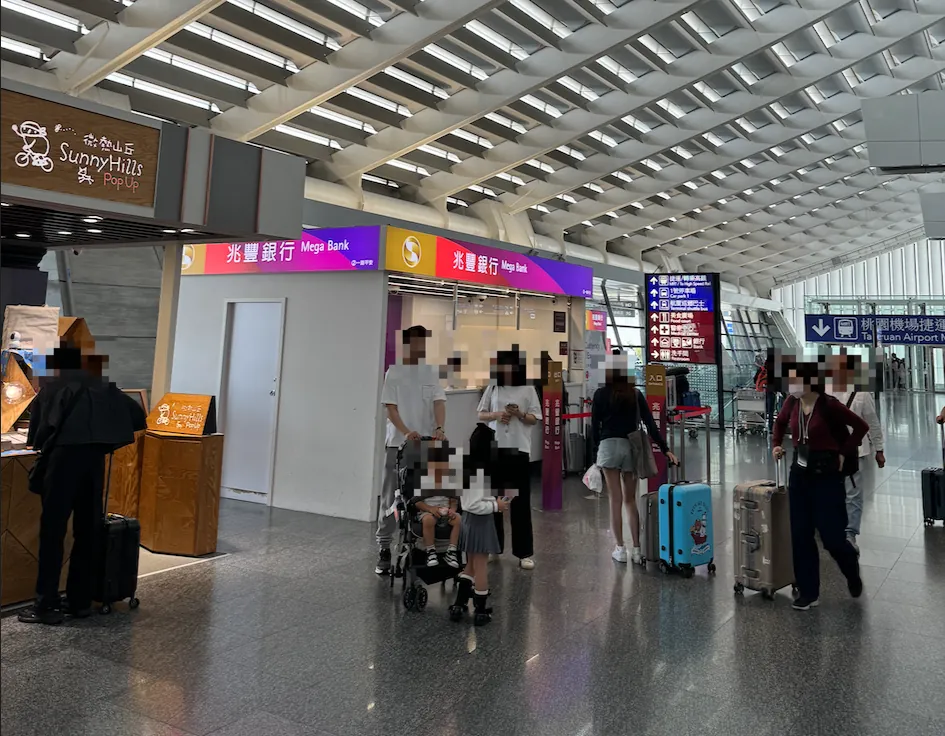
At the airport, first find the counter to exchange Korean won. Foreign exchange ATMs almost never provide Korean won, only Japanese yen; the airport exchange rate is poor and charges a NT$100 handling fee. Therefore, if you have time, it is better to exchange currency early at a bank counter.
13:00 Departure
By around 13:00, the exit procedures were completed.
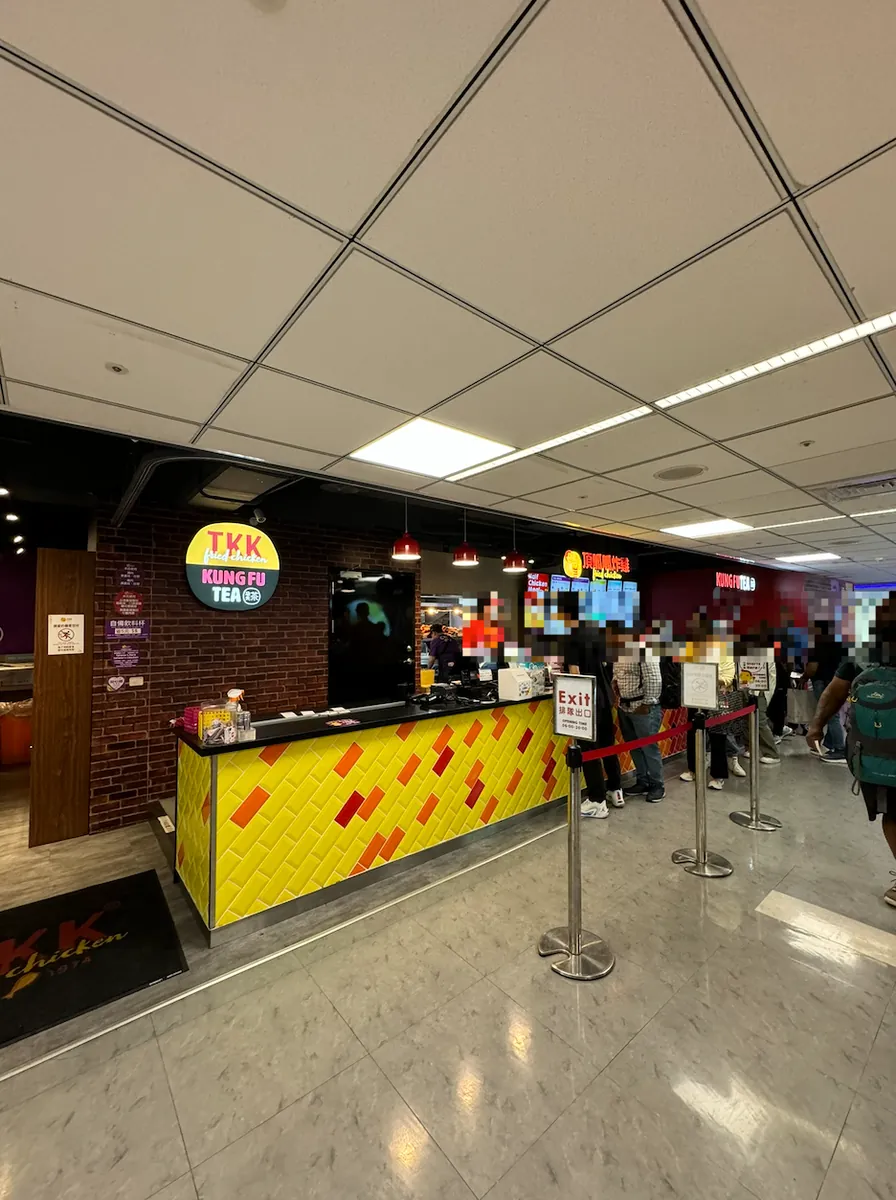
Bought a Ding Gua Gua fried chicken for lunch at Terminal 1 departure.
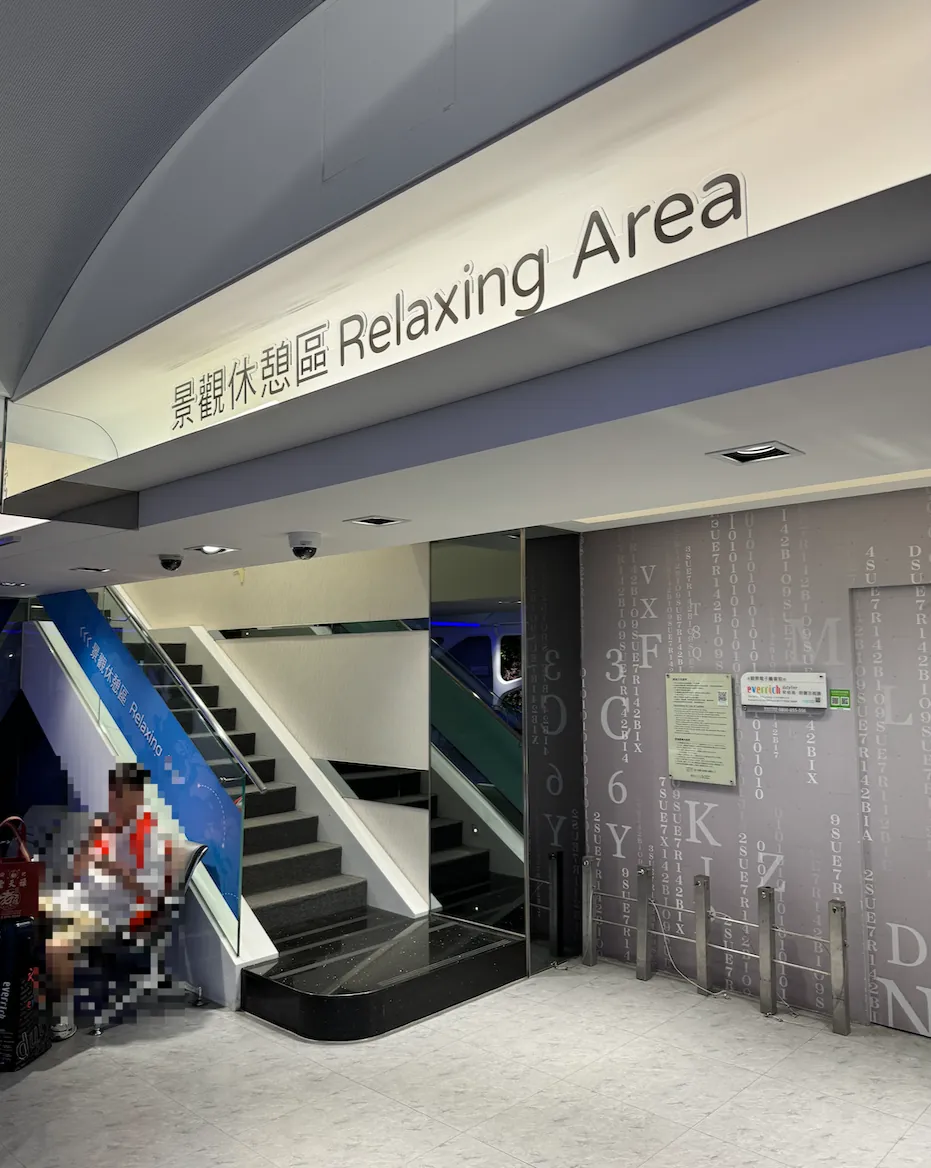
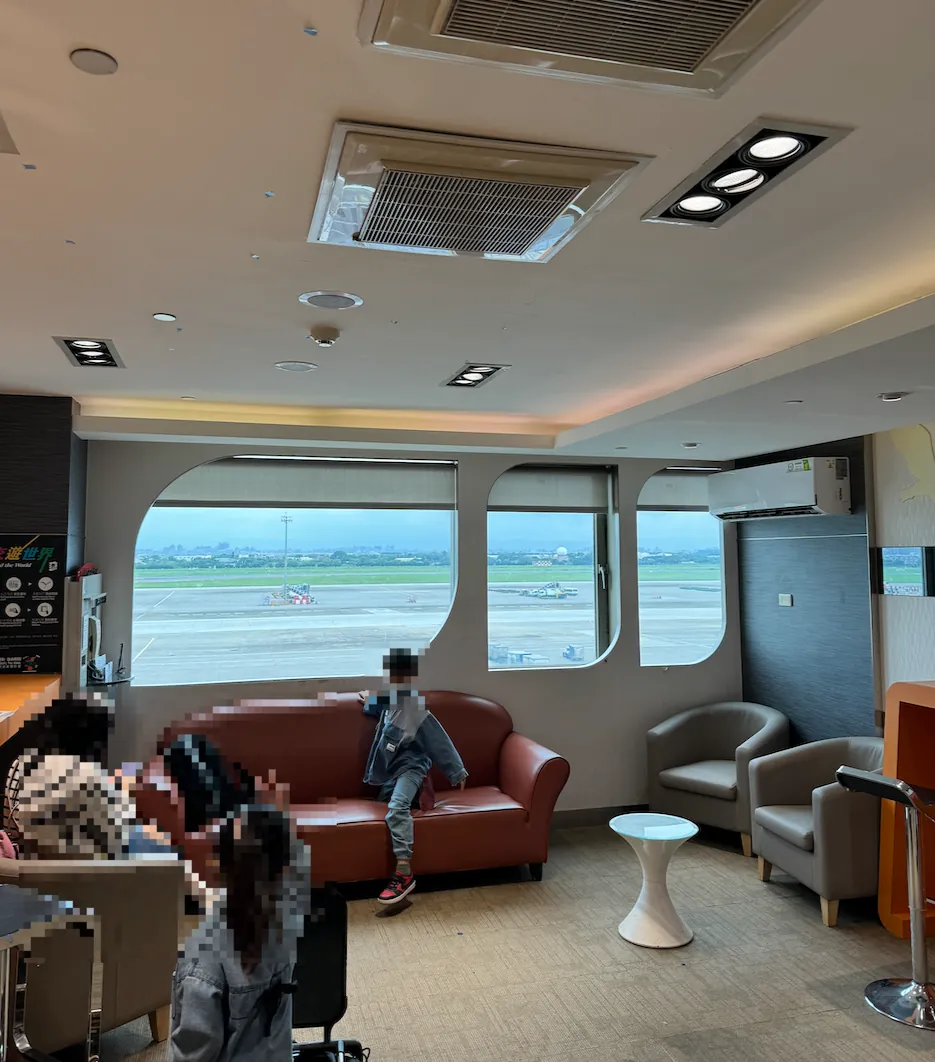
Previously the scenic rest area was always closed when passing by. This time it was open, so I went up to take a look. Surprisingly, it’s very small.
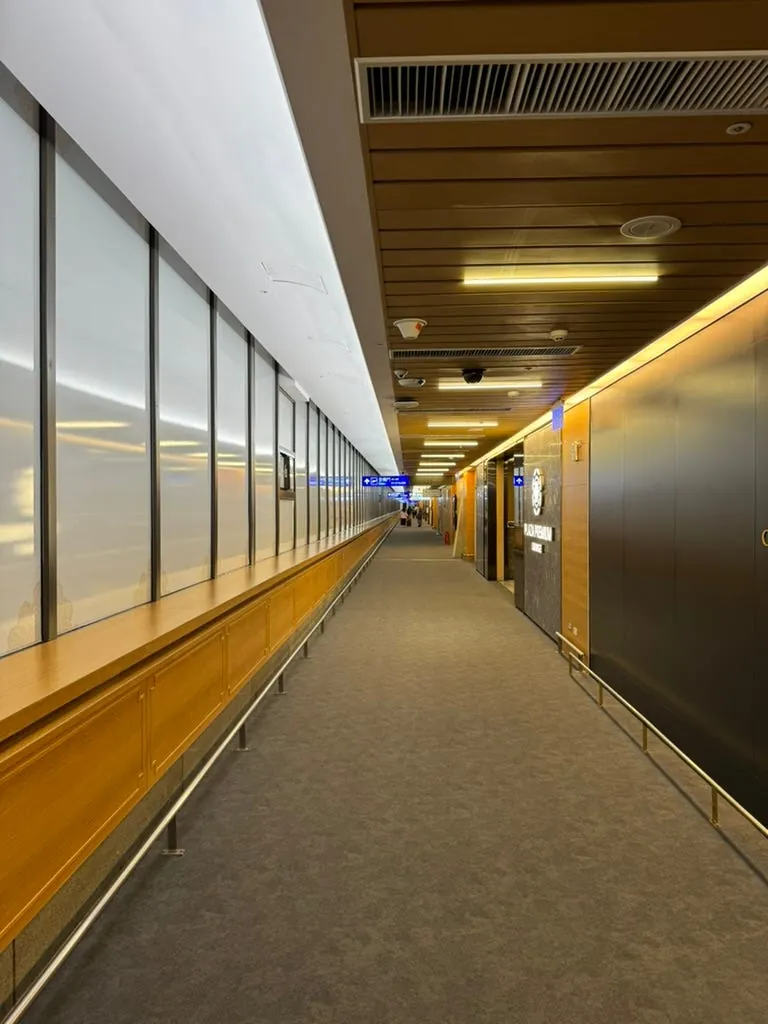
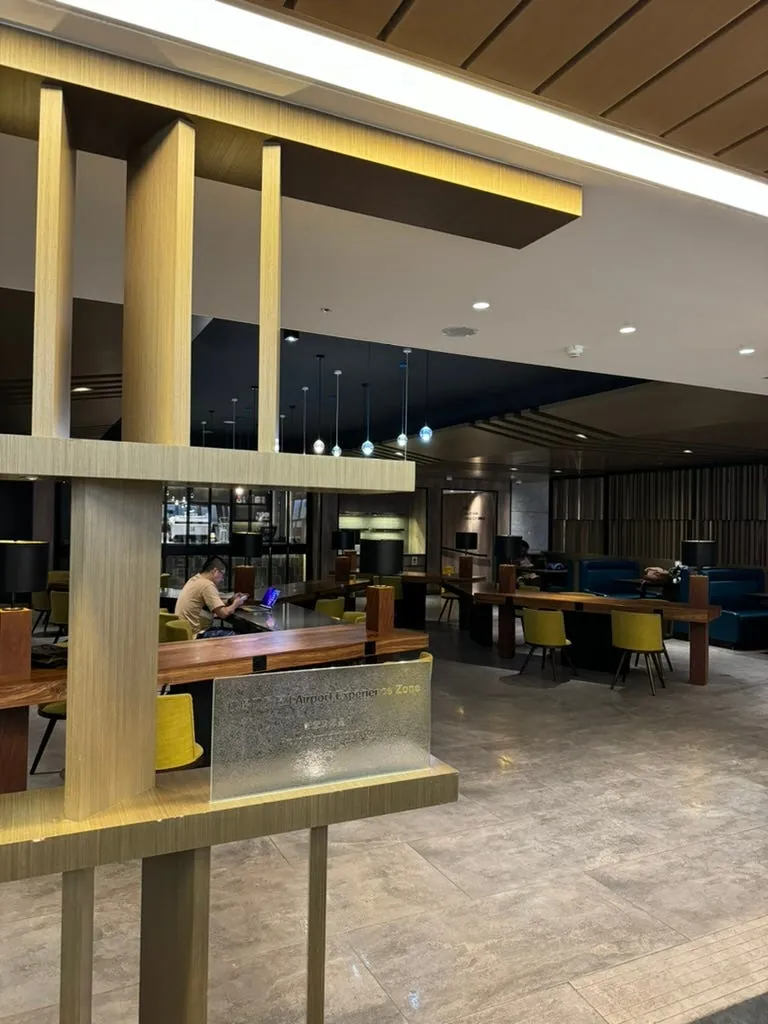
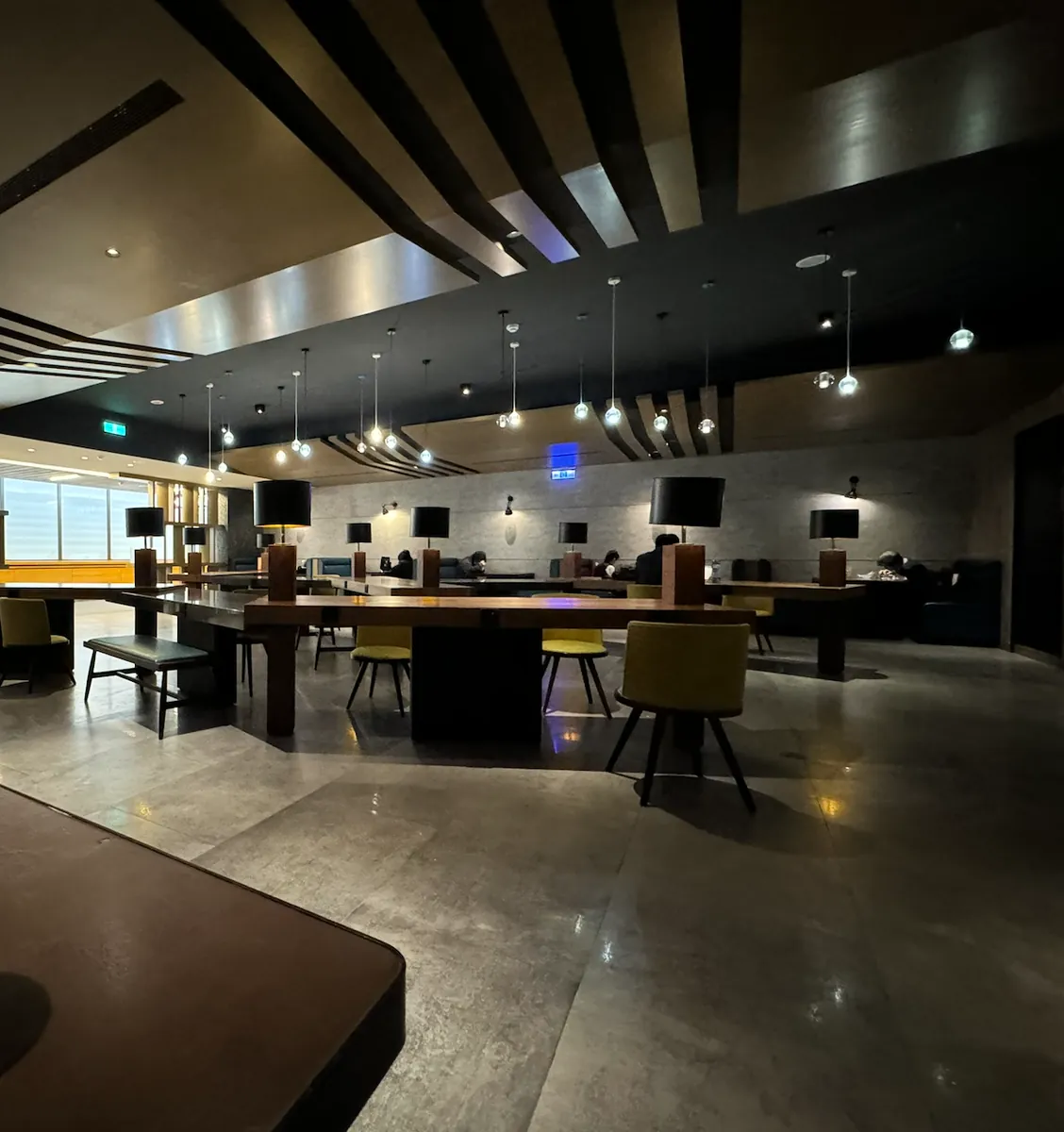
Since it was still early, I used the free lounge area at Ichihang this time to rest. There weren’t many people at this hour.
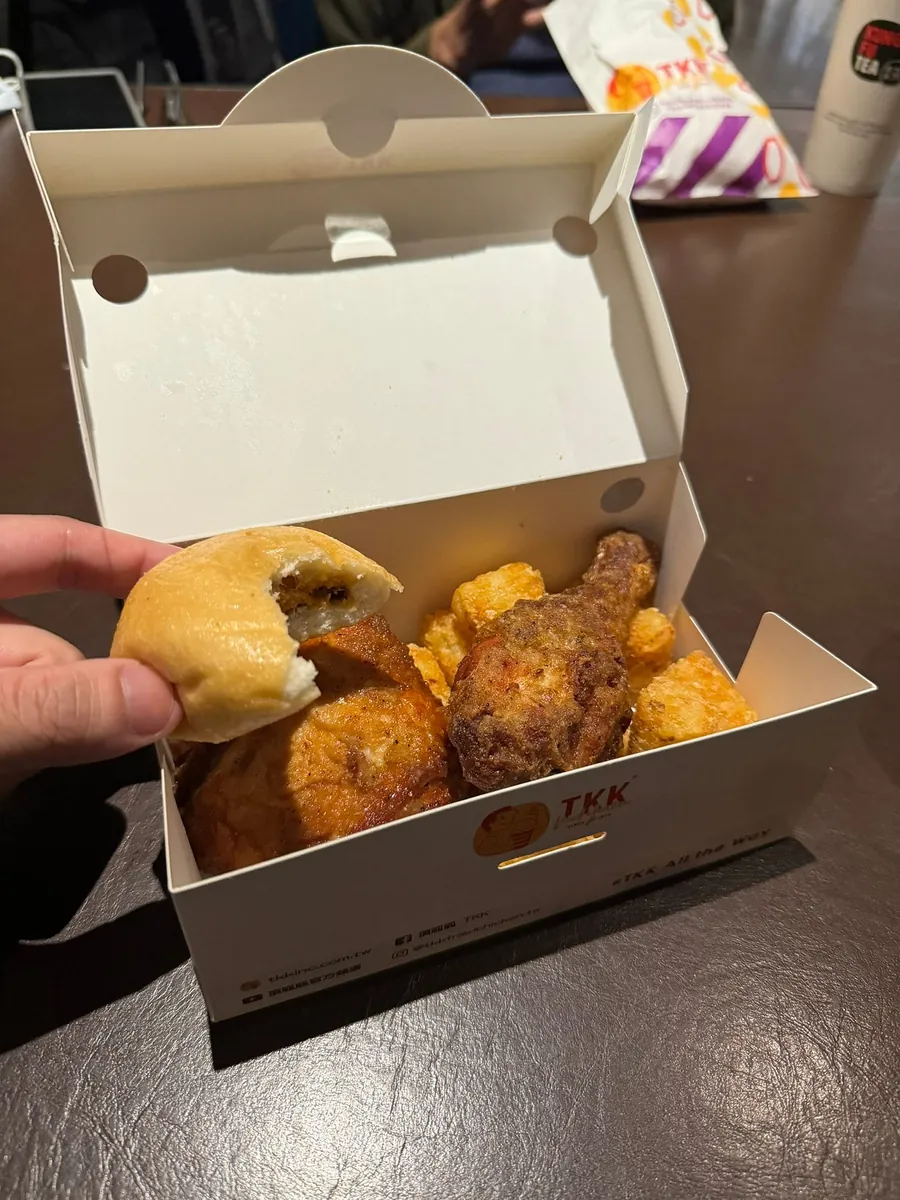
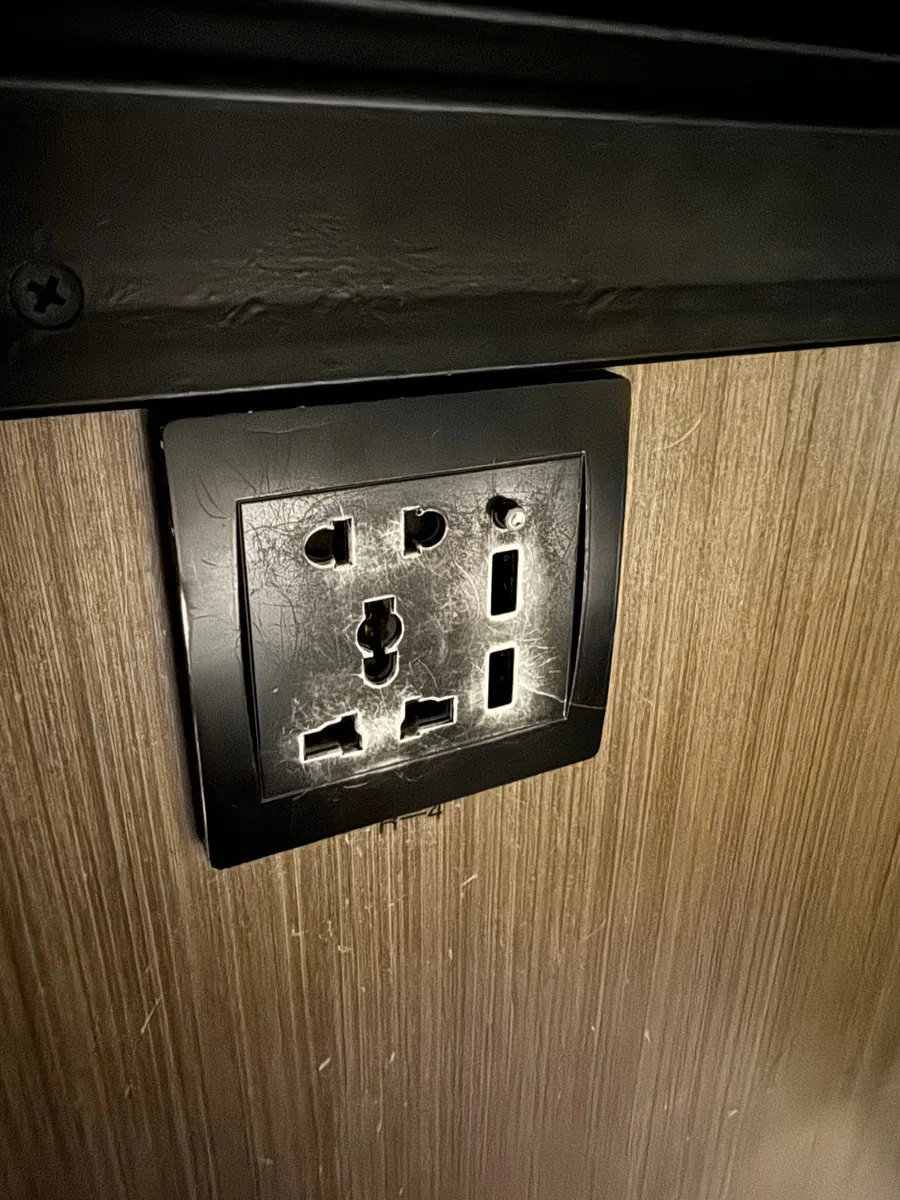
Ding Gua Gua fried chicken is marinated and very tasty, but unfortunately, this airport location does not offer the Gua Gua bun; additionally, I found that all charging stations here have been removed, leaving only the shells, so charging is not possible.
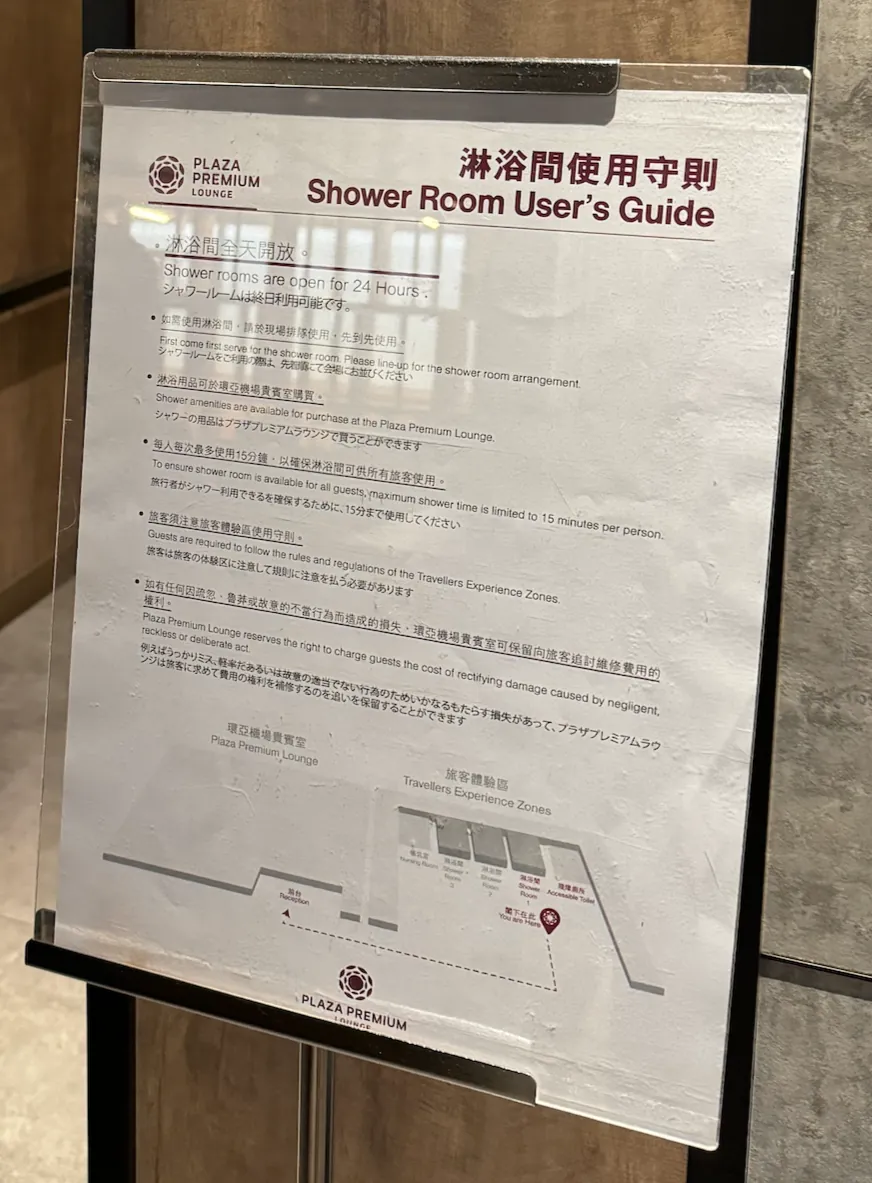
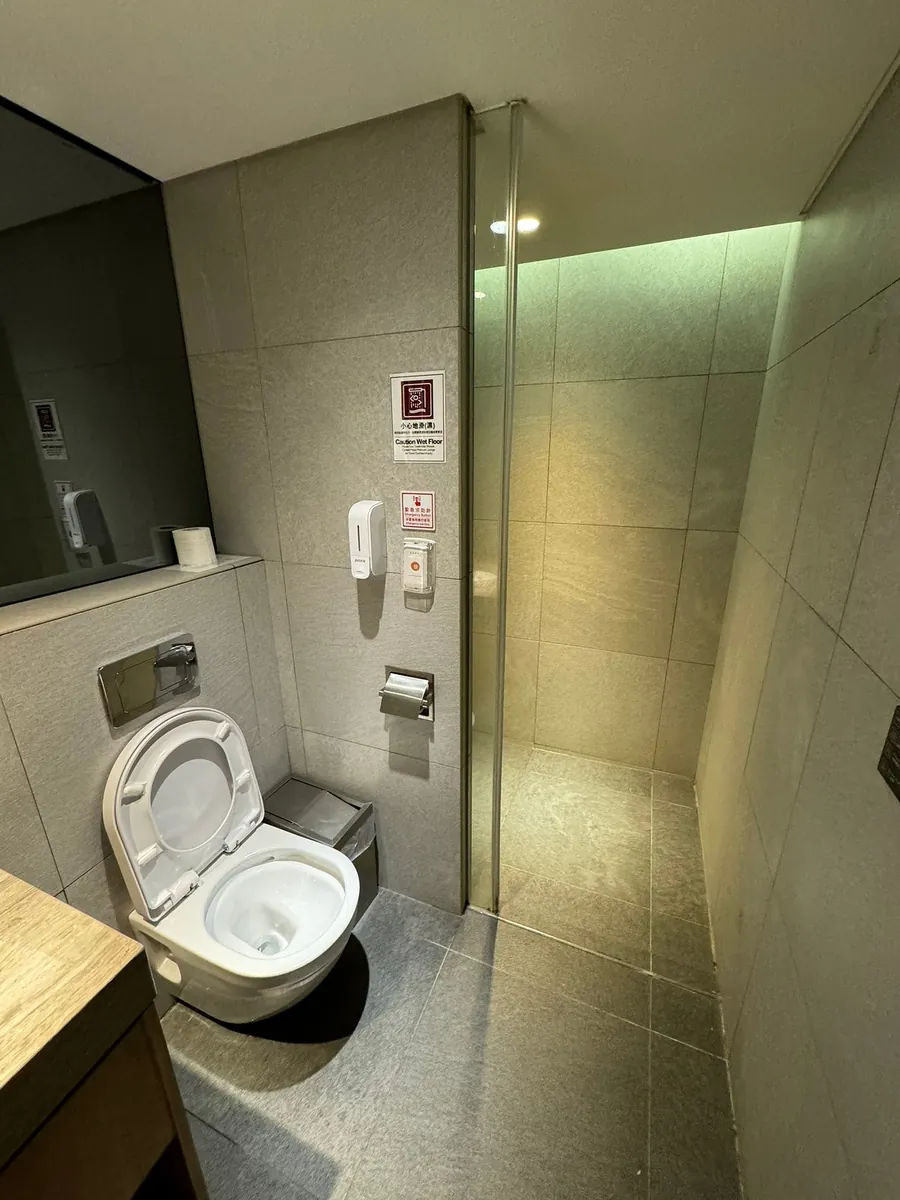
The bathrooms with toilets inside are limited in number (estimated about five), very clean and high-end. The cleaning staff also maintain them promptly.
15:20 Boarding begins
Boarding begins around 15:20.
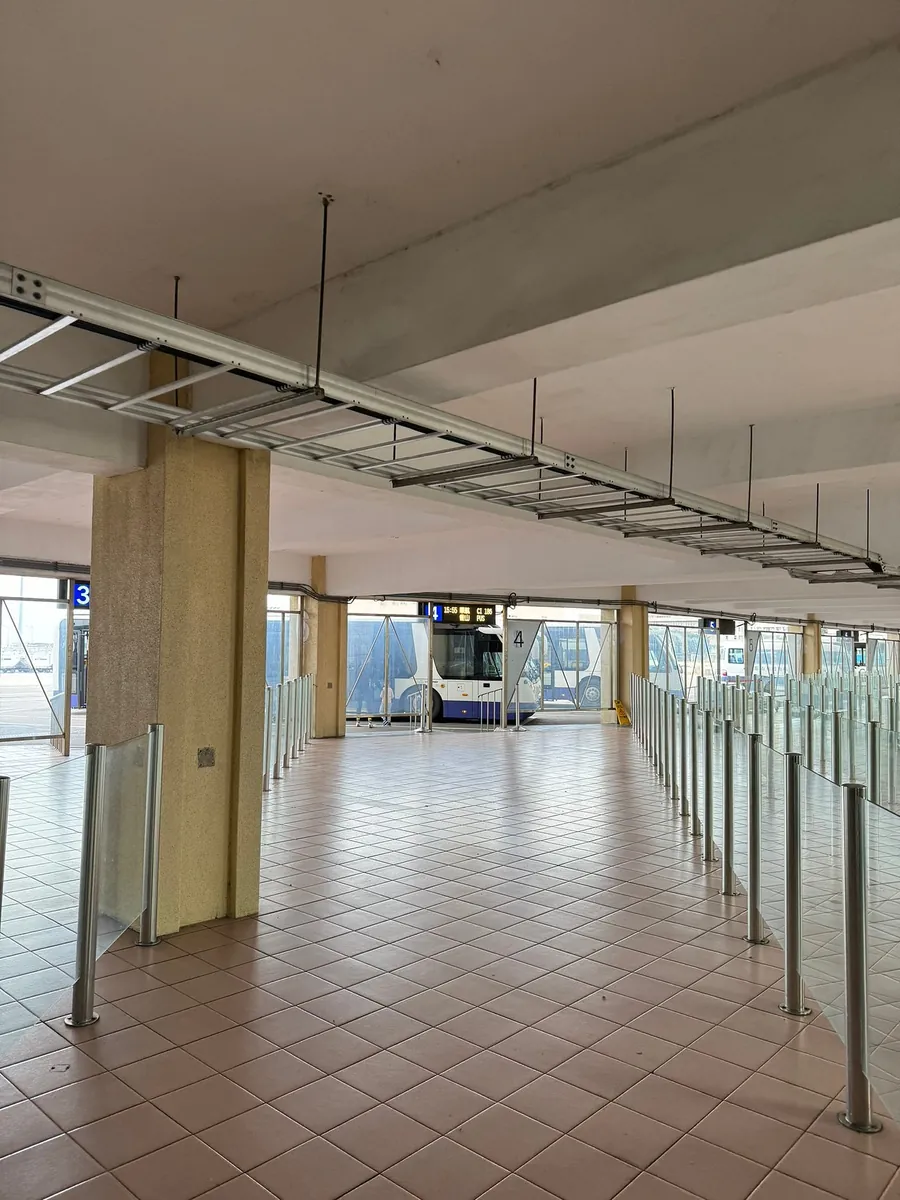
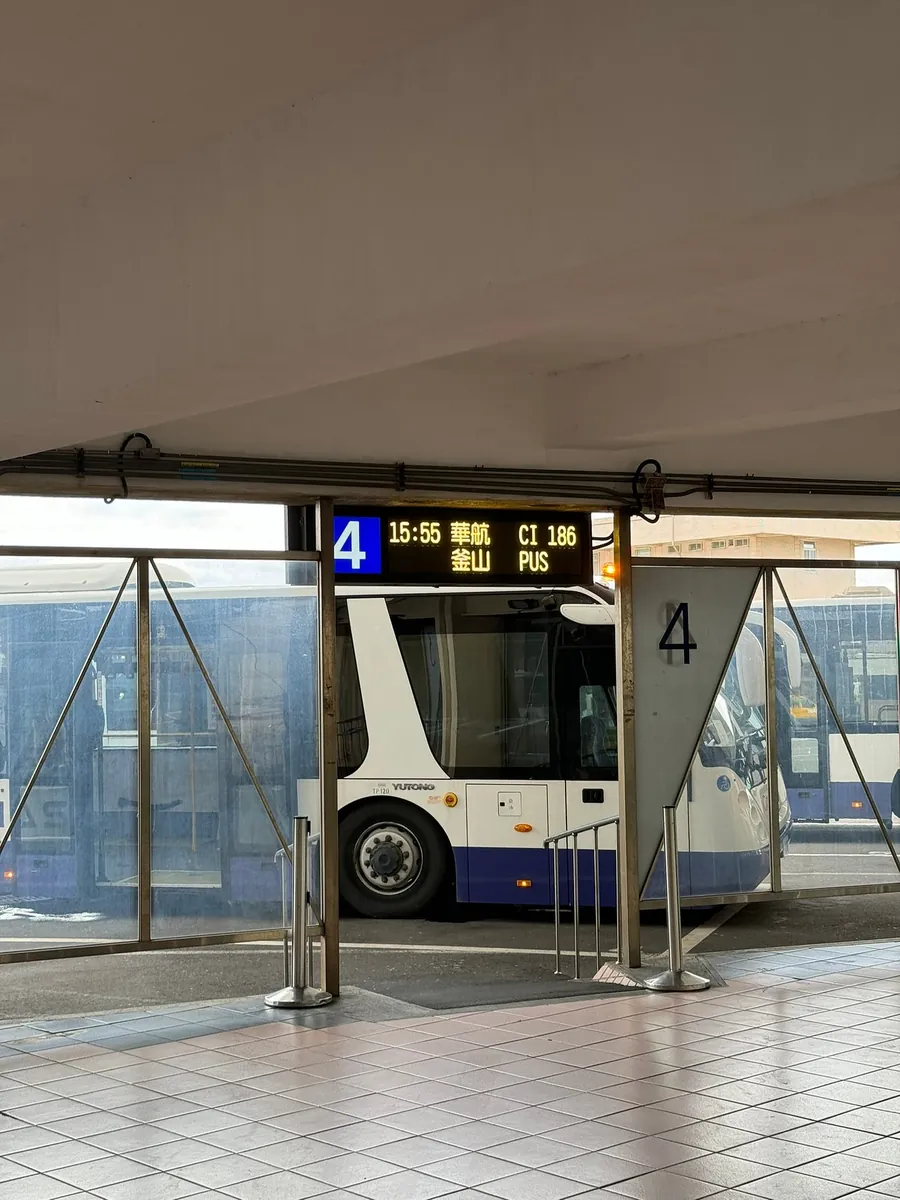
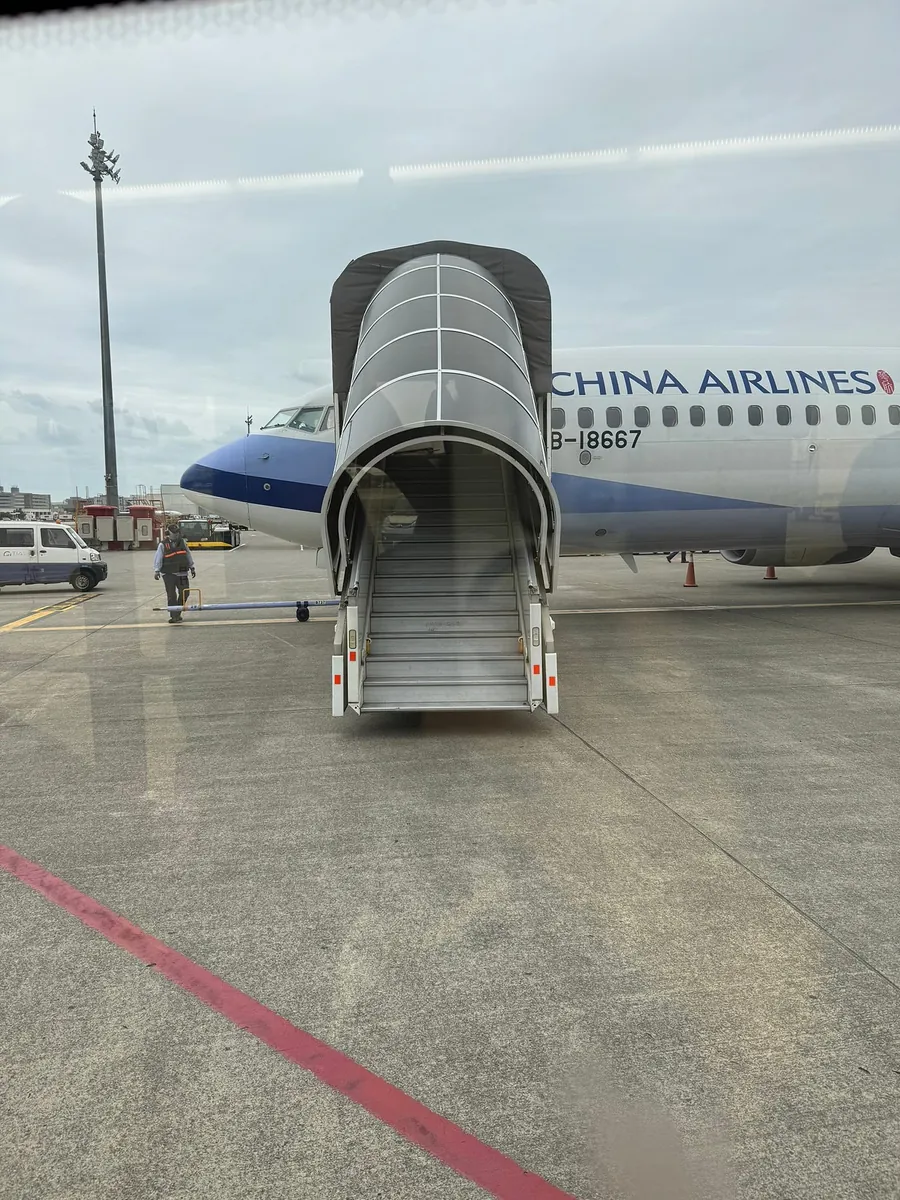
Terminal BR requires a shuttle bus transfer to the boarding gate. There are very few passengers on the flight to Busan! As shown in the picture, it looks like fewer than 30 people.
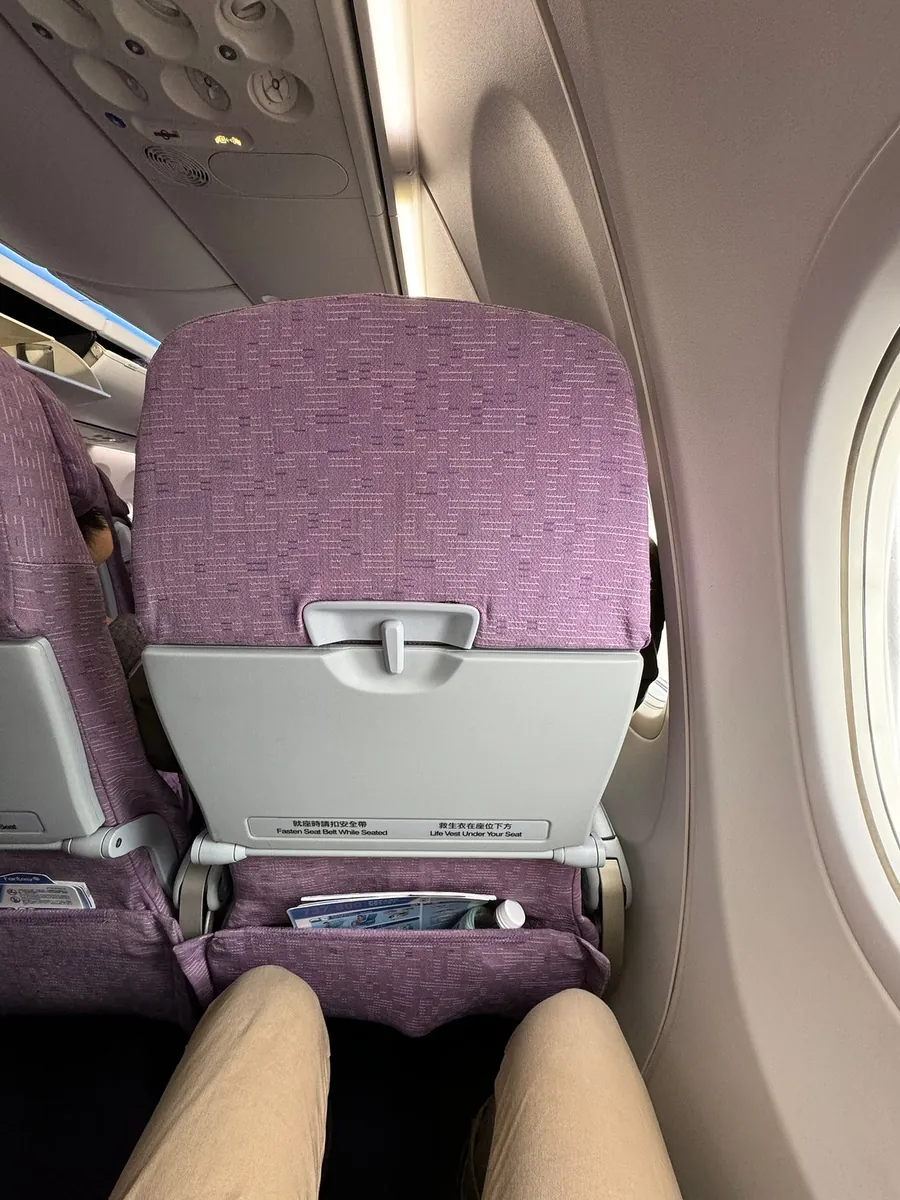
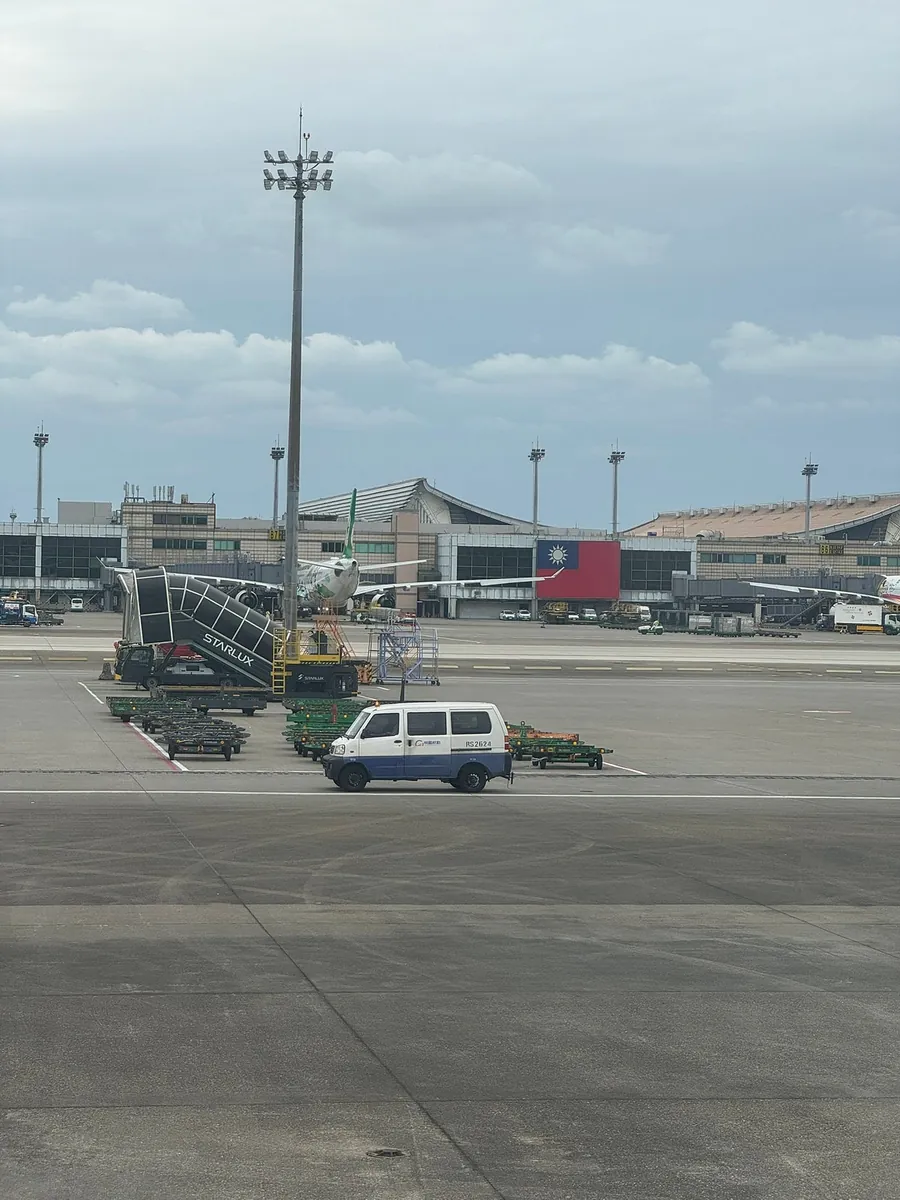
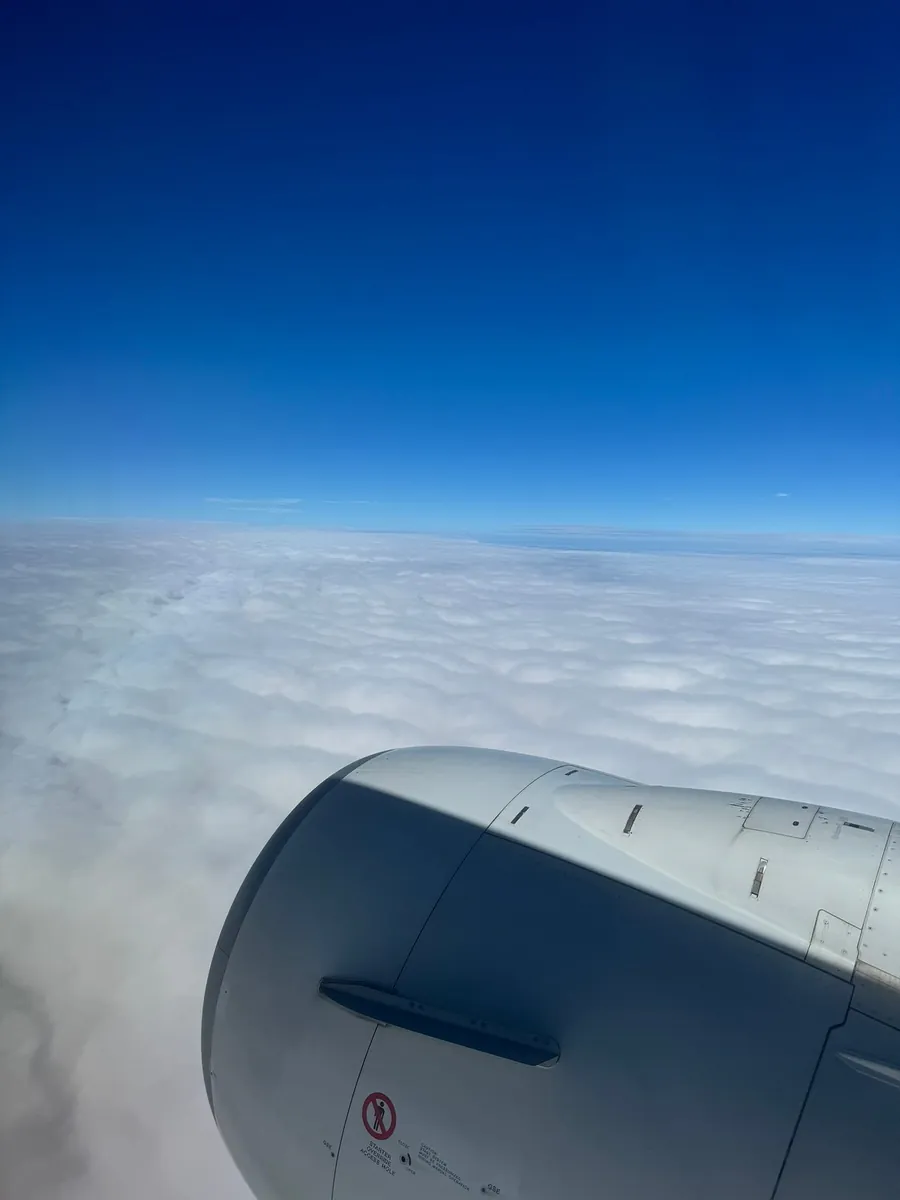
This China Airlines flight to Busan uses a 737–800 medium-sized aircraft with no entertainment screens. Bye Taiwan!
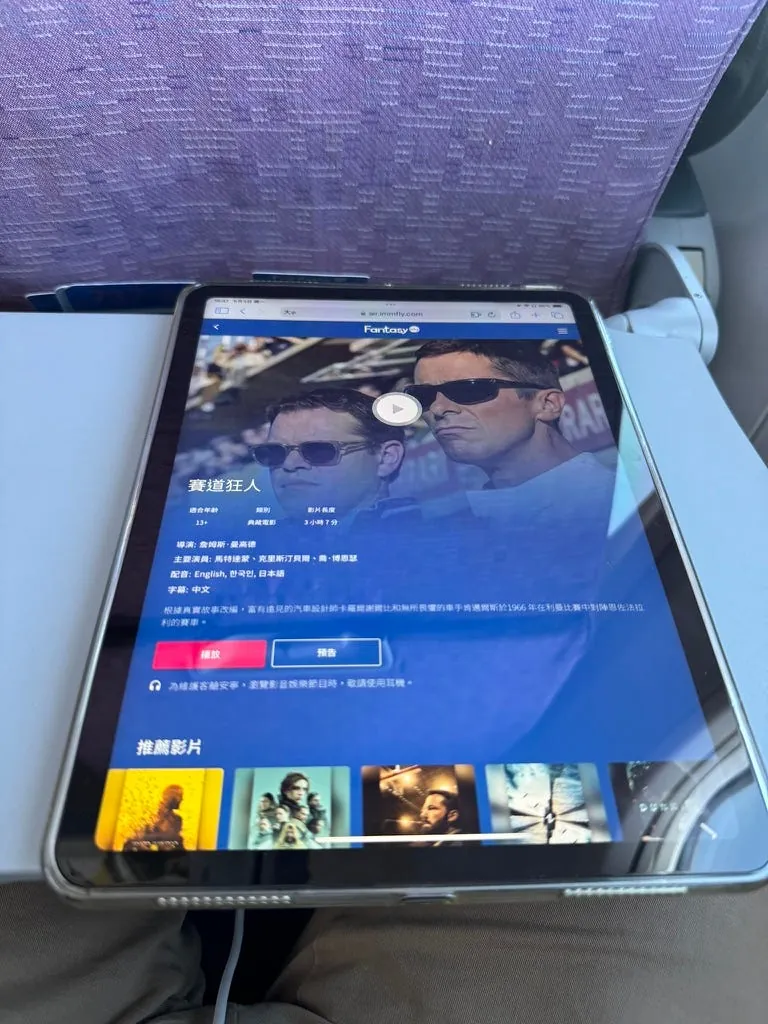
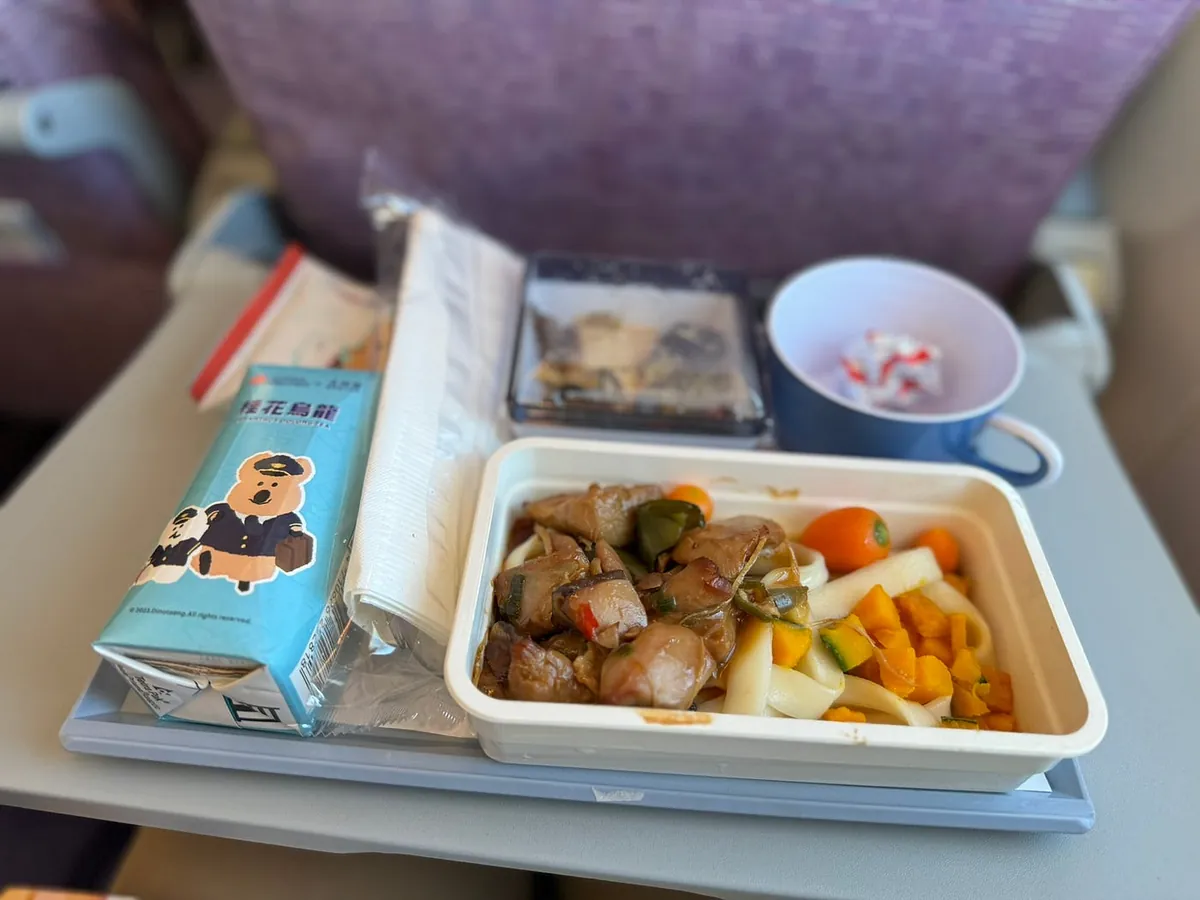
You can only access entertainment content via the onboard Wi-Fi, and there are quite a few movies! One of them is “Rush.” The in-flight meal was Three-Cup Chicken Noodles (pretty bad), but unexpectedly, there was a collaboration with China Airlines x Wutonghao x Dinotaeng Quokka, and I received a quokka snack.
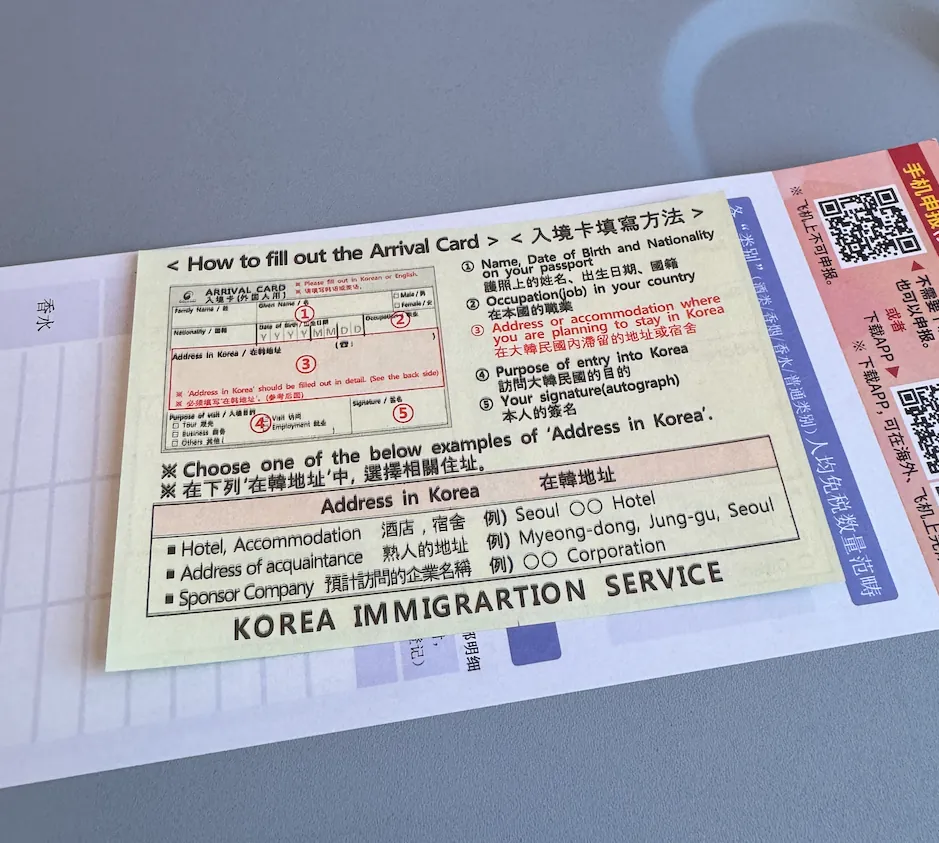
Fill out the immigration card and customs declaration form. You can pre-apply for the quarantine QR code. If not applied, you need to fill out an additional quarantine form.
19:05 Arrive at Busan Gimhae International Airport PUS, South Korea
The daytime temperature in Korea is around 20–25°C, and it may drop below 20°C at night; it’s somewhat like autumn in Taiwan.
19:20 Exit the airport
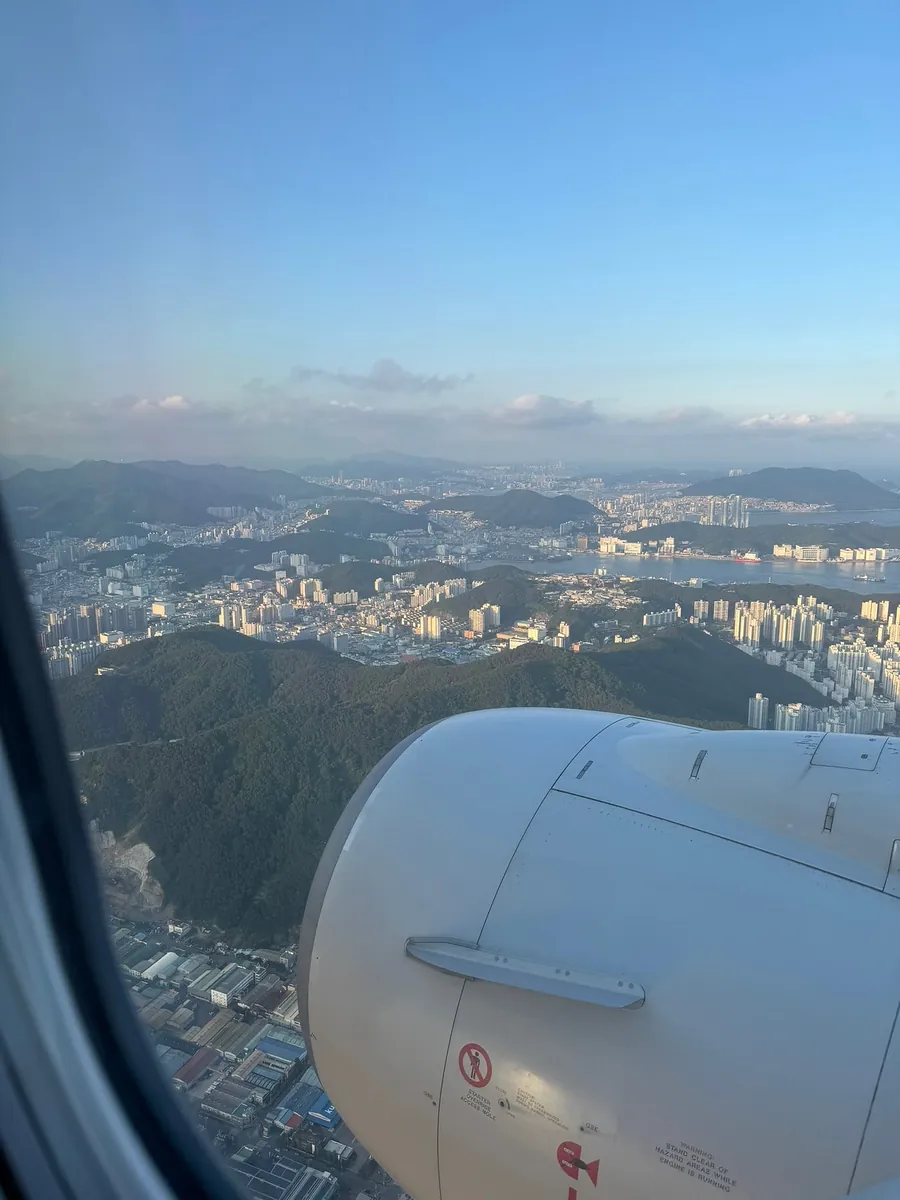
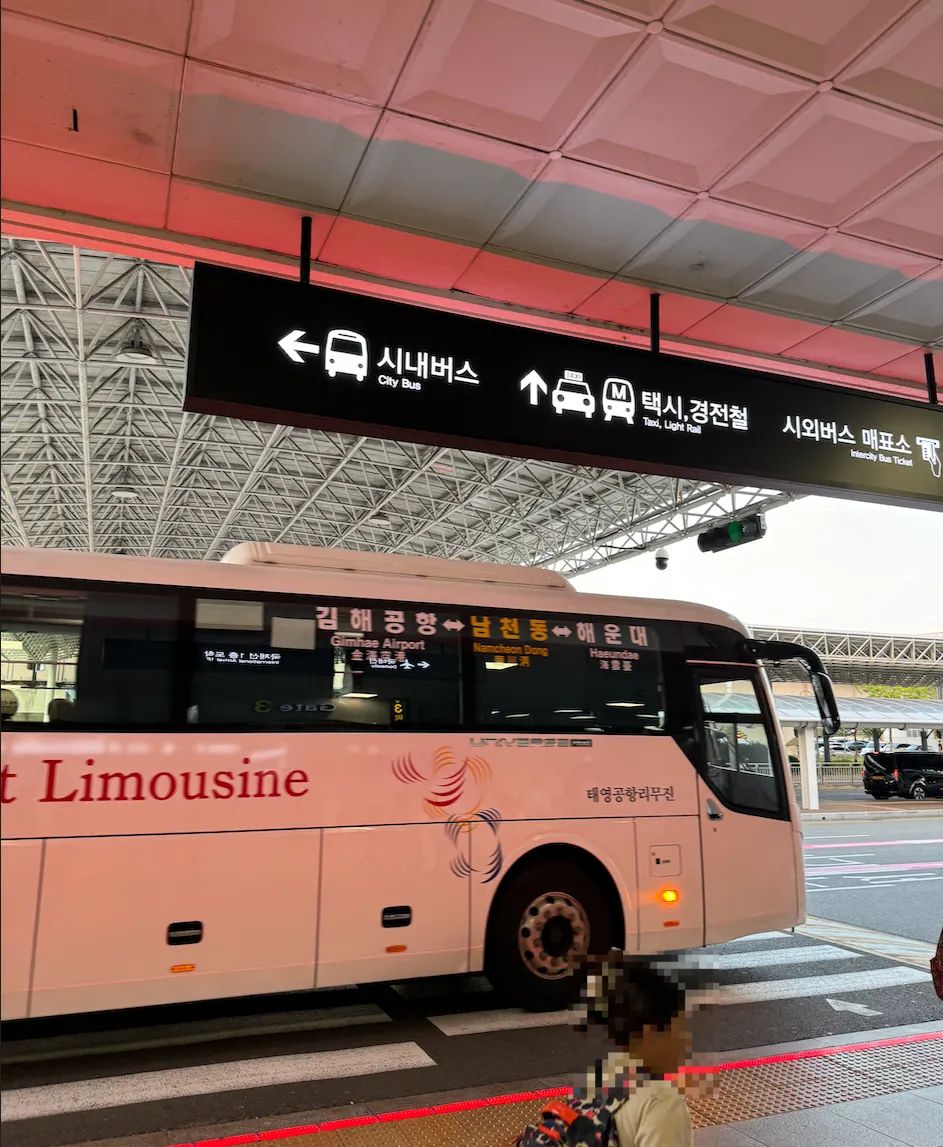
Around 19:20, we cleared immigration and picked up our luggage to exit the airport.
At that time, I misunderstood the relationship between wowpass and tmoney, thinking there were only two combined cards. My understanding was that wowpass is a cash card for loading, currency exchange, withdrawal, and shopping, while tmoney is a transportation card, and wowpass includes tmoney; actually, you only need to buy tmoney, not wowpass. I didn’t realize this and kept looking for wowpass instead of tmoney. There are no wowpass machines at Busan International Airport, so I had to buy tickets with cash and took the train all the way to Busan.
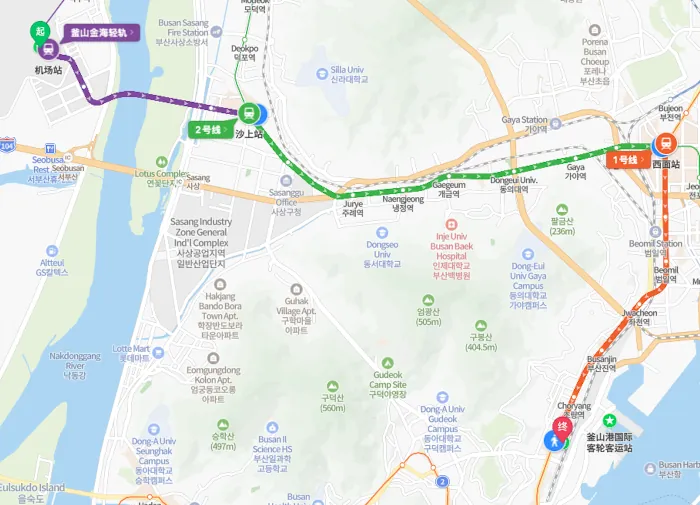
From Gimhae Airport to Busan Station, you need to transfer three times on the subway; the trains are not crowded, so there is no need to worry about congestion.
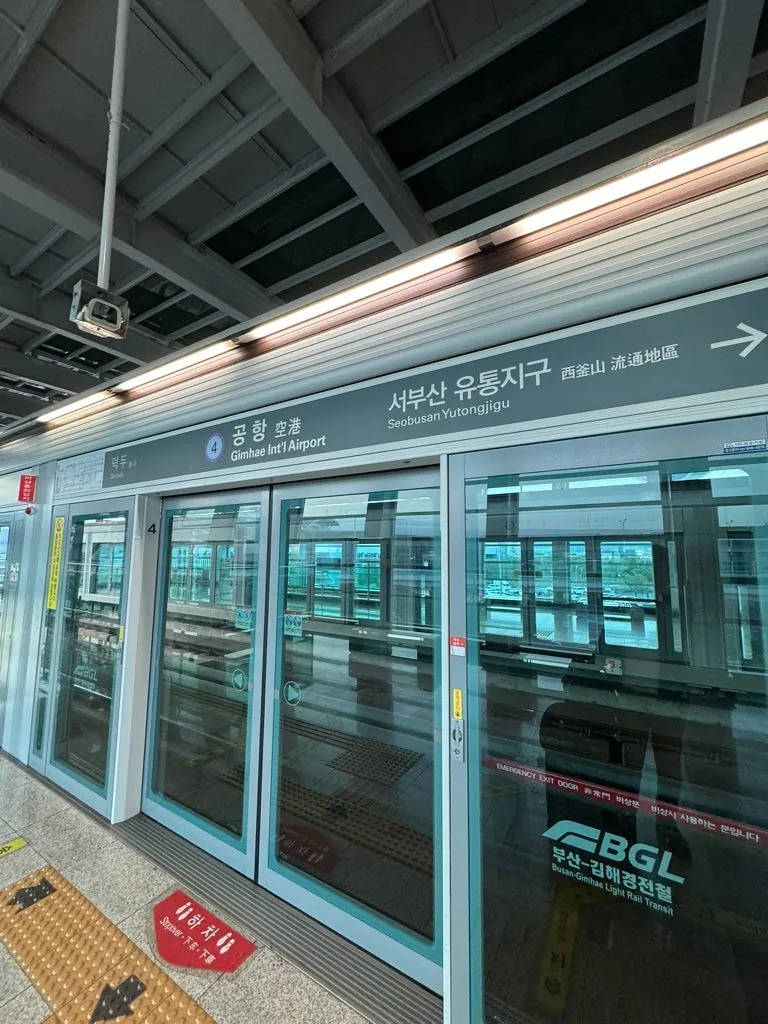
-
If you have a transportation card, you can simply tap to enter.
-
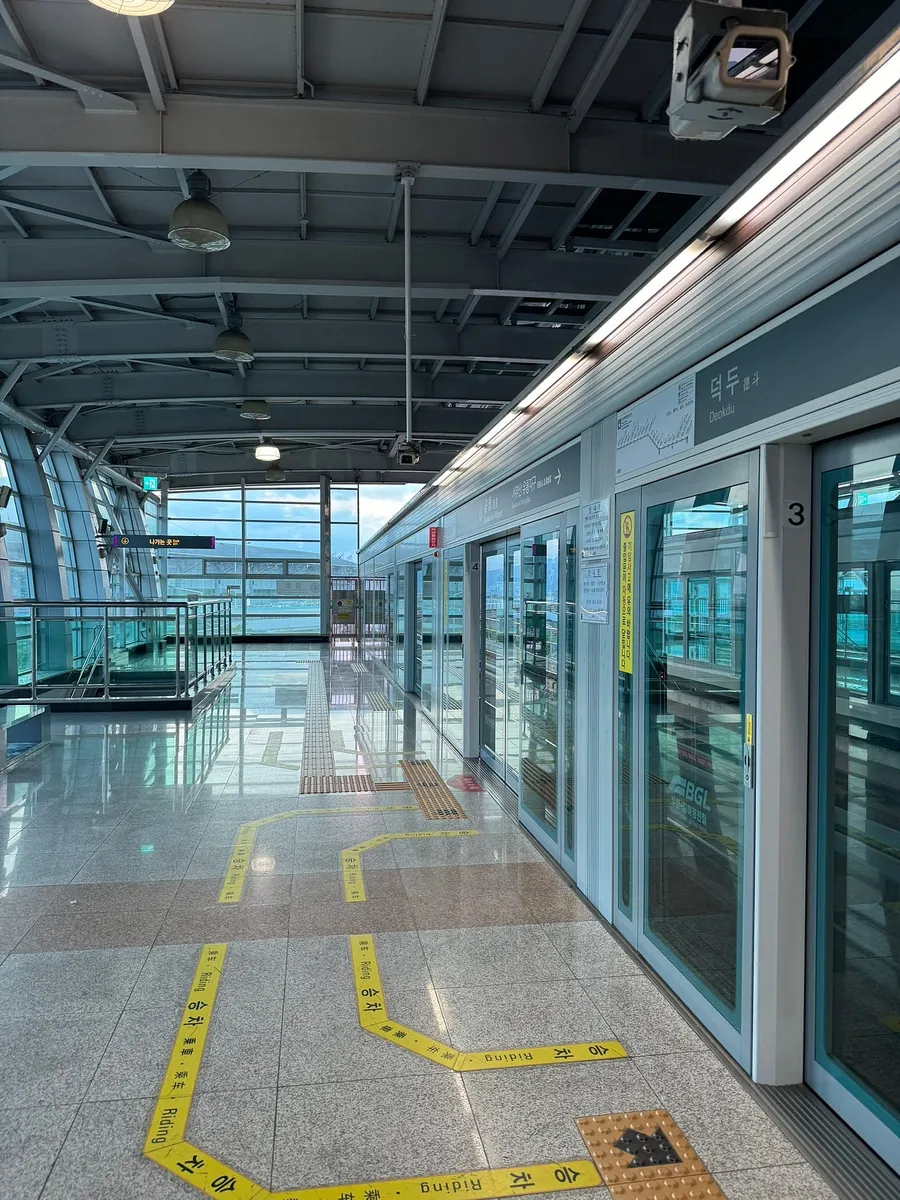
First ticket: Busan-Gimhae Light Rail (Purple Line) from Airport Station to Sasang Station
-
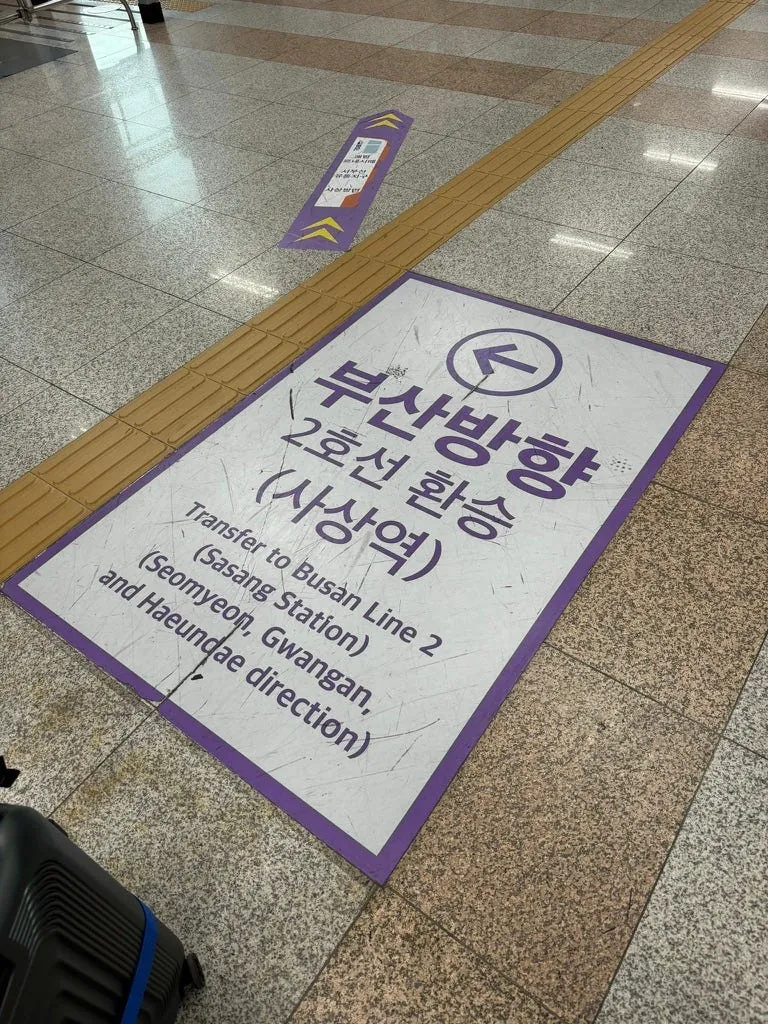
Follow the floor signs to the platform
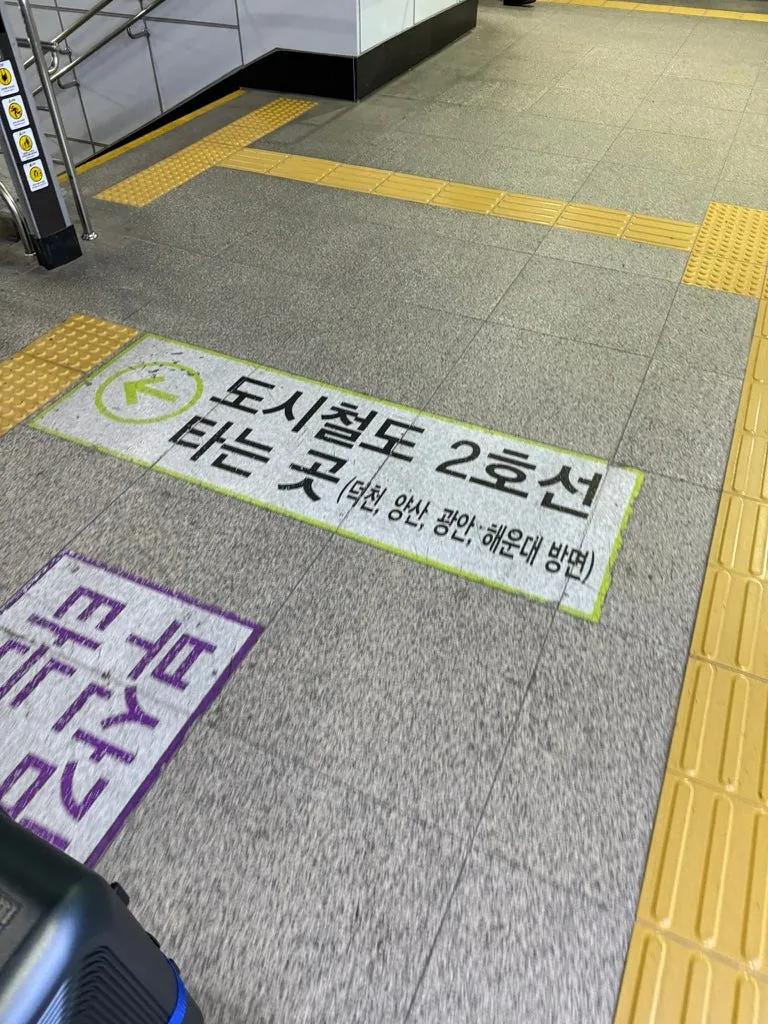
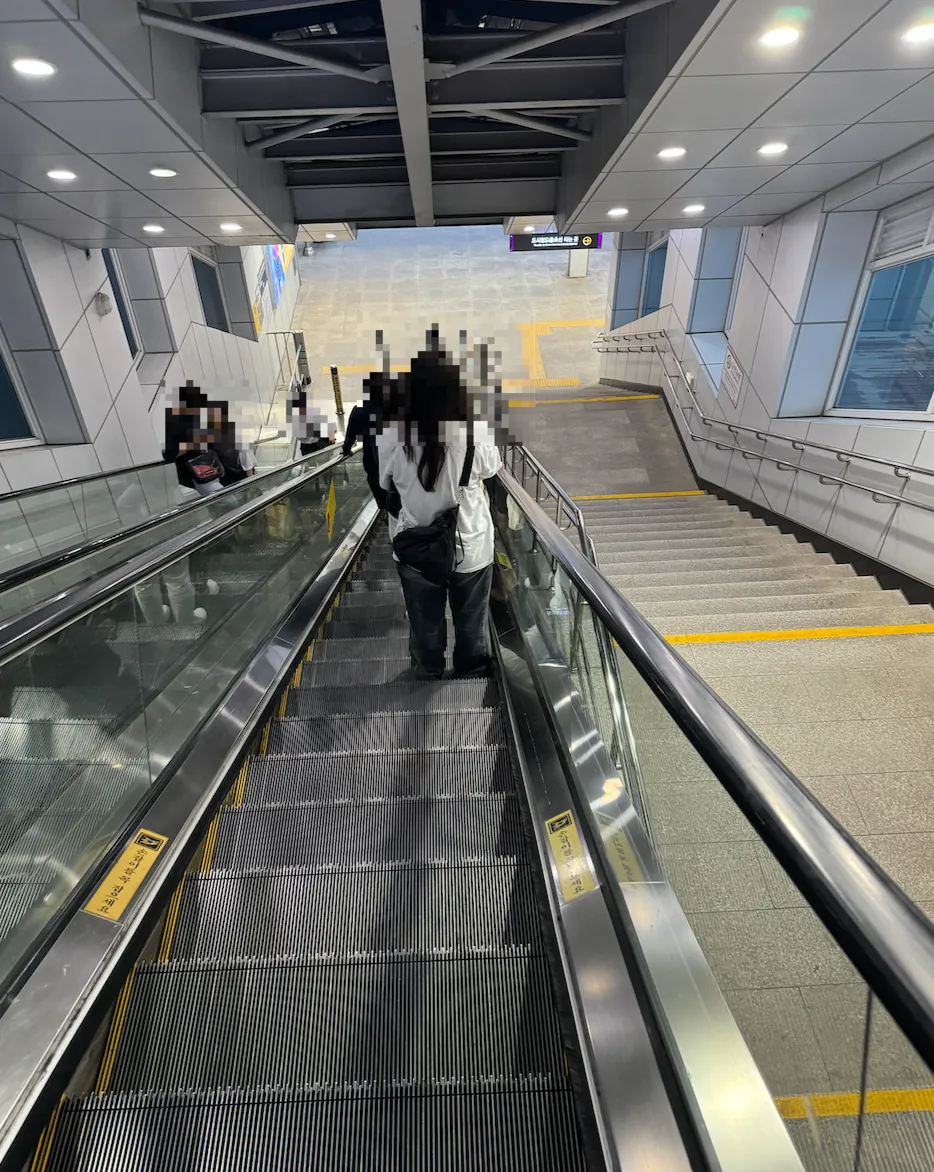
-
Take the purple line to Sasang Station, then get off and follow the signs to transfer to the green line.
-
Take Green Line 2 to Seomyeon Station.
-
Buy a second ticket to Seomyeon Station.
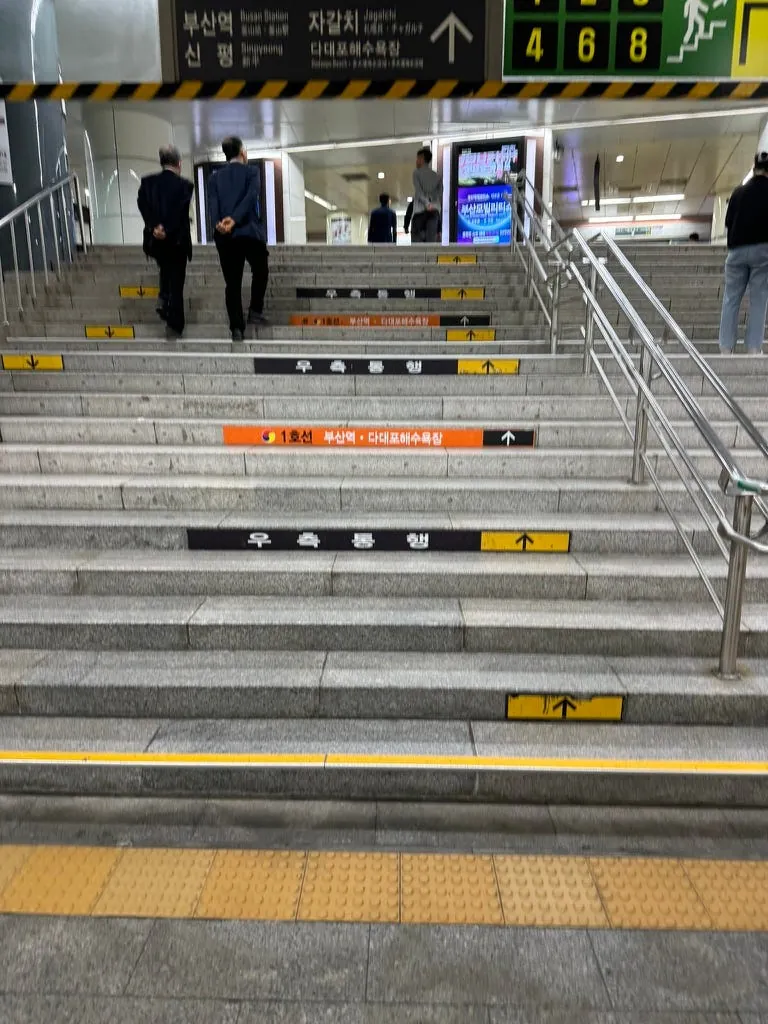
-
Take the green line to Seomyeon Station, get off, and walk straight to the orange line platform.
-
Take the Orange Line 1 to Busan Station and get off.
You don’t need to exit the platform when transferring from the green line to the orange line. I’m not sure if you could buy a ticket to Busan Station on the green line at that time, as I didn’t check carefully. Therefore, when exiting at Busan Station, I couldn’t leave and had to get a manual ticket adjustment to exit.
20:20 Arrive at Busan Station
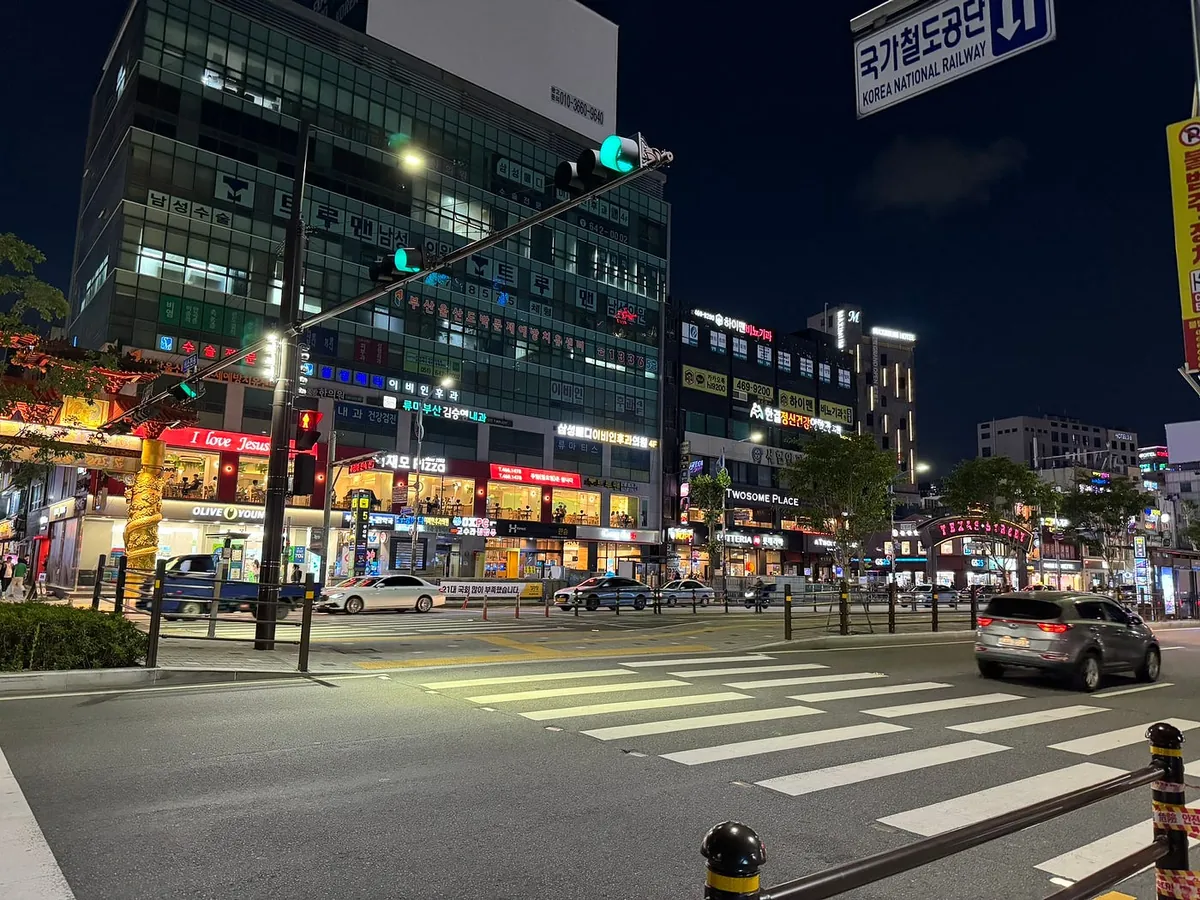
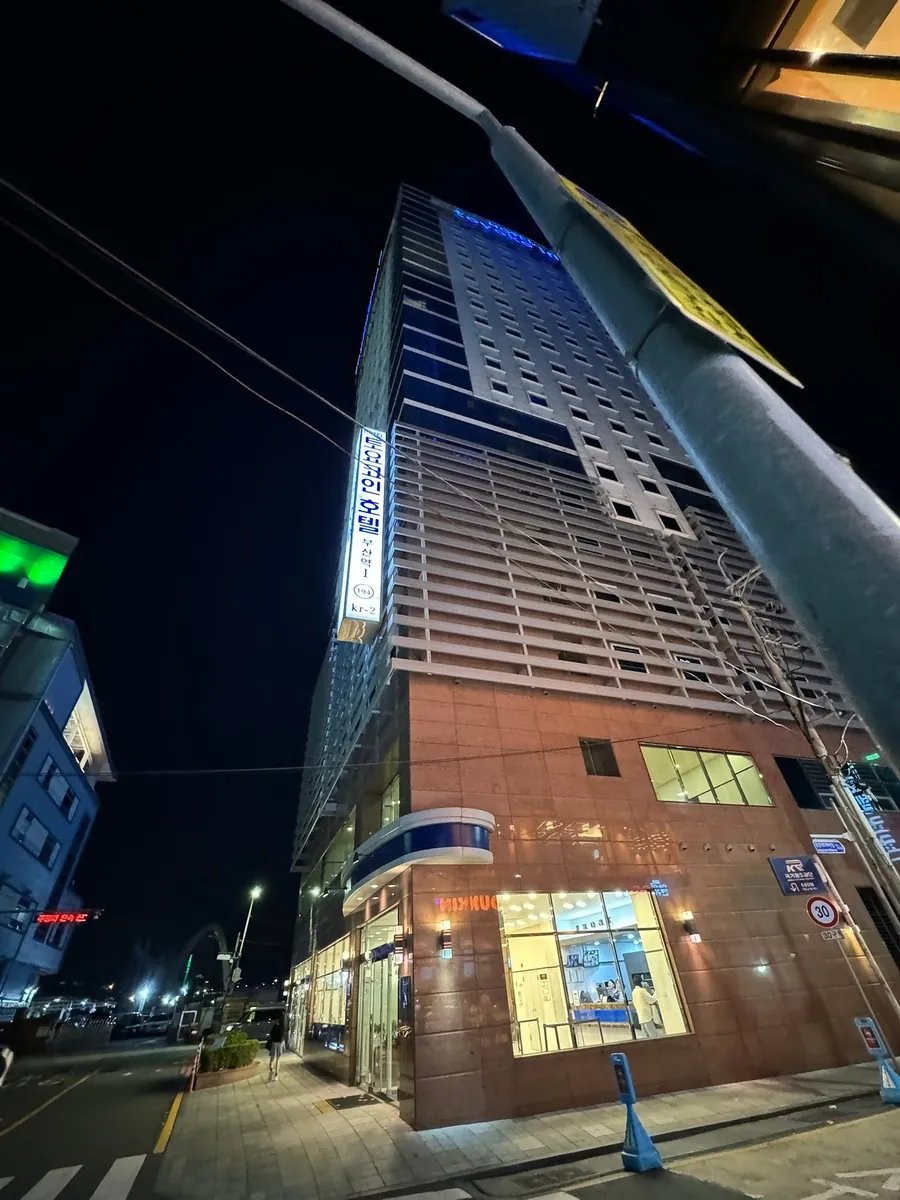
Exit the station, and you’ll find Toyoko INN Busan Station No. 1.
Put down the luggage and go out to find food.
- Fortunately, the hotel has 100V Taiwanese power outlets/USB ports, so no adapter is needed.
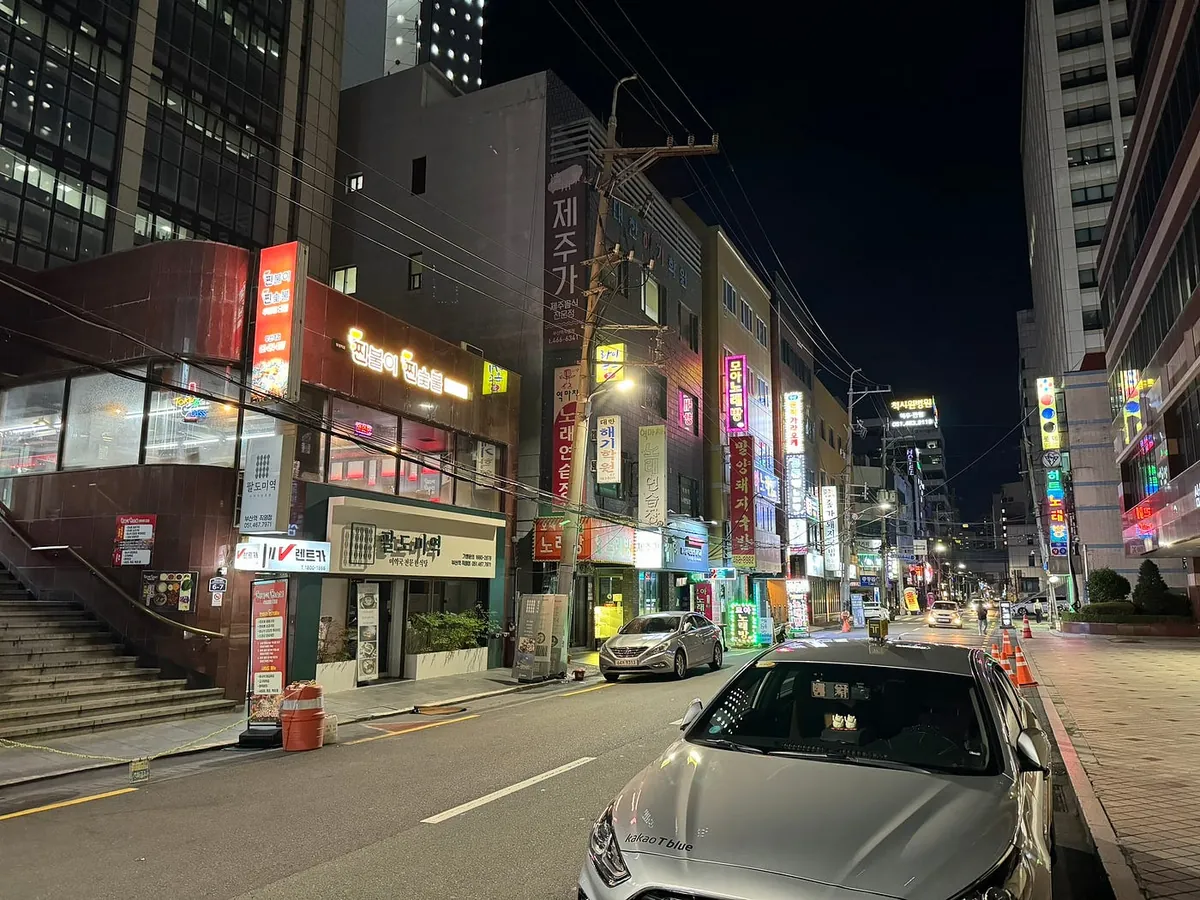
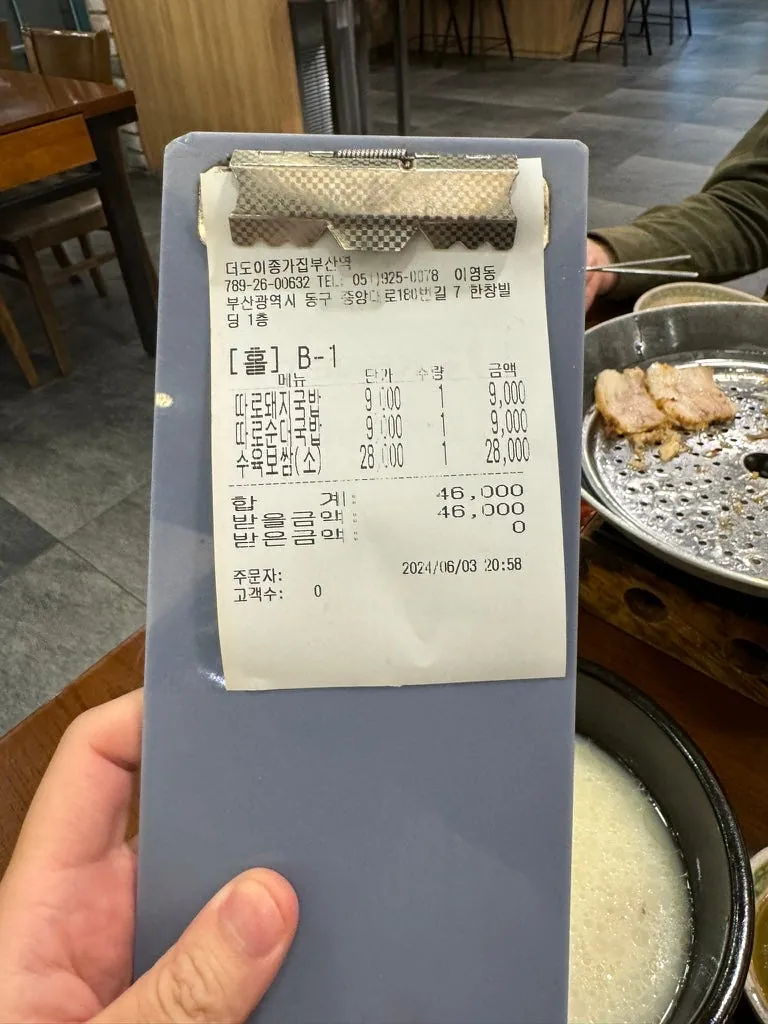
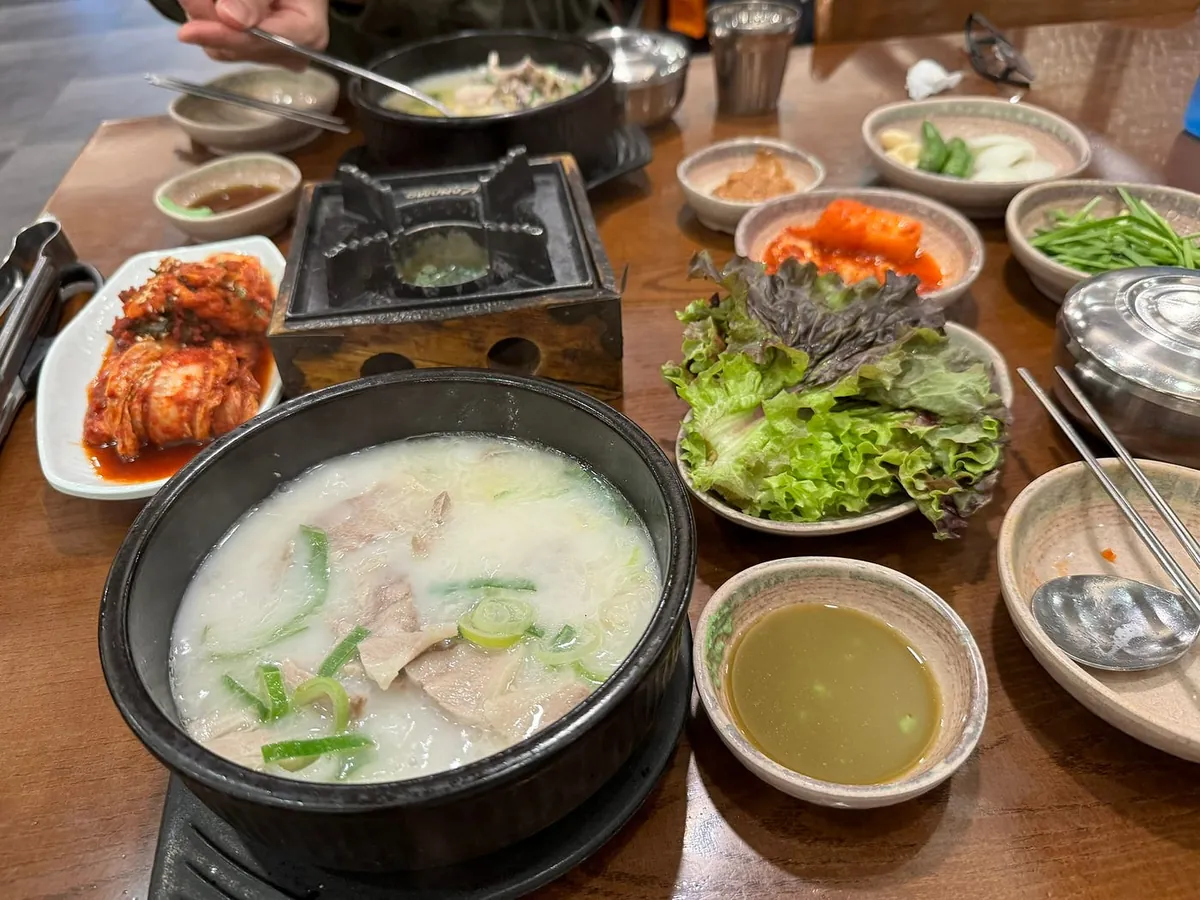
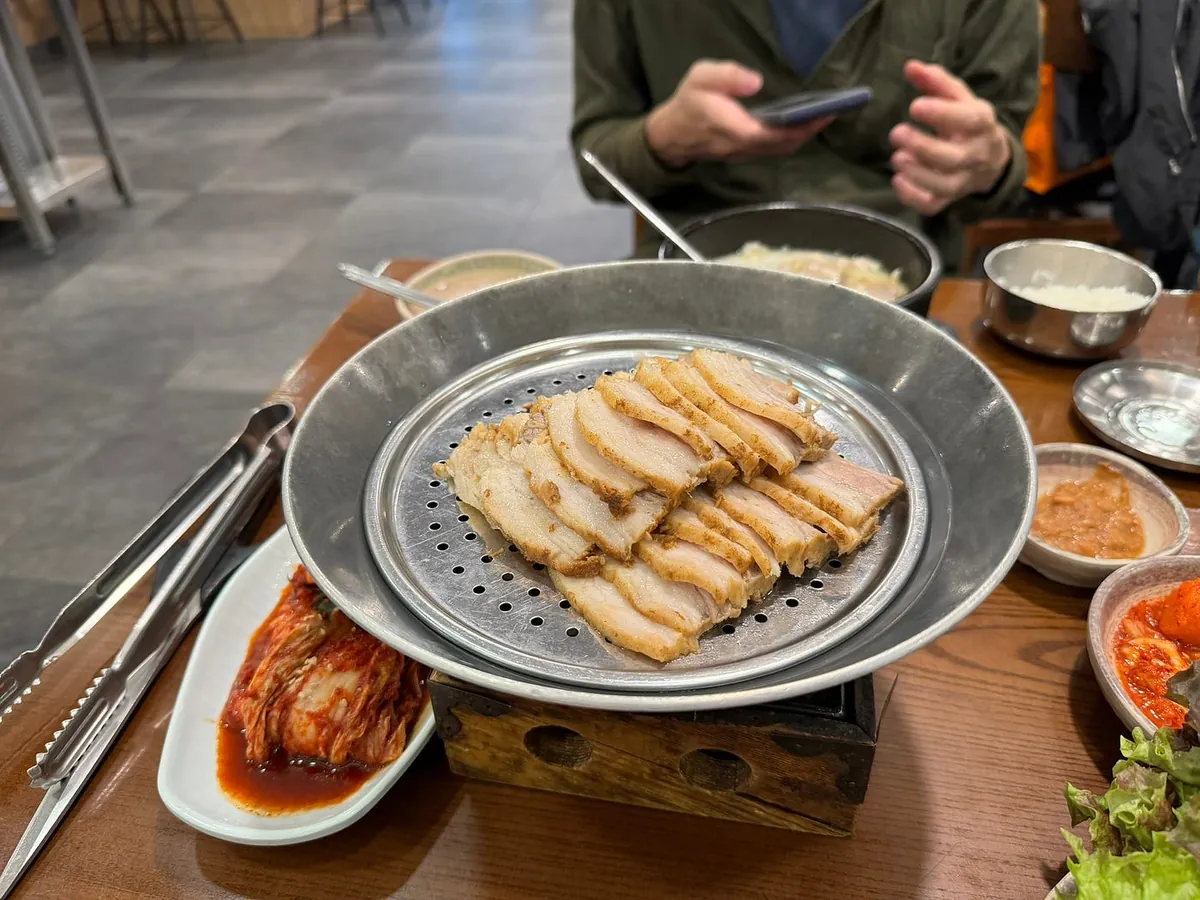
Because it was late, nearby yakiniku restaurants were closed; I randomly chose a pork soup rice restaurant to eat ( The Doi Jongga Dwaejigukbap Busan Stn. ).
-
Pork soup with rice has a strong pork flavor. The broth is oily but not thick, and it pairs well with rice.
-
Grilled pork neck on the pan, wrapped in lettuce with kimchi, is tasty, but eating too much can feel greasy.
-
Two servings of soup rice plus one plate of pork neck meat cost a total of 46,000 KRW.
Wowpass / Tmoney
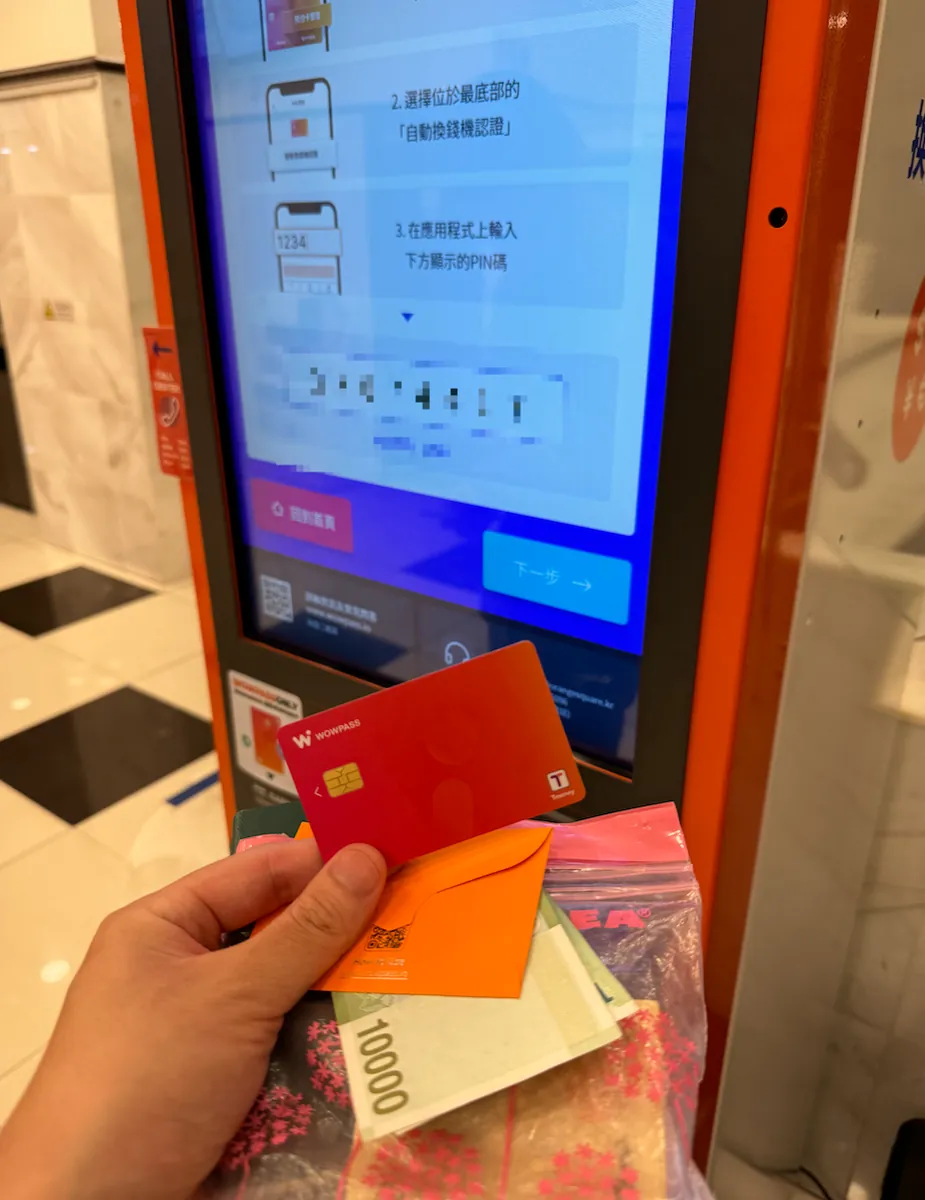
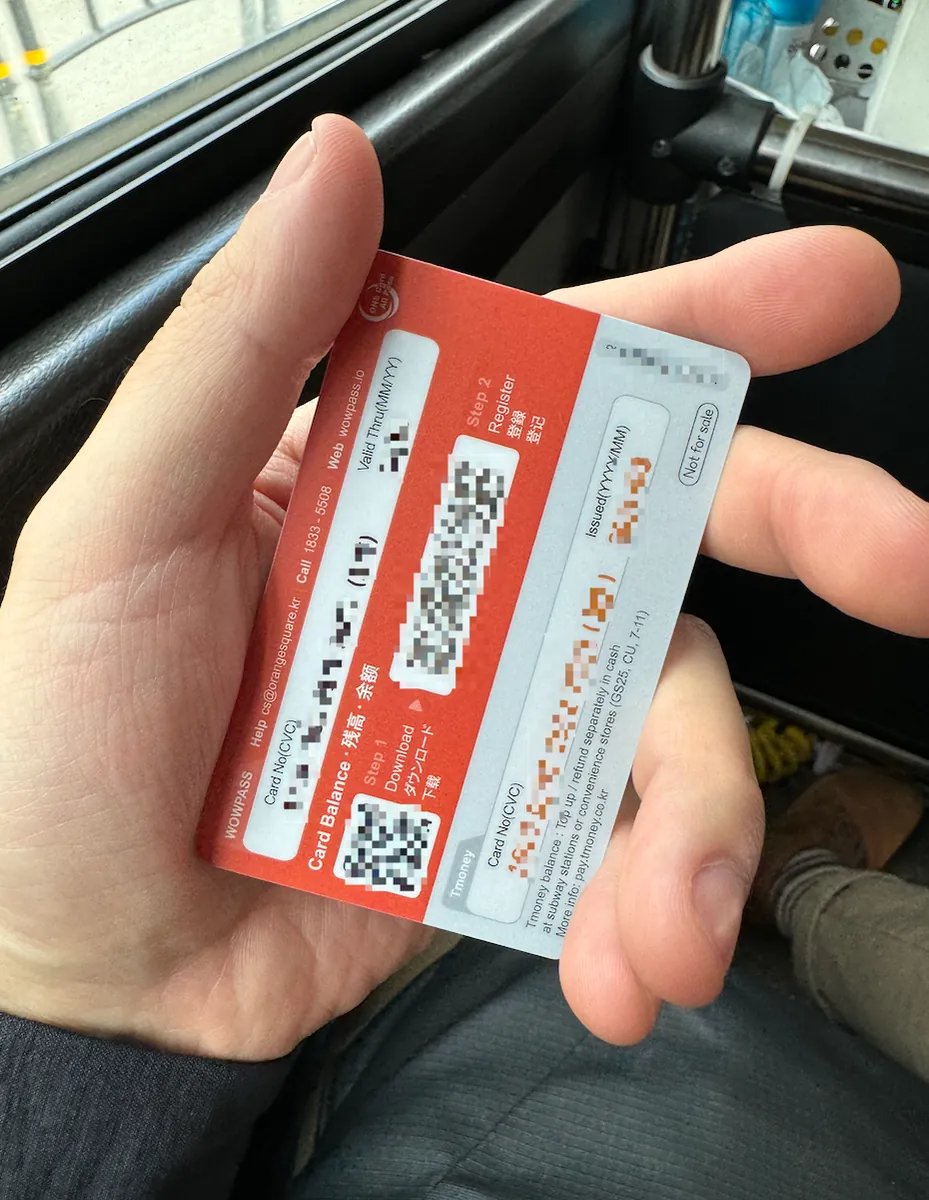
The hotel lobby has a wowpass machine. Scan your passport and follow the instructions to complete the process, and the machine will issue a wowpass+tmoney combo card.
-
The upper part is Wowpass
-
The chip is Wowpass
-
Wowpass balance and Tmoney are separate.
-
Wowpass can be recharged via Wowpass machines, directly with TWD, online credit card top-up, currency exchange, and withdrawal (with fees).
-
Wowpass has an expiration date , long periods of inactivity may cause the balance to disappear
-
The chip can be used for card payments at merchants.
-
Tmoney can be recharged at convenience stores or subway recharge machines.
-
Temporarily unable to top up Tmoney via Wowpass (officially stated it will be possible in the future)
-
Wowpass card issuance requires a 5,000 KRW deposit, but it seems this step can be skipped. Does skipping mean the card is issued for free?
-
The bottom half is Tmoney. Remember to use the bottom half when taking the subway or bus. The first time I used the whole card, it kept failing, probably because it was detected as Wowpass.
-
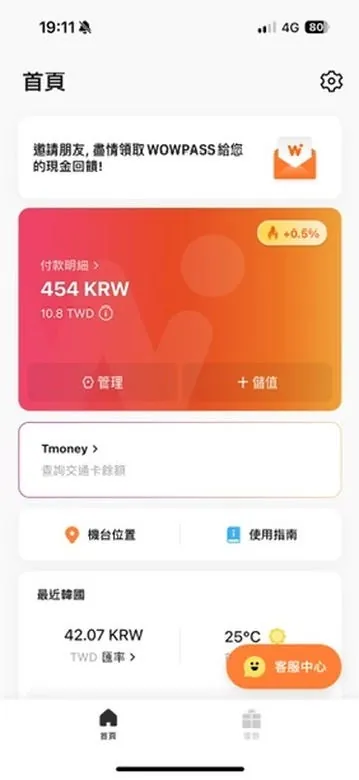
After receiving the physical card, you can link it in the Wowpass App
-
The Wowpass App can check the Wowpass balance
-
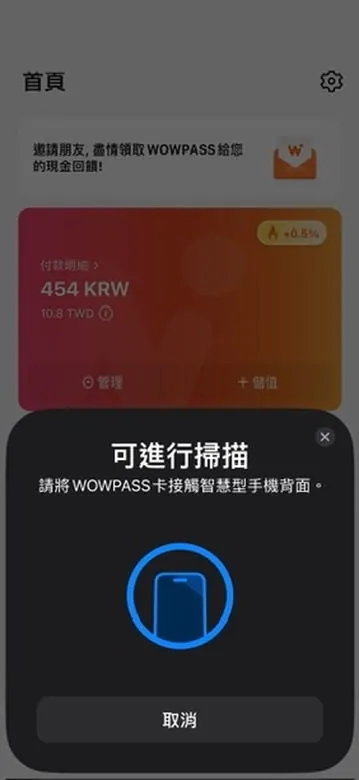
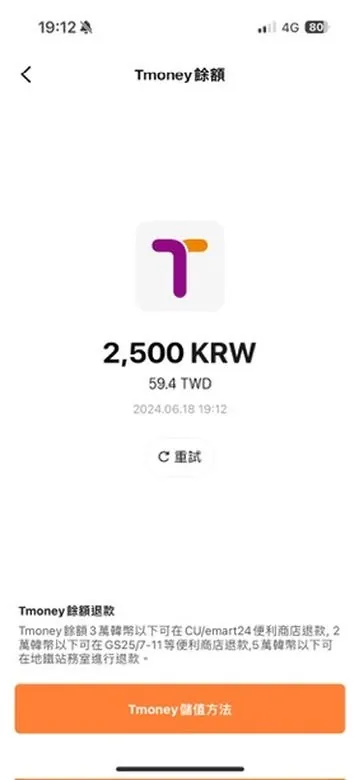
Tmoney balance can only be checked by tapping the card (quite unique!)
-
As shown in the image above, Wowpass balance is 454 KRW / Tmoney balance is 2,500 KRW
If you want to check tmoney top-up and deduction details, you need to install the App (BucaCheck):
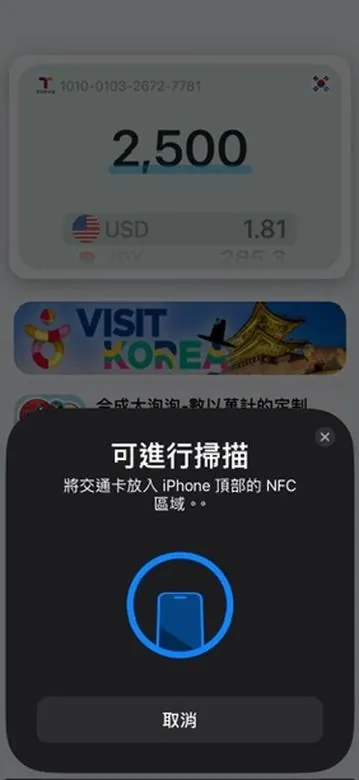
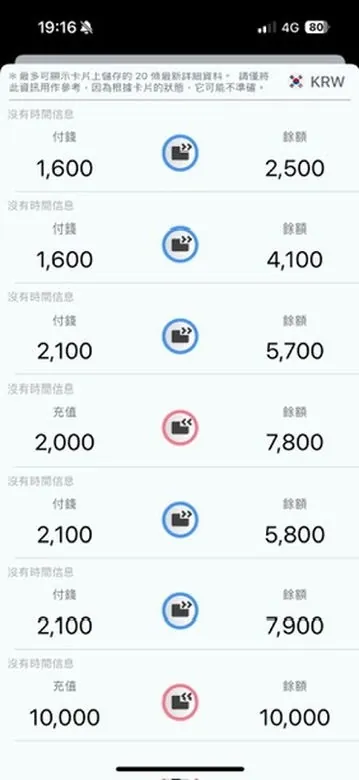
- It also relies on contactless card reading.
If this travelogue is helpful to you, you can enter my invitation code
373TBH87when registering on Wowpass.
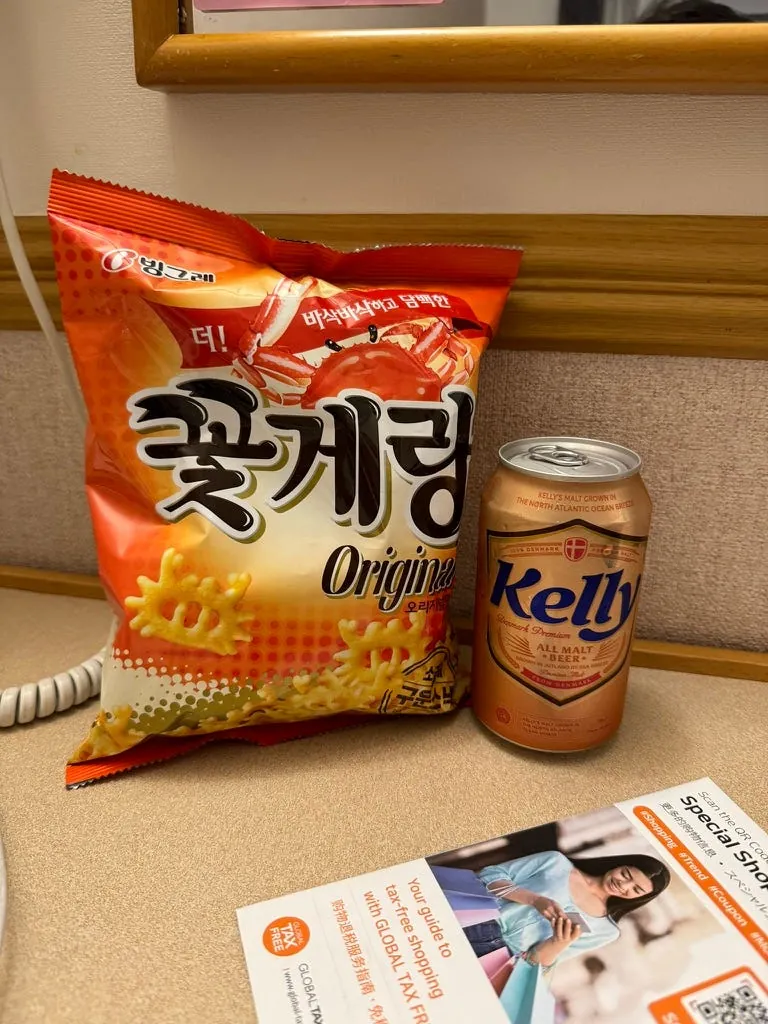
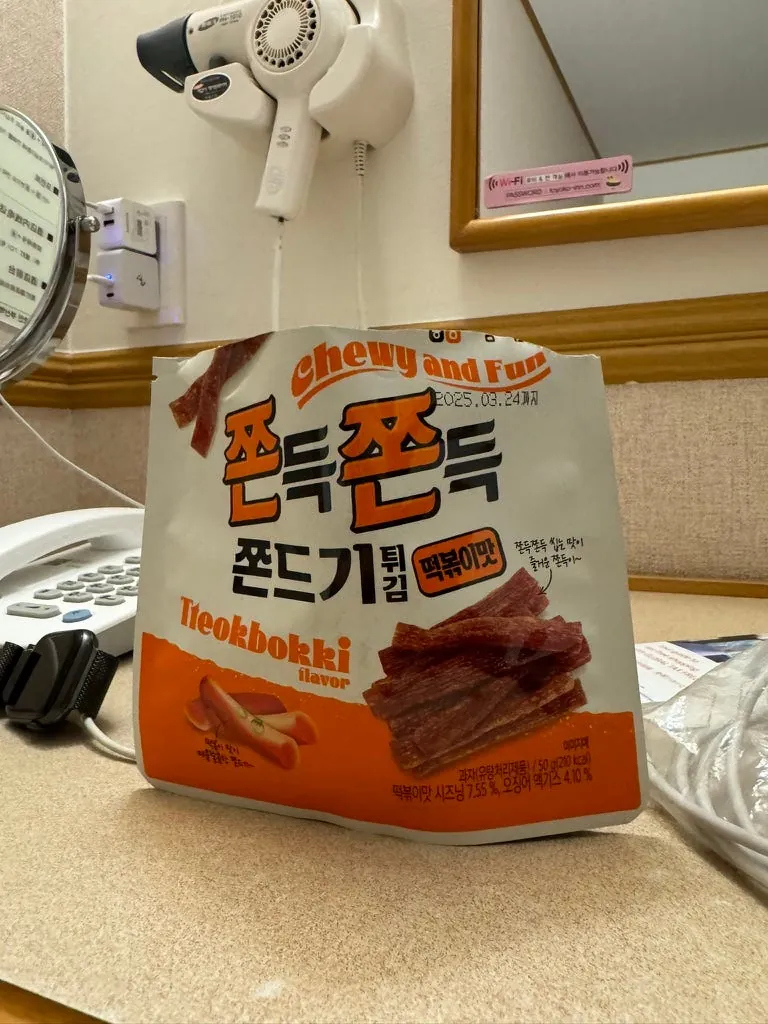
After dinner, we went to GS 25 to buy Korean beer and snacks. Kelly was tasty, the one on the right is like spicy strips but less salty and spicy, perfect as a drinking snack, while the crab-flavored crackers were just okay.
Resting, ending the busy Day 1.
Day 2 Haedong Yonggungsa Temple, Haeundae, Boarding the New Camellia Cruise Ship
Haedong Yonggungsa Temple
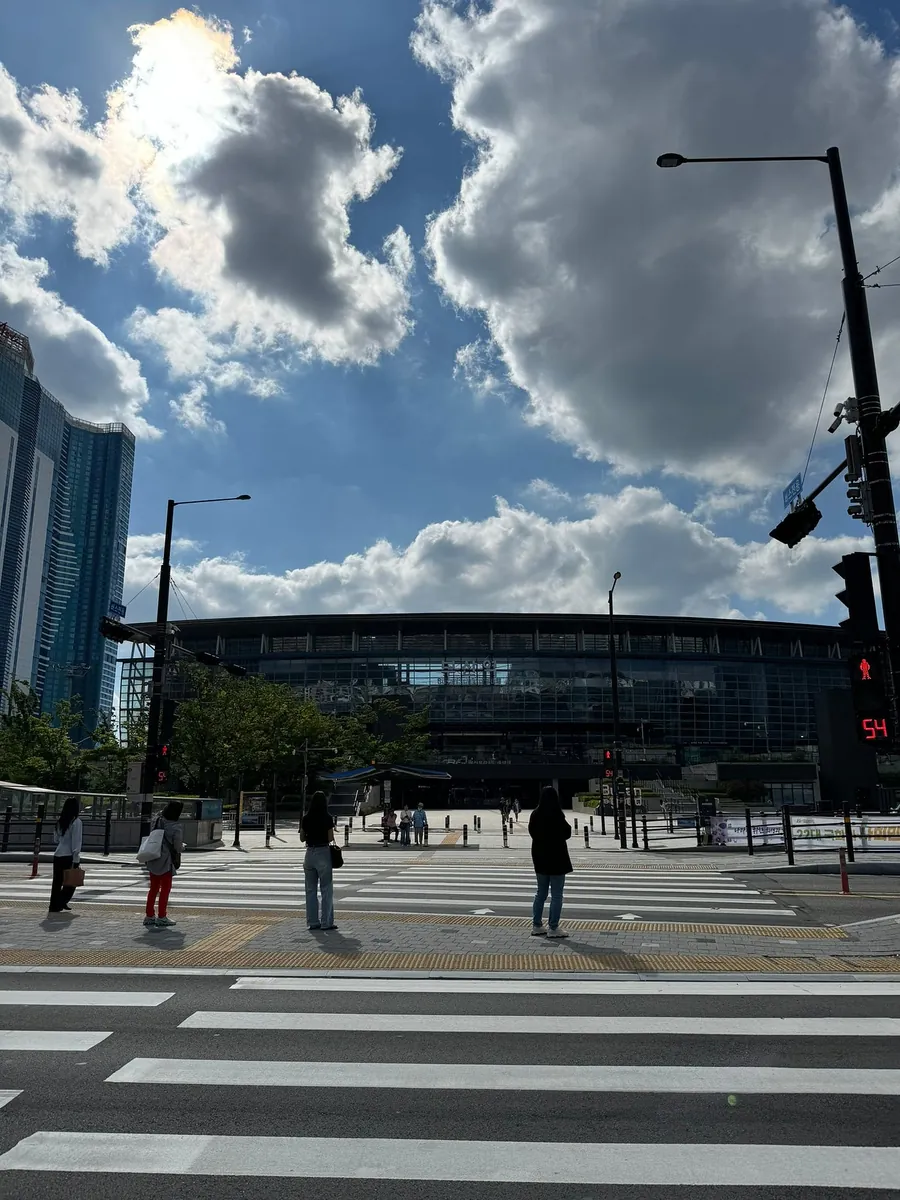
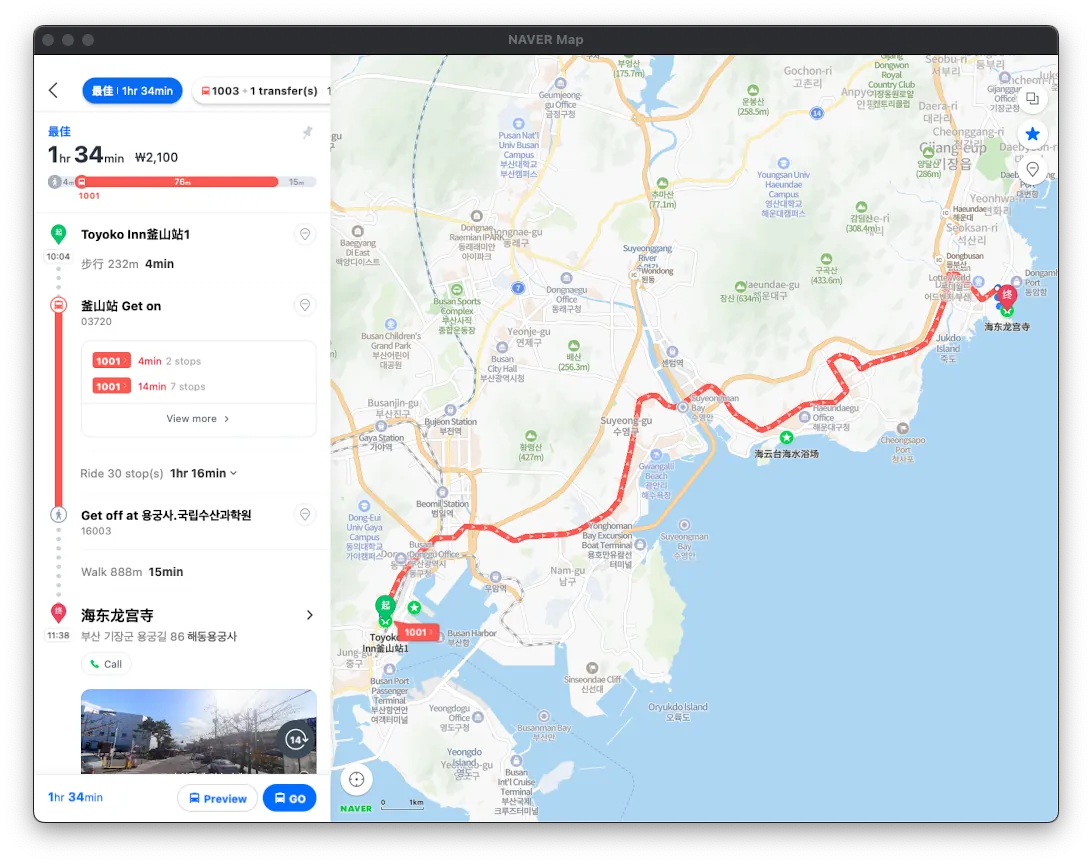
Early in the morning, take bus 1001 from Busan Station bus stop to Haedong Yonggungsa Temple; frequent departures and not crowded.
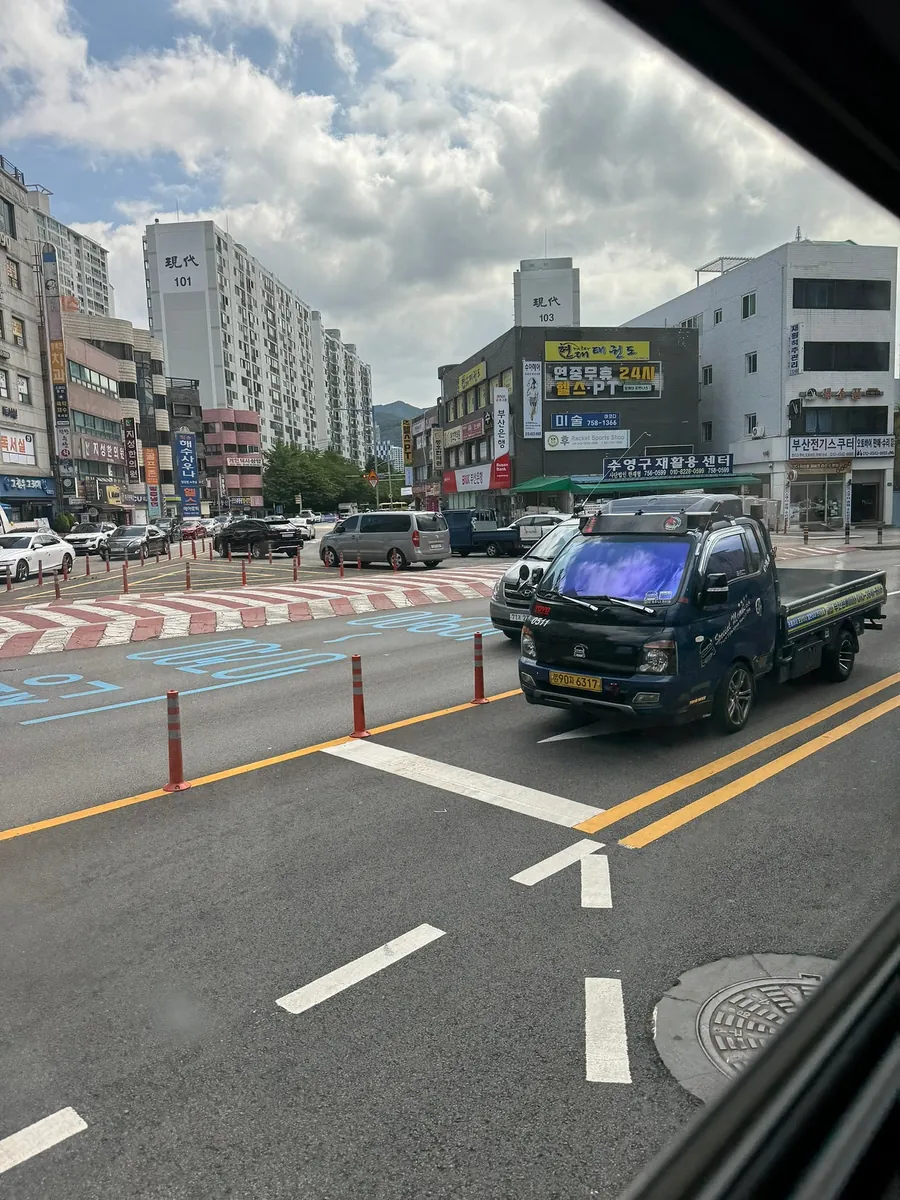
The trip is a bit long, about 1.5 hours. Korean buses are similar to those in Taiwan, and the drivers tend to drive quite fast. Normally, passengers board from the front and exit from the rear, but some buses allow boarding from the rear and exiting from the front.
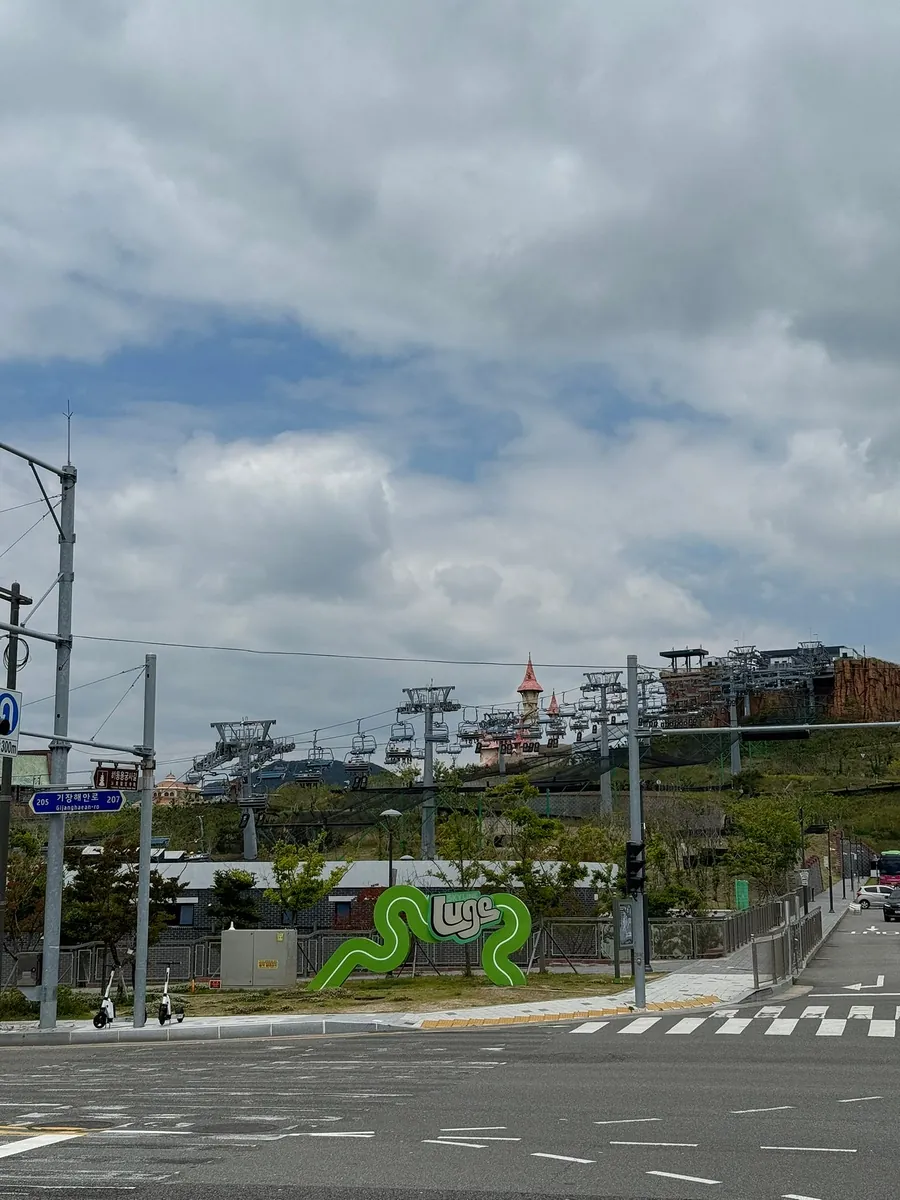
Right across from the drop-off point is Skyline Luge Busan.
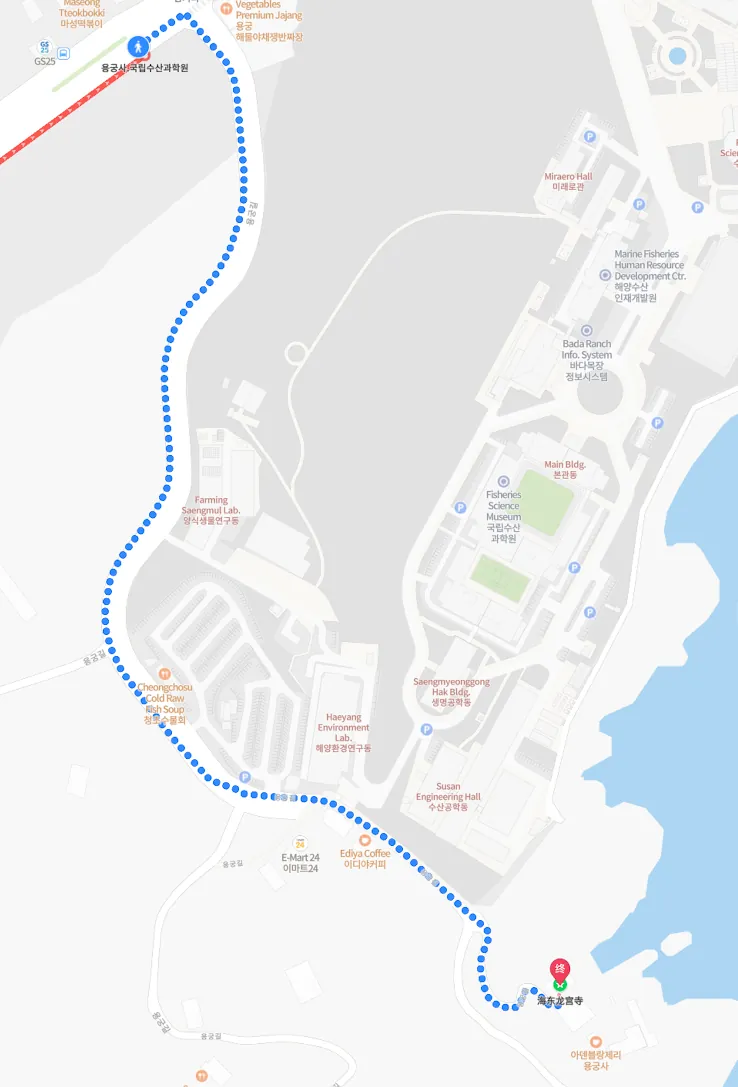
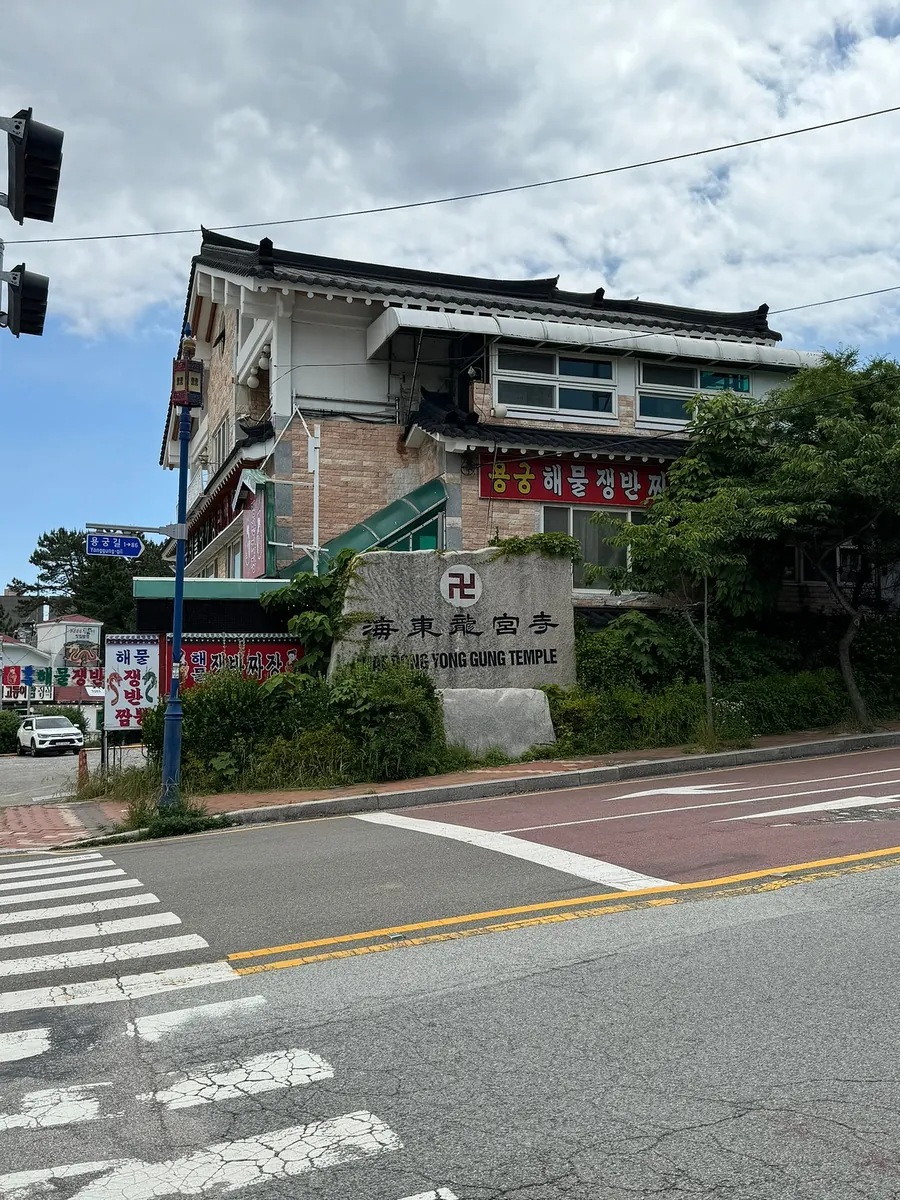
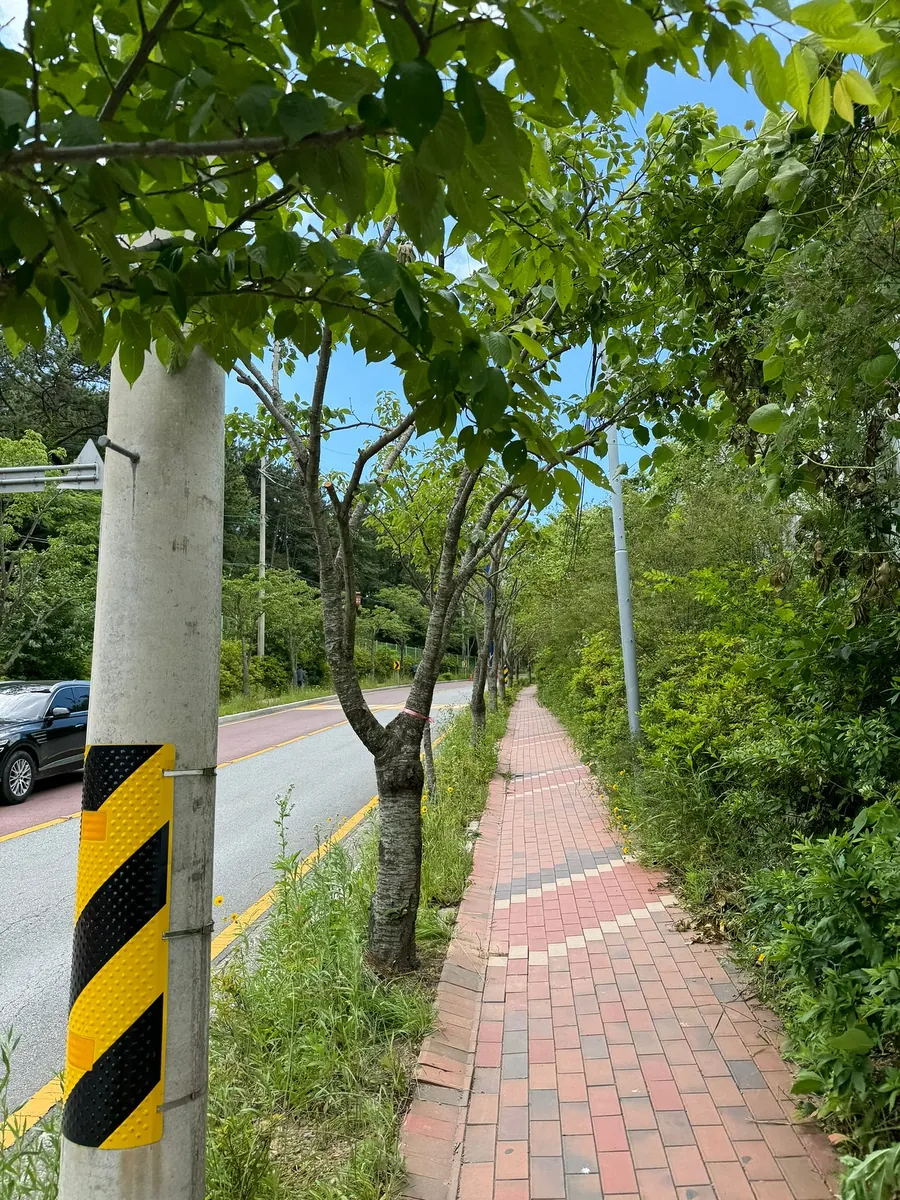
After getting off, walk straight ahead and you will see the sign for Haedong Yonggungsa Temple. Turn right and walk up a hill to reach it; the map says 15 minutes, but since it’s uphill, it takes about 30 minutes. If you don’t want to walk, you can also take a taxi.
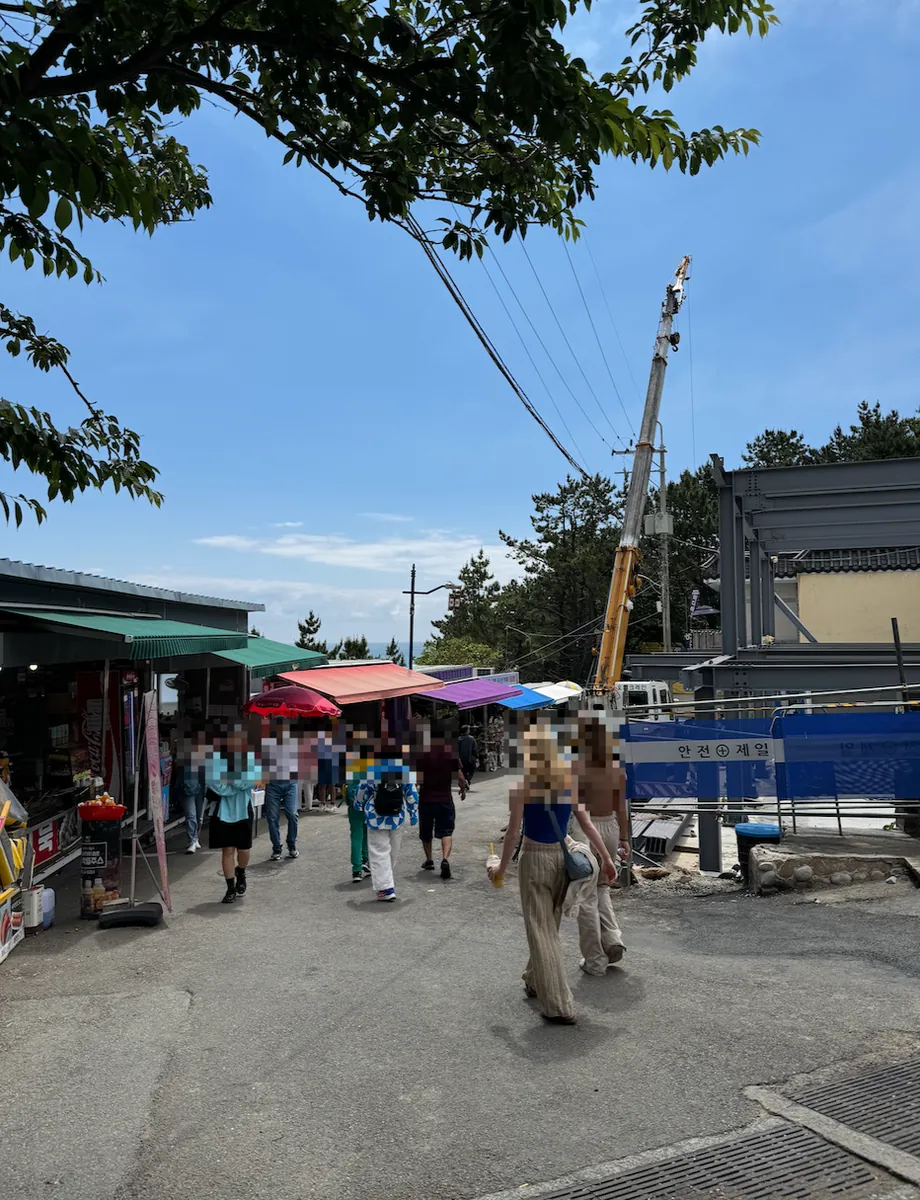
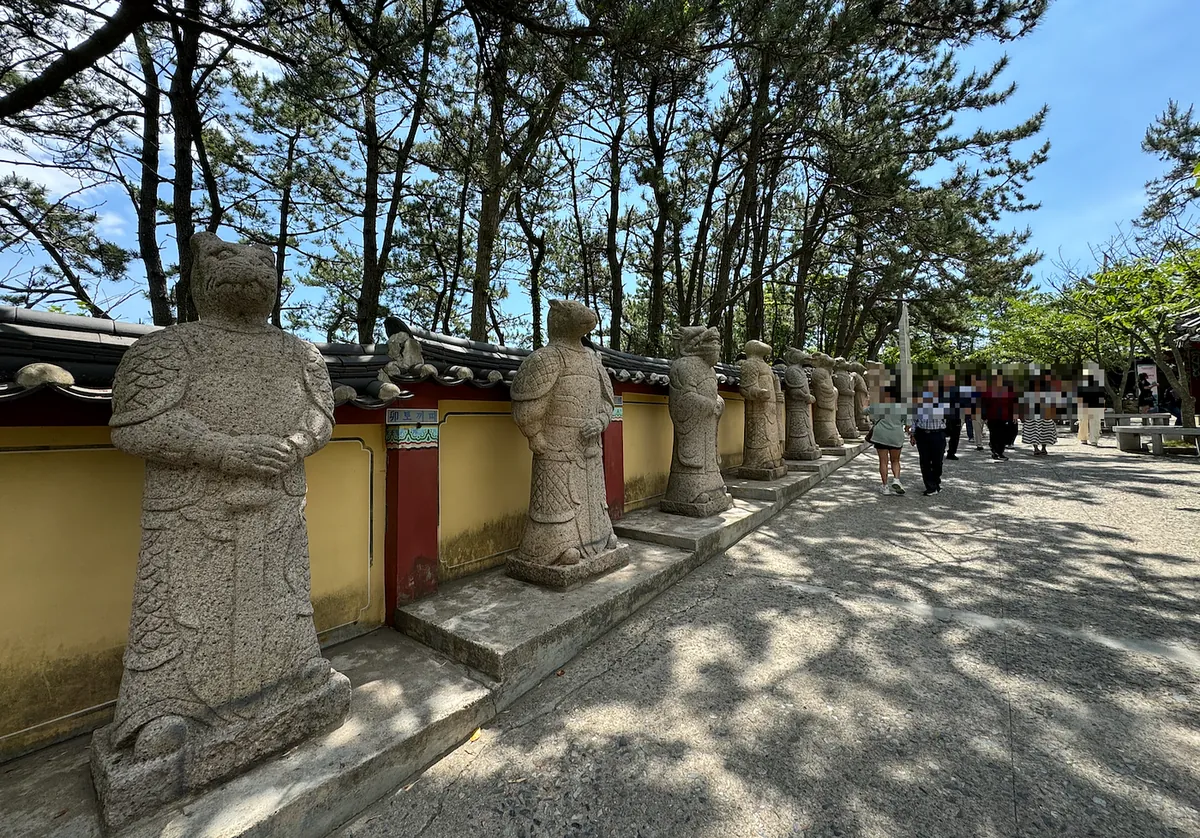
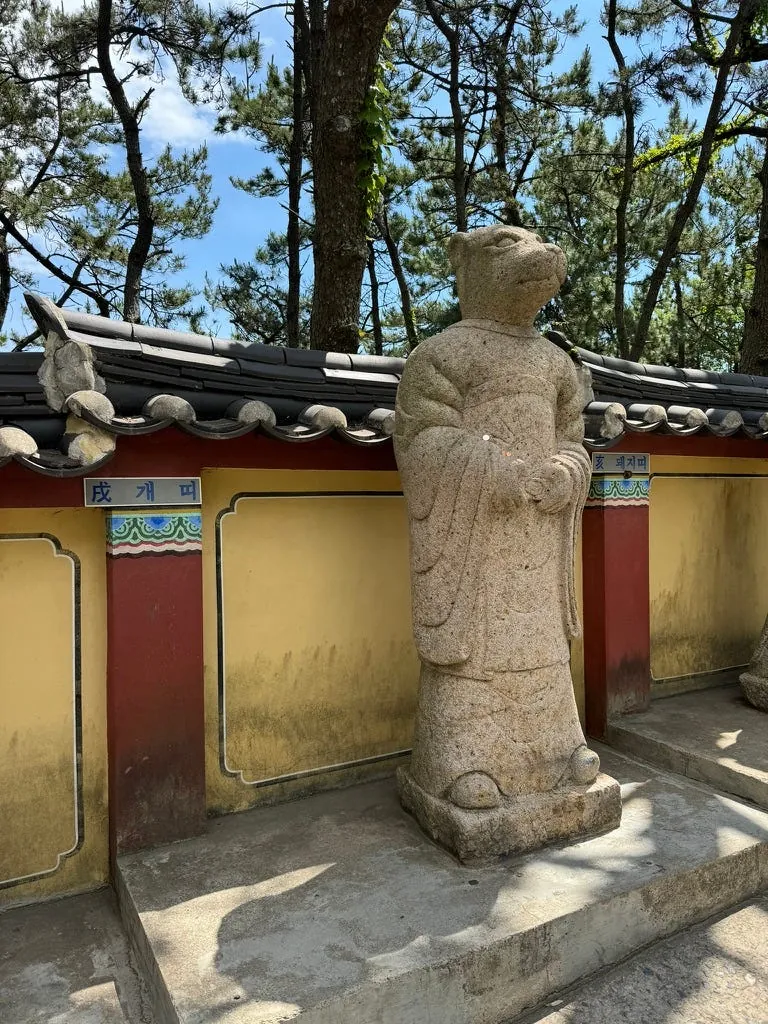
You will first pass through a shopping street, and nearby there is a container market-like area where you can take a break and grab a bite. Inside, you can see a row of the 12 zodiac signs, including the Year of the Dog (戌).
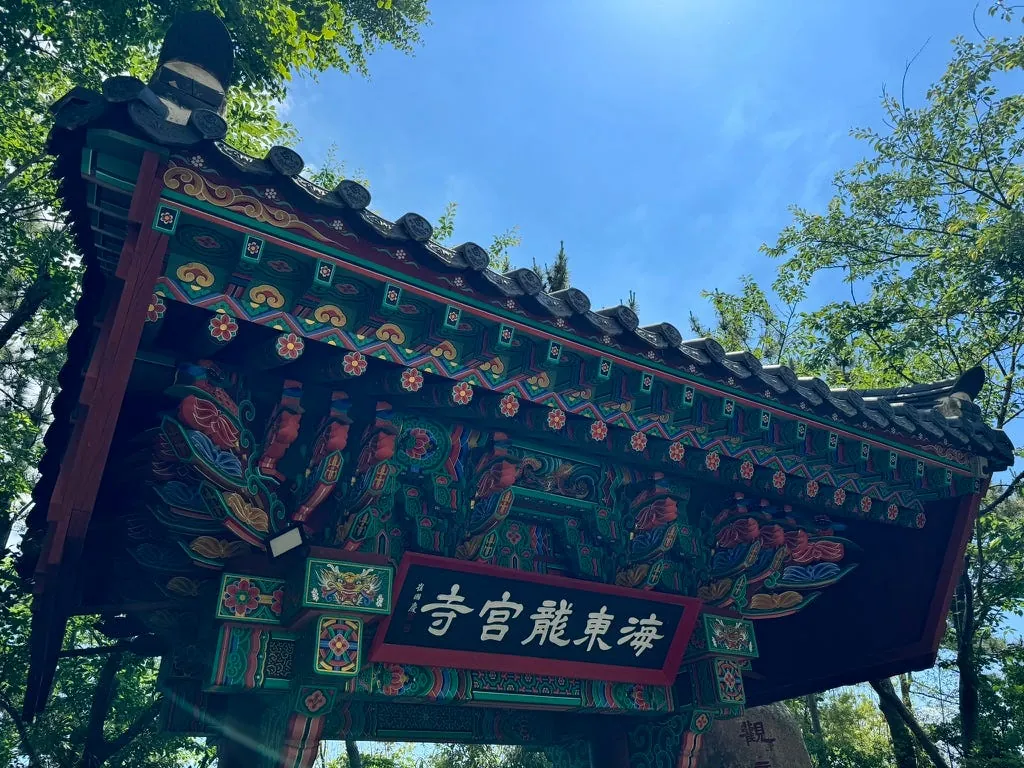
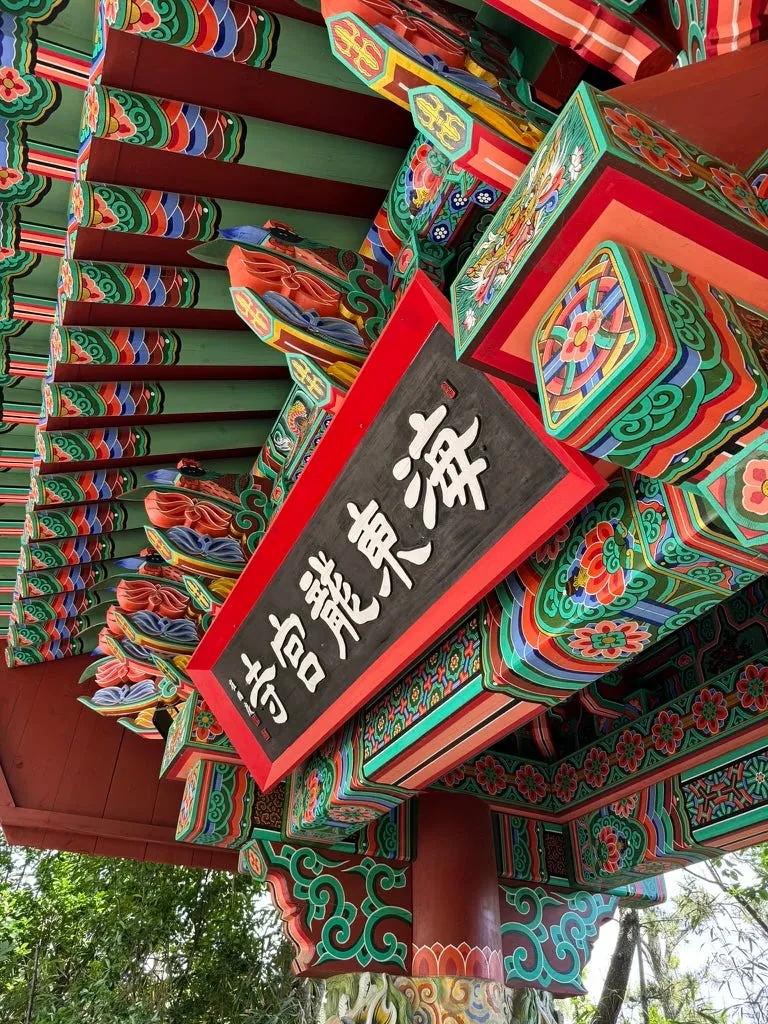
If you walk further ahead, you will see the gate of Haedong Yonggungsa Temple, which is very colorful and distinctive.
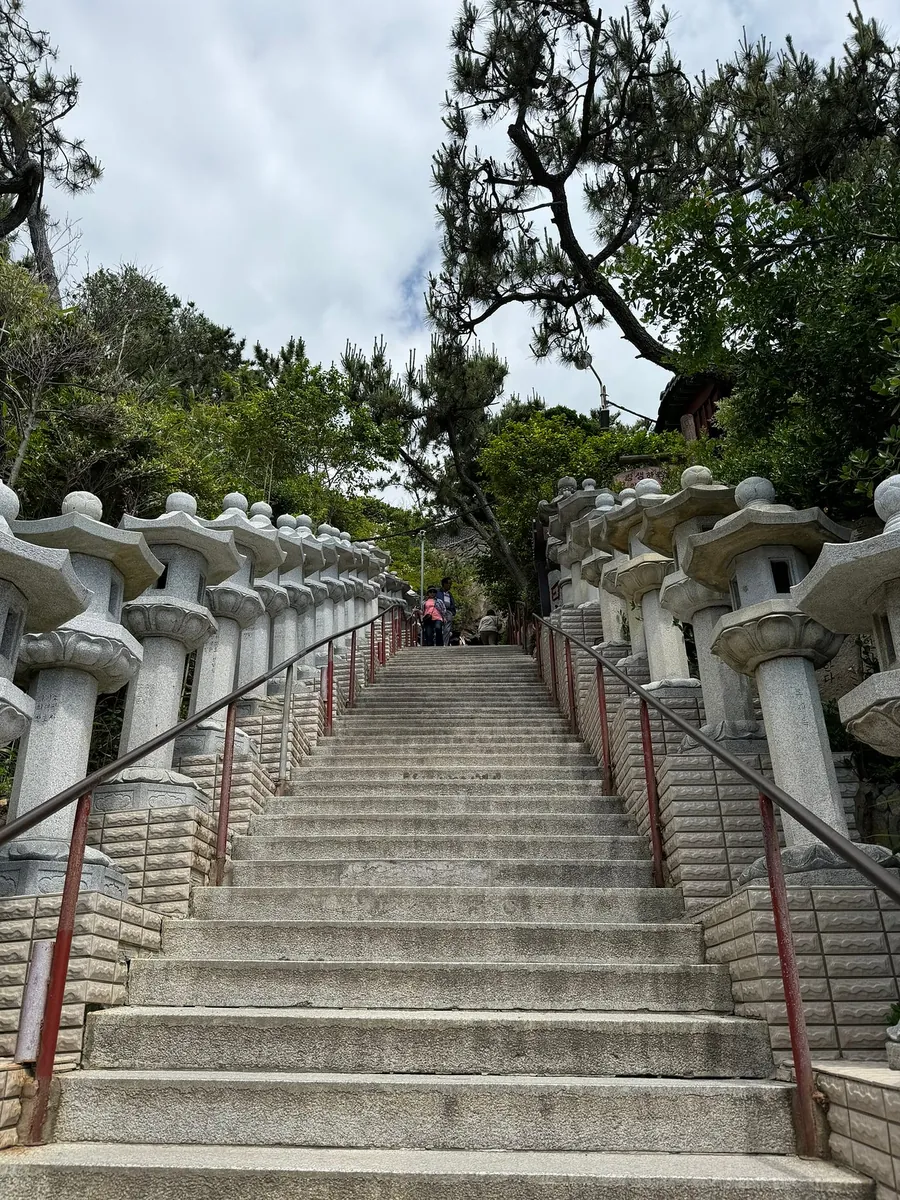
It’s a downhill walk to the main hall of Haedong Yonggungsa Temple. Be careful on the long flight of stairs.
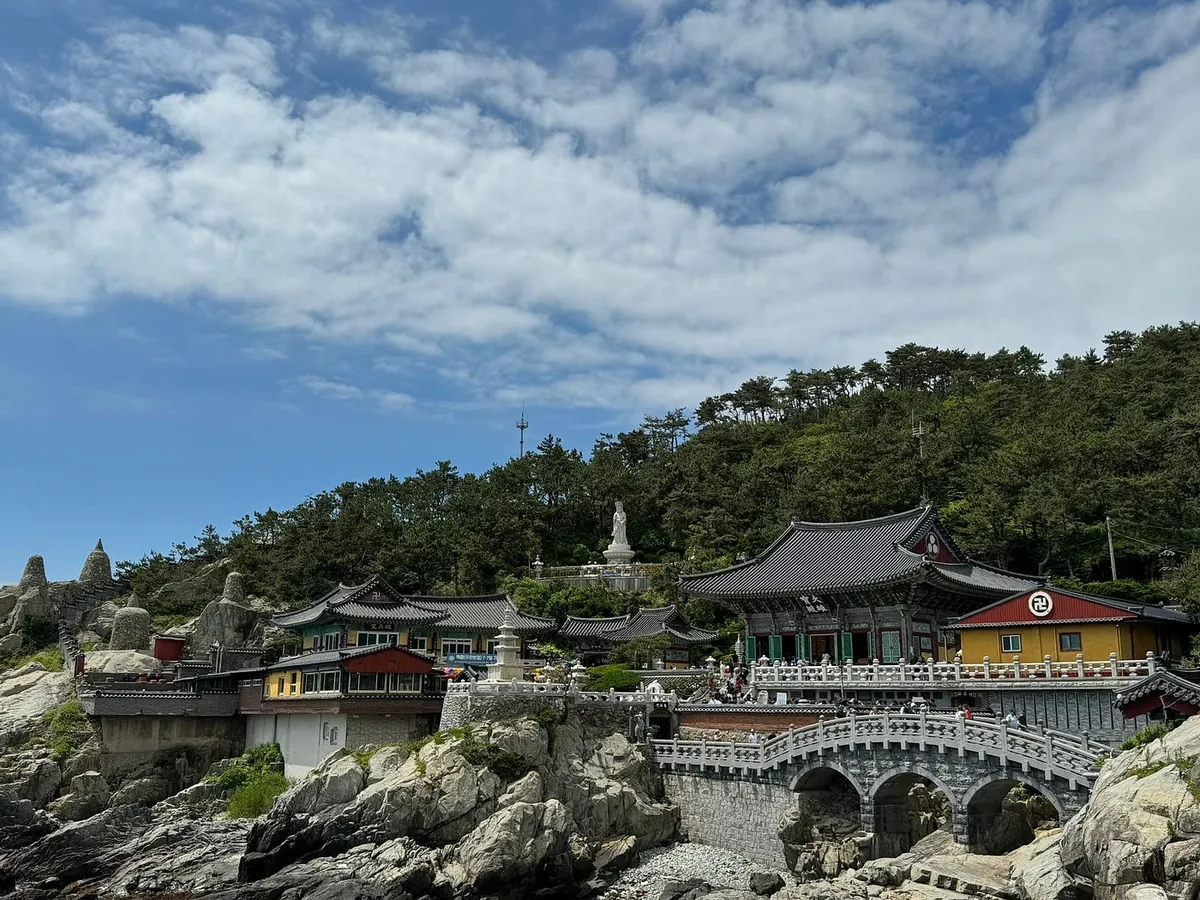
You can first go to the viewing platform on the left to get an aerial view of the entire temple.
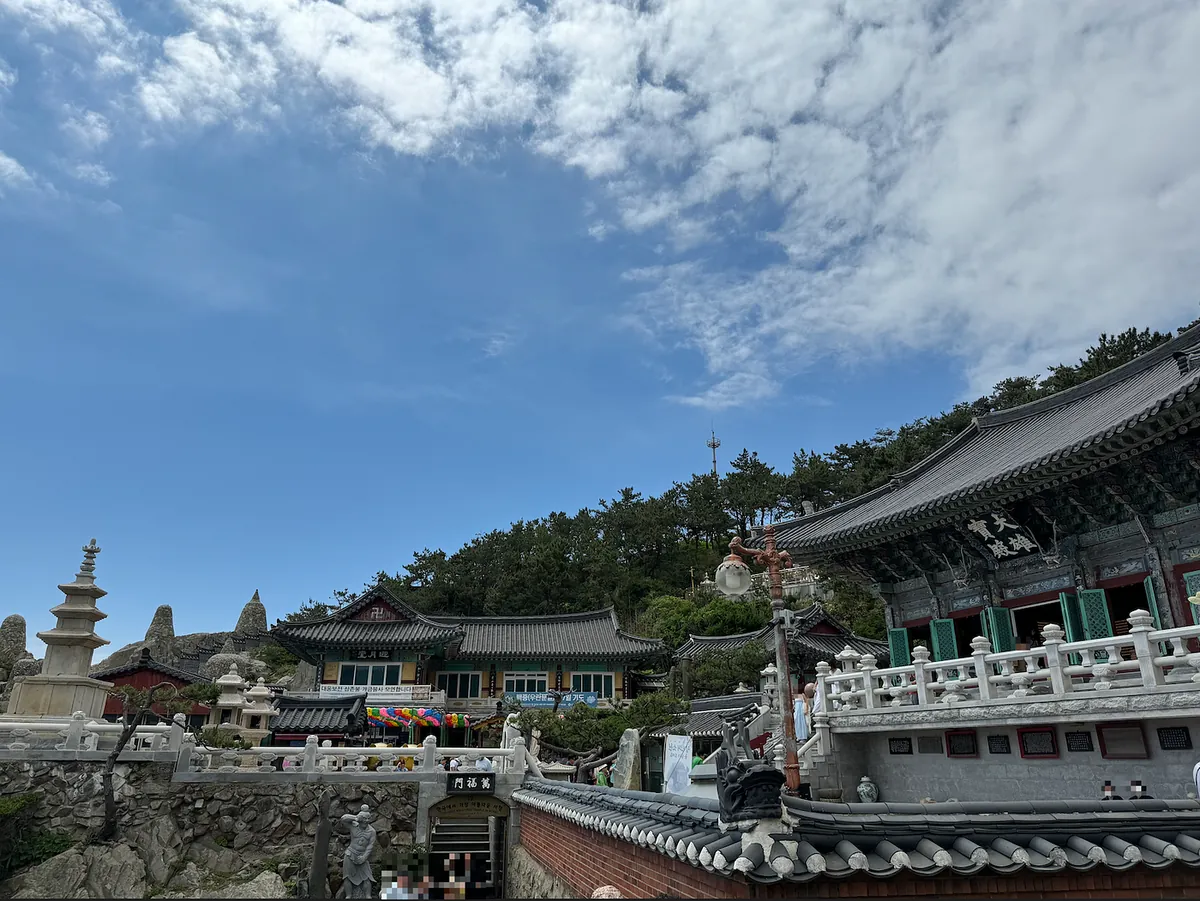
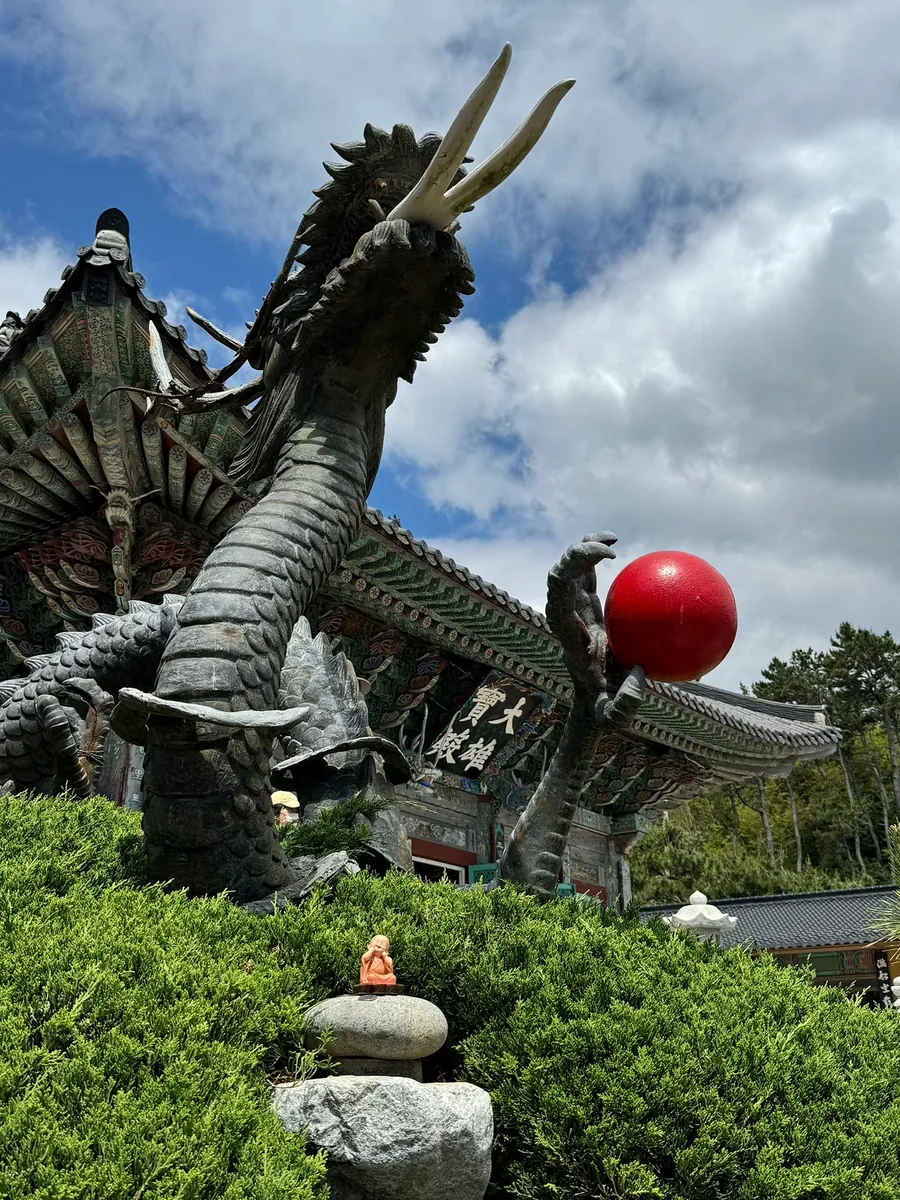
Entering the Main Hall, you can buy a tile outside to write your wish on (10,000 KRW).
Haeundae
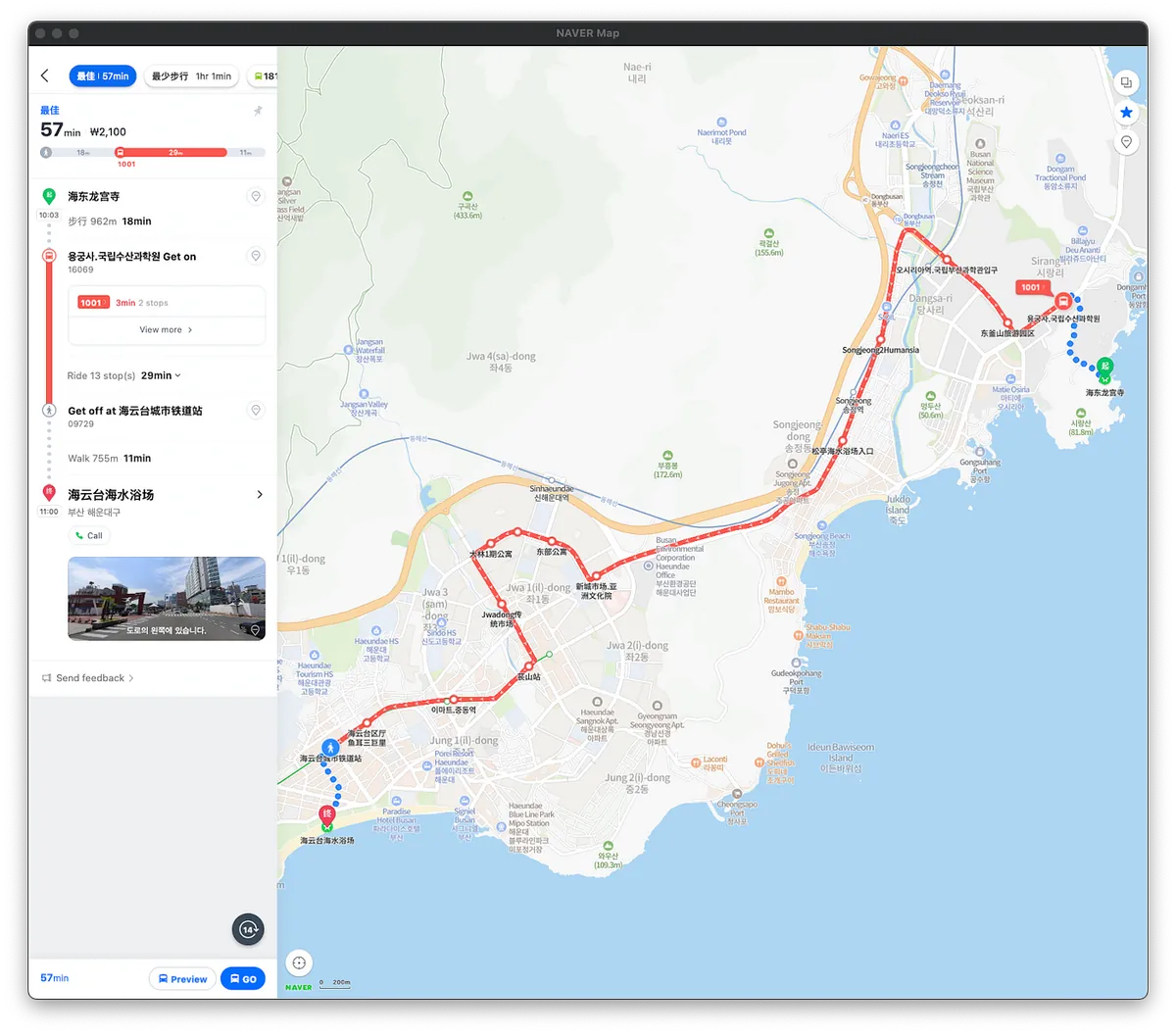
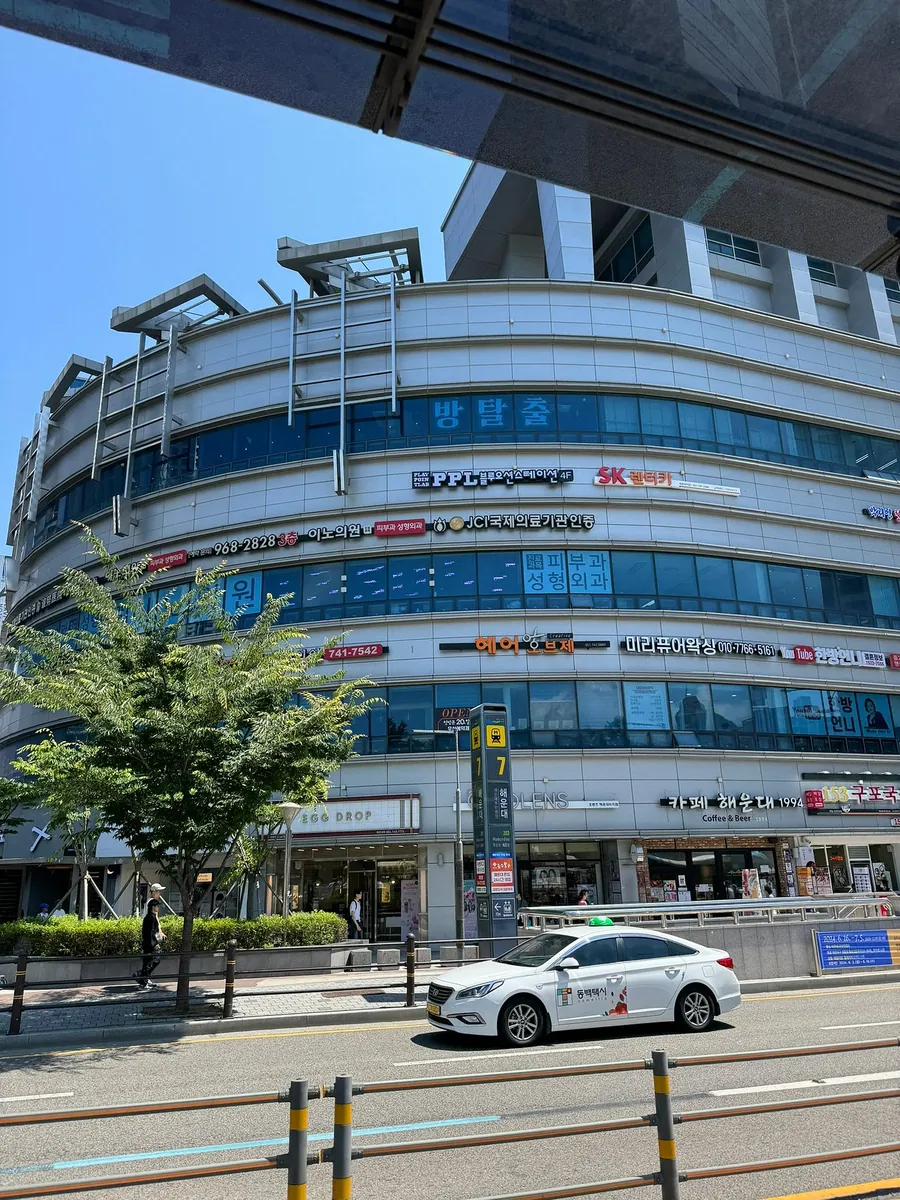
From the bus stop outside Haedong Yonggungsa Temple, take the 1001 bus back to Haeundae (about 1 hour).
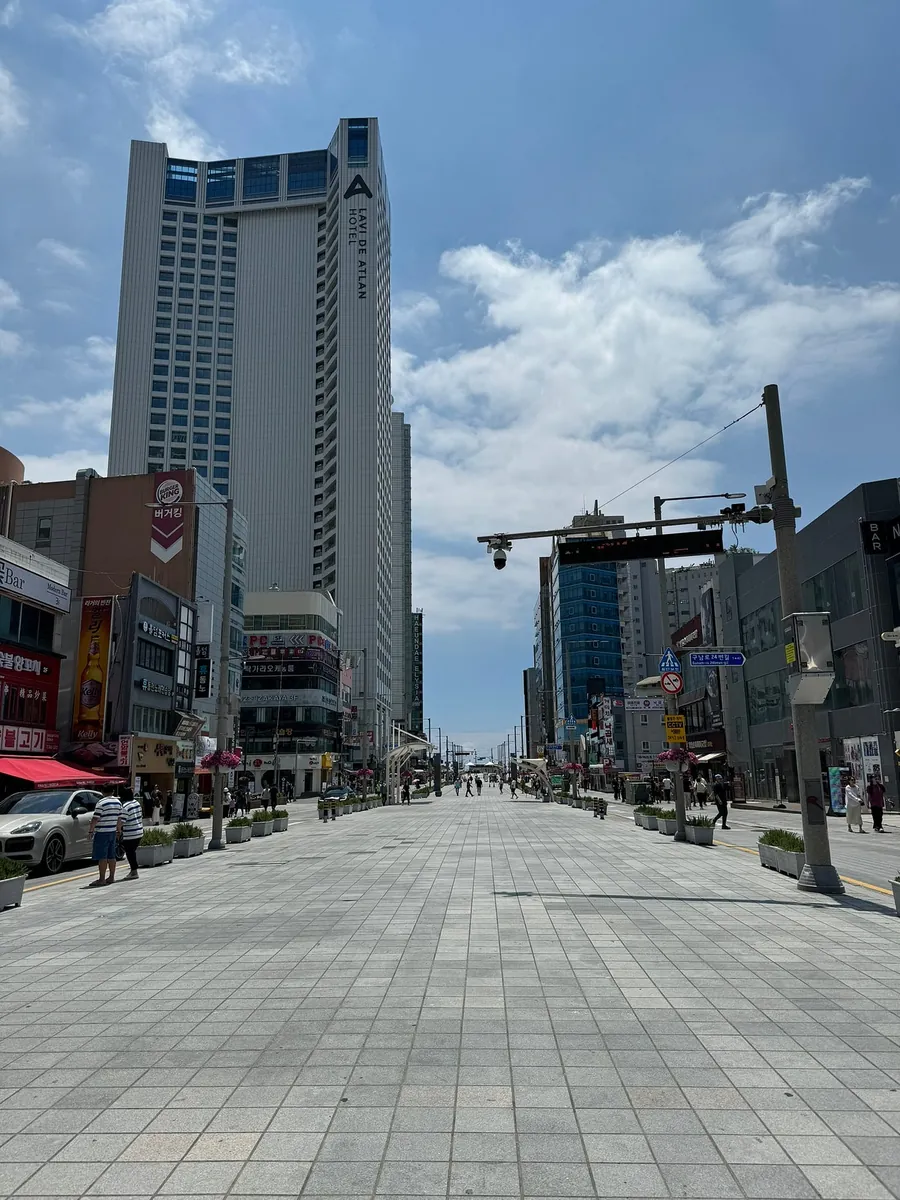
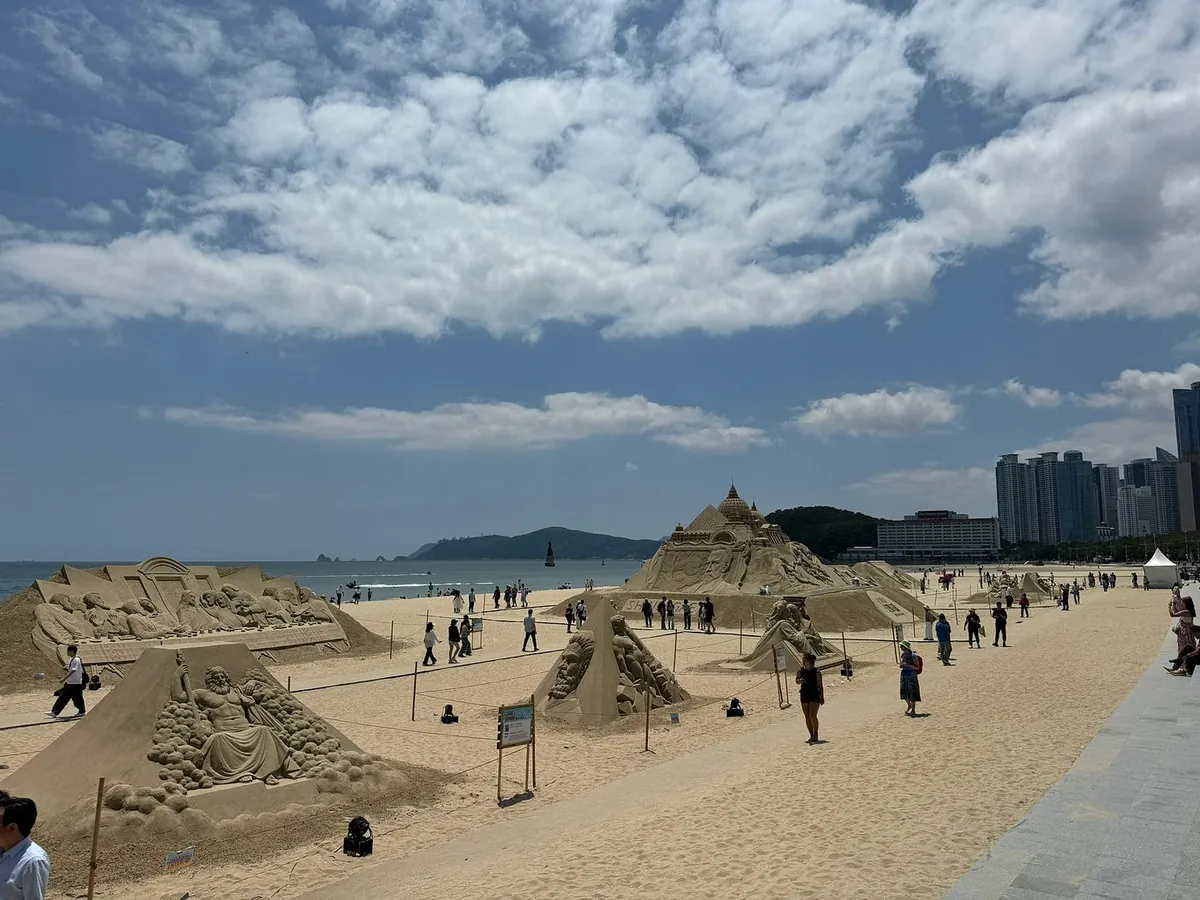
The sun was shining brightly that day, and there was a sand sculpture exhibition on the beach.
Be careful when going down the stairs. I saw a Korean man miss a step and fall into a pile of sand (luckily it was sand).
ㄏ
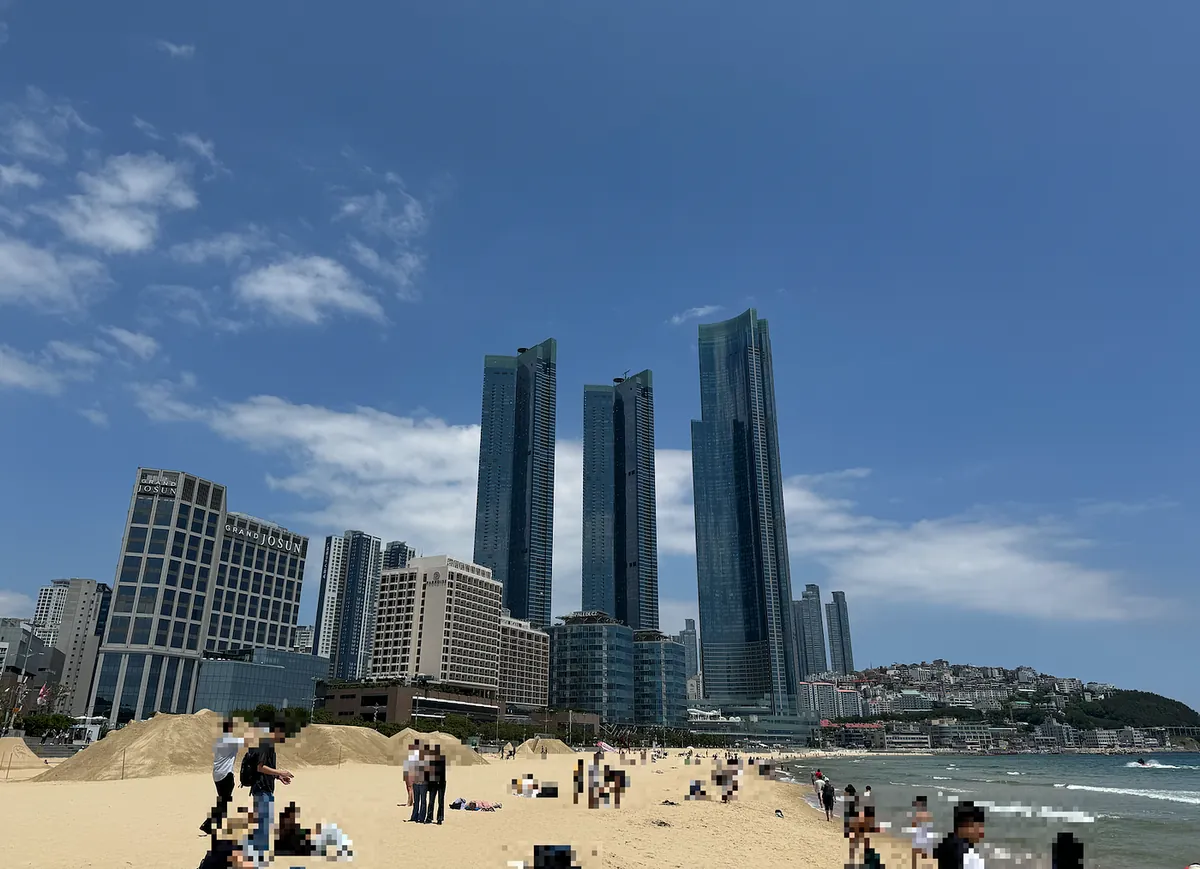
Haeundae LCT, a landmark building in Busan.
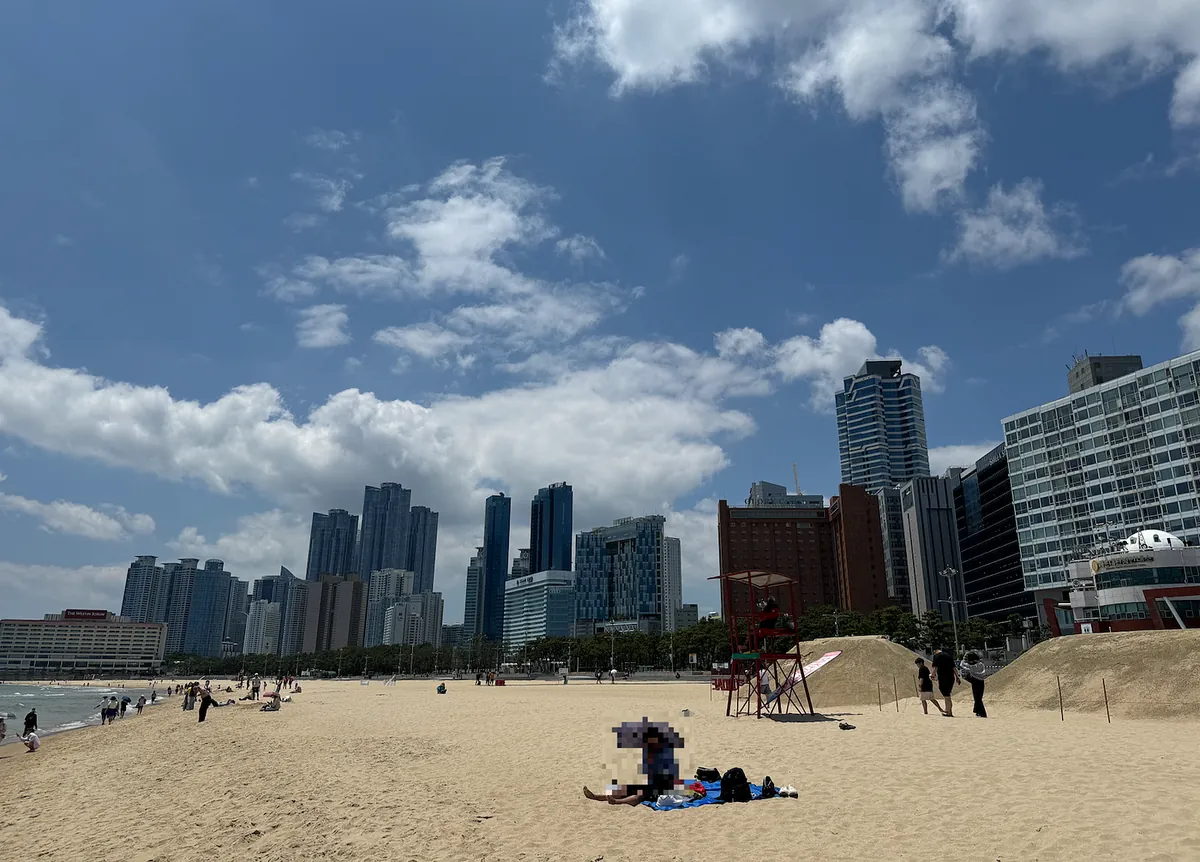
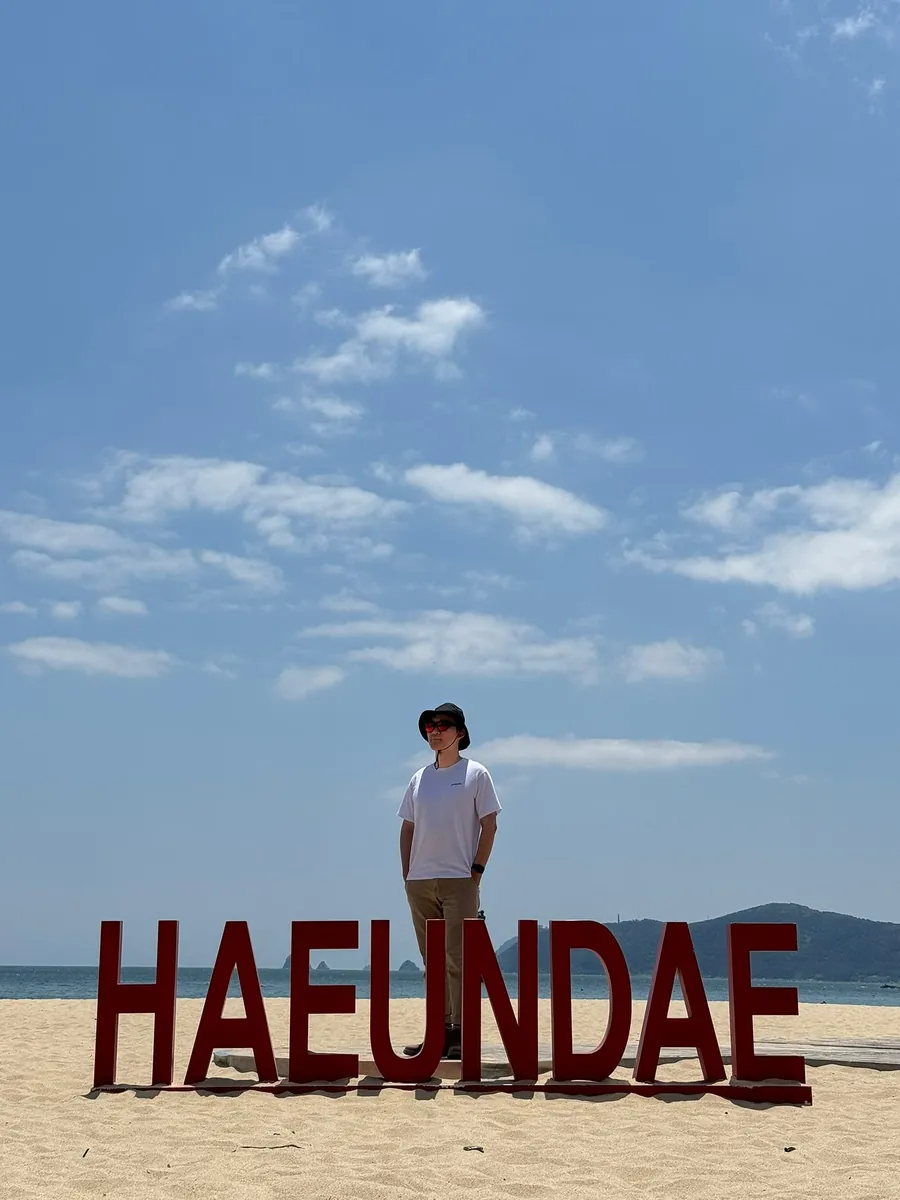
HAEUNDAE Haeundae, clear blue sky.
Haeundae Beach has lifeguards and marked swimming areas with red lines. Water activities can also be arranged.
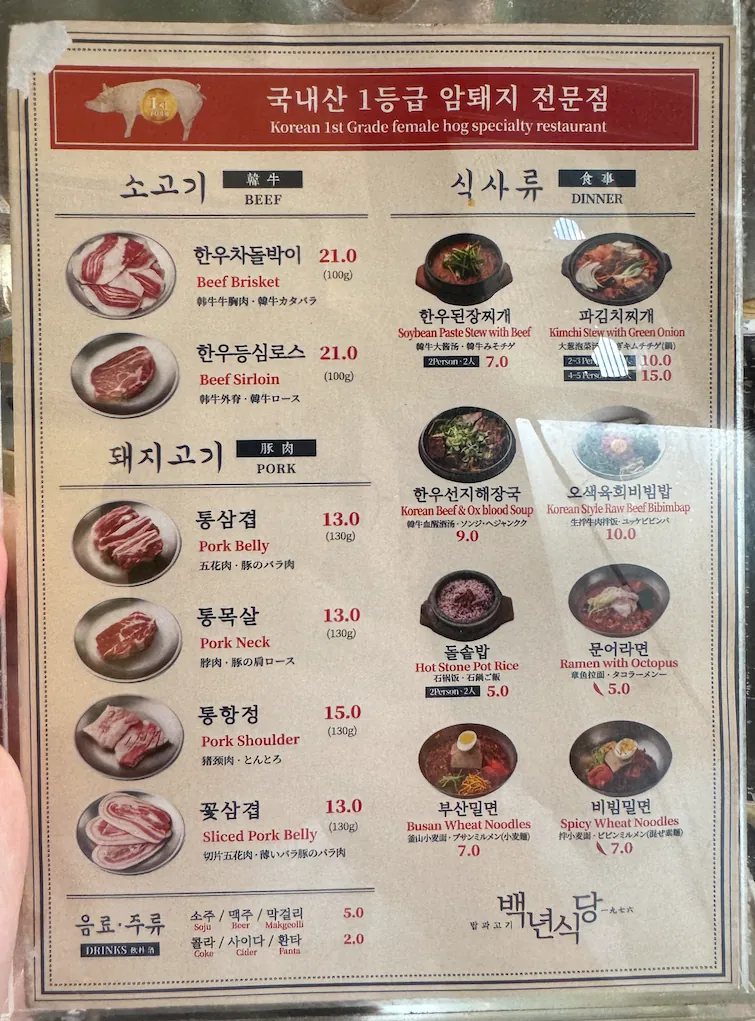
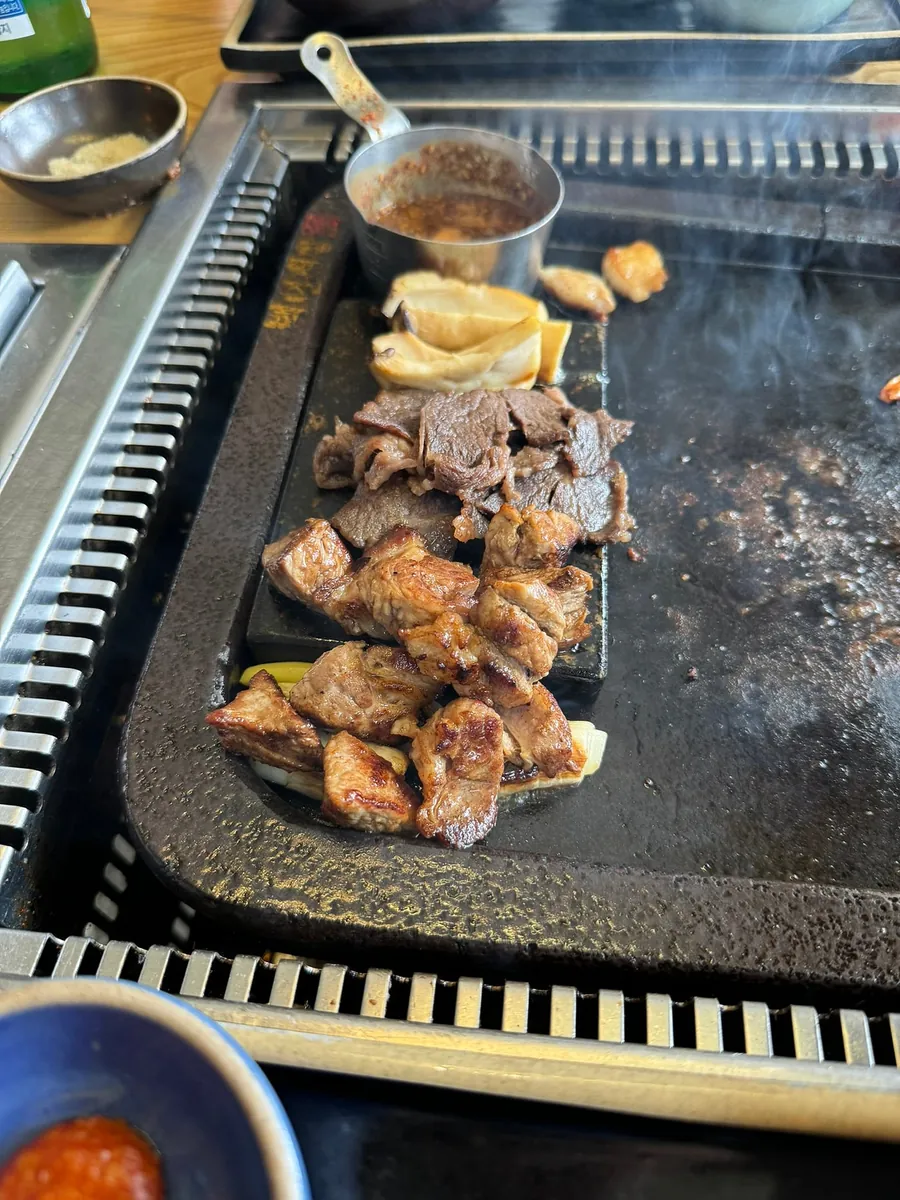
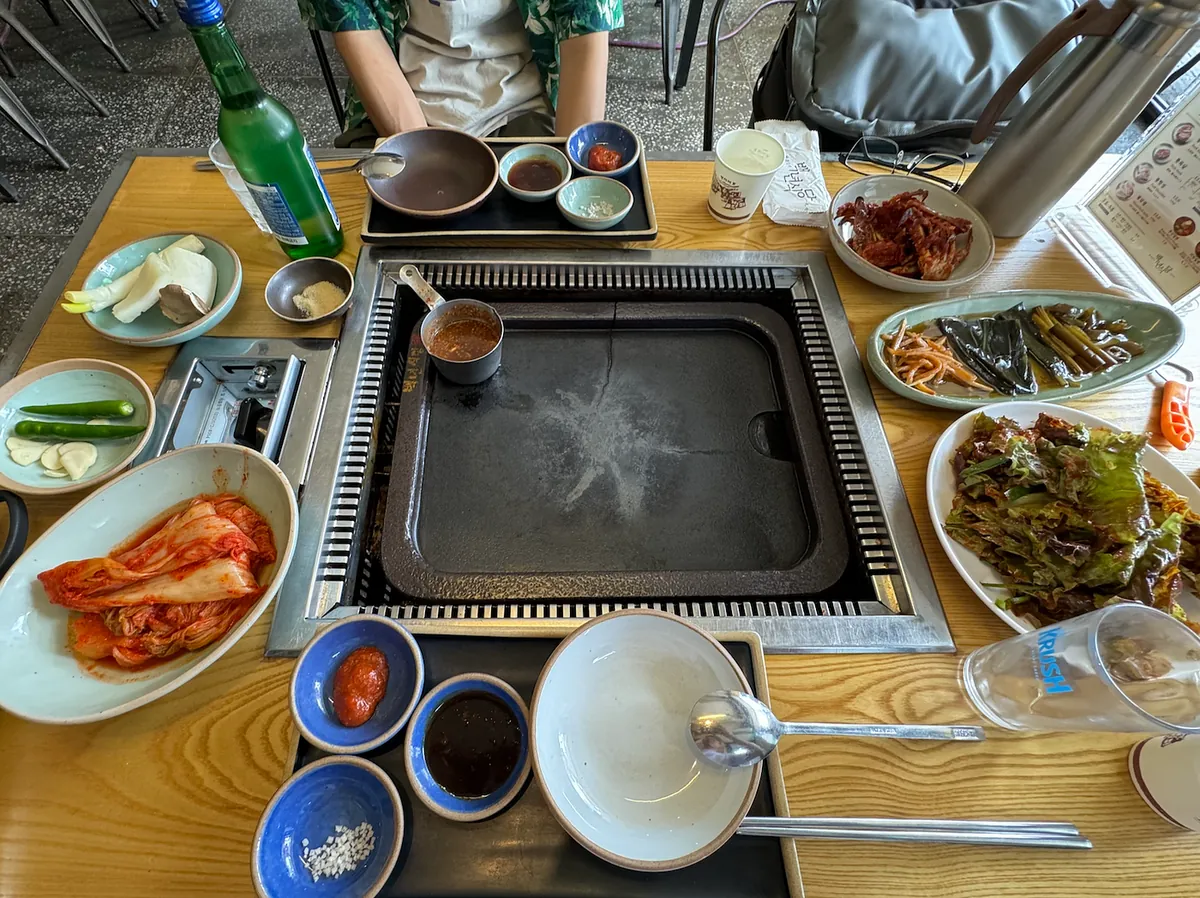
For lunch, we had Korean BBQ near Haeundae at Baegnyeon Sikdang. The staff grilled the meat for us. We ordered Korean beef sirloin and pork neck, both delicious, plus a stone pot rice with a strong crispy rice crust aroma. We shared everything between two people.
Also ordered Korean beer and soju to drink heartily. (Forgot to try soju mixed with beer)
-
Price 13.0 means 13 * 1000 = 13,000 KRW
-
There were also many Korean side dishes, mostly pickled items, kimchi, and marinated raw crab (which is meant to be eaten raw but smelled too fishy for me).
-
The staff were friendly, and their English was quite good.
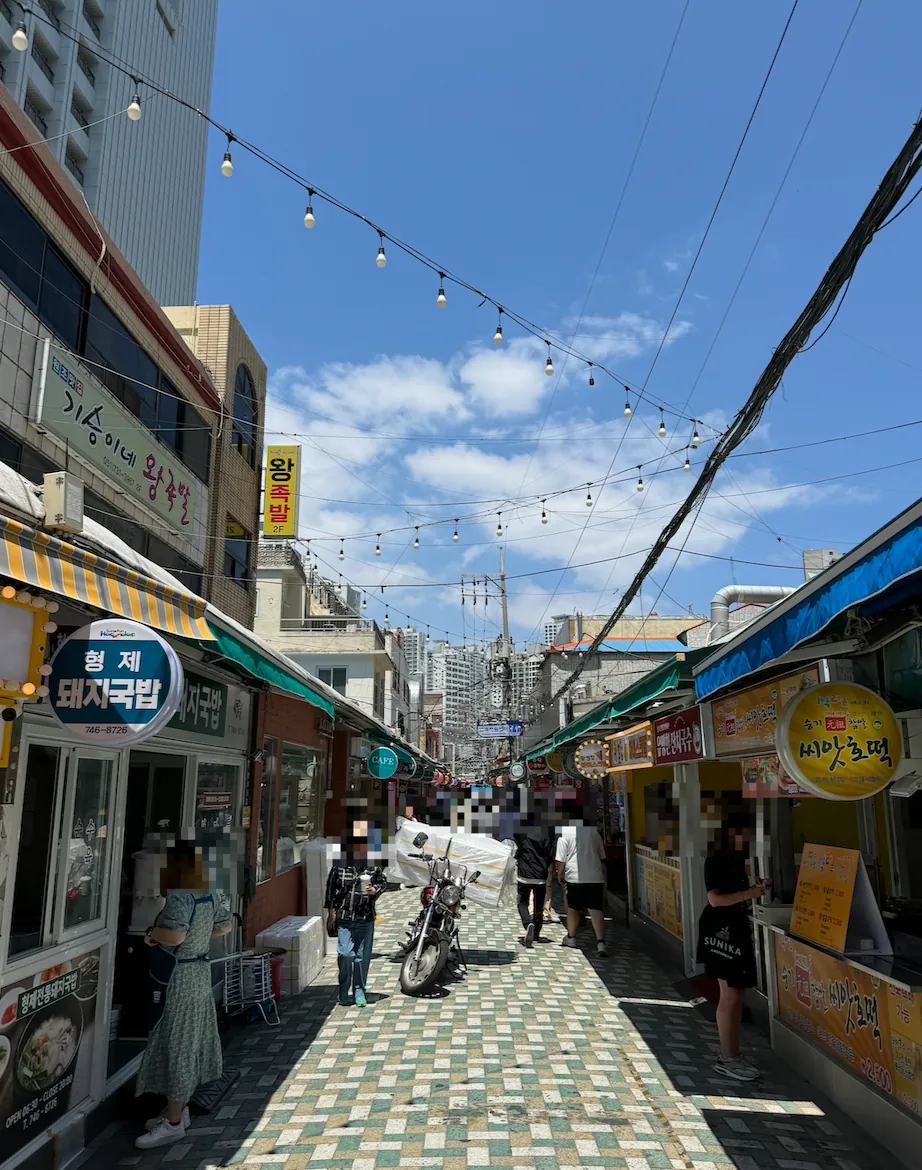
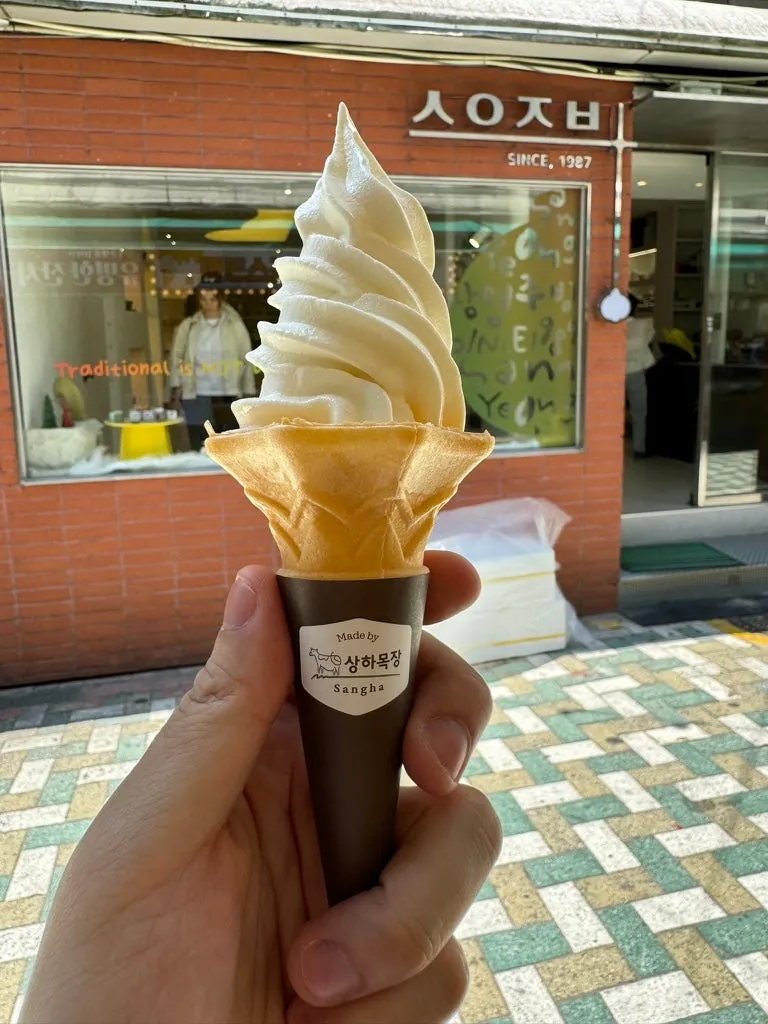
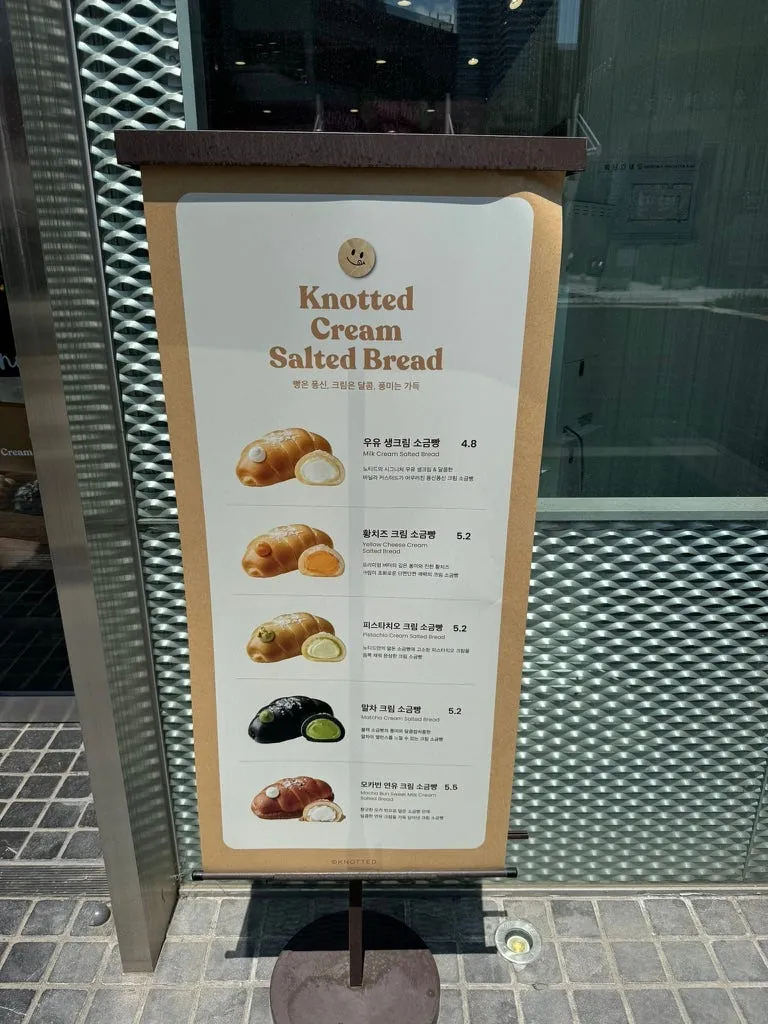
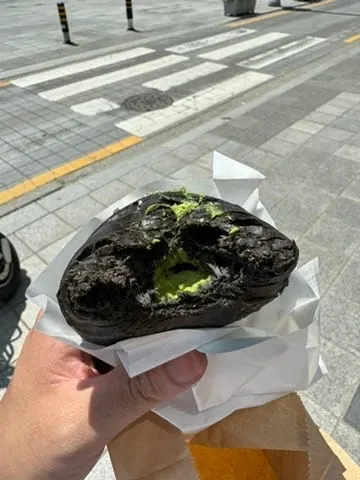
Next to it is Haeundae Traditional Market, mainly selling local seafood. I bought an ice cream and walked around, then went to another shop selling ice cream croissants and had a tea-flavored ice cream croissant (crispy outside, soft inside, delicious!).
After eating, I forgot that Haeundae also has a monorail and the Haeundae LCT, which you can actually visit (I didn’t research the Busan itinerary carefully when planning). It was around 14:00, so I took bus 1001 back to Busan Station, thinking I would decide where to go next or just explore around Busan Station.
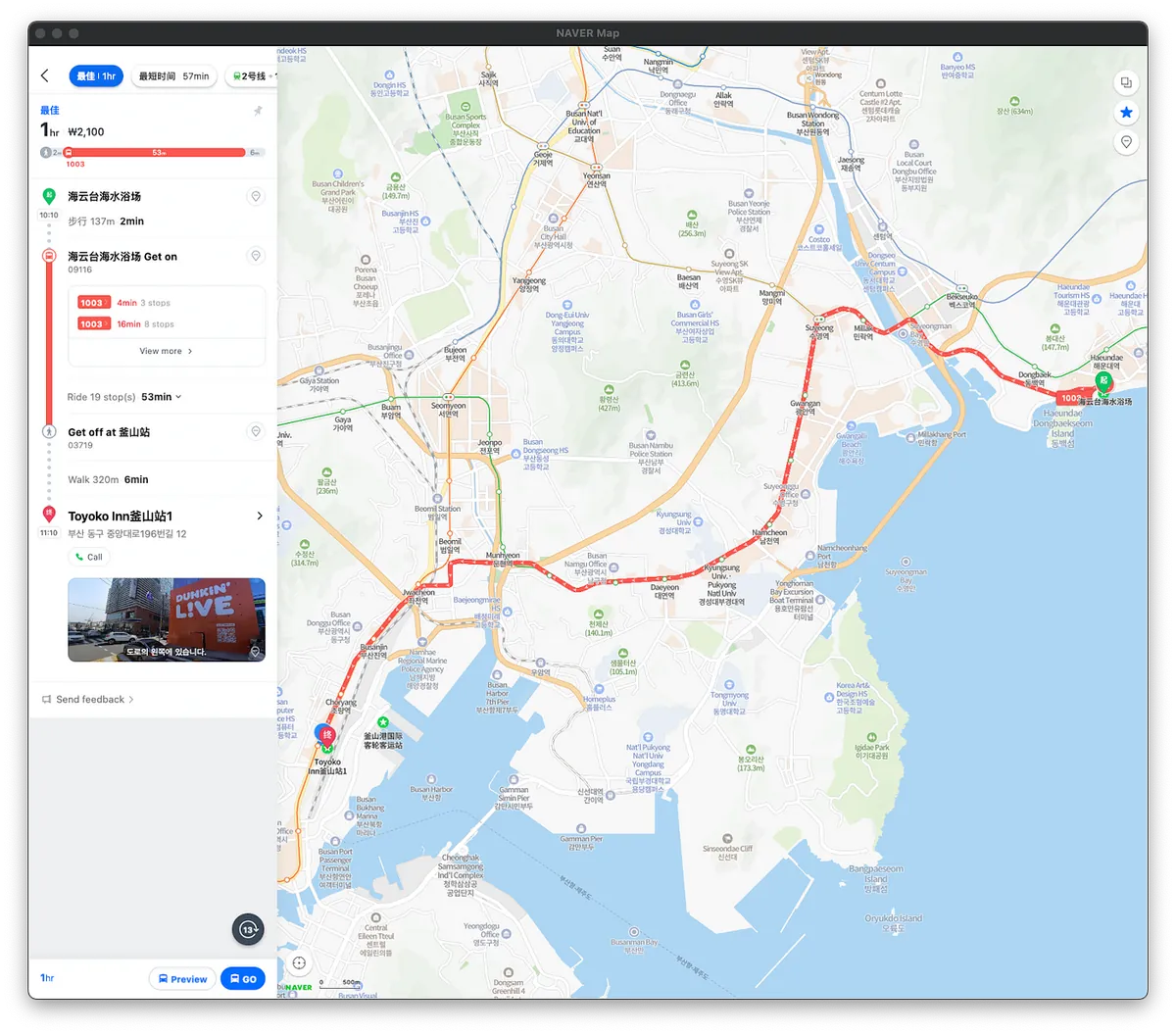
Back at Busan Station around 15:00, there was still plenty of time before the cruise check-in at 18:30. Returning to Busan, I realized Busan Station has no places to explore (it seems there are no department stores, shopping streets, or attractions nearby). I considered going to Gamcheon Culture Village but worried it was too far. I found that a few stops from Busan Station, you can visit Busan Tower and nearby department stores and shopping streets.
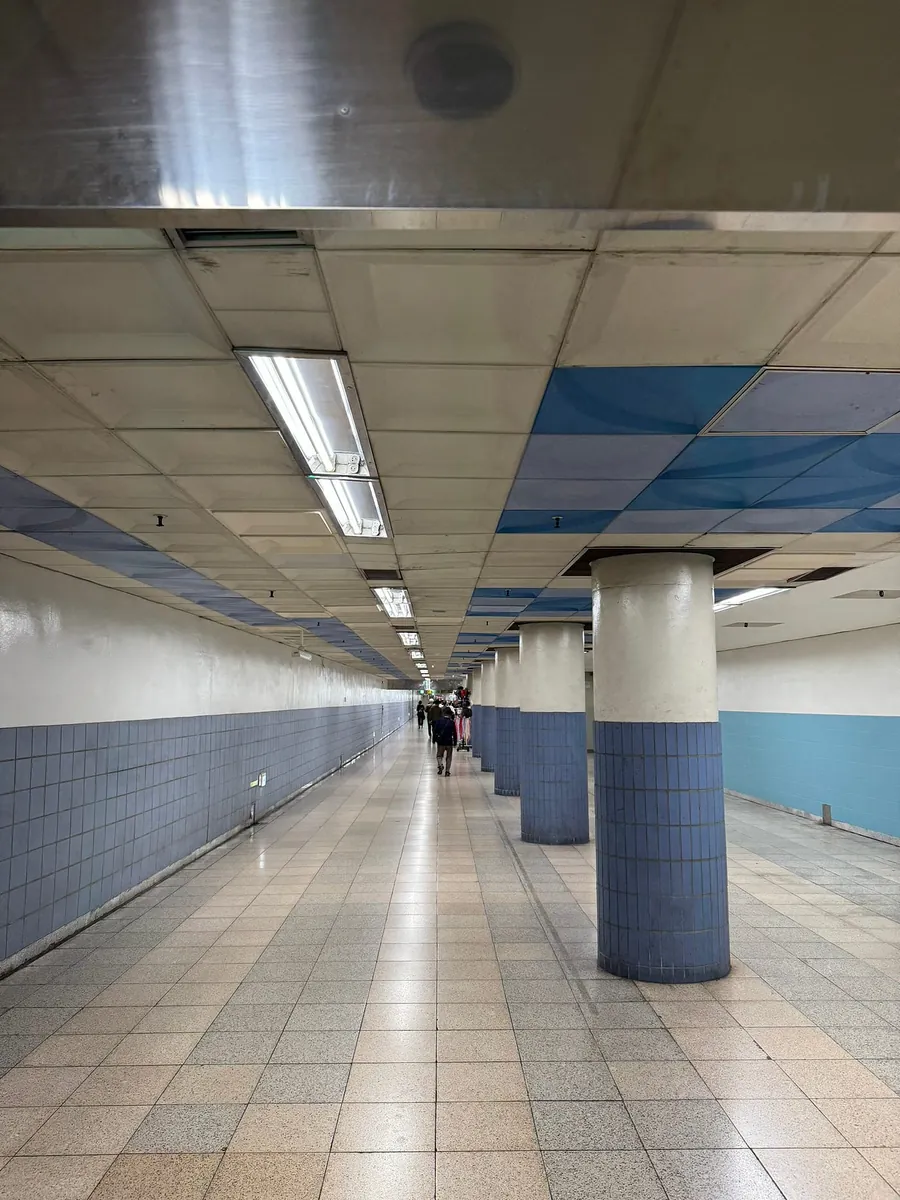
Originally planned to go to Busan Tower but got off at the wrong subway station and walked a long way, so gave up and returned.
KKday Busan, South Korea \| Yongdusan Park Busan Tower Observatory Electronic Ticket .
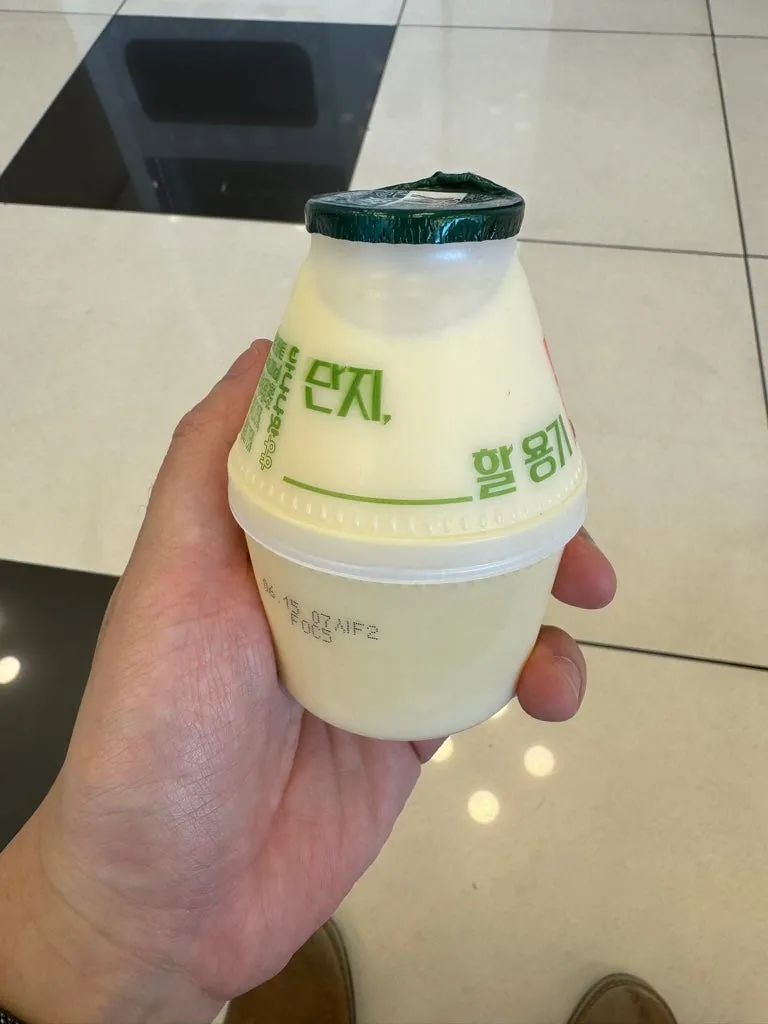
Bought the famous Korean banana milk to try.
17:00 Head to Busan Port International Passenger Terminal
Around 5 PM, after wandering near Busan Station, I went to the hotel to pick up my luggage and headed to Busan Port International Passenger Terminal.
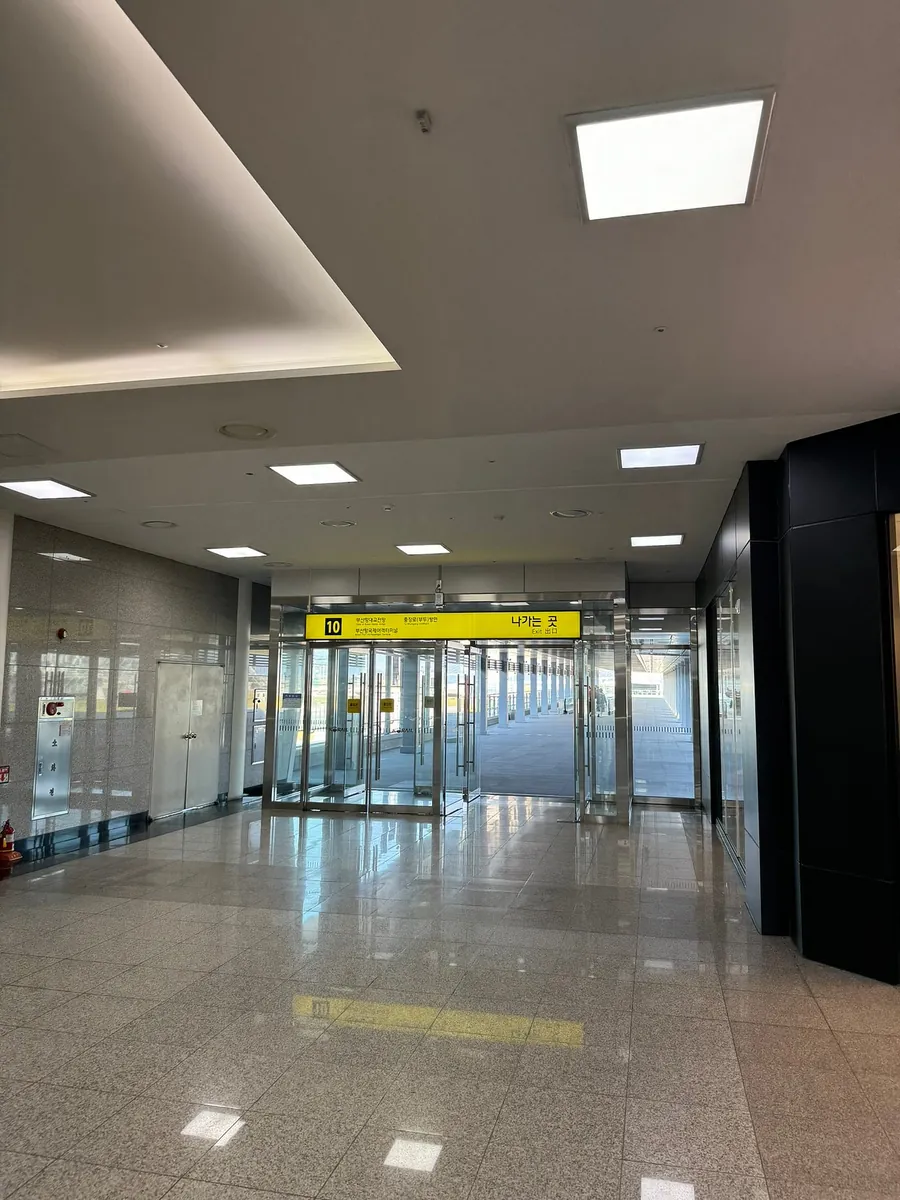
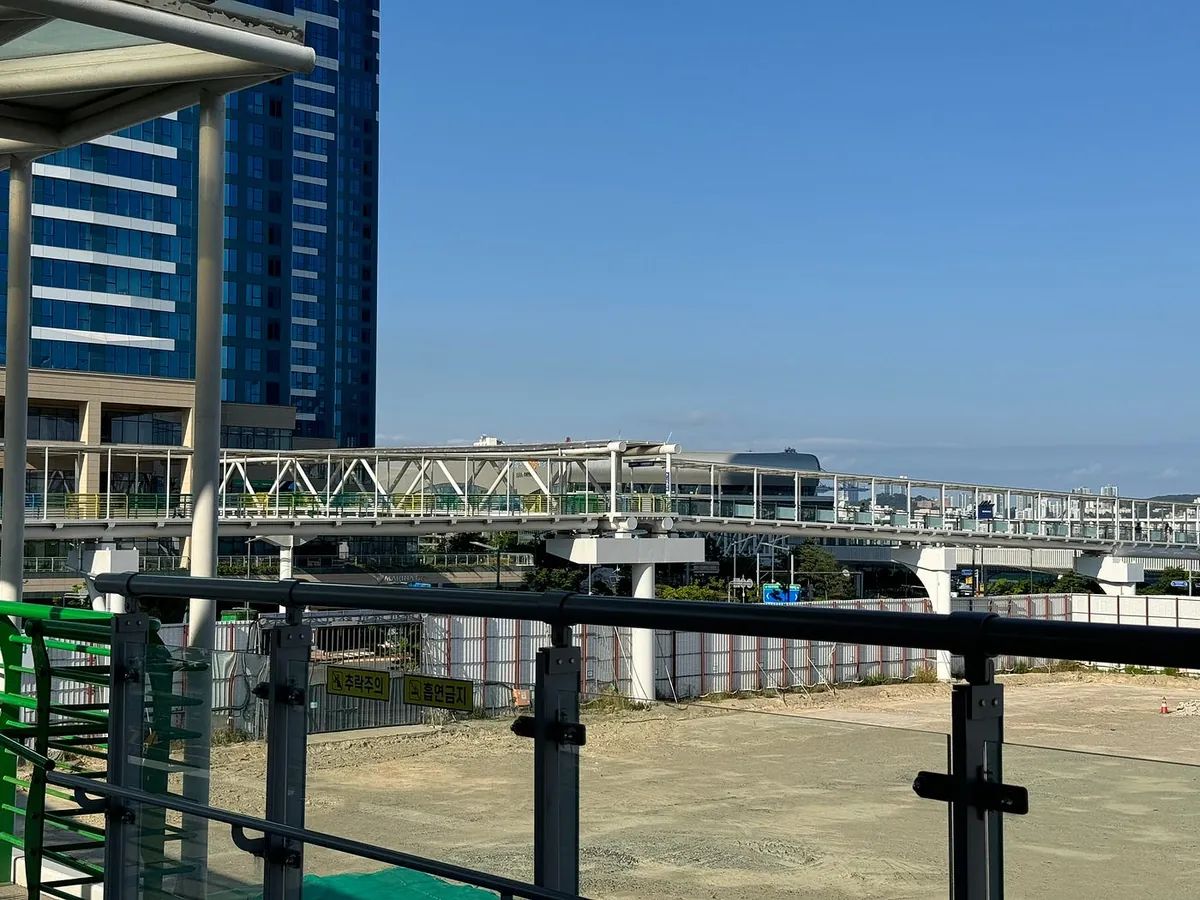
Enter the Busan Station lobby (2nd floor), find Exit 10, and walk along the skybridge to Busan Port International Terminal (about a 15-minute walk).
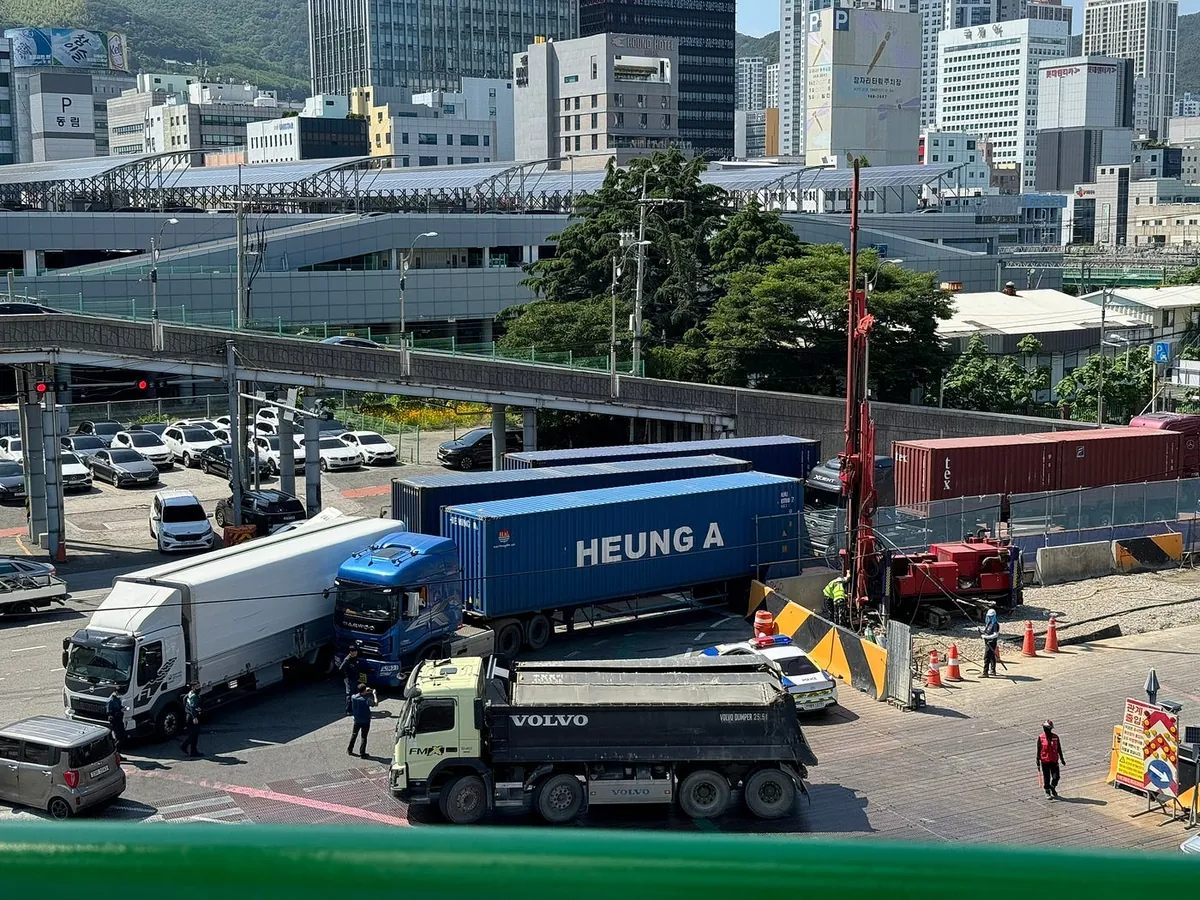
Avoid walking on flat roads at all costs; there are many large vehicles, and it is very dangerous.
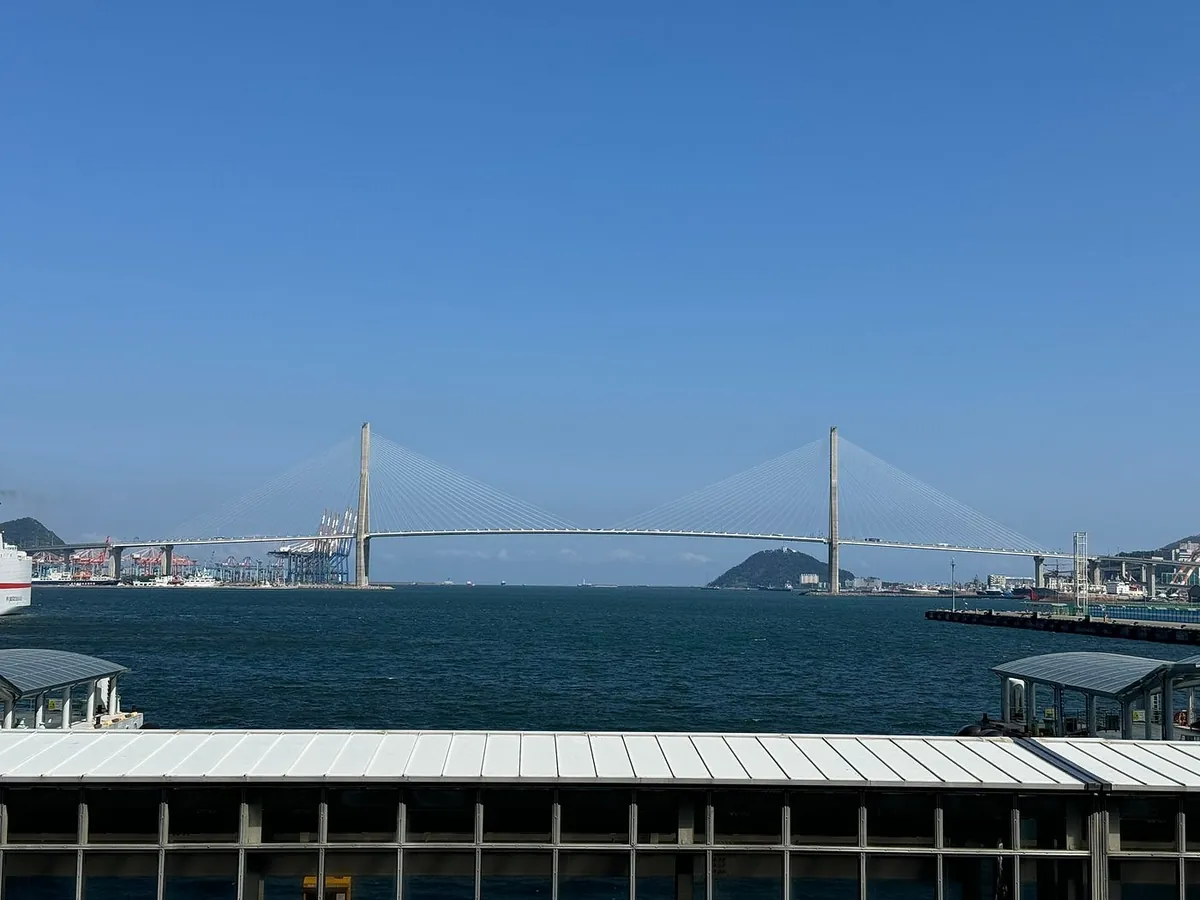
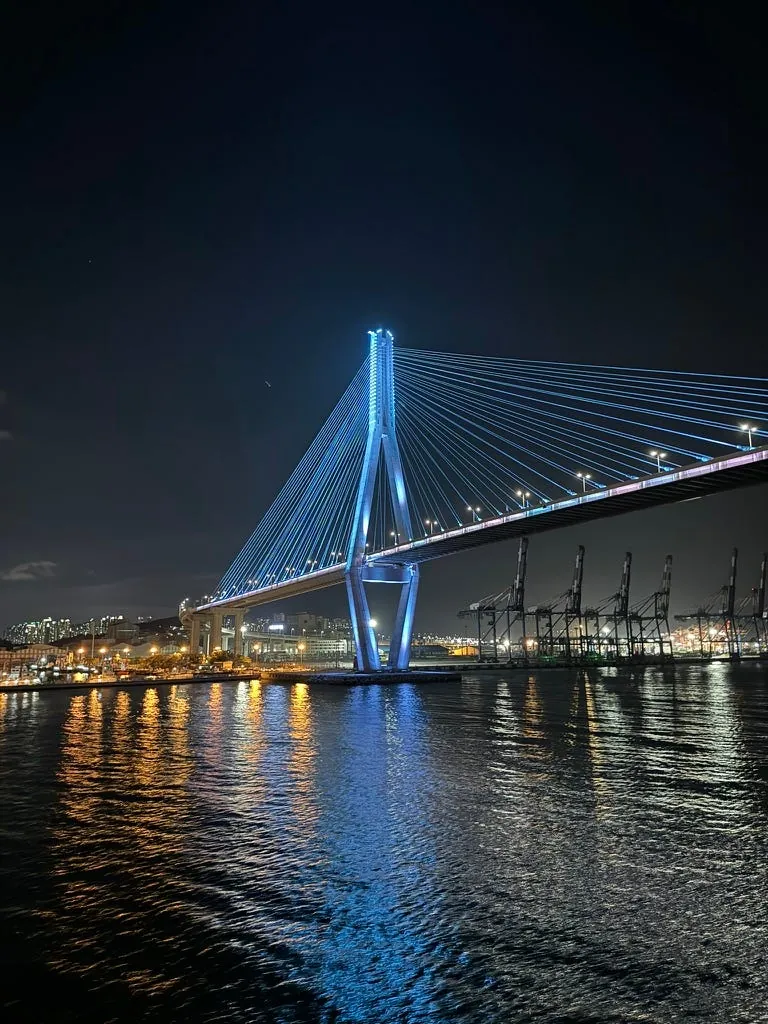
Busan Port Bridge during the day.
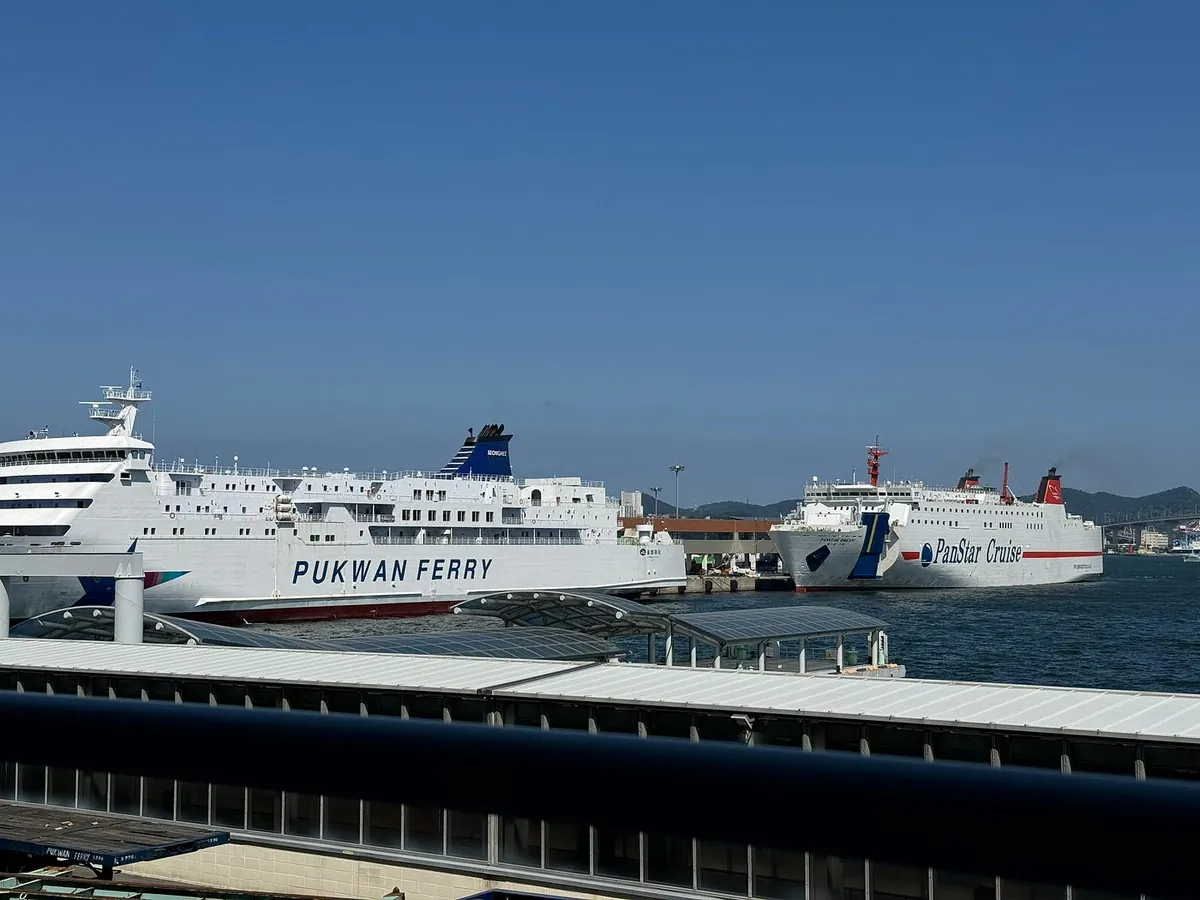
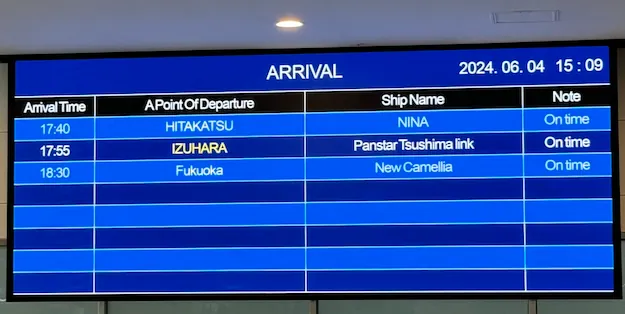
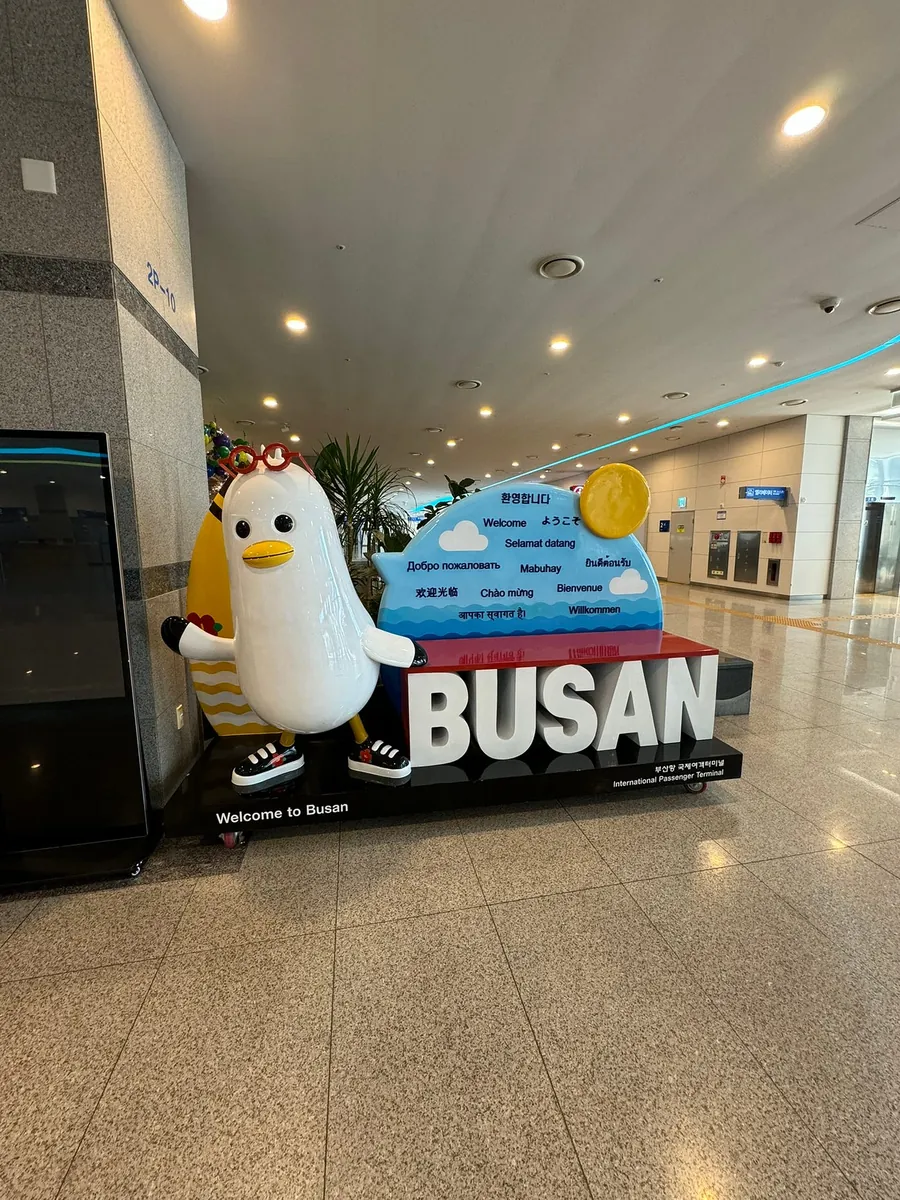
Busan Port International Terminal (pier) is quite empty inside, with few people, as daily sailings are limited; besides trips to Fukuoka Hakata, there are also cruises to Shimonoseki, Tsushima Island, Osaka, Kumamoto, and others.
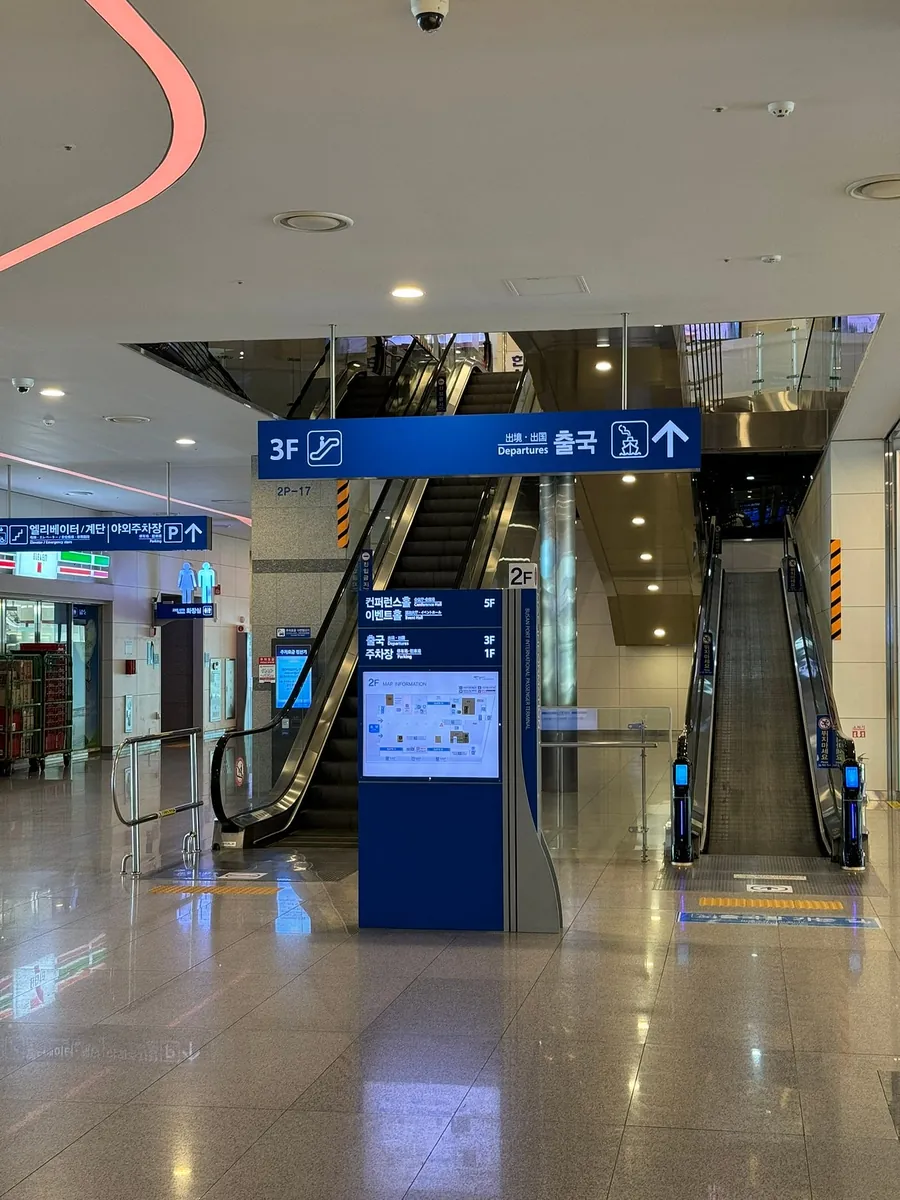
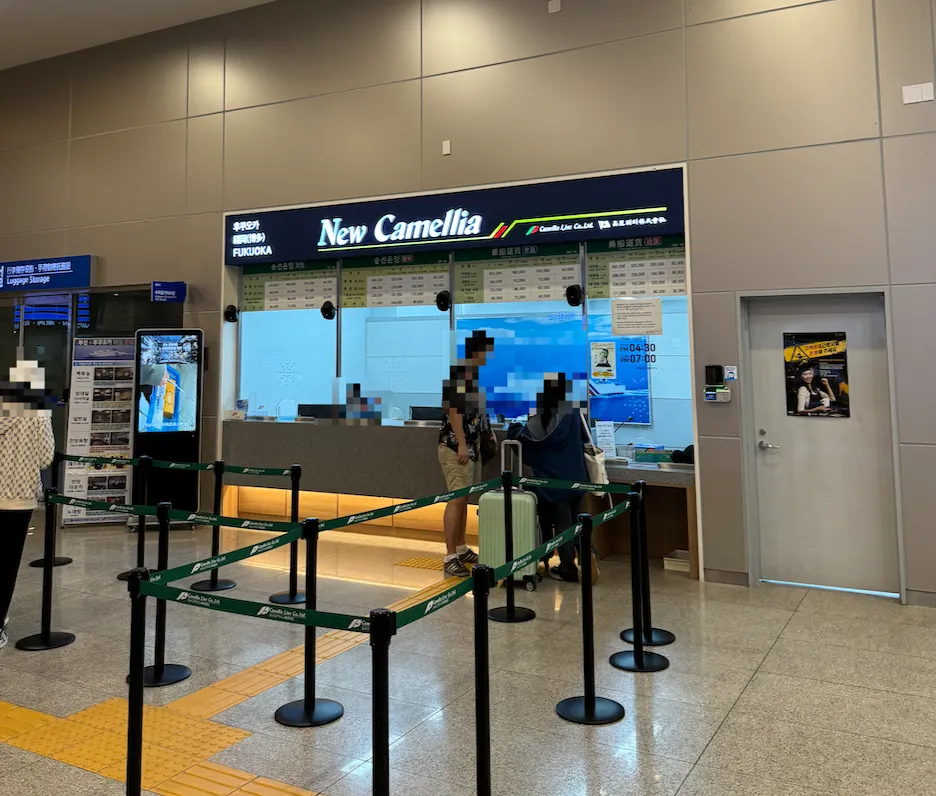
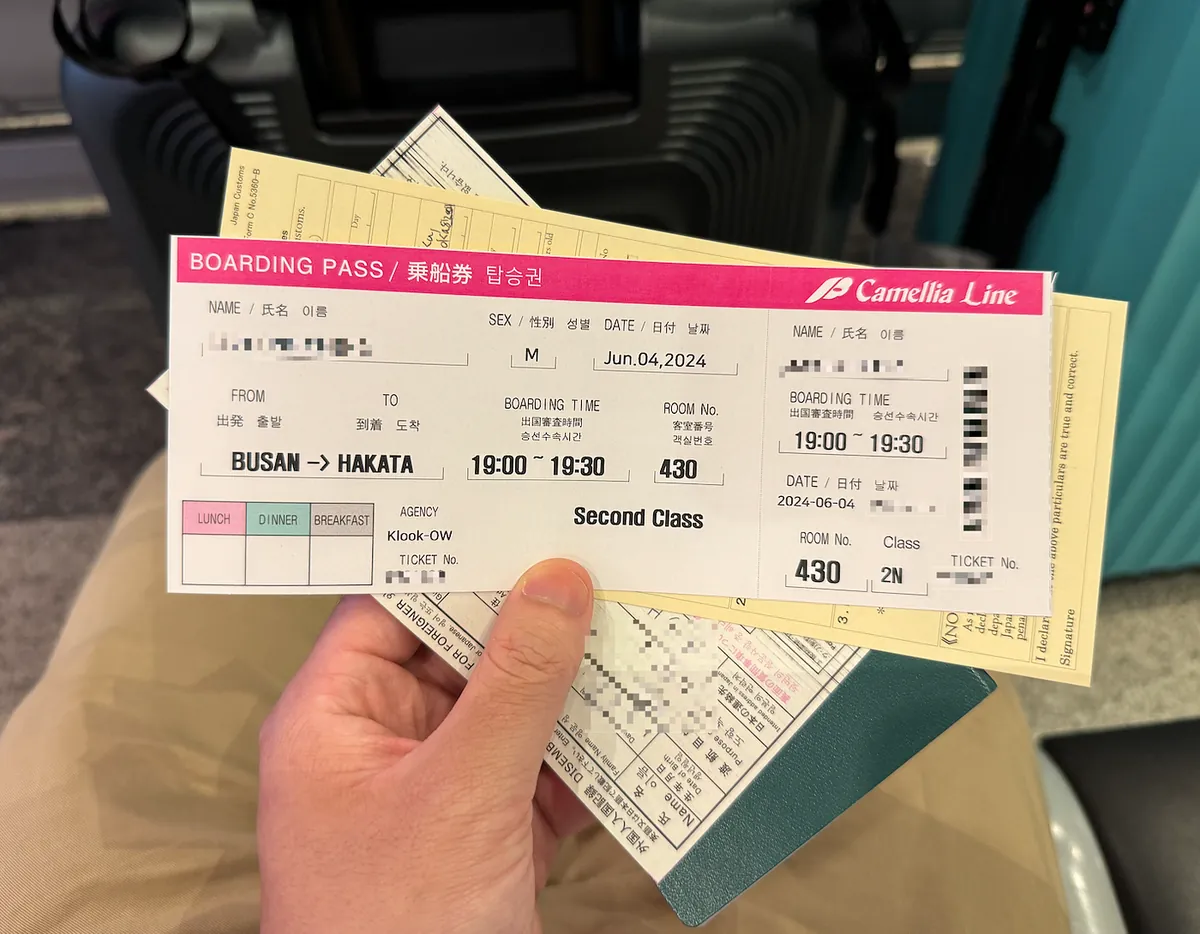
Go from the lobby up to 3F for departure, then go to New Camellia to exchange your ship ticket. (Passport required)
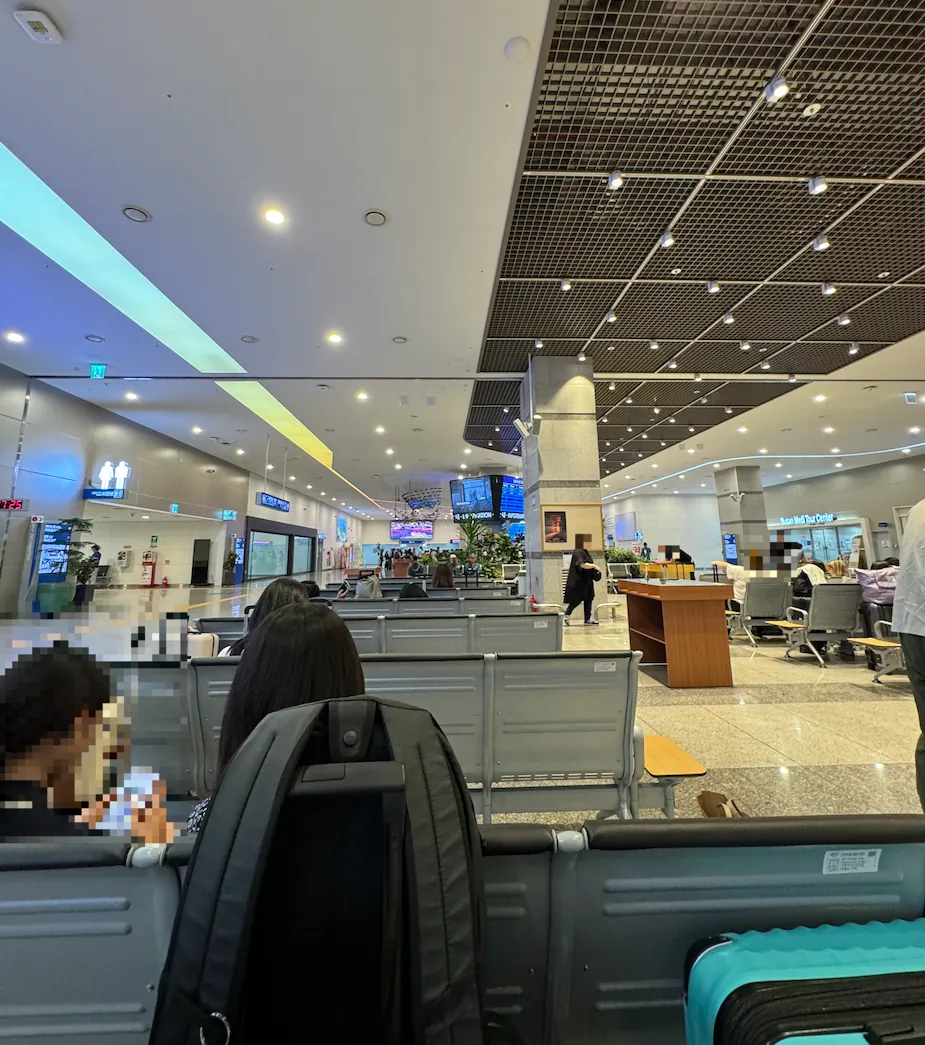
Around 17:30, boarding started. The waiting area for departure is very spacious; you can actually walk around and buy food to bring on board.
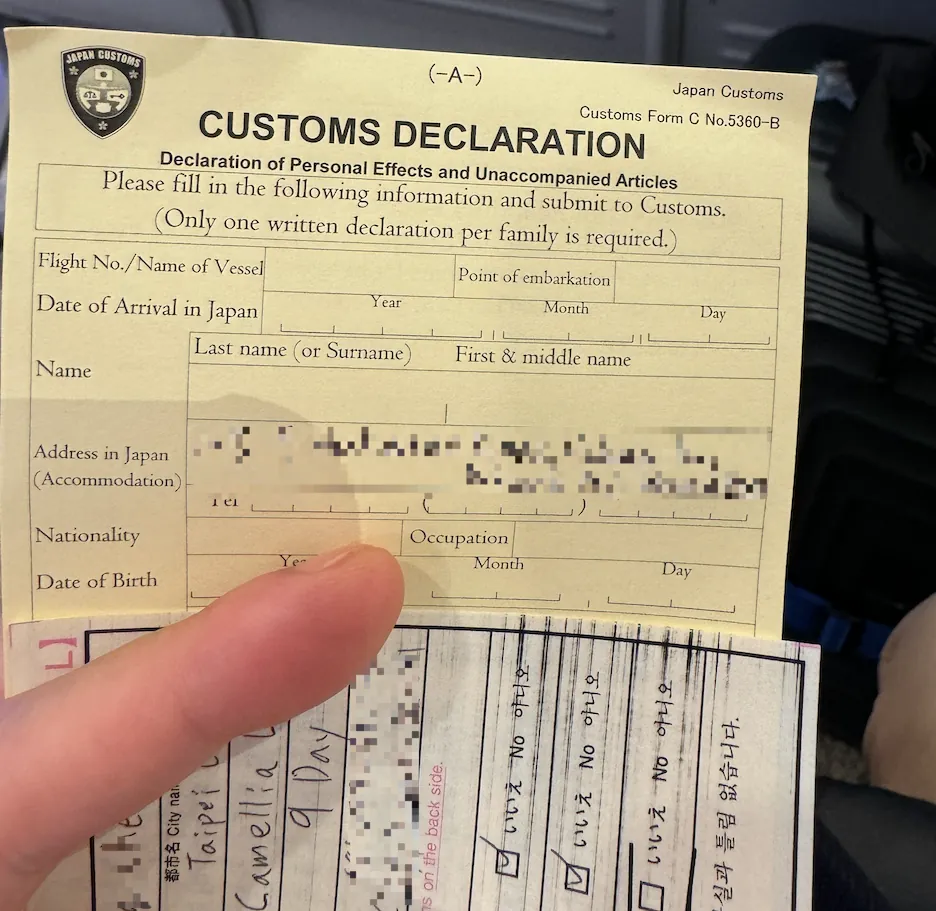
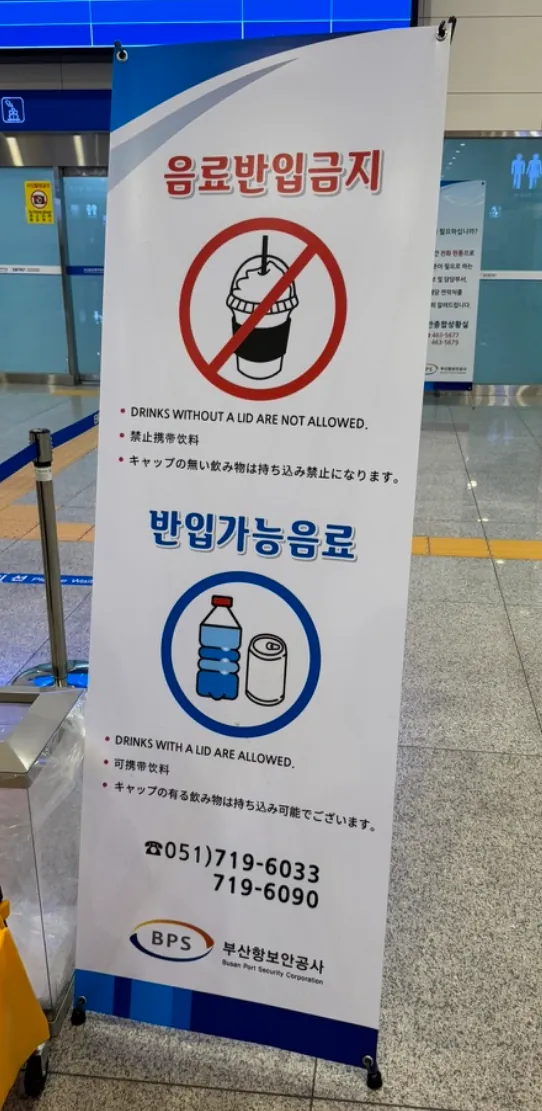
Things to Note:
-
Hakata Port does NOT support electronic customs clearance, so be sure to fill out the arrival card and customs declaration form ⚠️
-
You can bring food and water, and you don’t need to put them in your suitcase since there’s no need to check in luggage. Your suitcase goes on board with you.
-
Holding drinks only is not allowed.
-
The entire departure process was very quick, and the security check was just a formality (everything went through the X-ray).
18:30 Immigration opens.
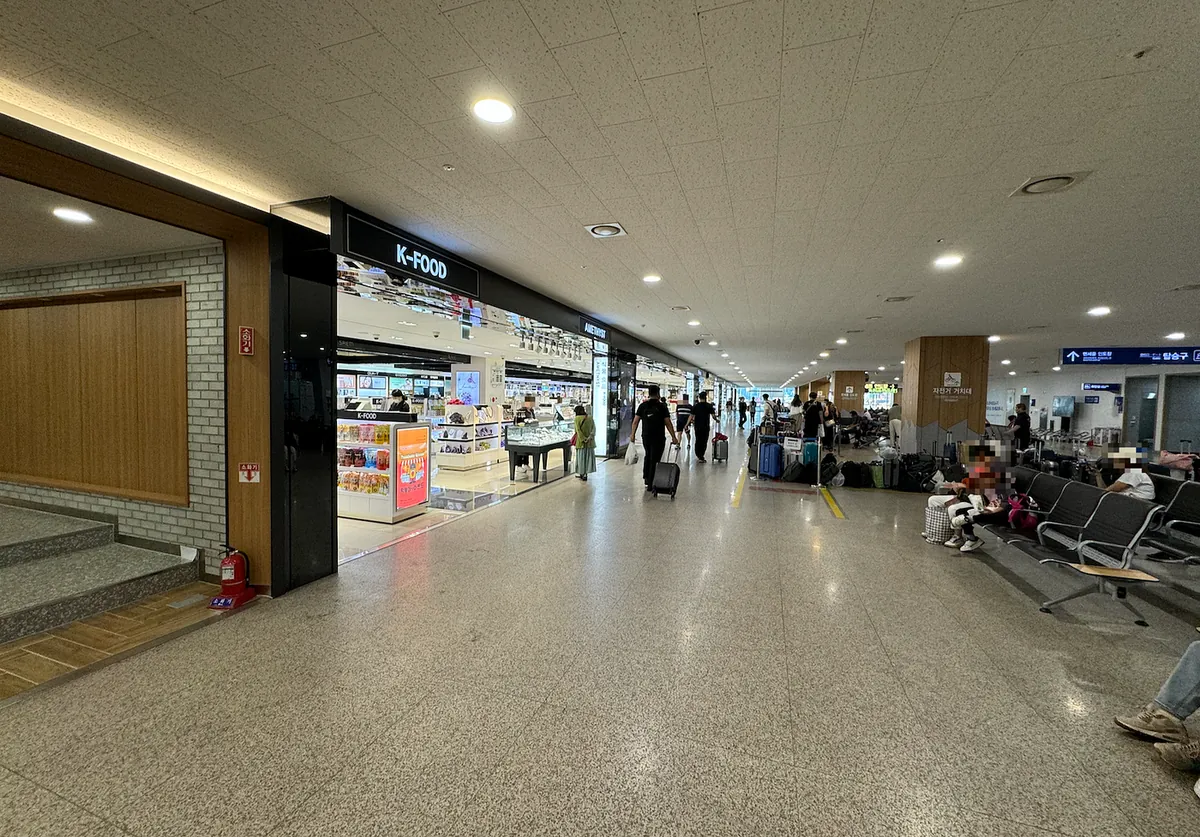
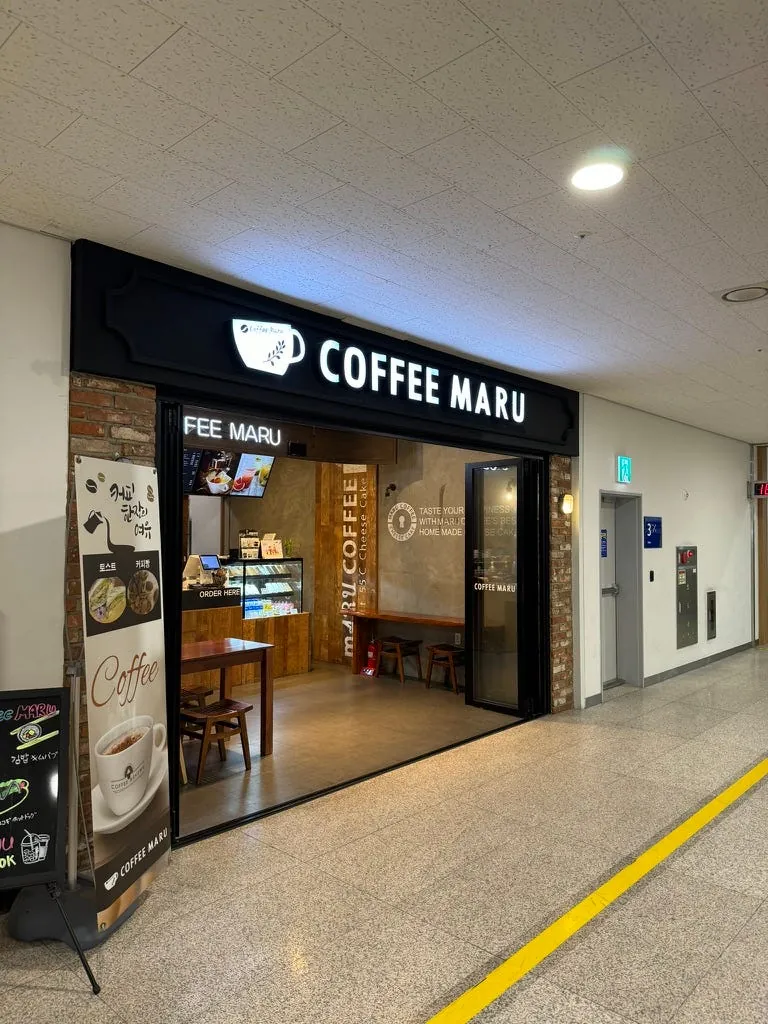
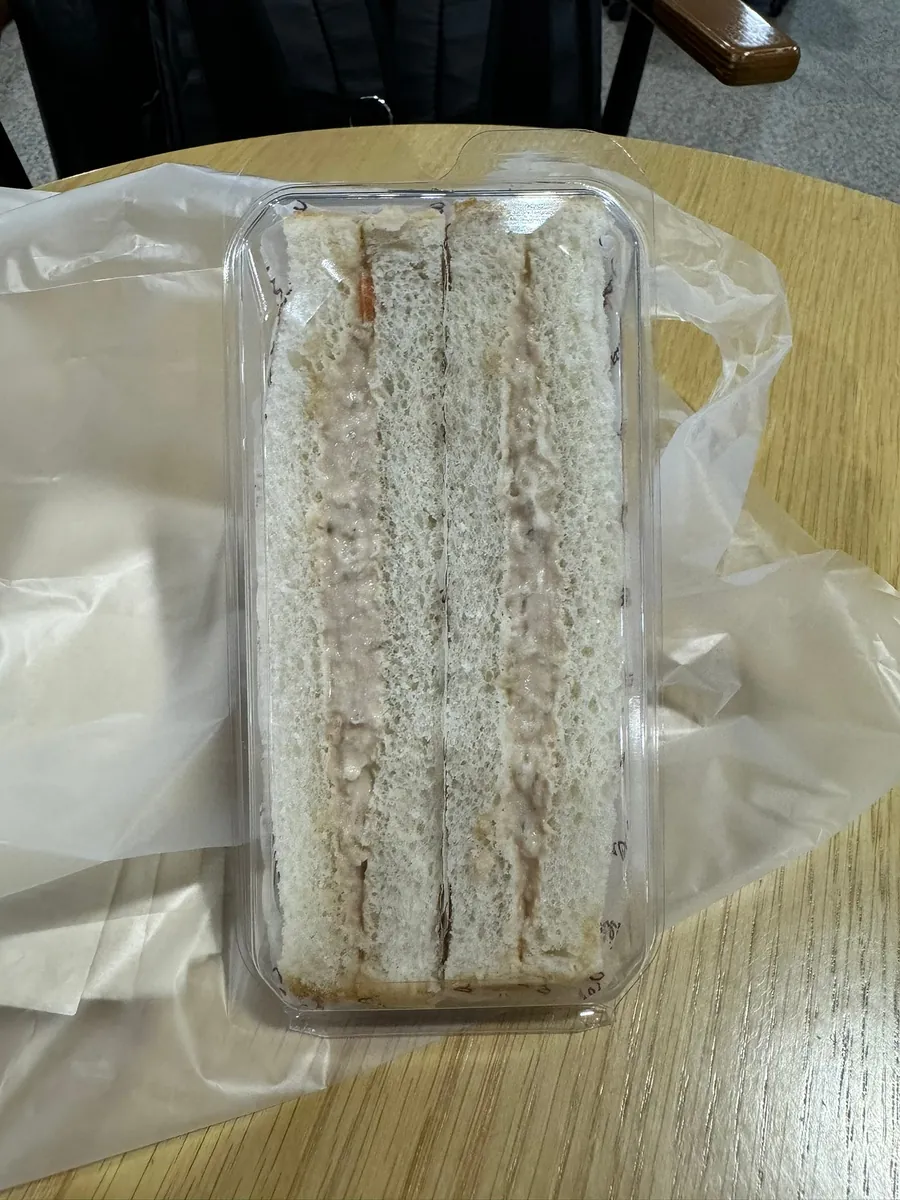
The waiting area after immigration is small, with a few duty-free shops and cafes (only this one sells food). I bought a tuna sandwich to satisfy my hunger.
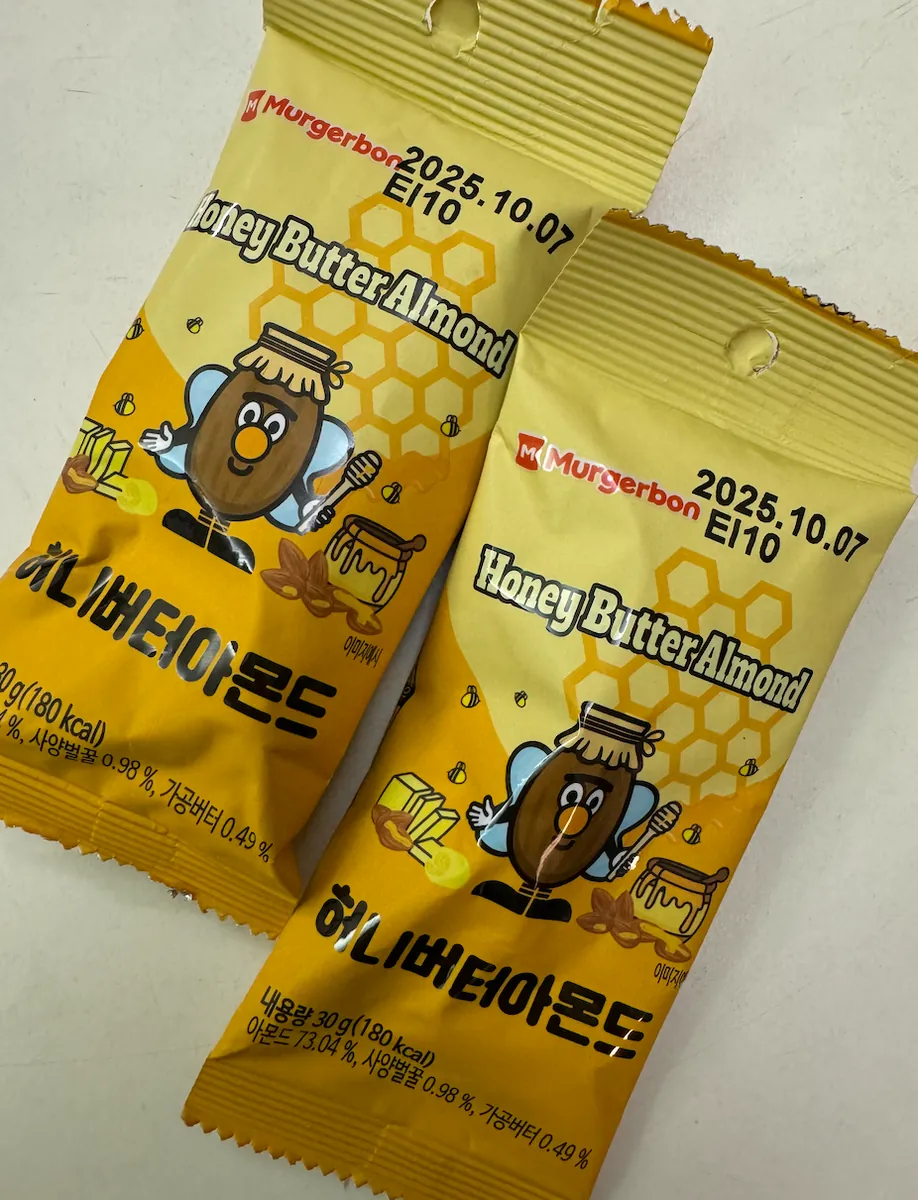
Bought some Korean Toms Gilim almonds (classic honey flavor, coated strawberry chocolate, tiramisu flavor) at the duty-free shop as souvenirs.
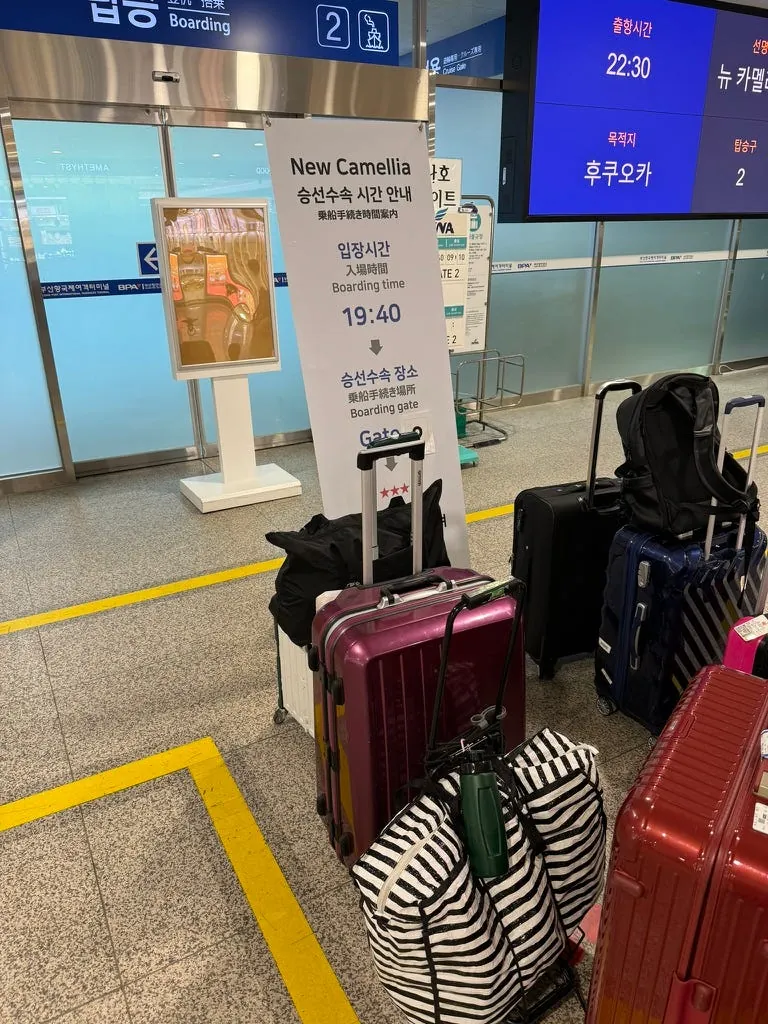
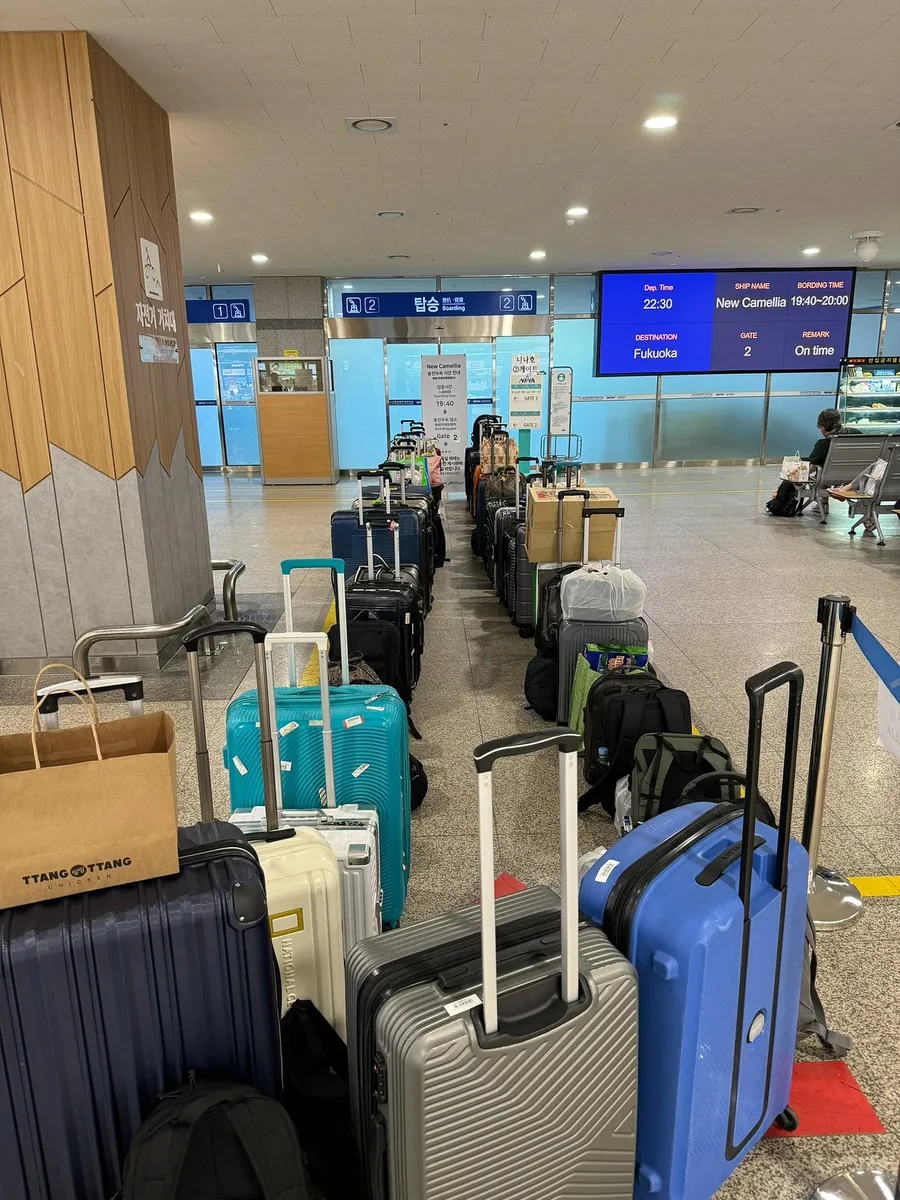
After exiting, you can line up with your luggage. Everyone queues up with their suitcases, ready to board the ship.
About 90% are Korean.
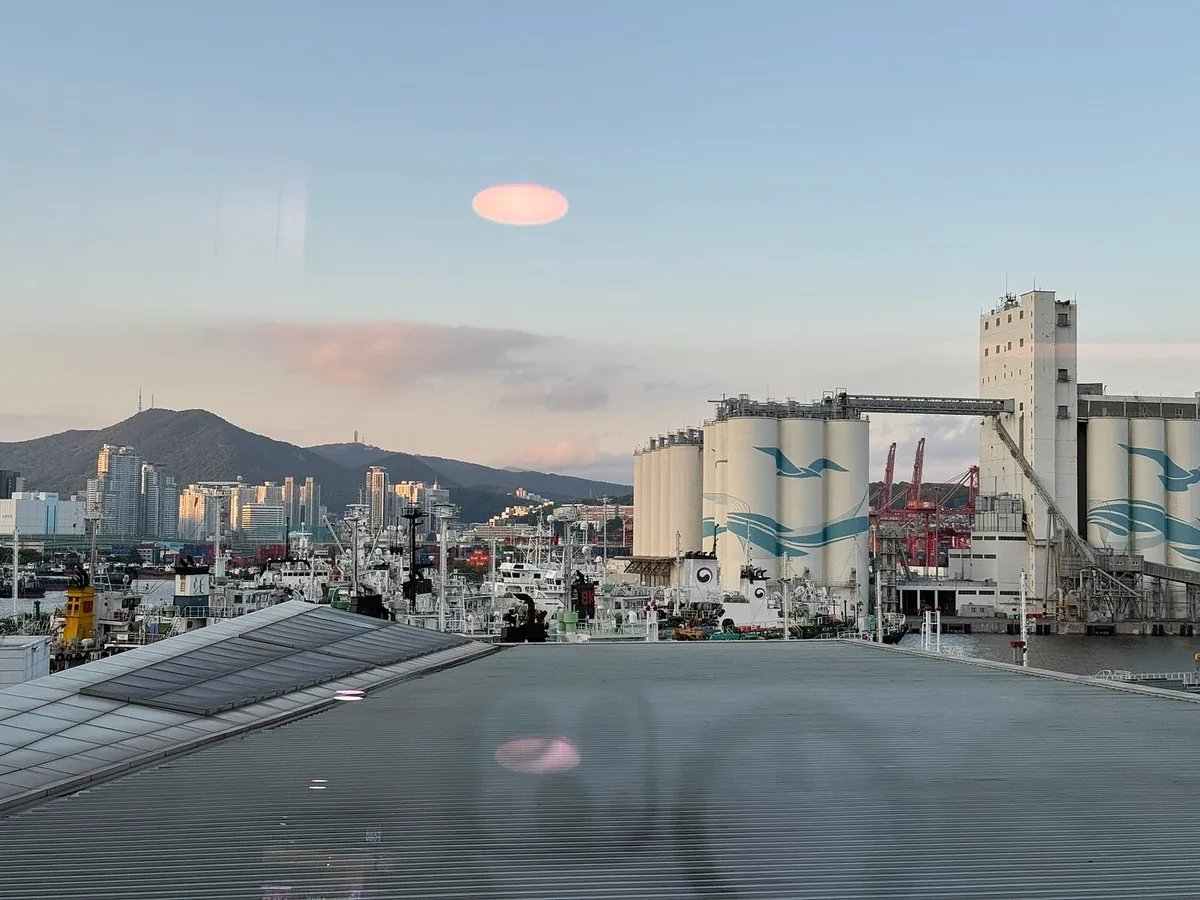
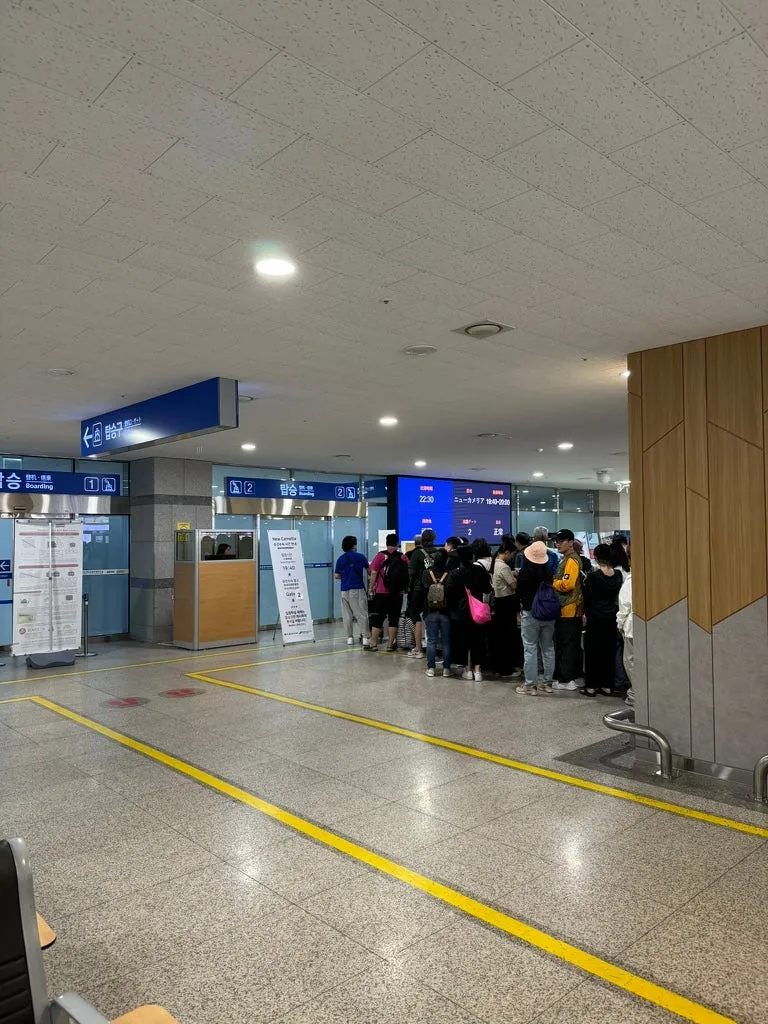
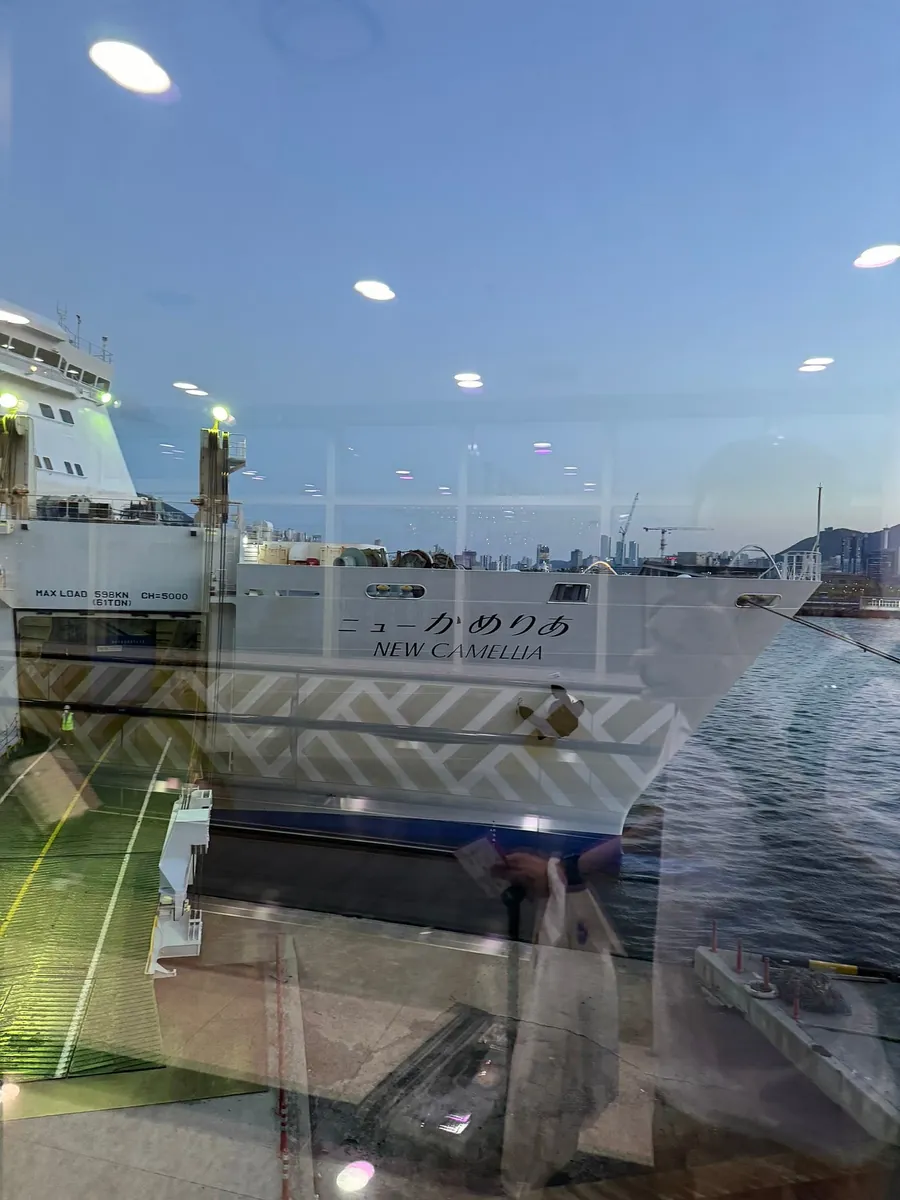
You can see Busan Port from the window. When it’s almost time, everyone will return to their luggage to get ready to board the ship.
It takes about 15–20 minutes to walk and wait from the pier to boarding the ship.
New Satsuma Camellia Ship
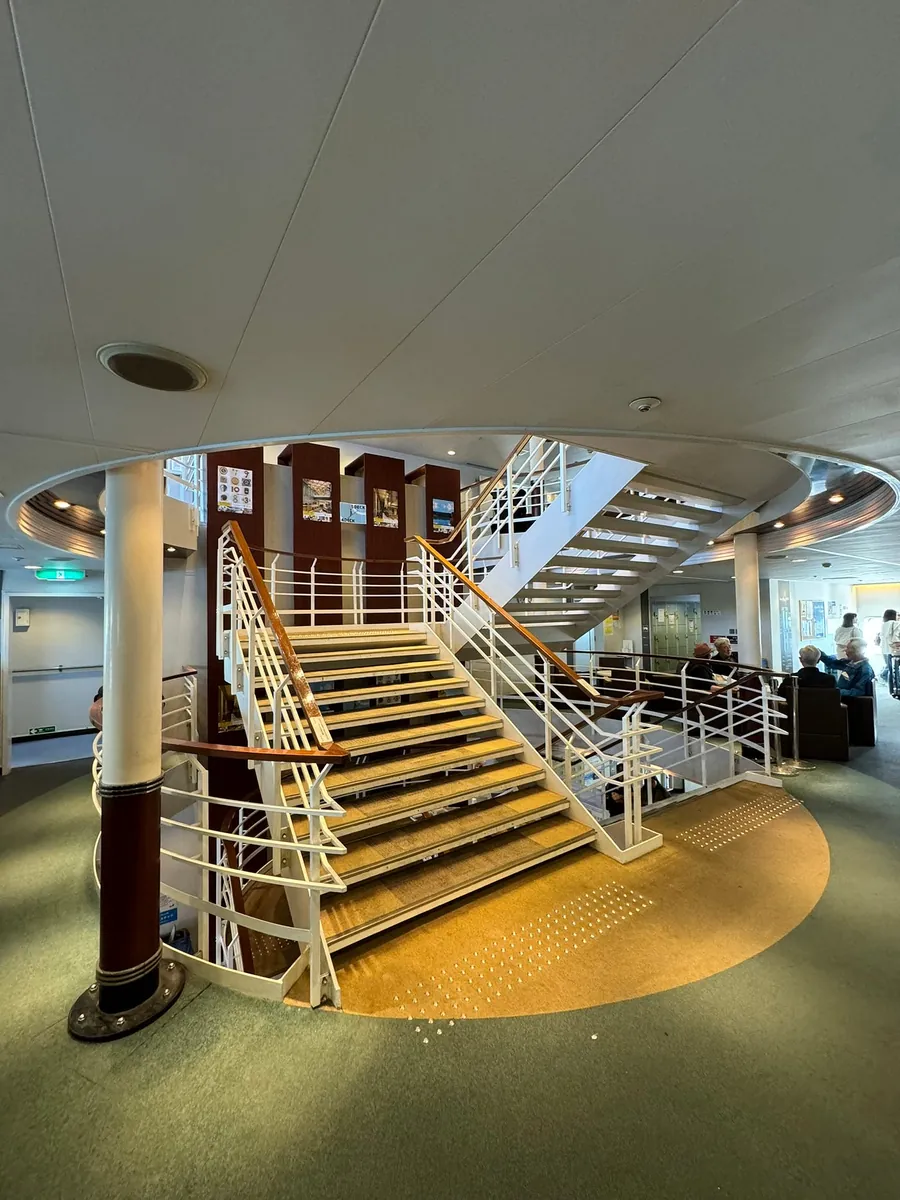
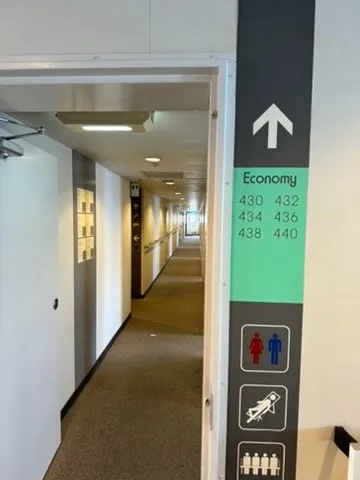
Room 430, after boarding, go up to the 4th floor to room 430.
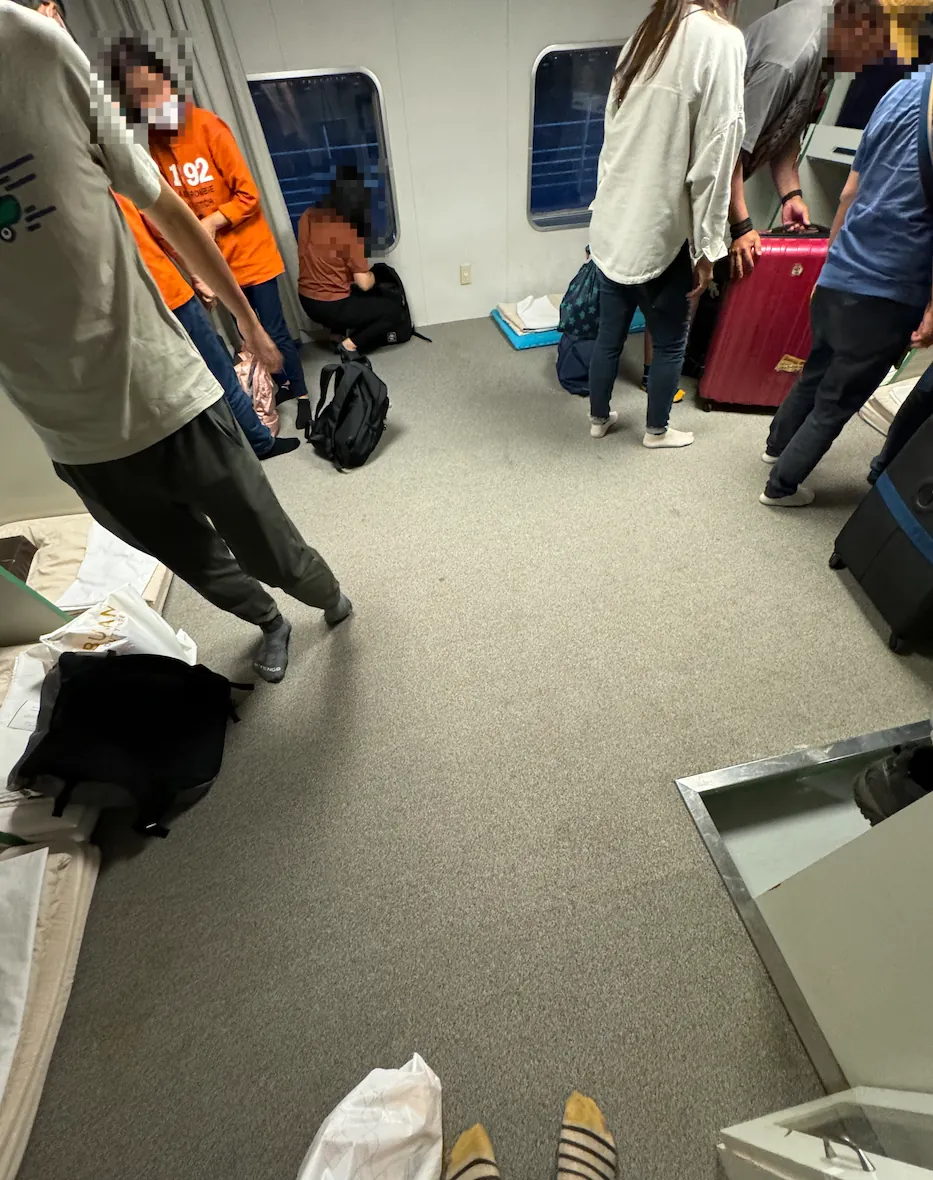
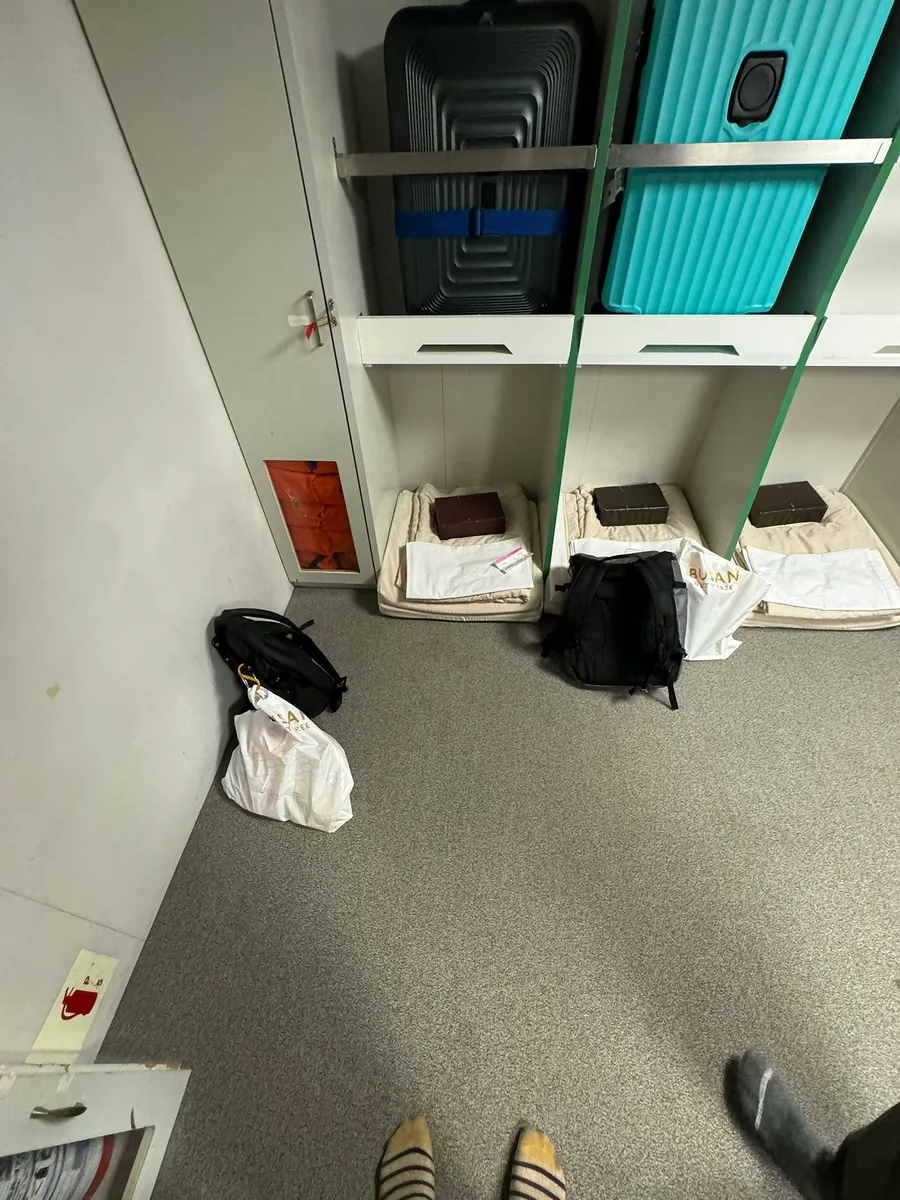
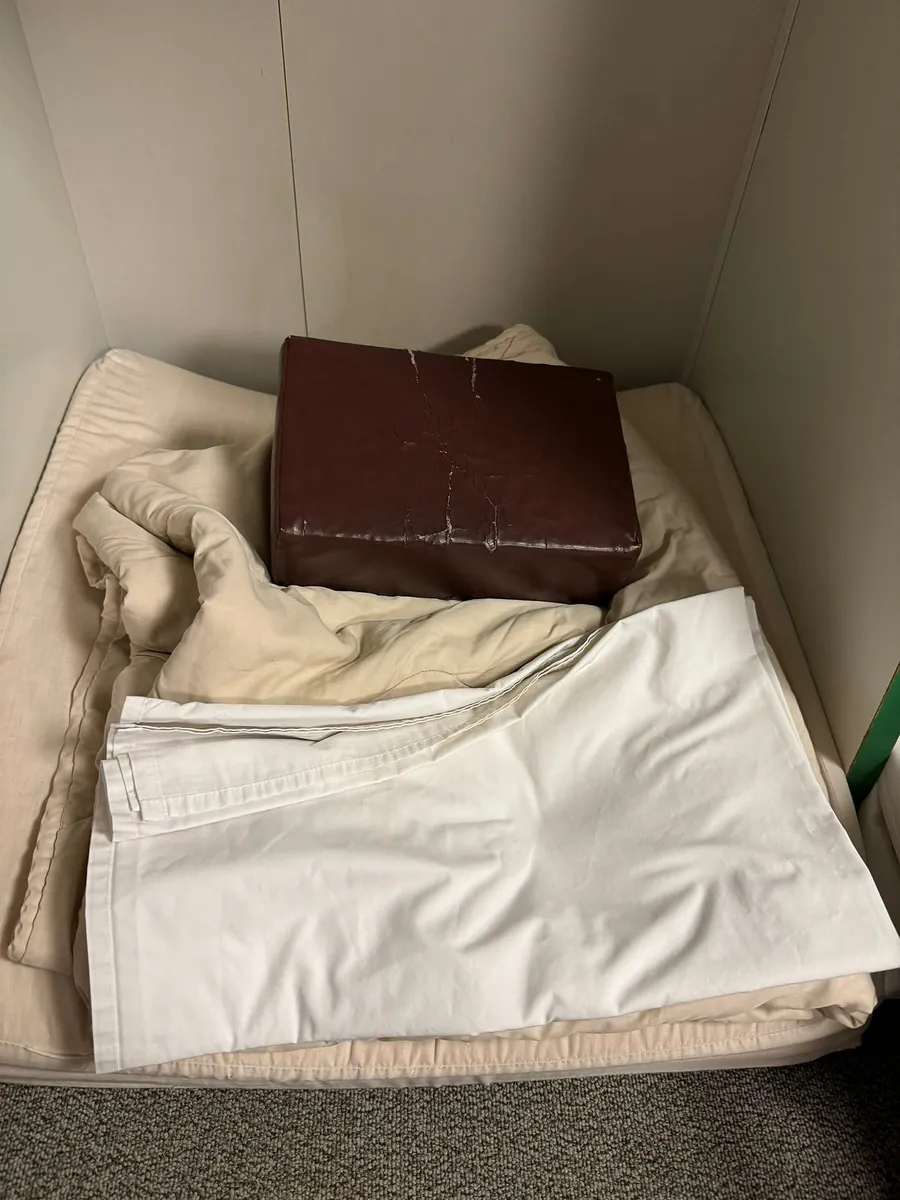
The space is very small, accommodating up to 11 people. This time, it was a family group (3 people) + two couples (4 people) + me and my friend (2 people), so it wasn’t fully occupied; it seems they arrange people who speak the same language or are from the same country together (in this room, except for one couple from Hong Kong/Macau, the rest were Taiwanese).
-
Small personal space, hard pillows, simple mattress, new bed sheets, and quilts.
-
First come, first served. Luckily got a corner seat, which is slightly bigger.
-
There are two power outlets (no adapter needed), allowing you to charge devices alternately.
Luggage was settled around 20:00, and the ship was scheduled to depart around 10:30.
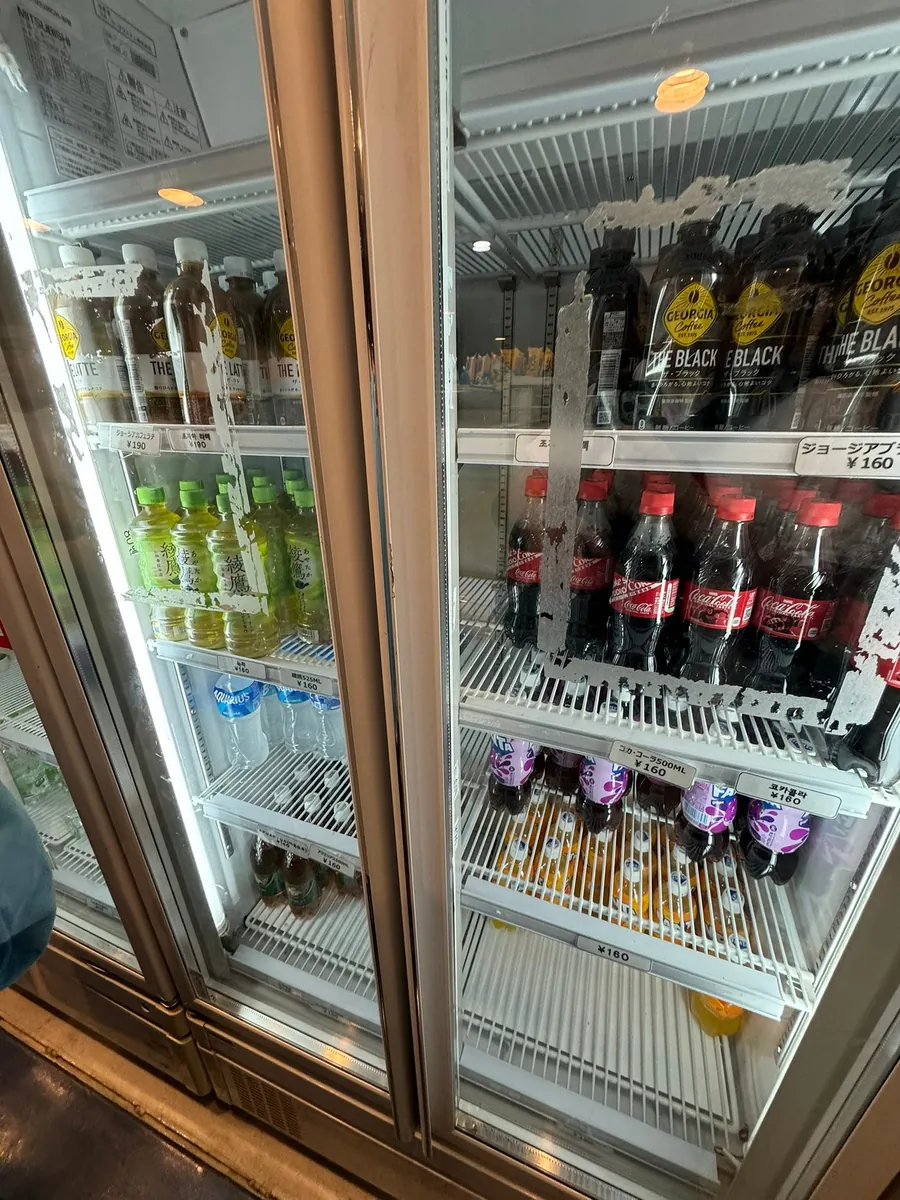
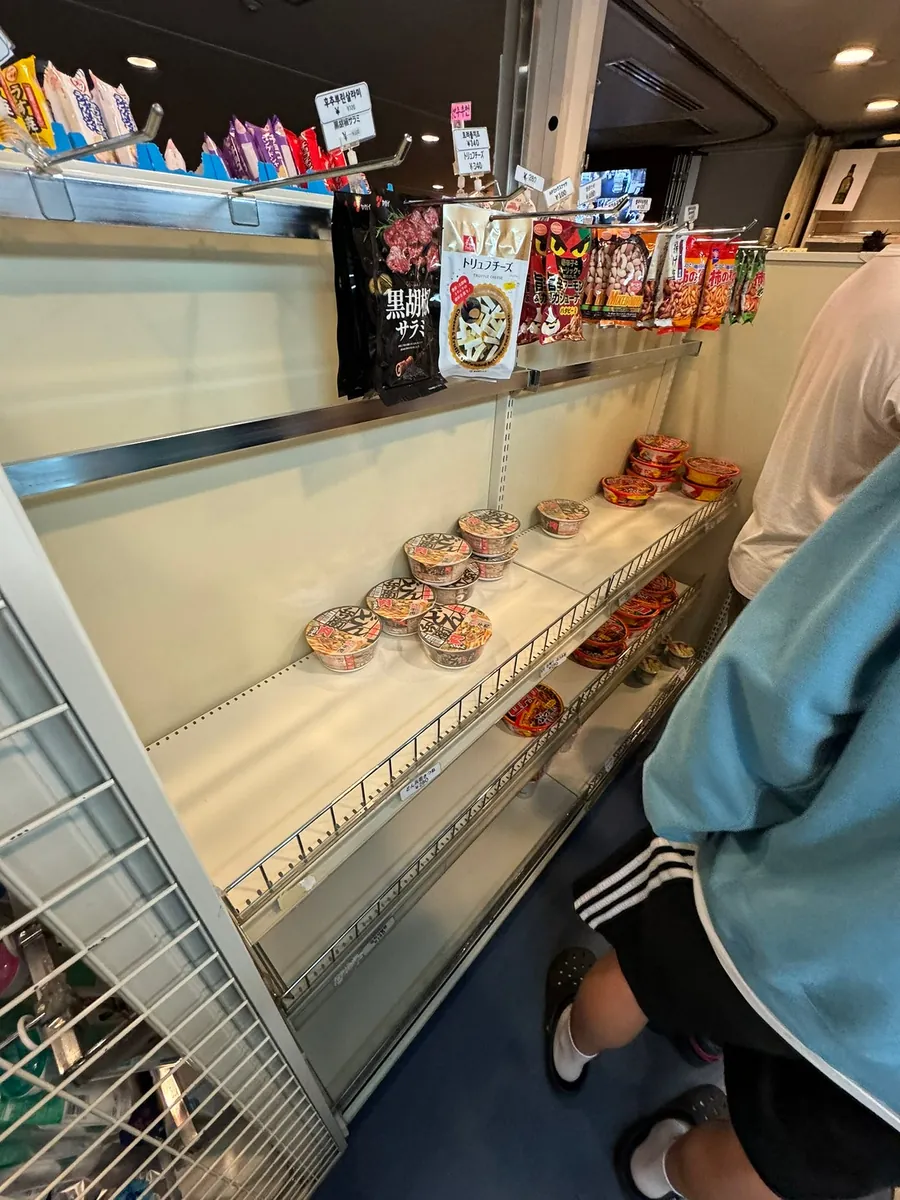
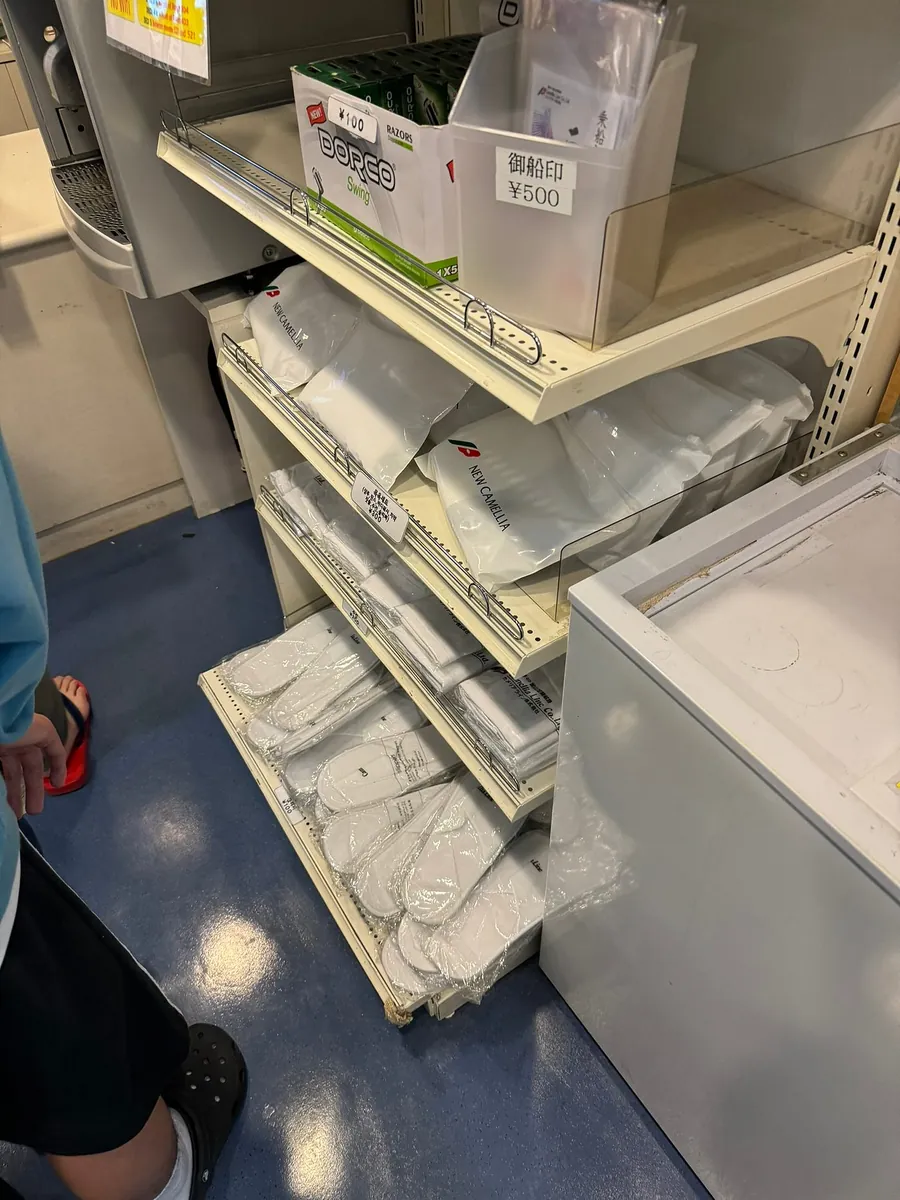
The 3rd floor has a restaurant, a convenience store, and vending machines (all use Japanese yen). They sell slippers, toiletries, and hygiene products. The restaurant does not serve meals; you can only buy instant noodles from the convenience store or microwave meals from the vending machines. Therefore, it is recommended to bring food from Busan.
Important: Meat products cannot be brought into Japan. Discard any leftovers. ⚠️
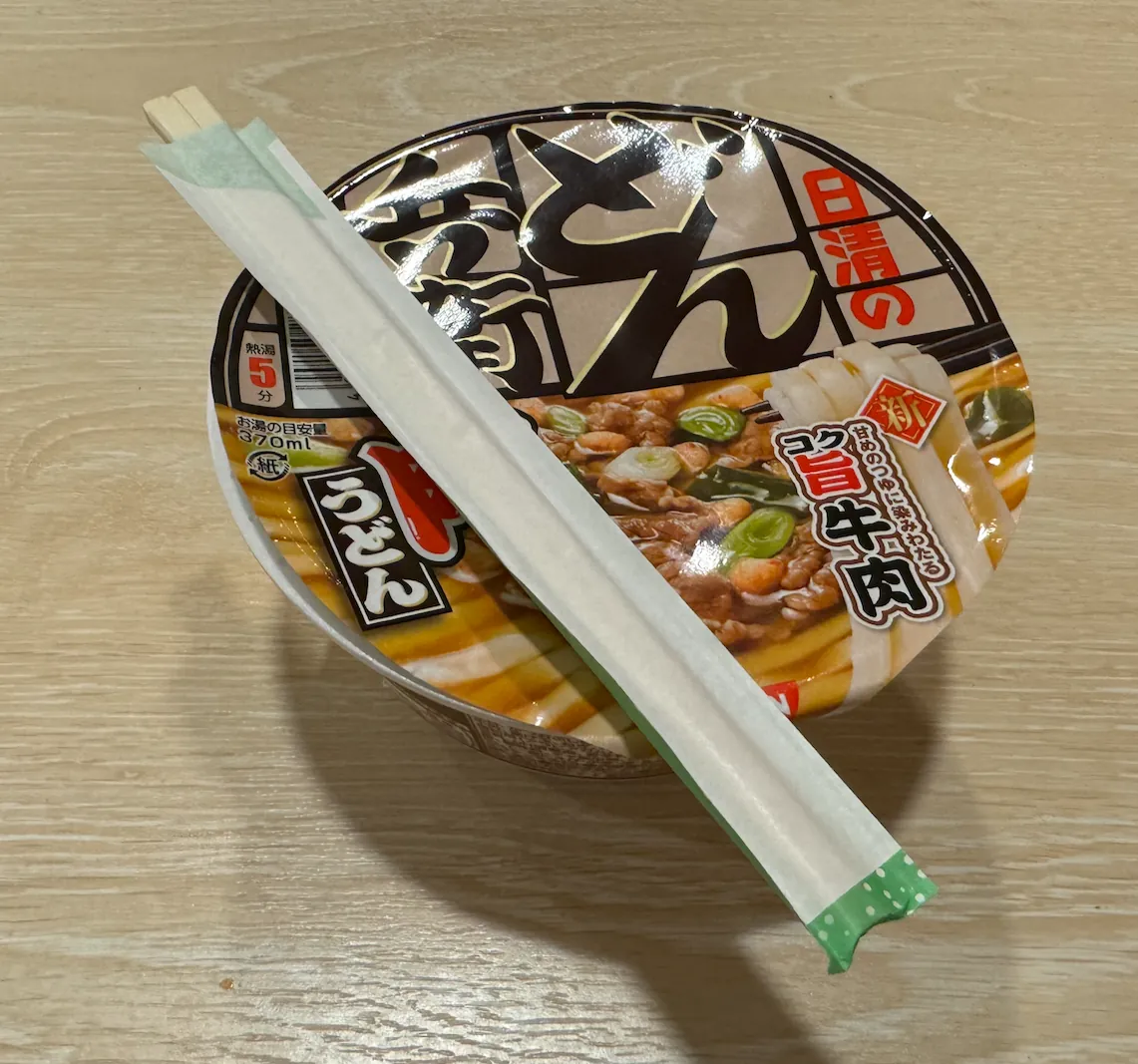
Fortunately, I ate a sandwich before boarding, so I wasn’t very hungry and just bought some instant noodles to settle a meal.
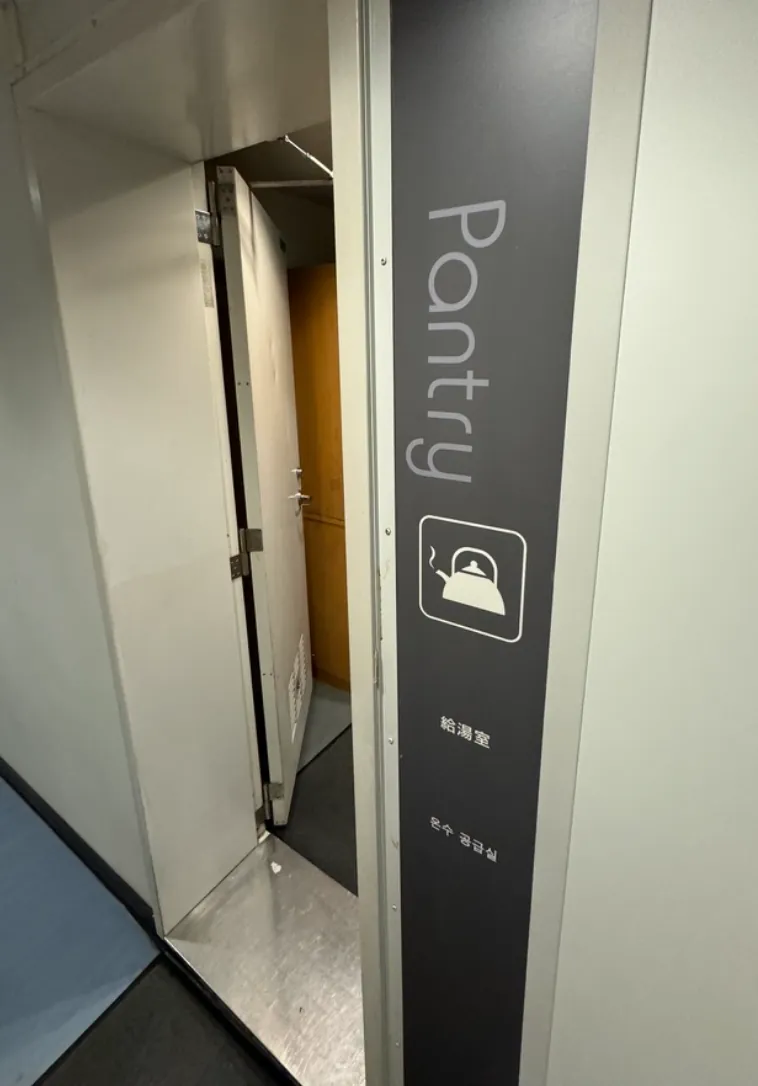
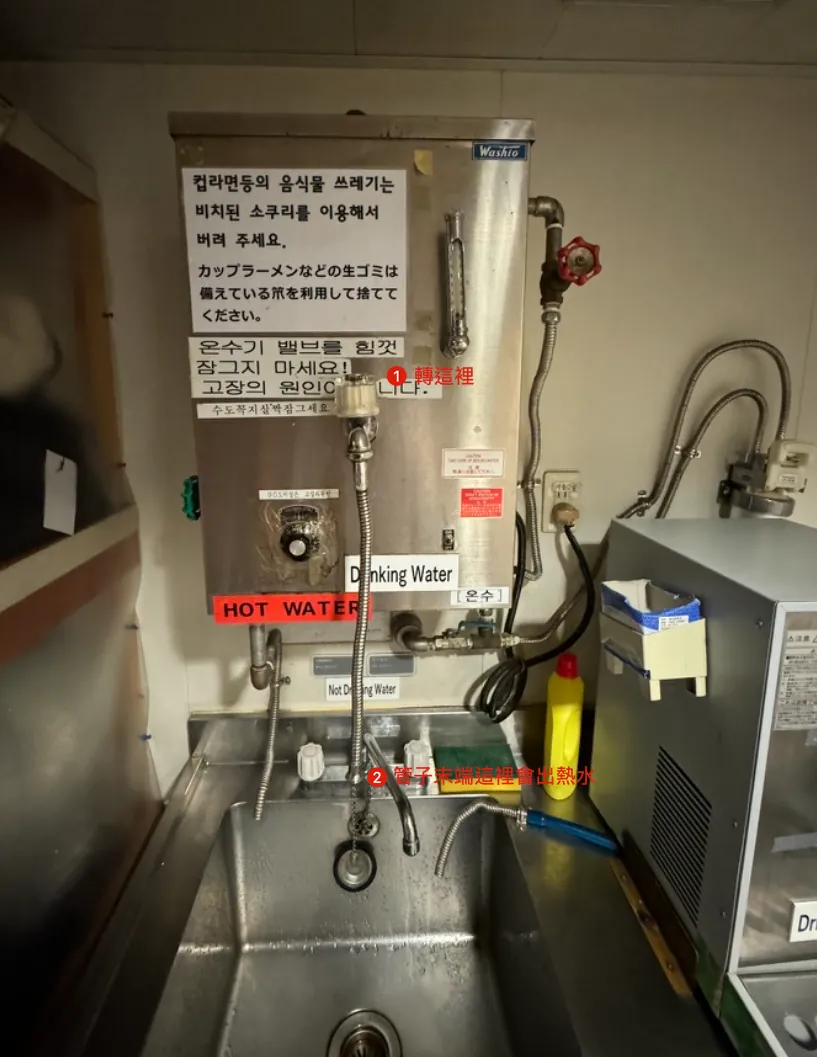
Note: Hot water is not available near the restaurant; only a cold water dispenser is there. Hot water can be found in the tea room near the aft of the cabin area. It took me a long time to find it.
Also, be careful when using the water heater. Turn on the switch first; water won’t flow immediately, so wait a moment. Once the water flows, handle it carefully. After use, be sure to turn it off completely to avoid scalding the next person.
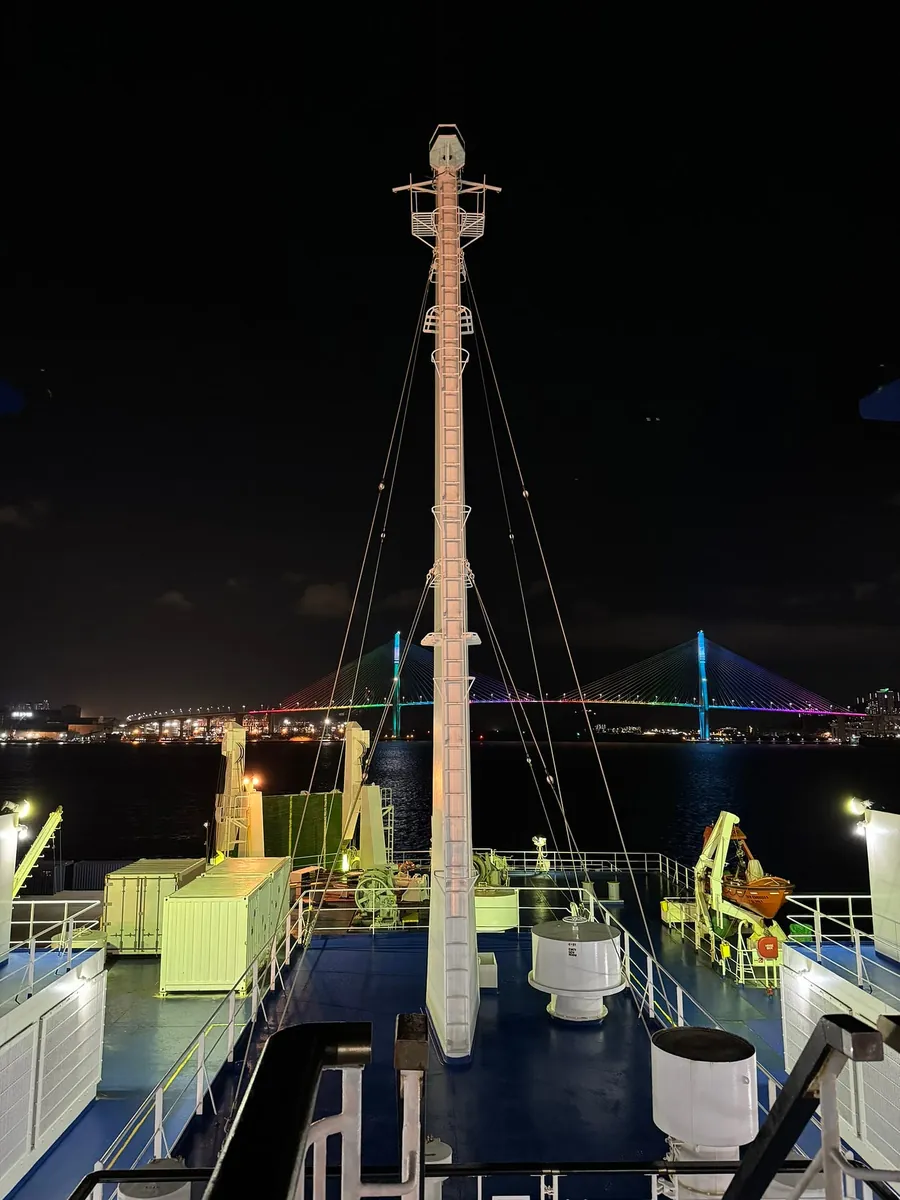
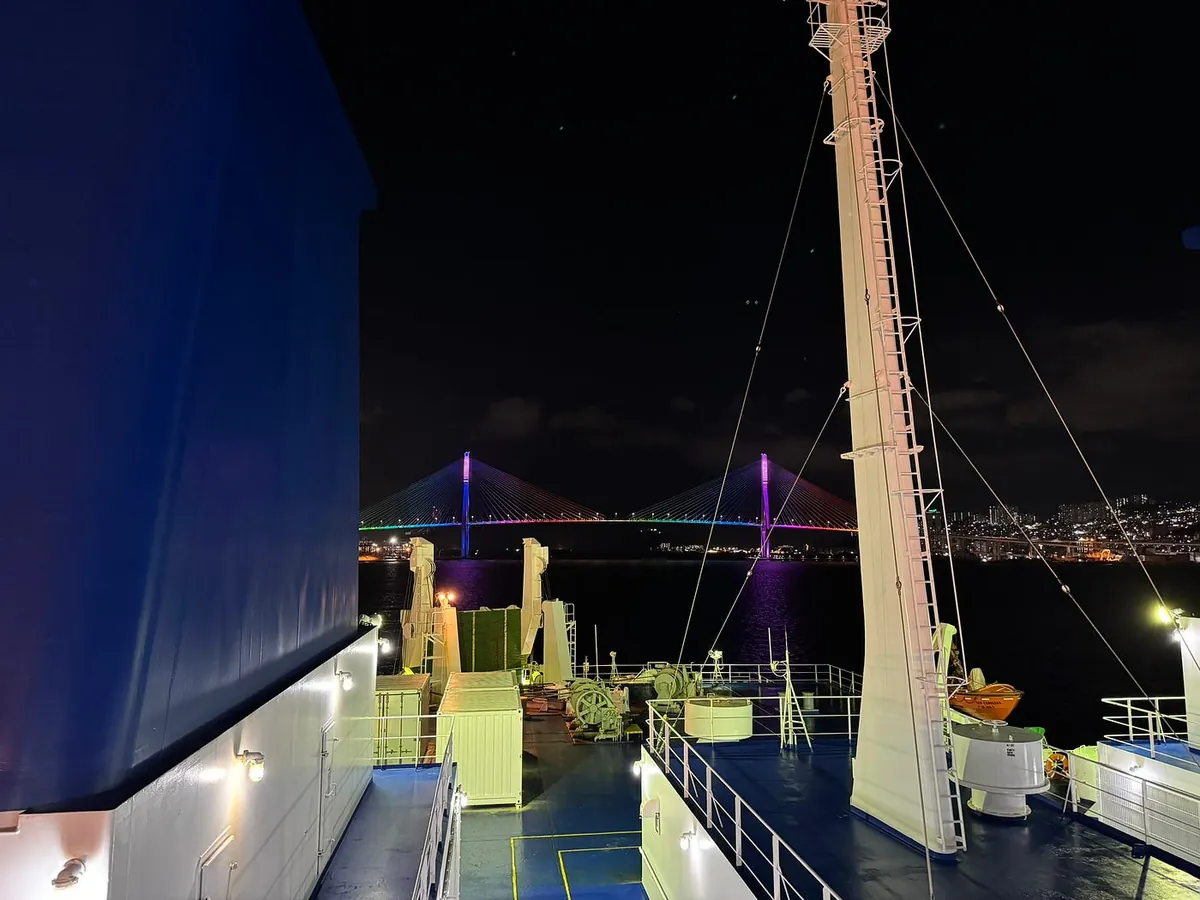
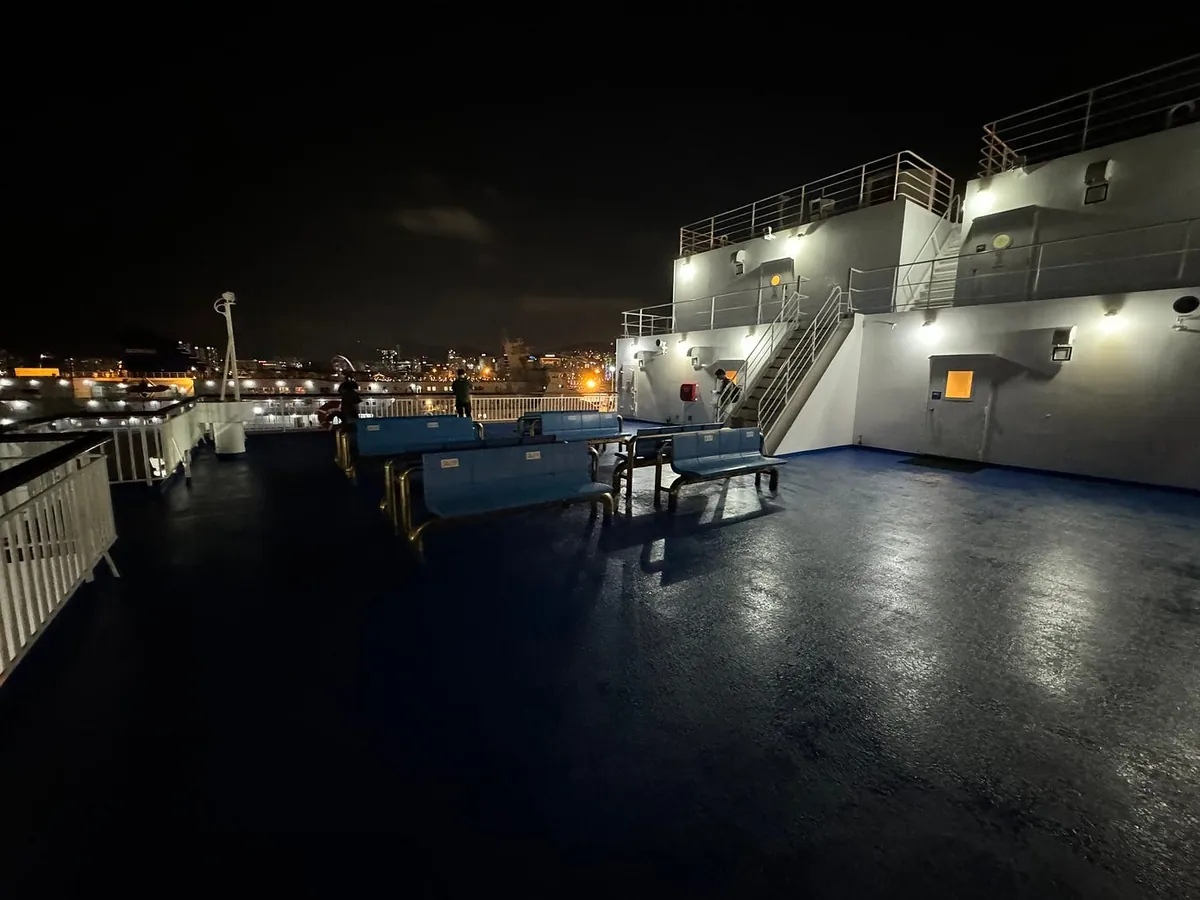
After eating, go out on the deck for a walk (free access, but watch out for slippery floors).
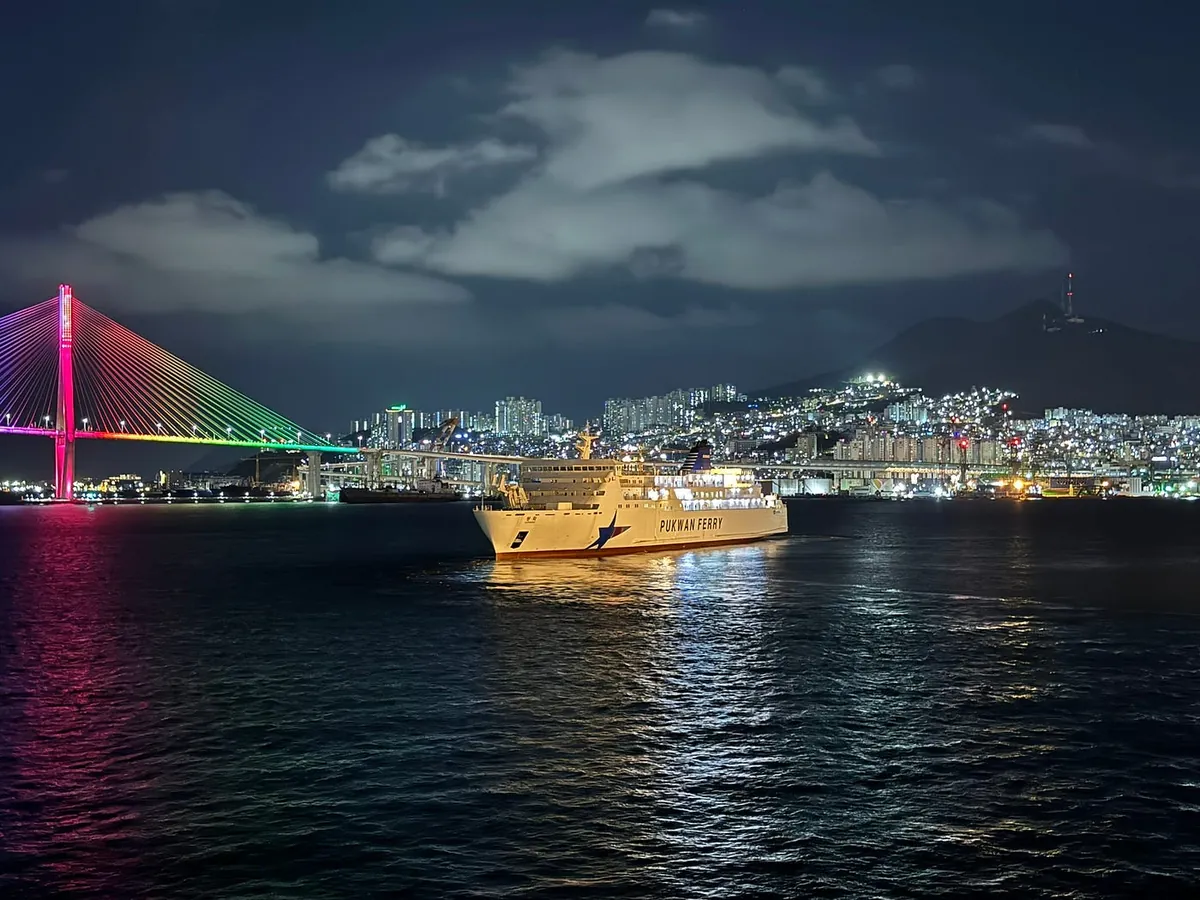
Around 21:00, another ferry (PUKWAN FERRY) heading to Shimonoseki City will depart first.
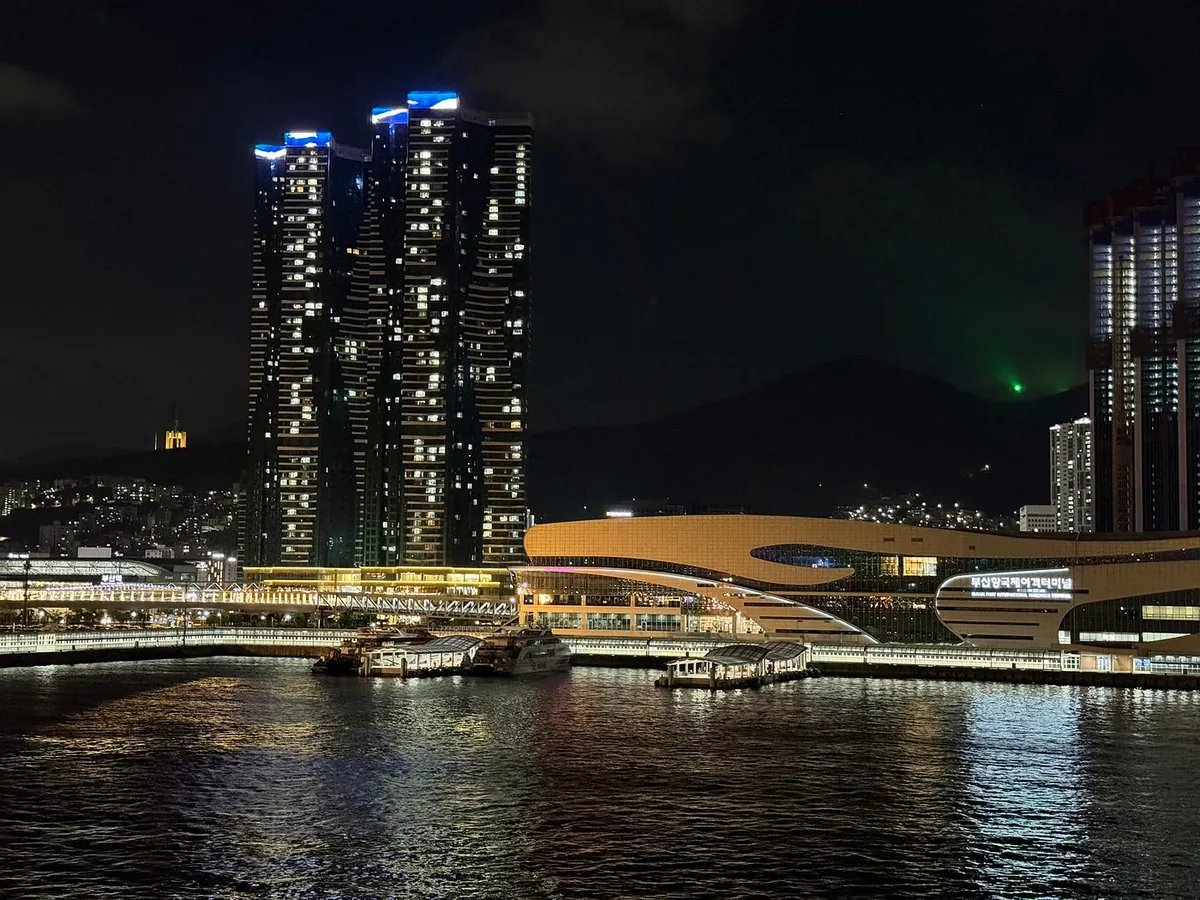
Looking back at the night view of Busan Port Terminal.
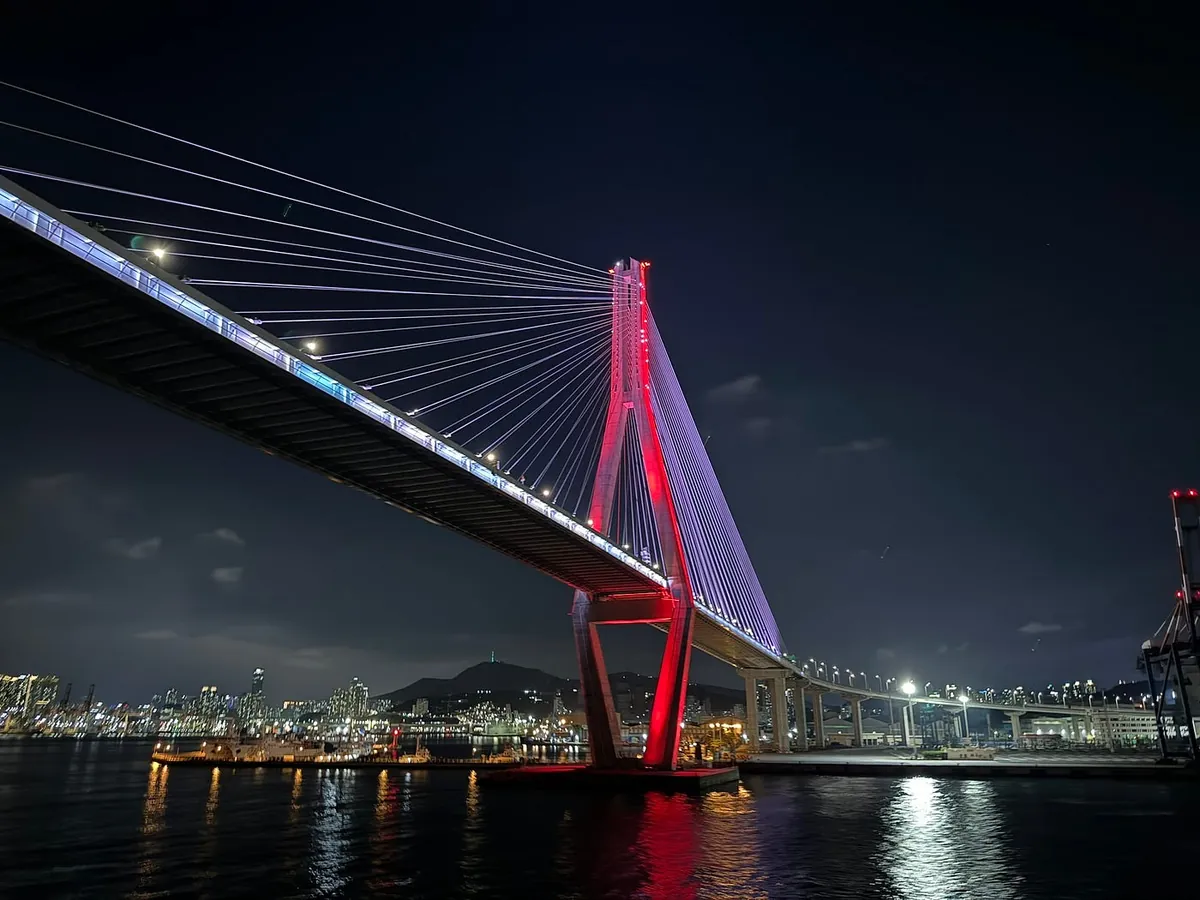
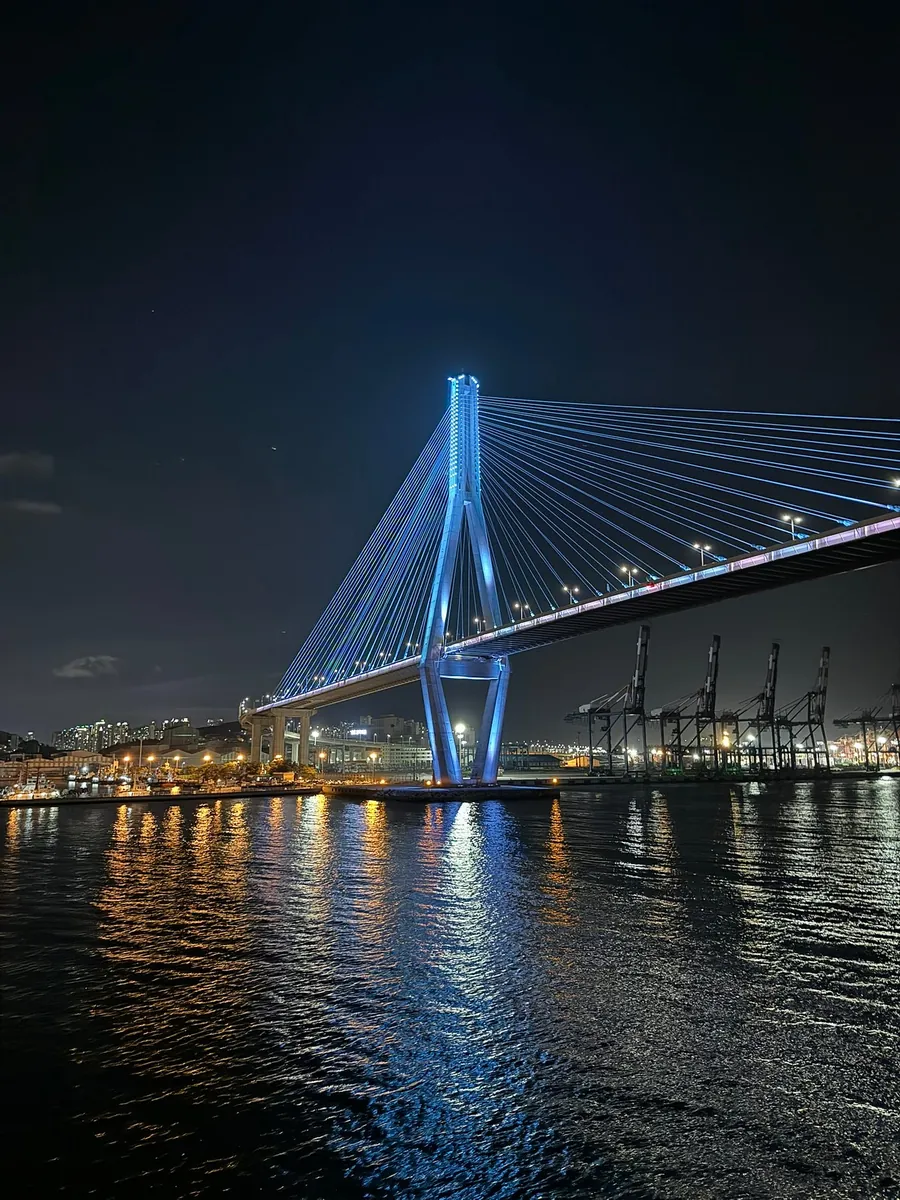
Around 22:30, the ship will start departing from Busan Port, passing under the Busan Port Bridge. The night view of the bridge is very beautiful. (It will be cold, so dress warmly)
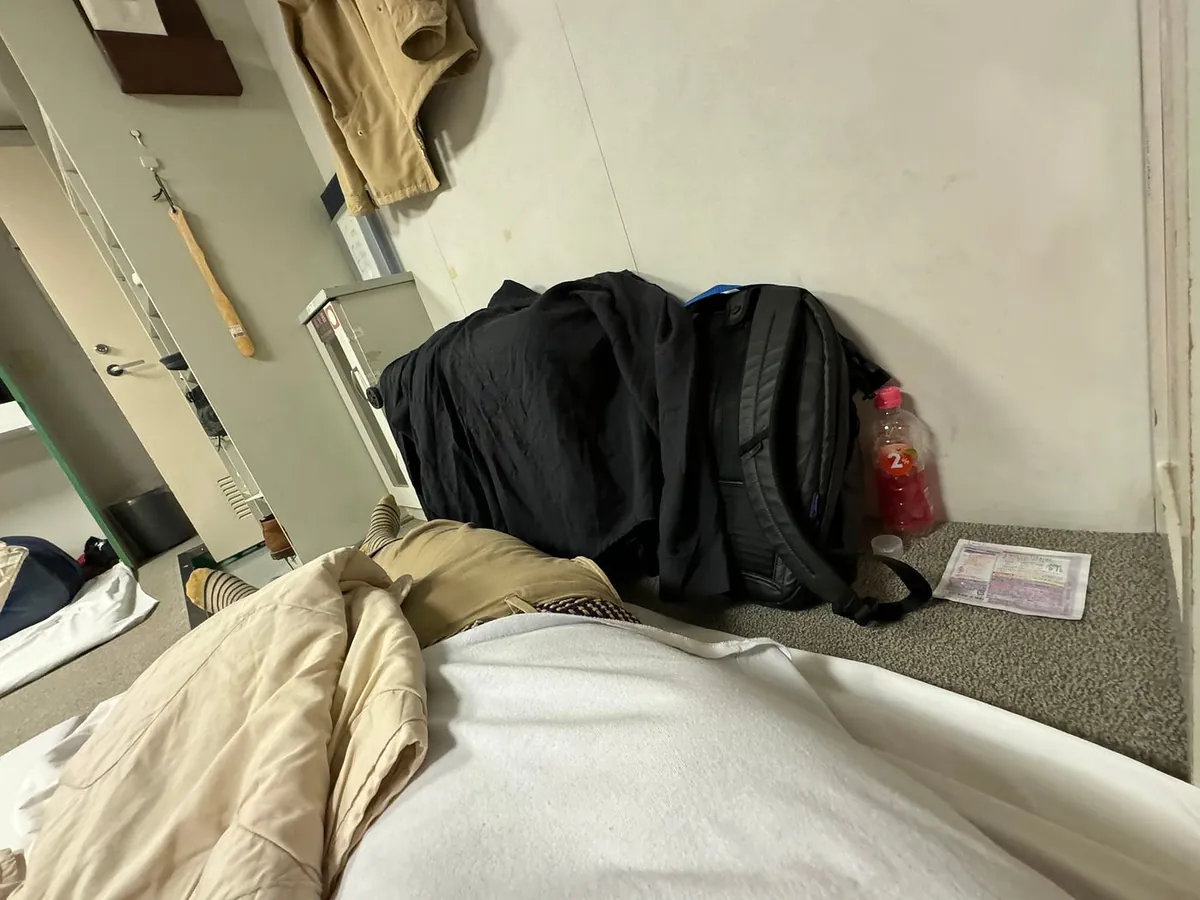
The economy dormitory lights go out at 11 PM. After watching the departure, you can head back and lie down.
-
Only the deluxe rooms have private bathrooms; others share common facilities.
-
The bathroom is a public bathhouse in Japan, requiring full nudity. There are small partitions at the washing area; since I was too shy, I didn’t take a bath.
-
The overall facilities are quite old but well maintained and clean.
-
There is a recreation room and KTV.
-
Public areas will not have the lights turned off.
-
The internet connection lasted until around 11 o’clock after departure (it is said there was only a short period without internet).
-
Approaching Tsushima Island means entering Japan, so it’s time to switch to a Japanese SIM card.
-
There will be slight rocking motions while sailing, so those prone to seasickness may want to take motion sickness medicine.
Good night, Busan.
Day 3 Hakata, Yutoku Inari Shrine
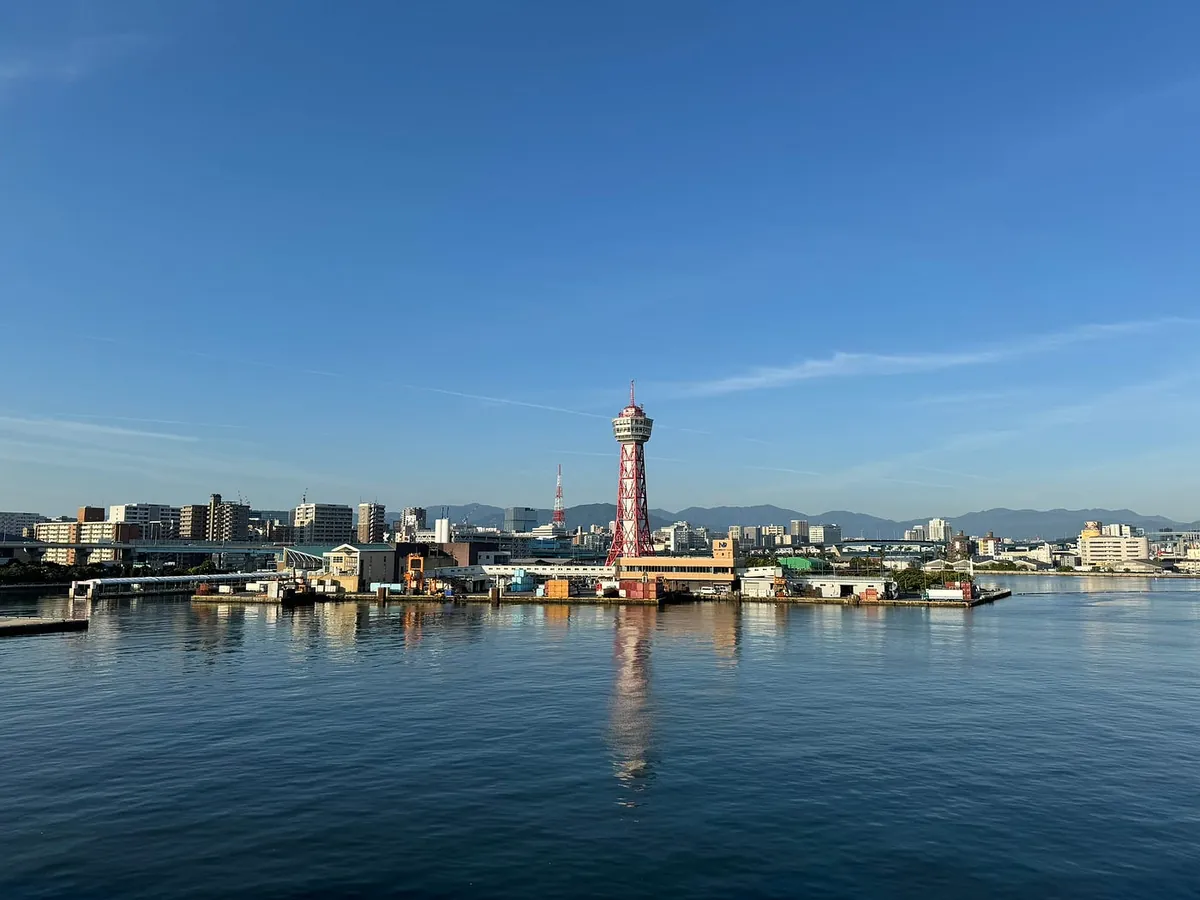
Arrived in Busan around 5:30 AM, and the dormitory lights were turned on simultaneously; went out on the deck to see the quiet Hakata Port and Hakata Port Tower in the early morning.
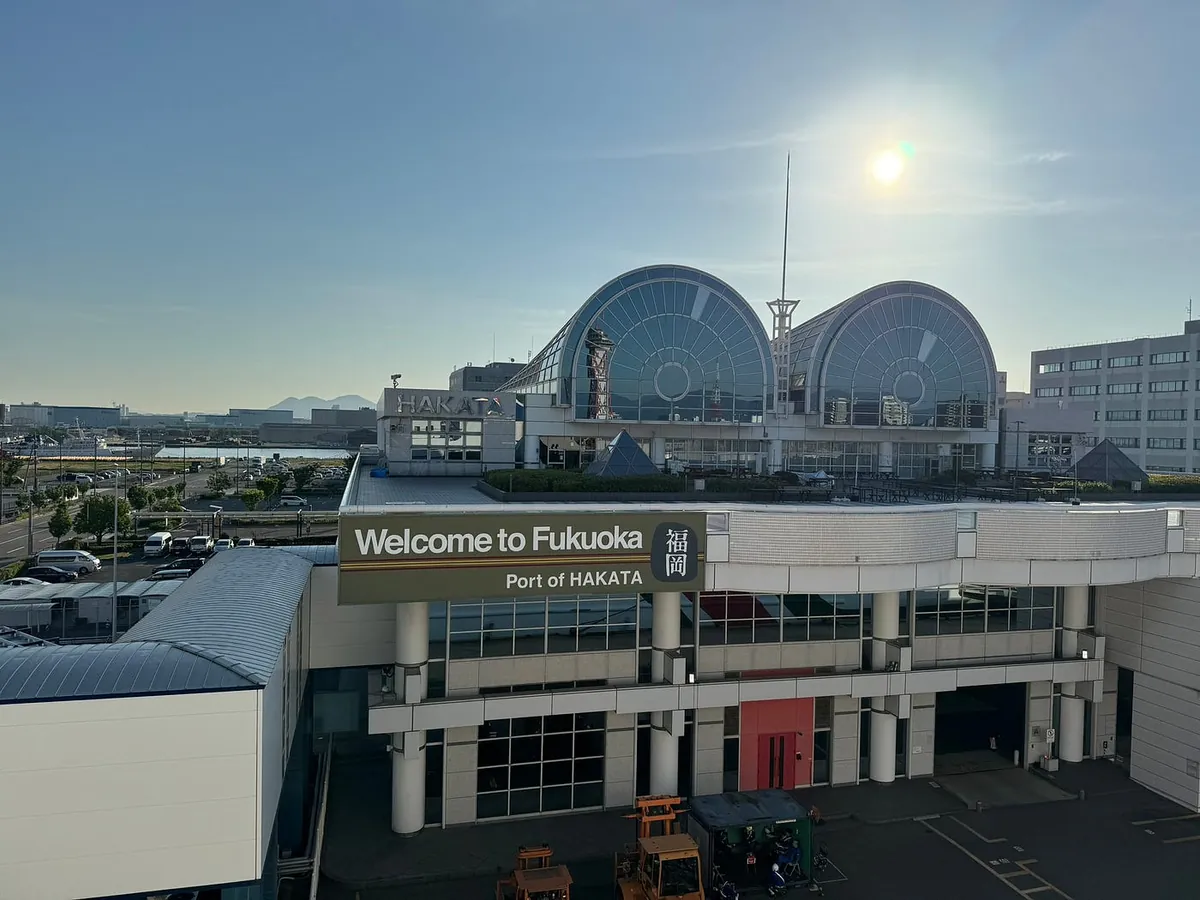
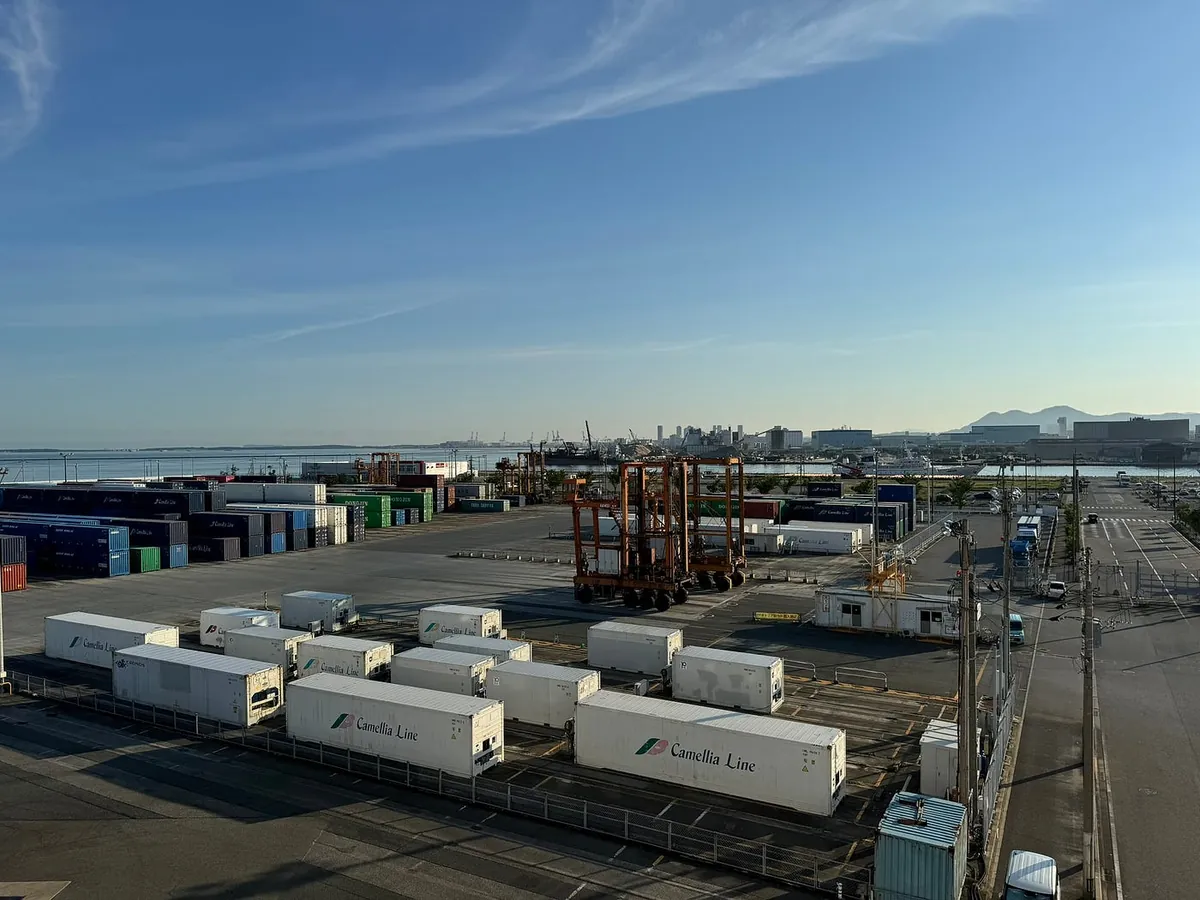
Those who purchased breakfast can dine at the restaurant. We didn’t, so we took our time freshening up, wandering around the deck, and packing up to prepare for disembarkation.
Disembarkation begins uniformly at 07:30. Everyone will line up with their luggage at the 3F lobby exit as usual.
Around 08:00 Complete Immigration into Japan, Exit Hakata Port International Terminal
Reminder: Hakata Port does NOT support electronic customs clearance, so please make sure to fill out the immigration card and customs declaration form ⚠️
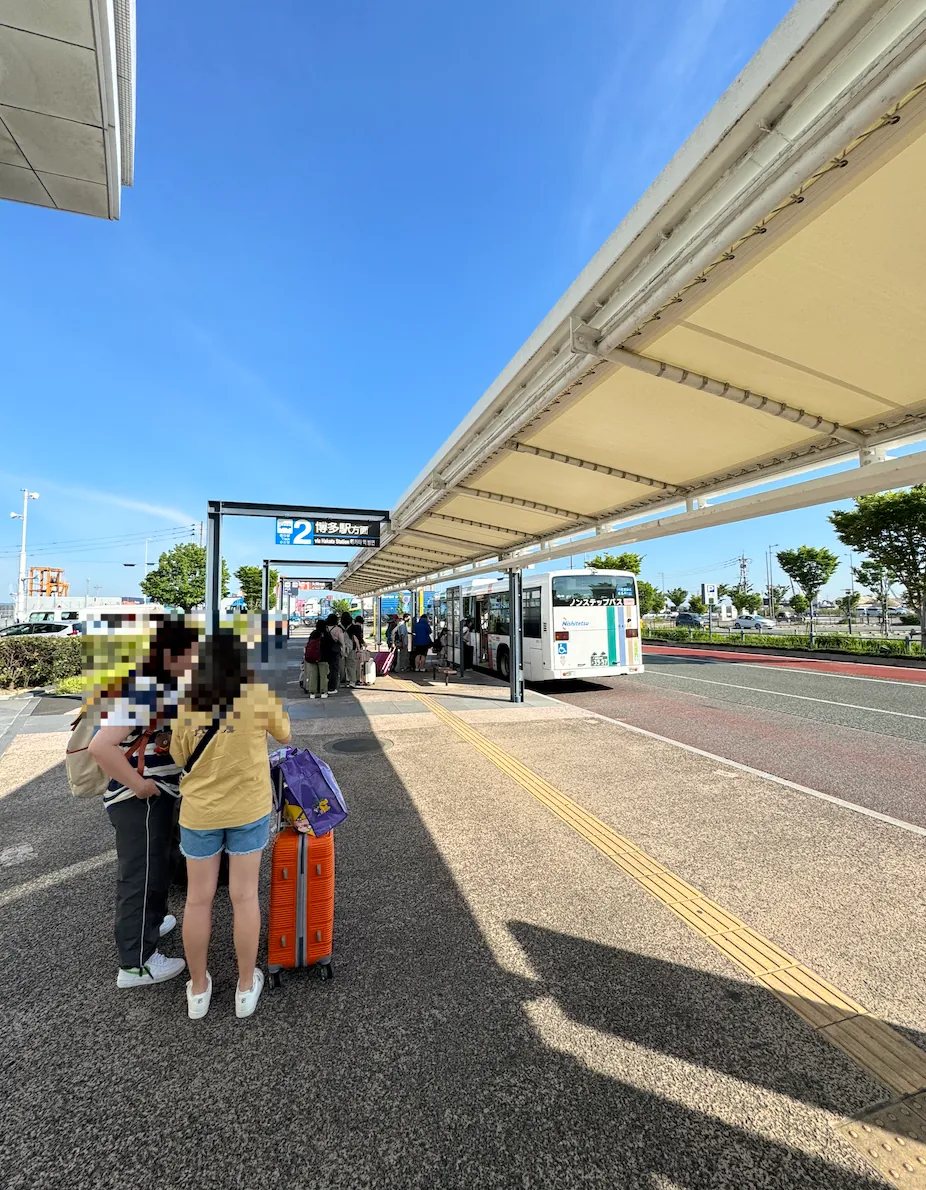
Right outside, there are buses going to Hakata Station or the Tenjin area.
-
Although carrying large luggage on the bus is inconvenient, since this is the departure station, seats are always available. Most people also carry luggage, so it feels less awkward.
-
Some passengers board at intermediate stops, but since the number is small, it remains manageable.
-
On a weekday morning returning to Hakata by subway, there are few passengers, so no need to feel awkward (Kyushu is just spacious!).
Around 9:30, drop off luggage at the hotel, have a morning shellfish soup set breakfast at the food court in Hakata Station department store to fill up, then pick up the JR Pass and the train ticket to Yufuin for tomorrow morning.
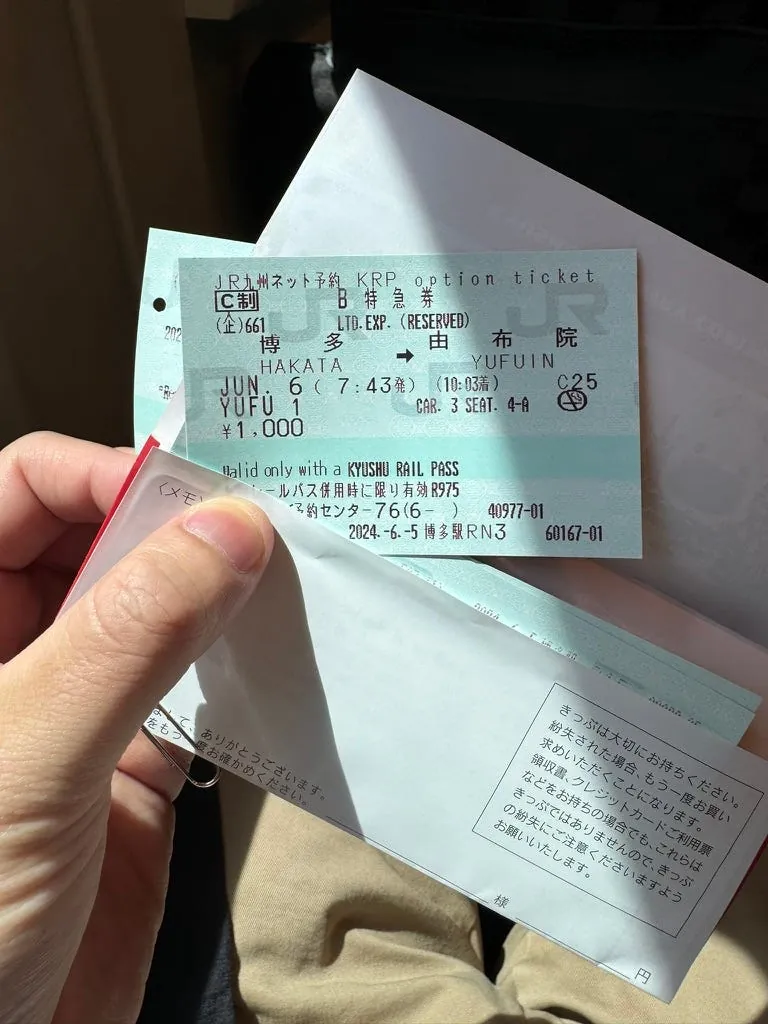
The JR Kyushu Pass still requires manual exchange at the counter. Please arrive early to queue for the exchange. If Hakata Station is too crowded, you can consider exchanging at nearby stations for a faster process!
Yutoku Inari Shrine
Originally planned to visit Karatsu Castle, but after checking JR limited express schedules, going to Yutoku Inari Shrine is faster and closer. Considering yesterday’s fatigue, decided to change the itinerary.
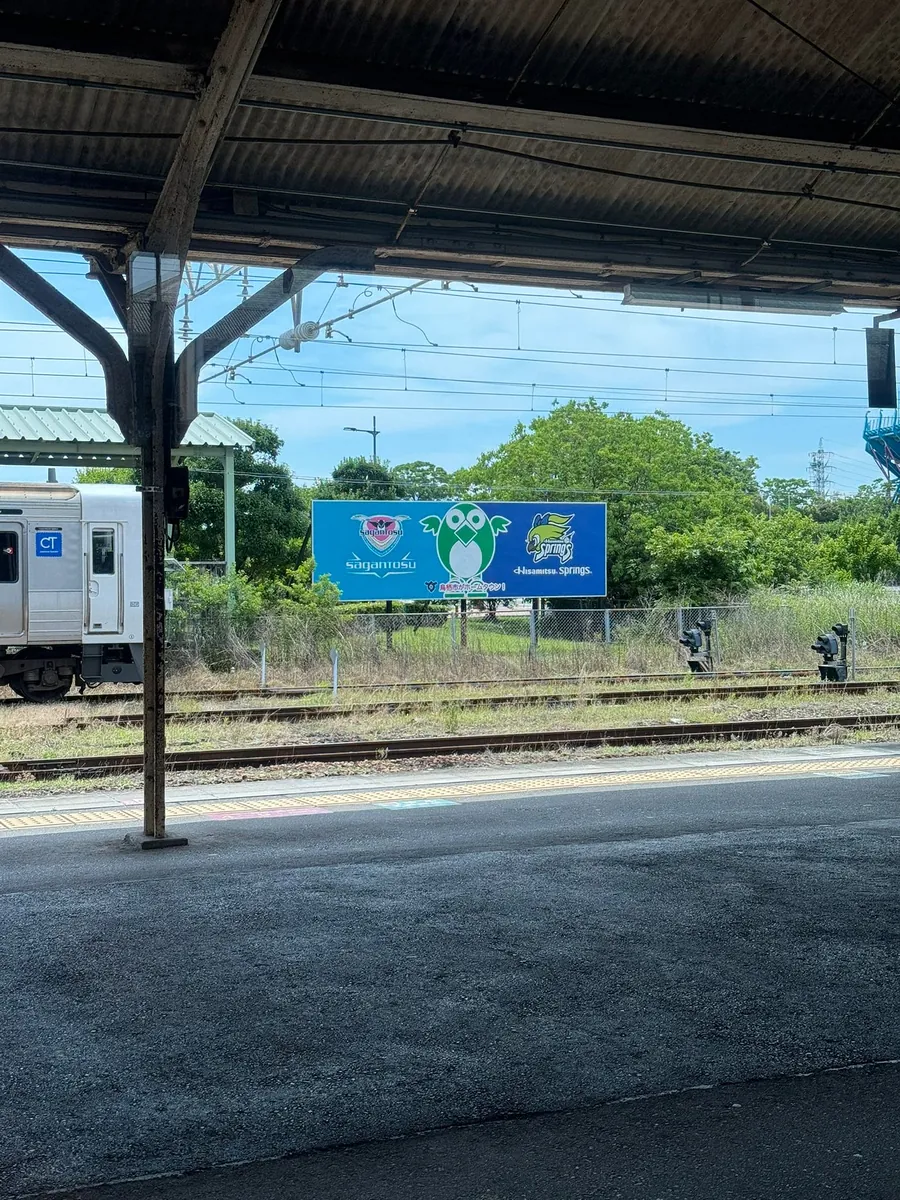
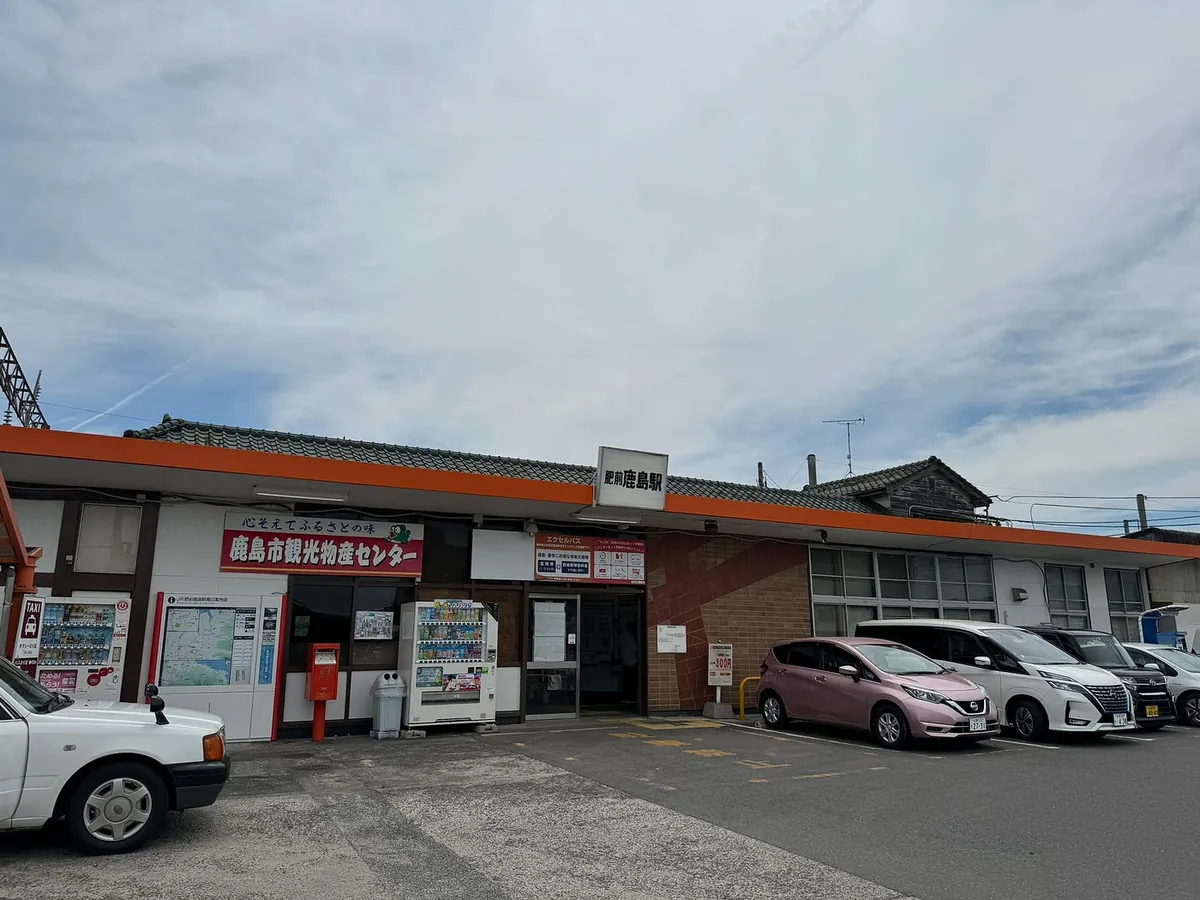
Take a train from Hakata to Kashima City - Hizen Kashima Station.
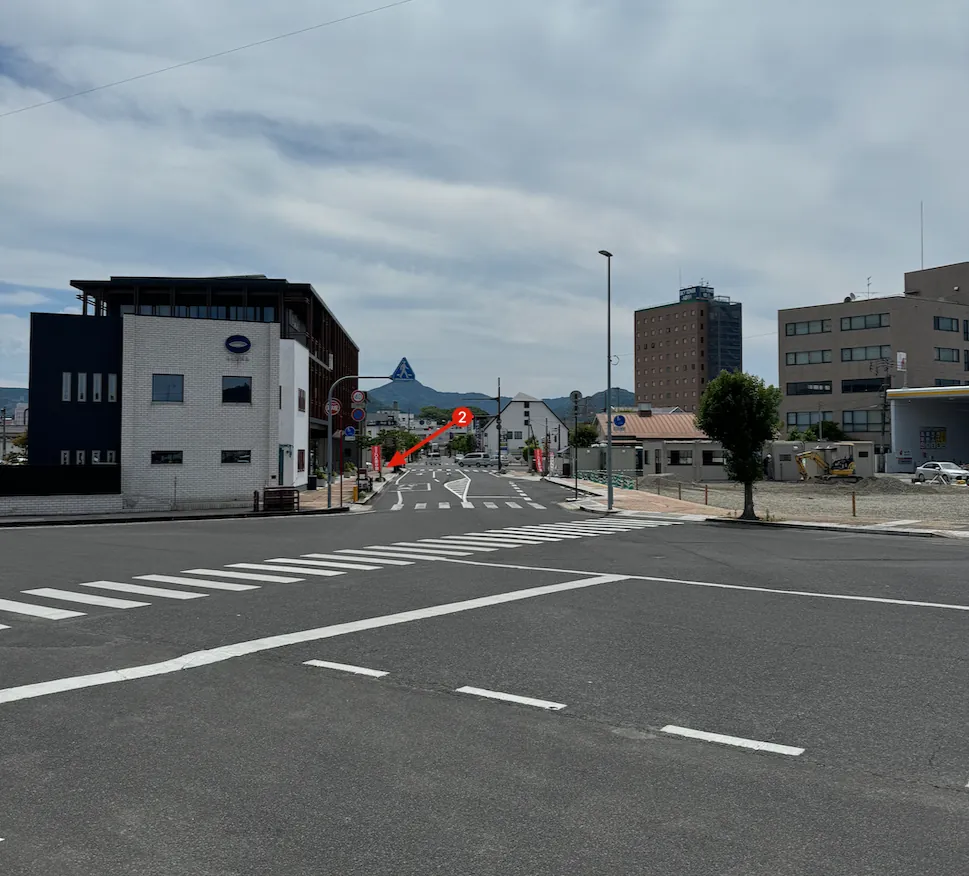
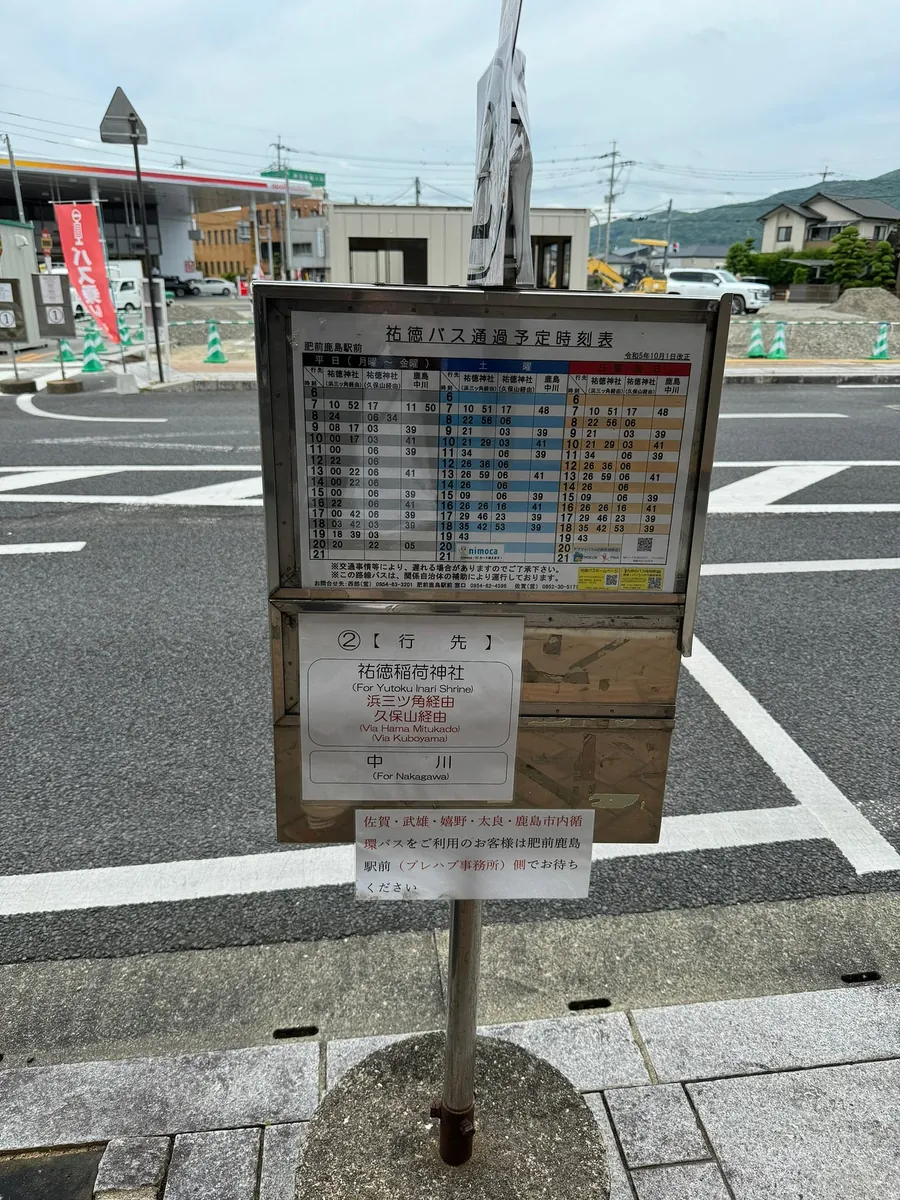
After exiting the station, walk to the left side of the road and go to the opposite side to wait at bus stop No. 2.
This differs from Google Map’s directions; Google Map asks me to walk to Nakamuta Station to wait for the train, about 500 meters away.
Please note that I visited in June 2024, and station details may have changed since then.
Yutoku Inari Shrine
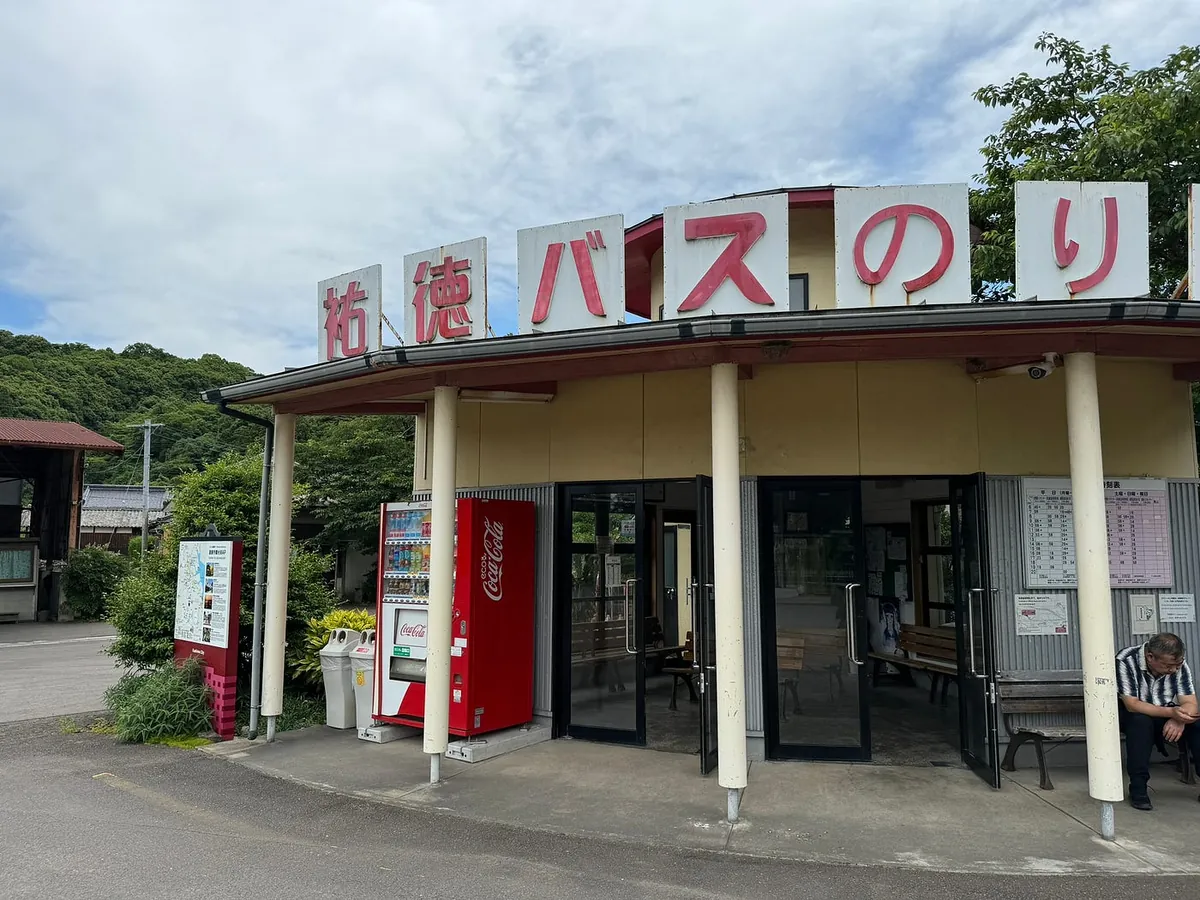
After getting off in front of Yutoku Shrine, walk backward to reach the main approach.
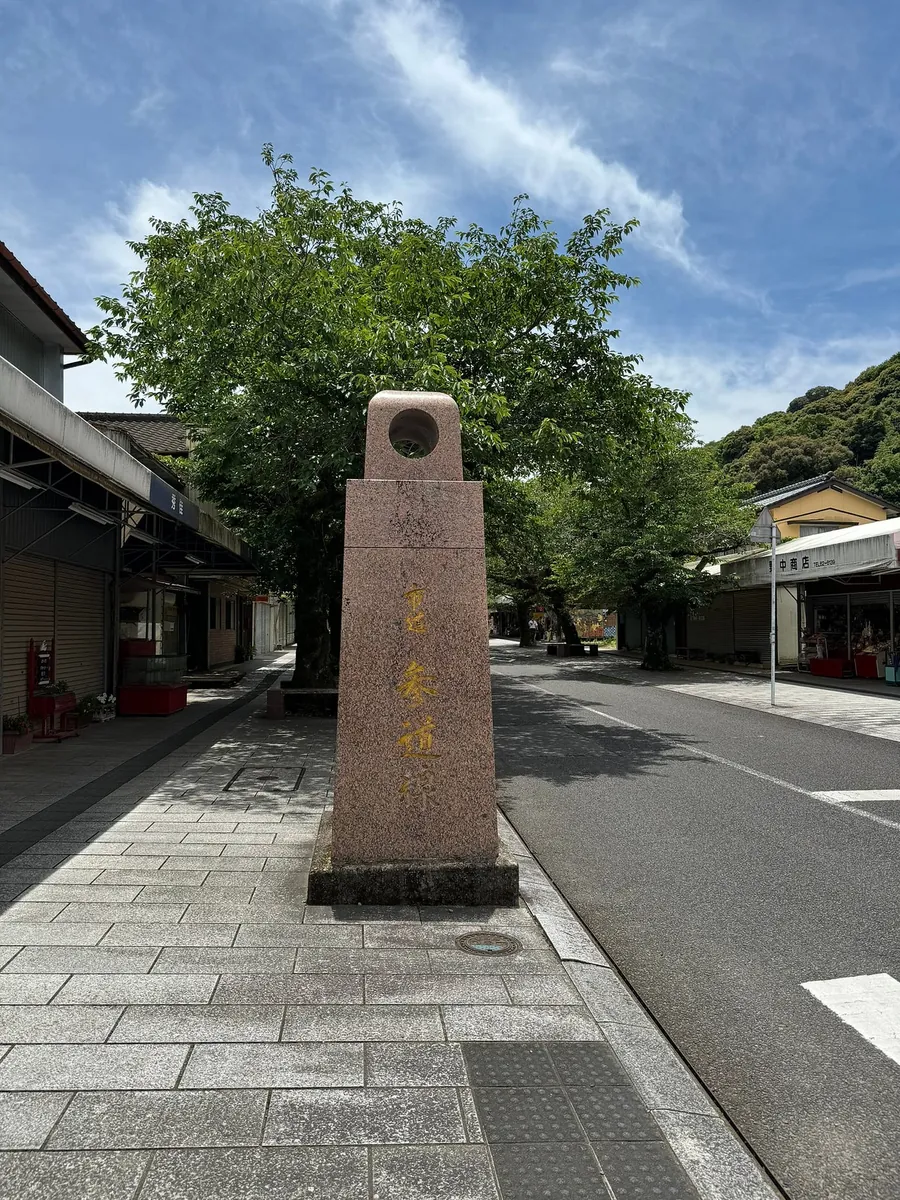
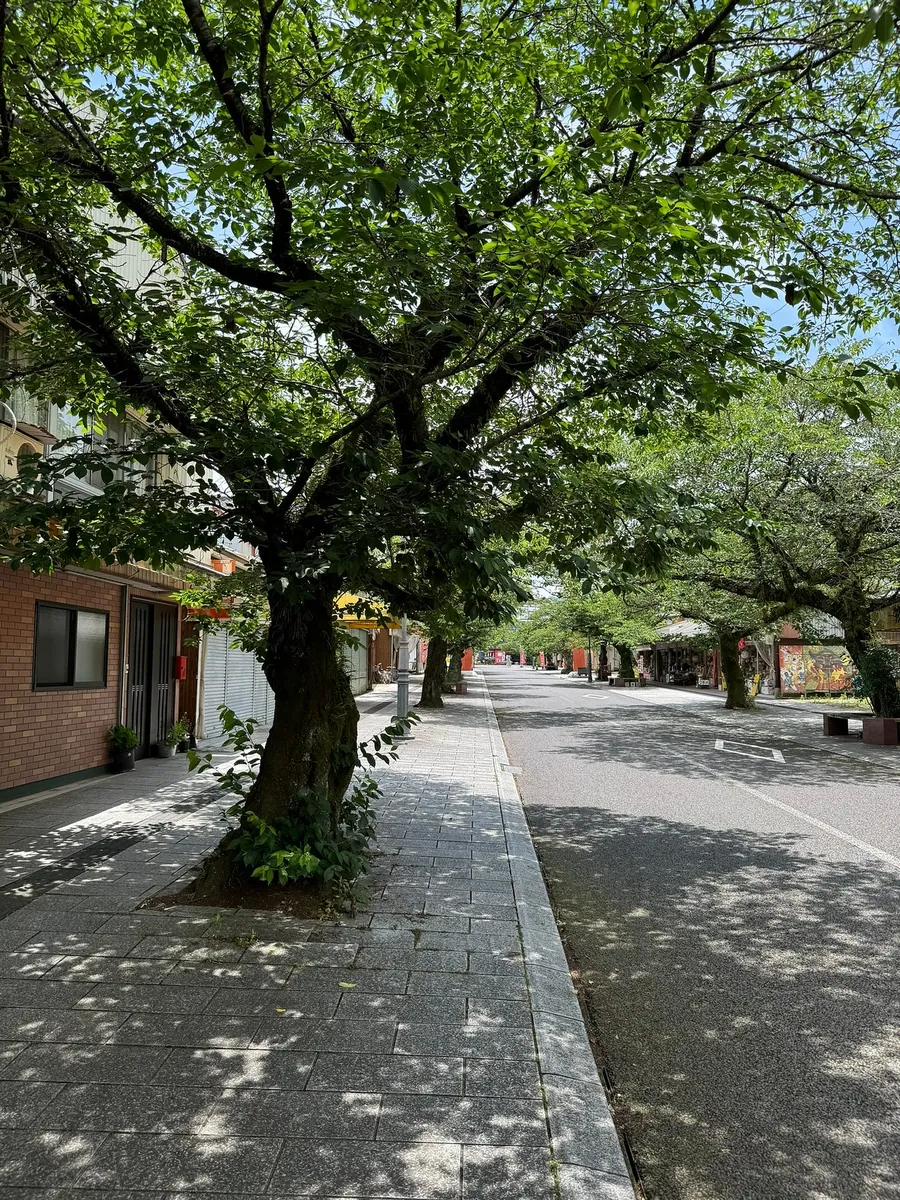
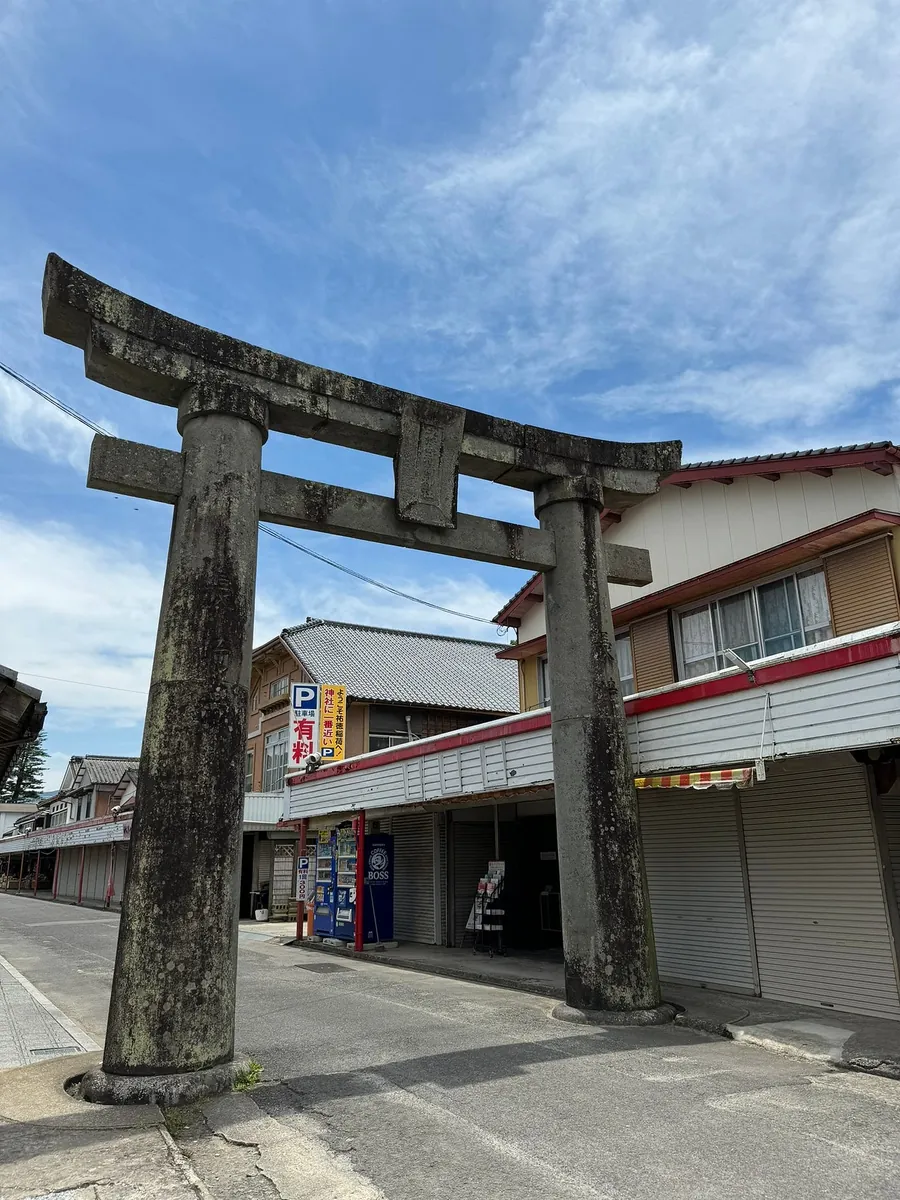
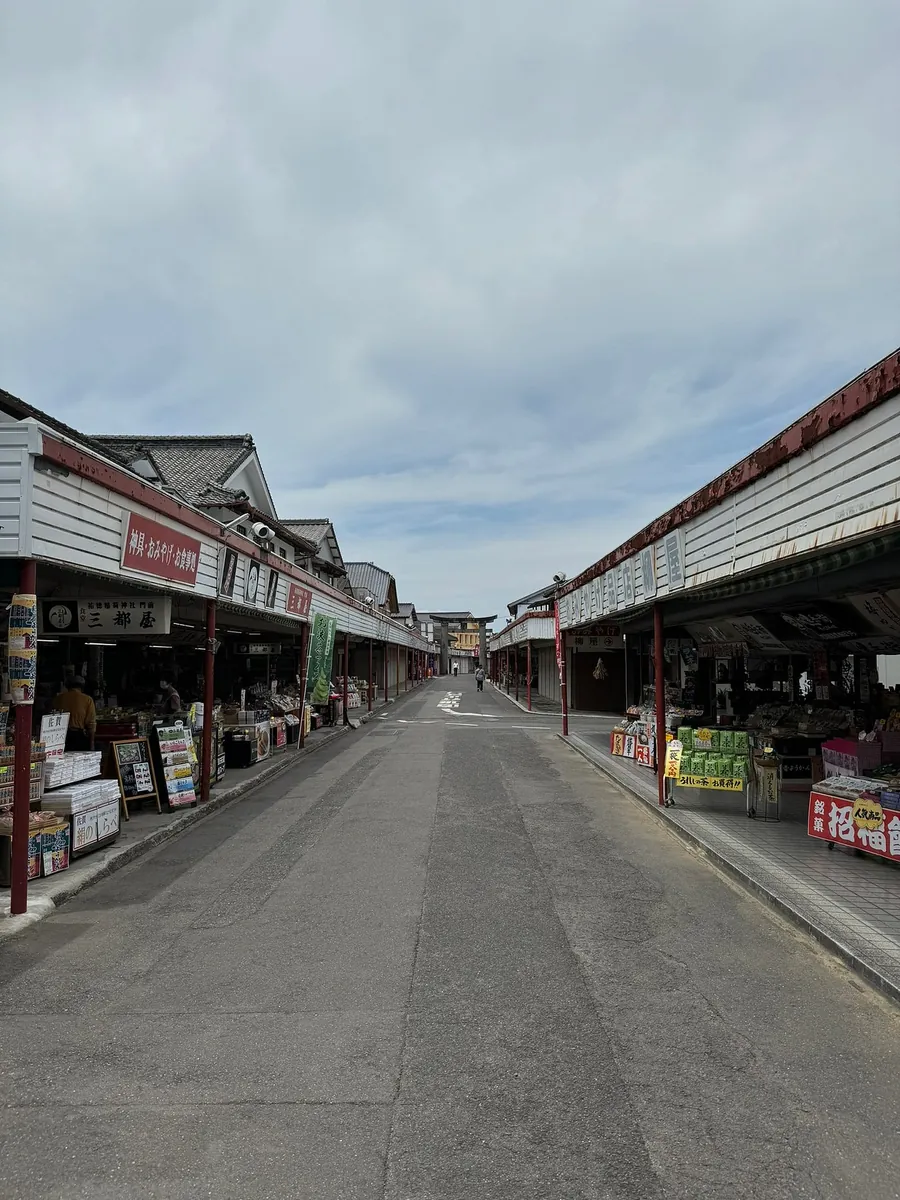
I’m not sure if it’s because it’s a weekday, but Omotesando and the shopping streets were almost empty, with very few stores open.
Walk straight ahead (about 15 minutes), and you’ll reach the shrine.
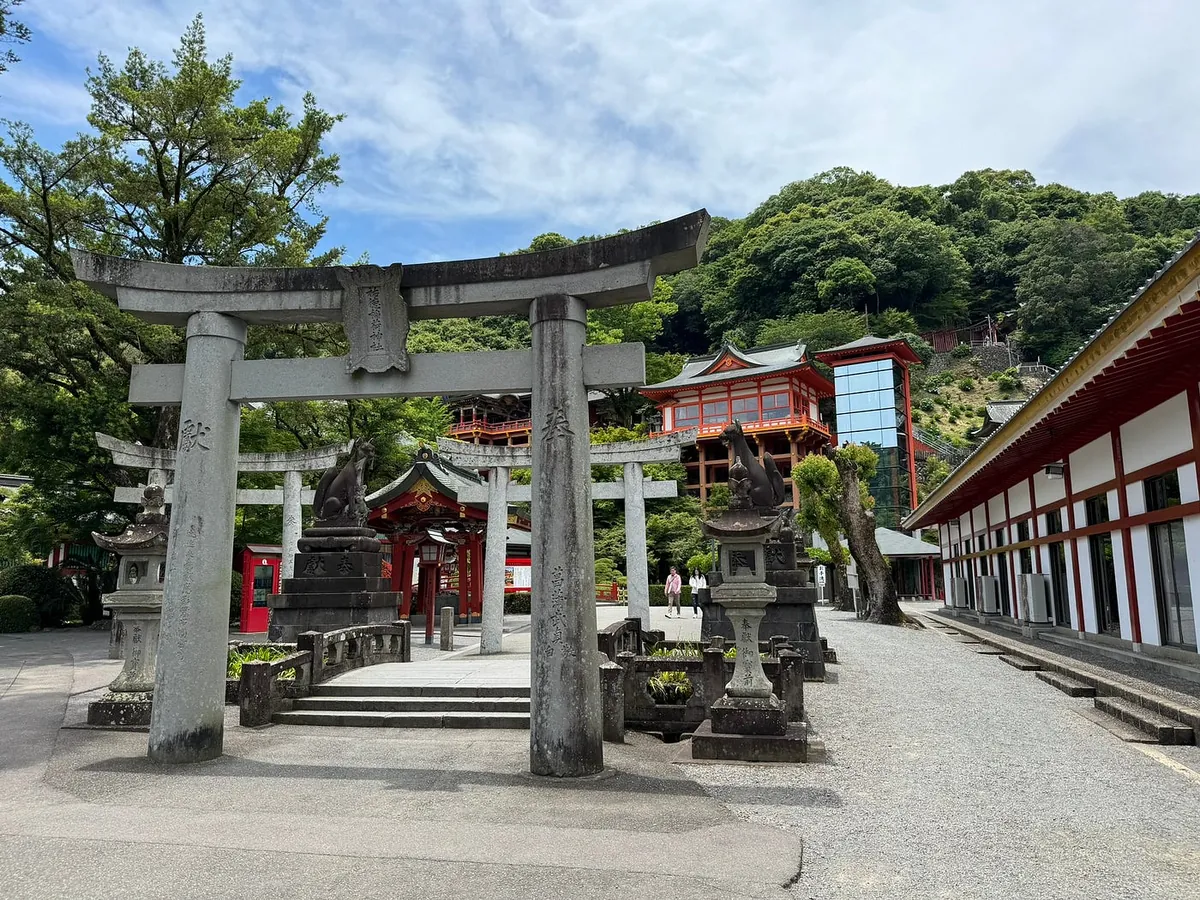
At the shrine entrance, the glass building behind houses an elevator. If you prefer not to walk up, you can take the elevator for a fee.
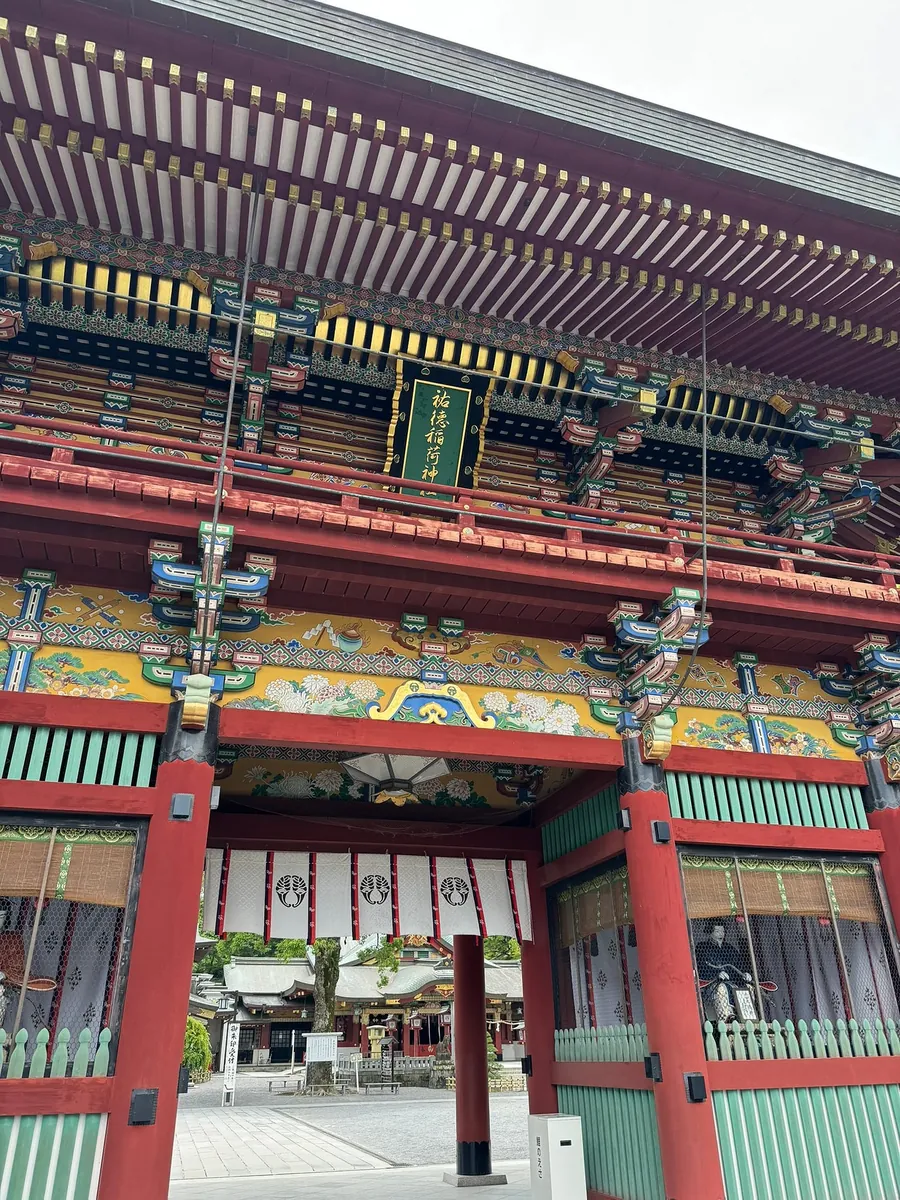
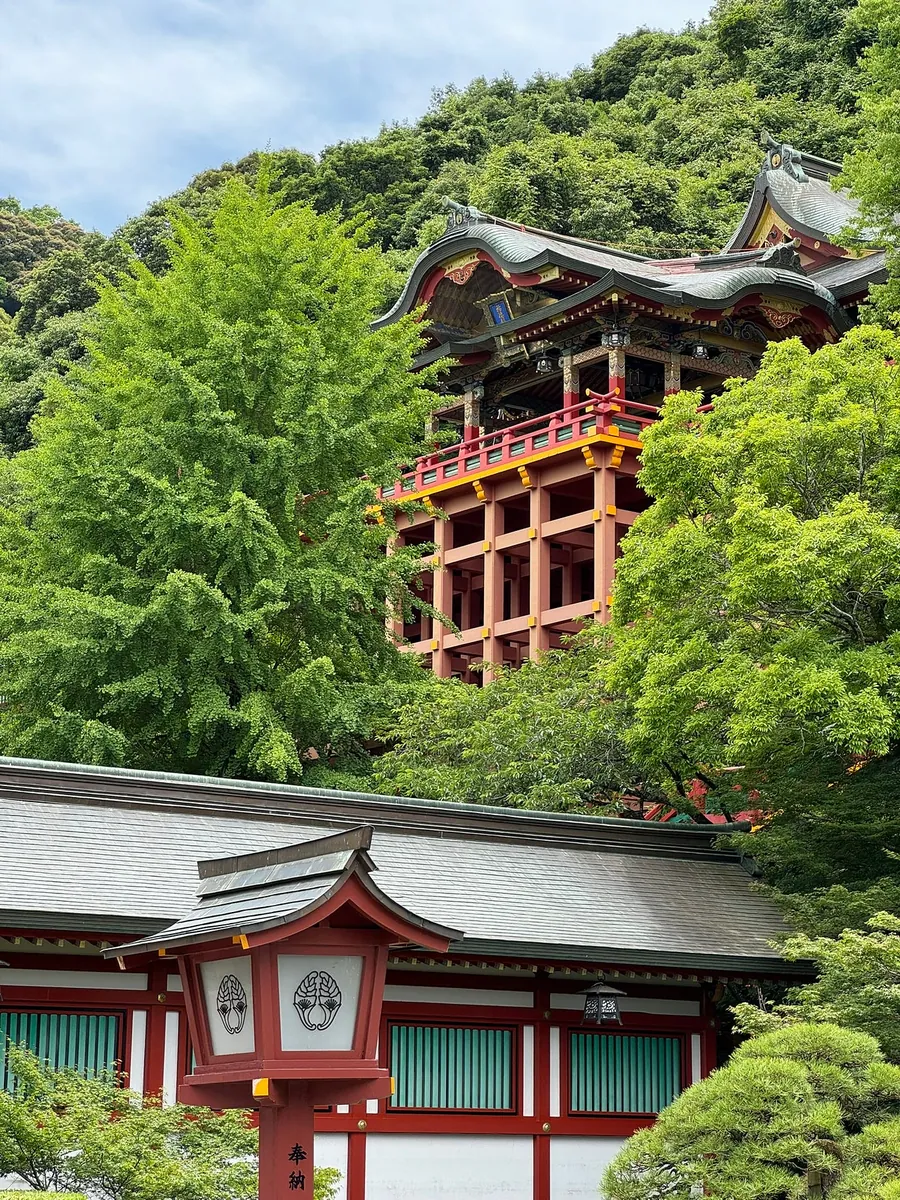
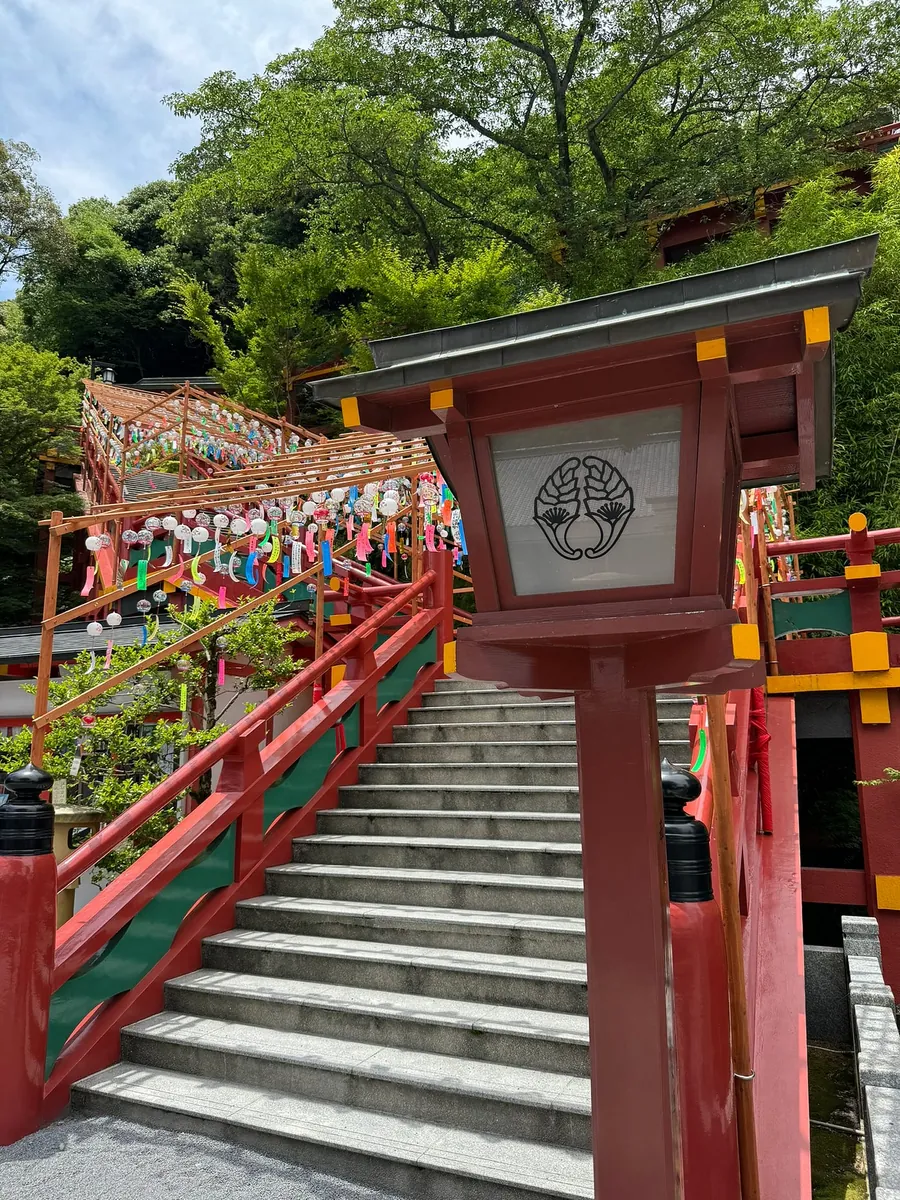
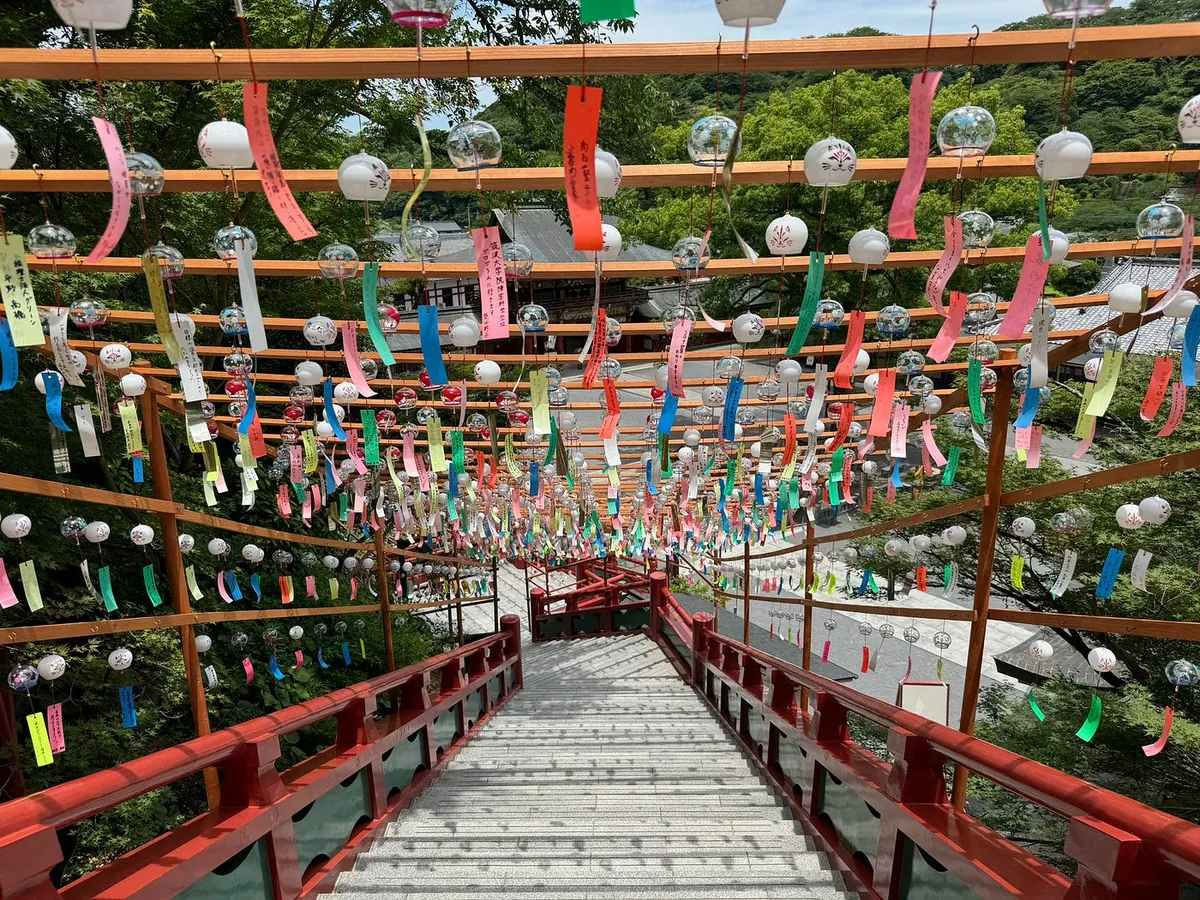
Going up, there is a row of prayer wind chimes. When I visited, there was no one around. As I passed by the chimes, a gust of wind made them ring loudly.
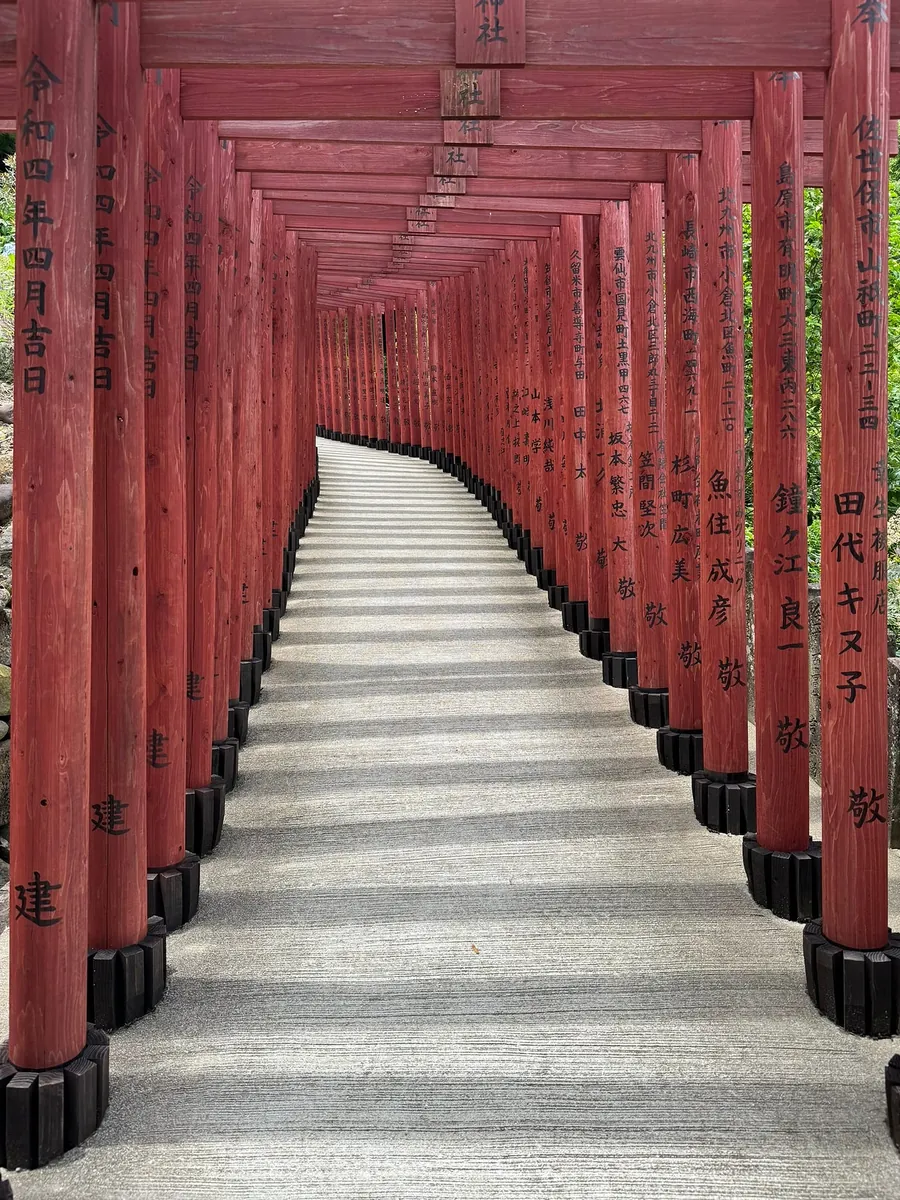
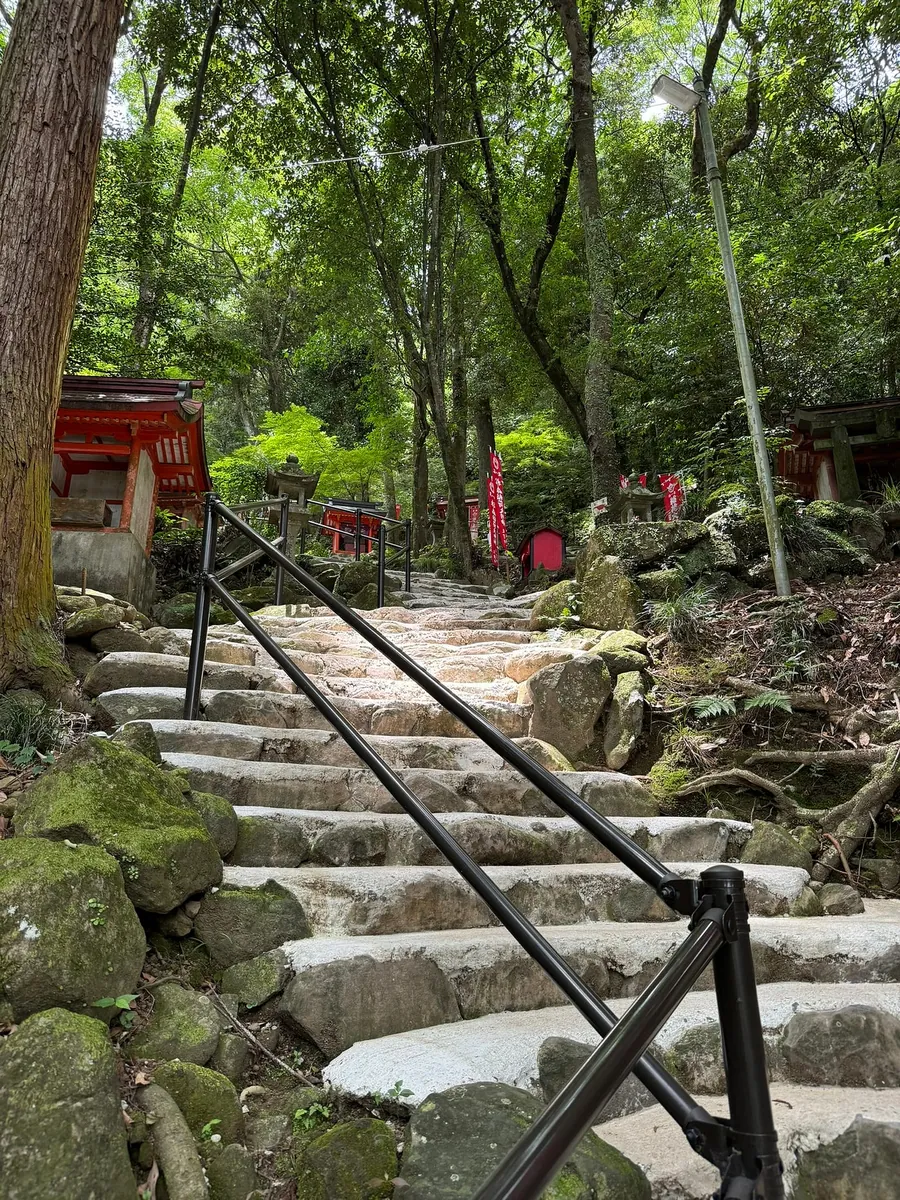
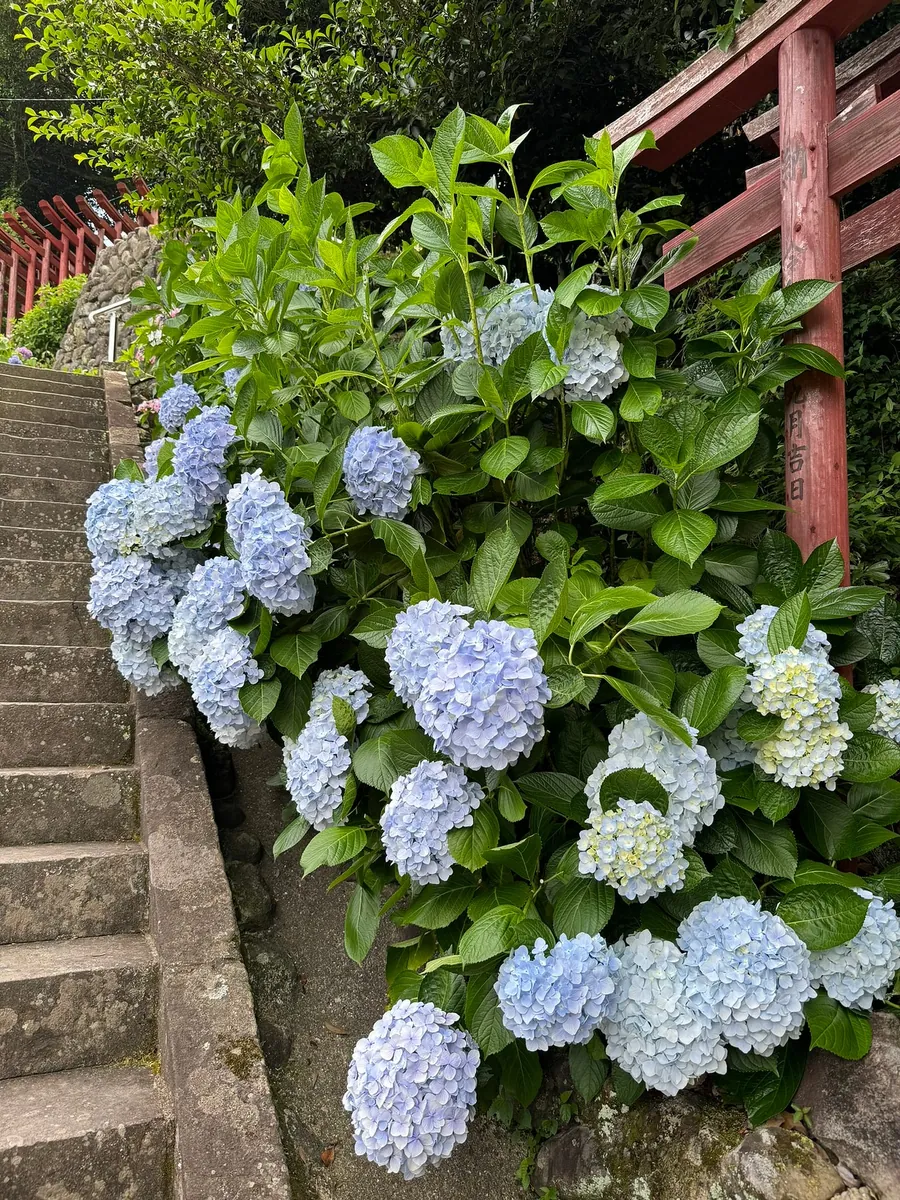
Passing through a row of torii gates and beautiful blooming hydrangeas, you can continue hiking up to the inner shrine (about 200 meters, very steep and difficult to walk).
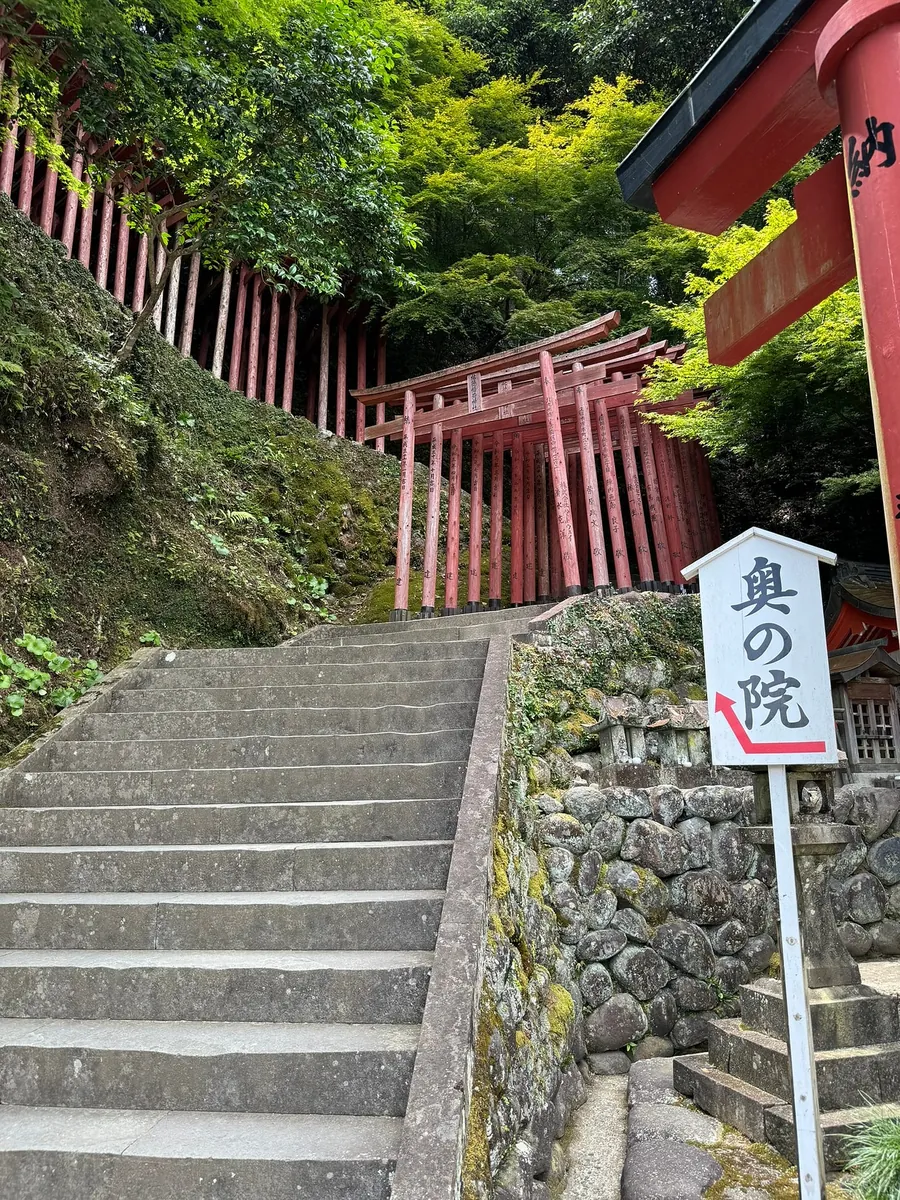
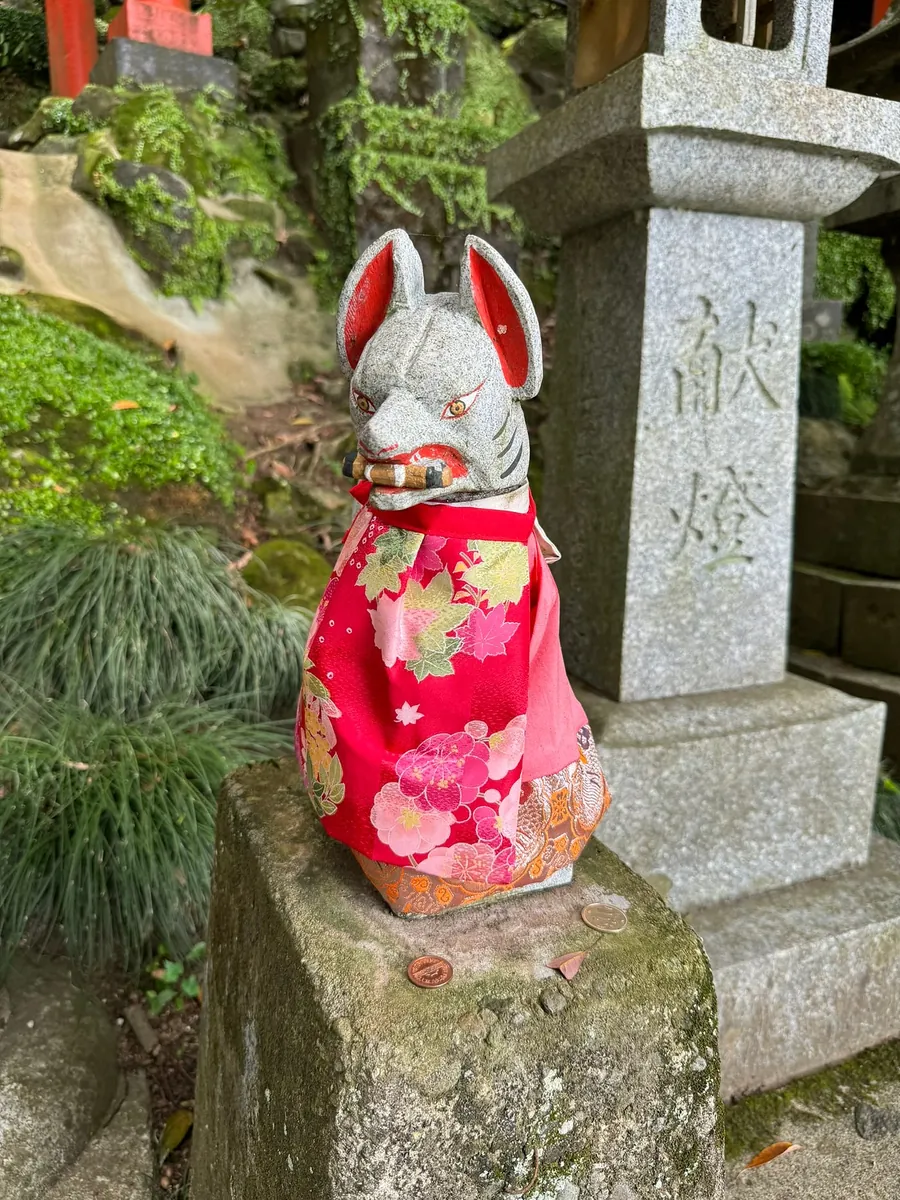
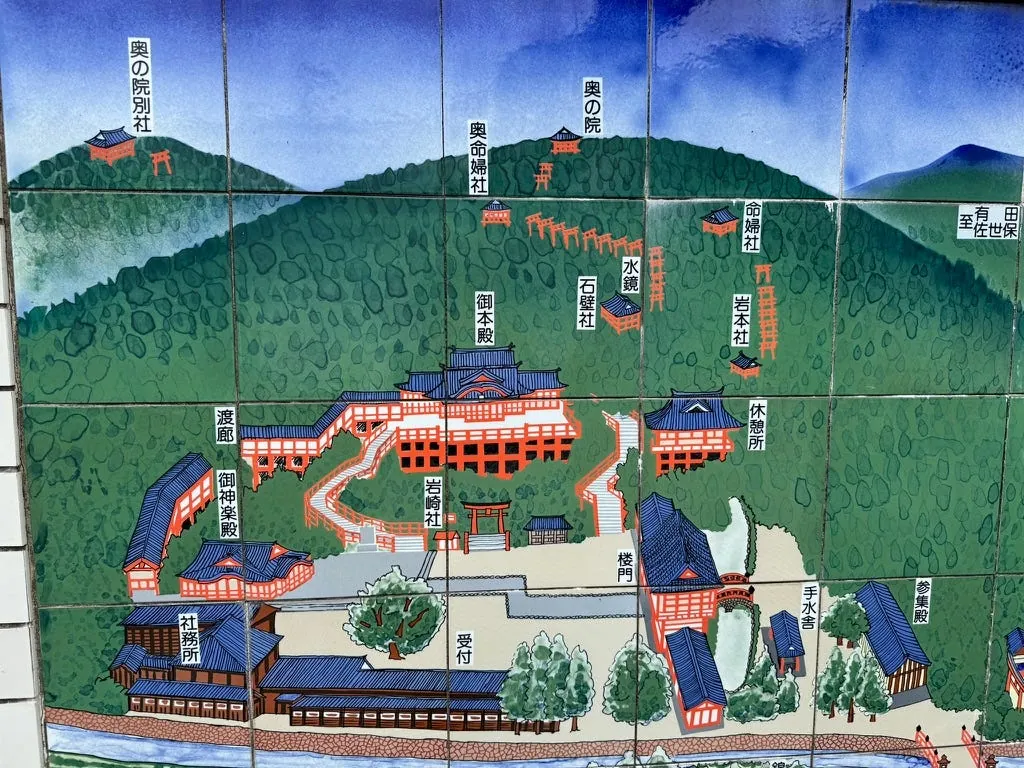
After the visit, return to the station and head back to JR.
Compared the Oyashiro Shrine’s Torii Gate in the Sea with Karatsu Castle, the sea Torii feels ordinary (after all, I’ve seen the famous Itsukushima Shrine’s floating Torii gate) and the transportation is inconvenient, so I plan to visit Karatsu instead.
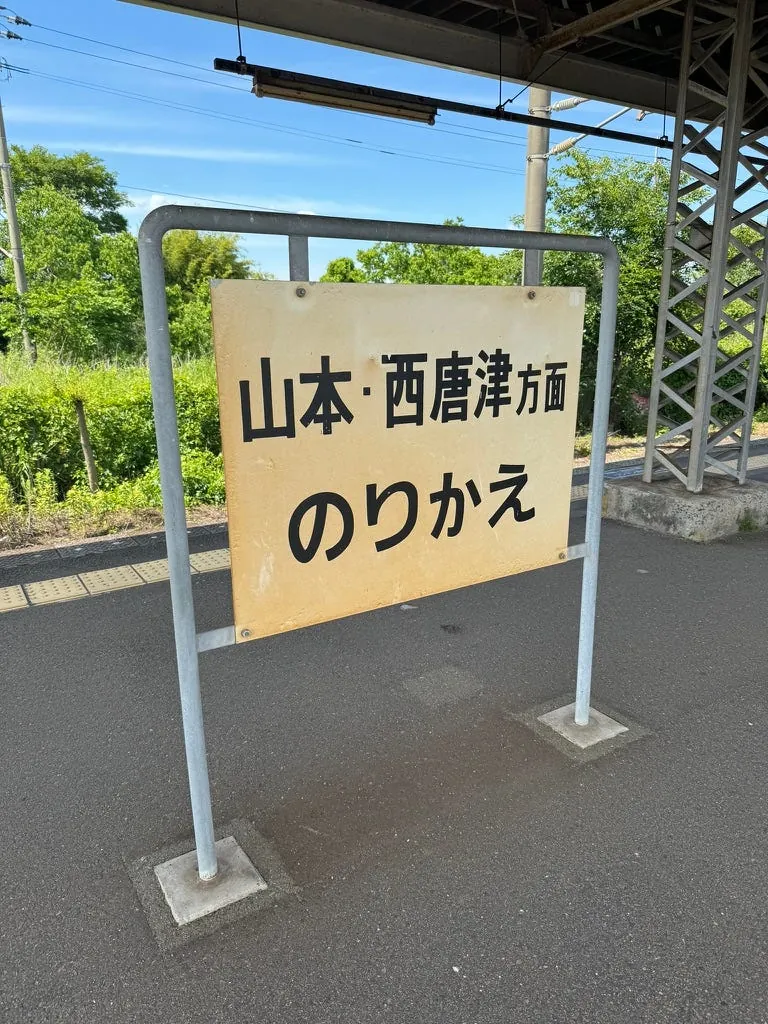
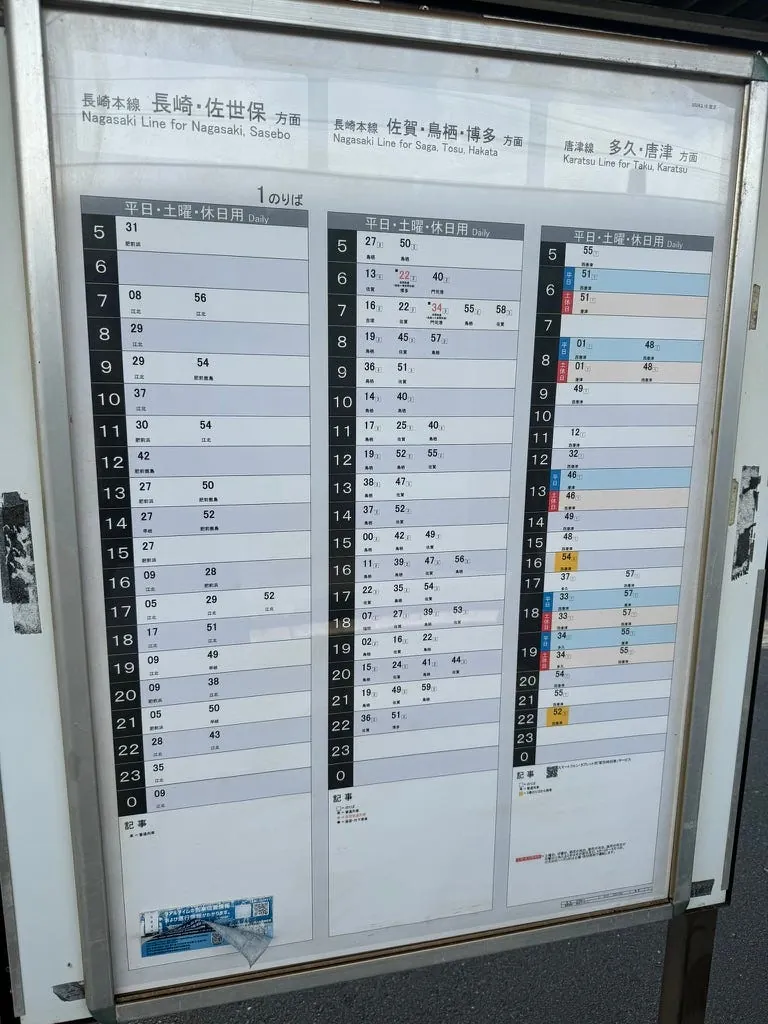
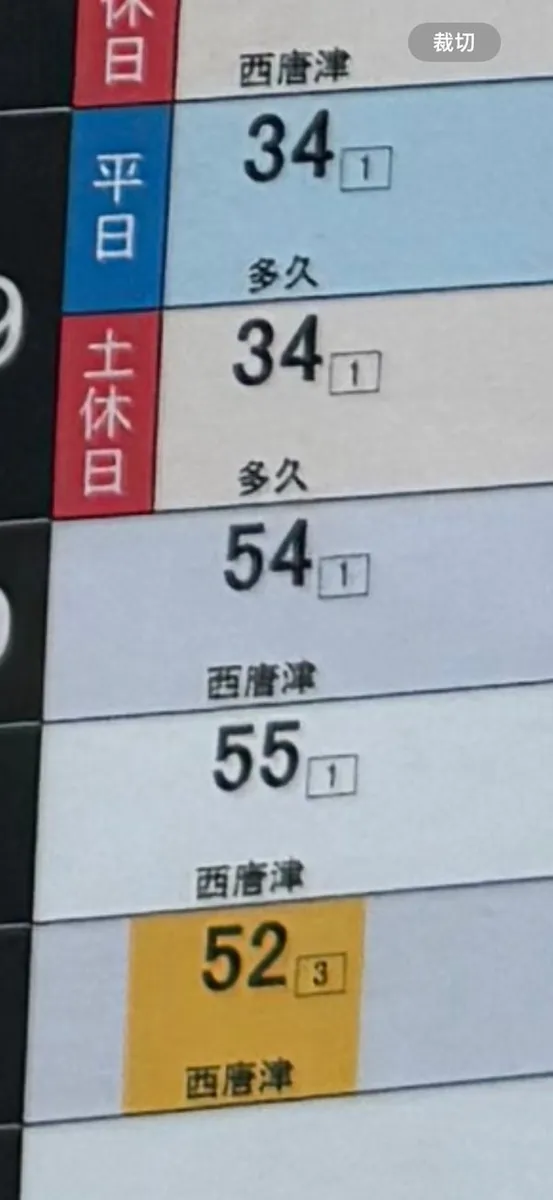
I made a mistake when transferring trains. This was a small station with no electronic boards. After getting off, I saw the platform labeled “Towards Karatsu” and thought I should transfer there. However, when the train arrived, it passed on another platform, and I missed getting on.
After careful study, I found that you need to check the bottom right box of the timetable to find the correct boarding platform. The platform may differ between weekdays and holidays.
Because we missed the train to Karatsu and couldn’t return to the Oyunohama Shrine’s torii gate in the sea, plus yesterday’s exhaustion, we decided to go straight back to the Hakata hotel to rest.
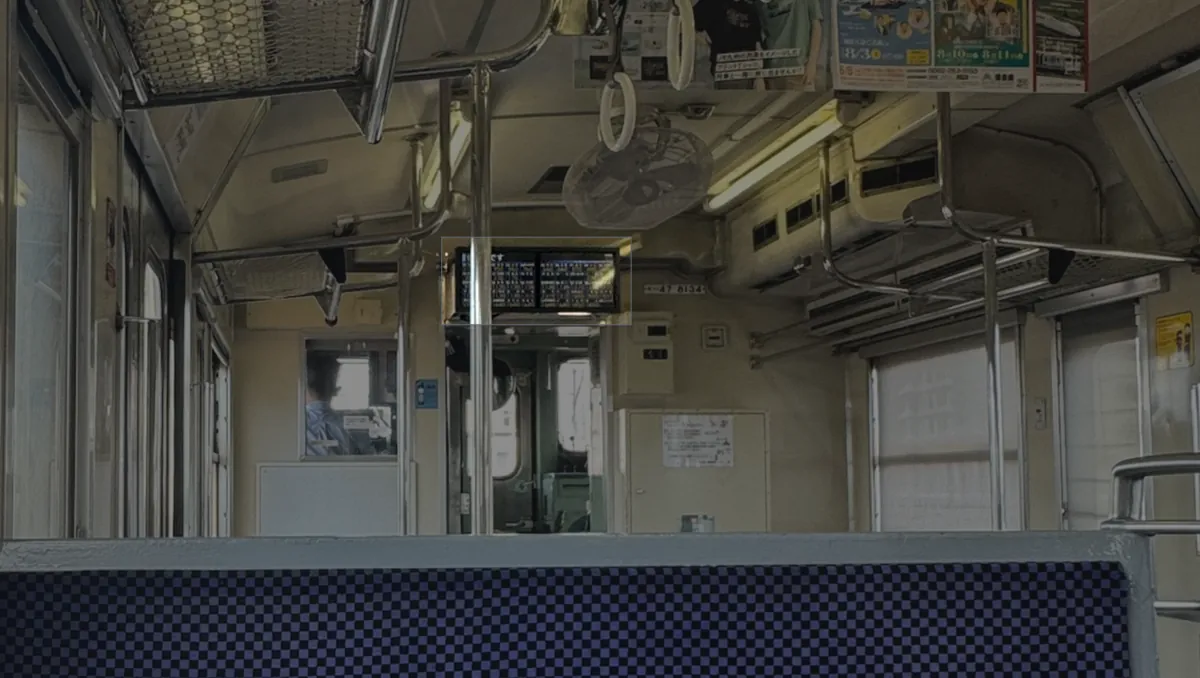
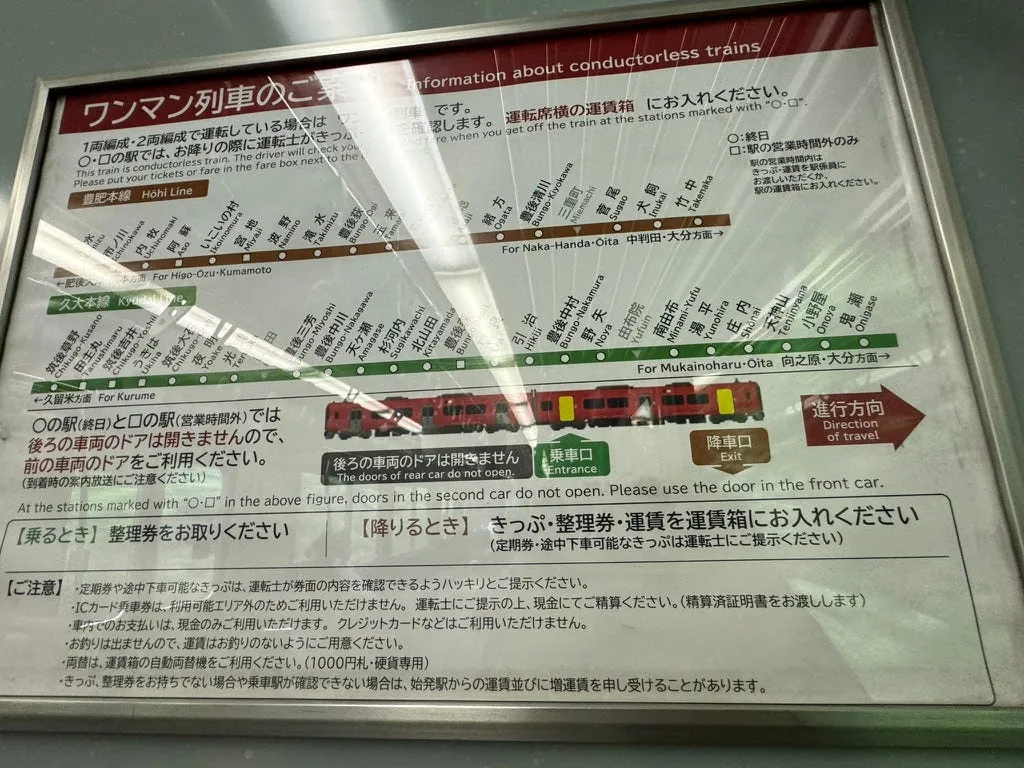
On the return trip, I noticed something interesting. At small stations, the train doors didn’t open (I was in the rear car). After careful observation, I realized that at stations without staff, the driver acts as the station staff. Passengers must get off from the first car and pay the fare by inserting coins or tapping a transit card on the screen (just like a bus). If using a JR Pass, just show it to the driver.
Also, a reminder: when exiting an unmanned JR station, just walk out with your JR Pass. Do not insert the JR Pass into the ticket collection box. ⚠️
Around 16:00 Return to Hakata and Hotel
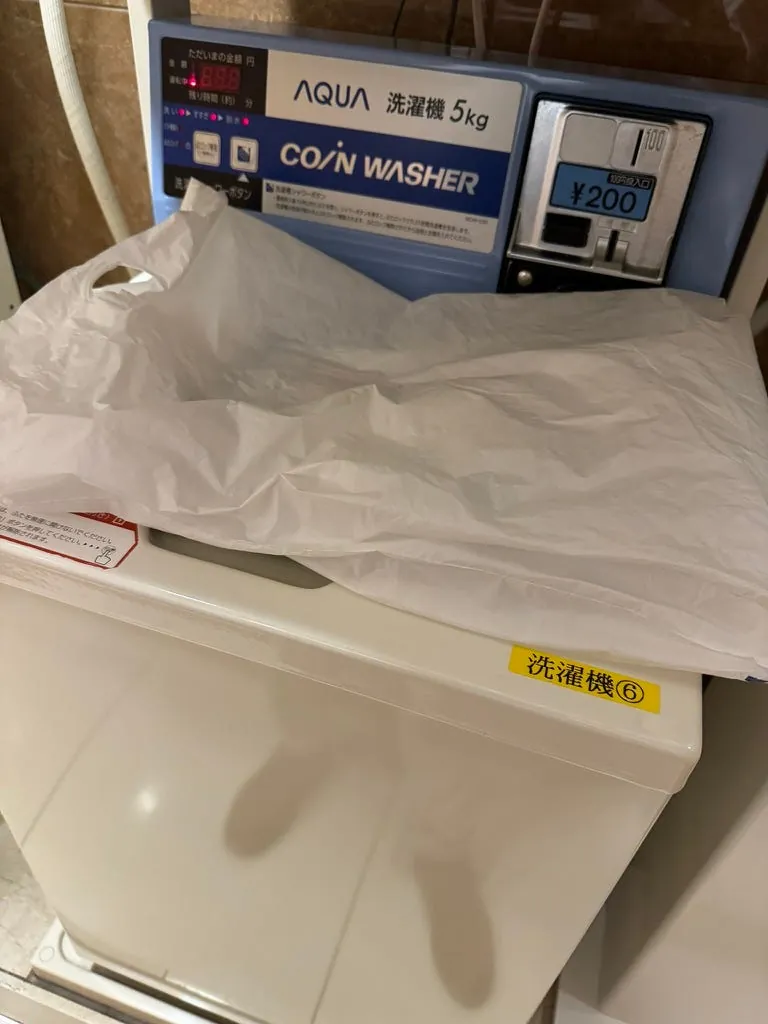
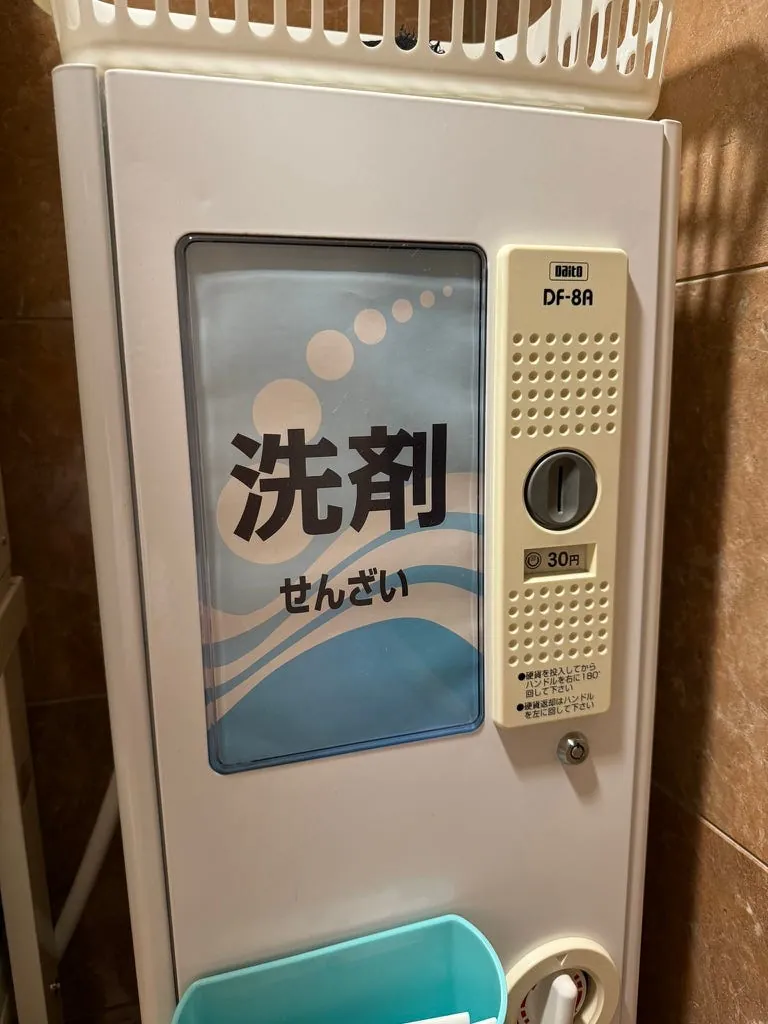
Note that the washing machines at Toyoko INN may not provide detergent. Please check if the machine automatically dispenses detergent before starting the wash⚠️
If not, you need to insert coins or buy detergent at the counter. (30 yen)
After putting the clothes into the washing machine, I went to the underground shopping area of Hakata Station’s department store to find something to eat.
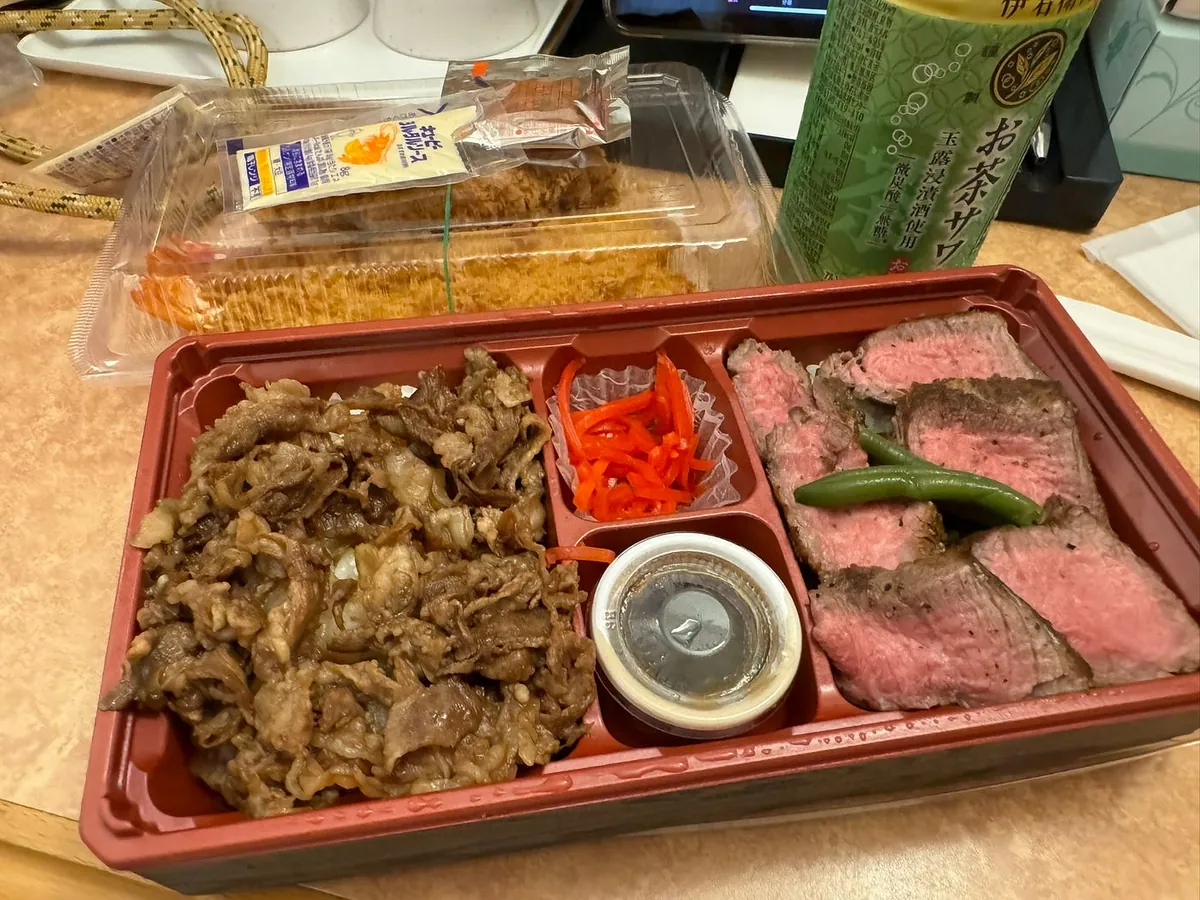
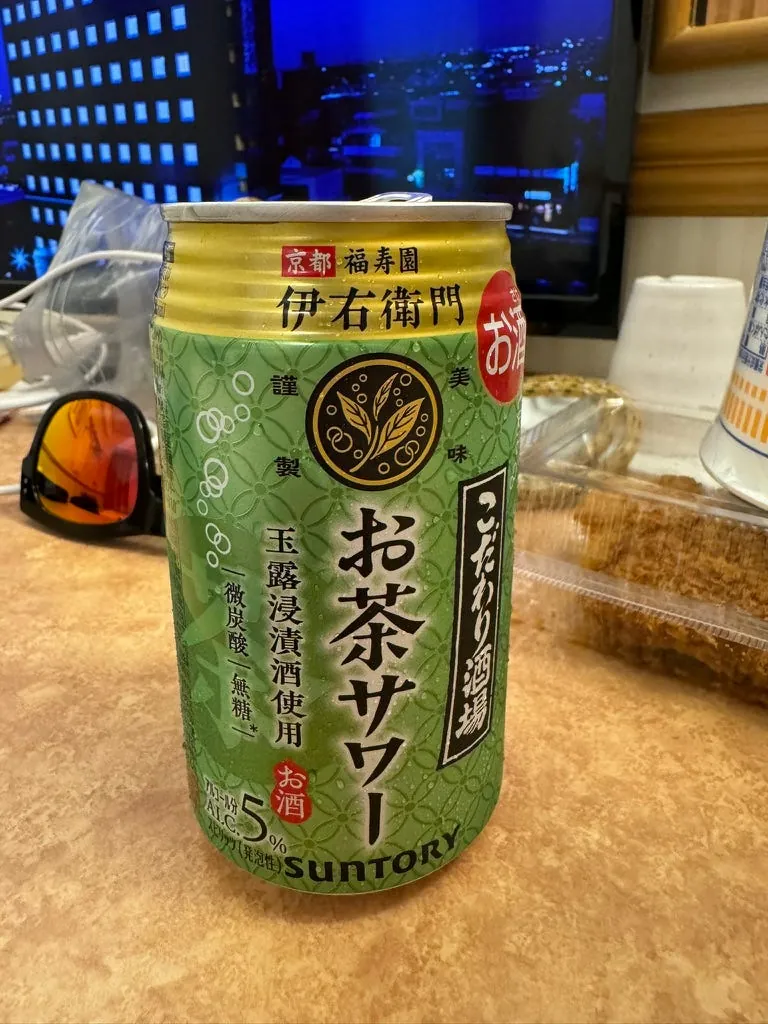
Bought a steak bento to eat, it was great; the tea and alcohol were okay, not much flavor.
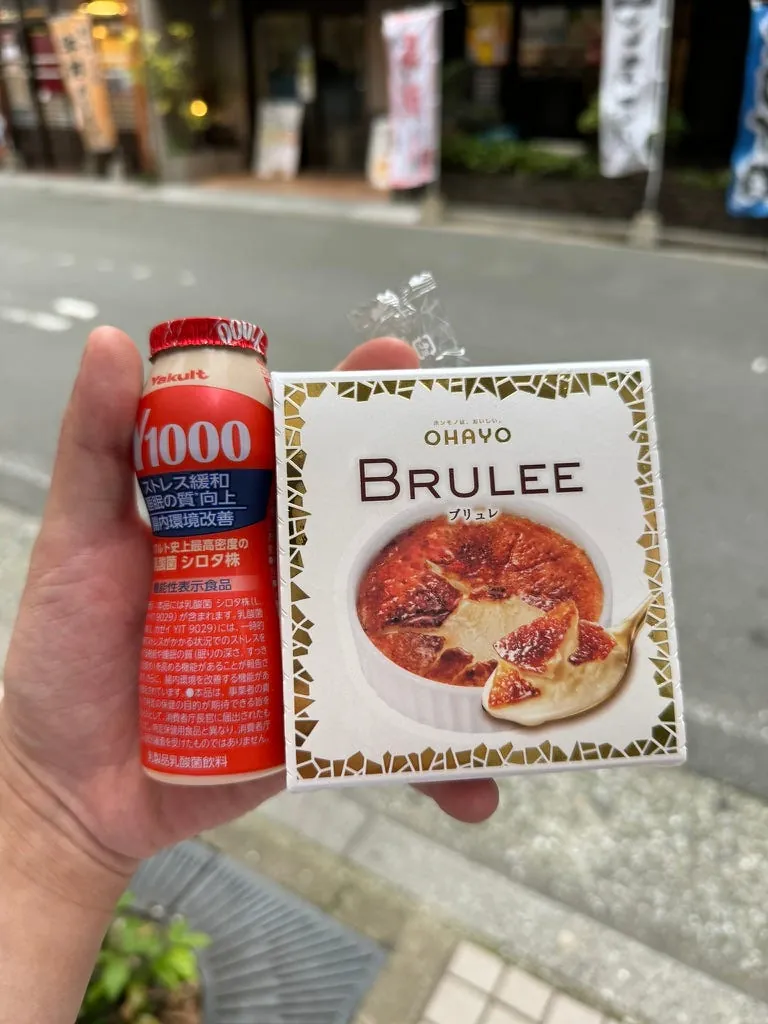
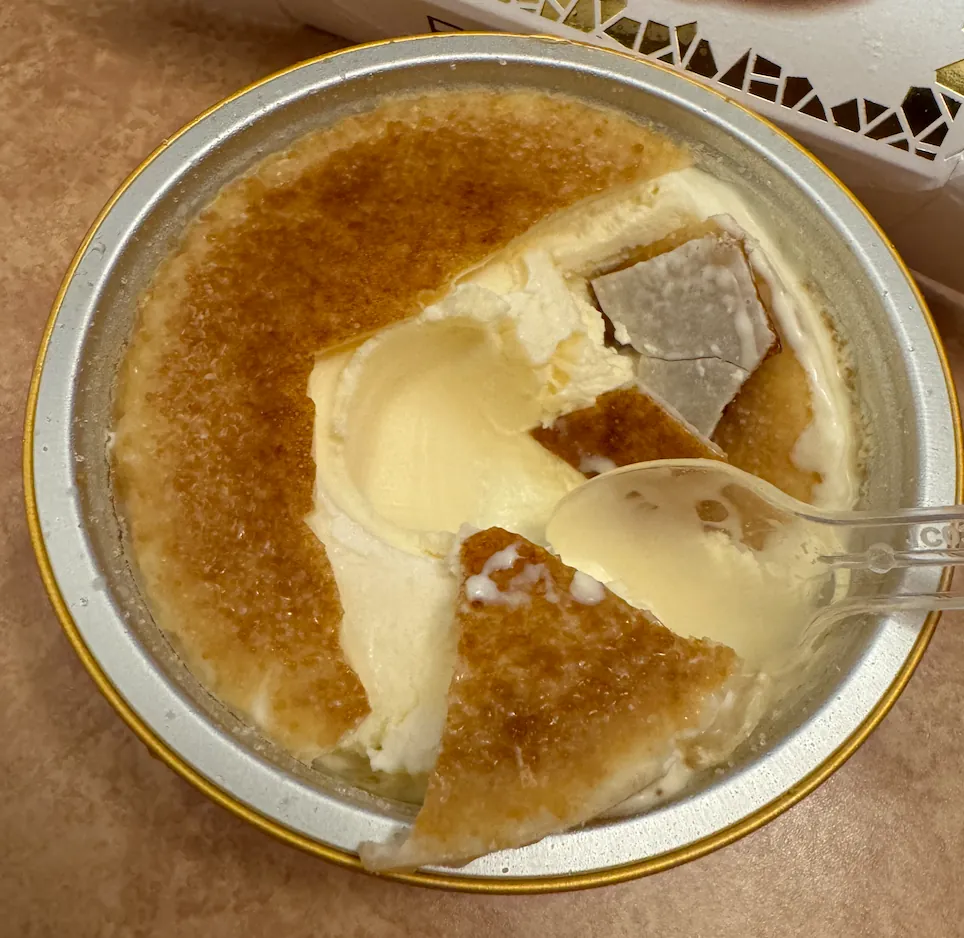
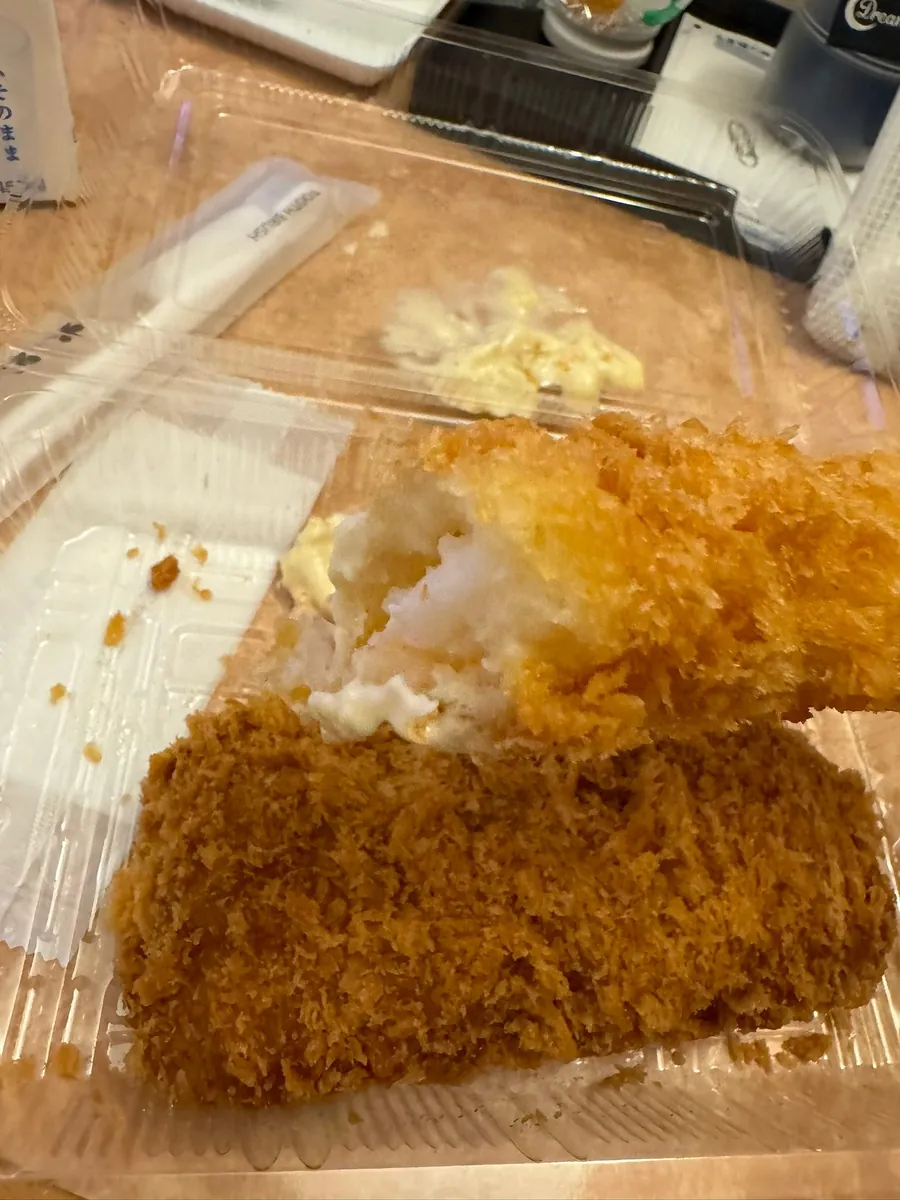
Also bought a Yakult 1000 to drink at night, BRULEE caramel ice cream as dessert (very sweet!), and fried shrimp as a late-night snack (this time I really got whole fried shrimp, unlike the fake ones I bought in Kumamoto QQ).
Laundry (30 mins), drying (1 hr), rest.
Day 4 Yufuin, Oita
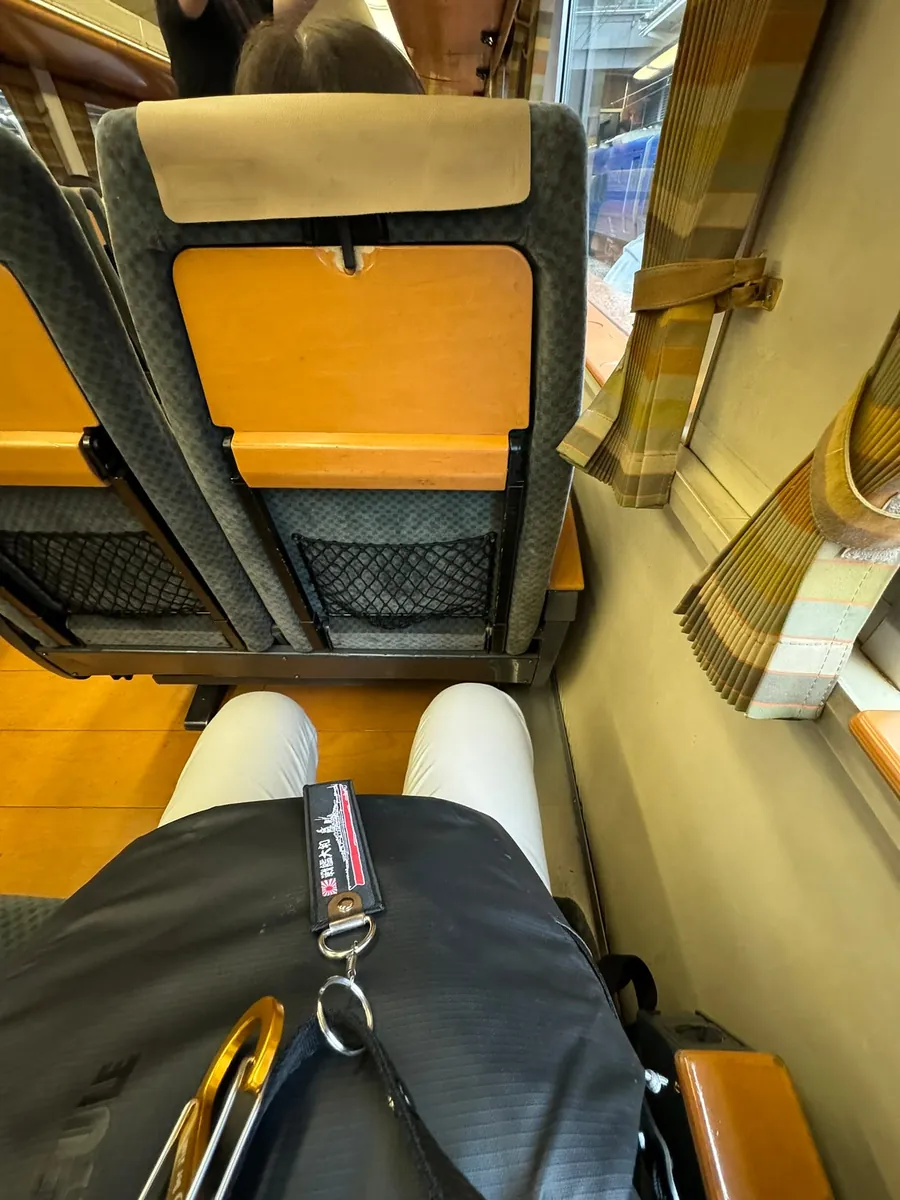
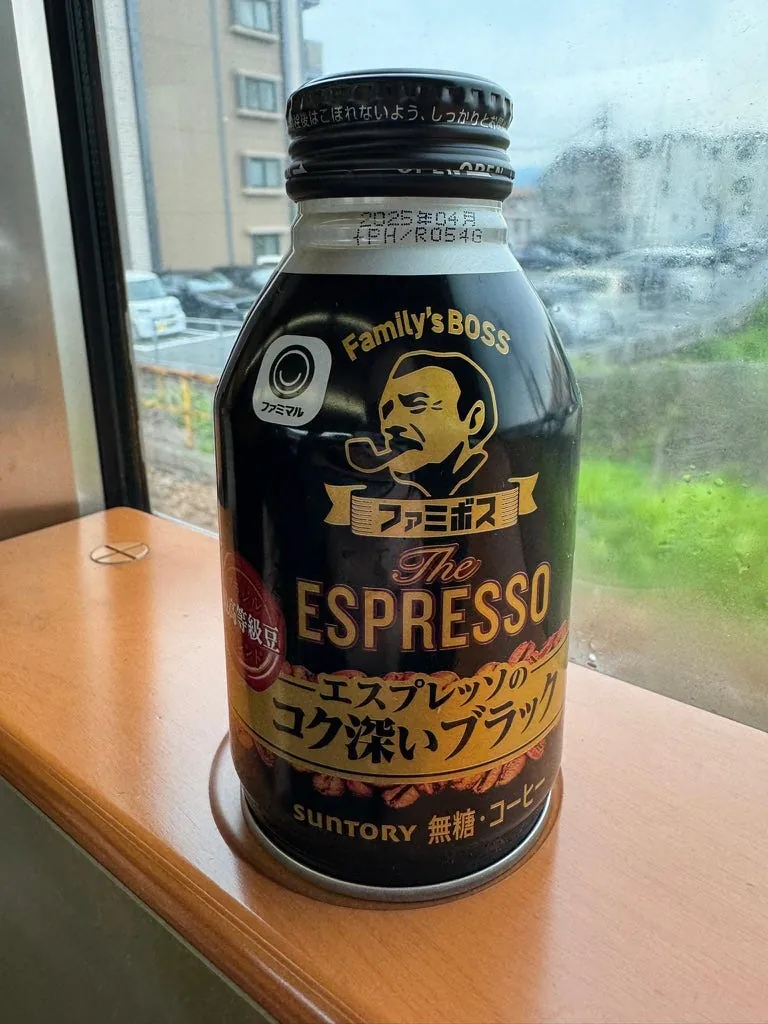
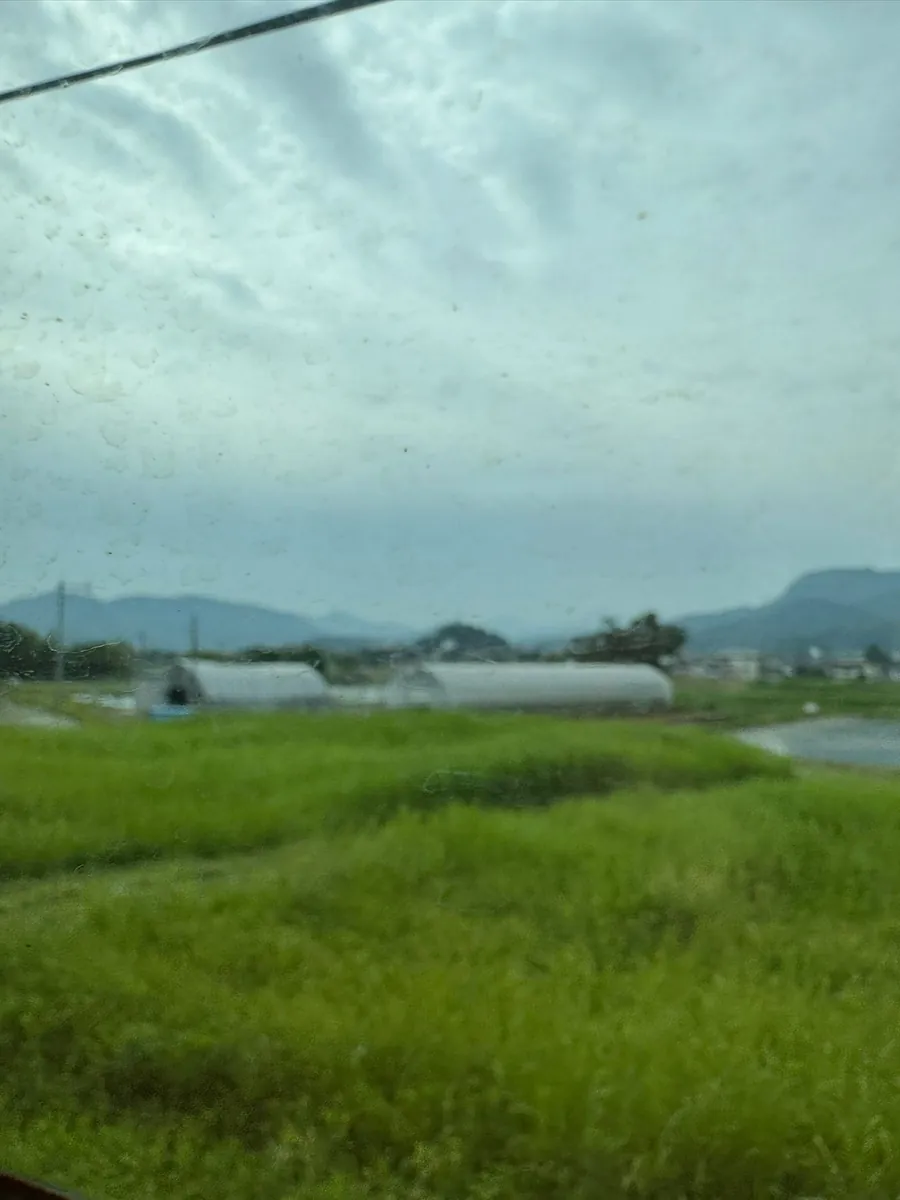
Early in the morning, check out and drag your luggage to JR Hakata Station to take the Yufu 1 bound for Yufuin.
-
Suitcases can be placed in the luggage compartment; if you are worried about sliding, you can lay them flat.
-
A cup of coffee to wake up the mind.
-
The scenery along the way is lush green this season but nothing particularly striking (or is it only the Yufuin no Mori that offers scenic views?)
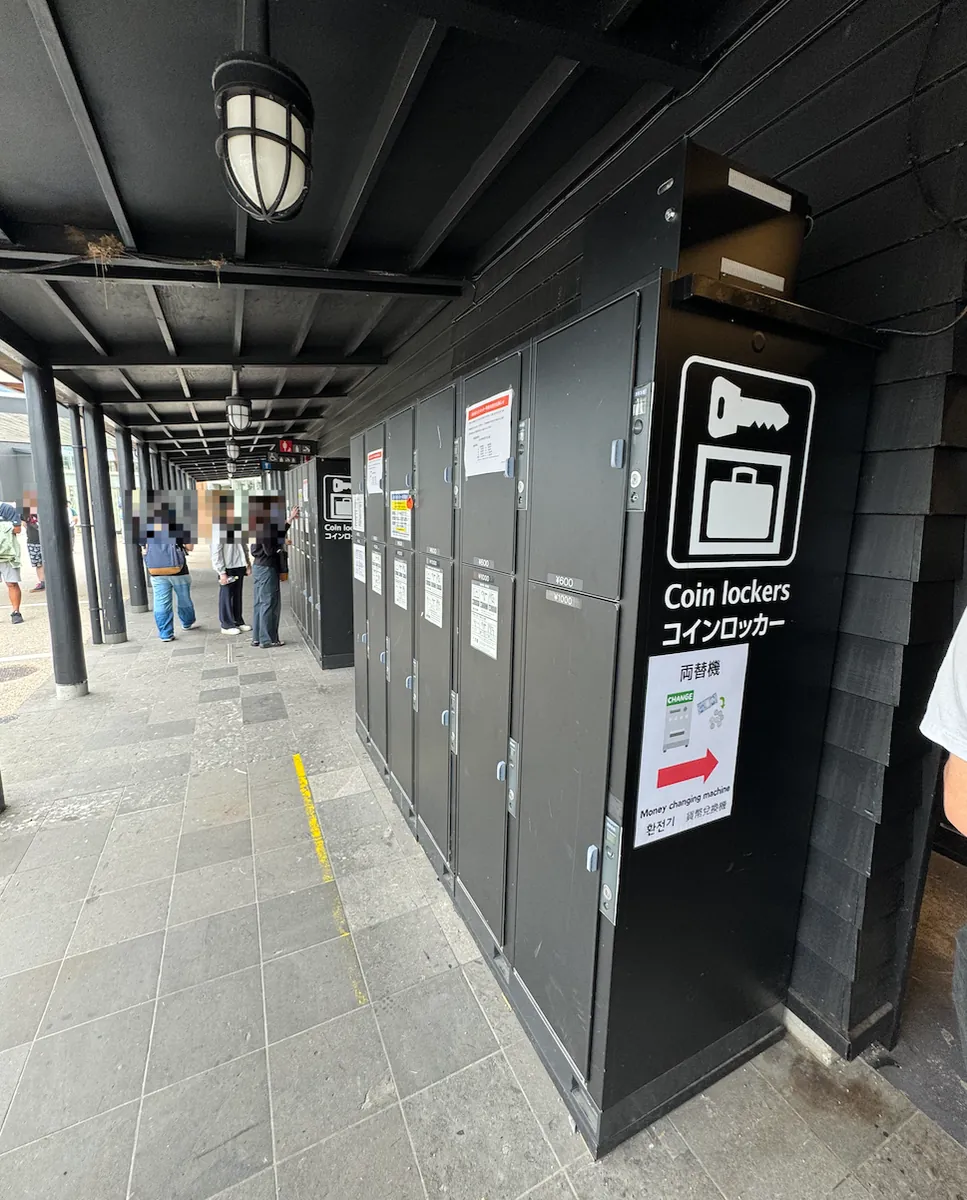
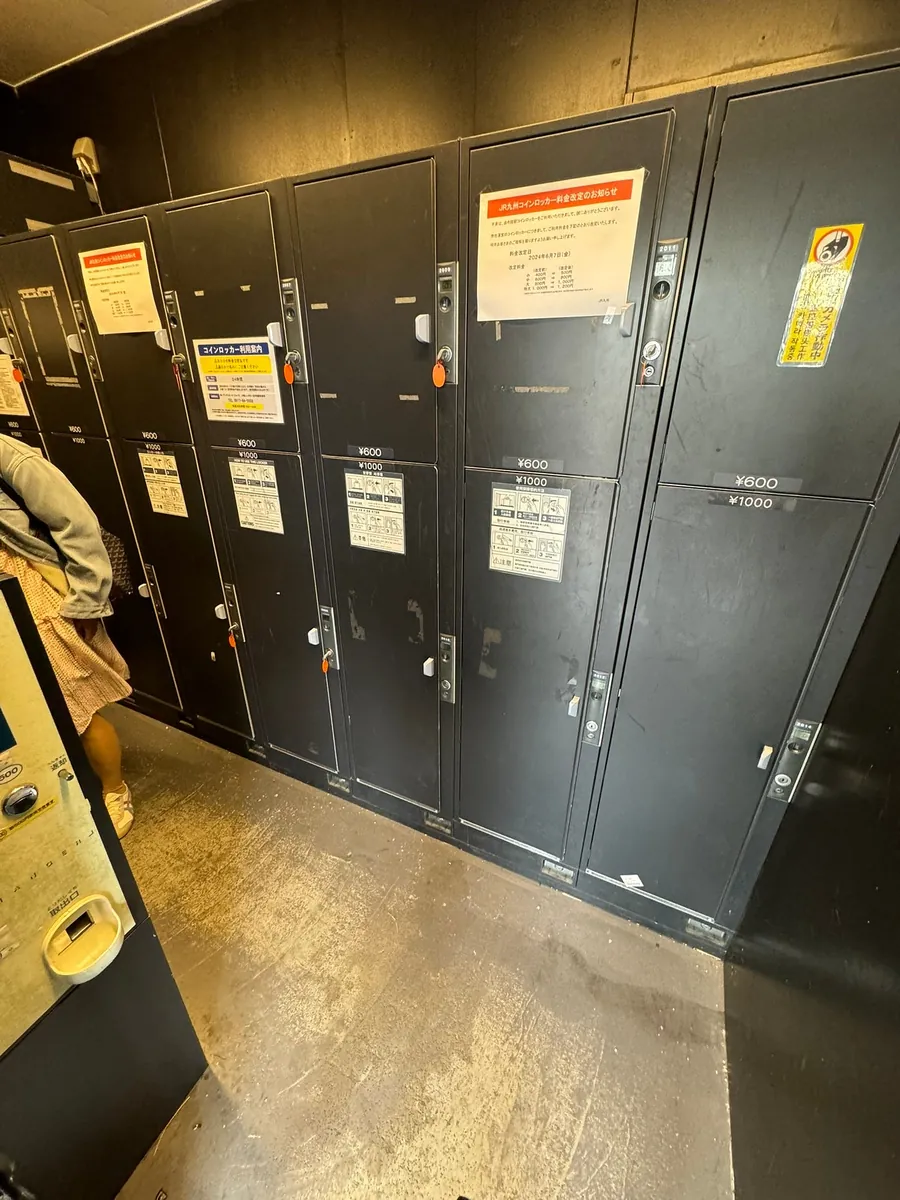
Upon exiting Yufuin Station, immediately turn right to the Coin Lockers to store luggage. Since it’s a suitcase, there are fewer spots available. (1,000 yen)
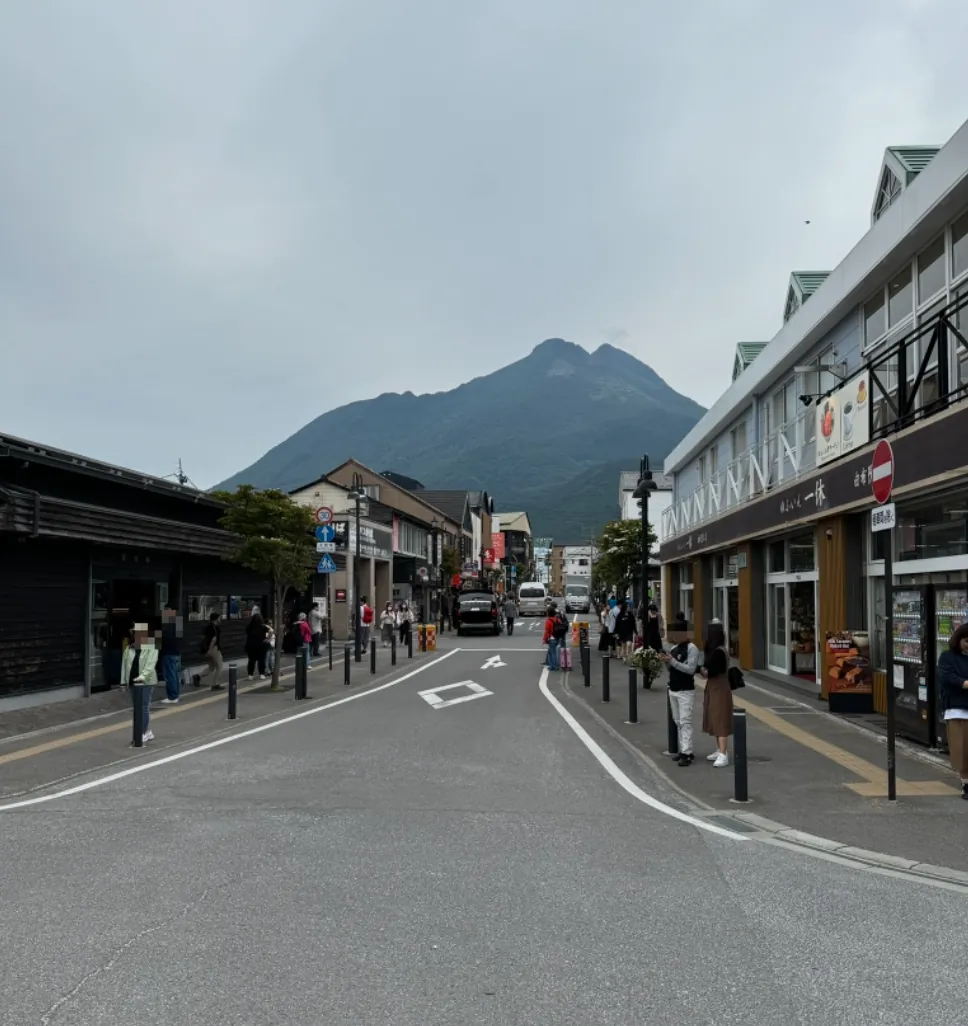
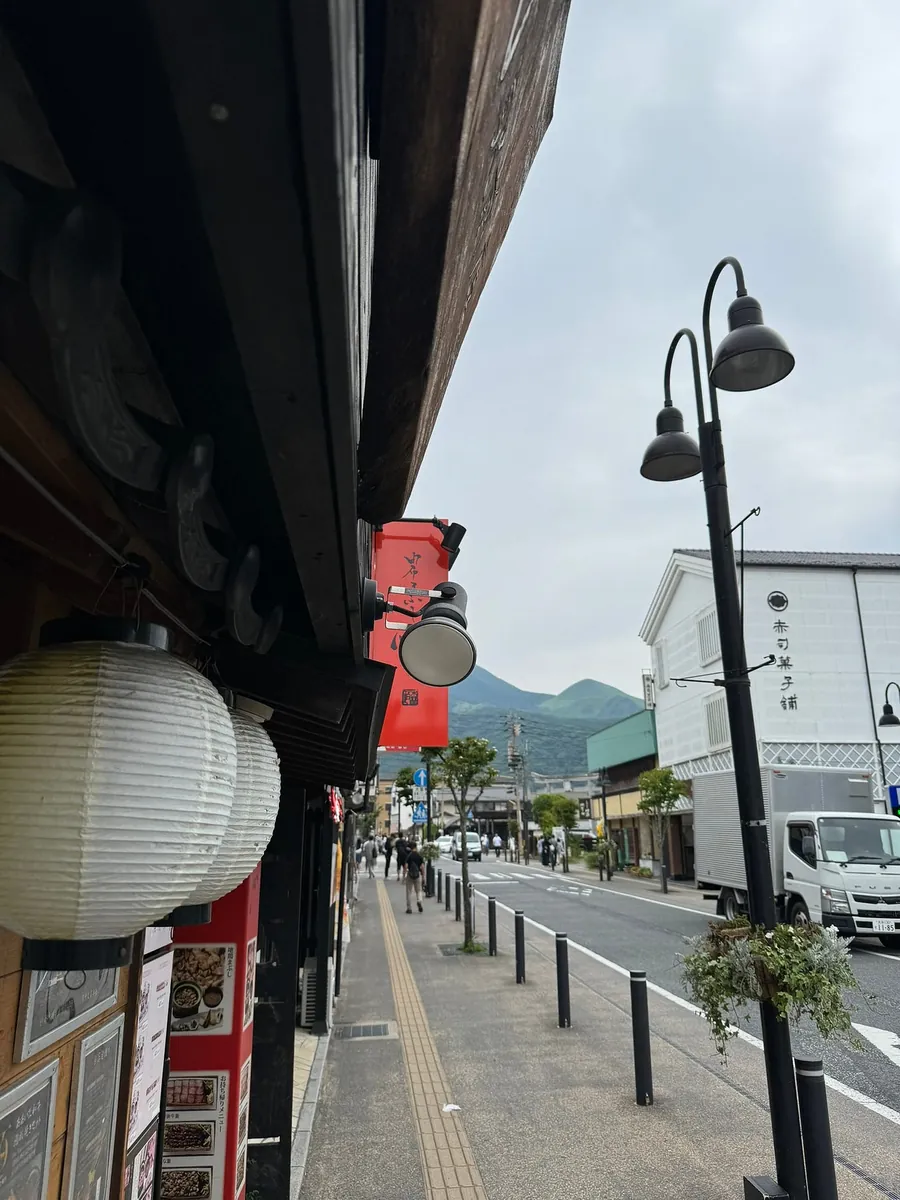
Possibly due to the season and weather, the overall tone felt gray and greenish during the visit, without any special impression.
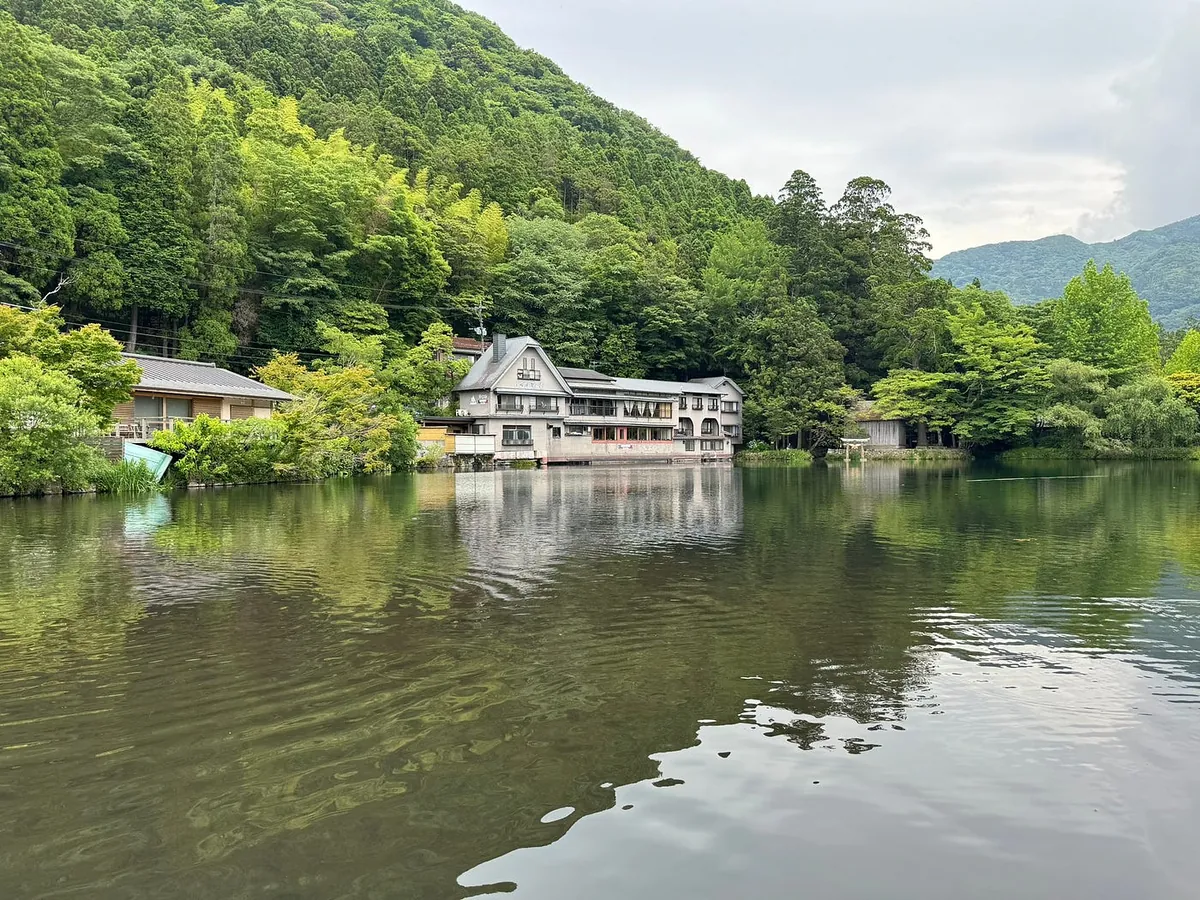
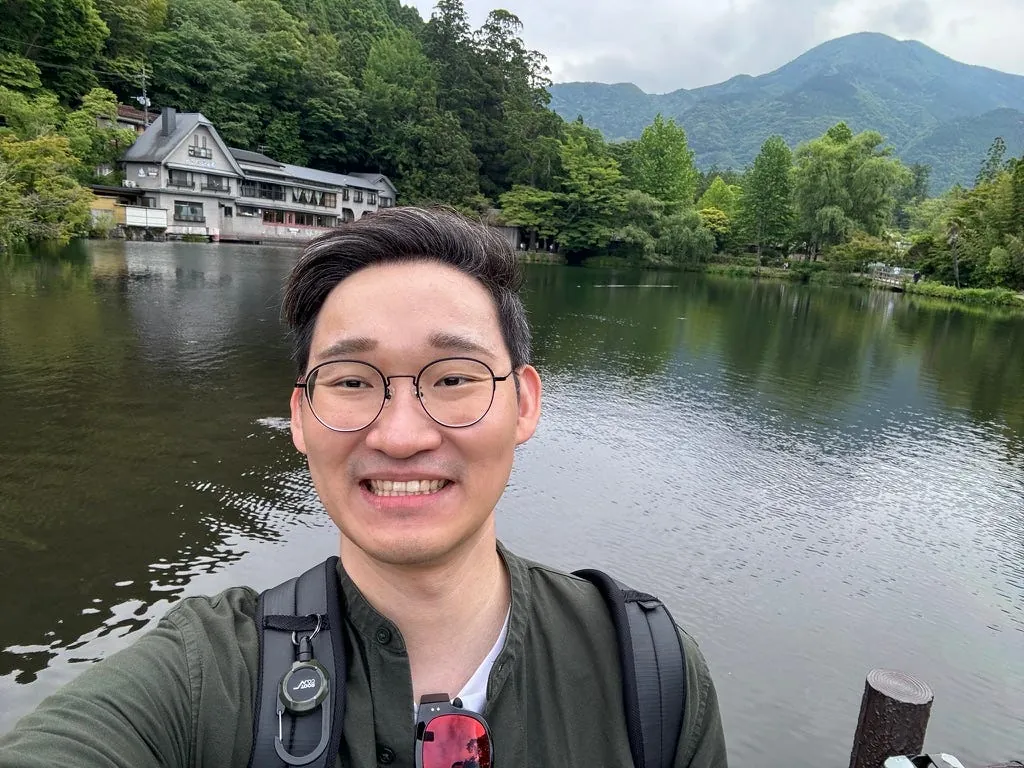
Walk straight down the street to reach Kinrin Lake, where the lush green lakeside exudes a sense of tranquility.
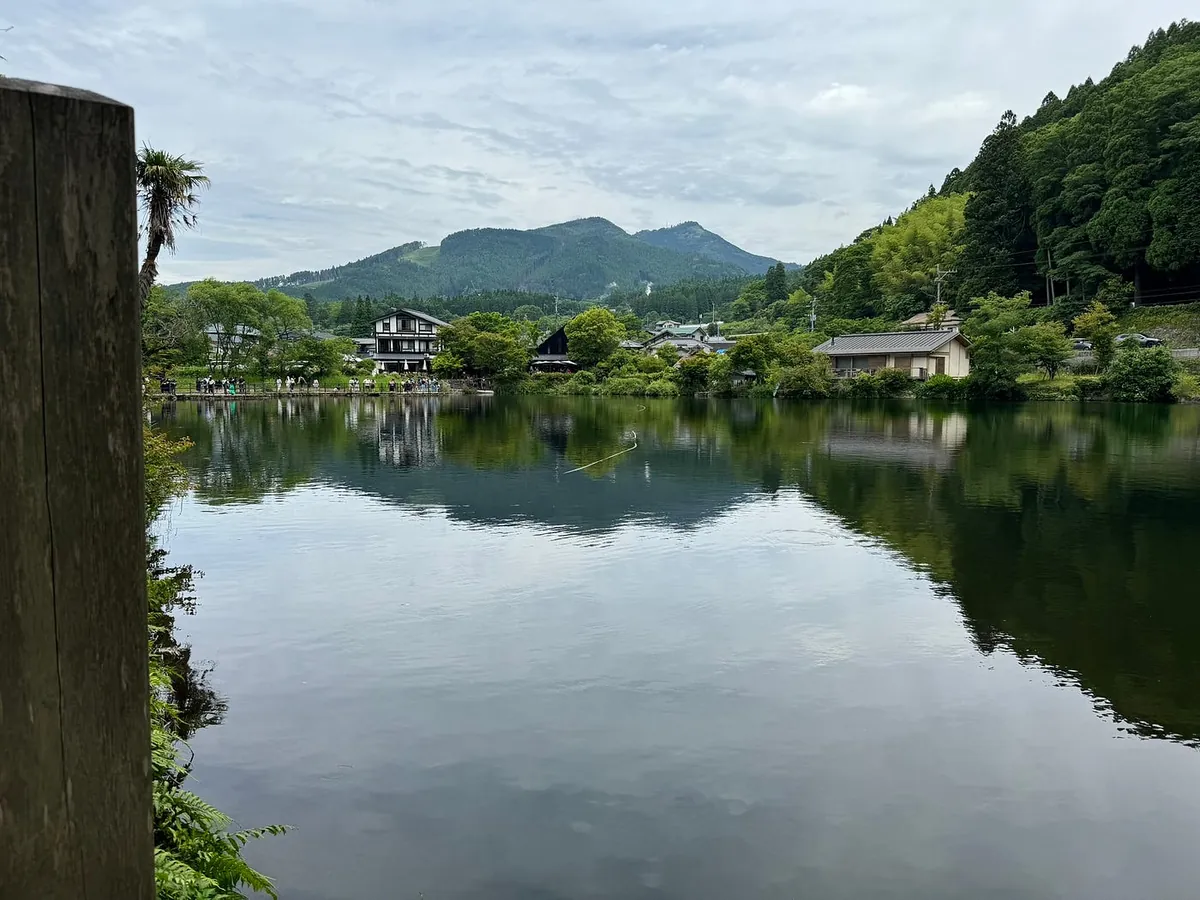
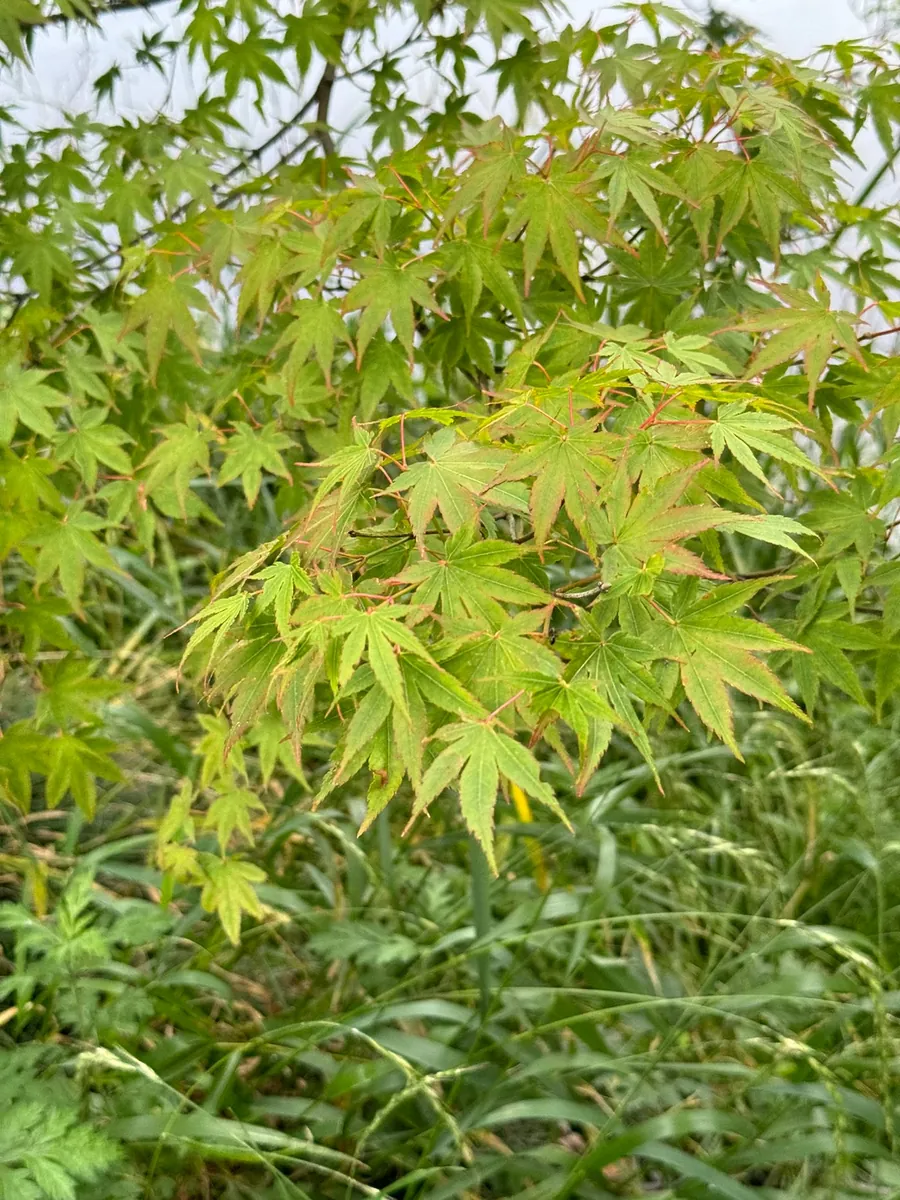
Kinrinko Lake is very clean and clear, with many maple trees by the shore (not yet changed color).
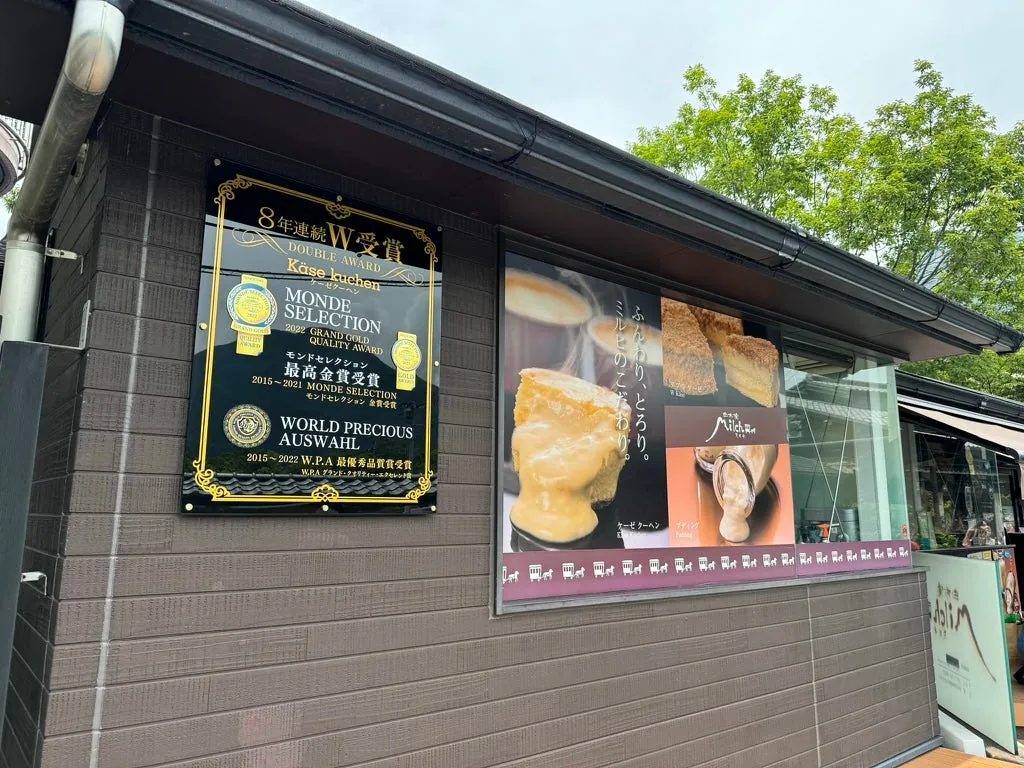
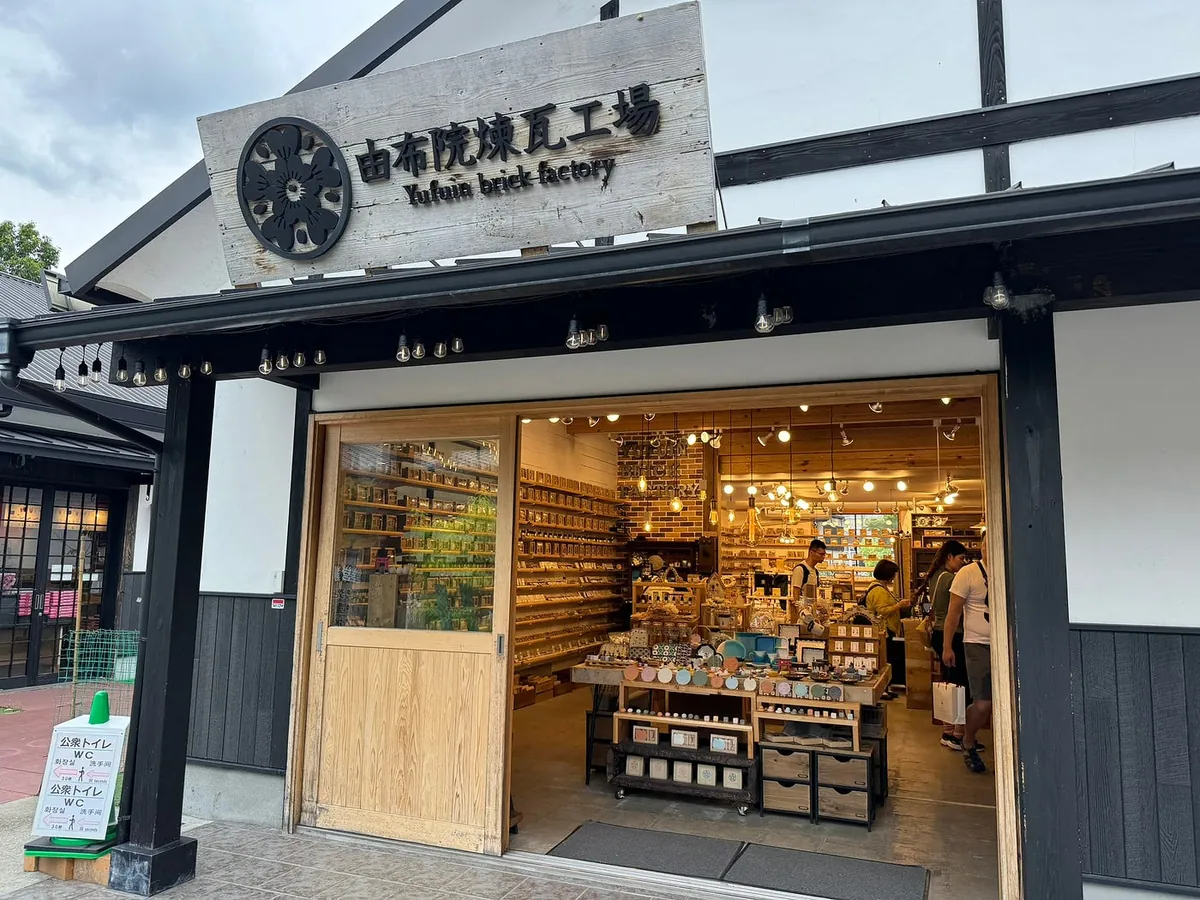
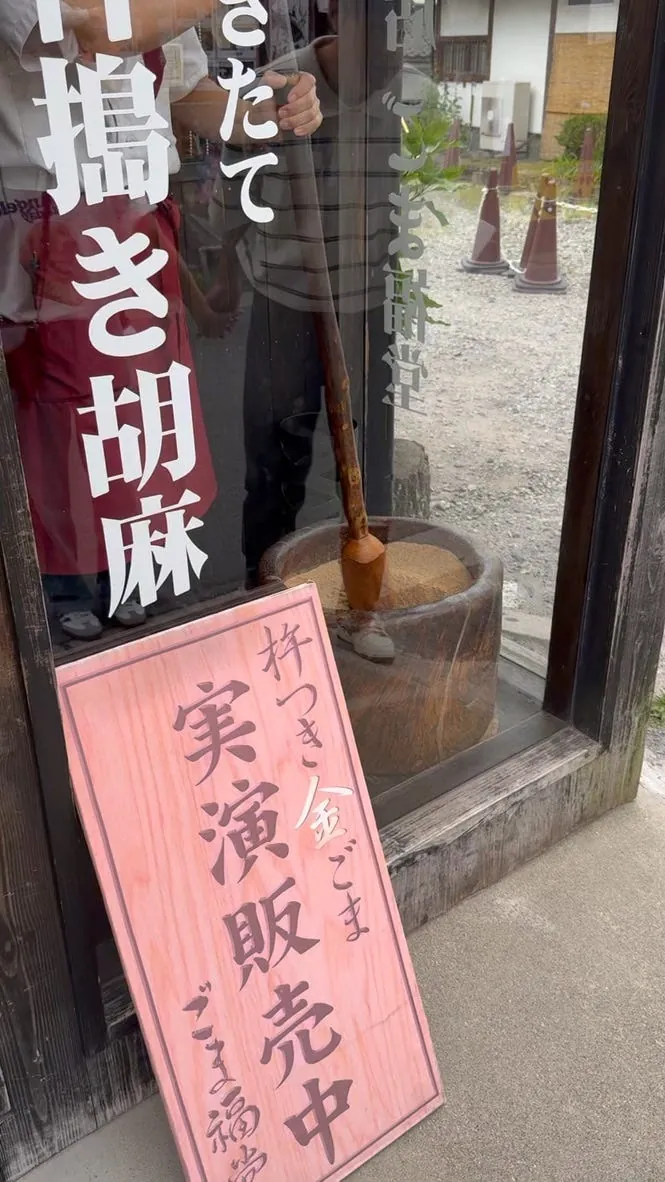
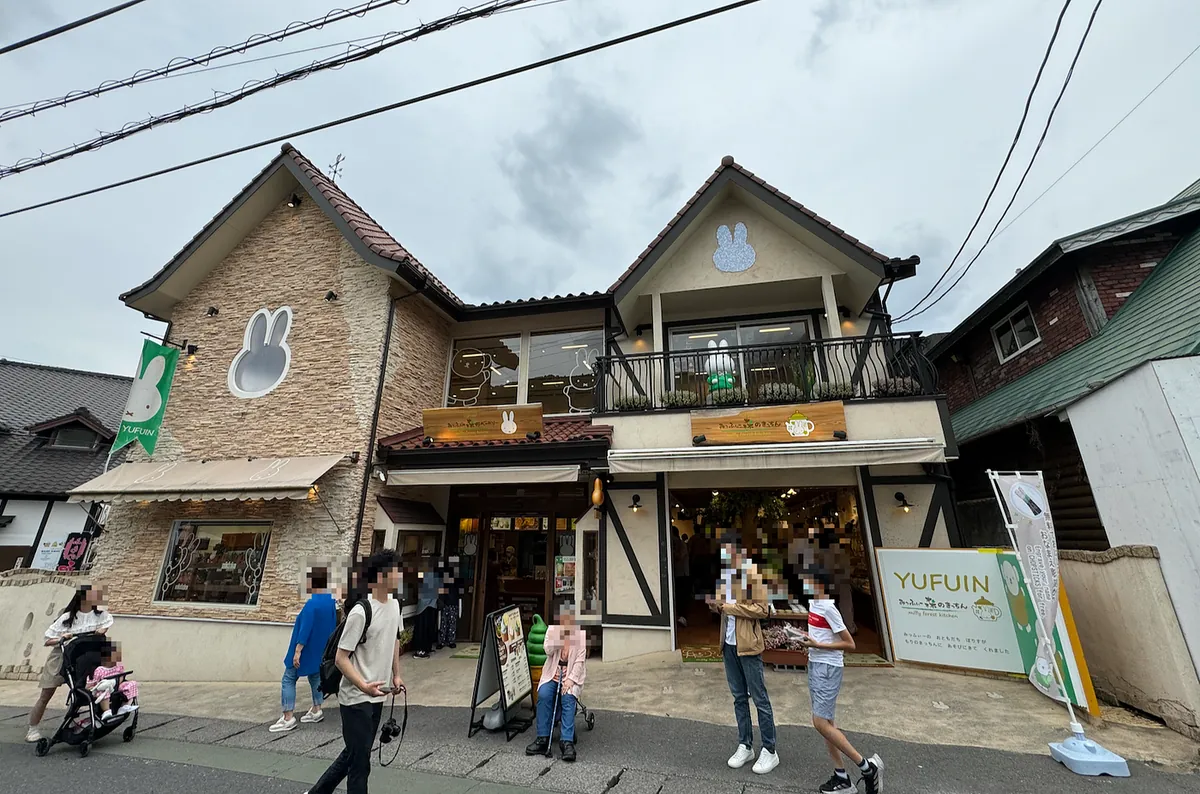
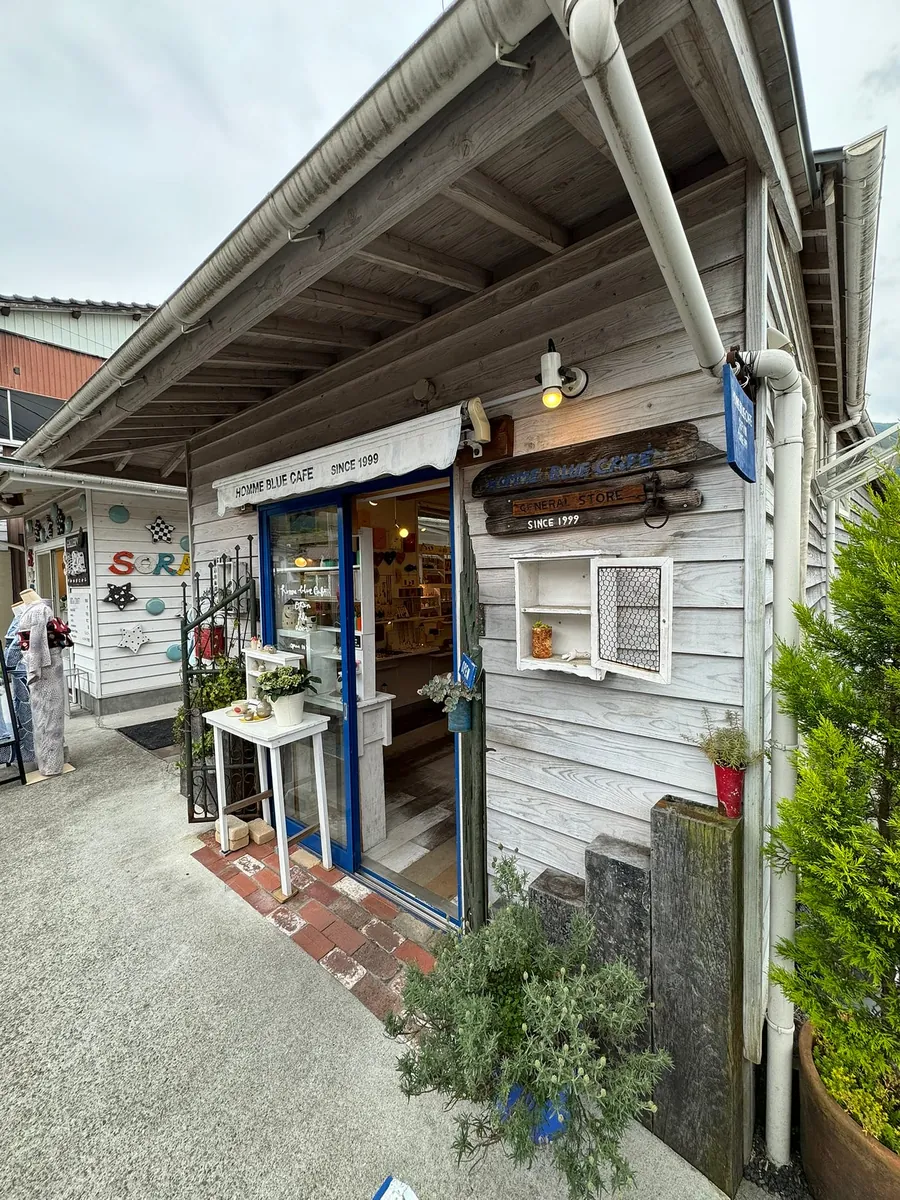
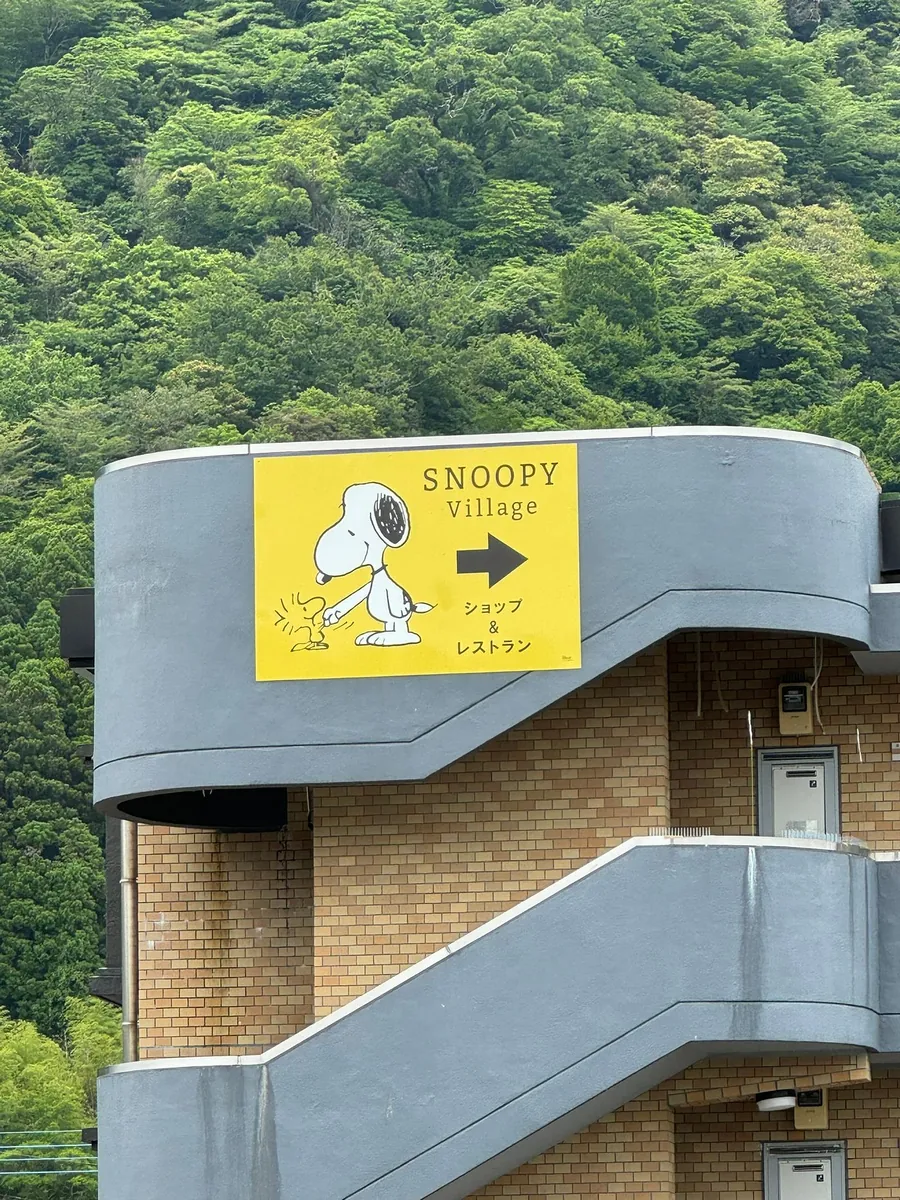
From Yufuin Station to Kinrinko Lake, there are many IP-themed and creative shops along the street to explore. If you’re interested in food, you can also check out Yufuin’s award-winning desserts, including pudding, ice cream, and more.
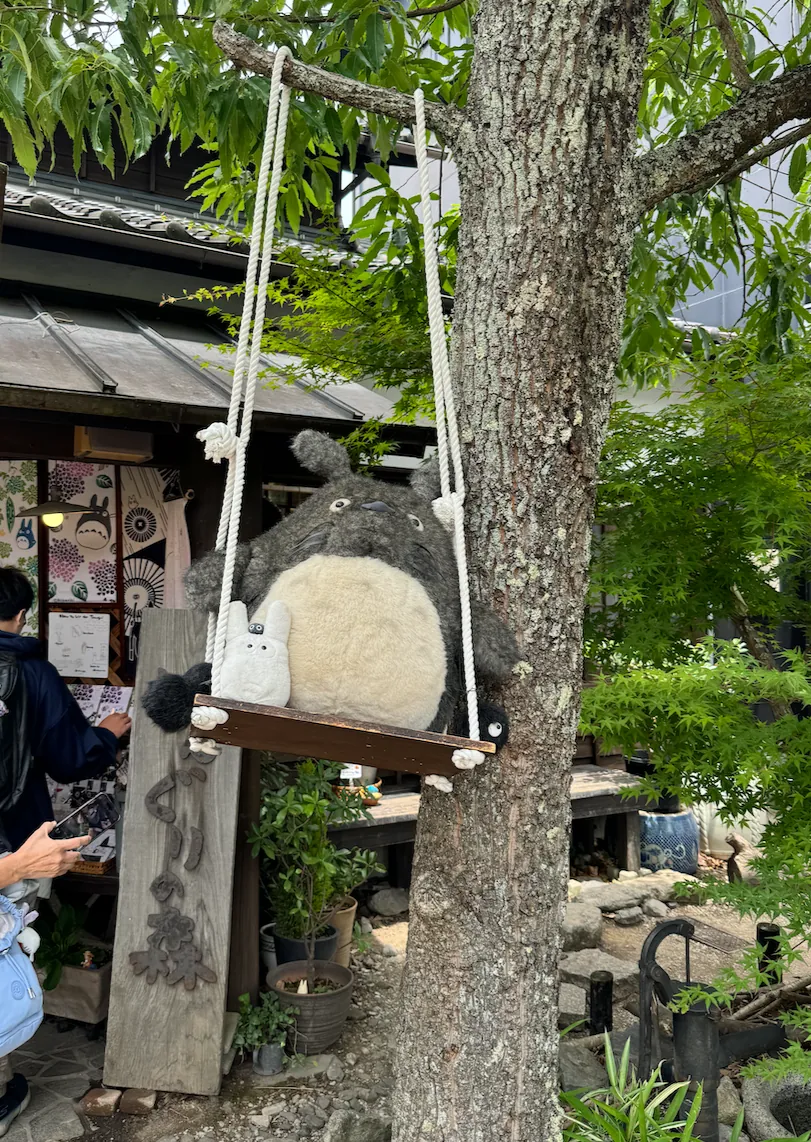
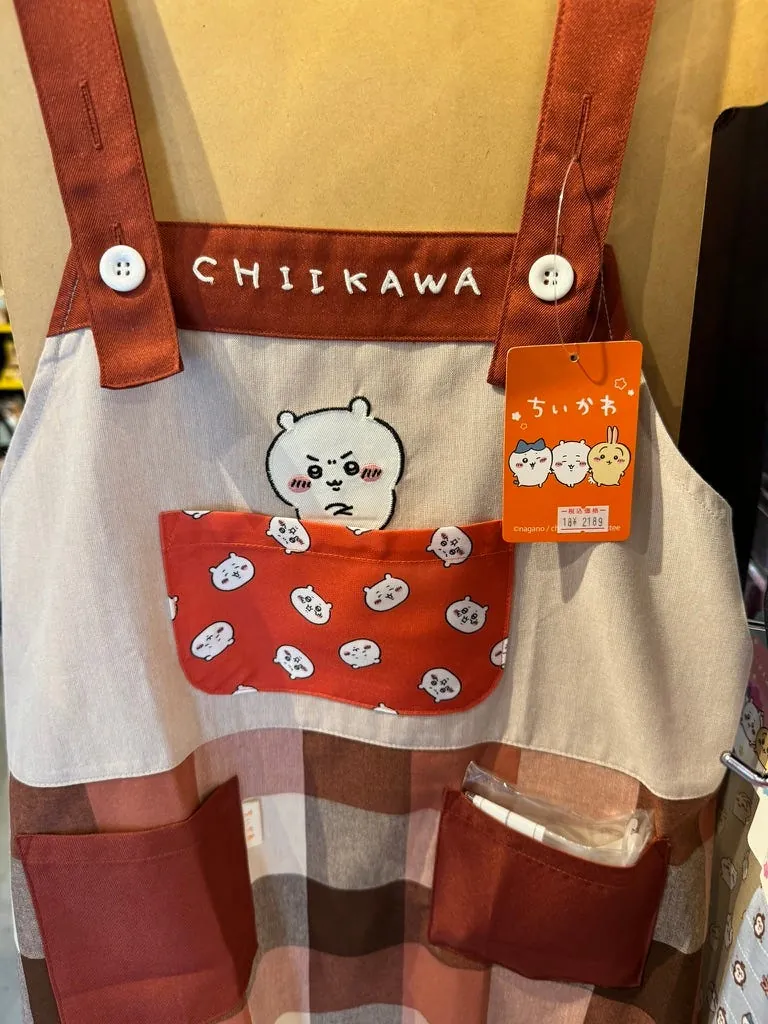
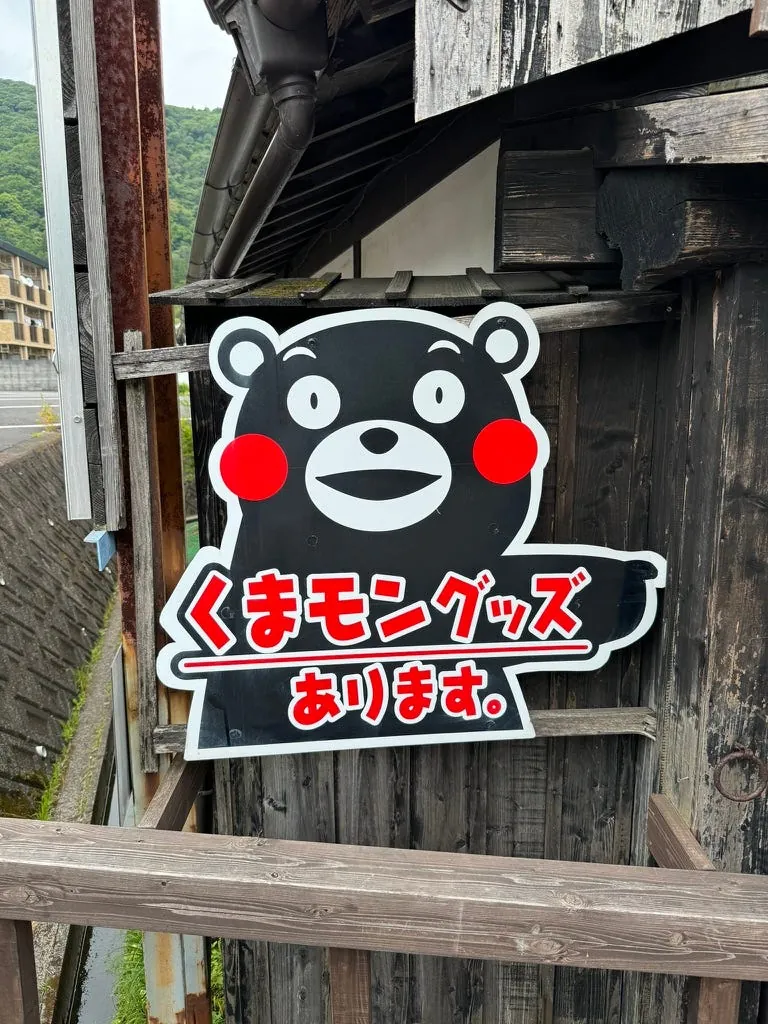
Of course, you can’t miss the widely seen Totoro Forest, Jiikawa, and the “Kyushu specialty” Kumamon.
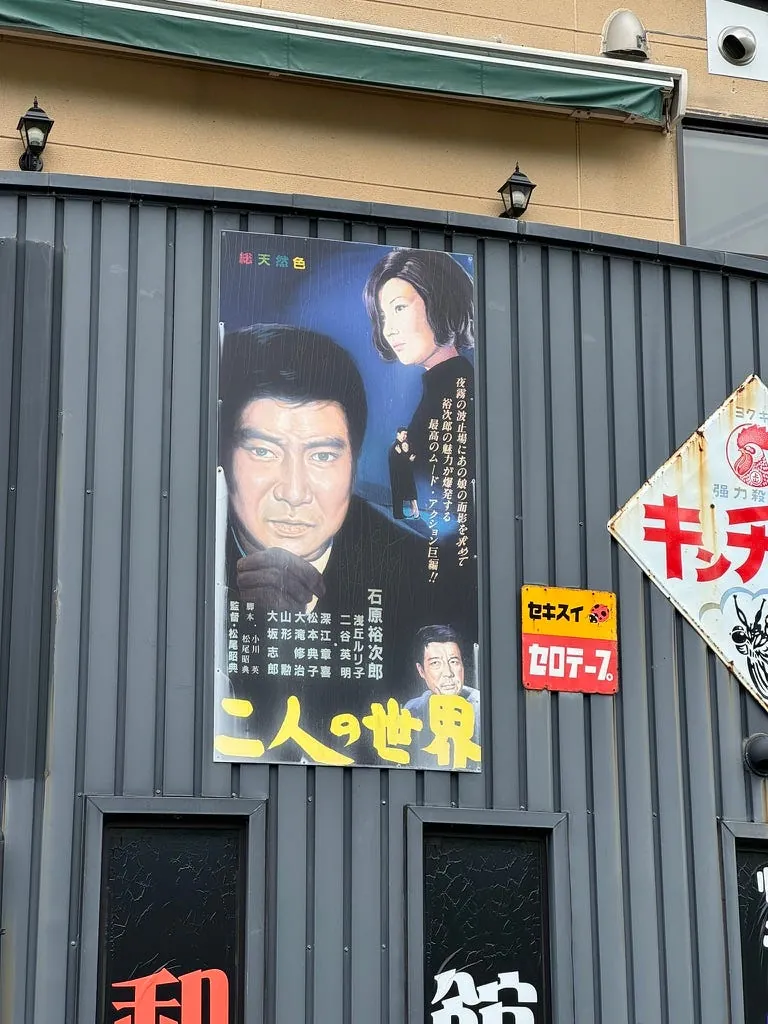
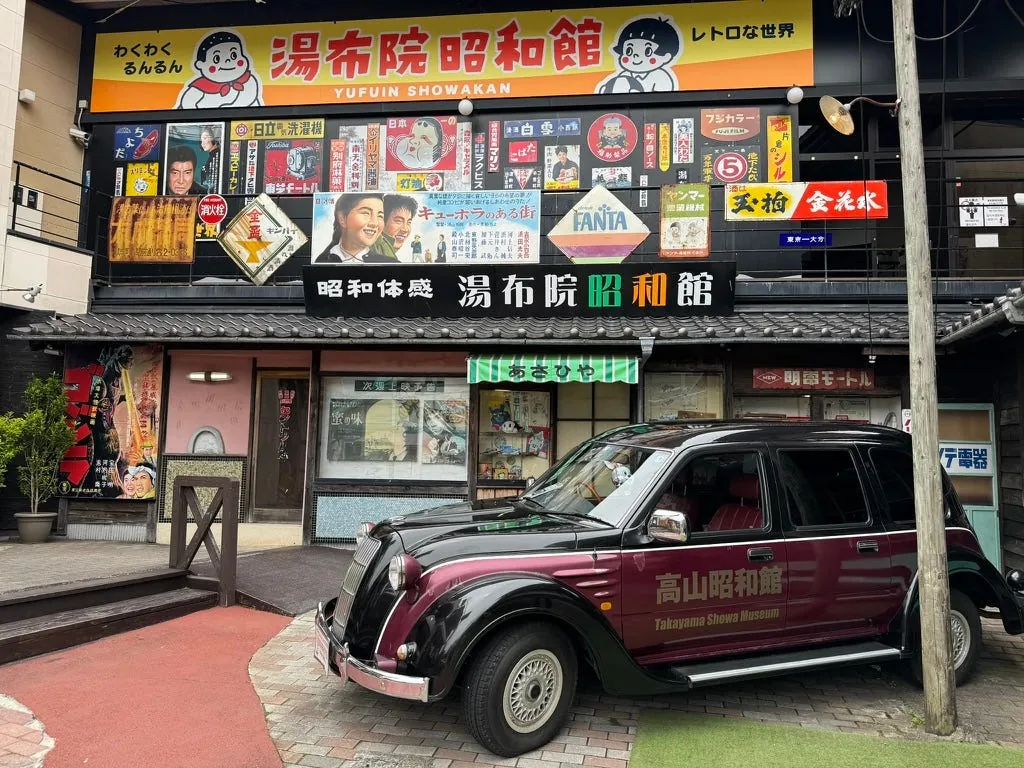
Yufuin Showakan has a strong traditional Japanese atmosphere.
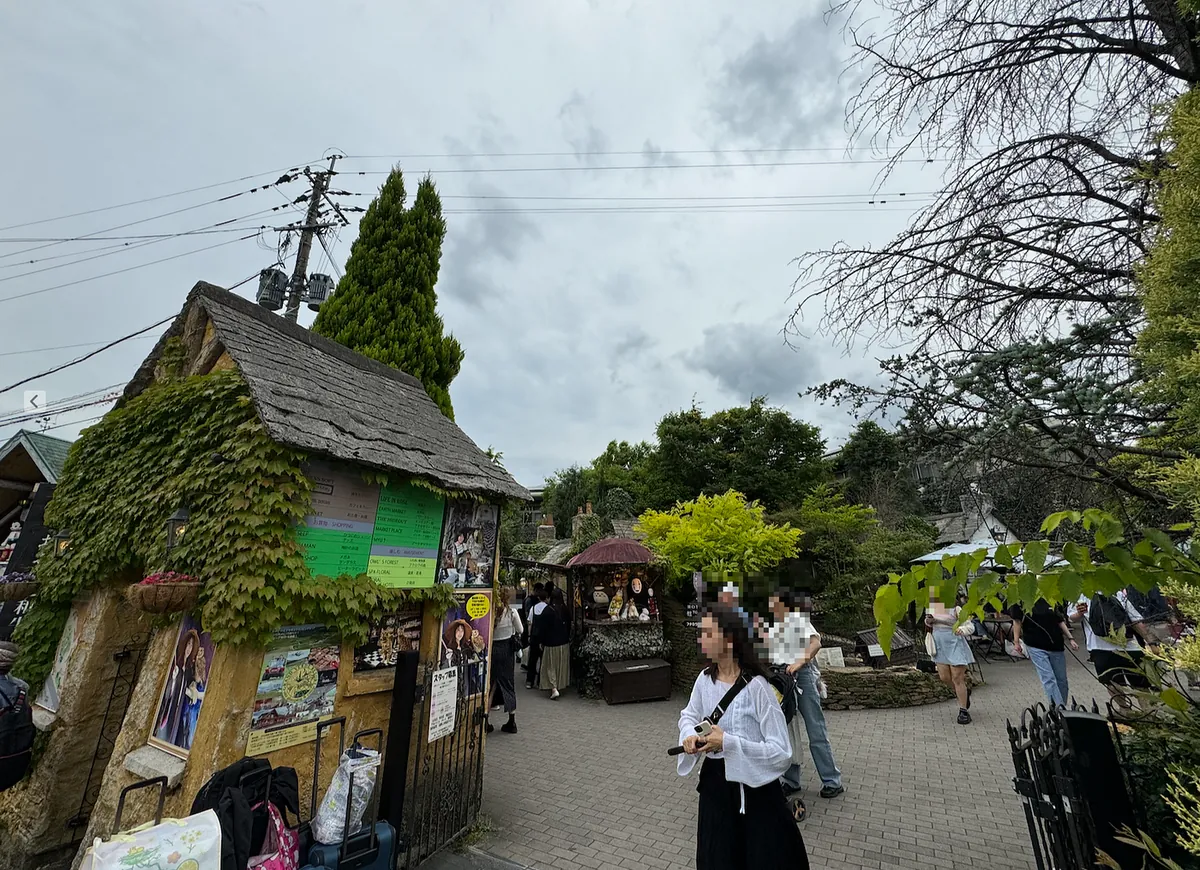
The Flower Village looked too touristy and crowded, so I didn’t go in to see it.
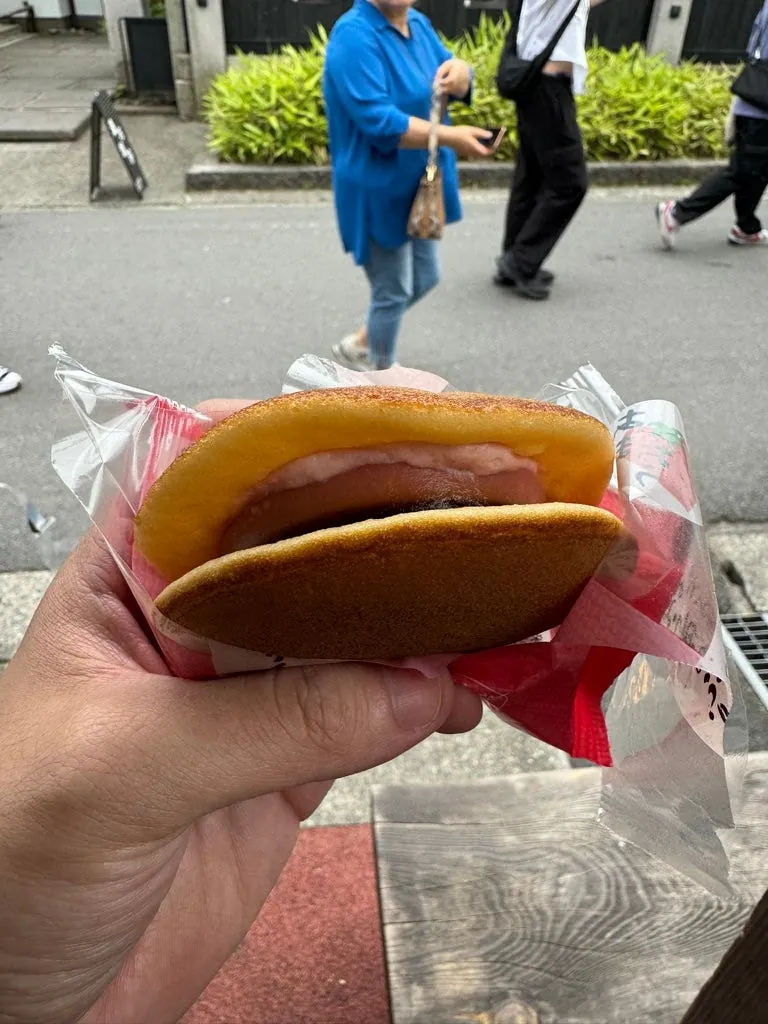
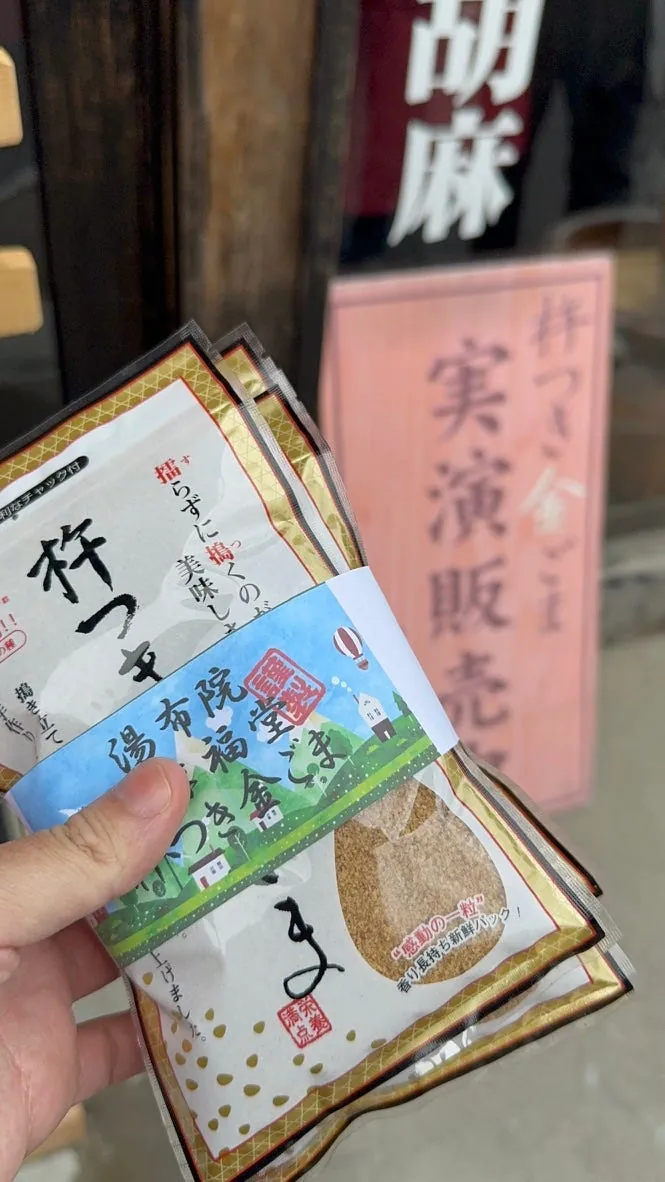
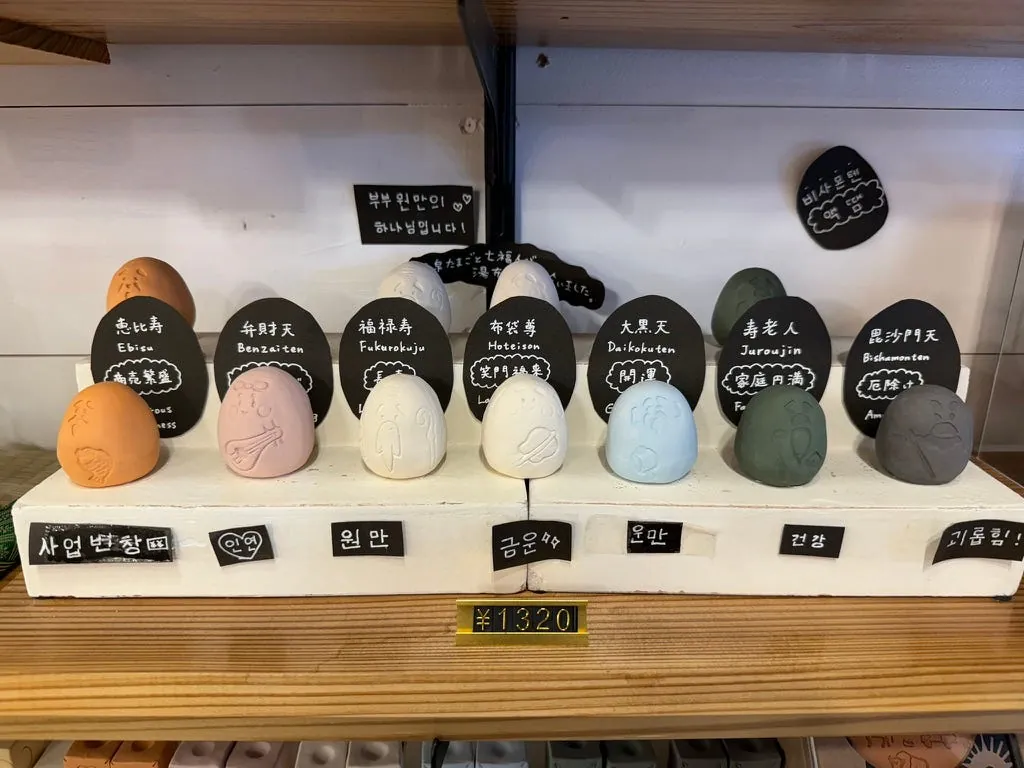
Bought the famous pudding dorayaki and some souvenirs on the way (sesame powder, Yufuin Renga Kobo — Seven Lucky Gods, cultural crafts, Yufuin incense…)
Fun fact: I actually ran into a colleague in this hidden paradise of Yufuin XD — Pinkoi Community Queen
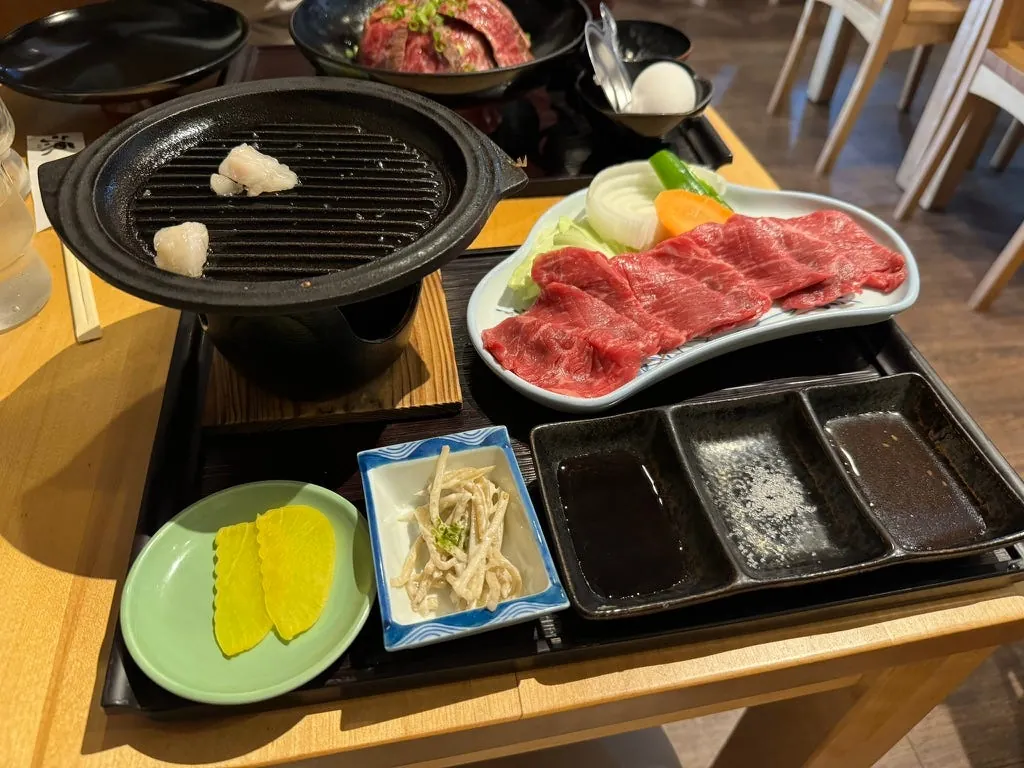
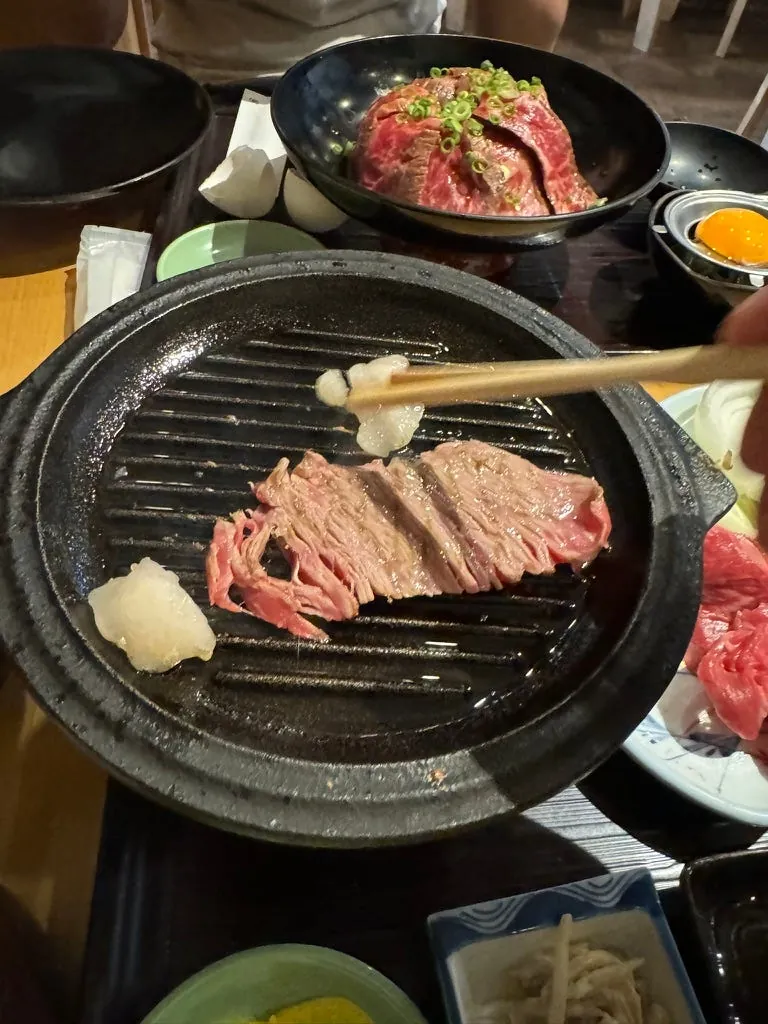
For lunch, we originally planned to eat Yufu Mabushi Kokoro, a famous Yufuin kamameshi restaurant. There are two locations: one at the Kinrin Lake main store and one at the station exit. The station exit branch was closed that day, and we were too lazy to walk back to the main store, so we switched to the first-floor Sushi Gen.
I had the Bungo beef steak, and my friend had the rice bowl; the beef was very tasty, flavorful, juicy, and had little to no gamey smell. The price was also affordable.
After eating and strolling around, it was about 15:00, so I took the train to continue heading to Oita.
There are many trains from Yufuin to Oita, and few passengers (maybe more people go back to Hakata?). There are also local trains. This time, I took a local train and practiced some newly learned Japanese:
Does this train go to Oita?
Yes, it goes to Oita.
16:20 Oita
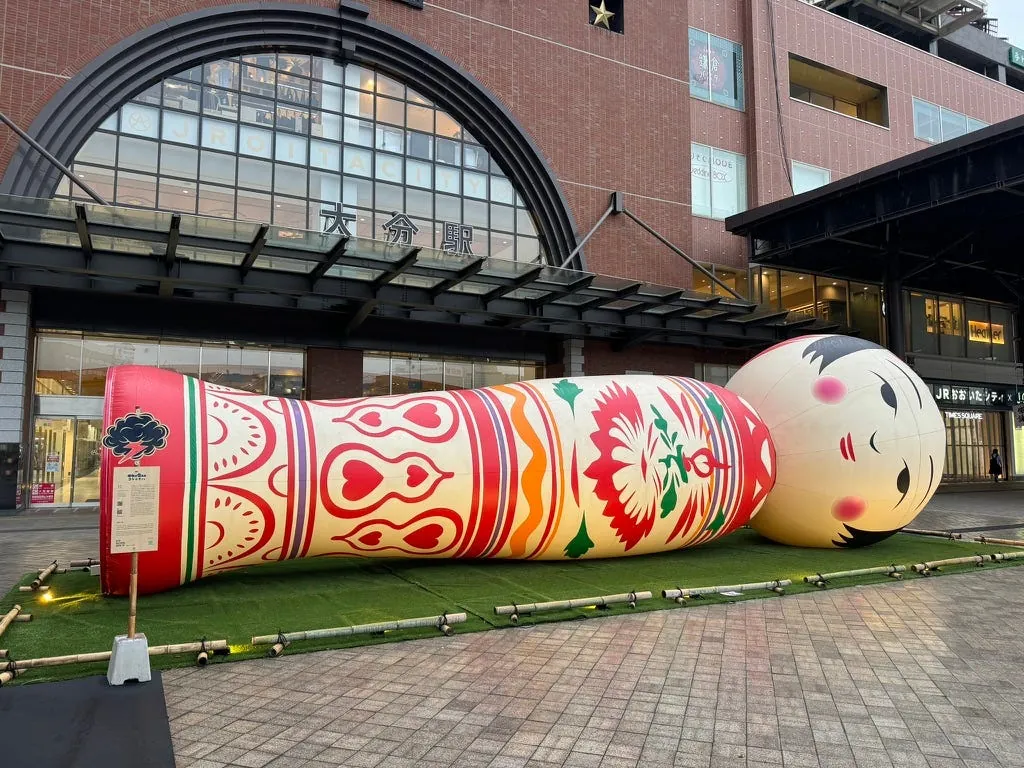
We happened to encounter an art installation at Oita Station (it even made sounds).
Oita gives off a vibe of being far away from the hustle and bustle. When wandering around the city, it feels unusually quiet, with only faint car engine sounds and very few people or vehicles.
First, go to the hotel to drop off luggage. The layout of Toyoko INN hotels is quite similar. This time, I got a room with the exact same layout and angle as the one in front of Hakata Station yesterday. The difference is that this hotel’s bathroom is larger, but the hallway is narrower.
It was still early, so I decided to take a walk around and casually opened Google Maps to check nearby attractions.
Giant Bougainvillea
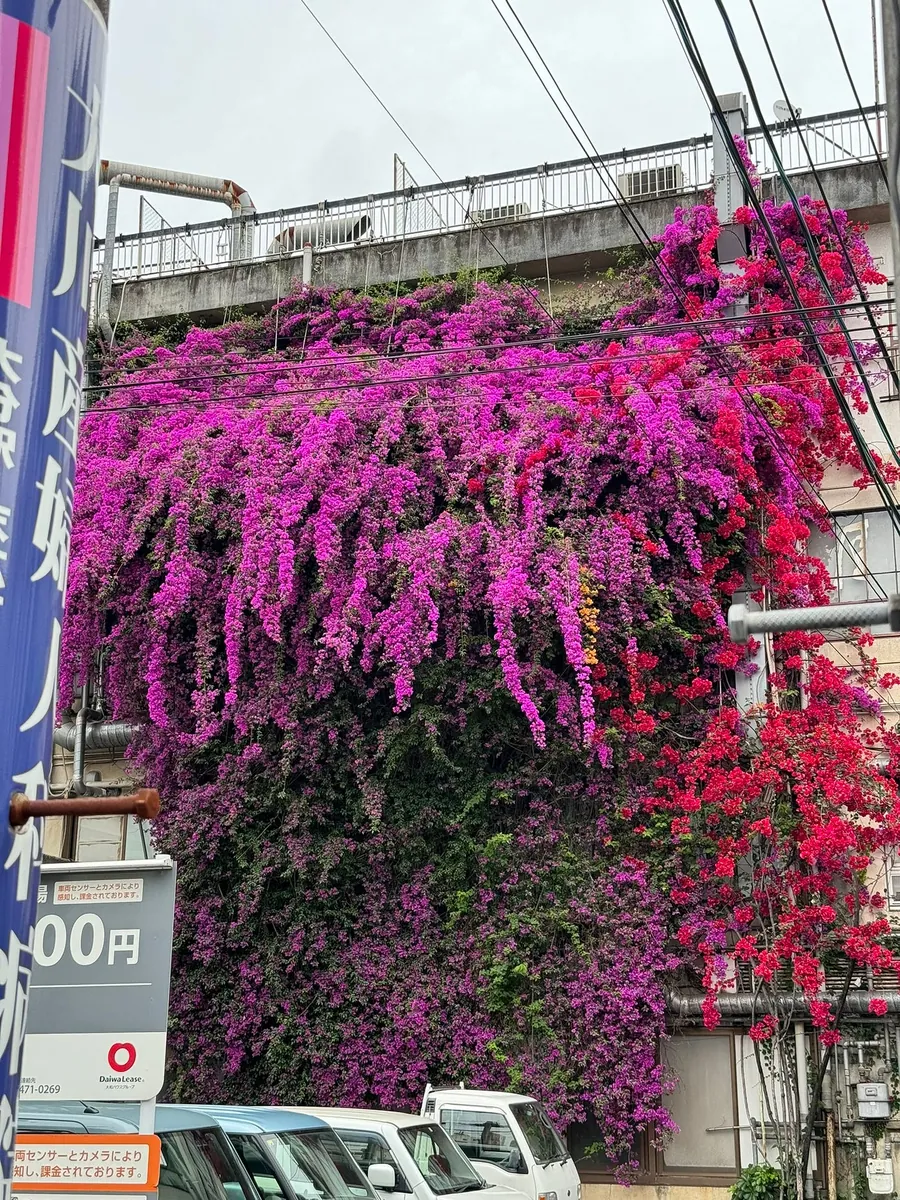
On the way to Oita Castle Ruins, there is a huge bougainvillea at the park parking lot (it looks like some curse from Jujutsu Kaisen).
Oita Castle Ruins
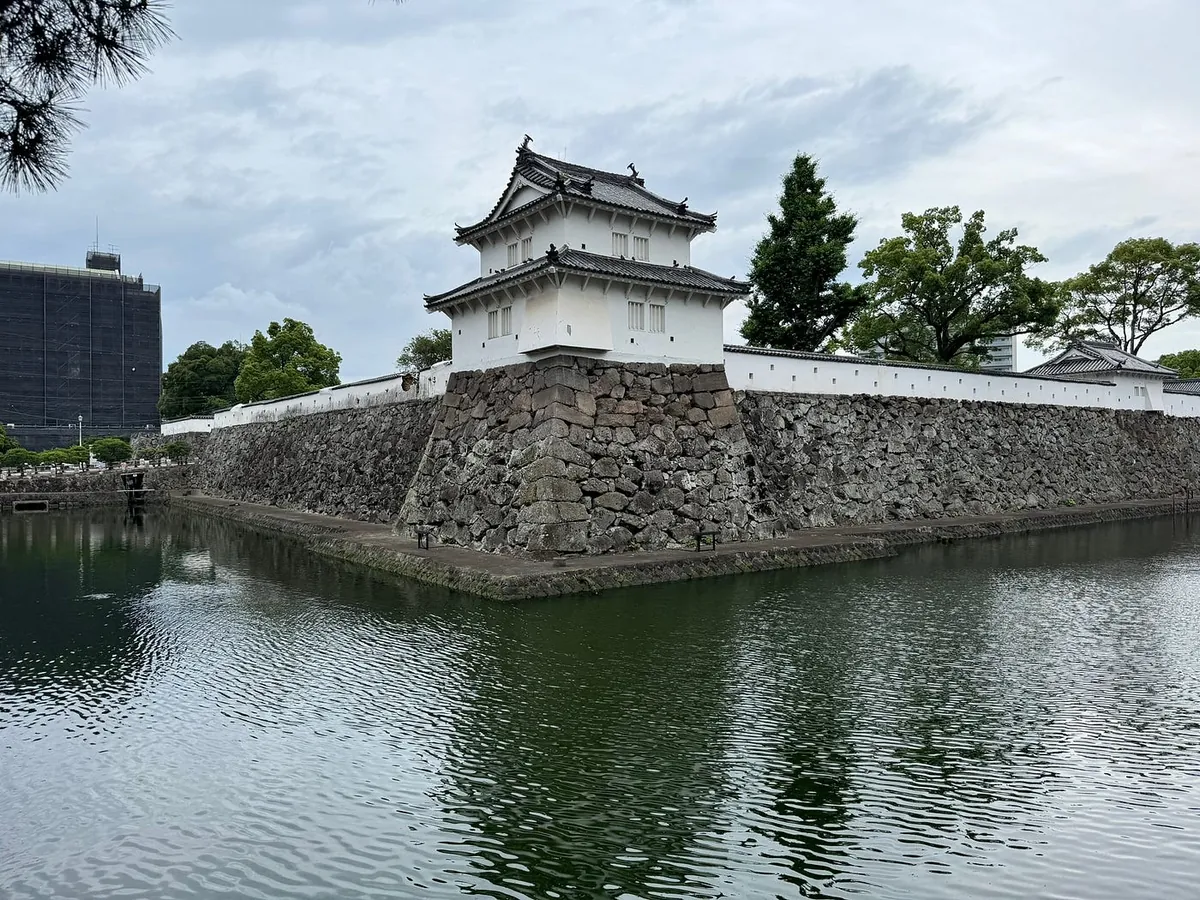
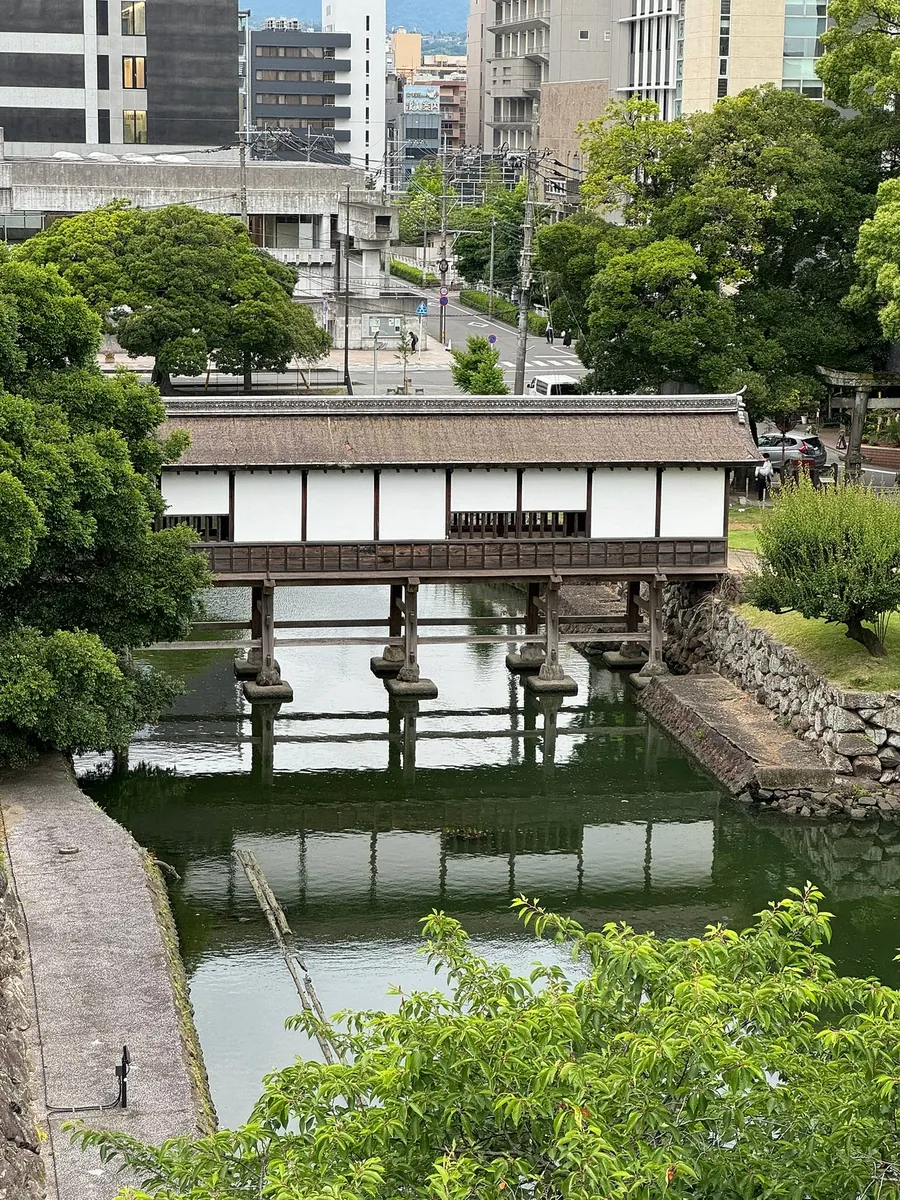
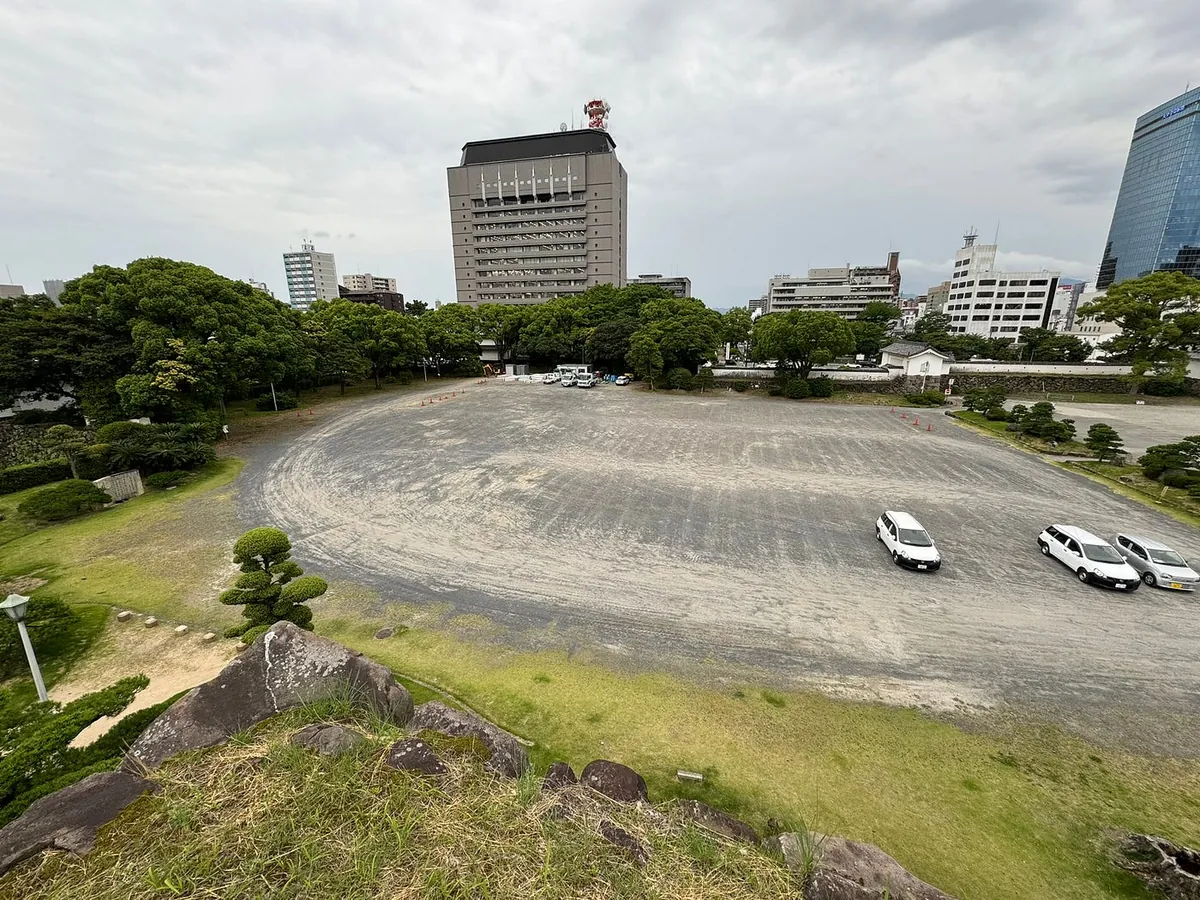
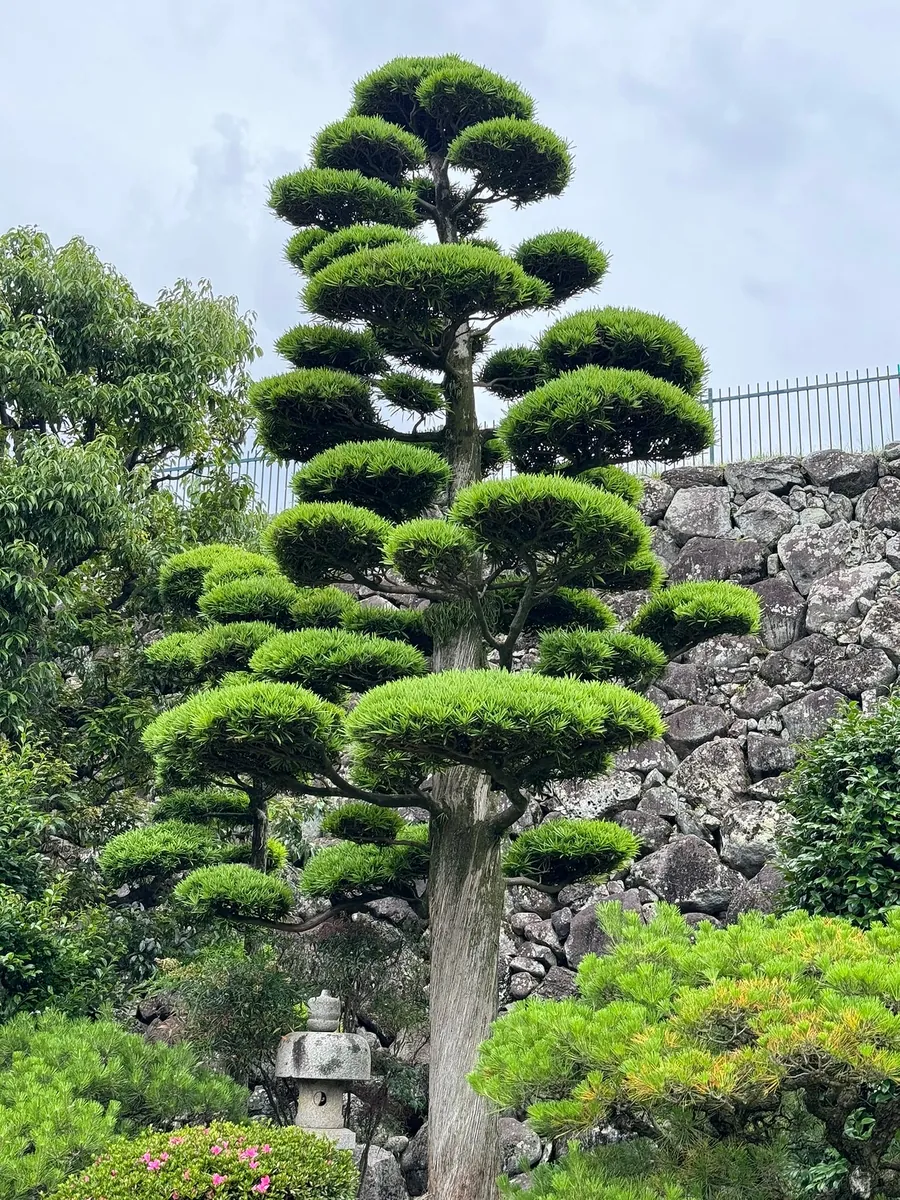
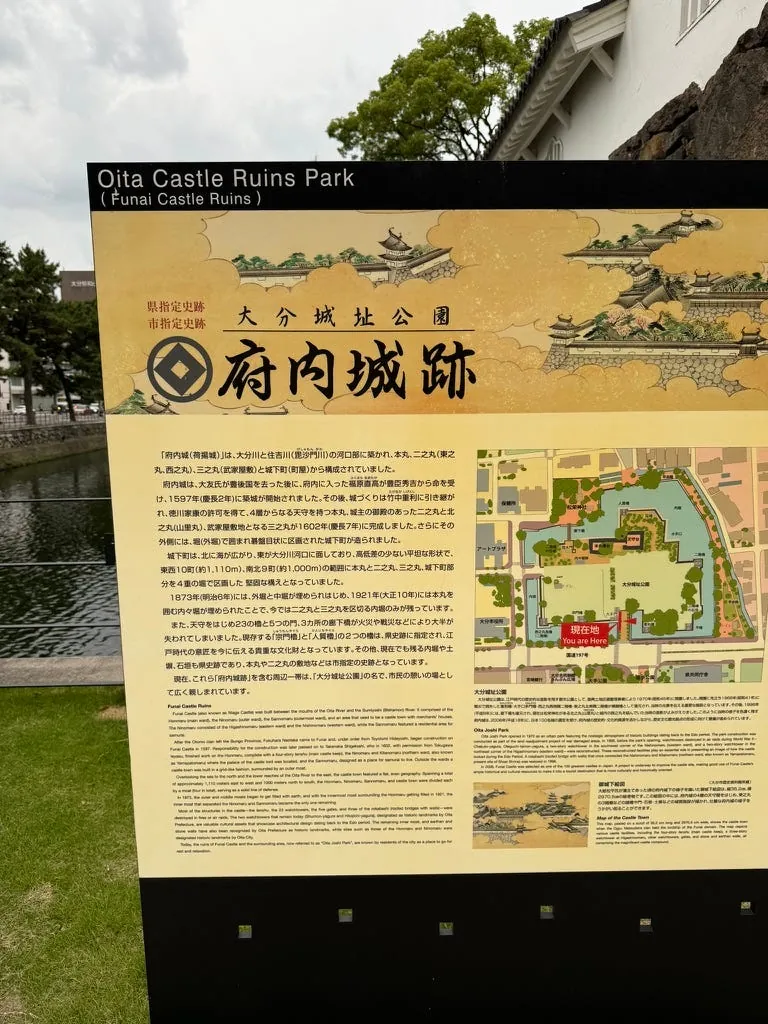
Oita Castle site only has the moat, walls, and courtyard remaining. Inside is an open parking lot and the main keep platform, where you can overlook Oita City.
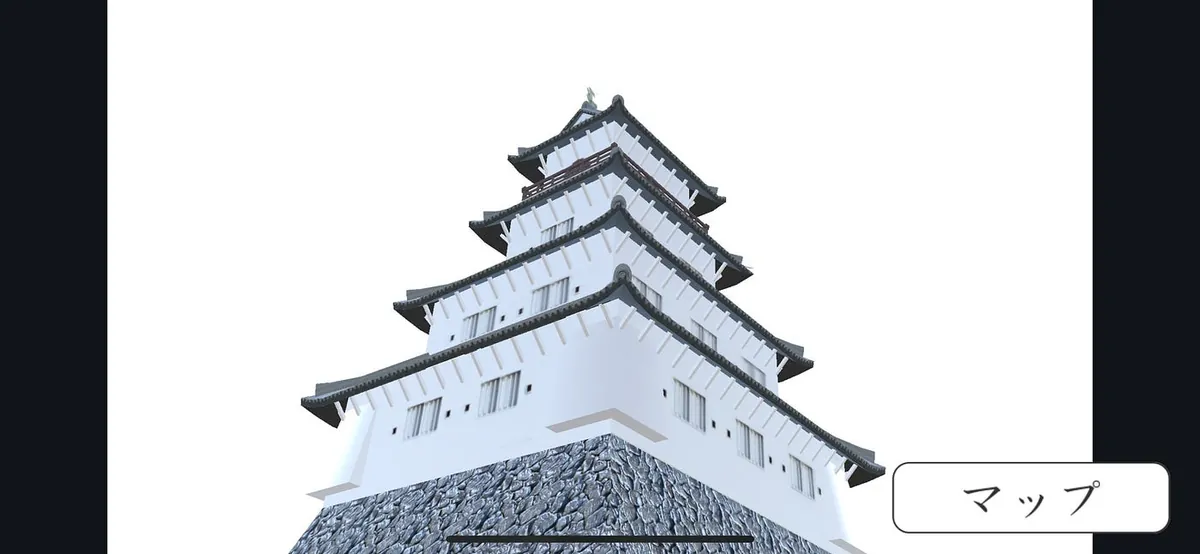
The official AR App lets you see what Oita Castle looked like before.
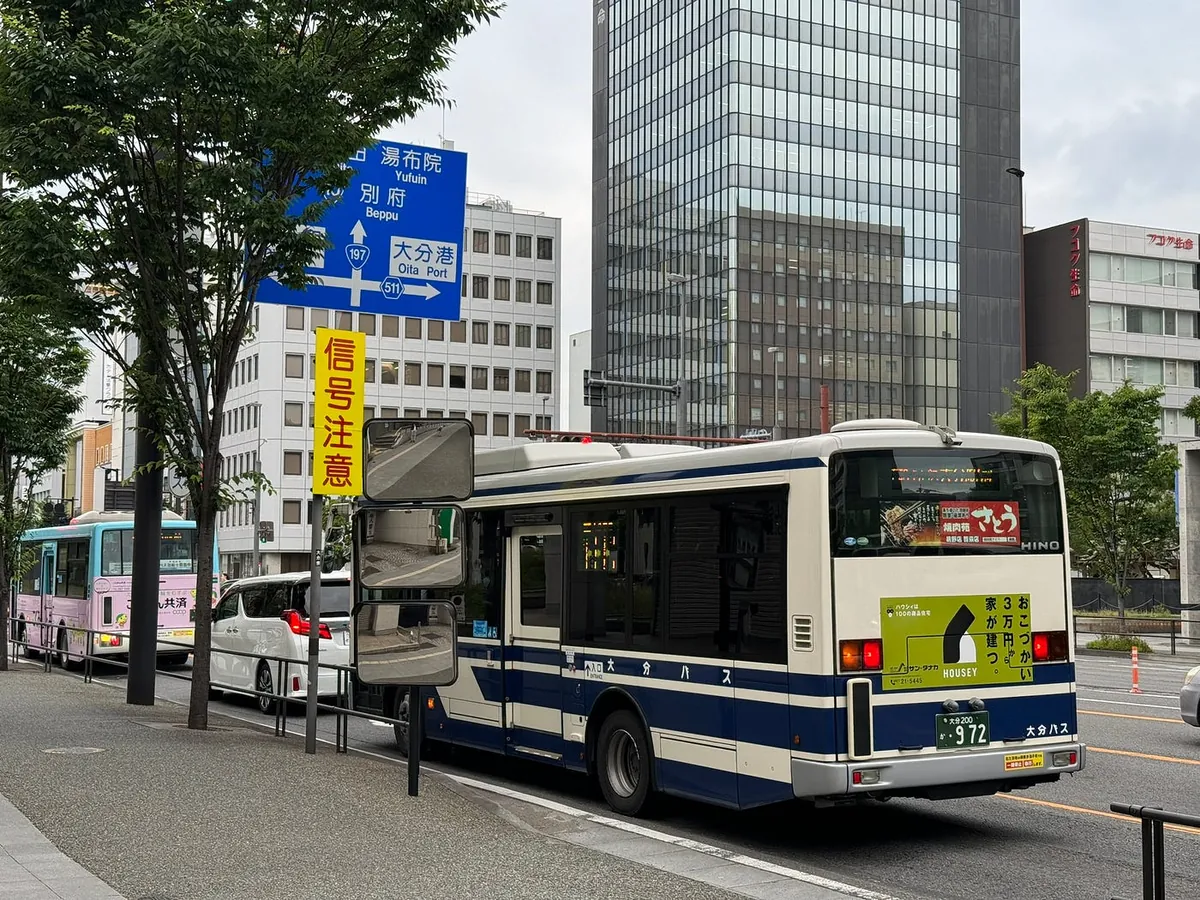
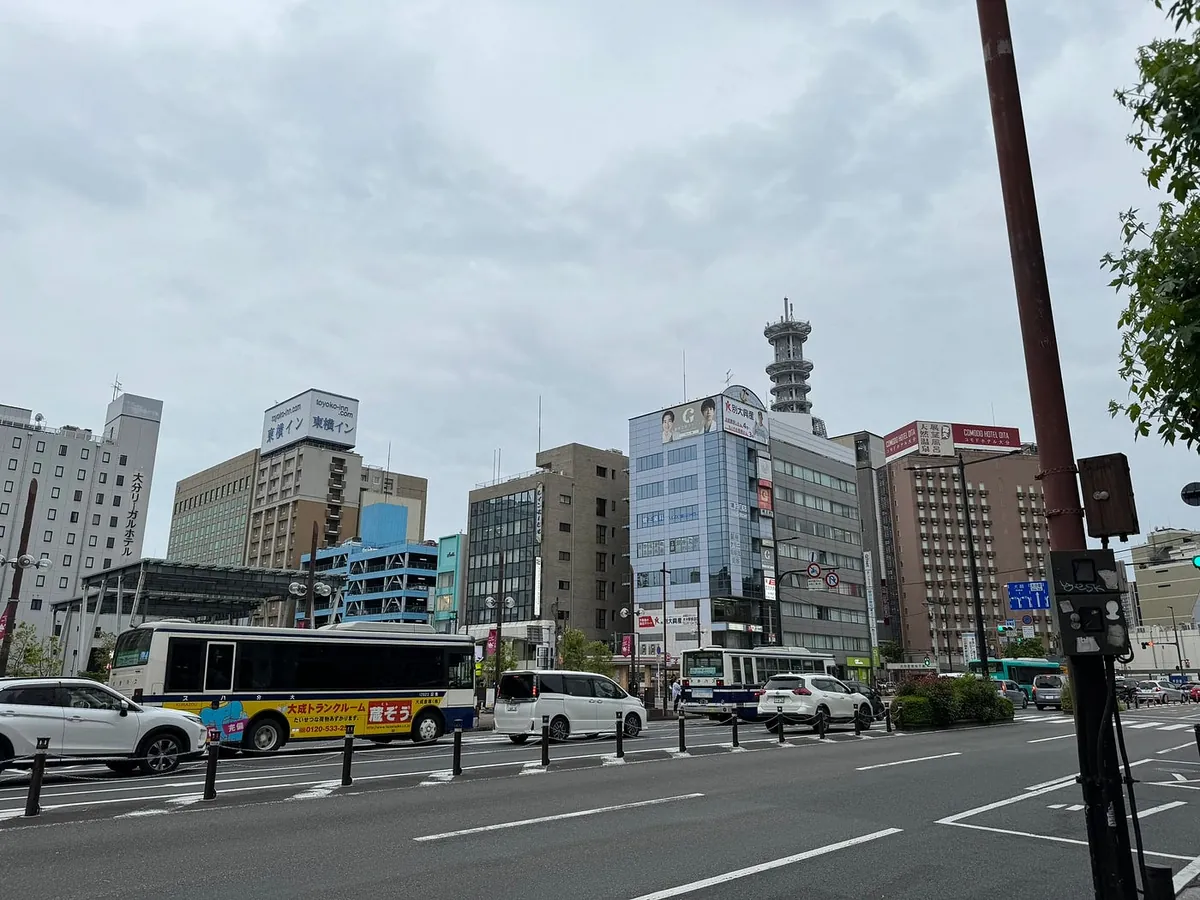
Strolling leisurely back to the station market to find food, the buses in Oita have a vintage feel but are well maintained.
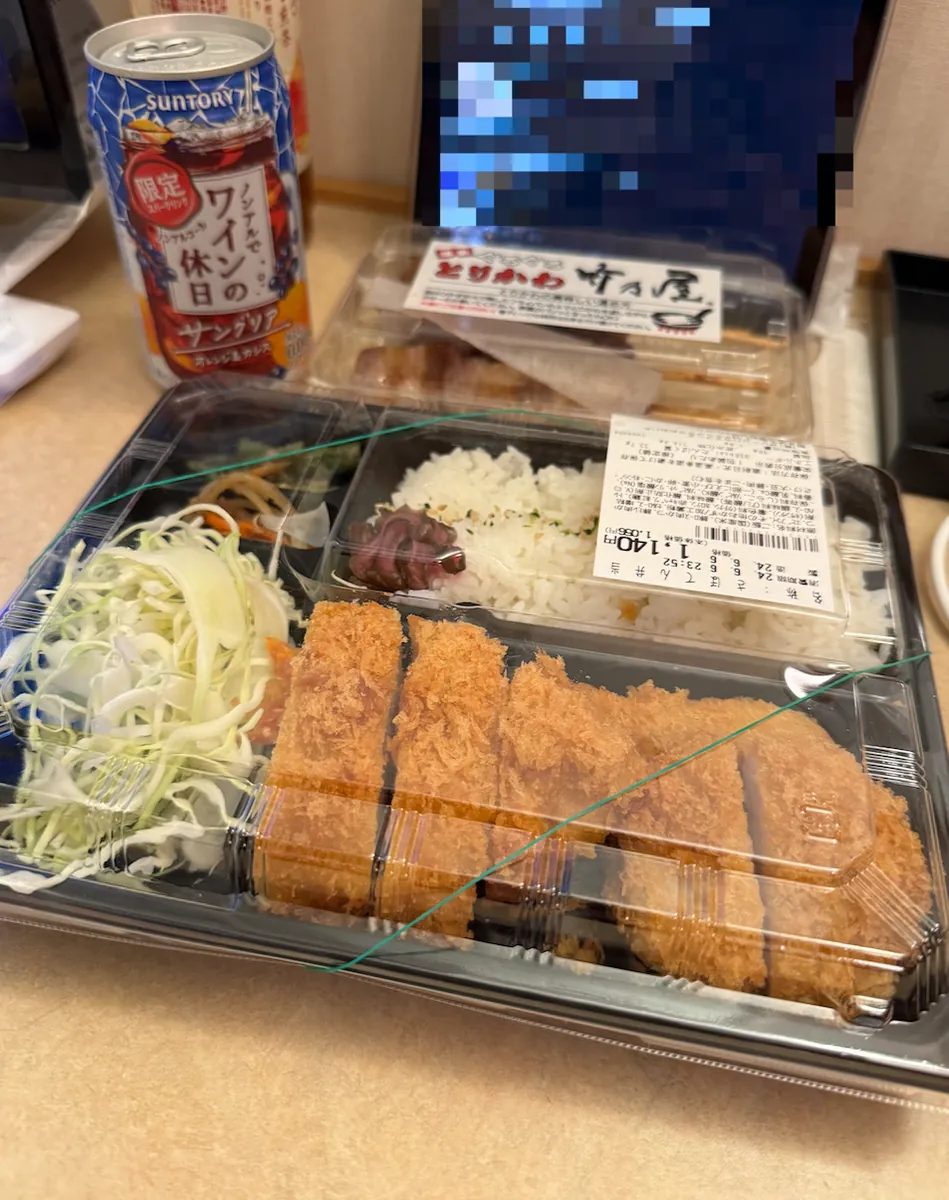
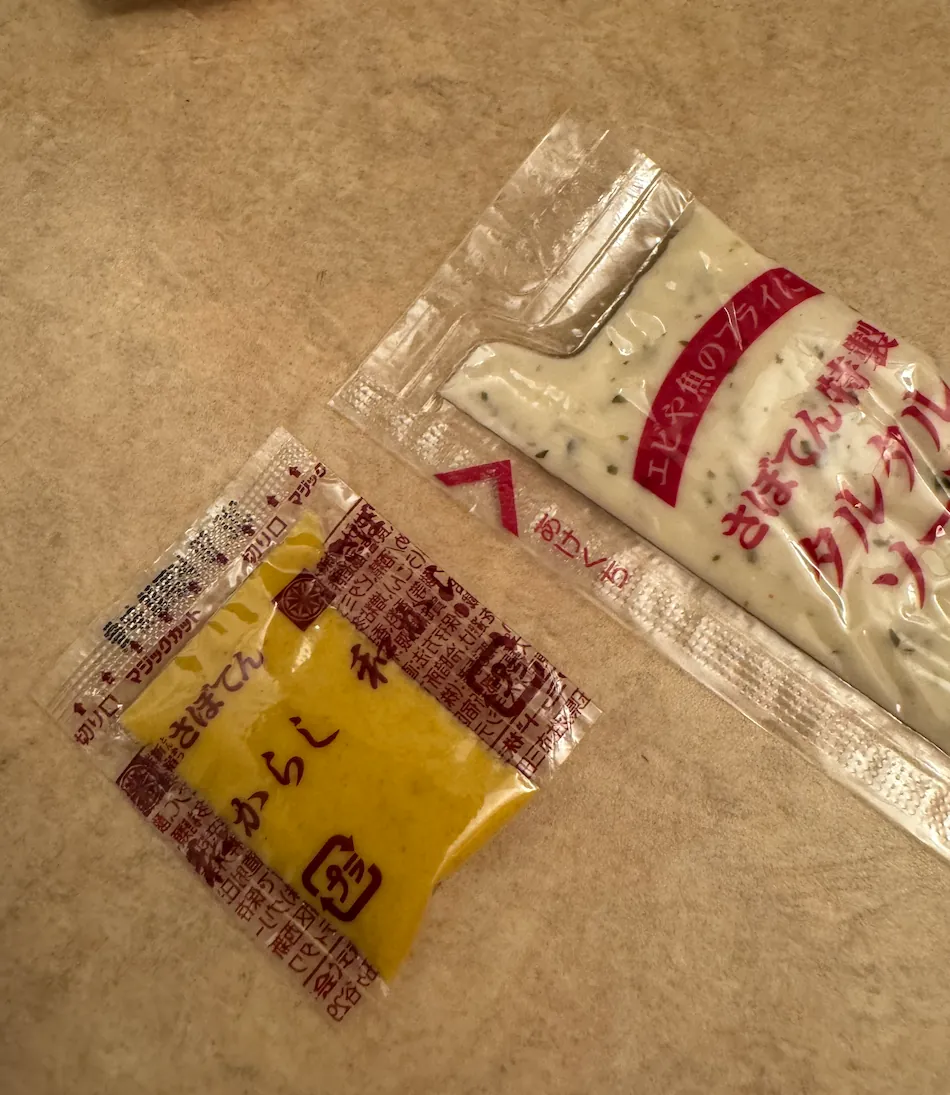
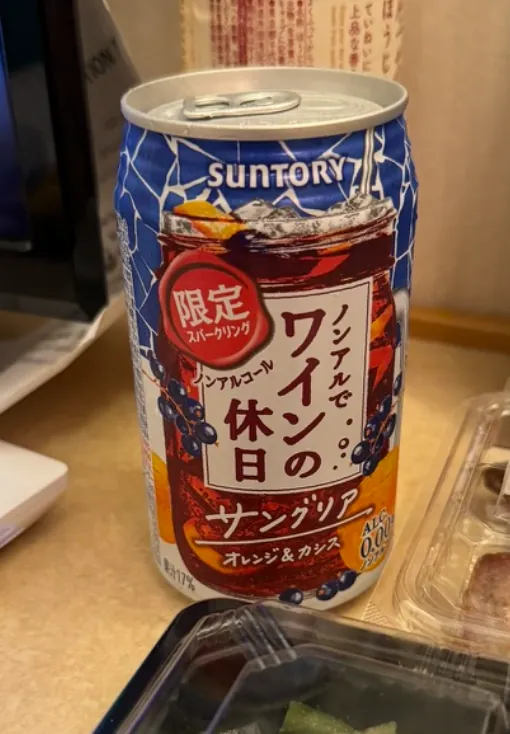
For dinner, not sure what to eat, so I casually bought a pork cutlet rice and a Suntory non-alcoholic sparkling drink (delicious!). The sauce packets in Japan are thoughtfully designed with a small corner for easy opening.
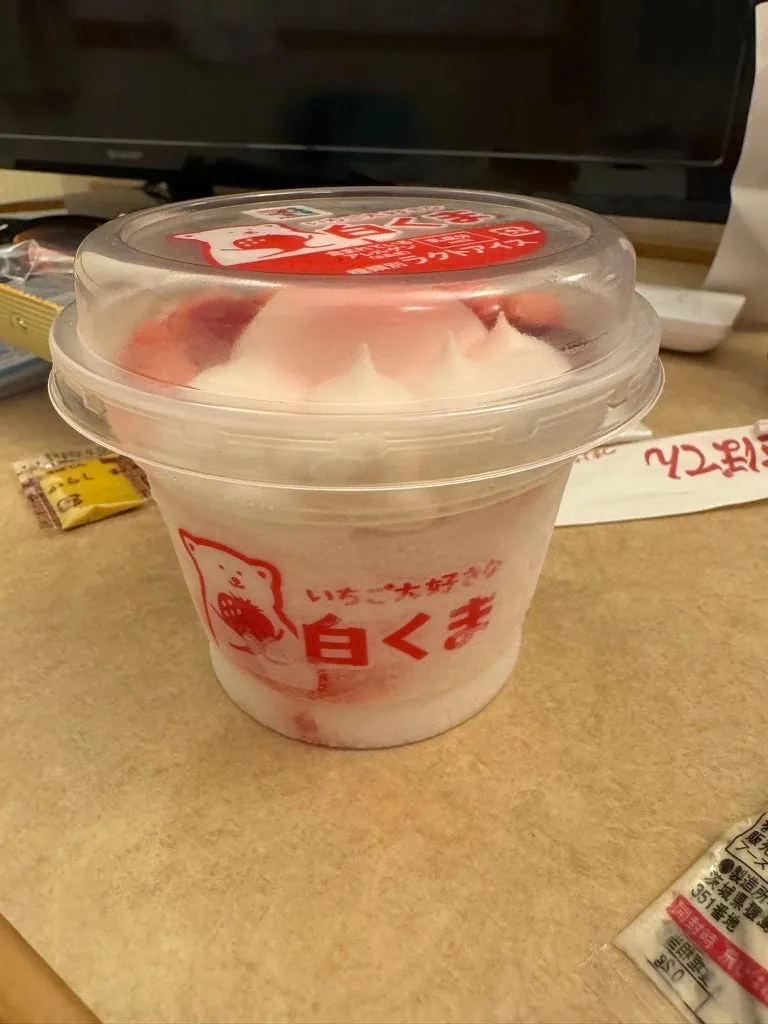
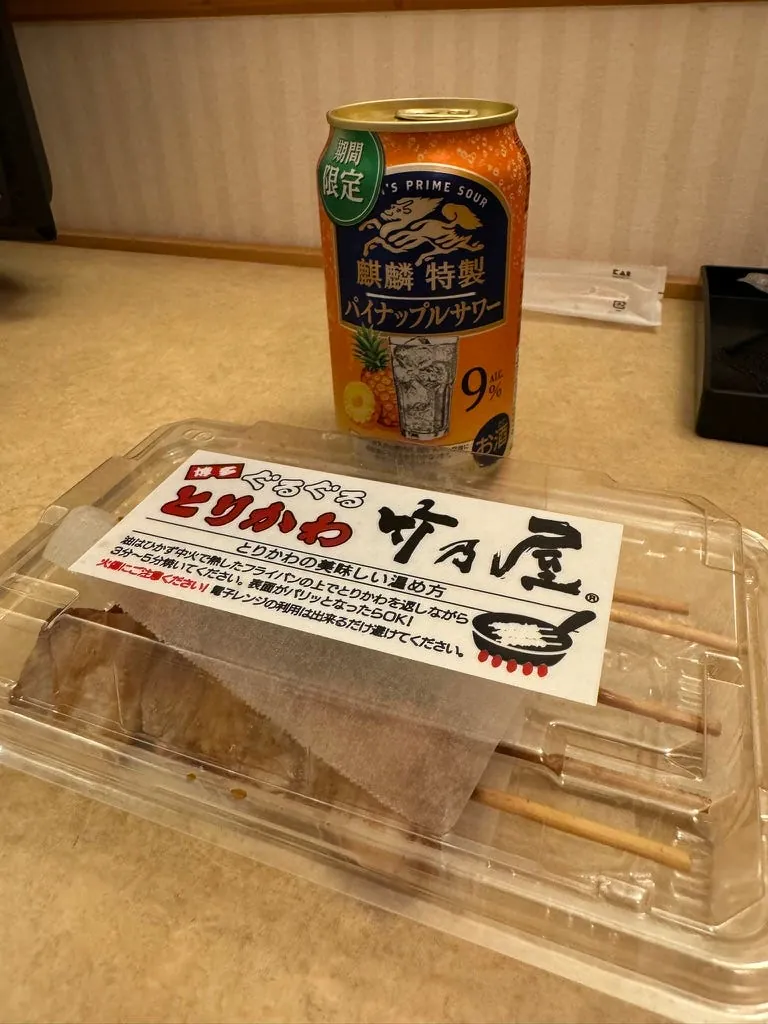
Late-night snacks were strawberry smoothie ice cream, barbecue, and Kirin limited-edition pineapple sake (strong pineapple flavor, slightly sweet).
Day 5 Beppu Hells, Beppu
Sample itinerary:
KKday 【Beppu Yufuin One-Day Tour】Sairokiji Temple + Beppu Hells + Yufuin (From Fukuoka)
Beppu Hell Hot Springs Tour \| Regular Admission / Pre-sale Ticket \| Instant Use
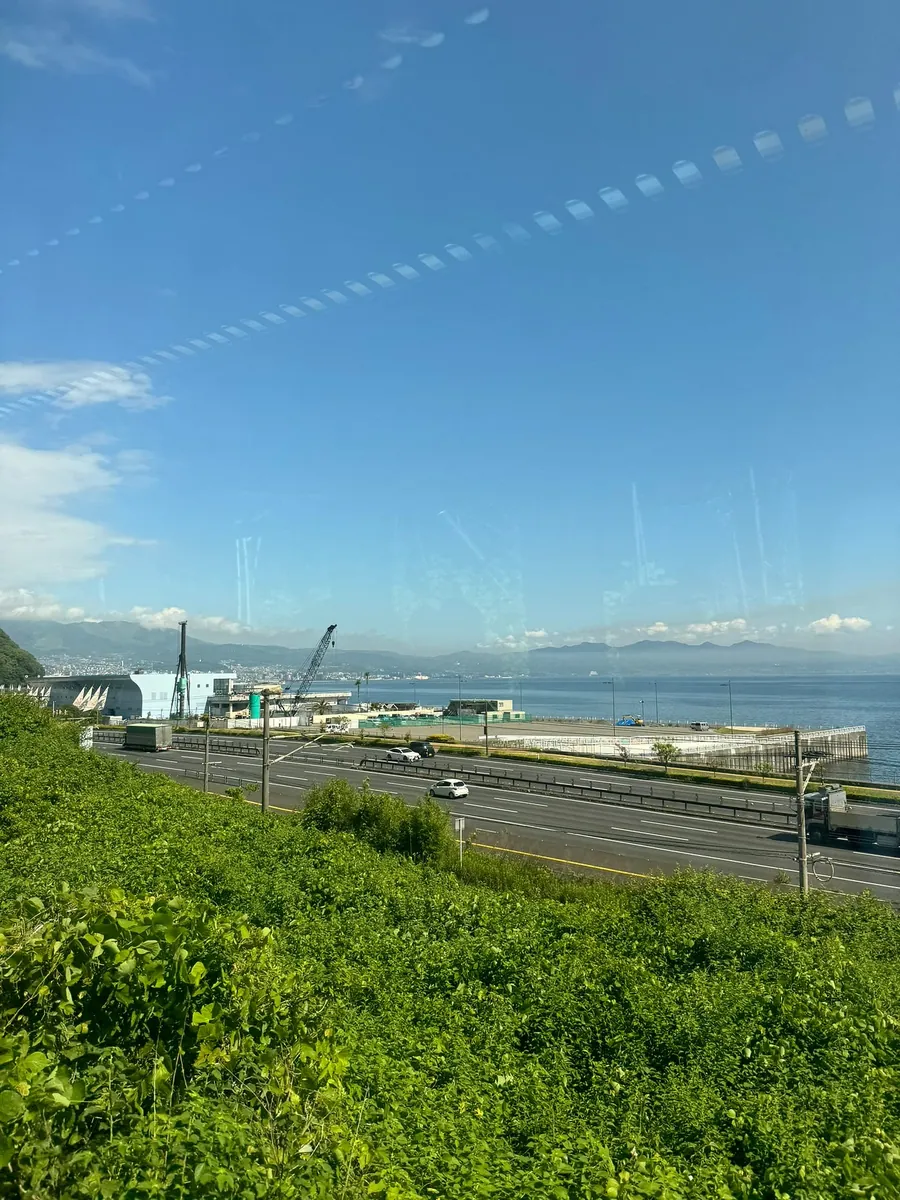
It takes about 15 minutes by JR Limited Express from Oita Station to Beppu Station. The scenery along the way is somewhat similar to the route from Hiroshima to Kure.
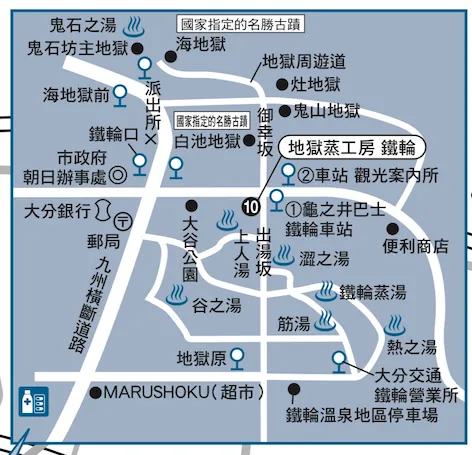
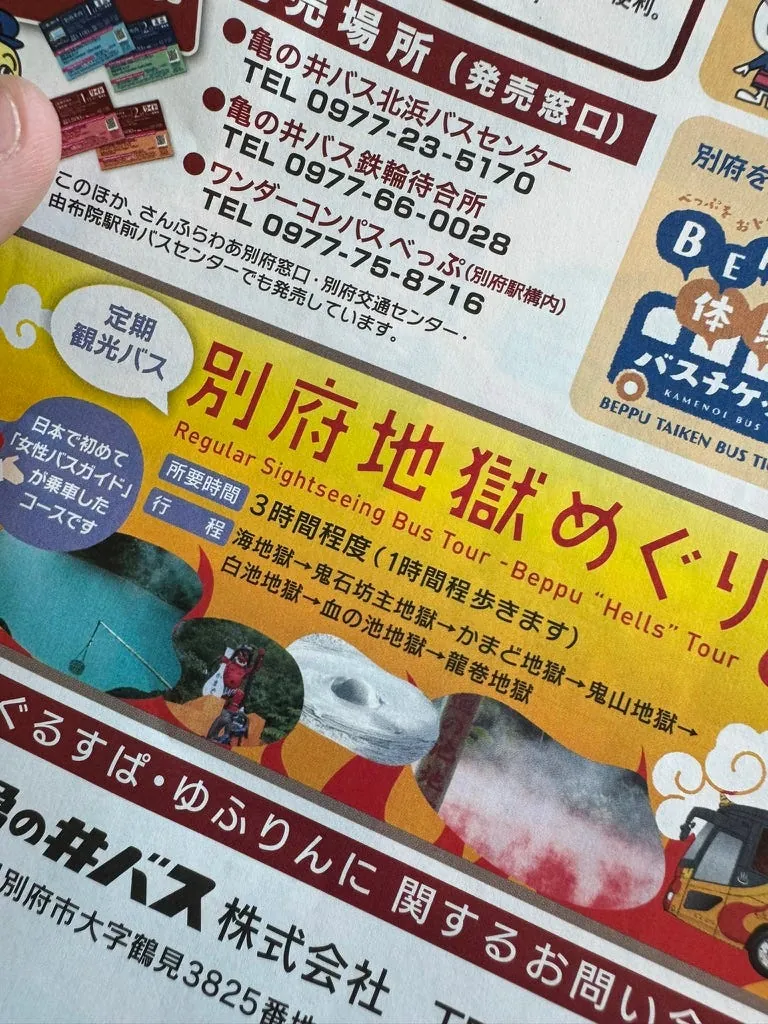
Exit JR and transfer to the bus heading to Beppu Jigoku — the first stop is Umi Jigoku. You can follow the route shown in the above itinerary.
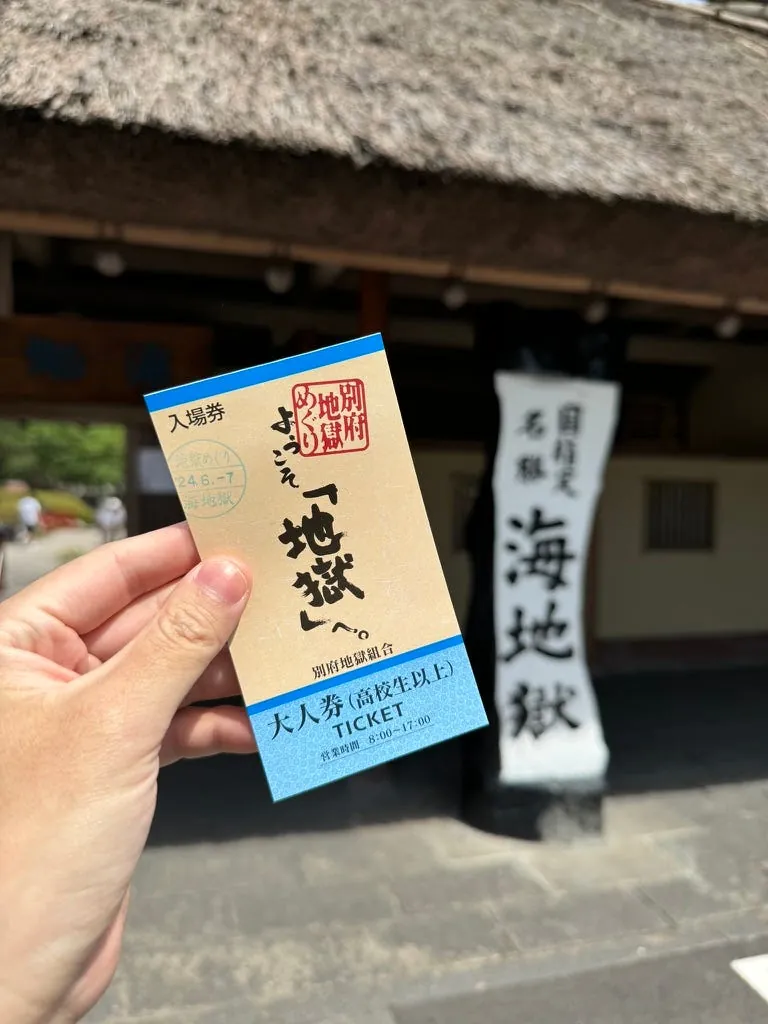
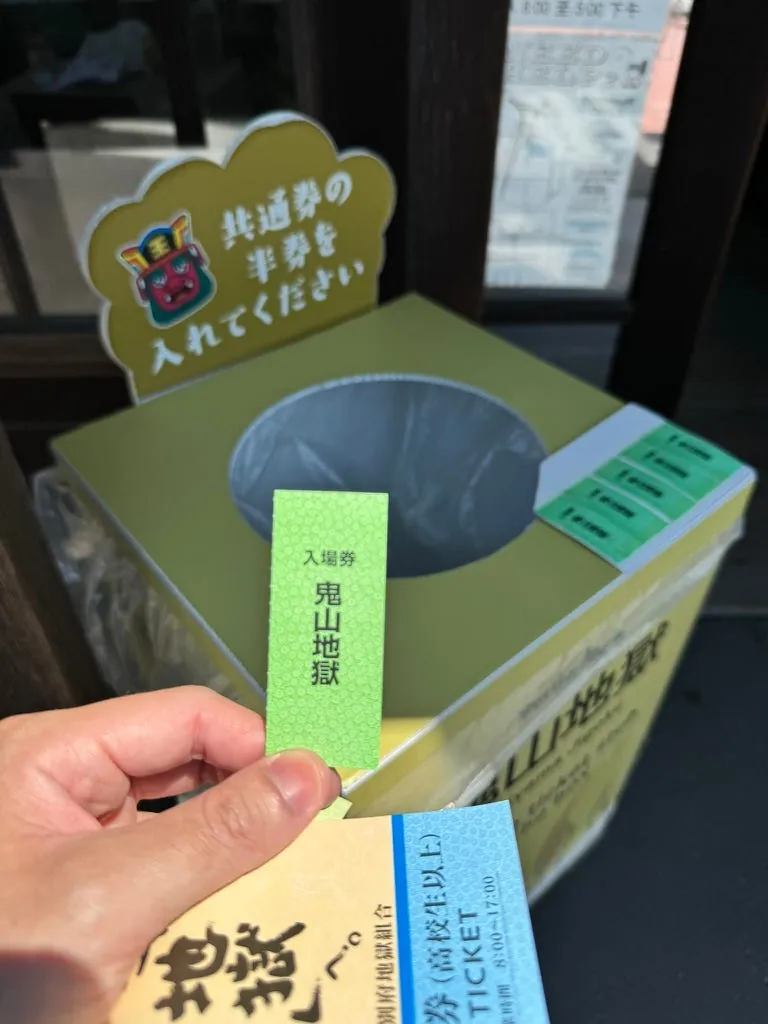
-
If you want to visit all 7 hells, it’s cheaper to buy a full set of 7 tickets at the entrance of the Sea Hell.
-
If time is limited, I think you can just visit the Sea Hell.
-
To enter, simply tear off a corner of the ticket and drop it into the box.
-
Each hell has a free foot bath rest area.
Sea Hell
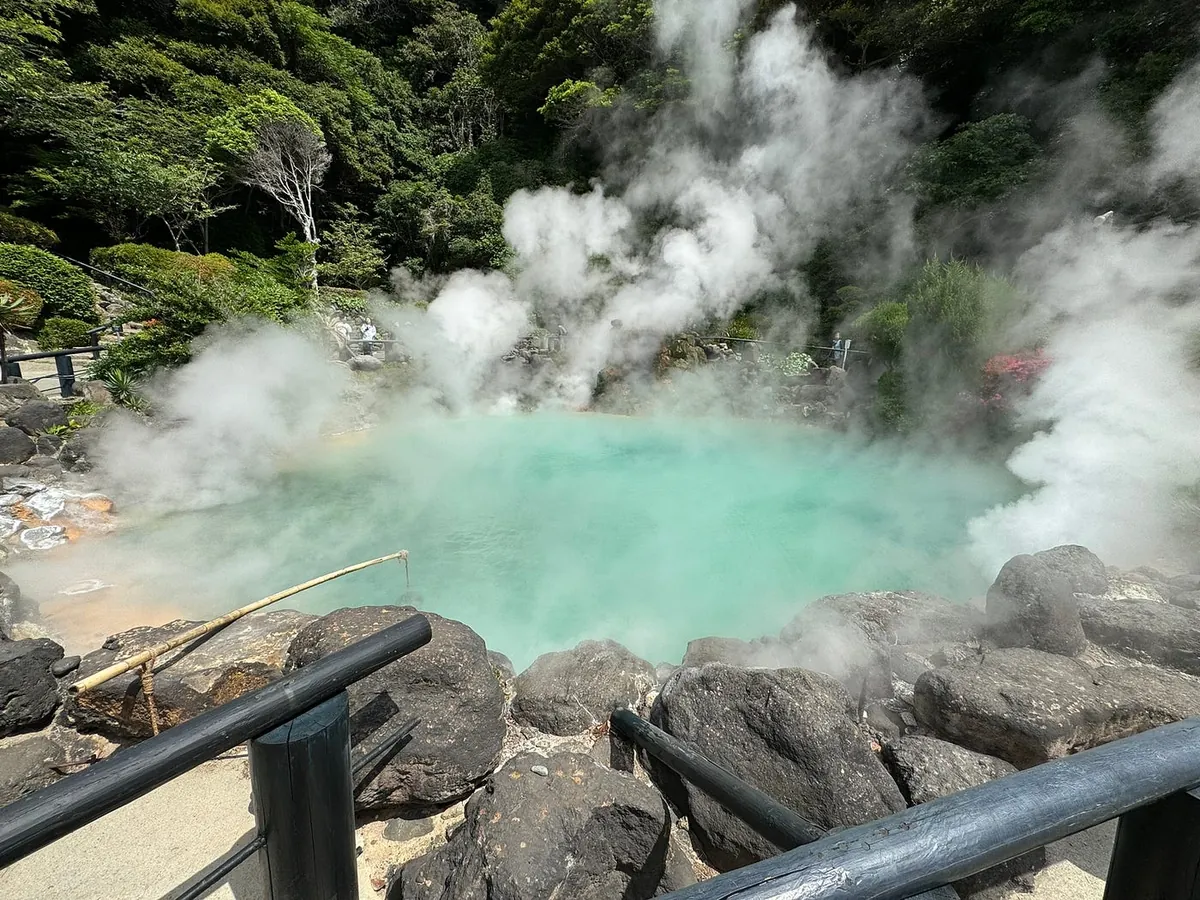
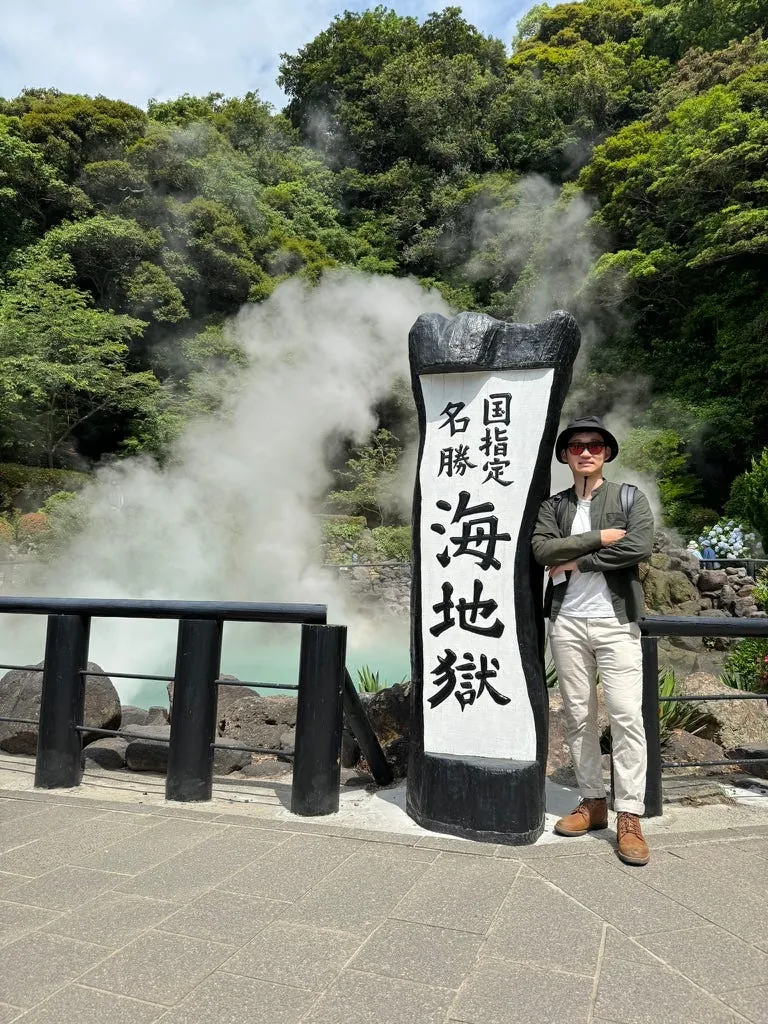
I think Sea Hell is the most spectacular, with constantly boiling steam and deep blue spring water.
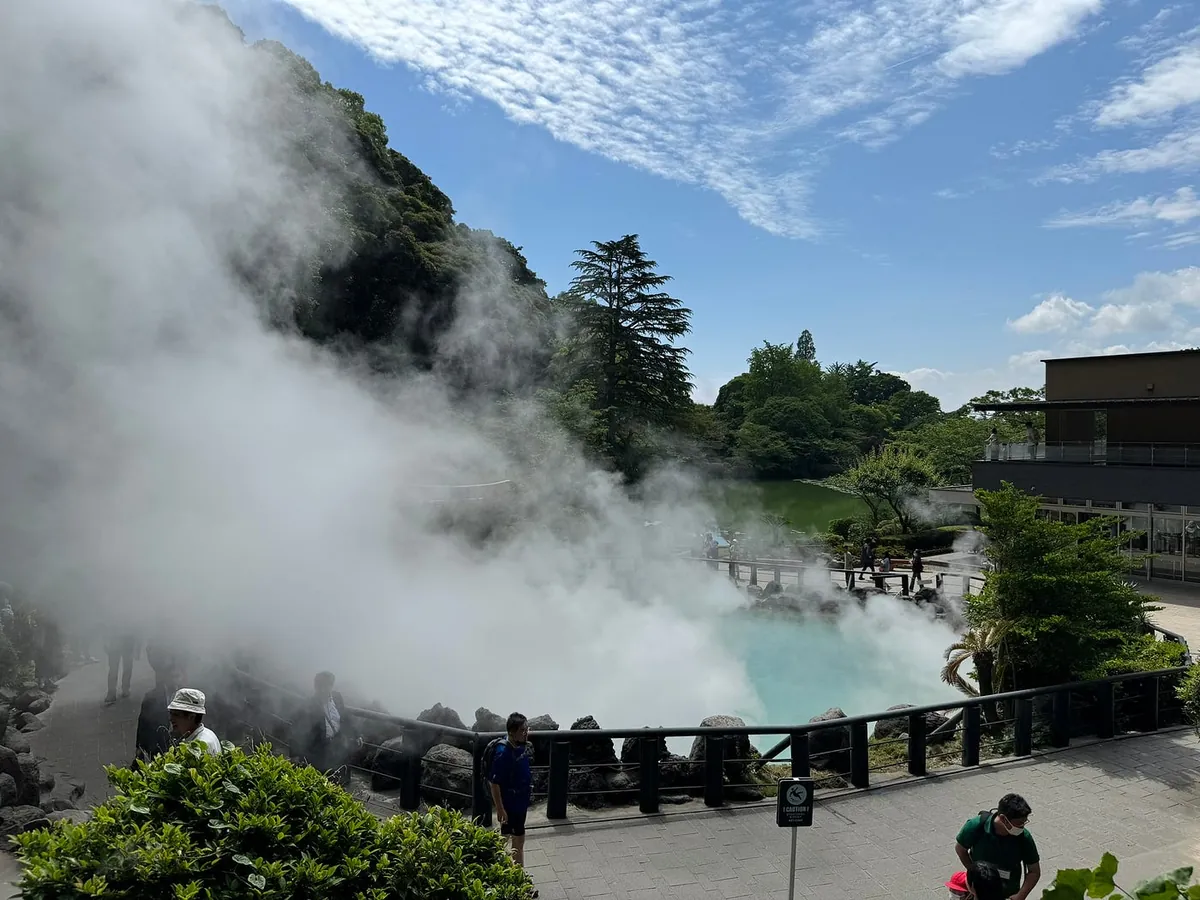
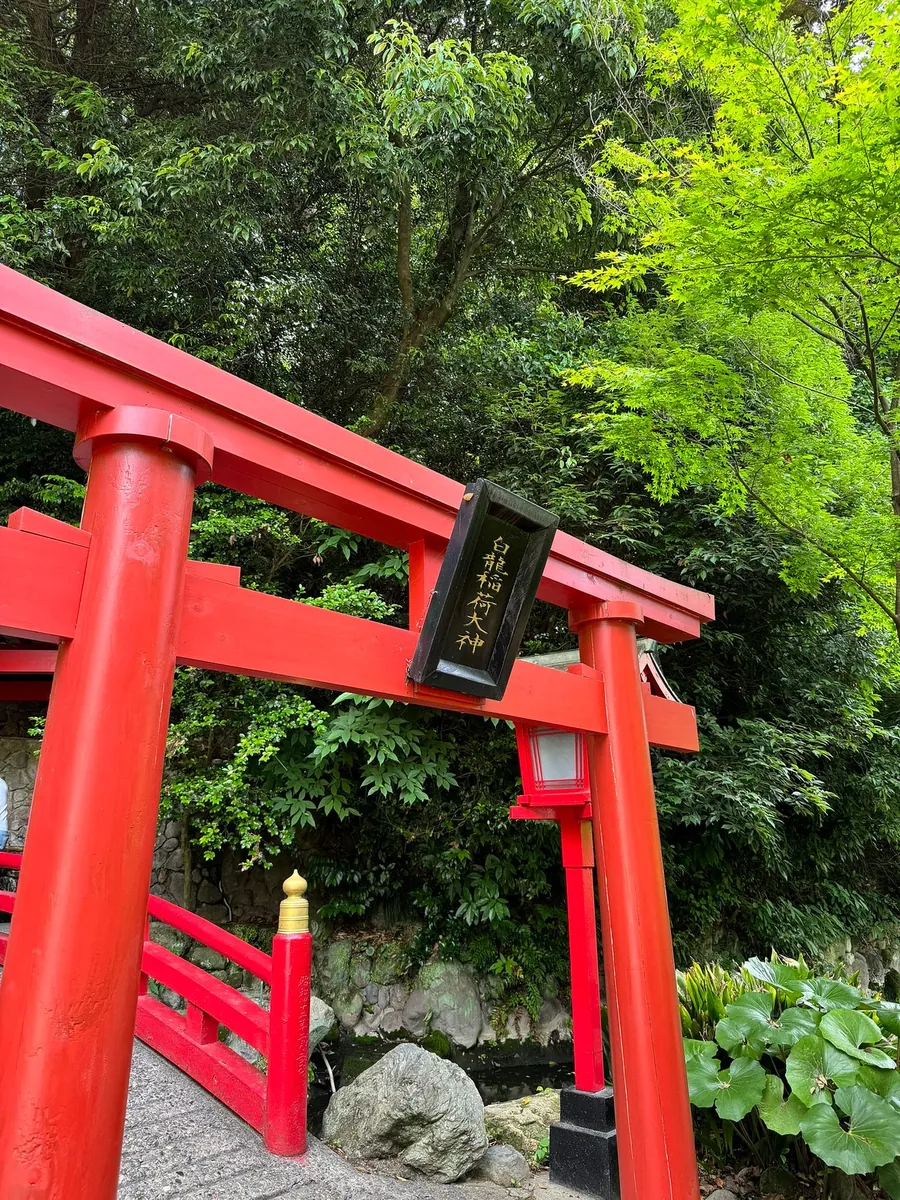
Behind is a terrace and a small shrine.
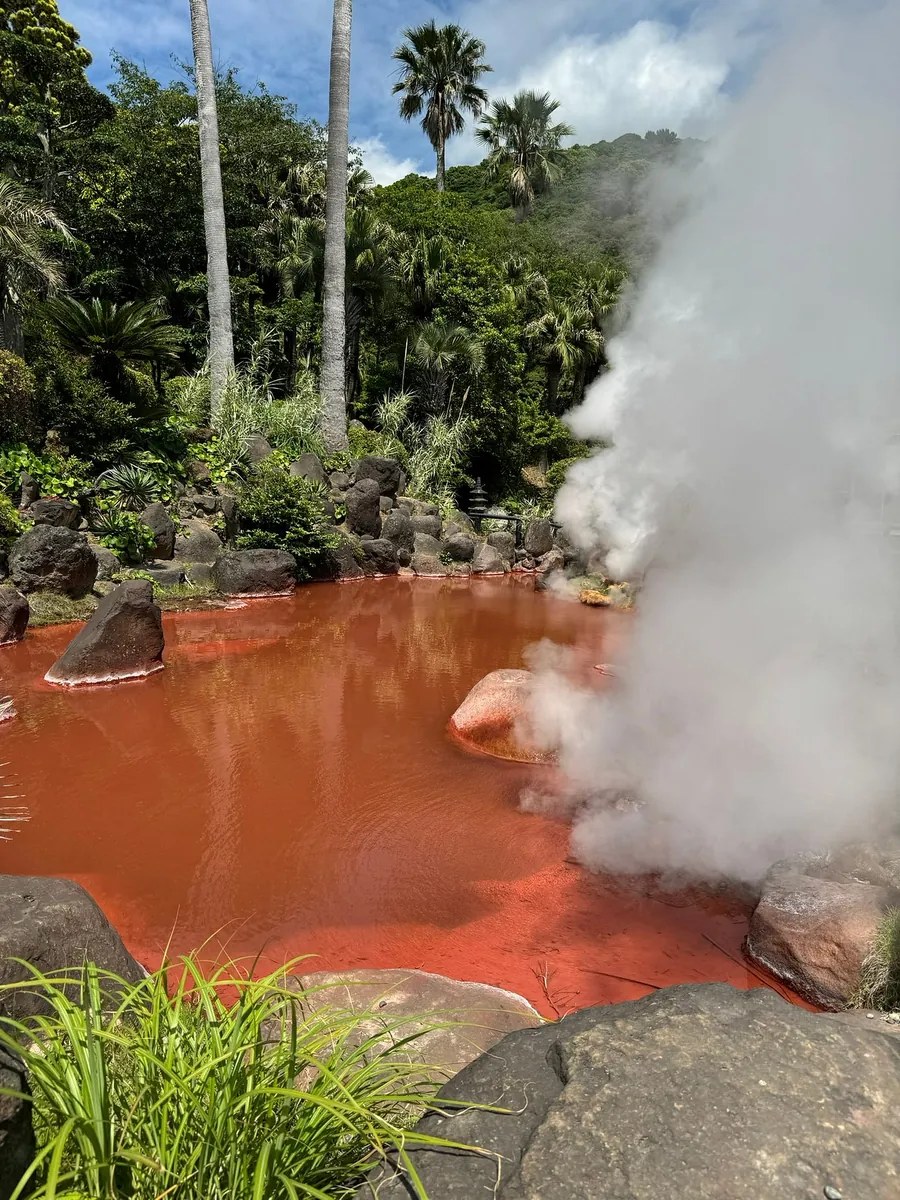
The small blood pond on the other side is also quite special.
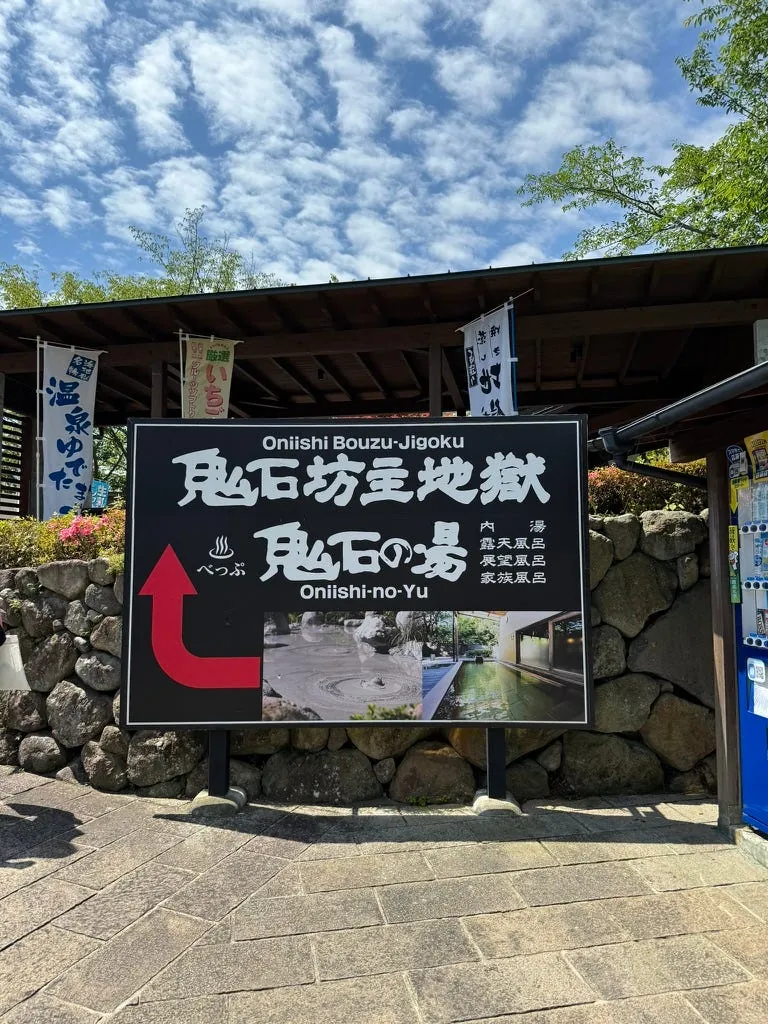
After visiting the Sea Hell, just follow the signs to reach the next Oniishibozu Hell.
Oniishibozu Jigoku
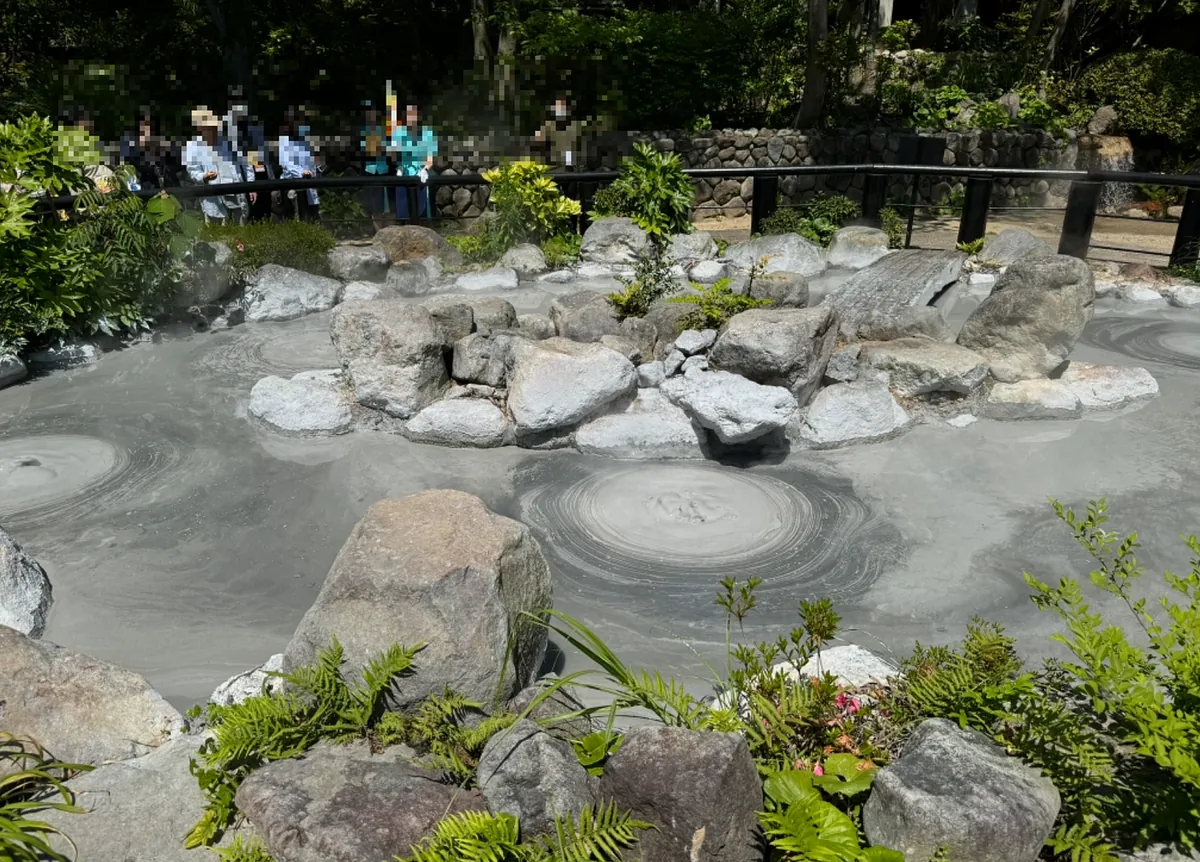
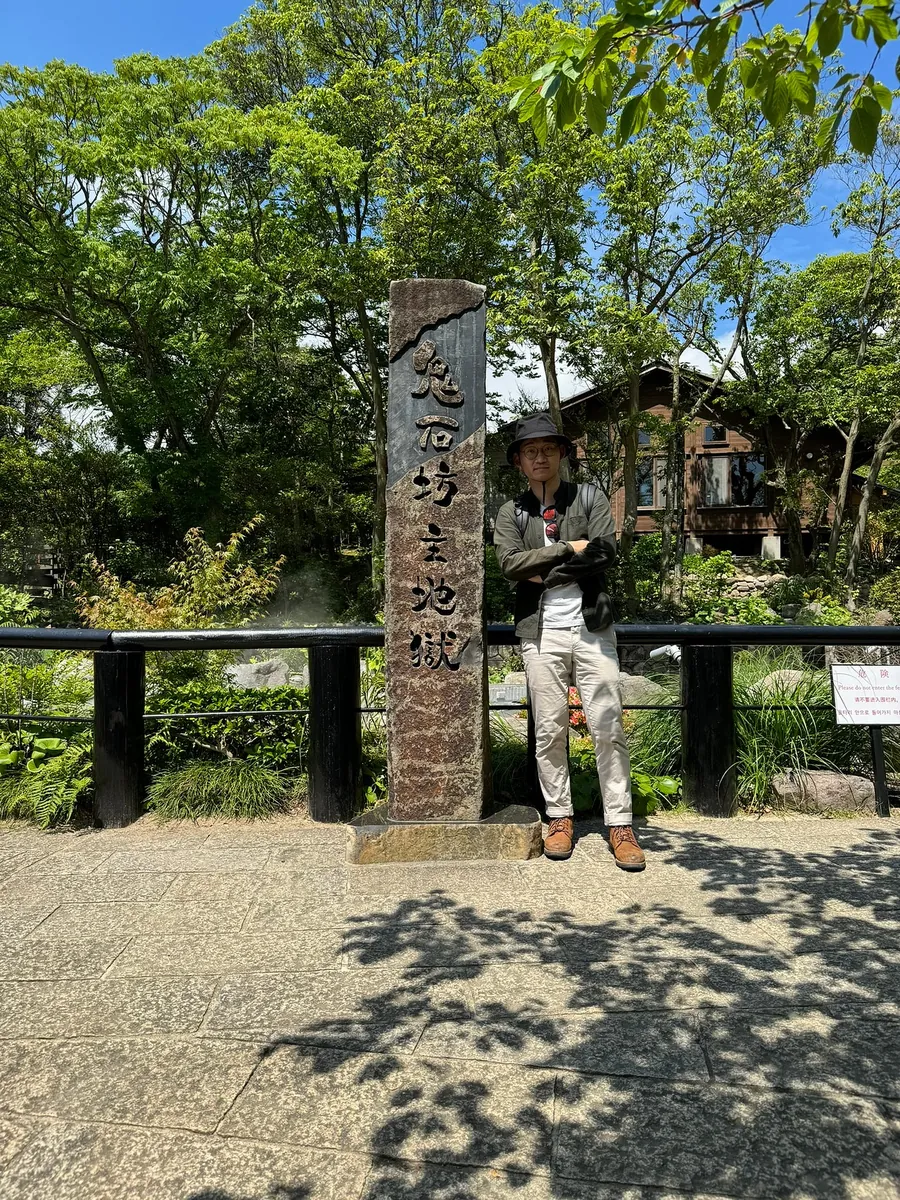
Mainly a mud bubbling hell.
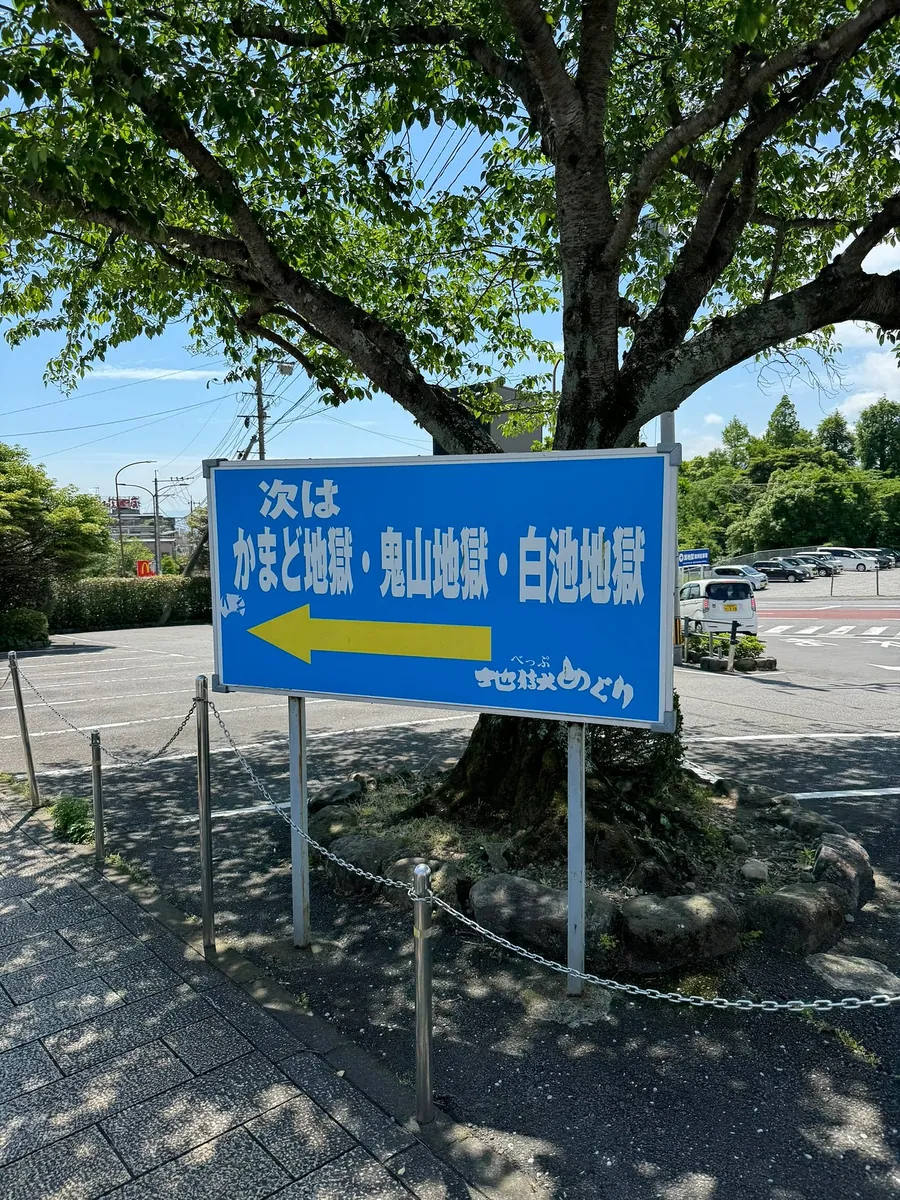
After exiting, there are also signboards directing you to the next hell.
Kamado Jigoku (Cooking Pot Hell)
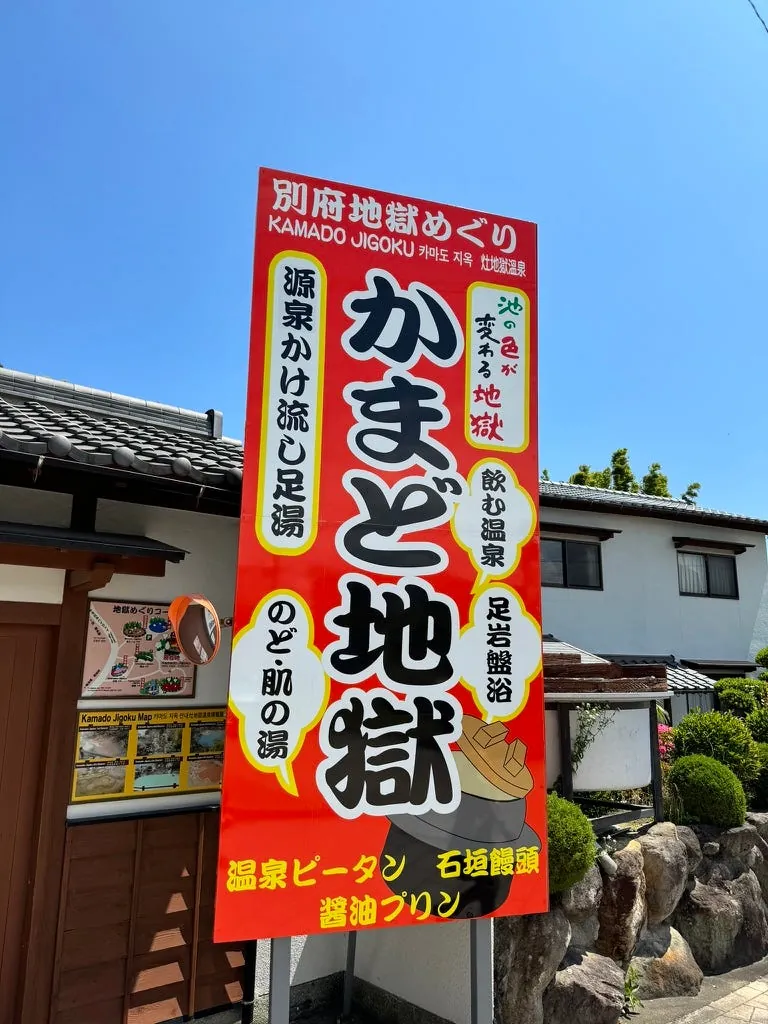
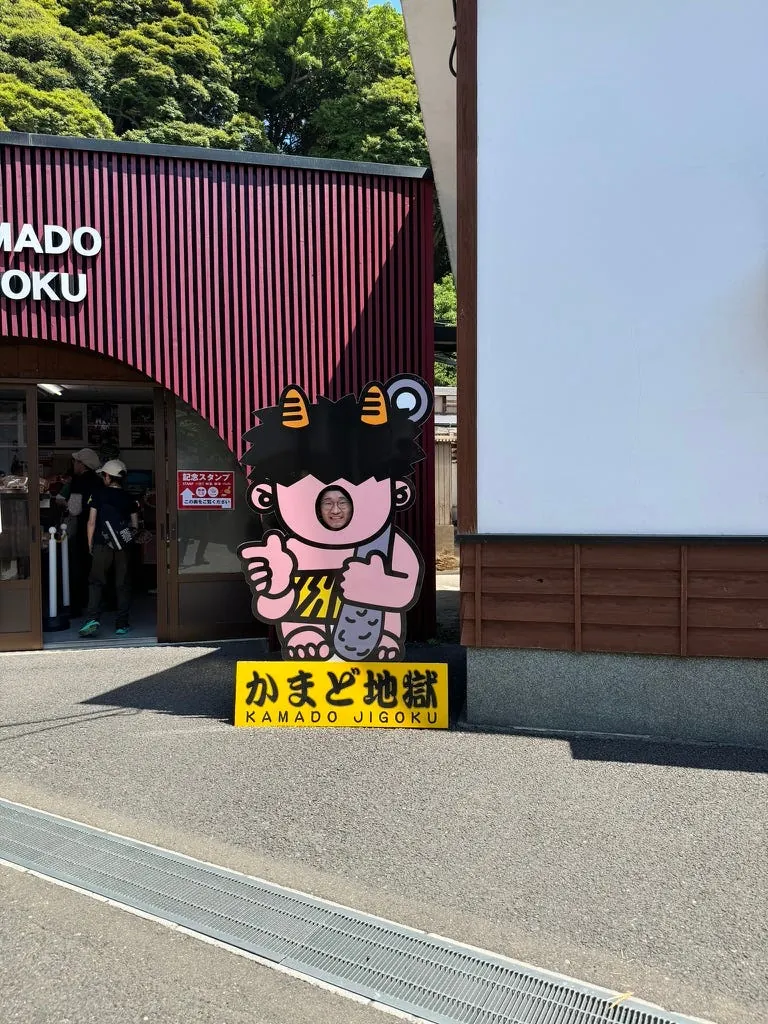
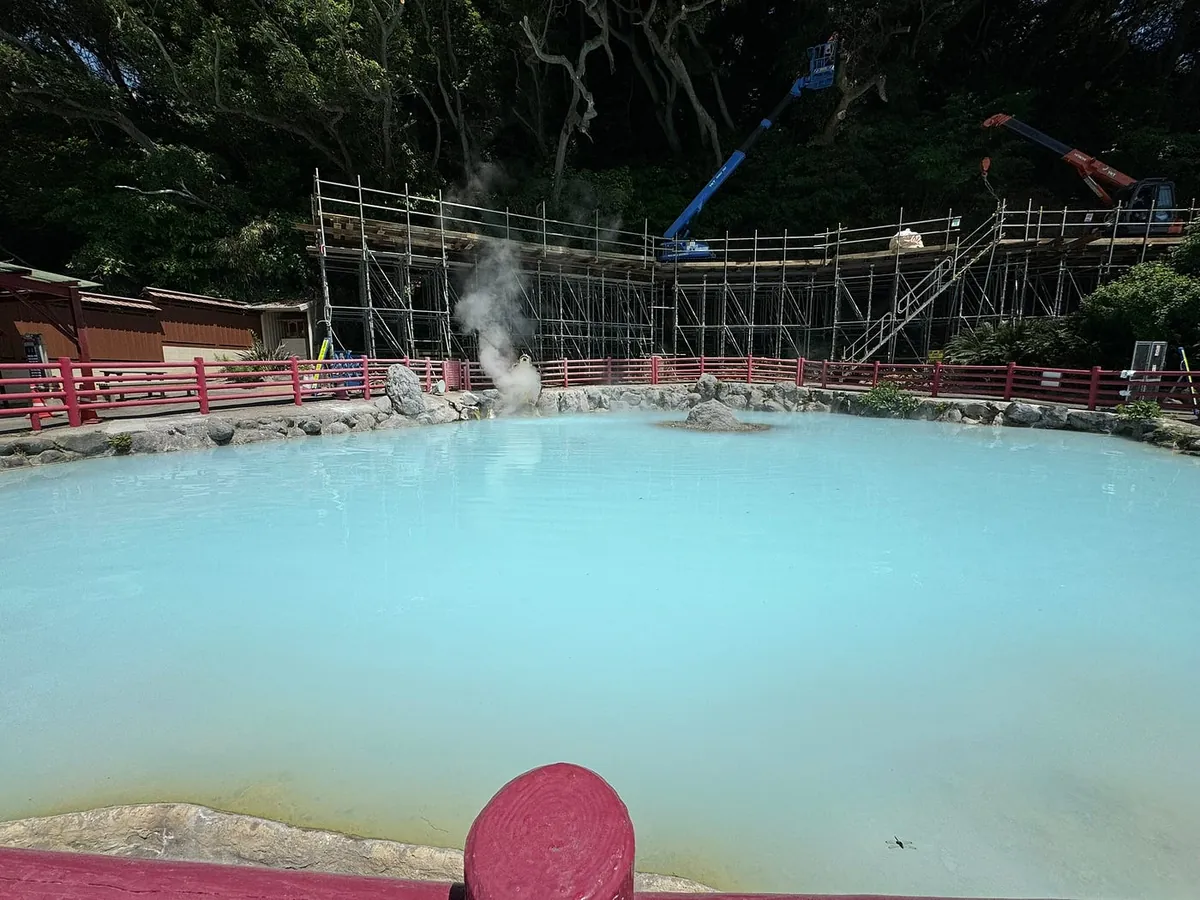
The Milk Pond at Zao Jigoku feels great for soaking.
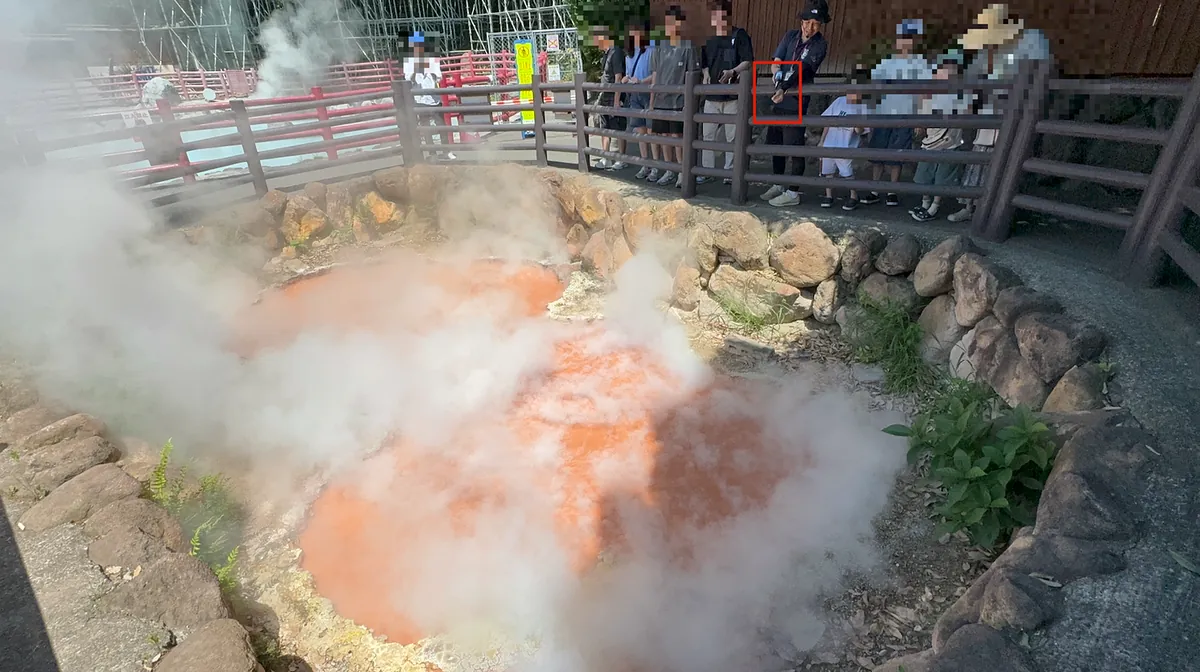
But the unique feature of the Cooking Pot Hell is not the spring itself, but the smoke. Staff use incense sticks and blow air onto the hot spring steam, which produces a large amount of smoke. It’s quite interesting (according to explanations, the incense particles attract more water vapor molecules, causing the smoke to gather).
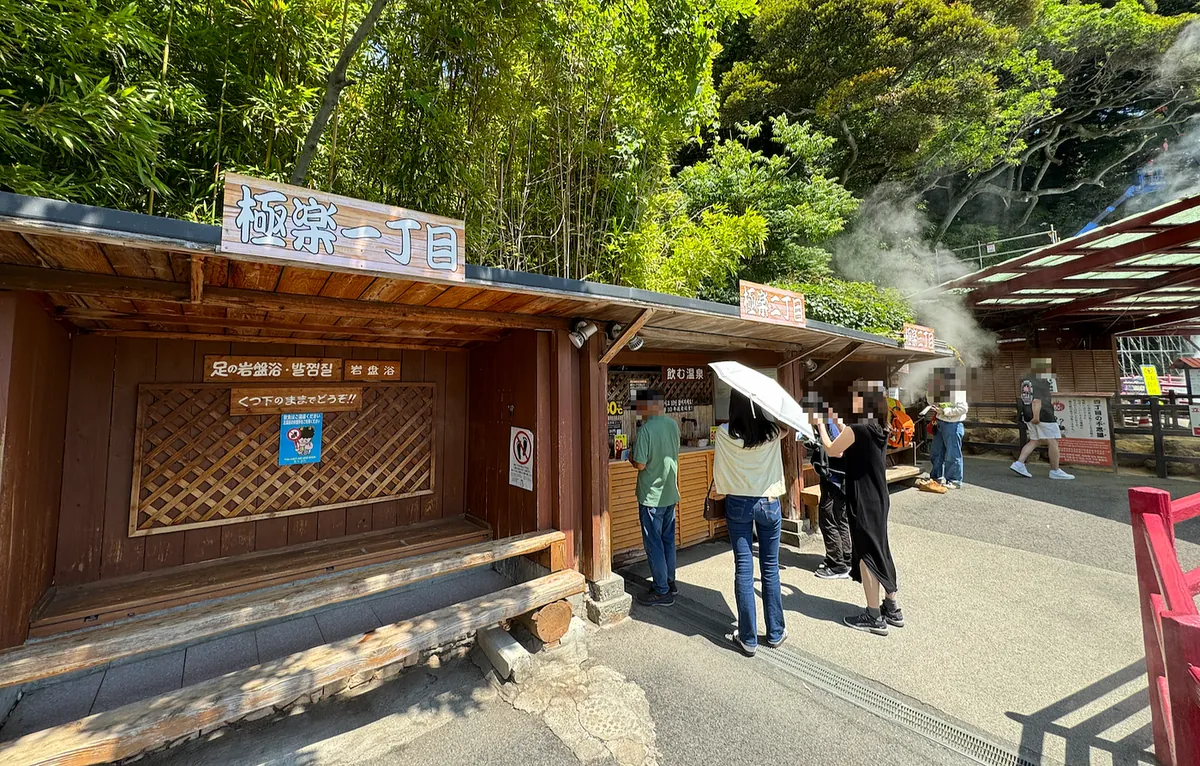
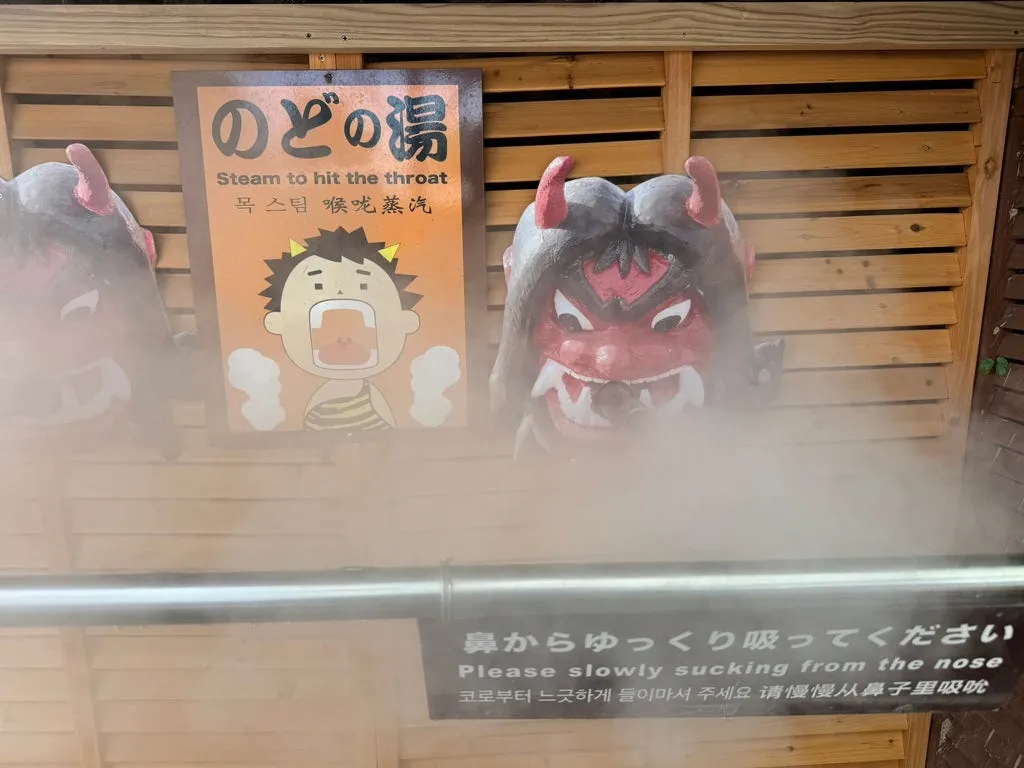
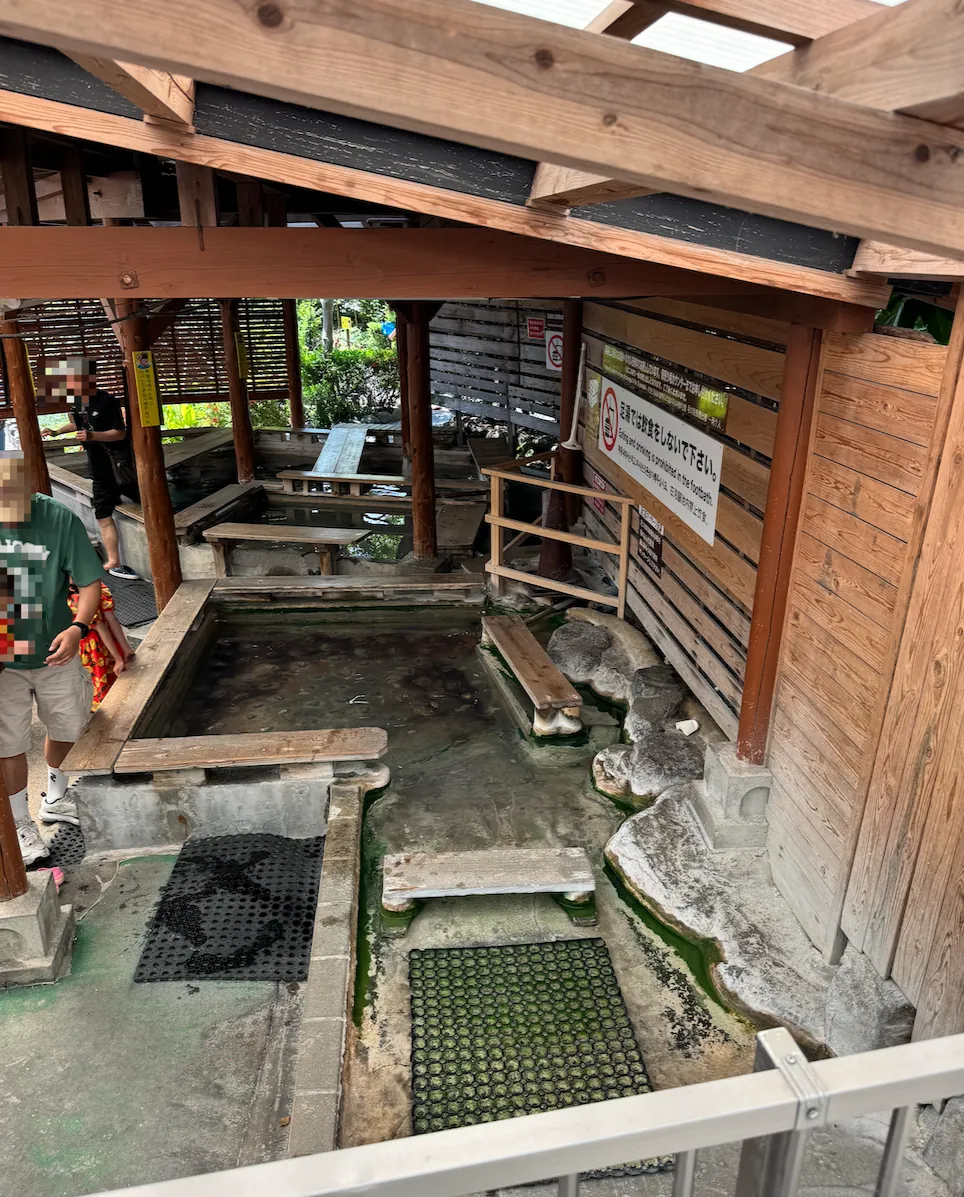
Another feature of the Cooking Pot Hell is the row of hot spring experiences, including stone foot baths, drinking hot spring water (which tastes a bit thick and salty), foot soaking, facial steaming, hand steaming, and throat steaming (just like visiting a pediatrician in Taiwan XD).
This area is more spacious with more activities to experience. Some shops also sell snacks, making it a good place to rest.
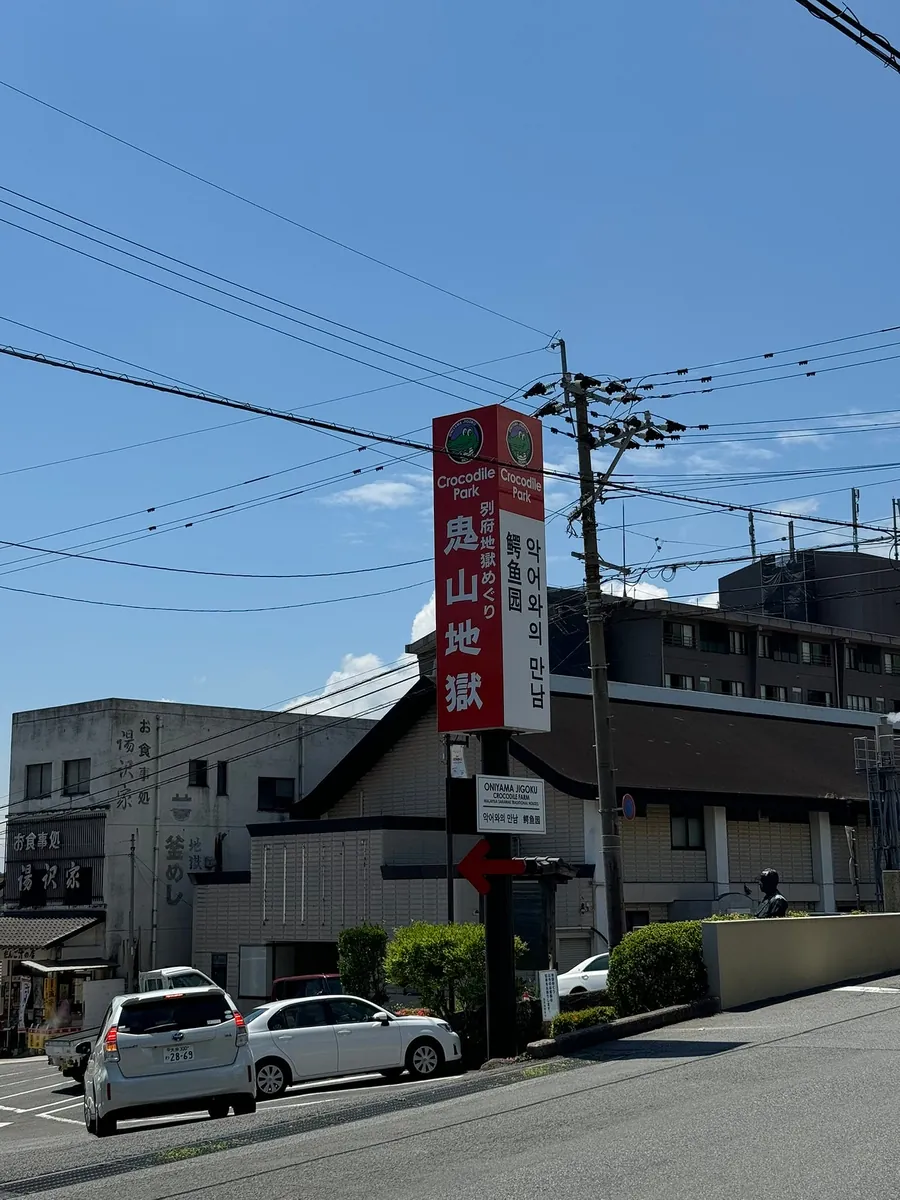
As soon as you exit, you can see the signboard pointing to Oniyama Hell.
Oniyama Hell
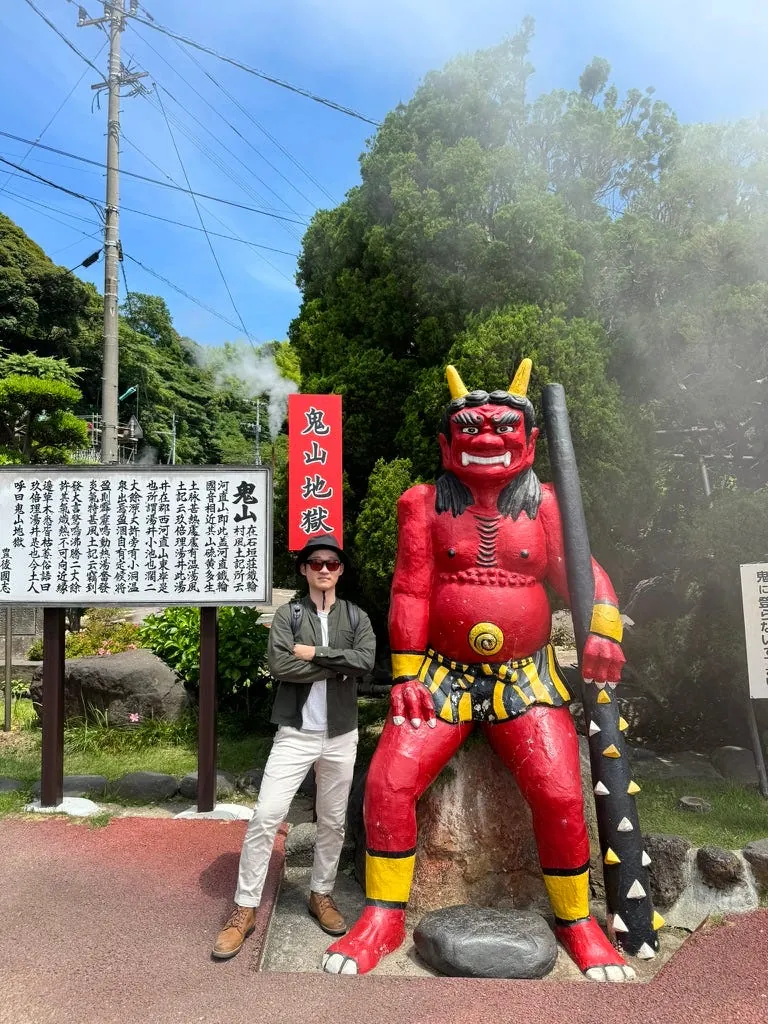
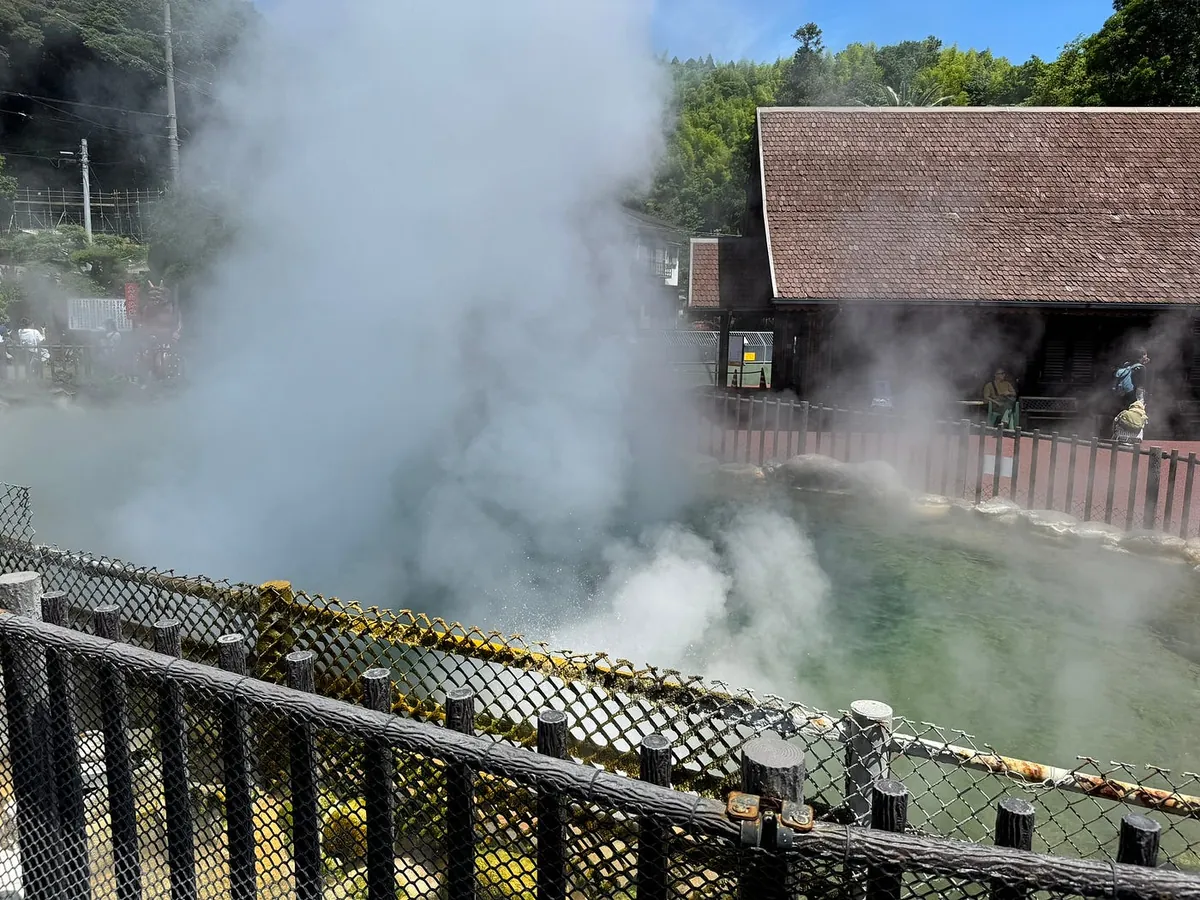
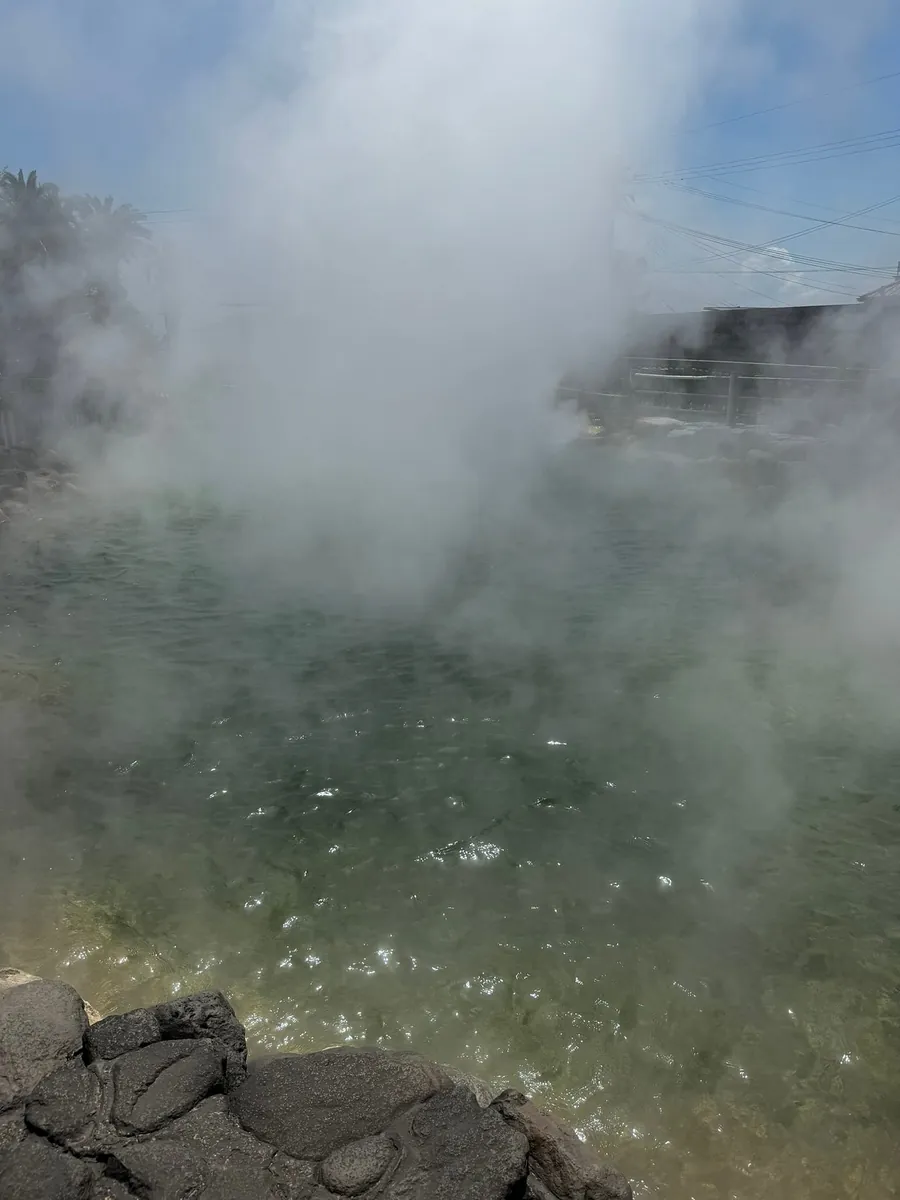
The water at Oniyama Hell boils more violently, continuously surging outward.
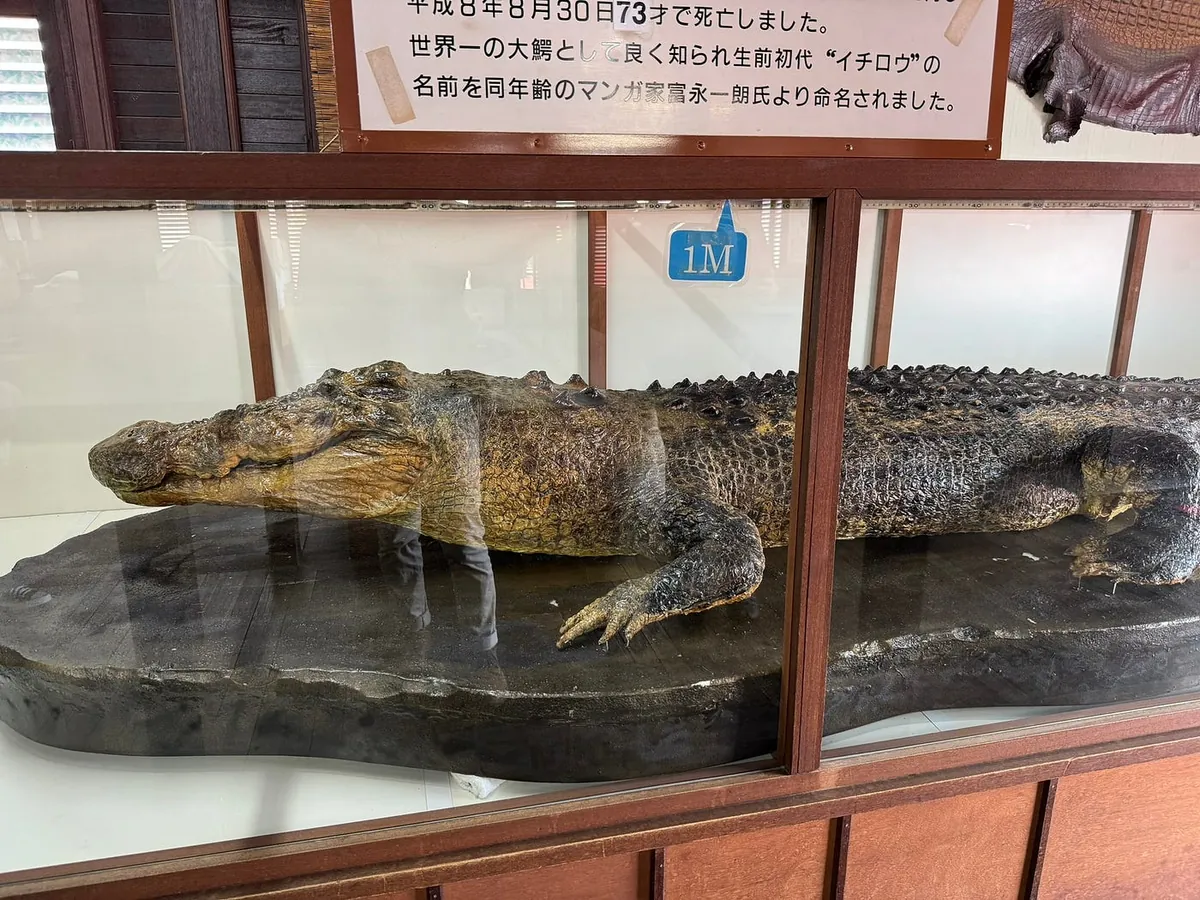
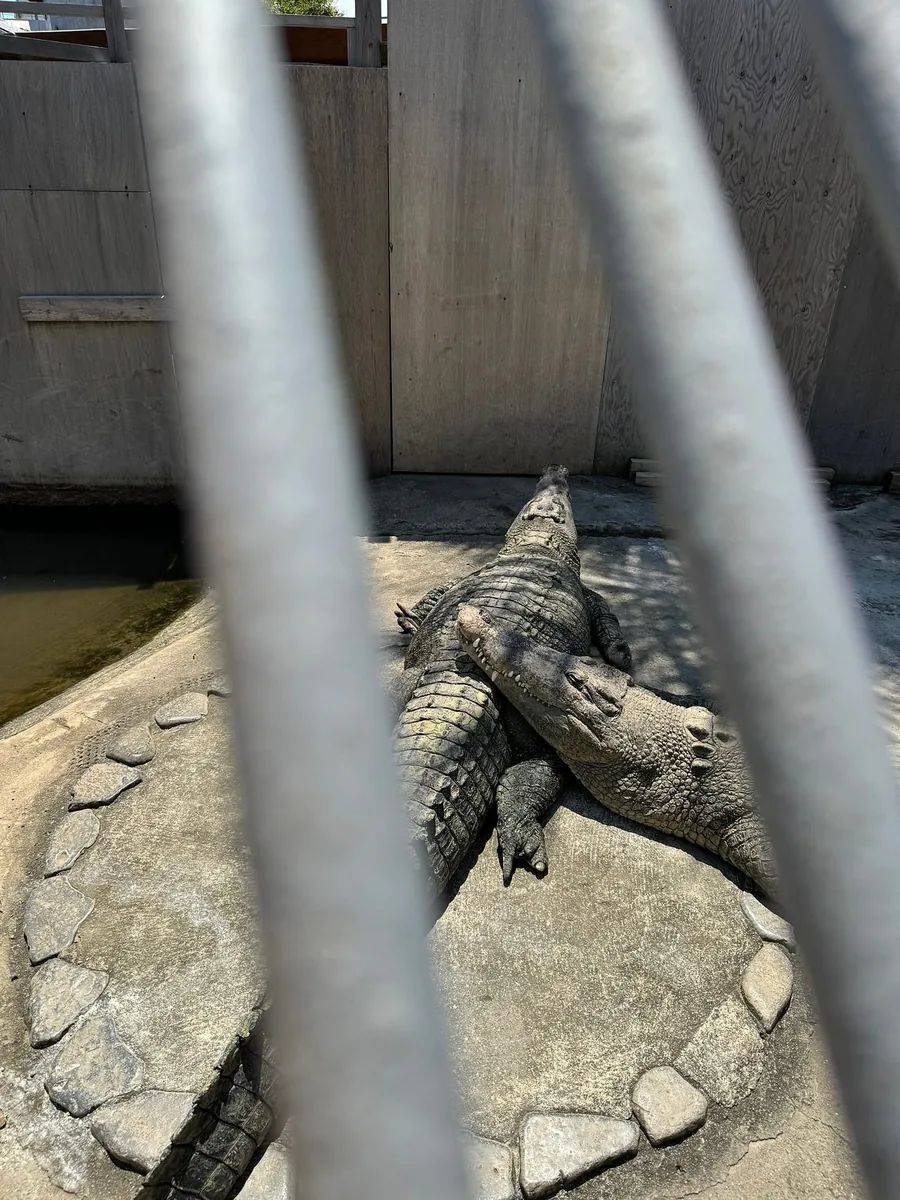
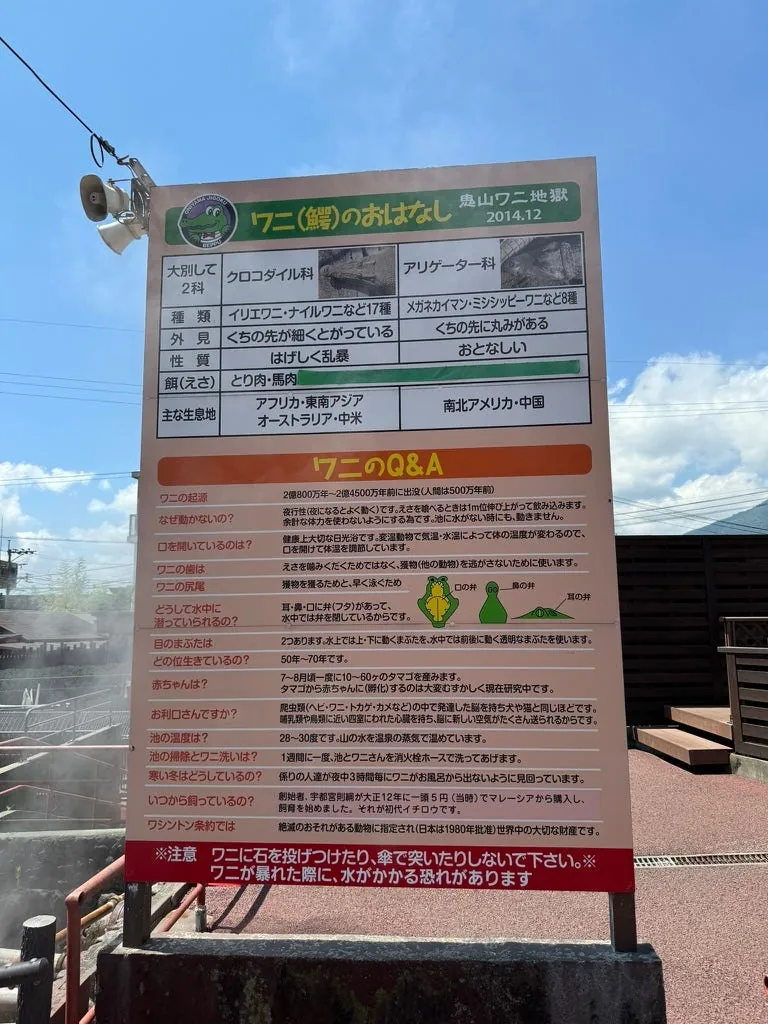
On the other side of the park is the crocodile enclosure.
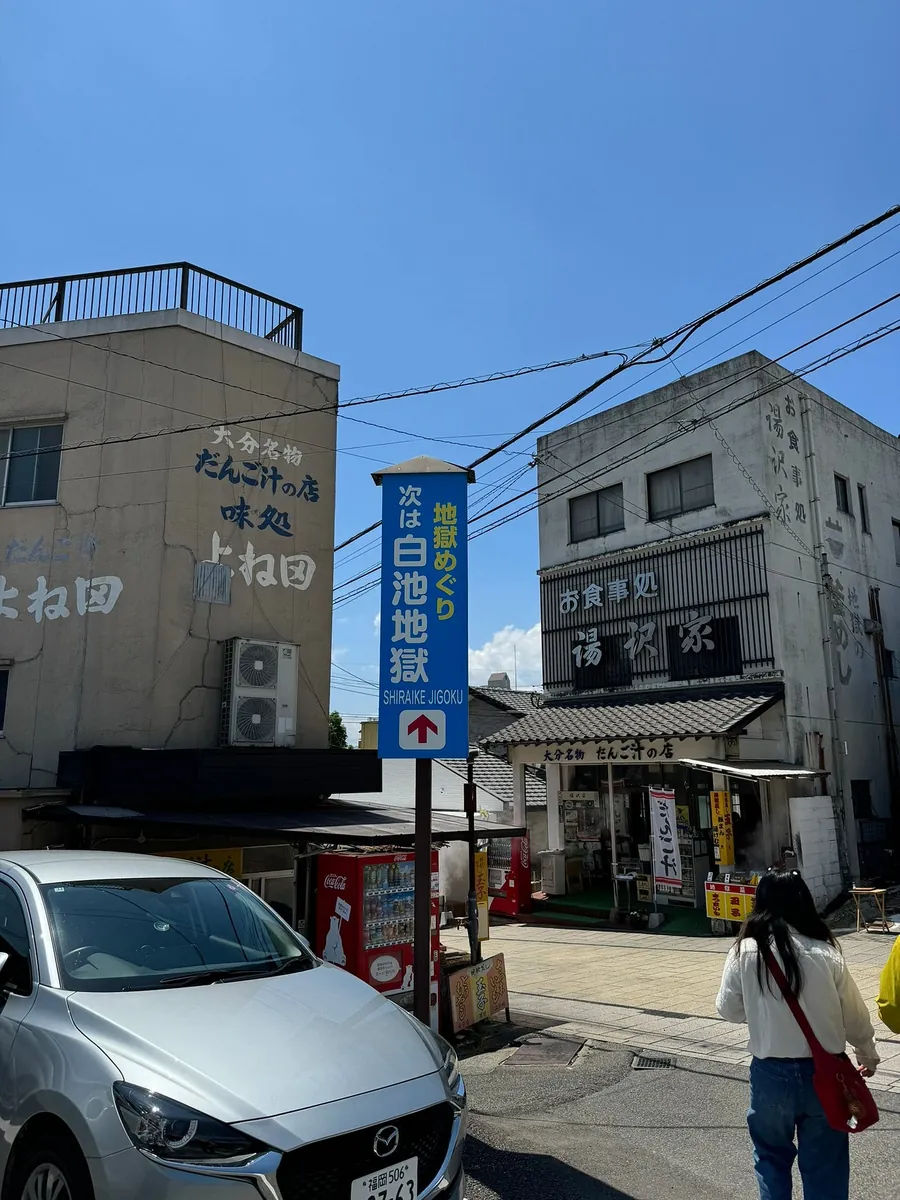
Exit and follow the instructions to go down to Shiraike Jigoku.
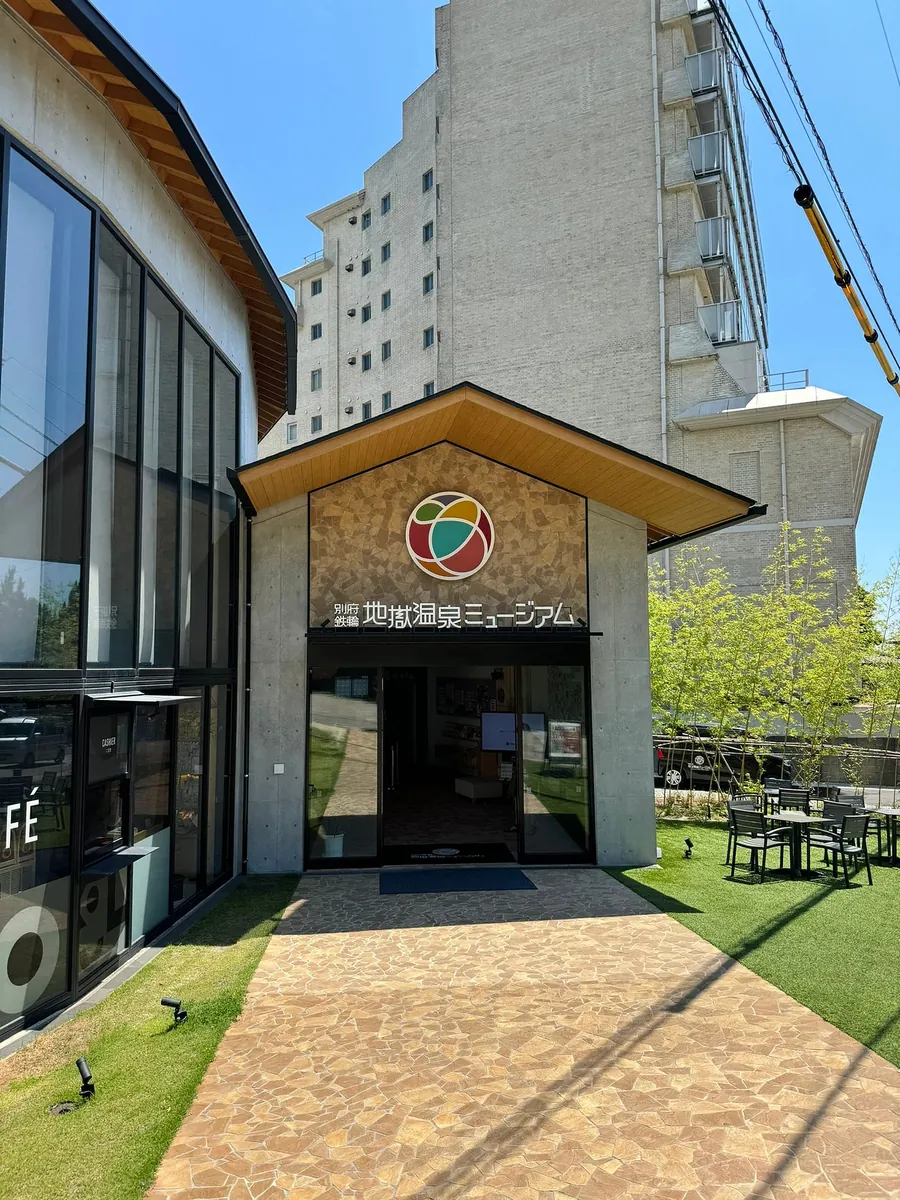
You will pass by the Jigoku Onsen Museum (café), where you can take a break.
Shiraike Jigoku
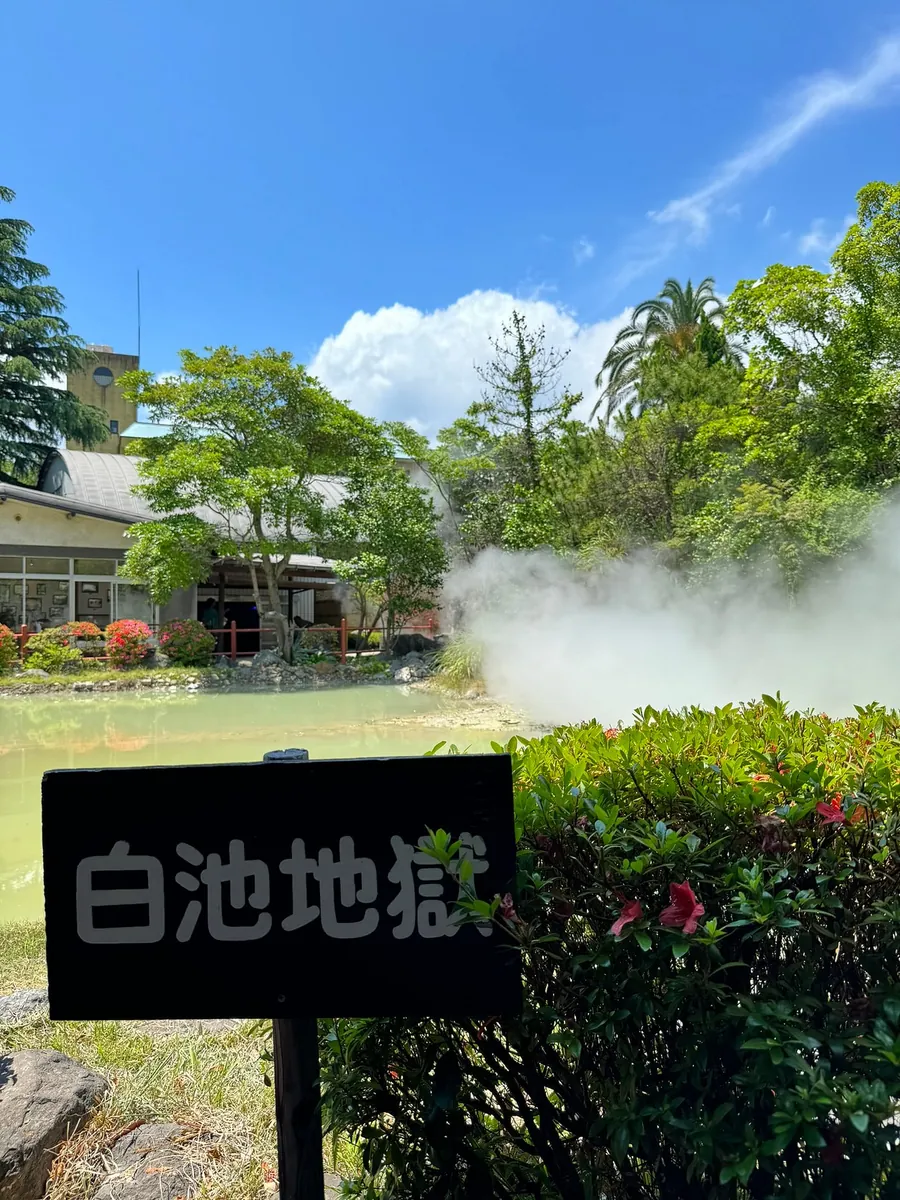
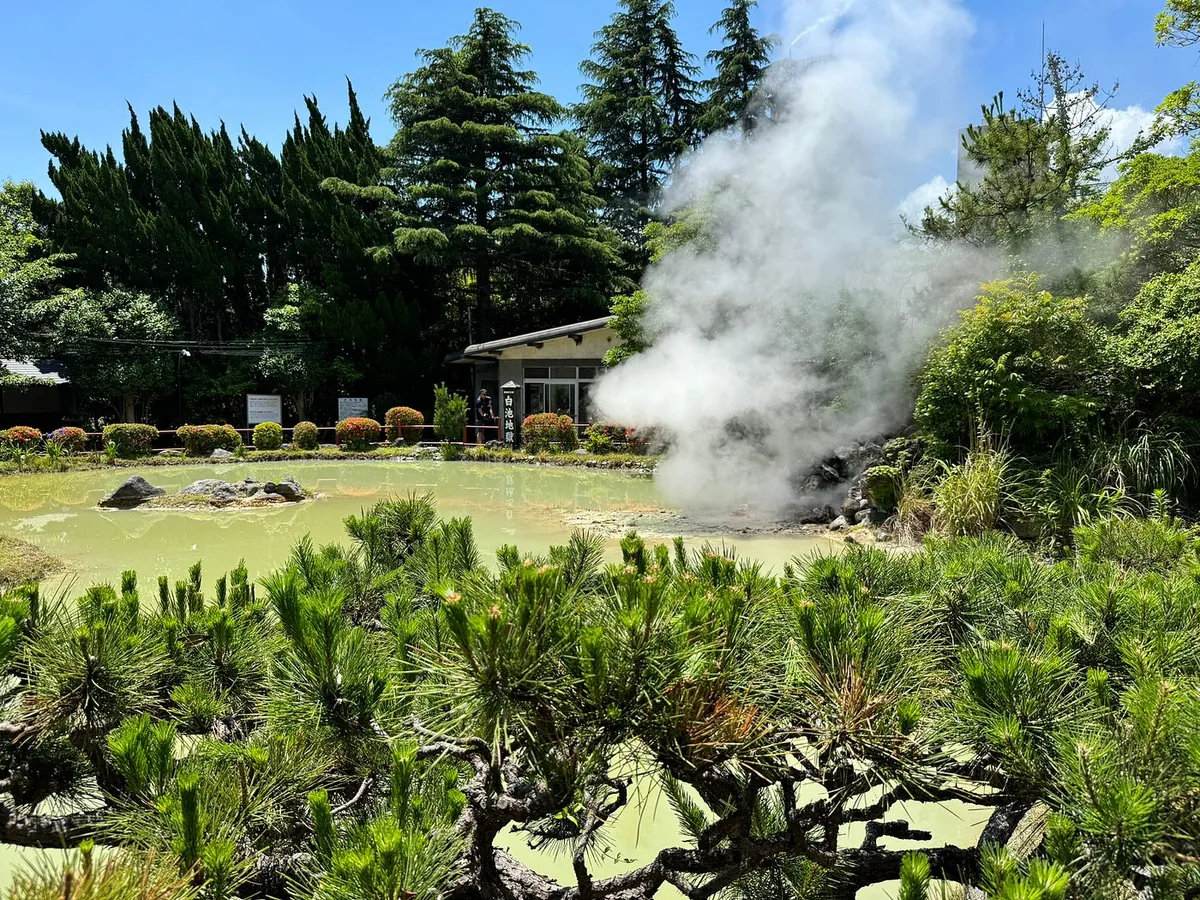
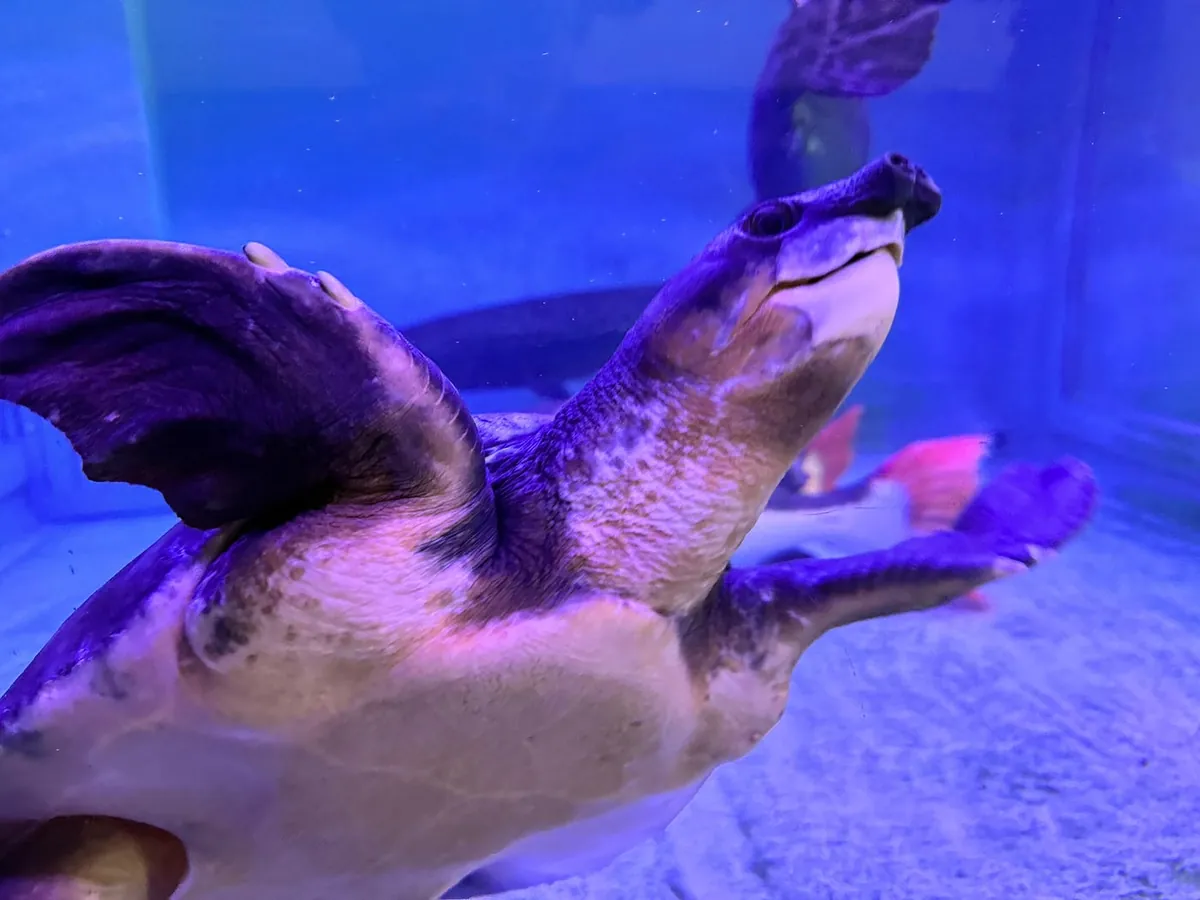
Shiraike Jigoku is less distinctive and has a small tropical fish aquarium.
The remaining Blood Pond Hell and Tornado Hell are not in this area and require taking a bus to reach.
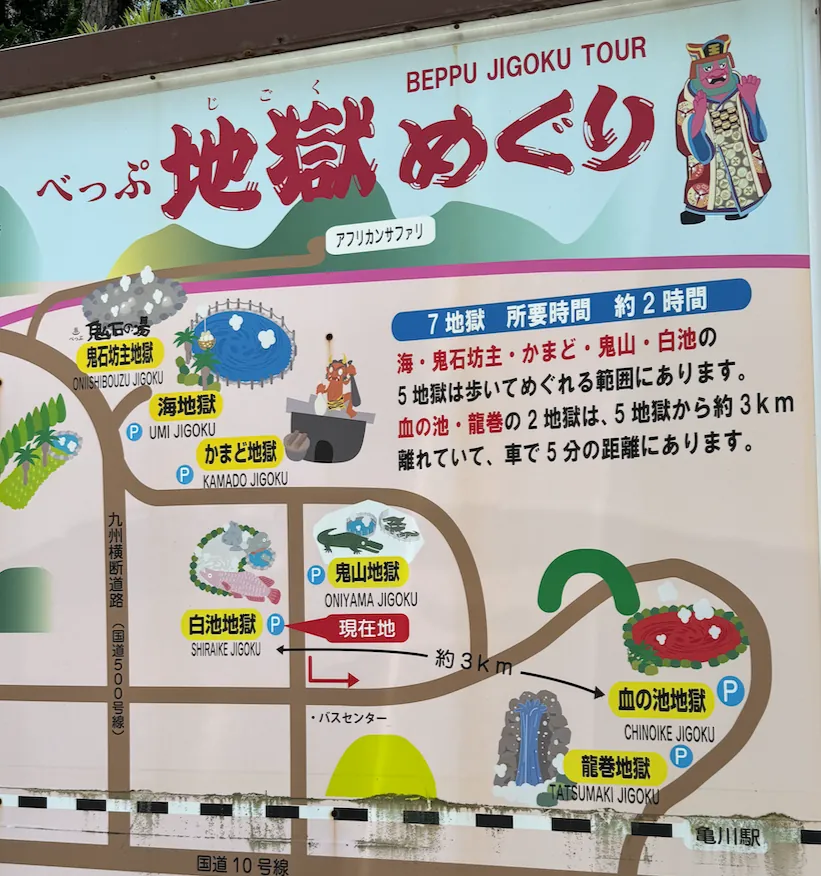
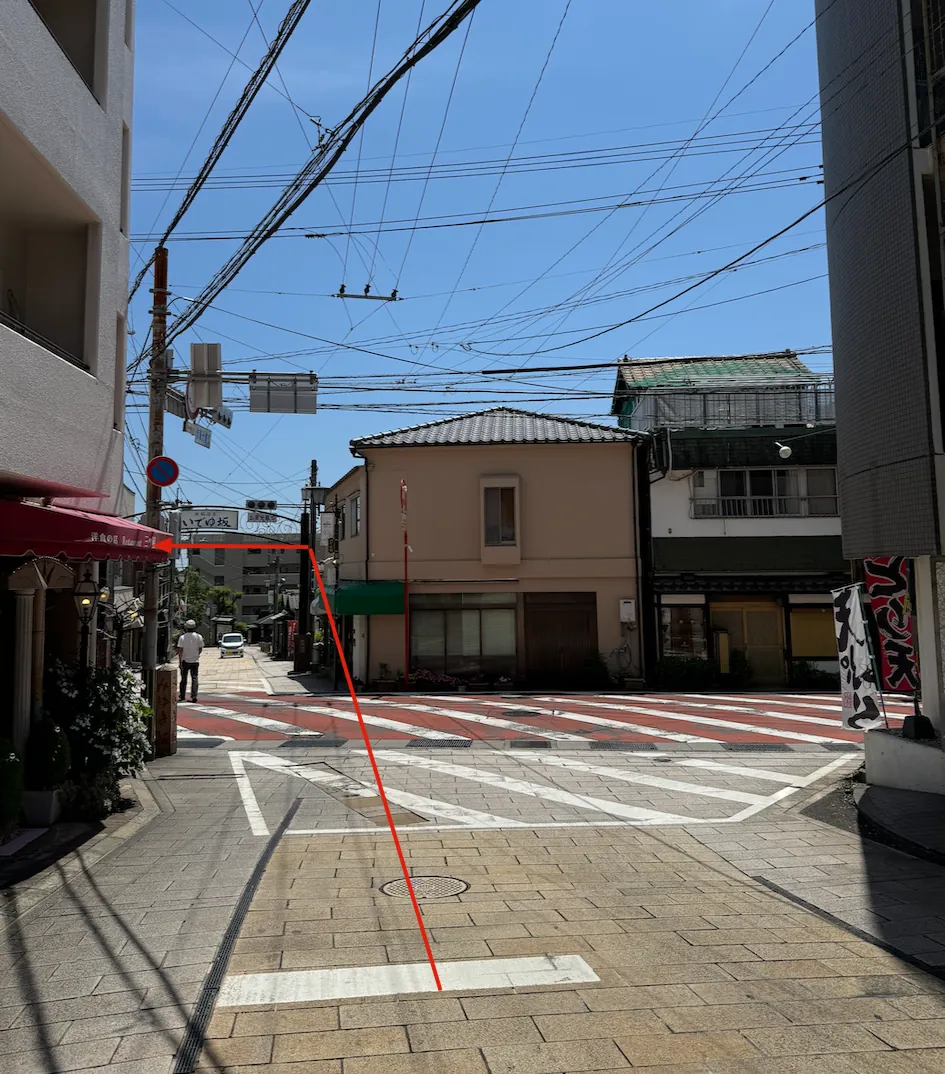
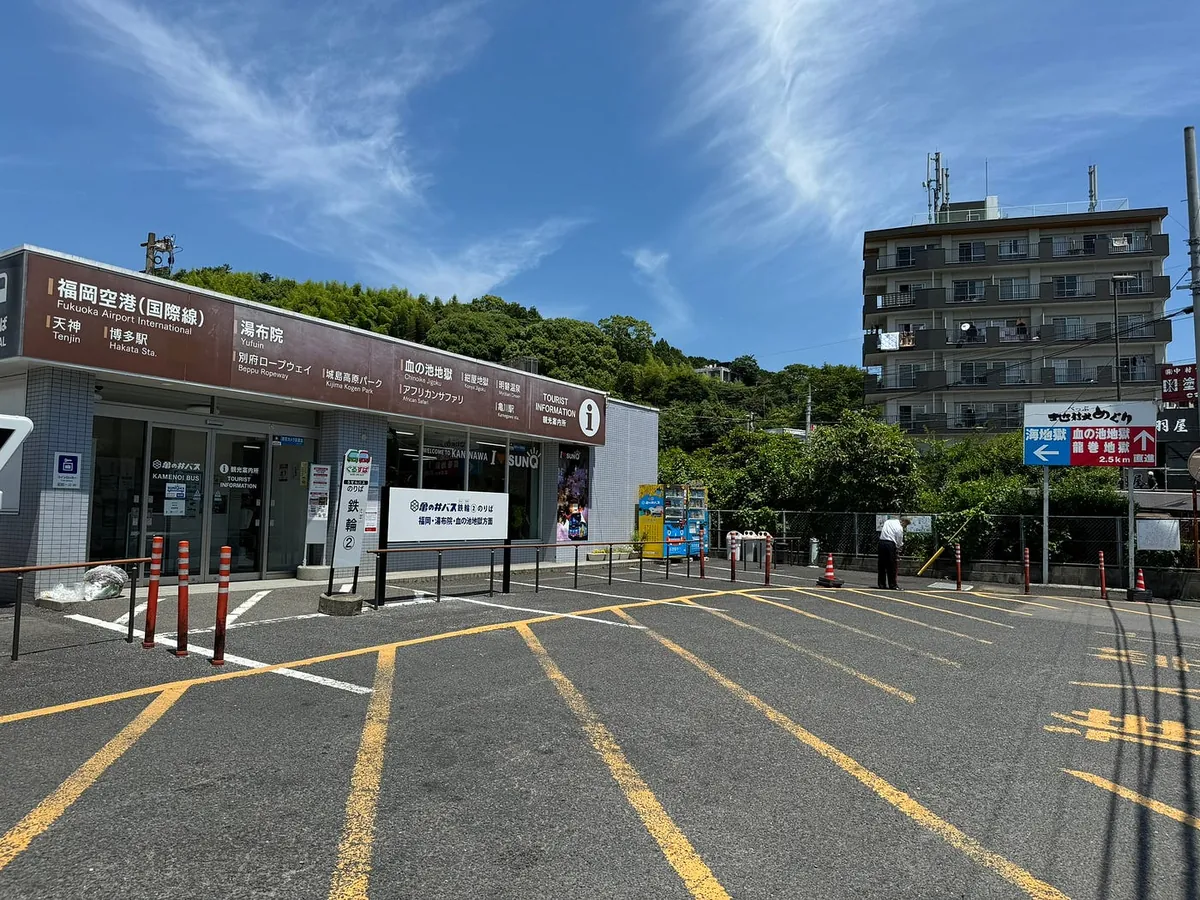
After leaving Shiraike Jigoku, walk straight down to the intersection and turn left. Go straight ahead to Tetsunawa Stop No. 2 to wait for the bus.
Blood Pond Hell
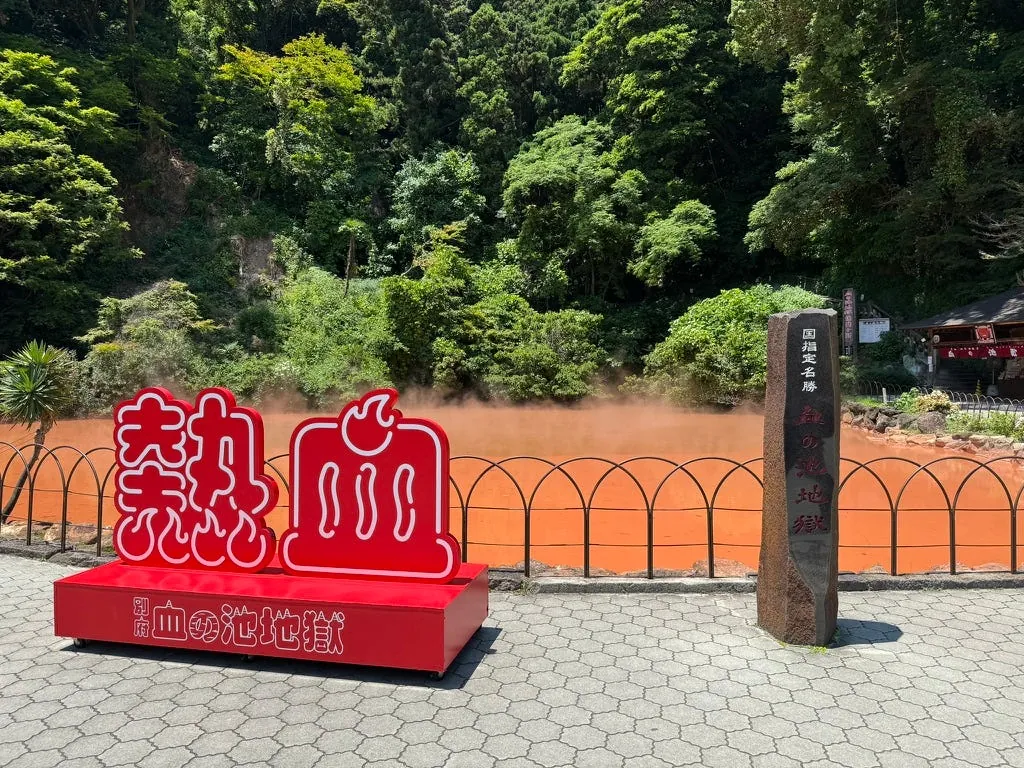
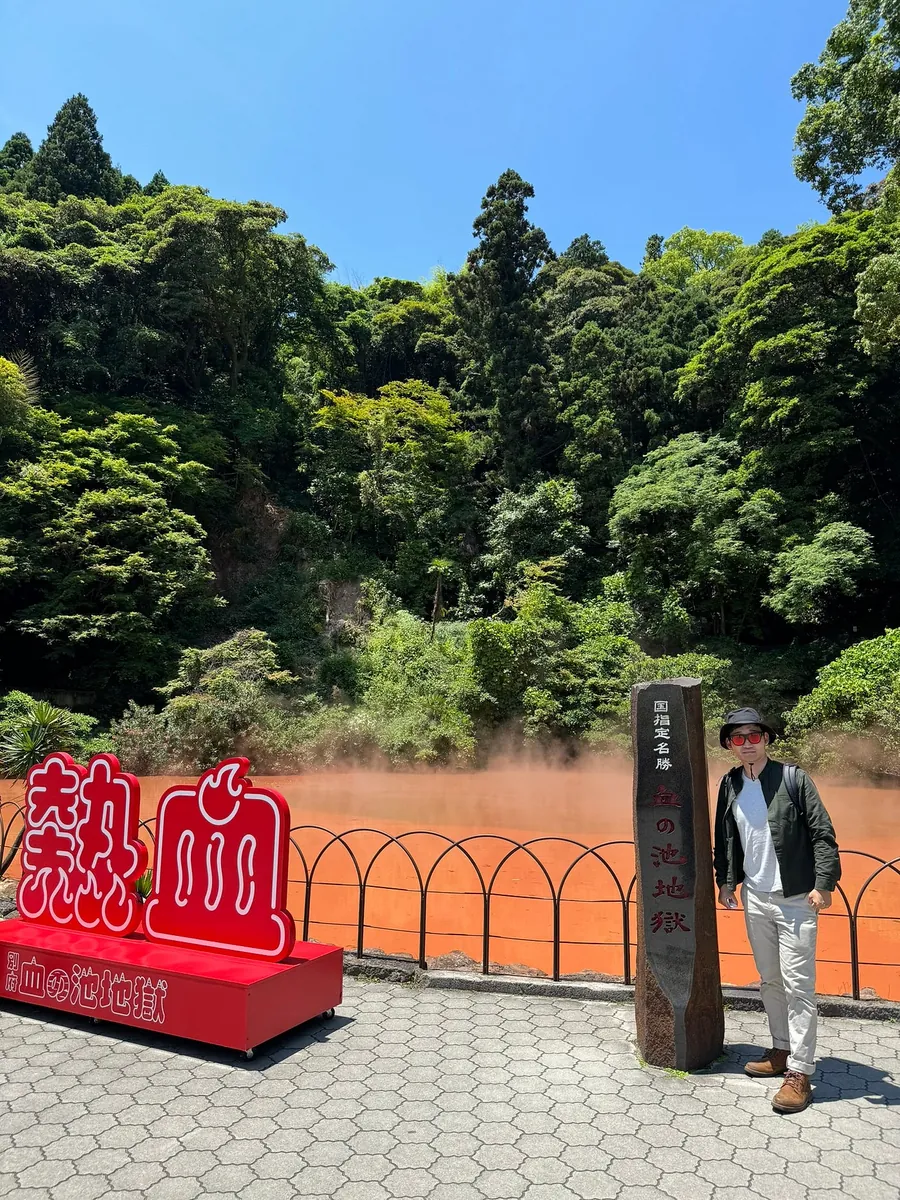
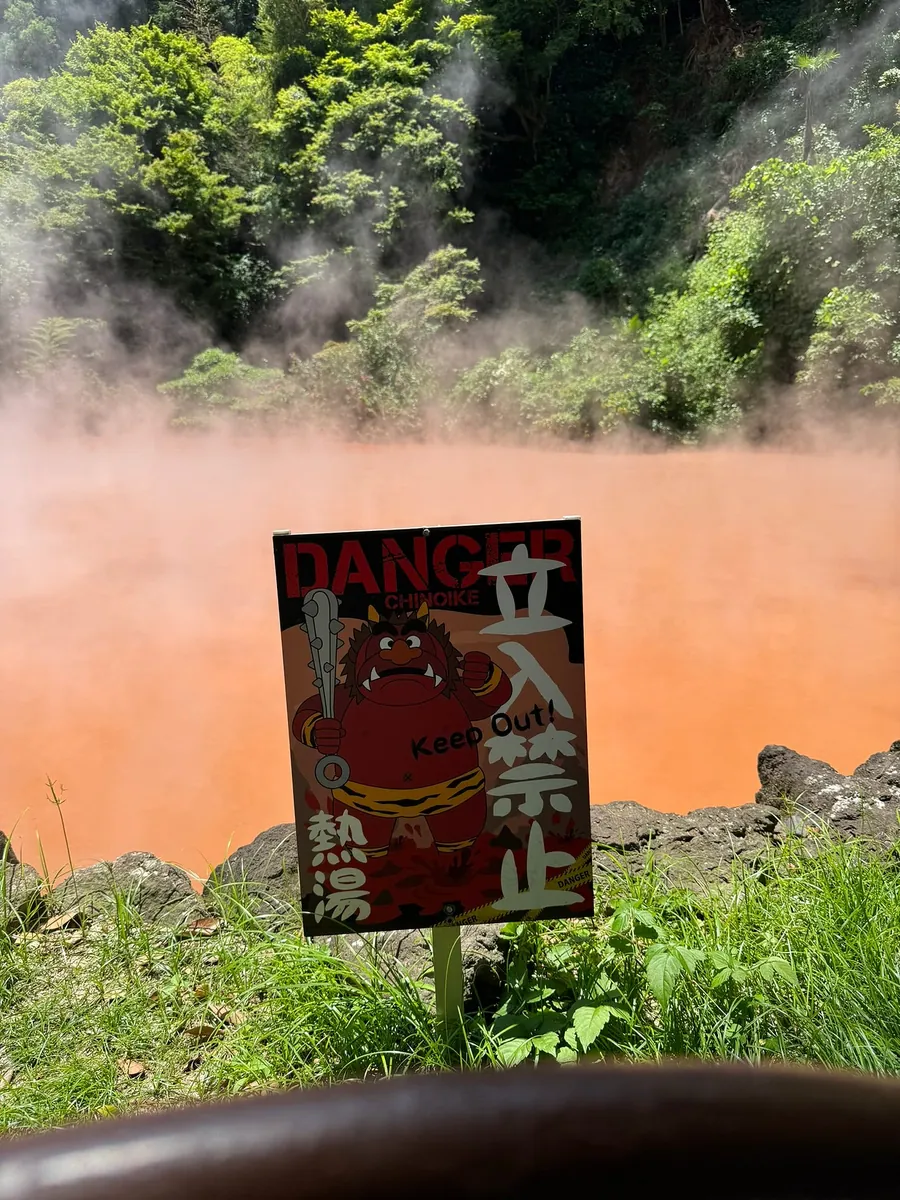
First, visit the Blood Pond Hell, which is similar to the Small Blood Pond at Sea Hell but on a larger scale.
Going down leads to Tornado Hell.
Dragon Whirlpool Hell
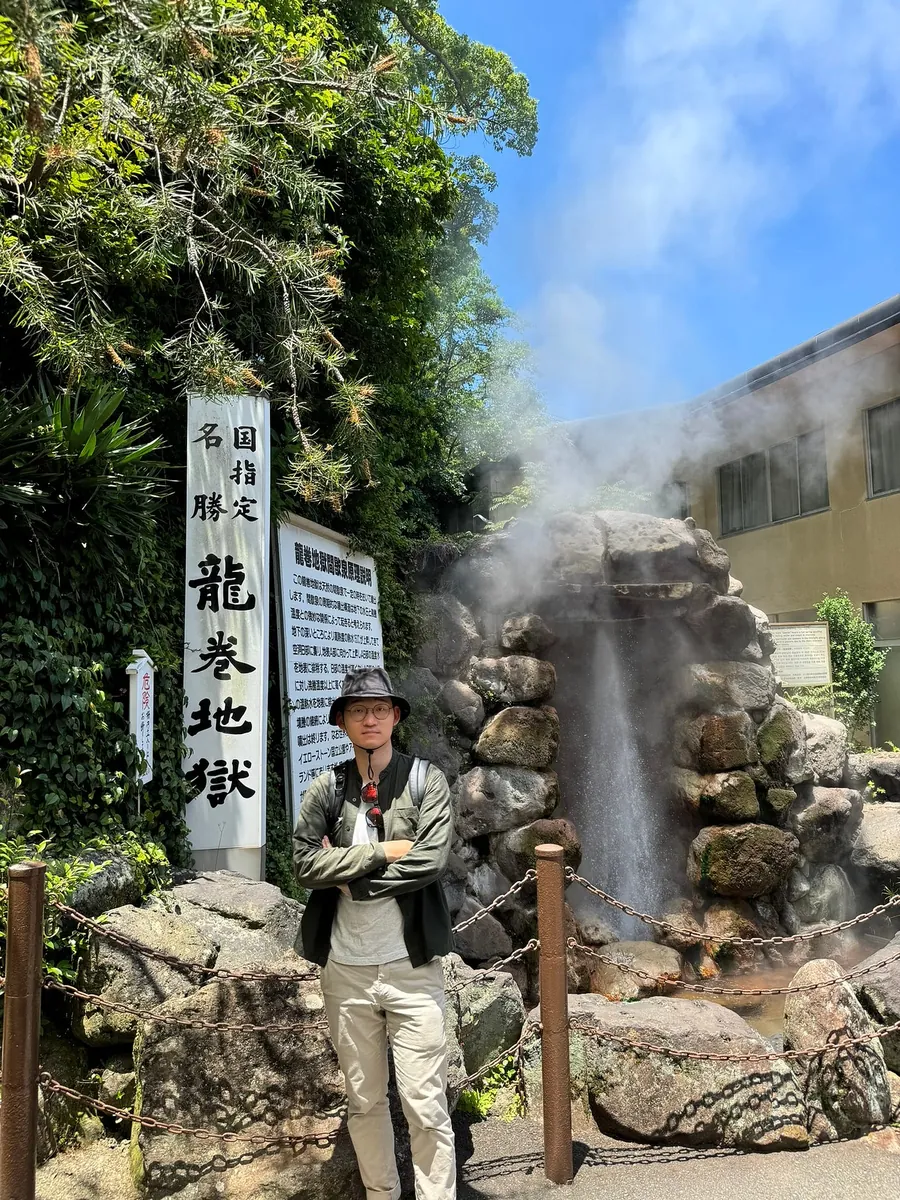
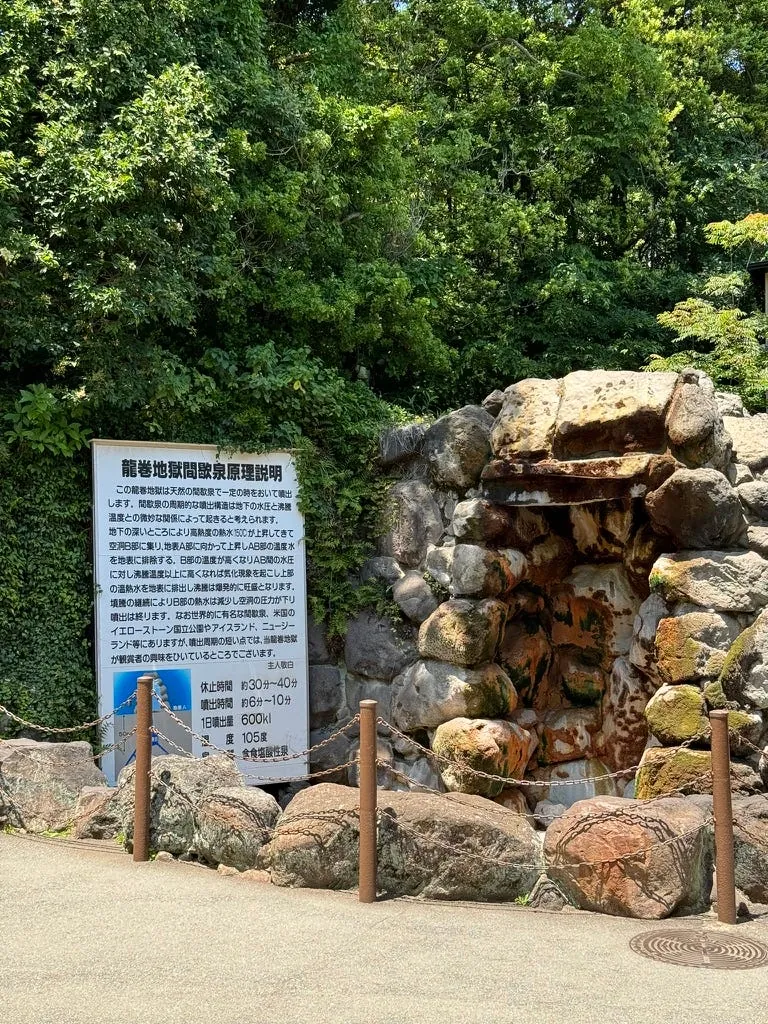
Tatsumaki Jigoku is an intermittent geyser that erupts every 30–40 minutes, with each eruption lasting about 6–10 minutes. You can ask the staff at Tatsumaki (in our case, the staff proactively informed and assisted us). If it’s about to erupt, you can wait and watch; if not, you can visit Chinoike Jigoku first.
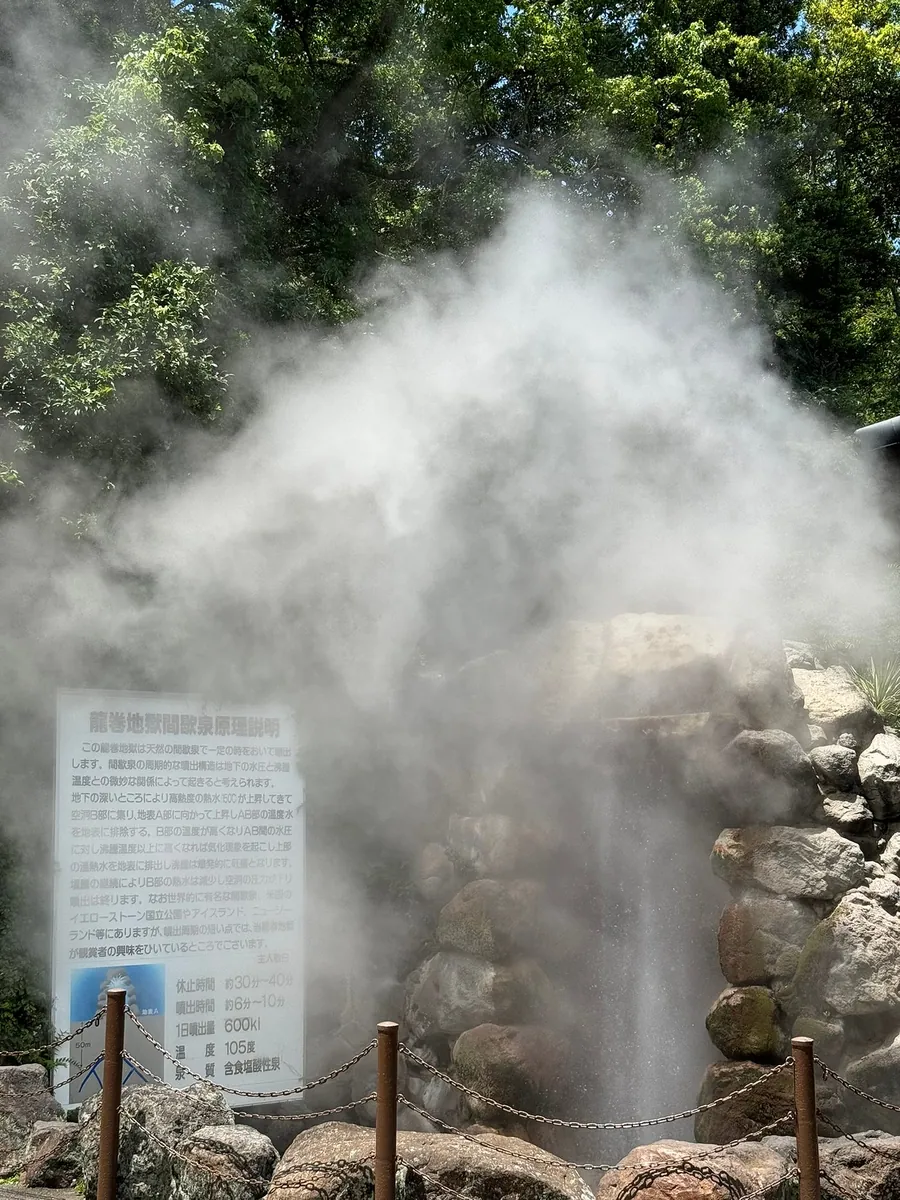
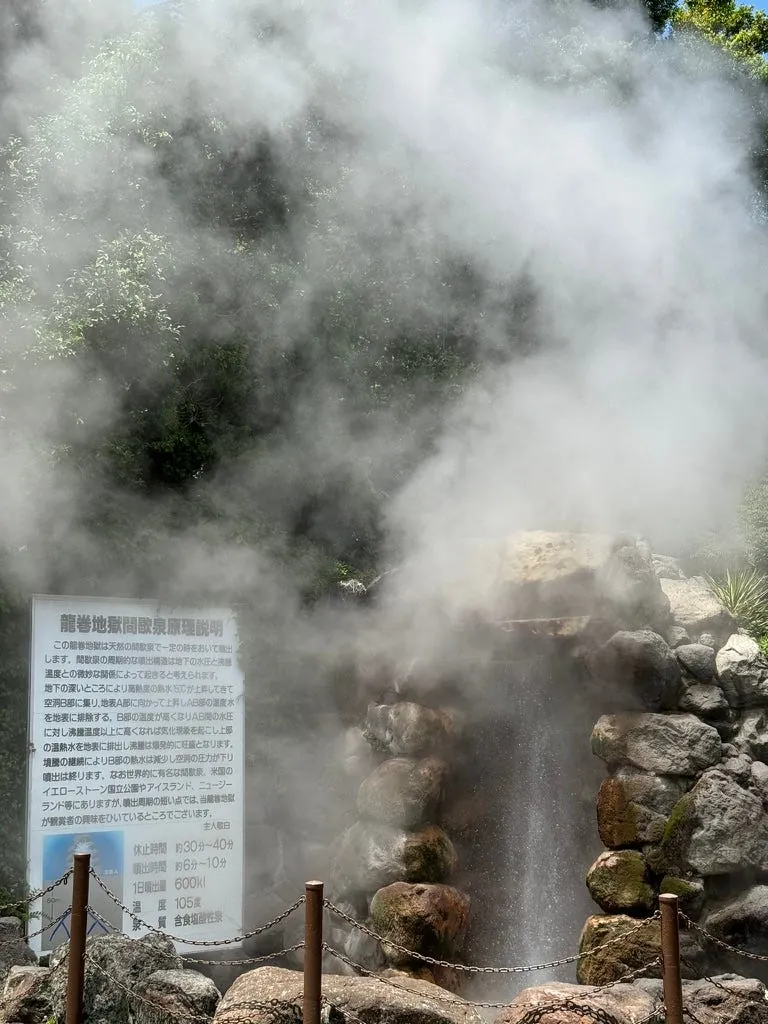
The smoke during the eruption forms a tornado-like shape, hence the name.
Gokurakutei
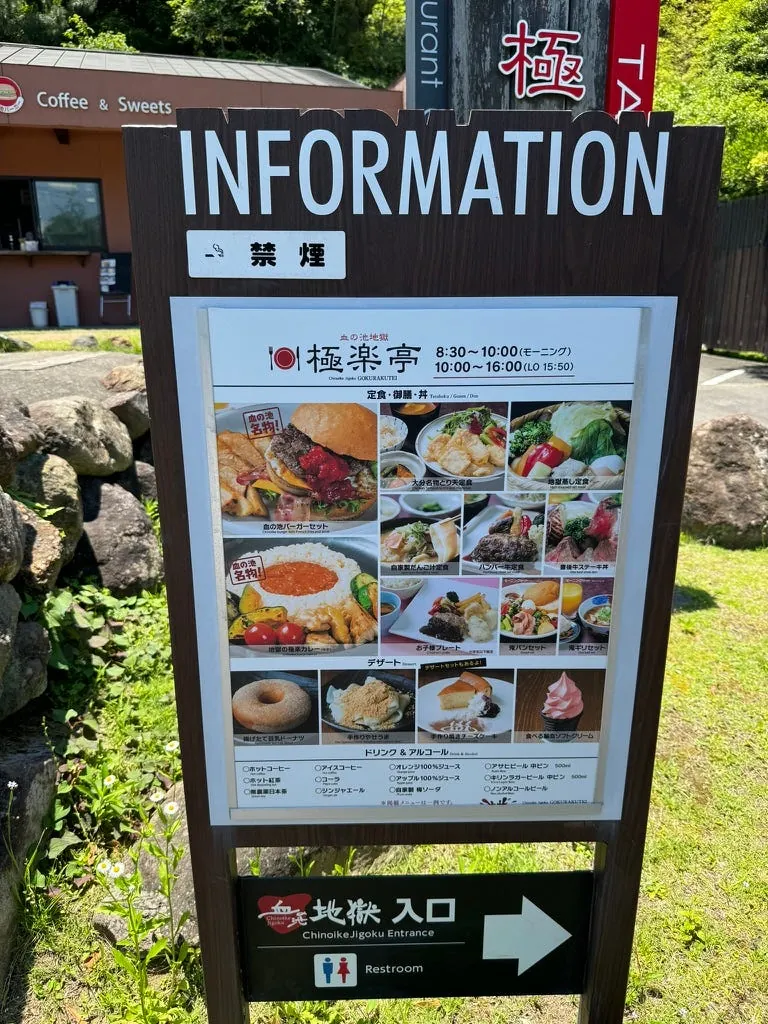
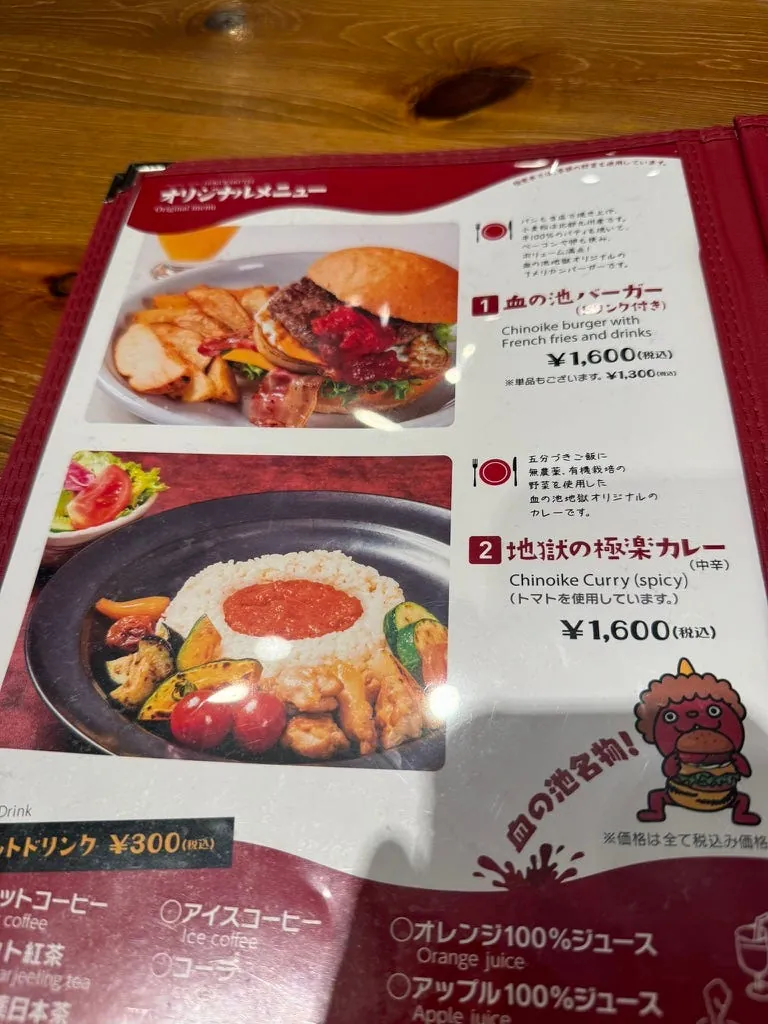
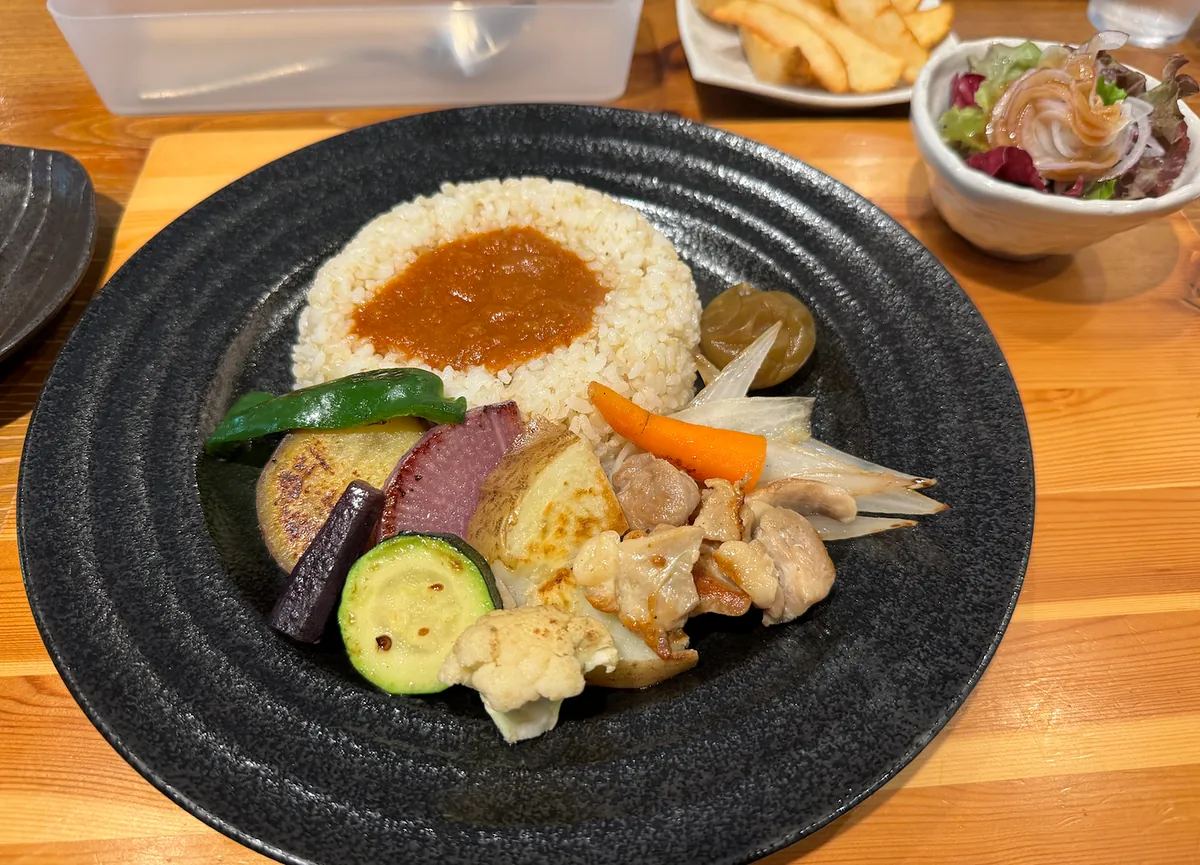
Lunch was directly taken care of at Chinoike Jigoku Gokurakutei.
Tried the specialty Jigoku Gokuraku Curry, enjoyed the Japanese-style rice with distinct grains paired with thick, mildly spicy curry. Served with grilled vegetables and chicken, it was flavorful without being greasy, smooth and refreshing.
After eating, I found that there are nearby attractions like Kifune Castle, Cross Mountain Observatory, Myoban Hell, and Yunohana…
Kifune Castle
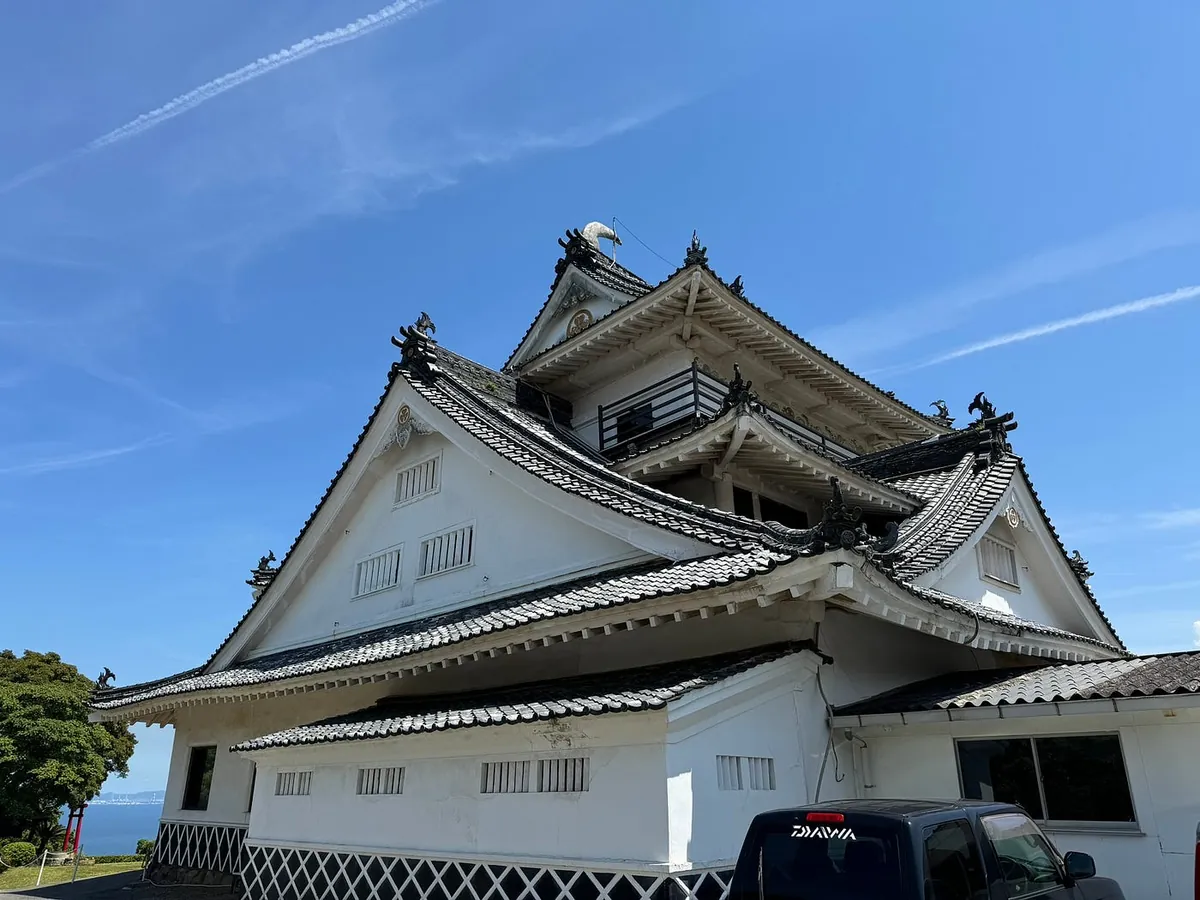
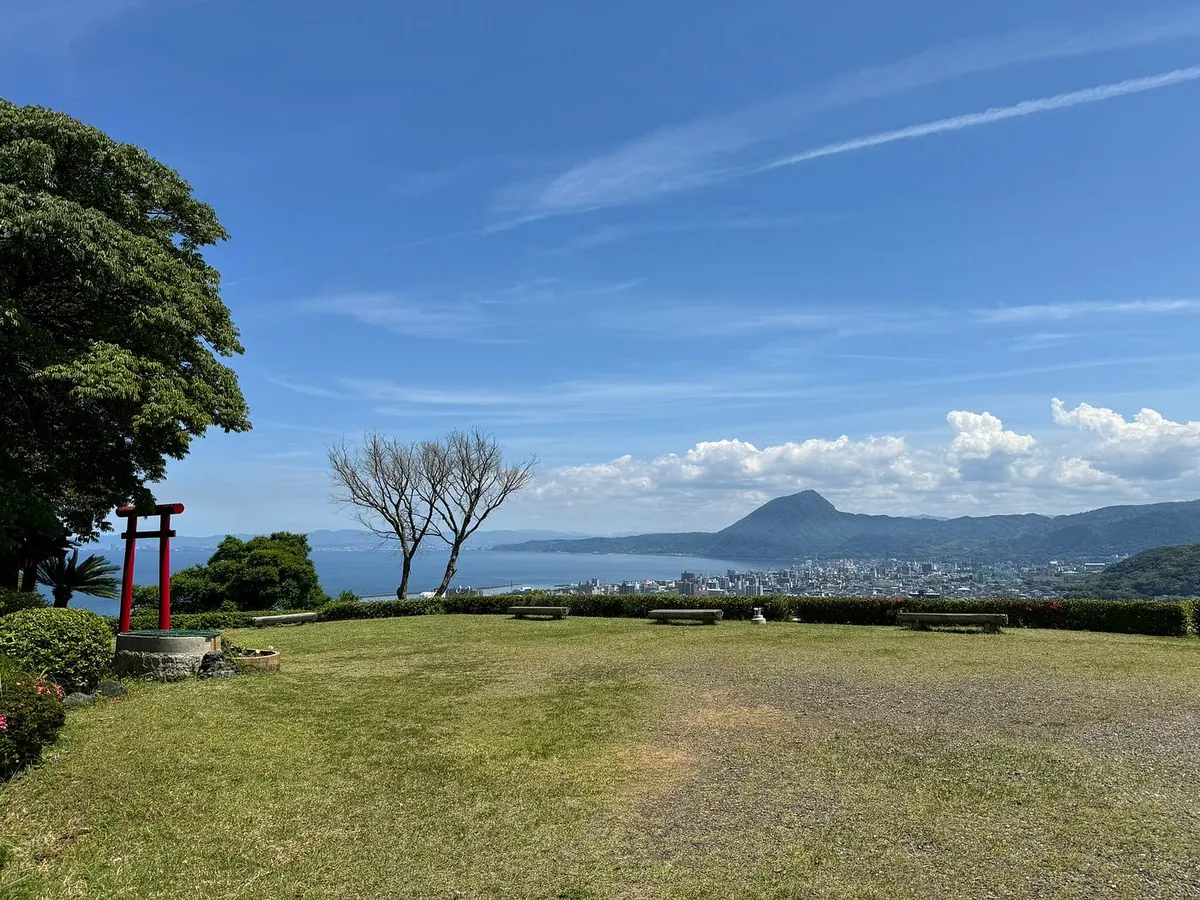
On the way back to the Tetsuwa 2 bus stop, I decided to visit Kifune Castle. The castle is small, but the view from the lookout is nice. However, walking from the bus stop and going uphill was quite tiring.
Jujiyama Observatory, Myoban Jigoku, and Yunohana are actually above Umi Jigoku; if rearranging the itinerary, you should first go up to these spots, then head down to Umi Jigoku, and continue to Chinoike Jigoku and Tatsumaki Jigoku, or start with Chinoike and Tatsumaki first.
Juujiyama Observation Deck
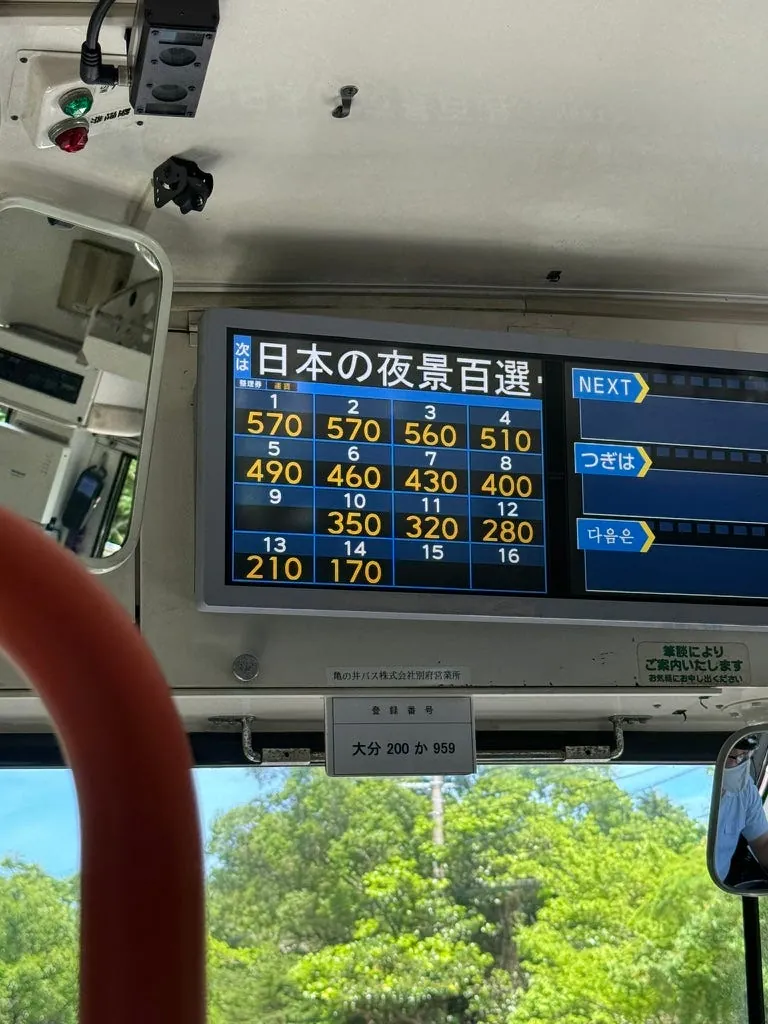
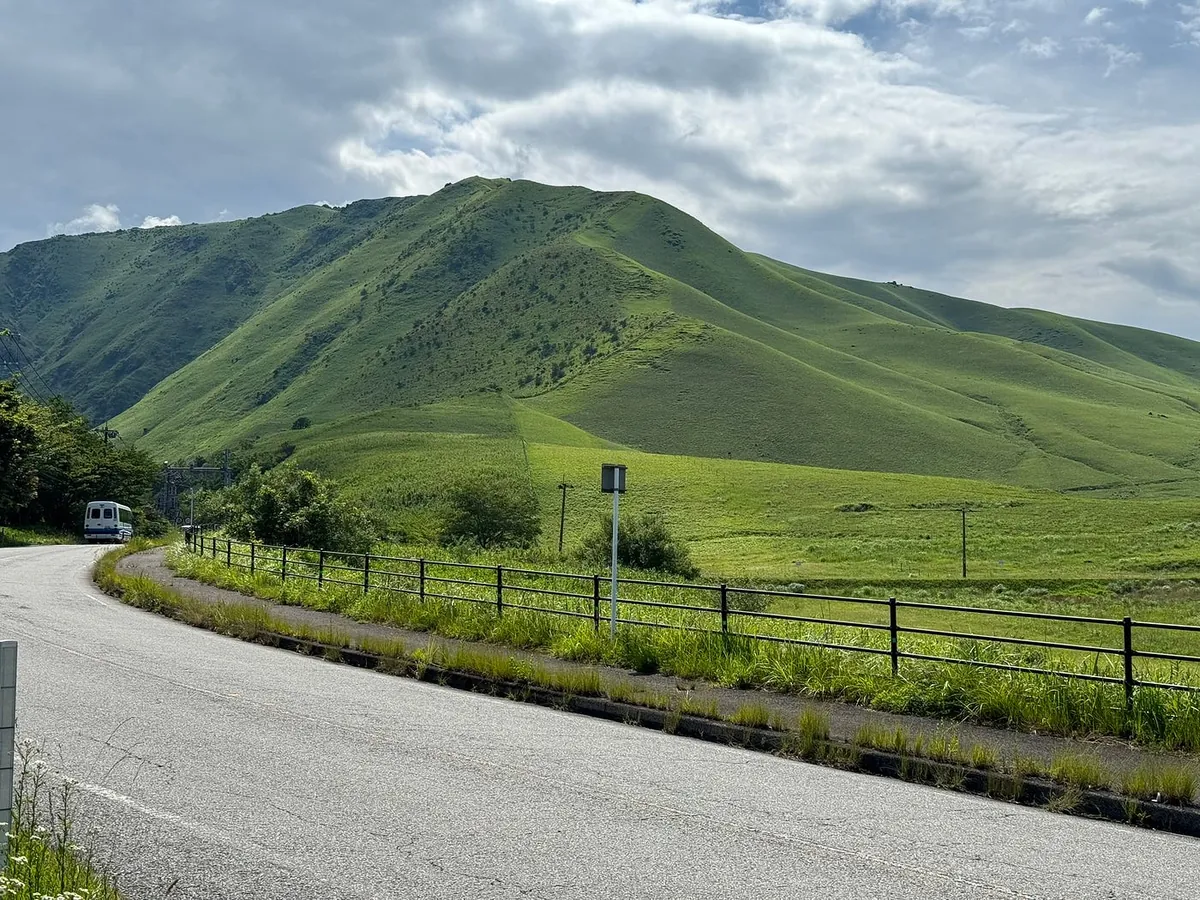
Return to Tetsurin 2 and take the bus passing through Umi Jigoku again, heading first to Juujiyama Observatory to overlook Beppu City. The sun is strong and hot; the observatory only has restrooms, no shops or rest areas.
The mountain opposite the entrance is lush and green, very beautiful.
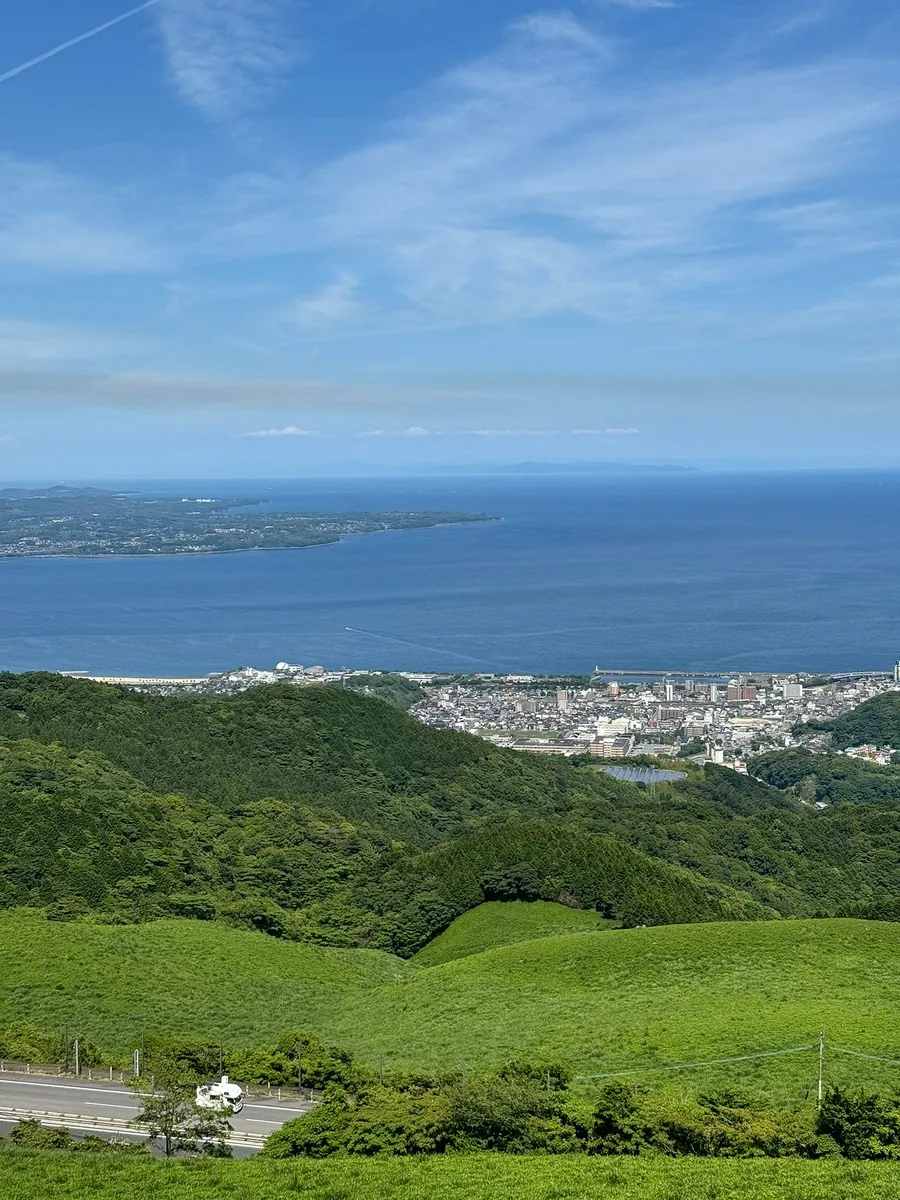
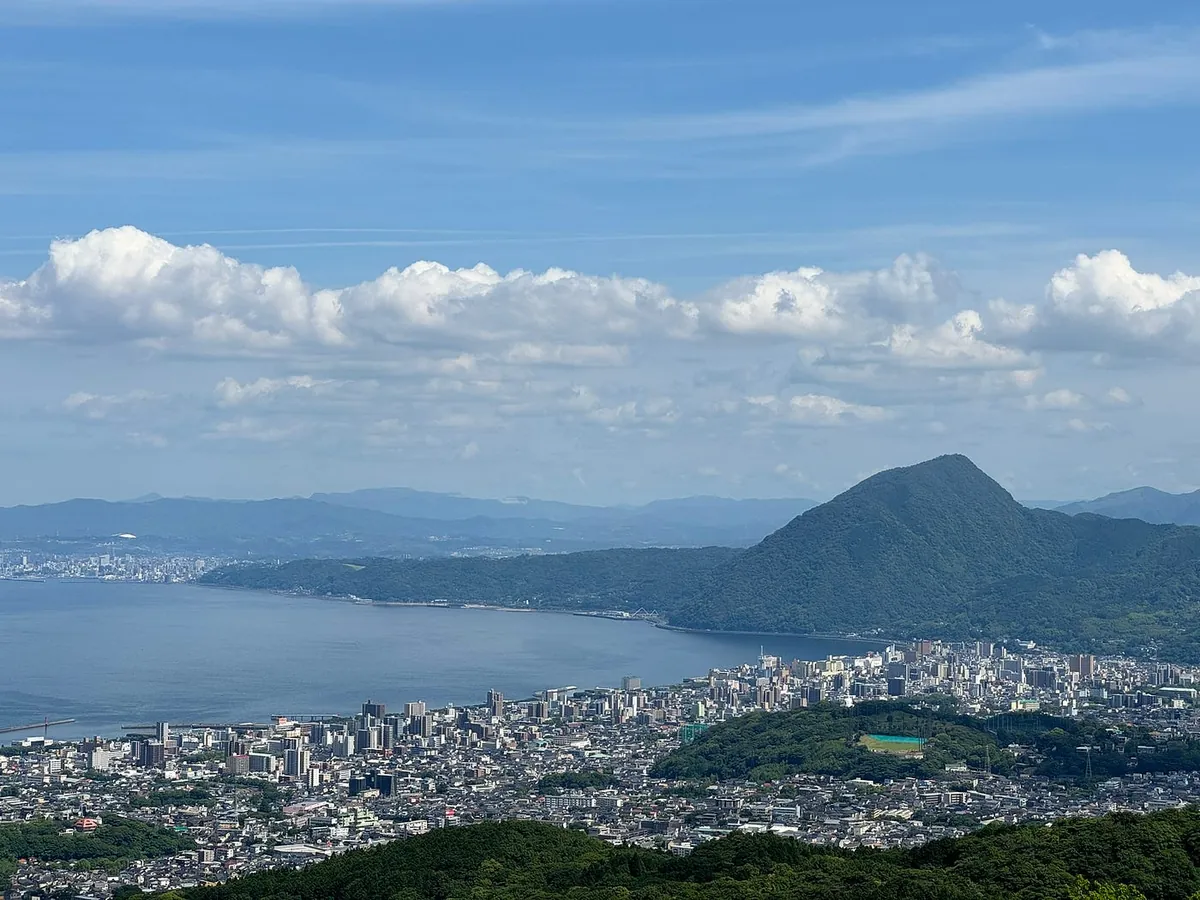
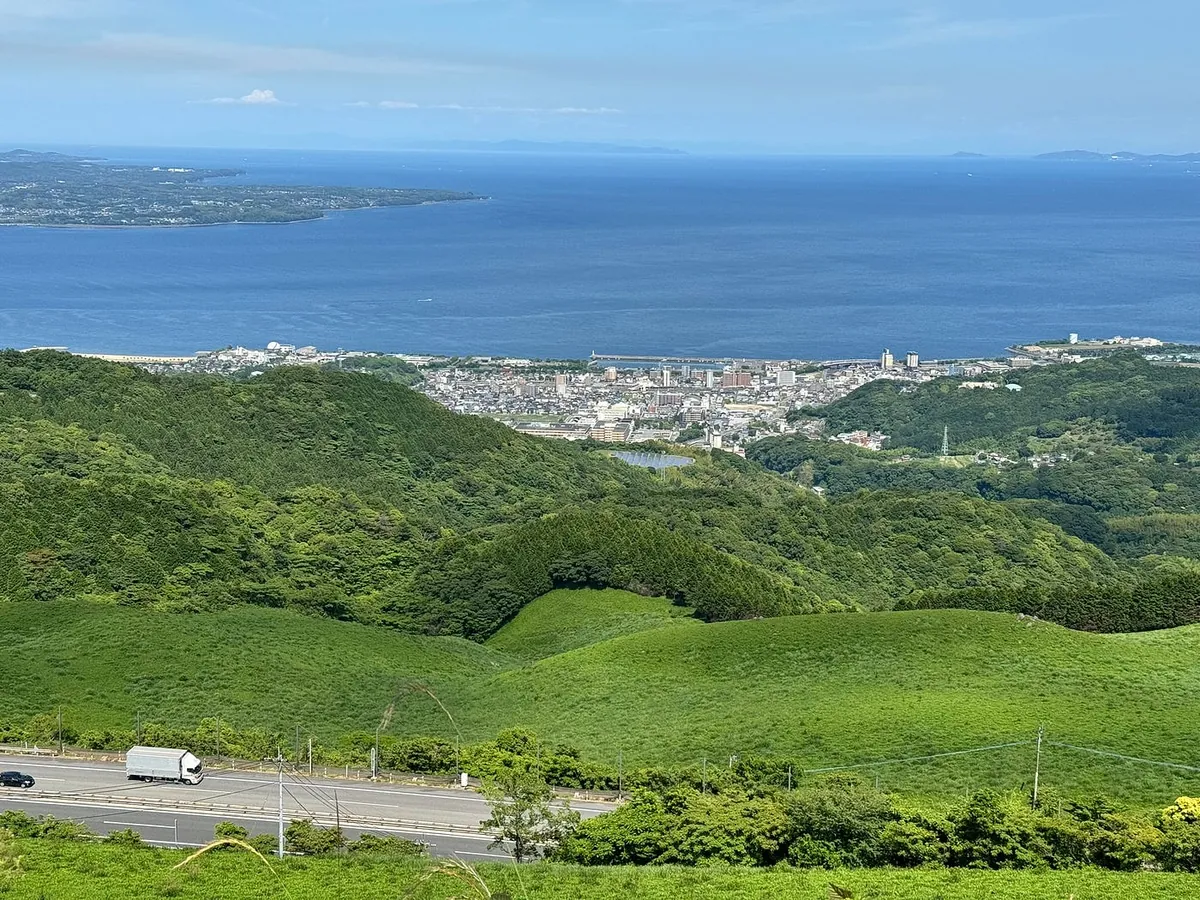
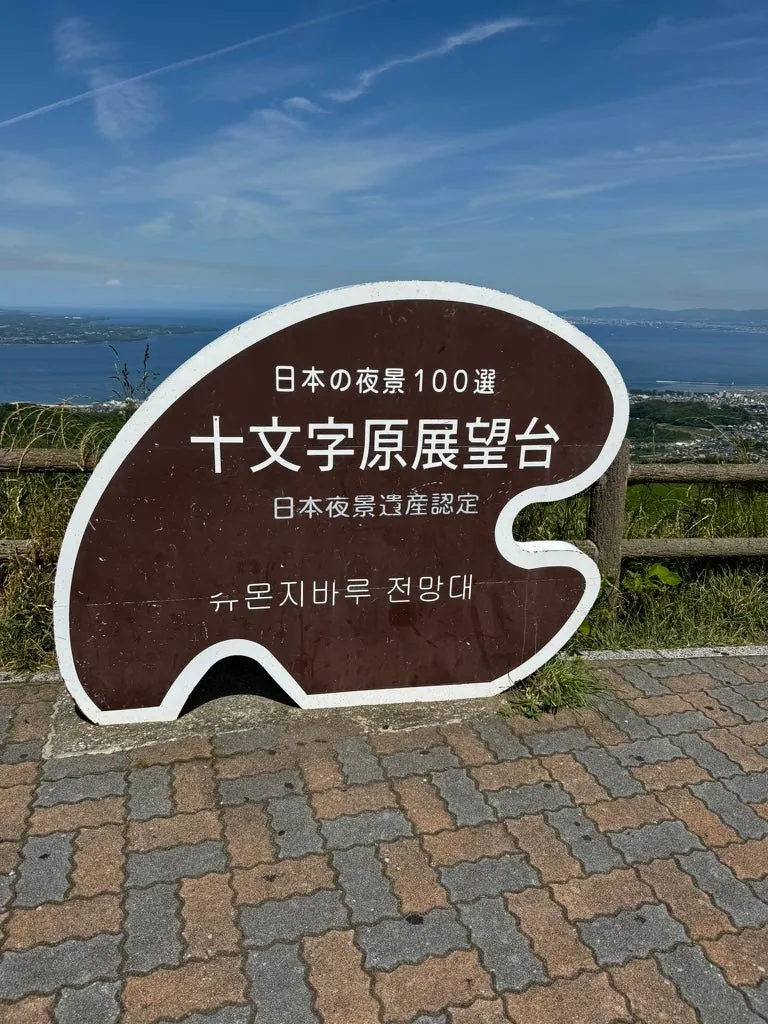
Since it’s a night view, there’s nothing much to see in the morning, just a lot of sun.
Myoban Jigoku
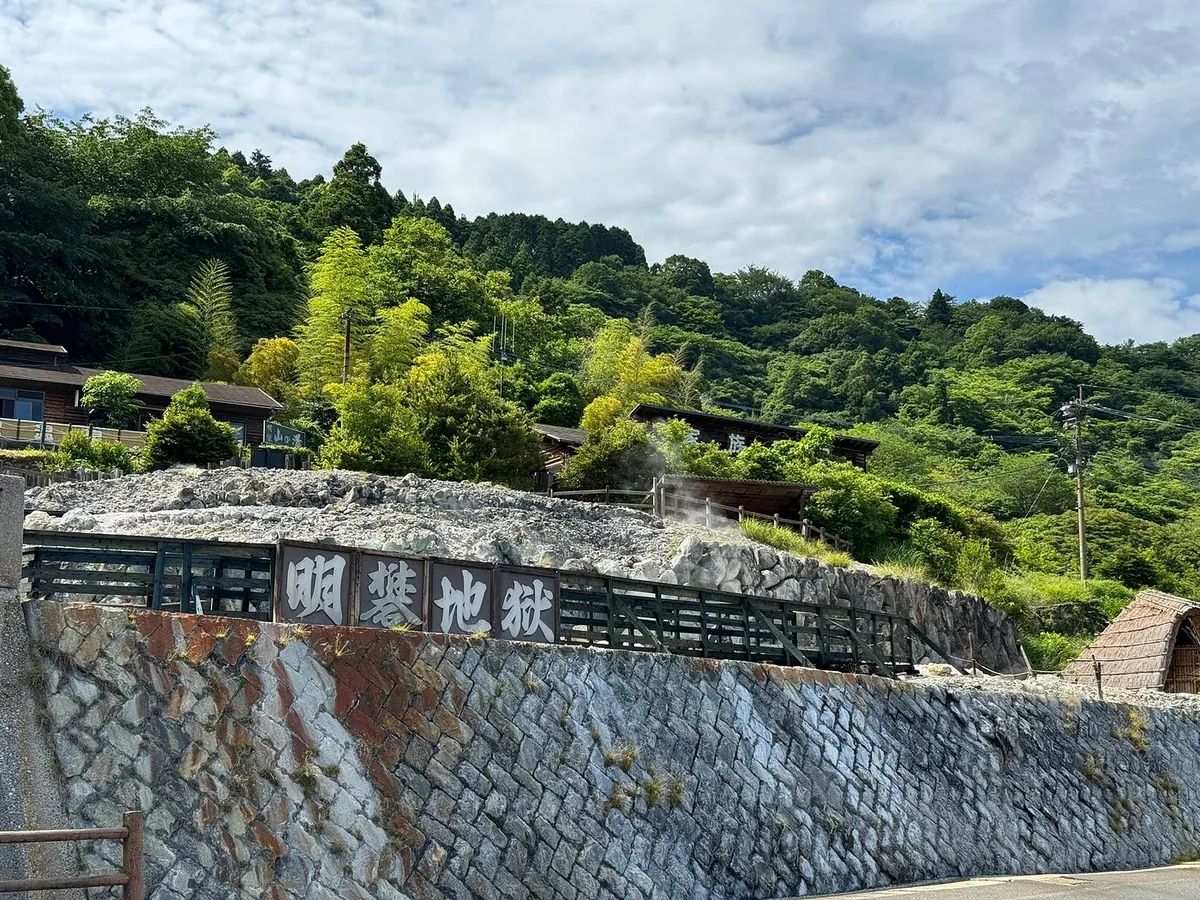
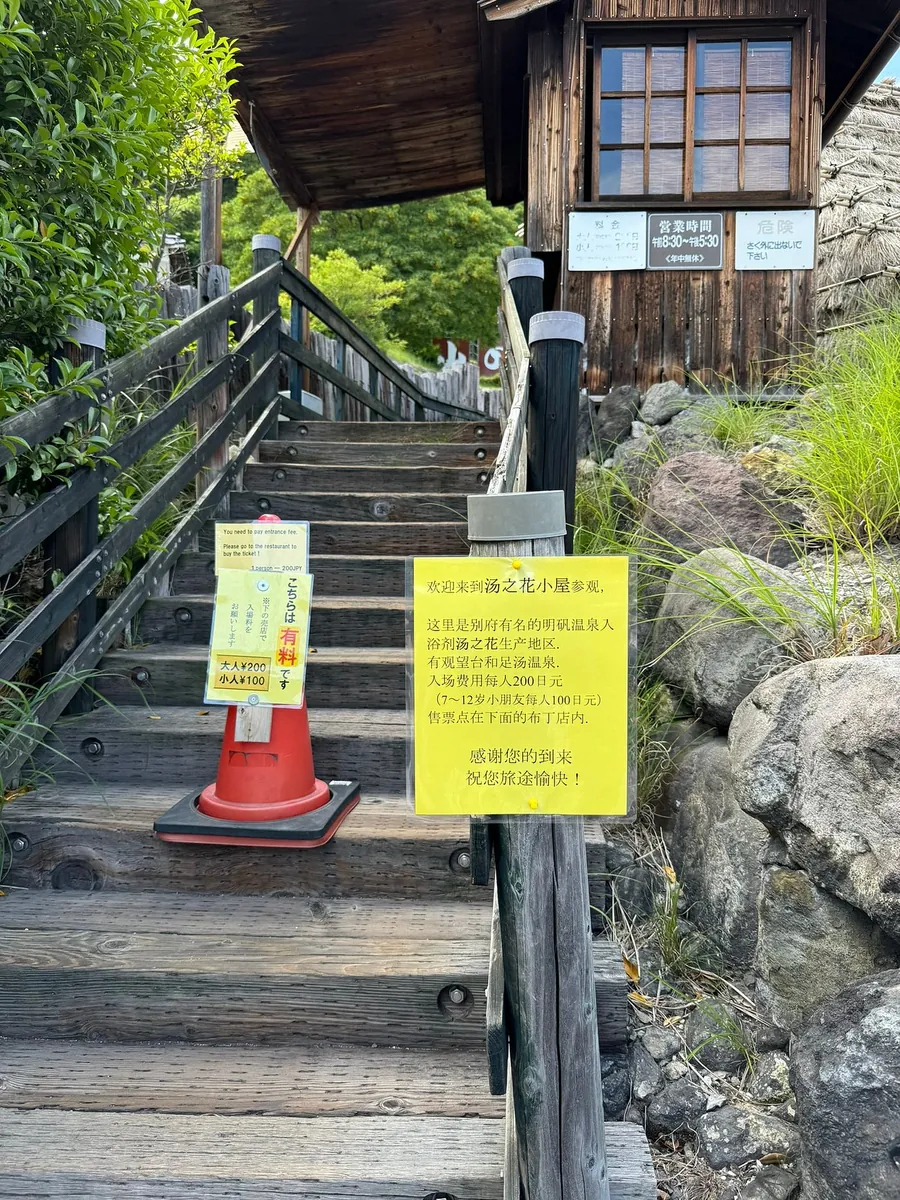
Head back down to Myoban Hell. The ticket office is across the street at Okamotoya Pudding Shop. Just tell the staff you want to go to the opposite side.
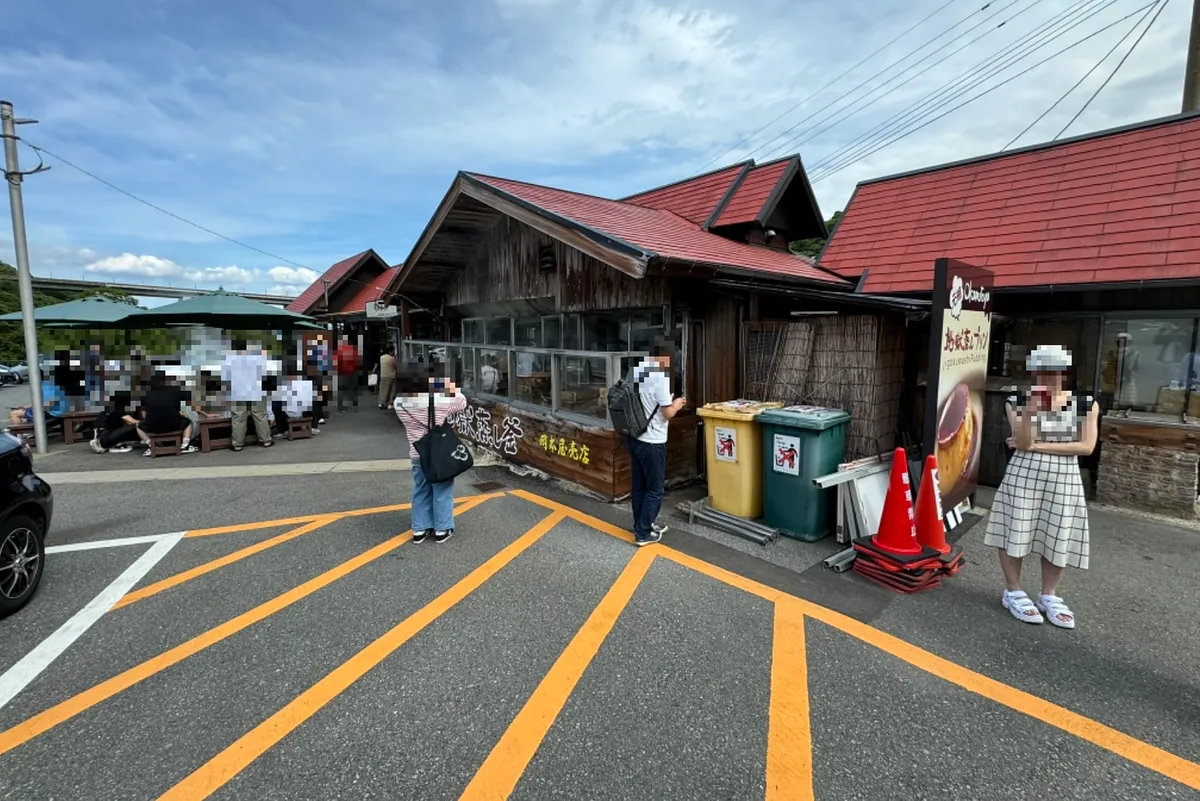
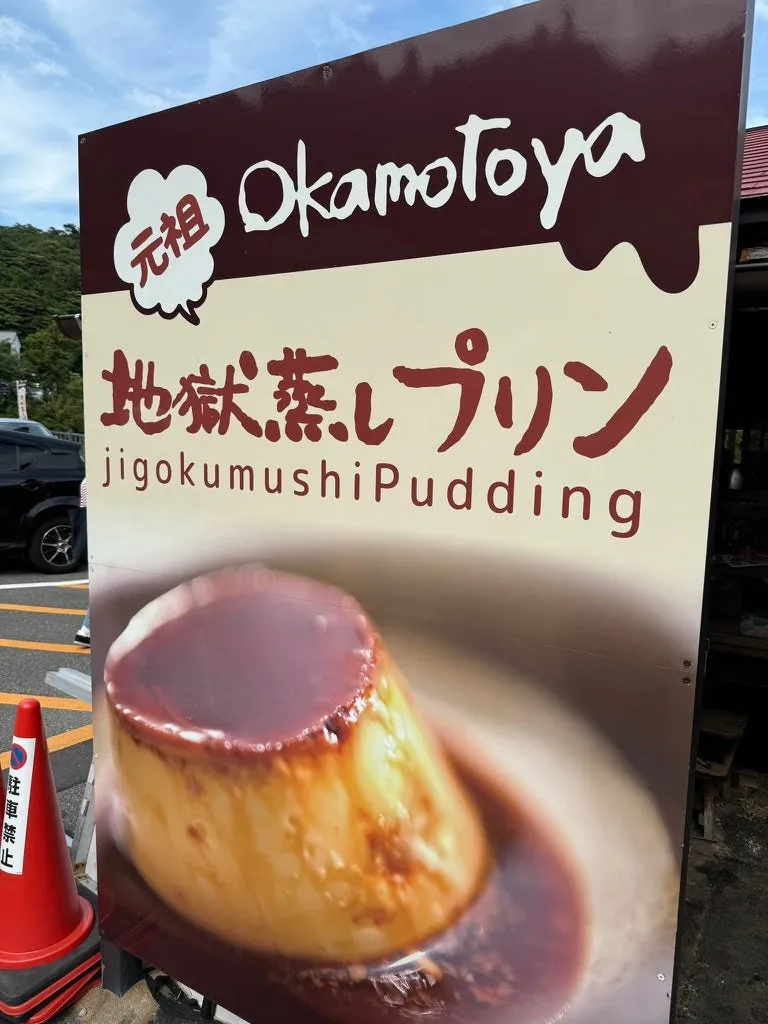
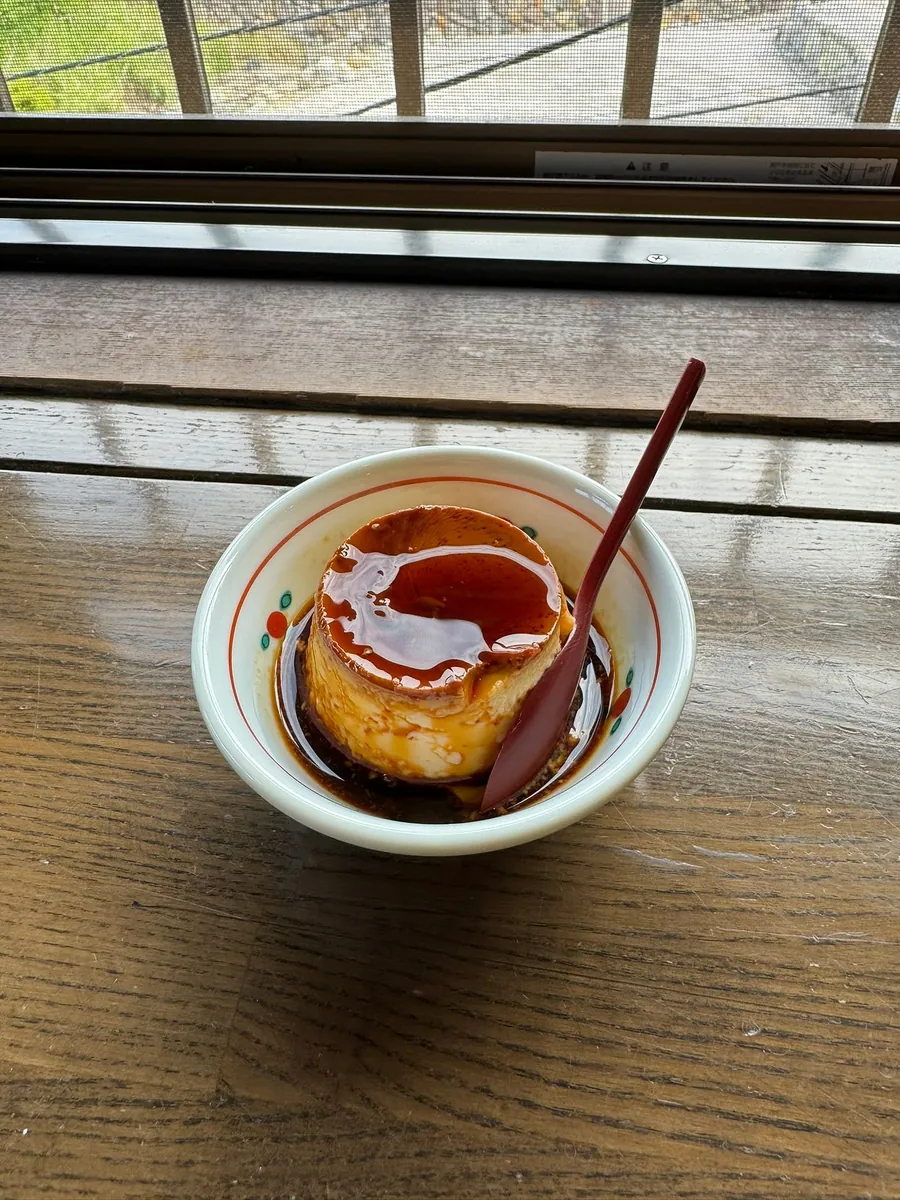
You can enjoy a hell-steamed pudding before you leave.
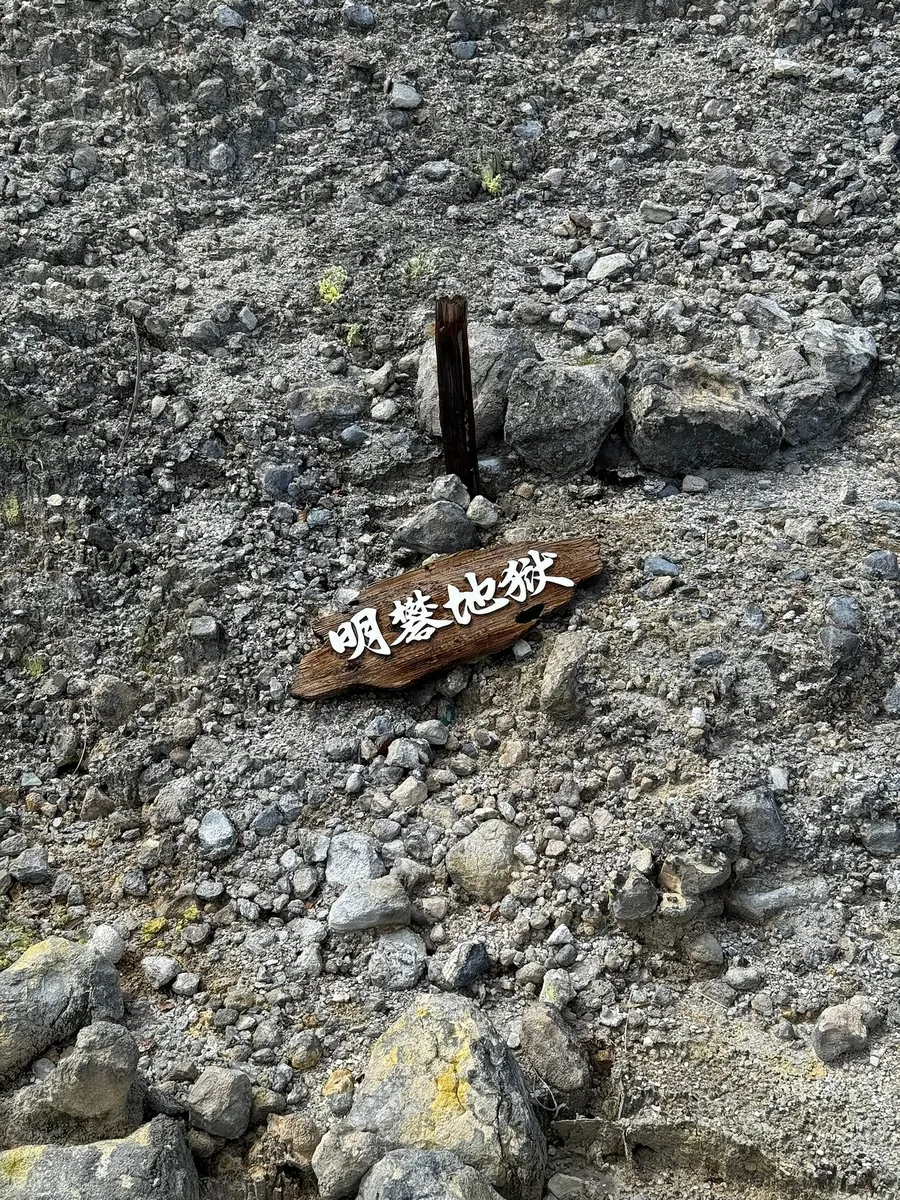
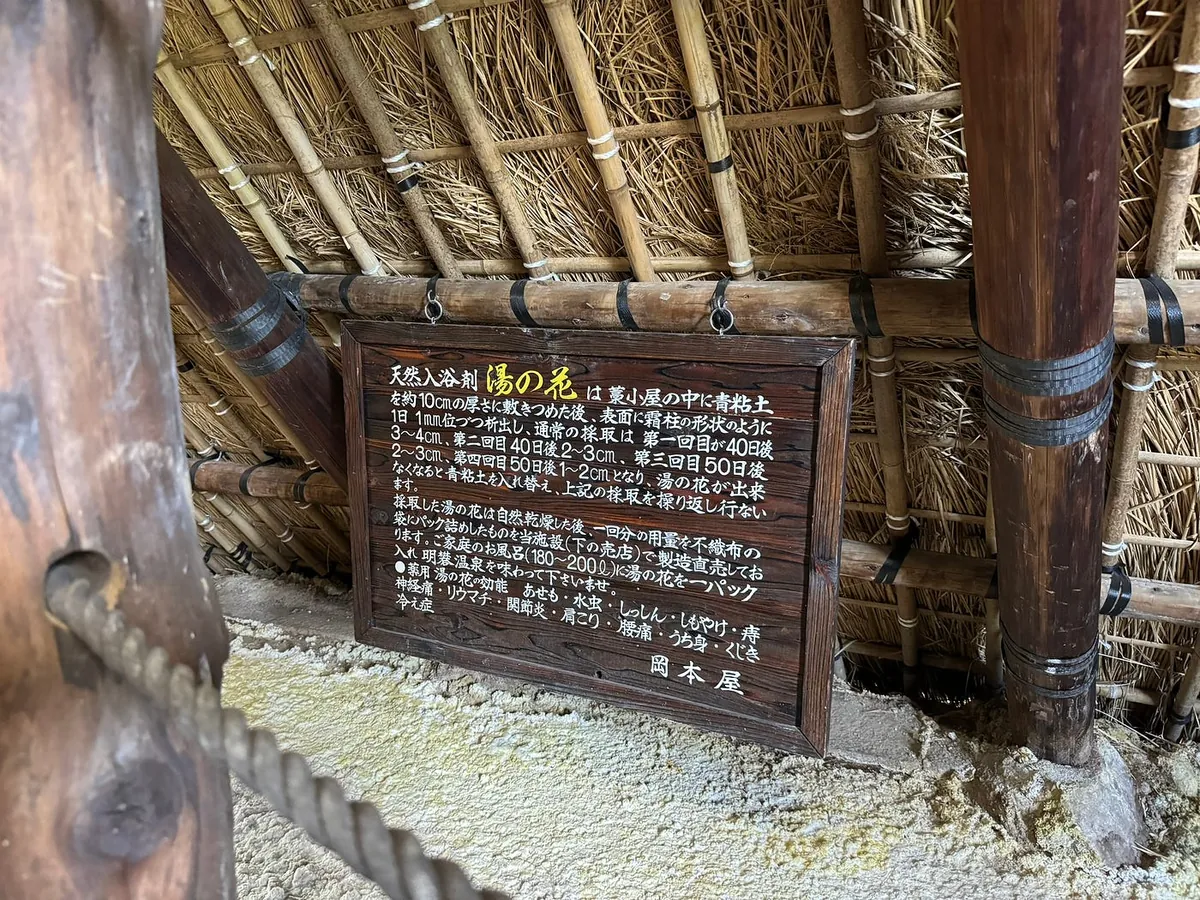
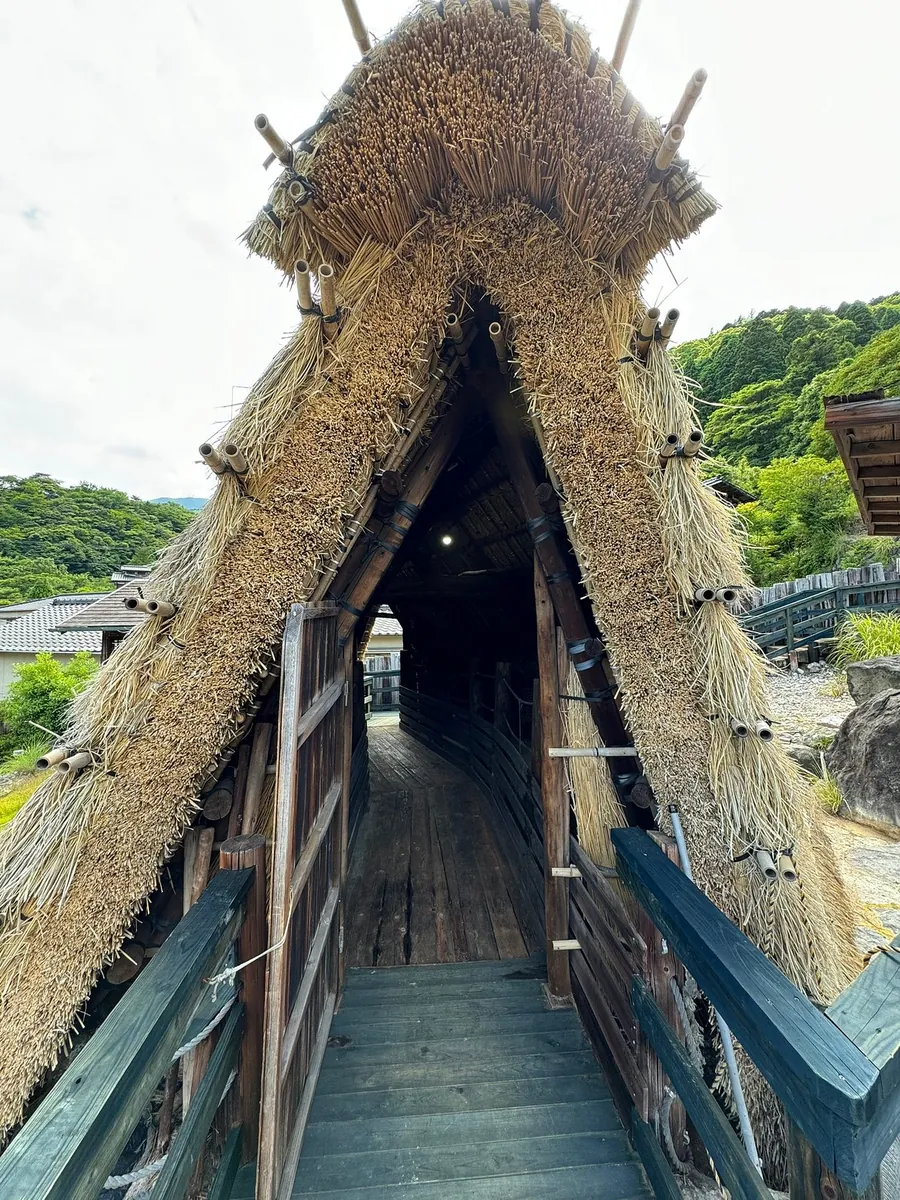
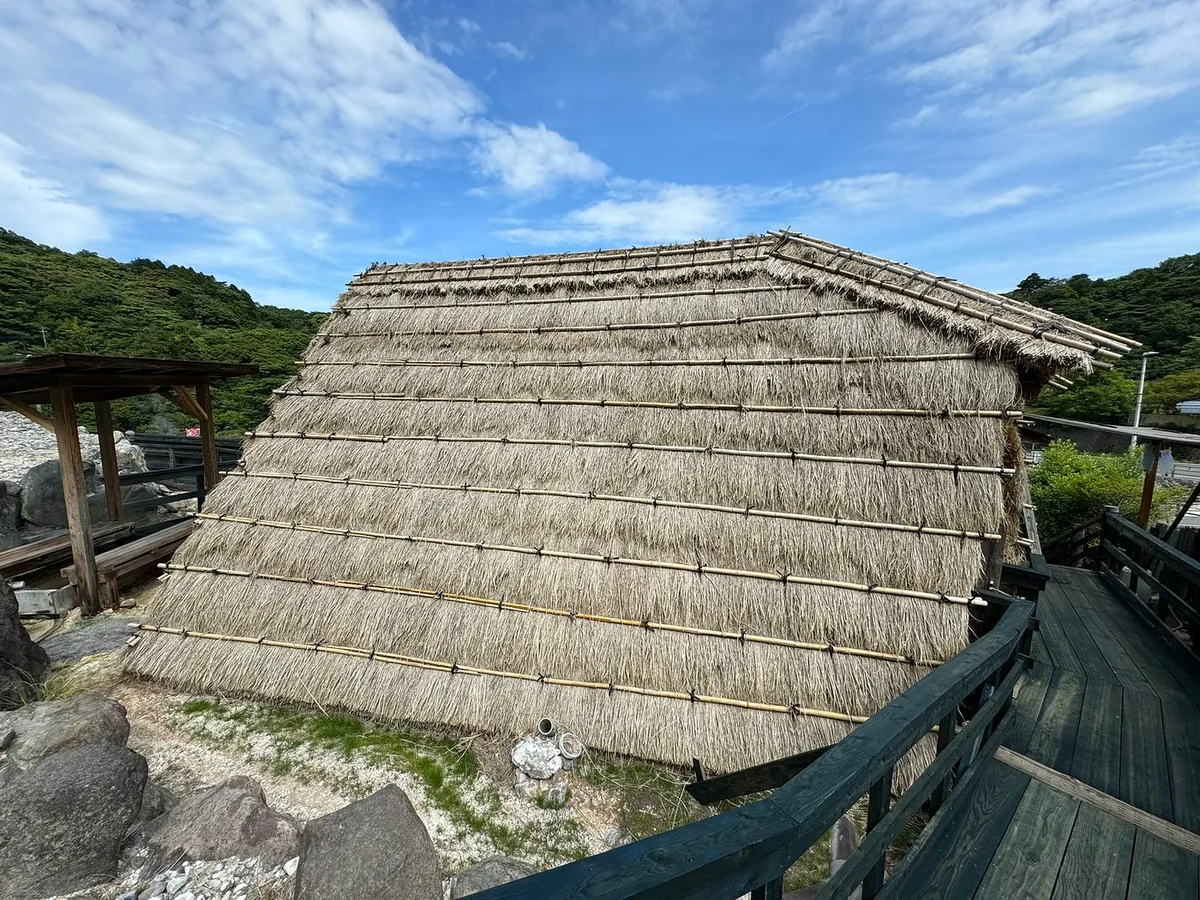
Yunohana Hut is used to dry hot spring water to obtain crystals. If you go up to the Yunohana Shop, they sell this hot spring bath additive.
Yunohana Cottage
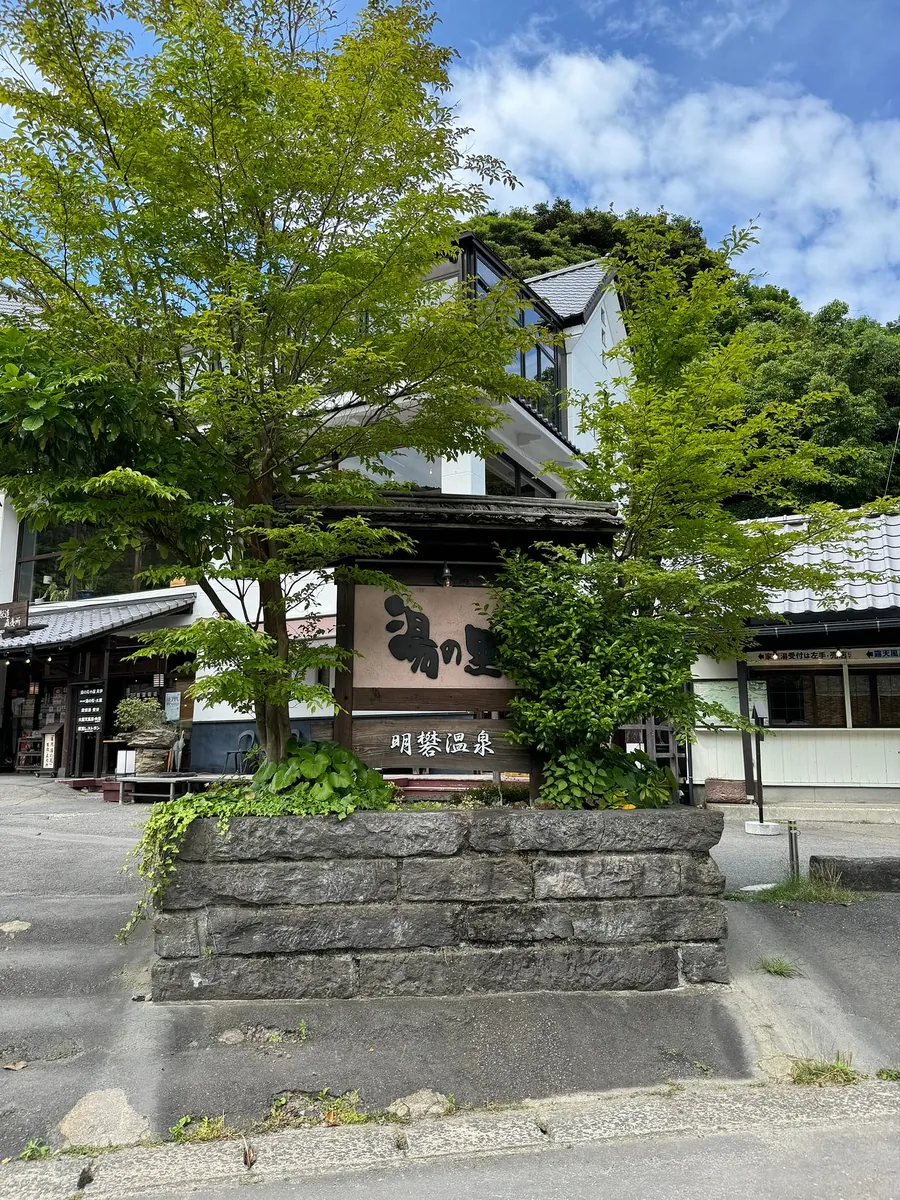
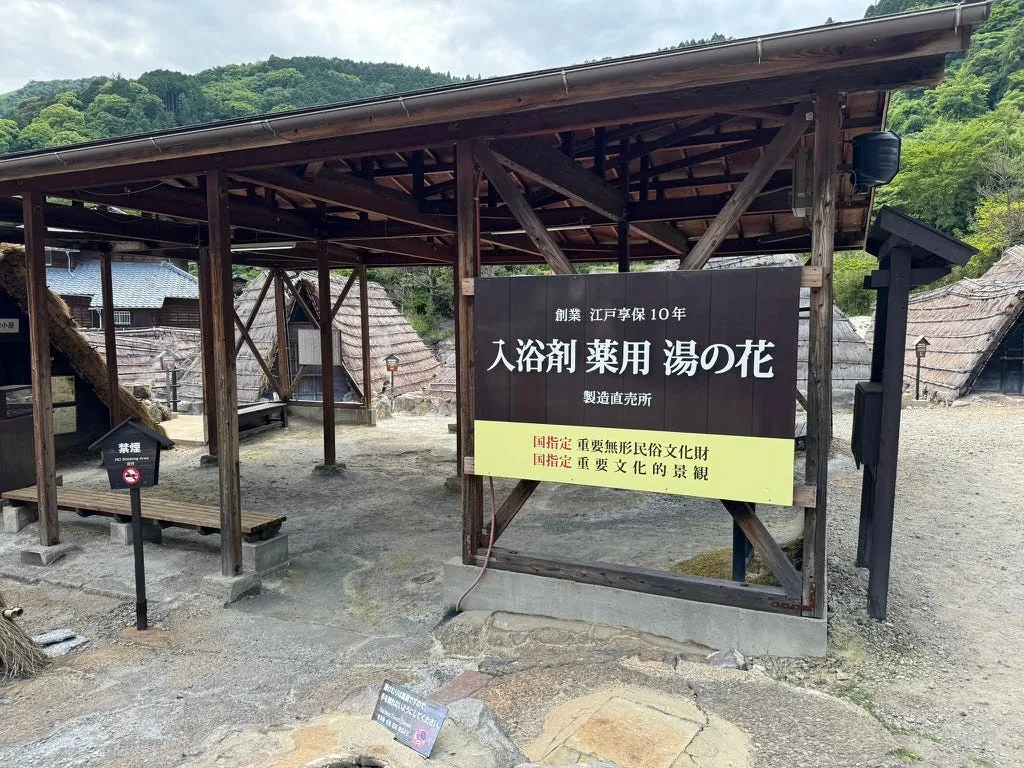
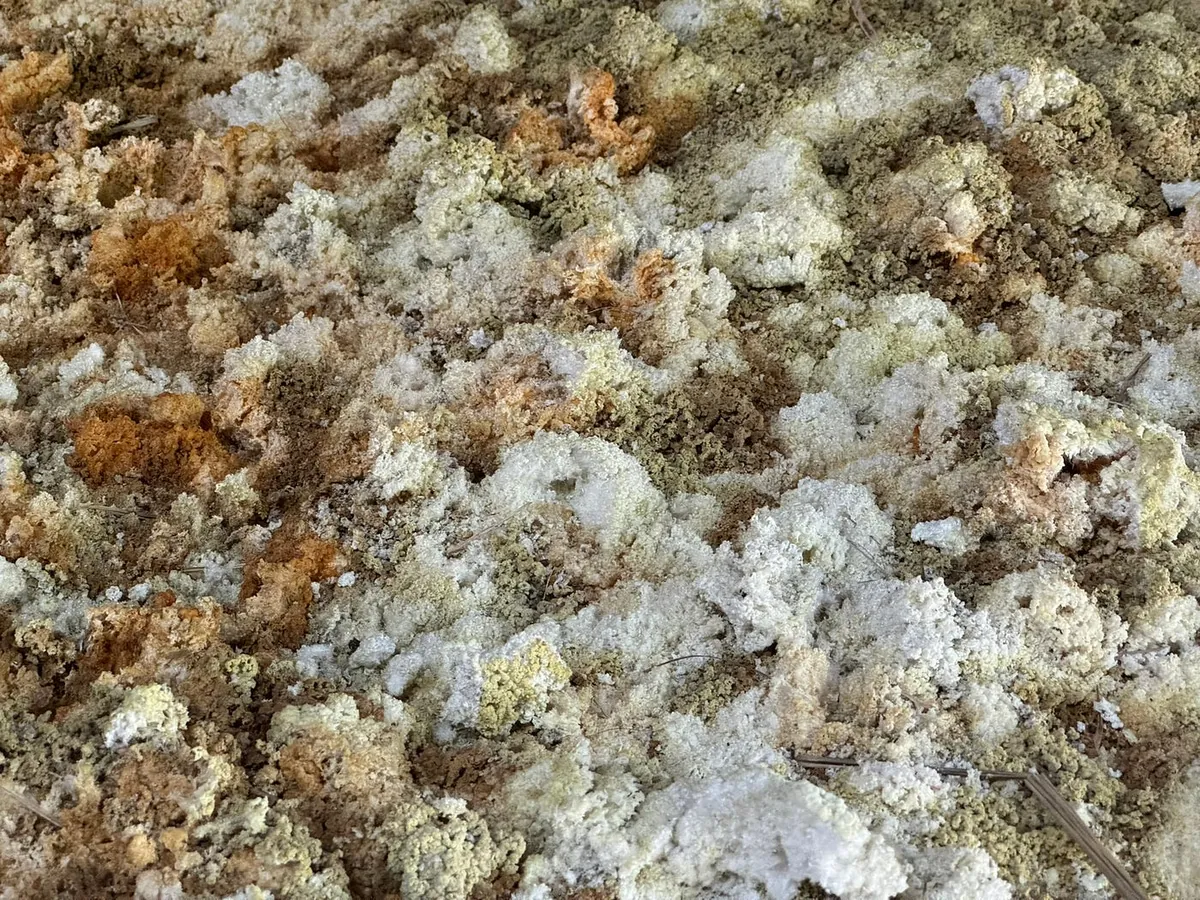
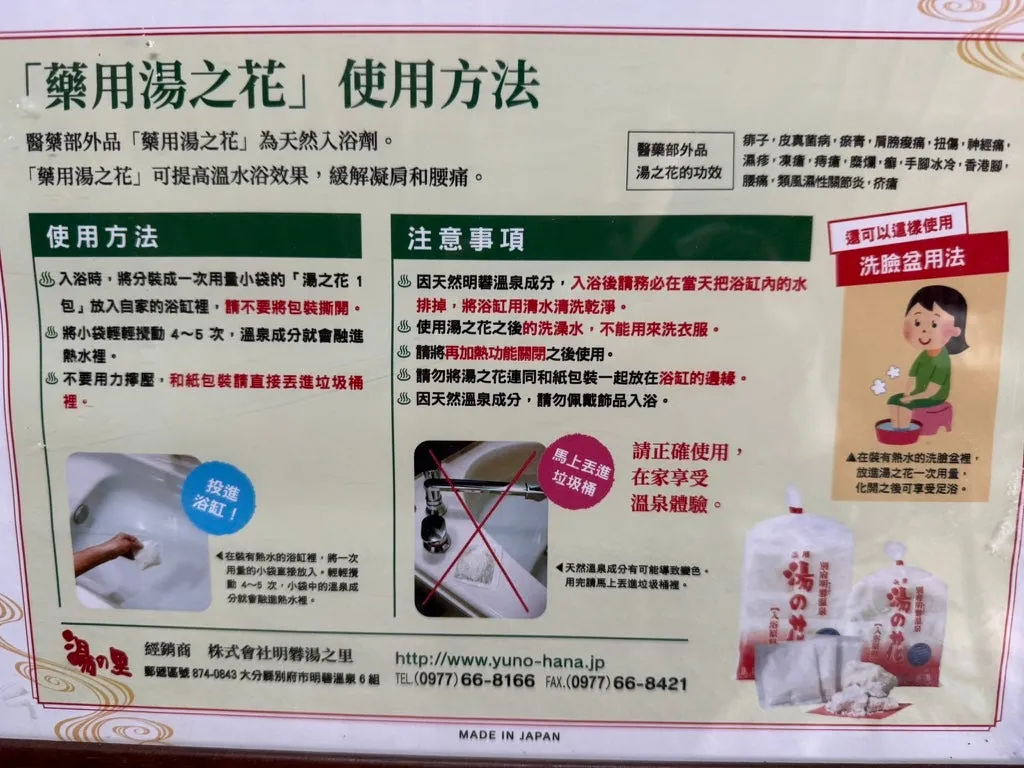
Went to a small shop called Yunohana and bought some bath additives, face masks, and creams as souvenirs.
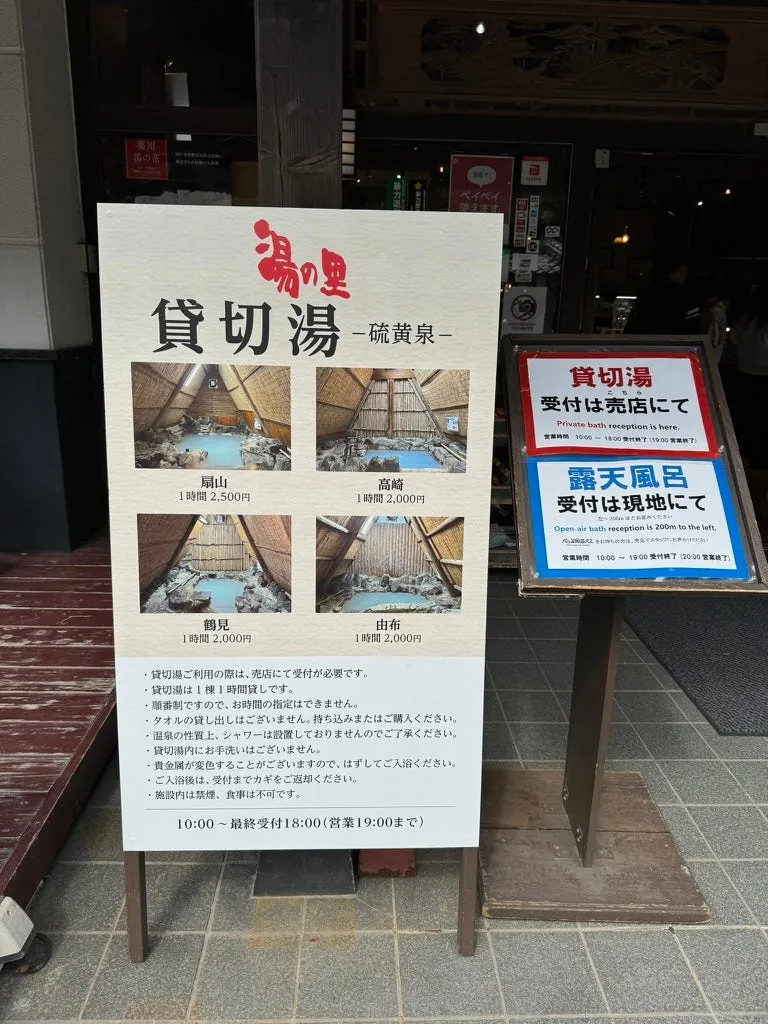
There is also a Private Bath available here. If you feel shy about using public baths, you might consider trying this option.
At around 4:00 PM, it was time to take the bus back to the city.
Beppu
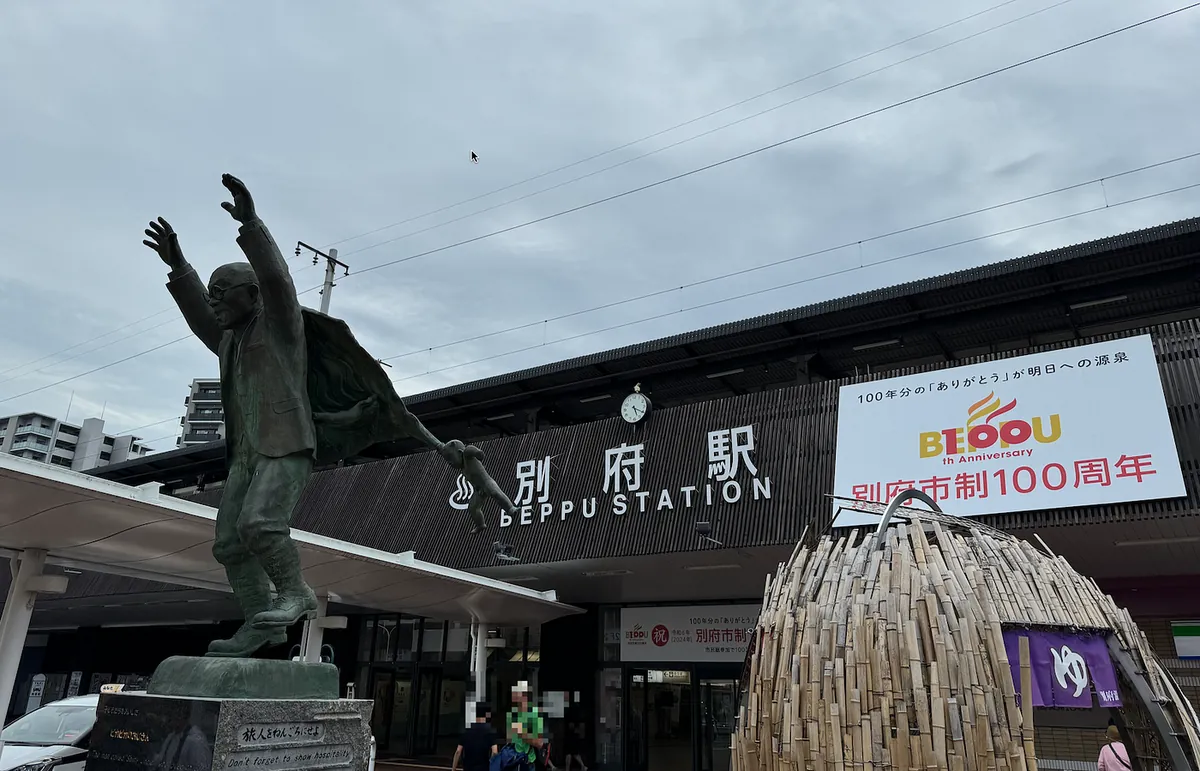
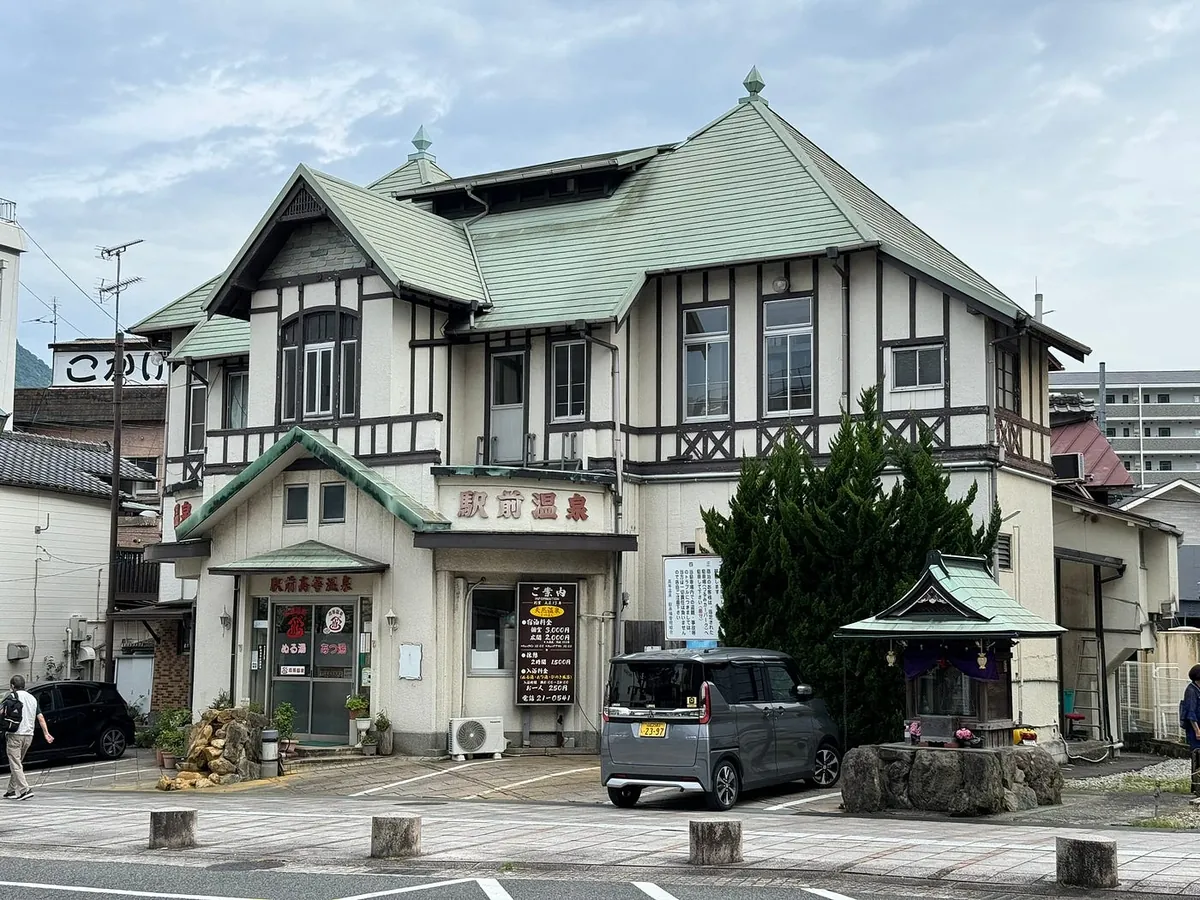
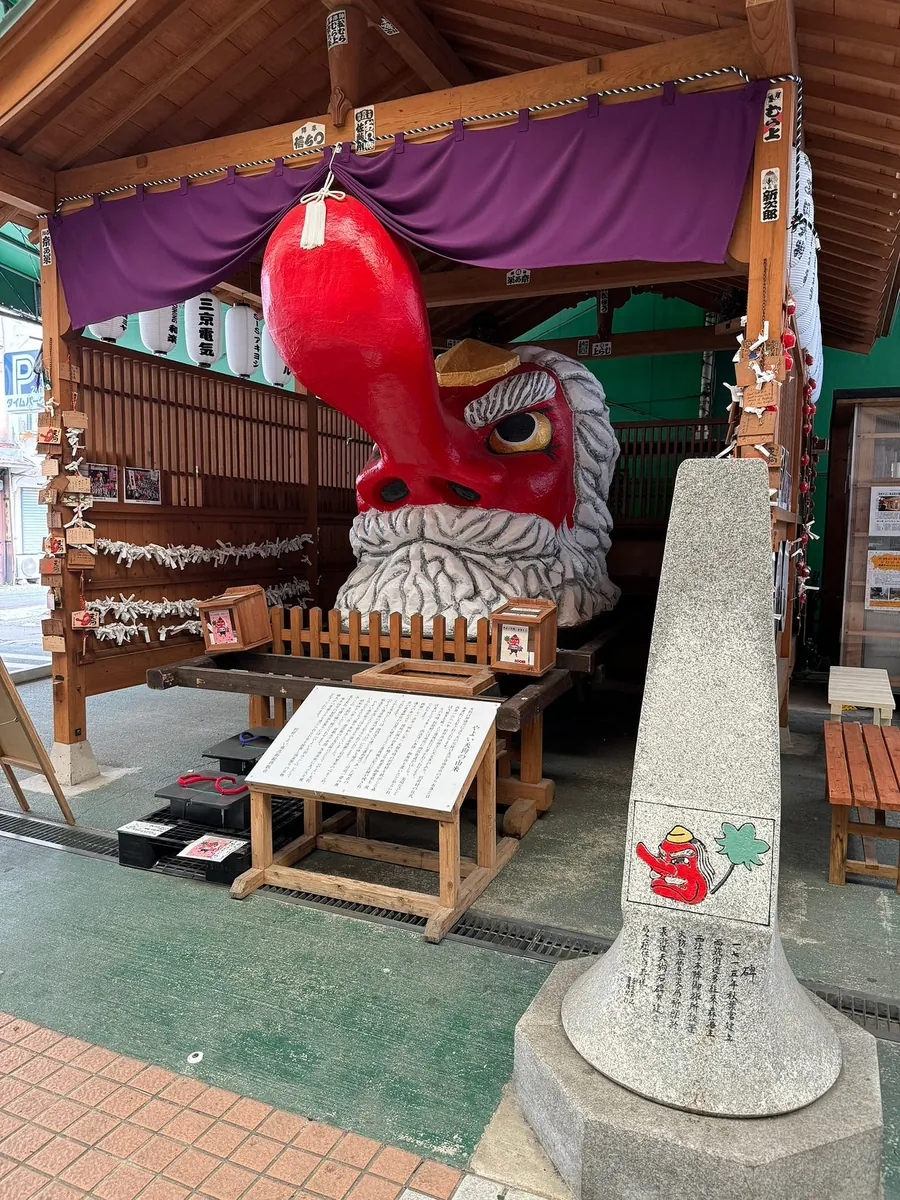
After returning to Beppu Station, I walked to Beppu Tower, casually exploring along the way. (Statue in front of the station, old hot spring hall, Great Tengu)
Beppu Tower
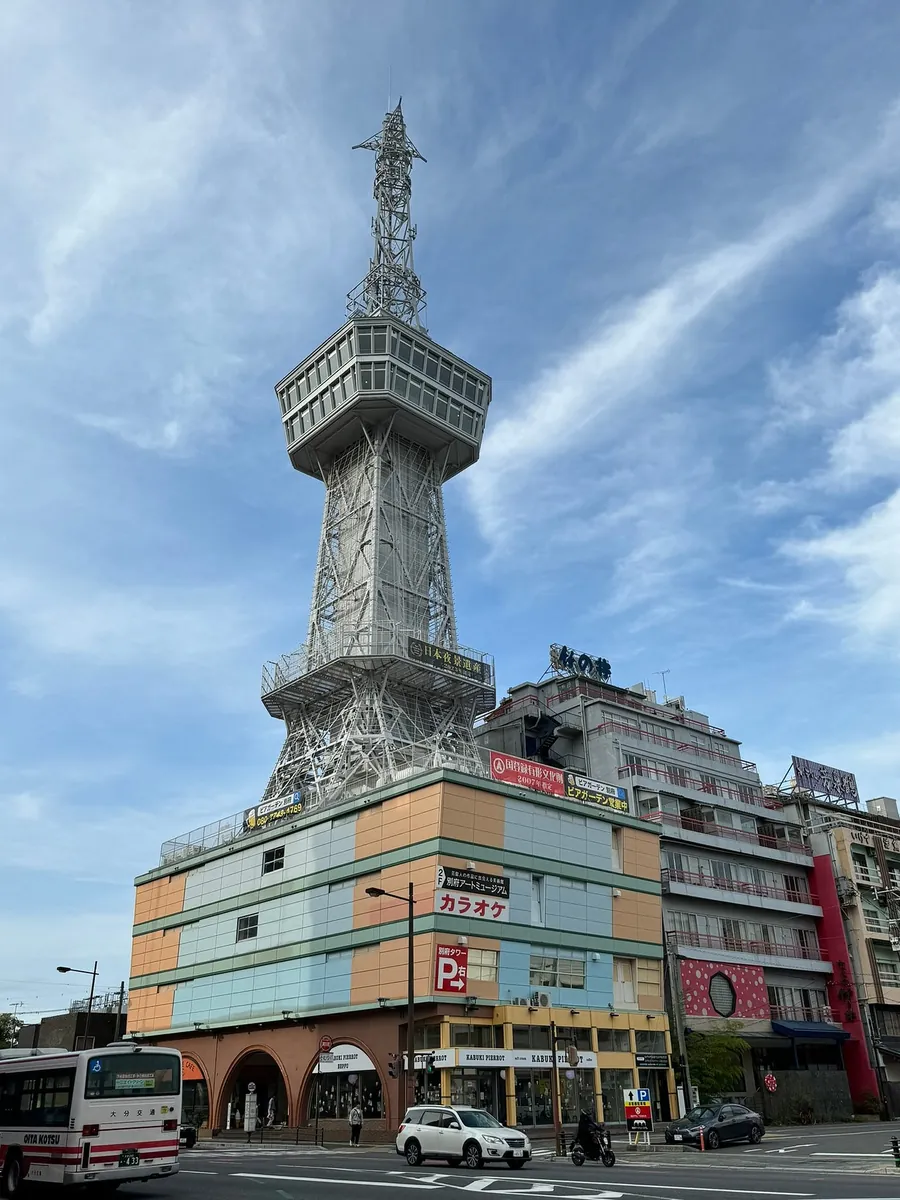
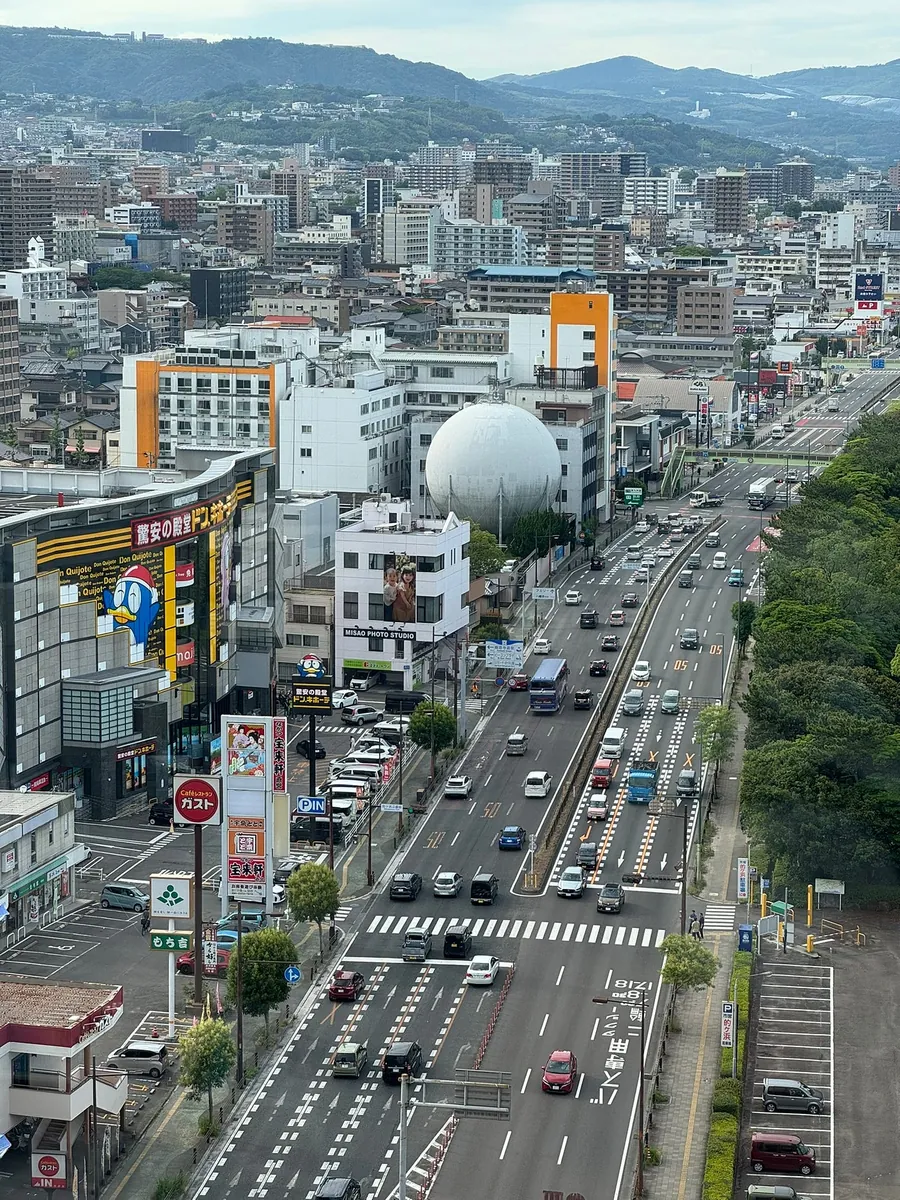
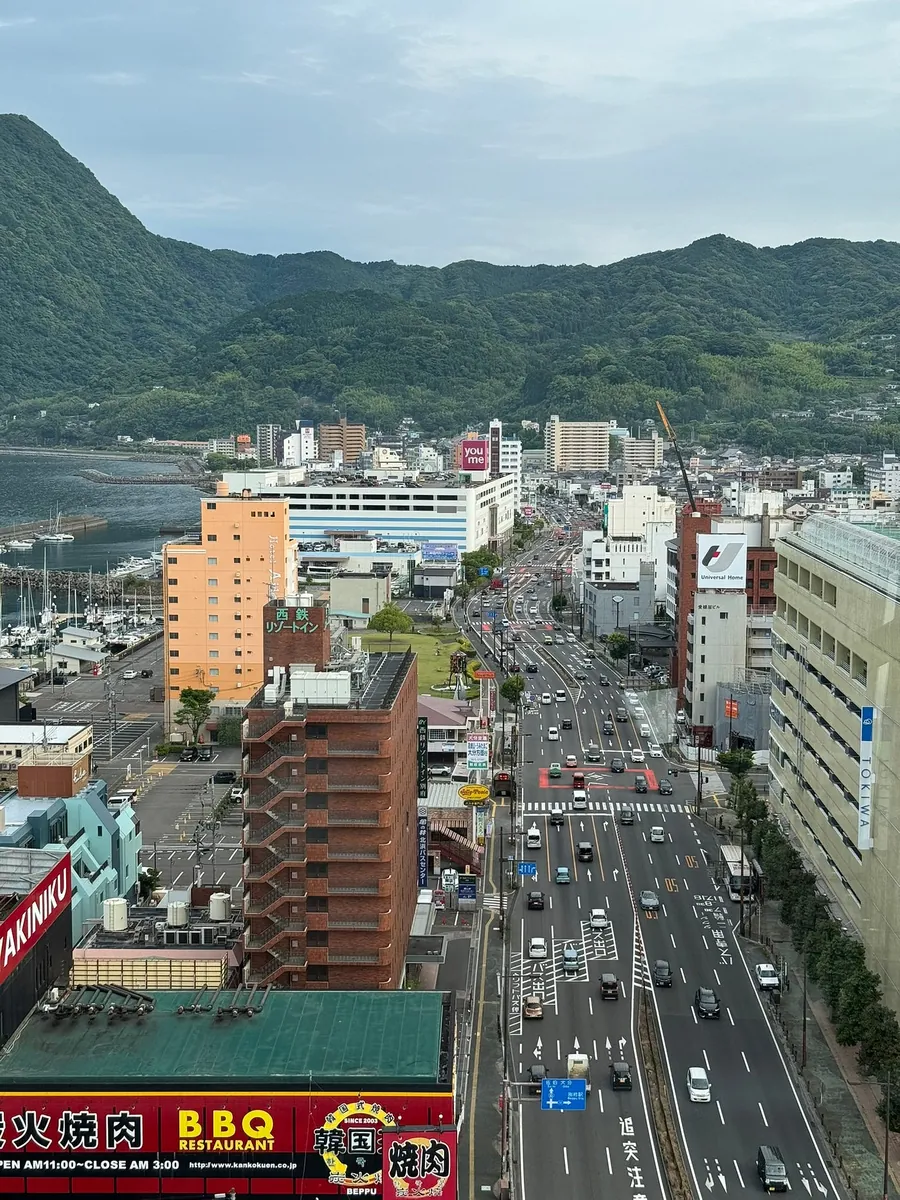
Buy tickets at the vending machine on the first floor of Beppu Tower, take the elevator up, and enjoy a bird’s-eye view of Beppu’s coastal city area.
Looking at the streets and cars from above is very soothing.
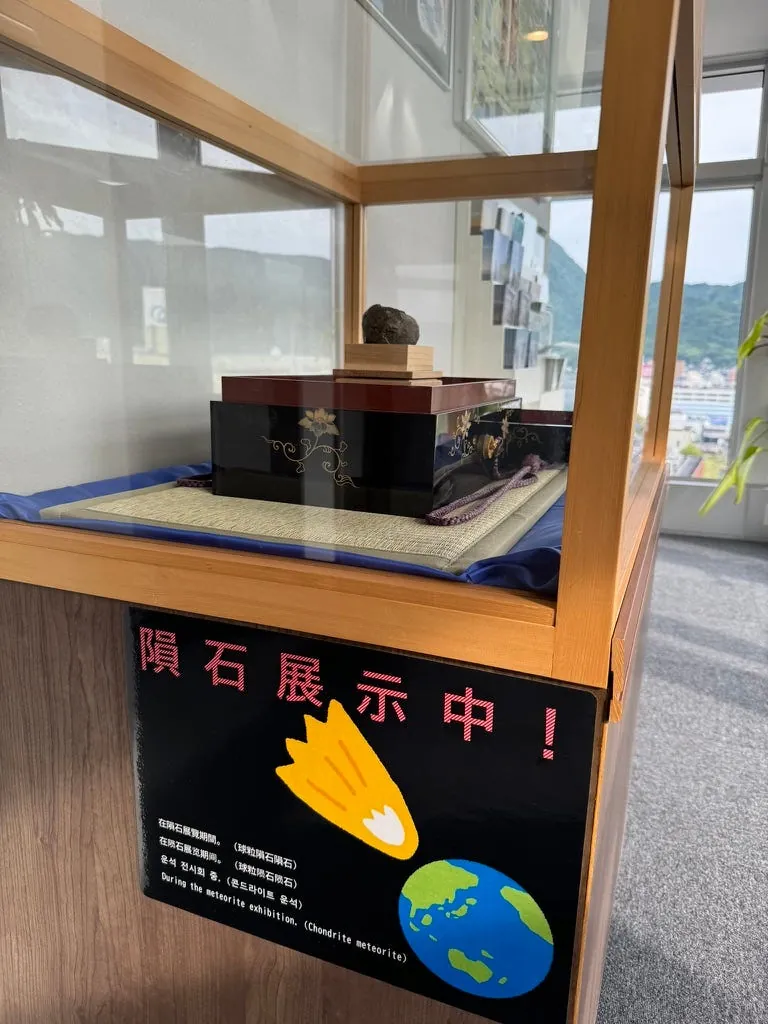
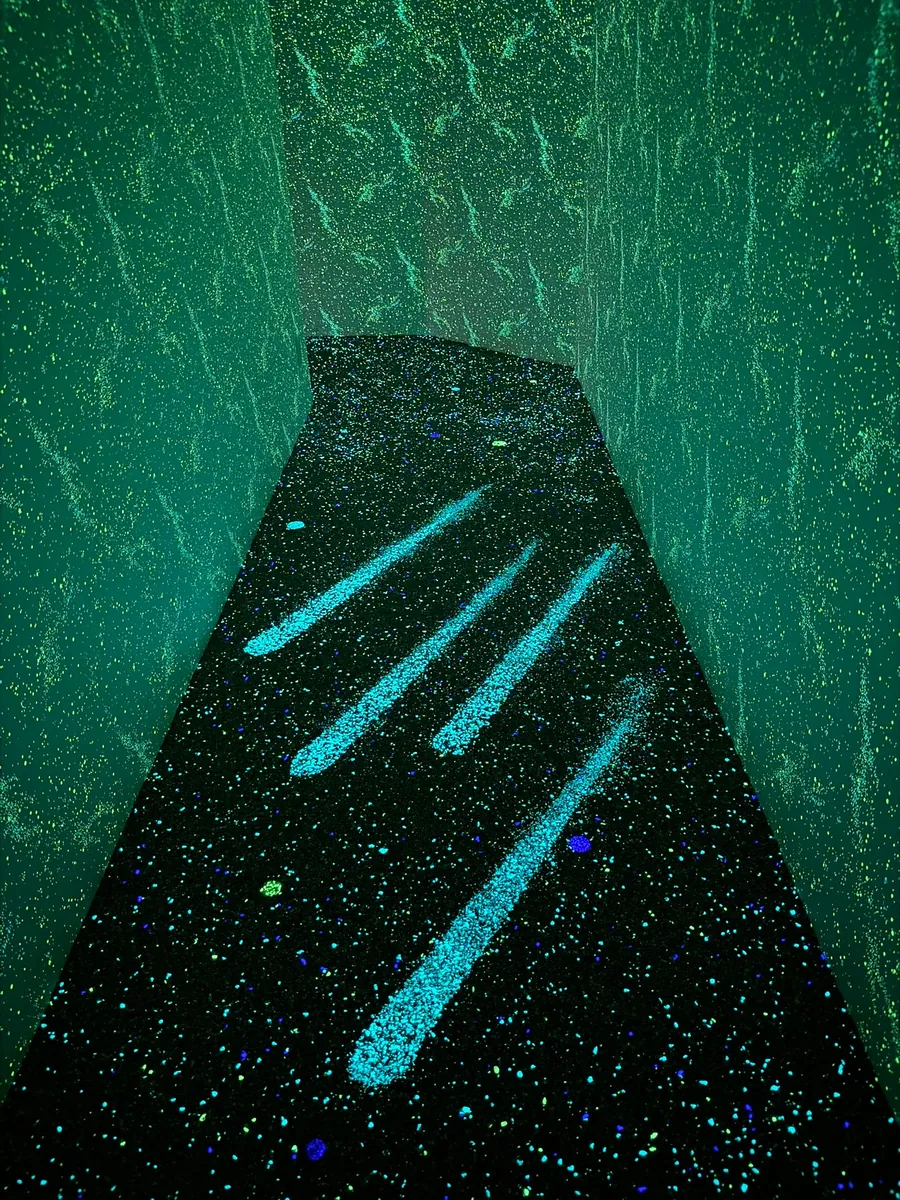
There is a meteorite exhibition inside the tower.
Besides Beppu Tower, you can also visit the cable car or the new Beppu World Tower.
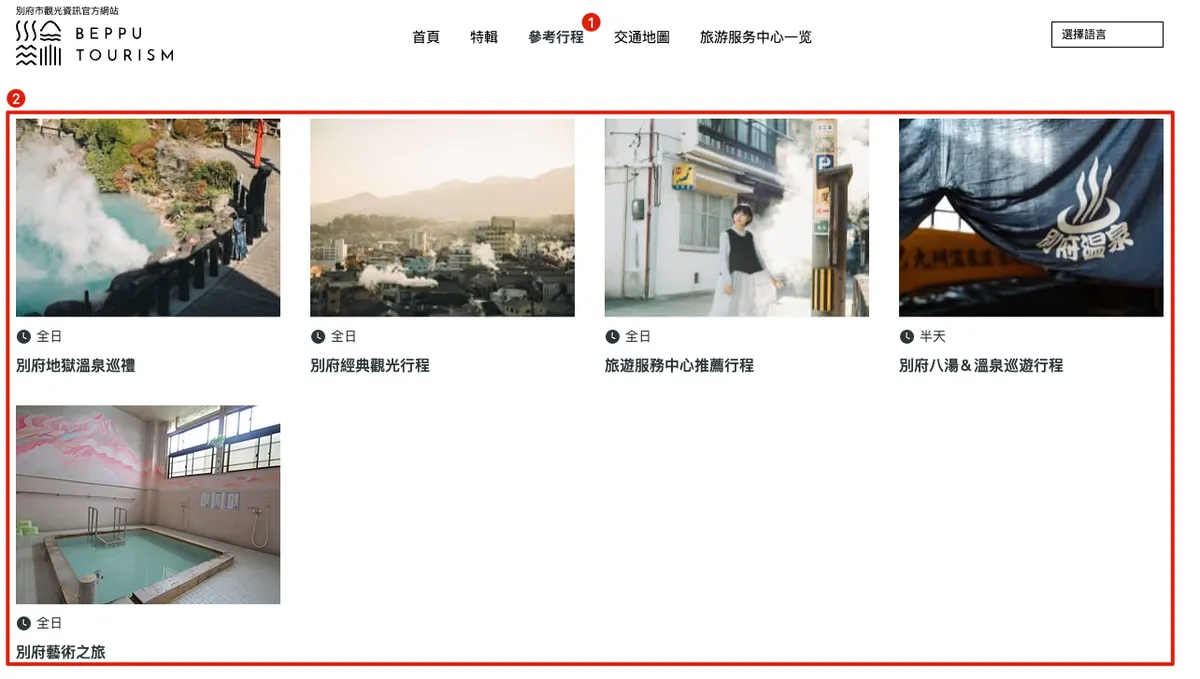
The Beppu Tourism Bureau website also offers other itinerary references :
Head back to the hotel to rest.
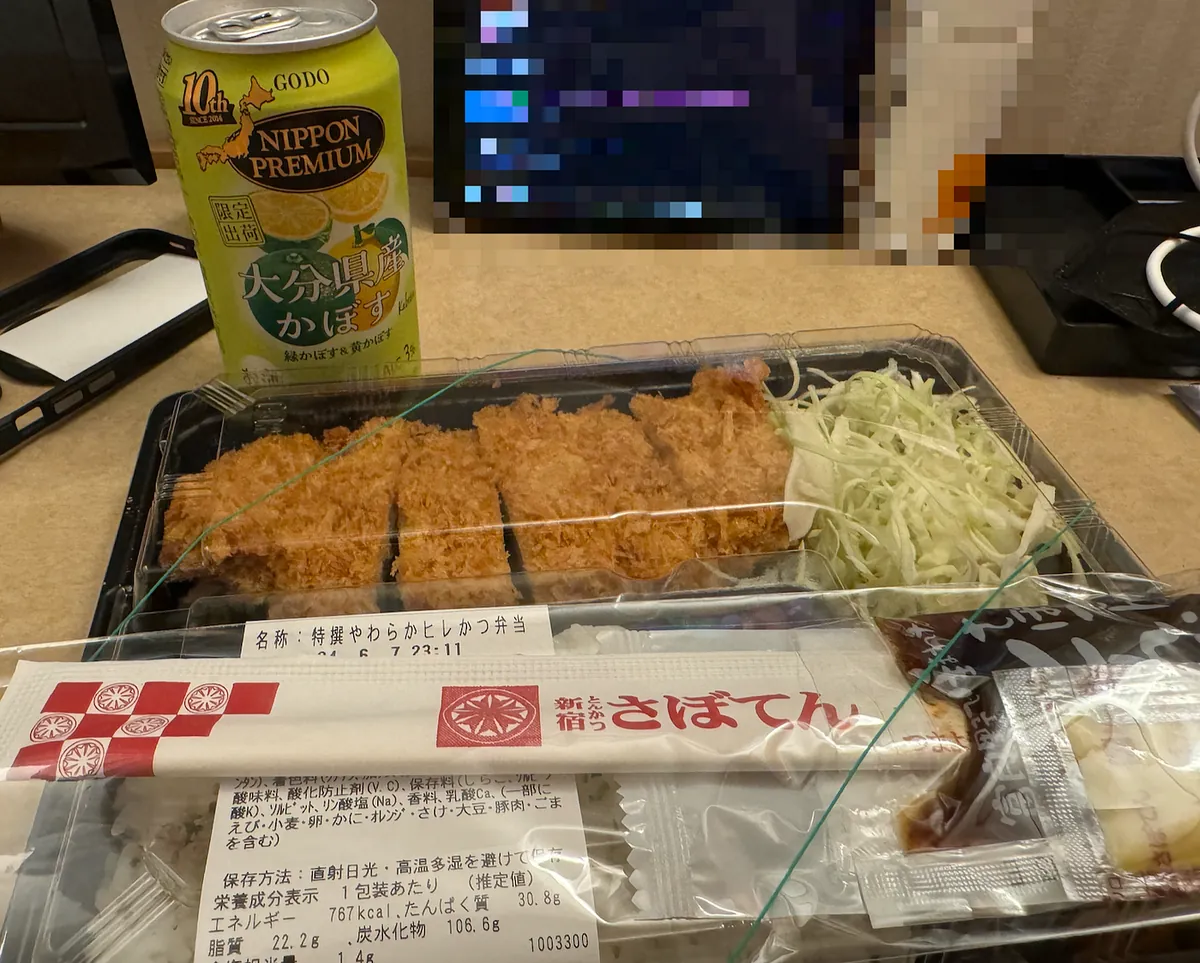
Return to the hotel to rest, then go to Oita Station Market to buy dinner, a pork cutlet bento, and Oita-exclusive fruit wine (tasty, refreshing, not too sweet).
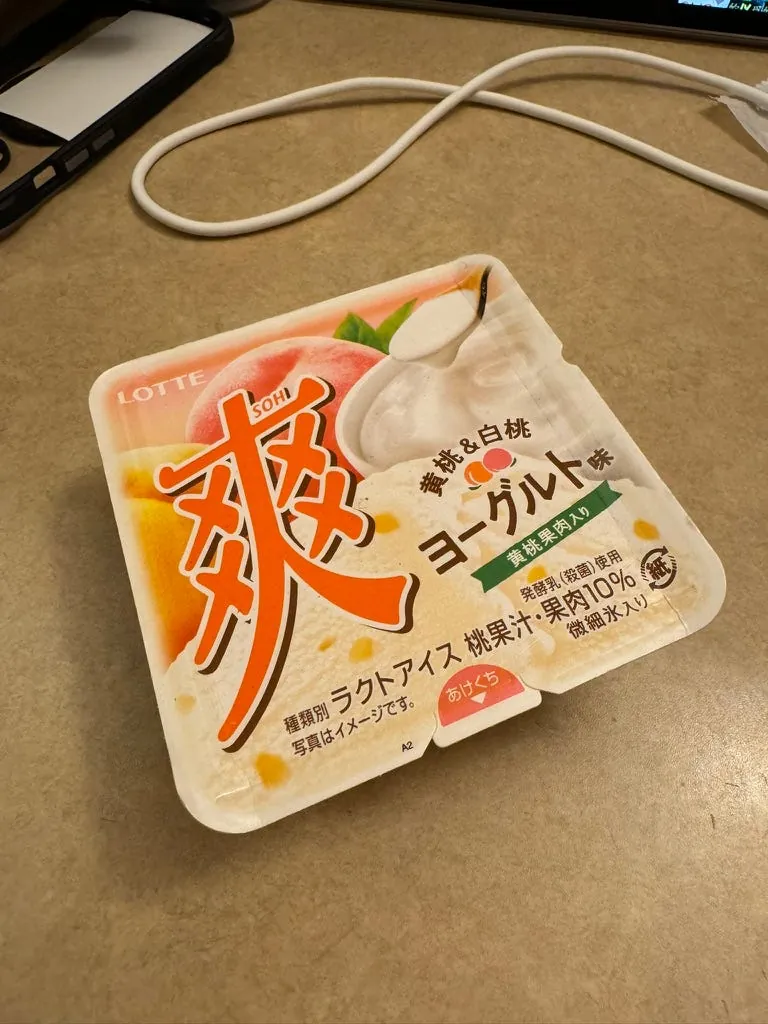
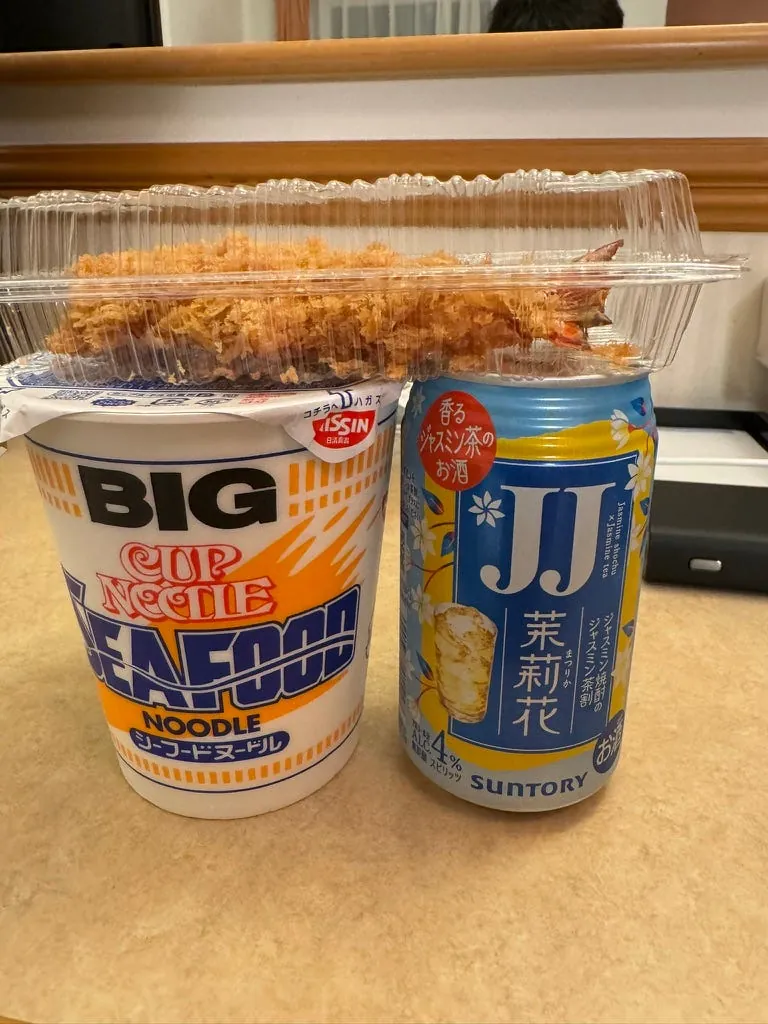
Dessert/late-night snacks were fried shrimp, instant noodles, white peach ice cream, and jasmine flower brûlée (which I don’t like).
Day 6 Shimonoseki, Karatsu
First, from Oita to Kokura, then to Mojiko and Shimonoseki. Shimonoseki and Karatsu are about 140 km apart, and normally people wouldn’t plan a trip like this; since I took the wrong train on the first day in Japan and missed Karatsu, I really wanted to visit this spot, so I forced myself into a march-like one-day trip from Shimonoseki to Karatsu.
Woke up late and took the JR Limited Express from Oita around 8:40 to Kokura. Planned to leave luggage in Kokura before taking a branch line to Mojiko.
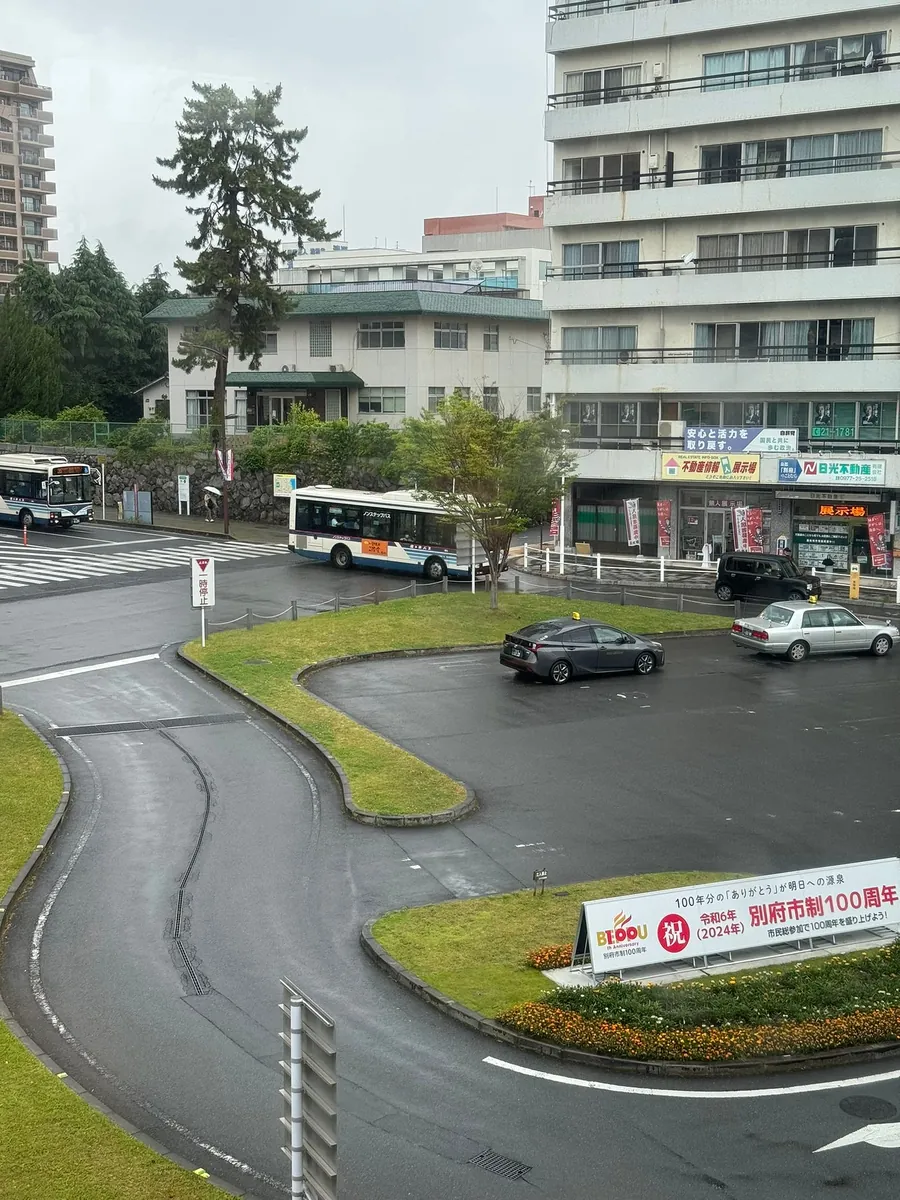
It started drizzling in Oita’s sky. Thinking back, it seems I’ve encountered rain in every city I’ve visited. (Definitely the Rain God)
Arrived at Kokura Station around 10 AM and wandered for a long time. All the self-service luggage lockers were full (a friend said there were spots at 9 AM). The staffed counter for luggage storage opens at 11 AM, so I had to carry my luggage and head straight to Mojiko to look for options.
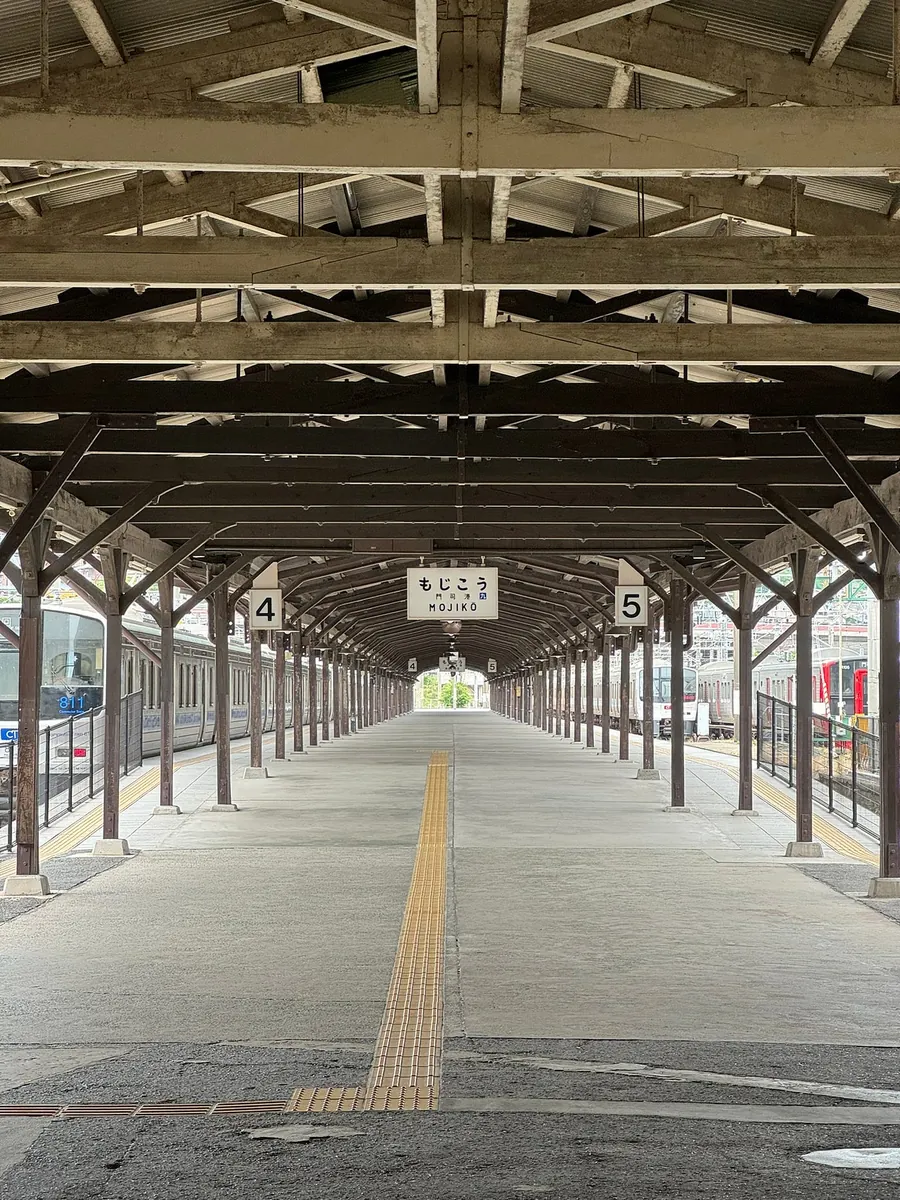
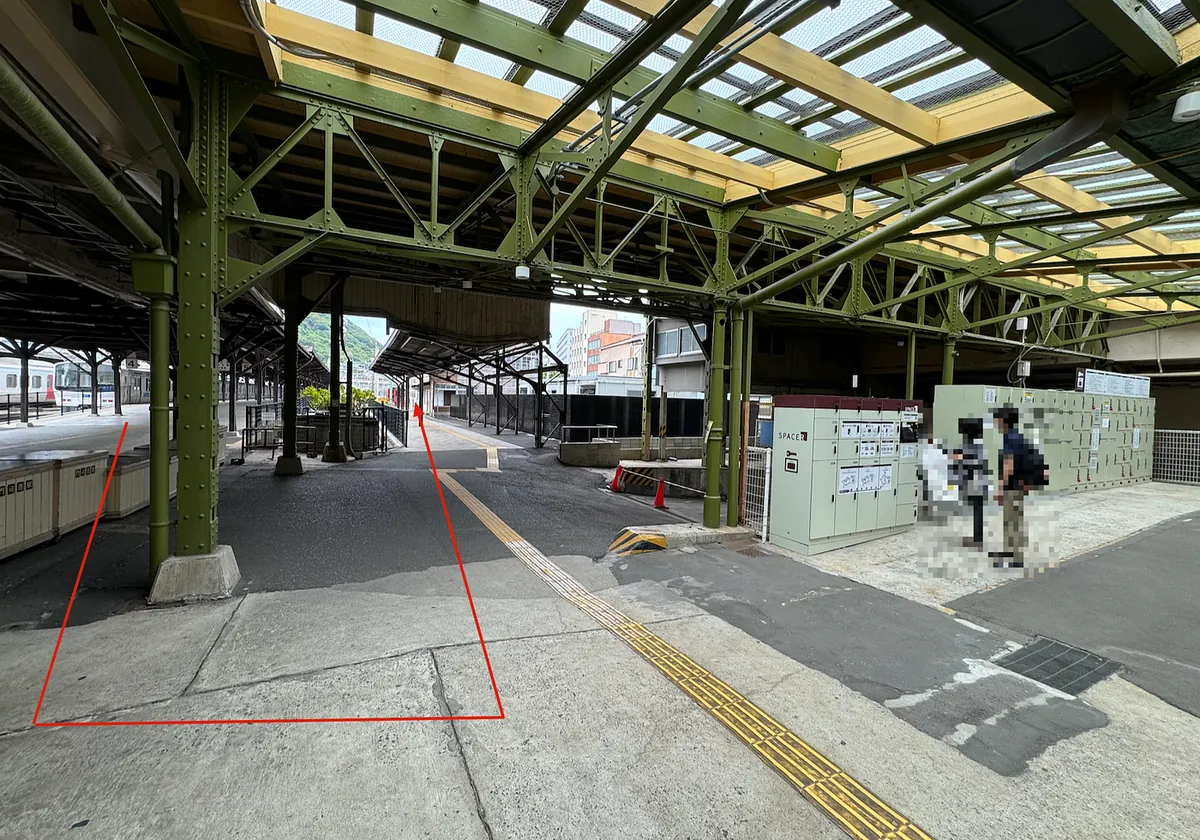
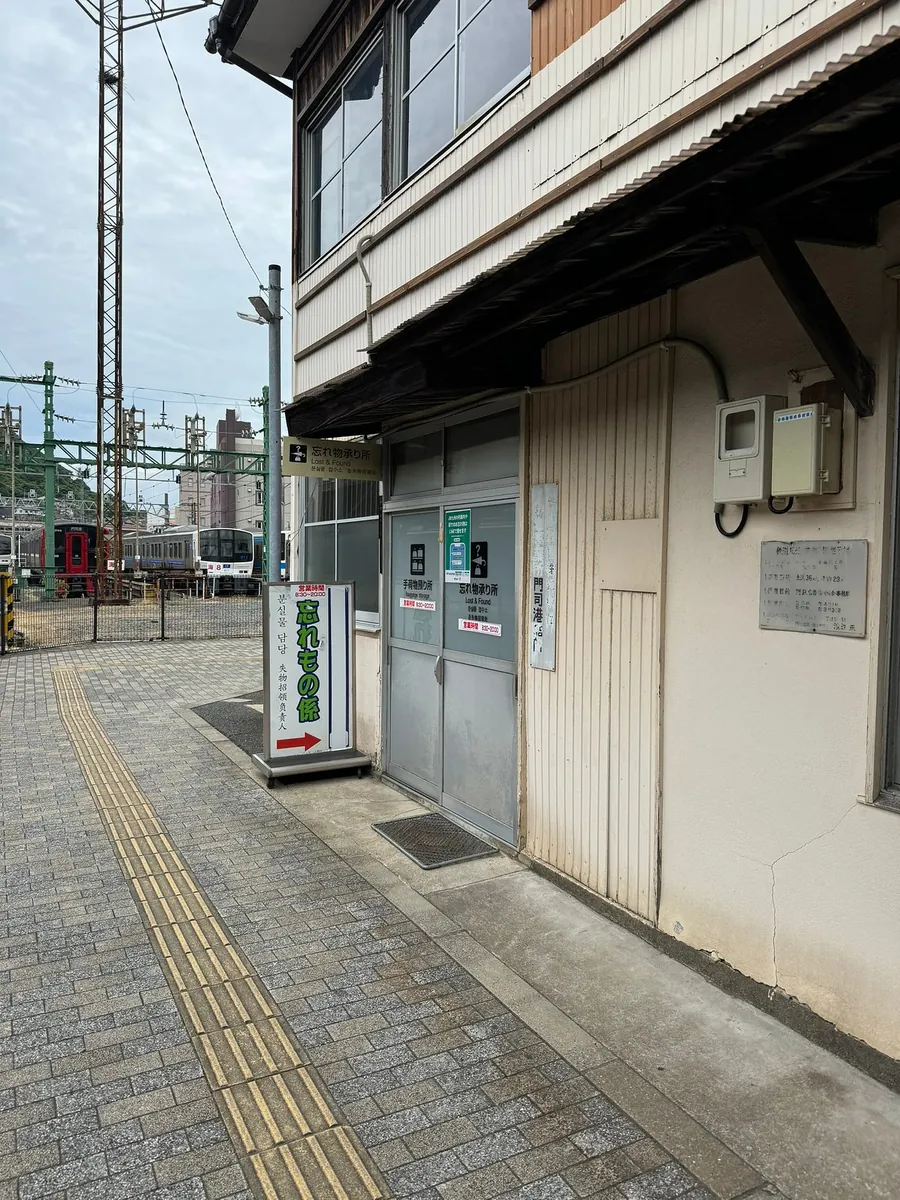
After exiting Mojiko Station, turn directly to the left (no need to leave the building) to find the self-service Coin Lockers. There were quite a few people in Mojiko this time, and all lockers were full; however, fortunately, the manned luggage storage counter had started operating, allowing me to store my luggage successfully (but the manned counter only operates until 8 PM! ⚠️).
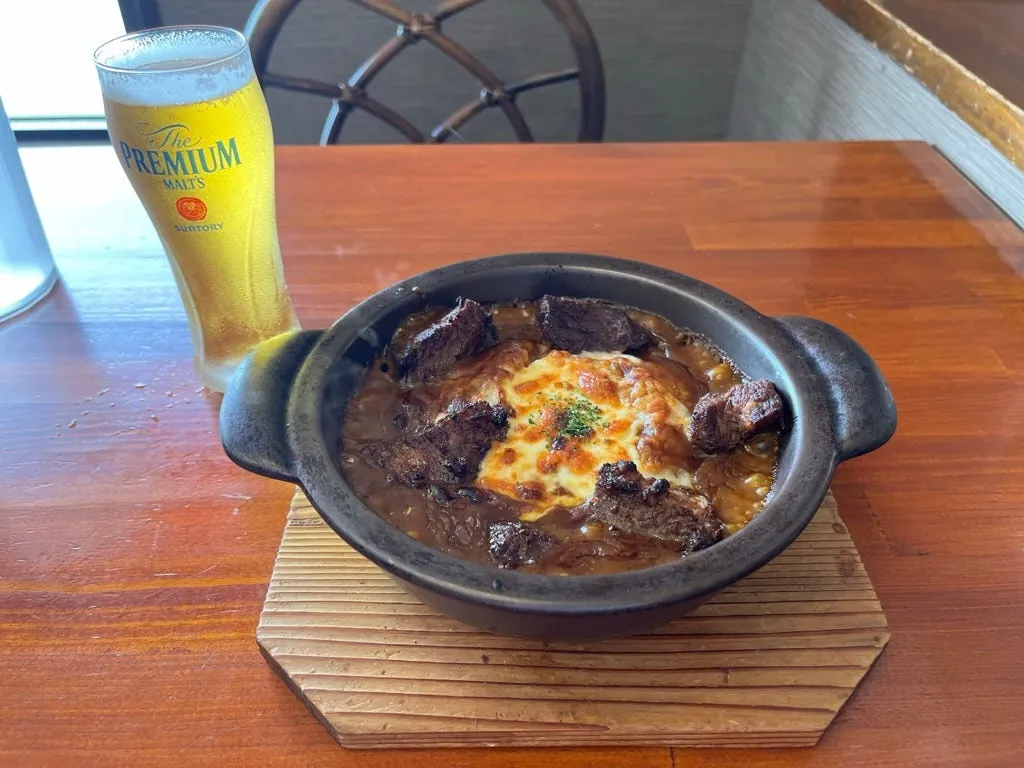
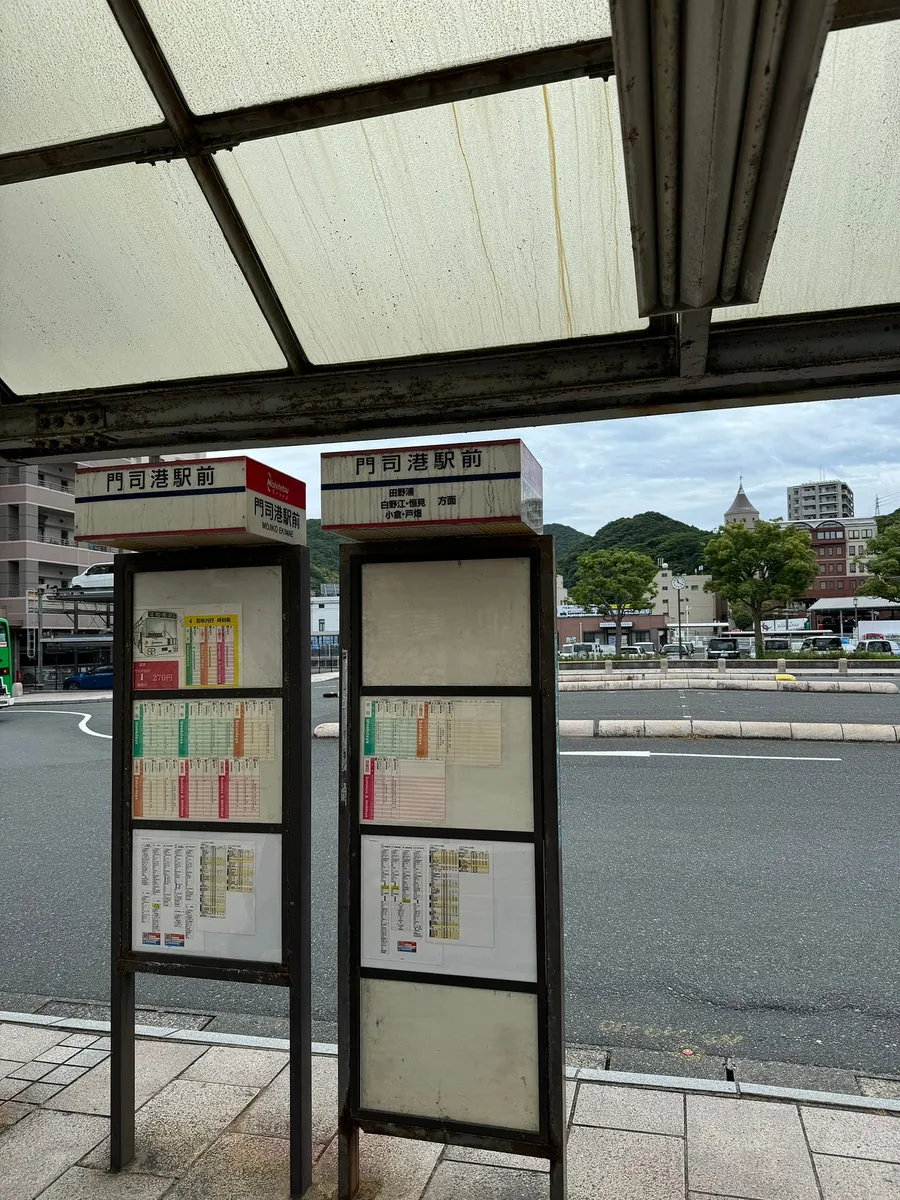
I originally planned to eat Moji Curry-yaki, which had no lines last year and was easy to enjoy, but when I got out of the station, I saw a long queue and gave up. I turned right to the Mojiko Bus Station to wait for the bus to Shimonoseki Port.
Shimonoseki
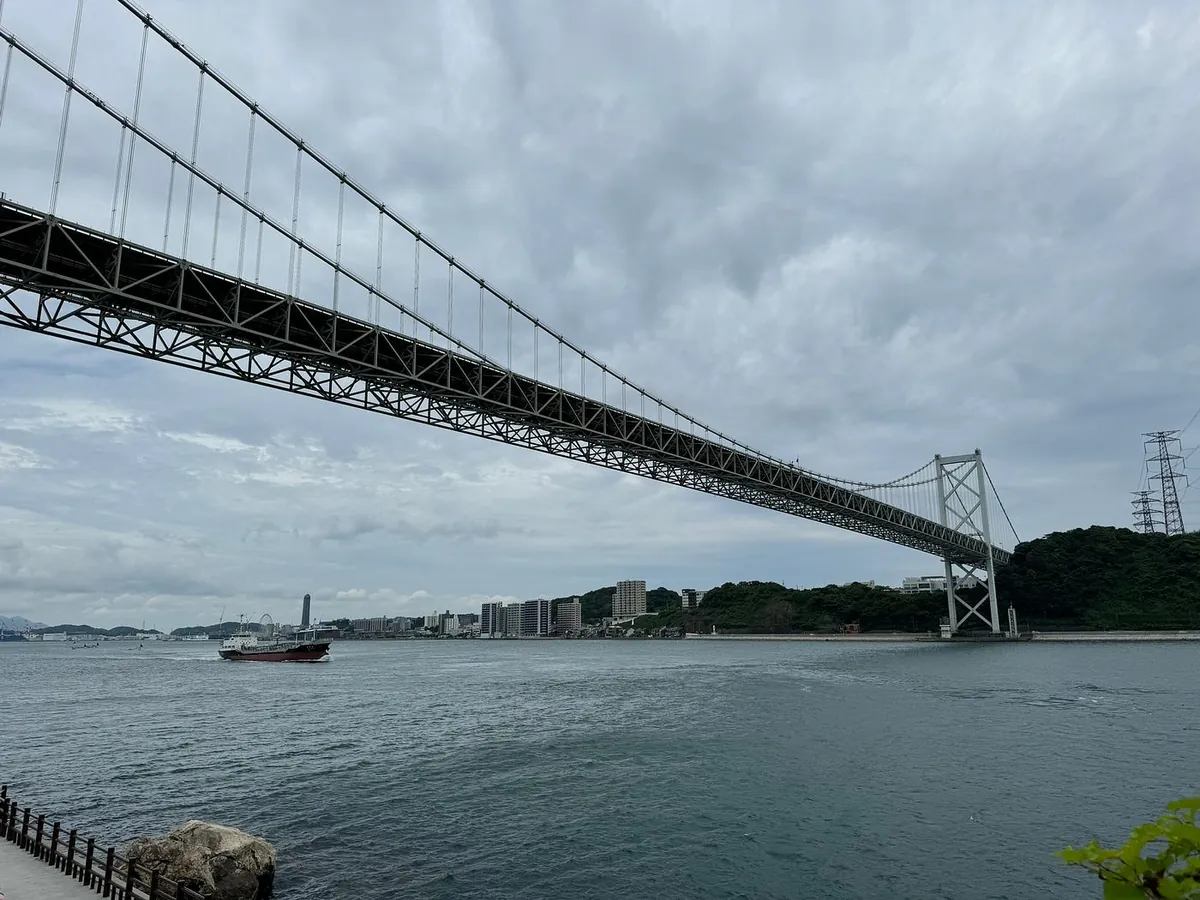
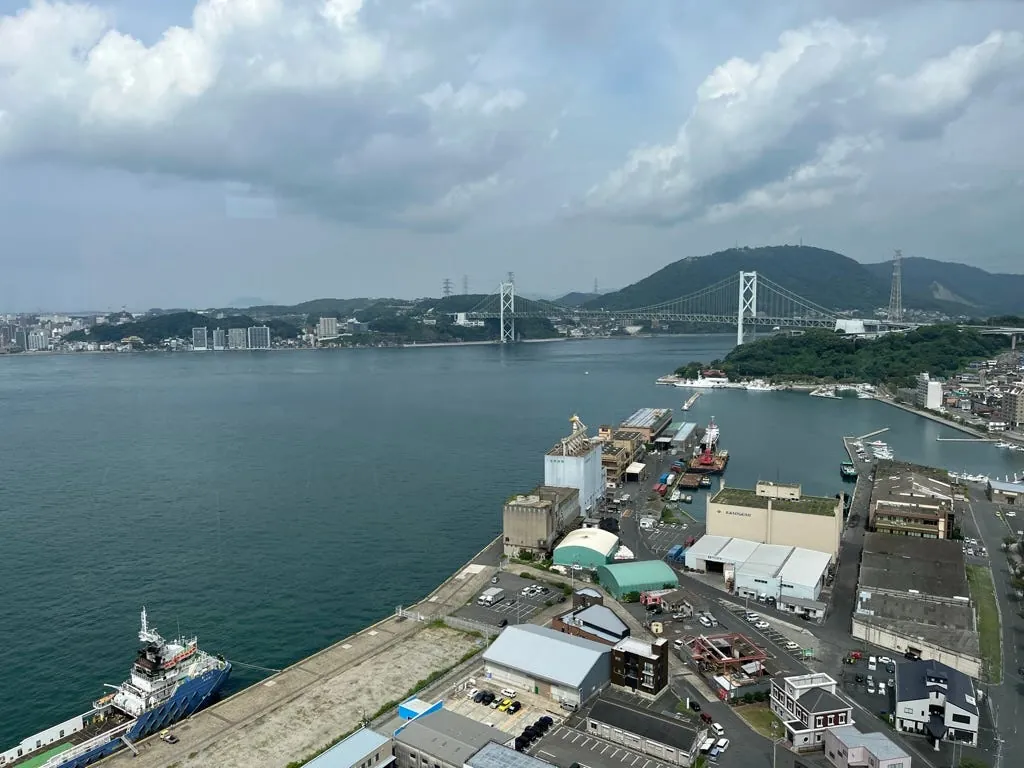
Get off at the underground pedestrian passage in Shimonoseki Port. This time, view the Kanmon Bridge from a different angle. The right side of the photo shows the view from last year at the Mojiko Retro Observation Room (/posts/travel-journals/kyushu-10-day-solo-travel-guide-explore-fukuoka-nagasaki-kumamoto-efficiently-d78e0b15a08a/).
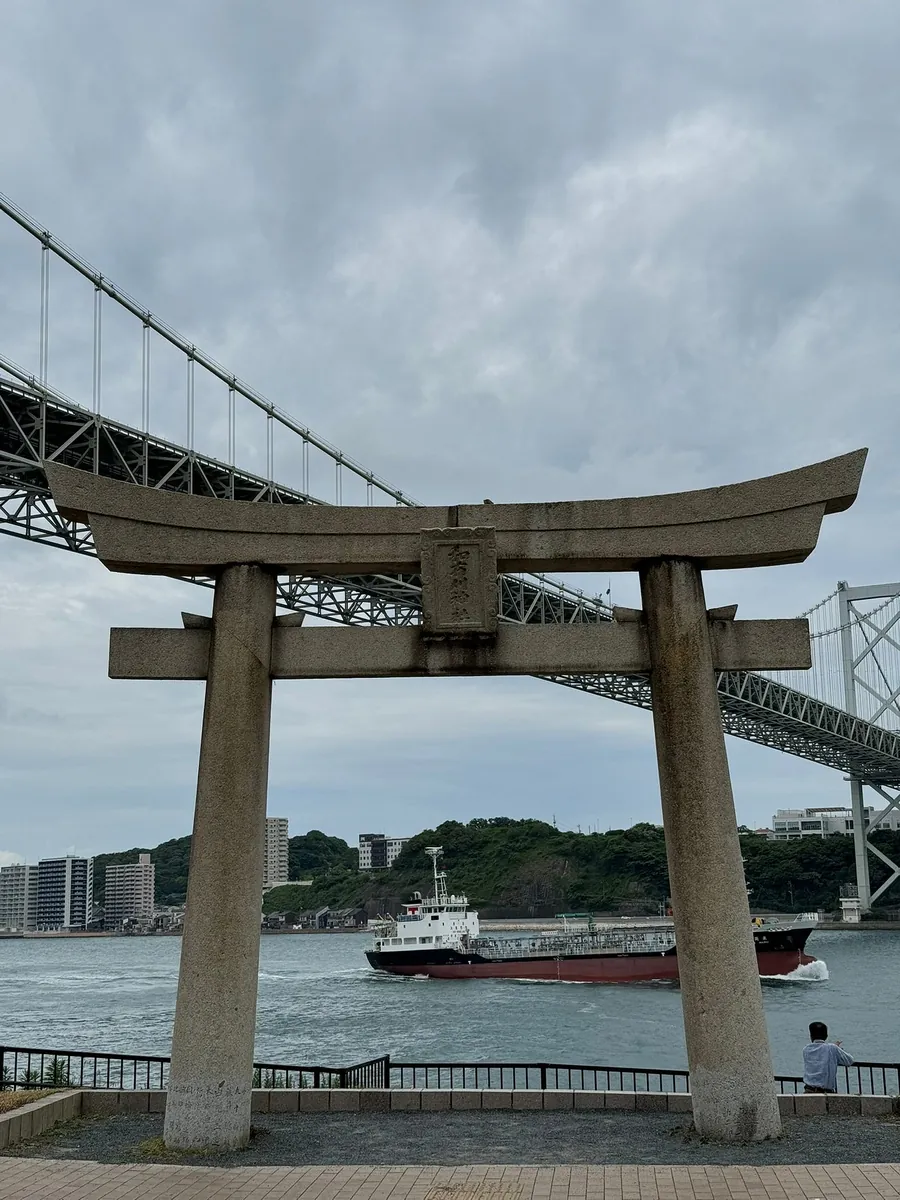
Here is the Wakamatsu Shrine torii gate, and on the mountain behind it are Wakamatsu Shrine and the Wakamatsu Shrine Observation Deck.
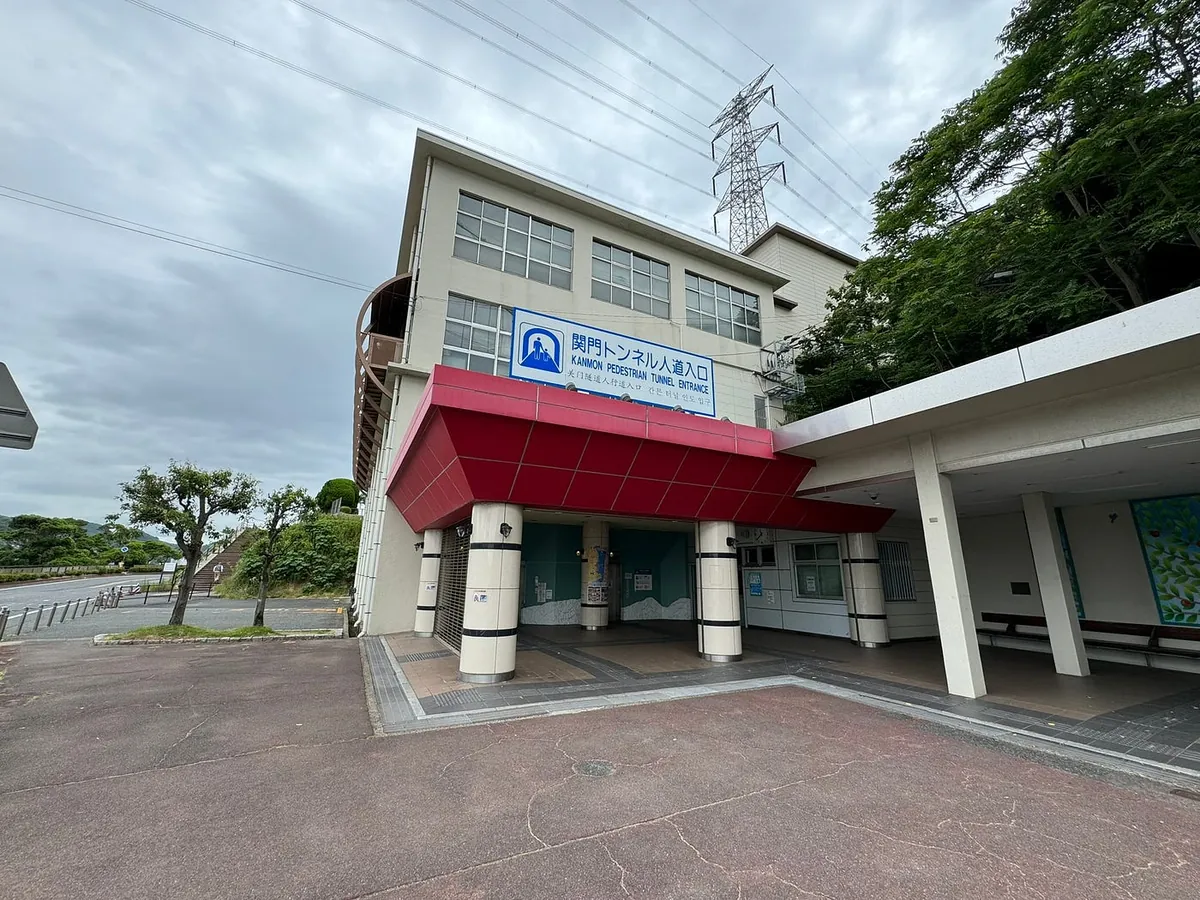
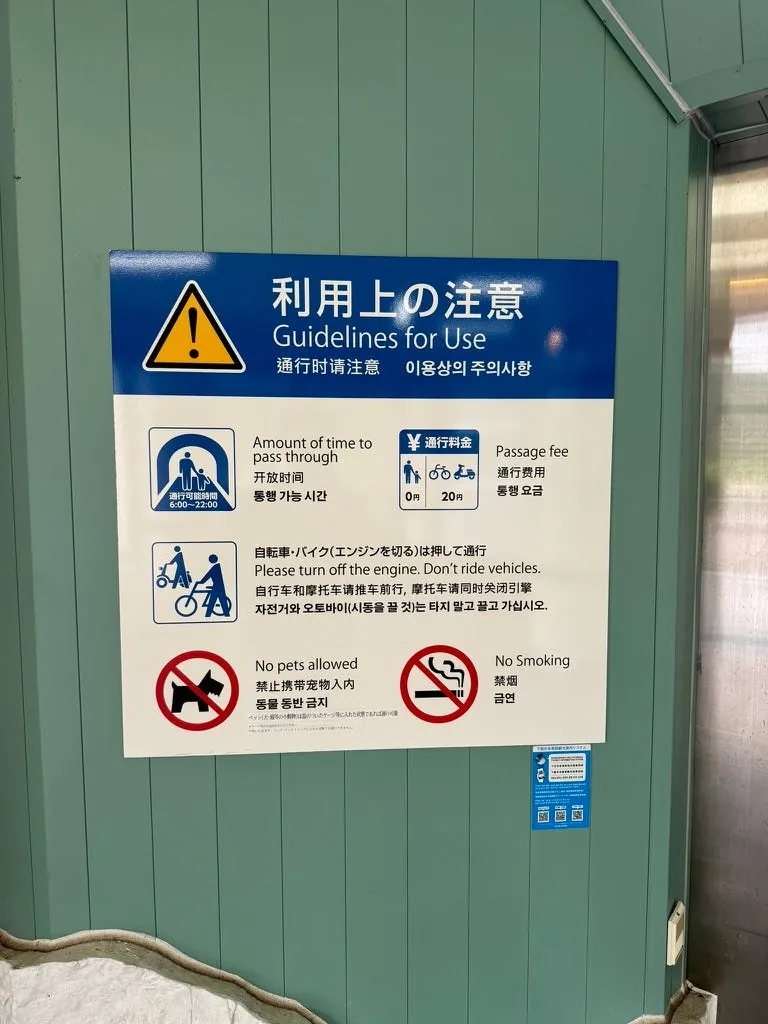
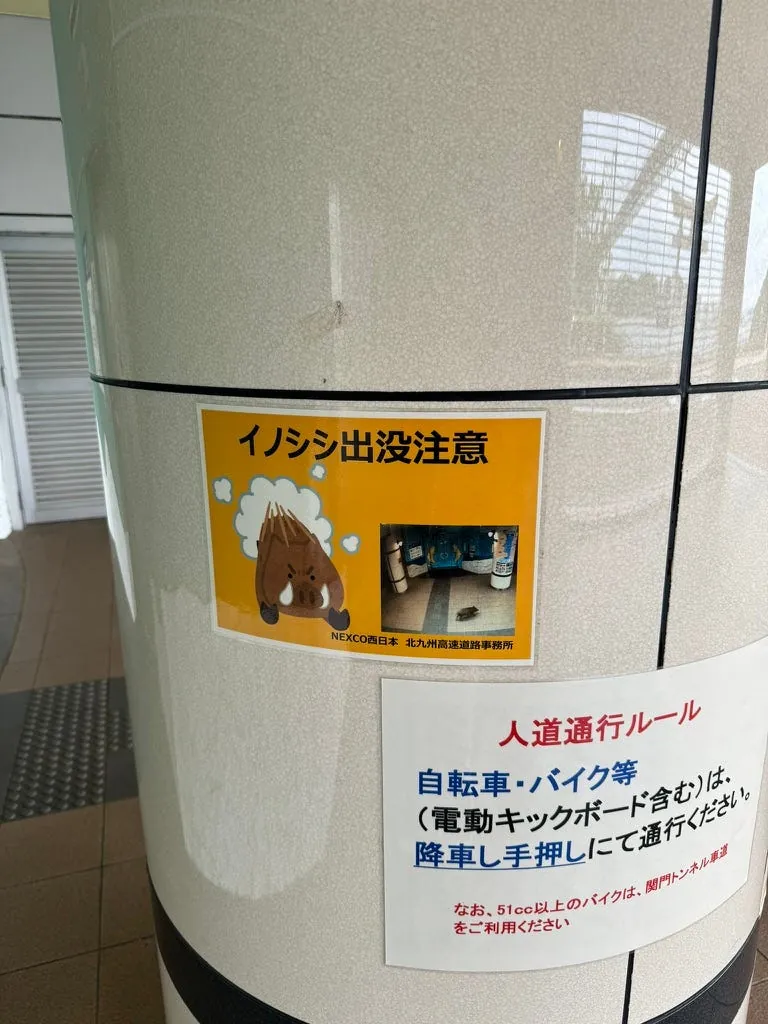
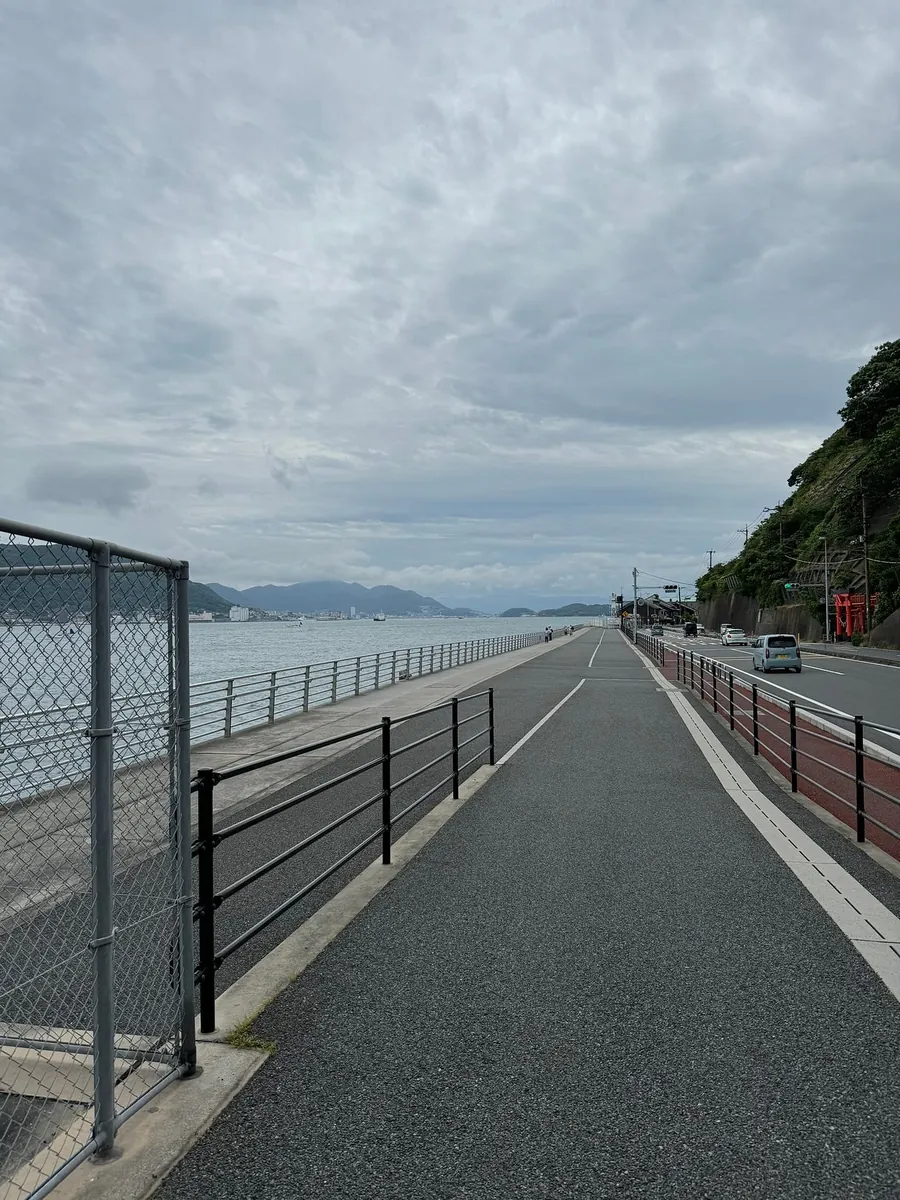
Take the elevator from the sidewalk entrance down to B1 to reach the pedestrian zone. Pedestrians enter for free, but bicycles must pay a 20 yen crossing fee. Also, watch out for wild boars in this area XD
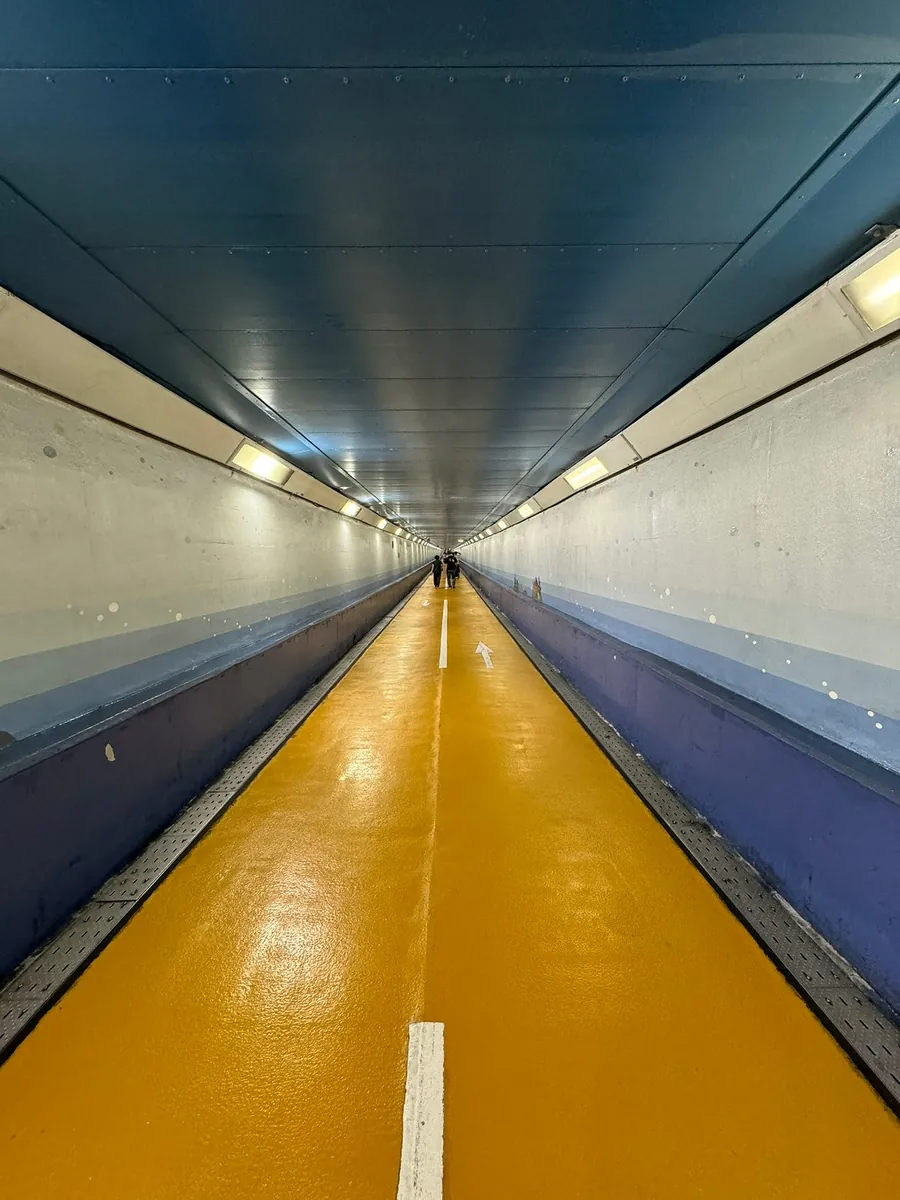
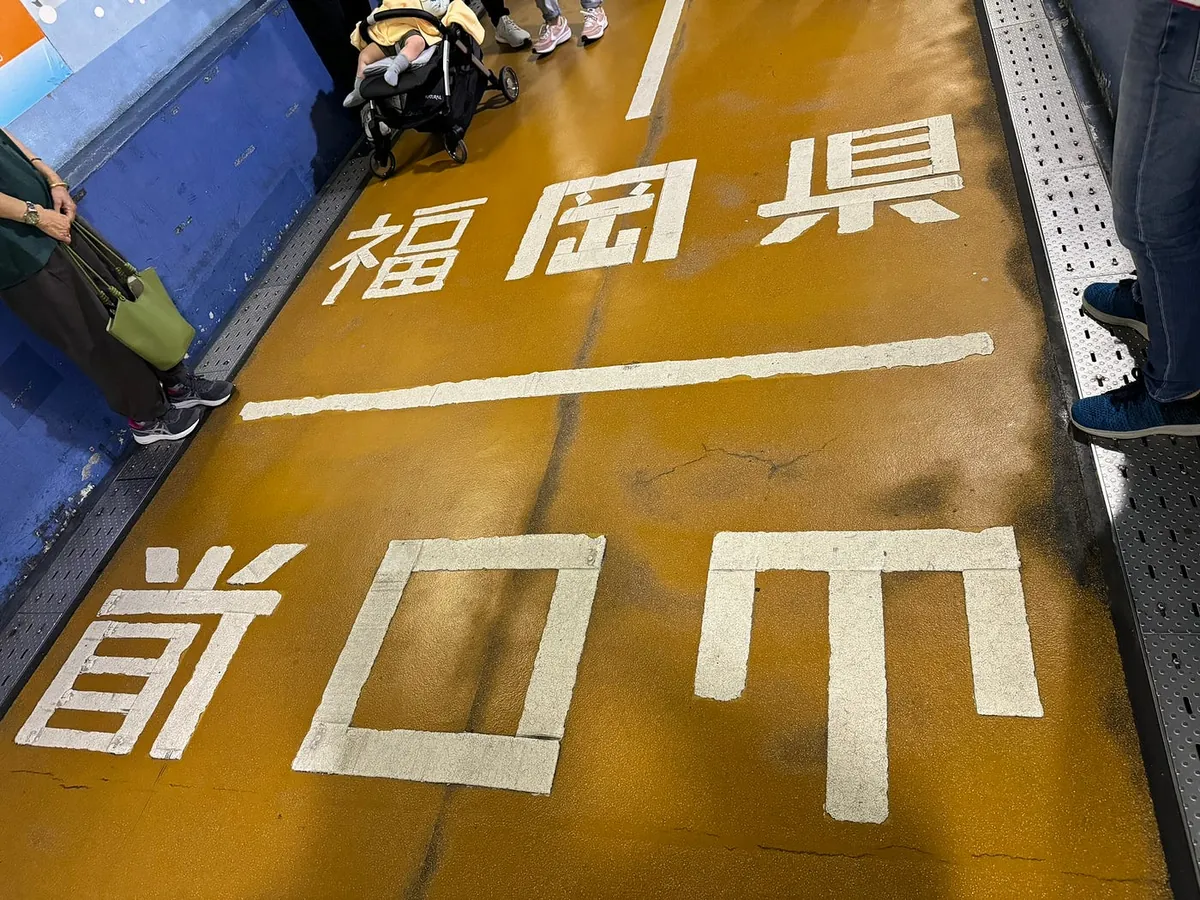
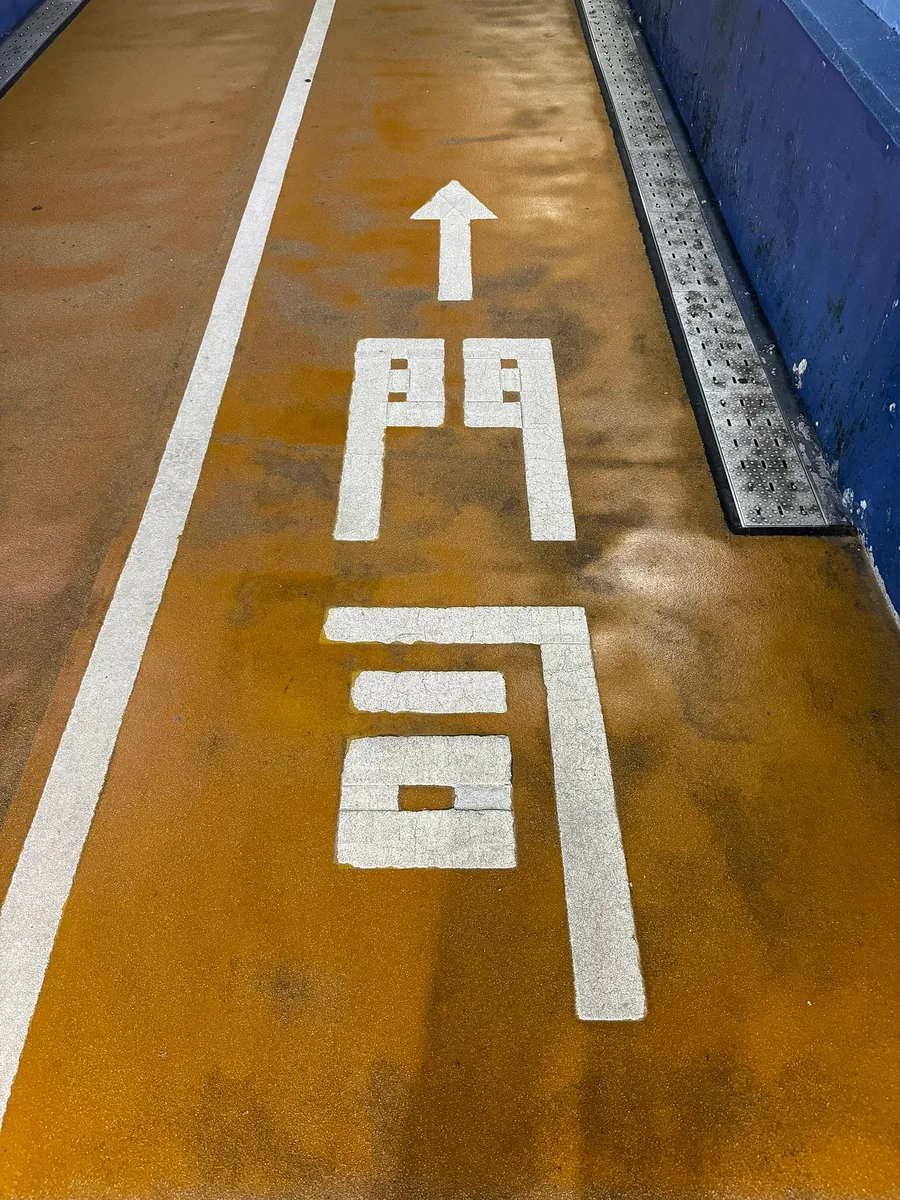
The total length is 780 meters, going straight all the way. There is a dividing line in the middle.
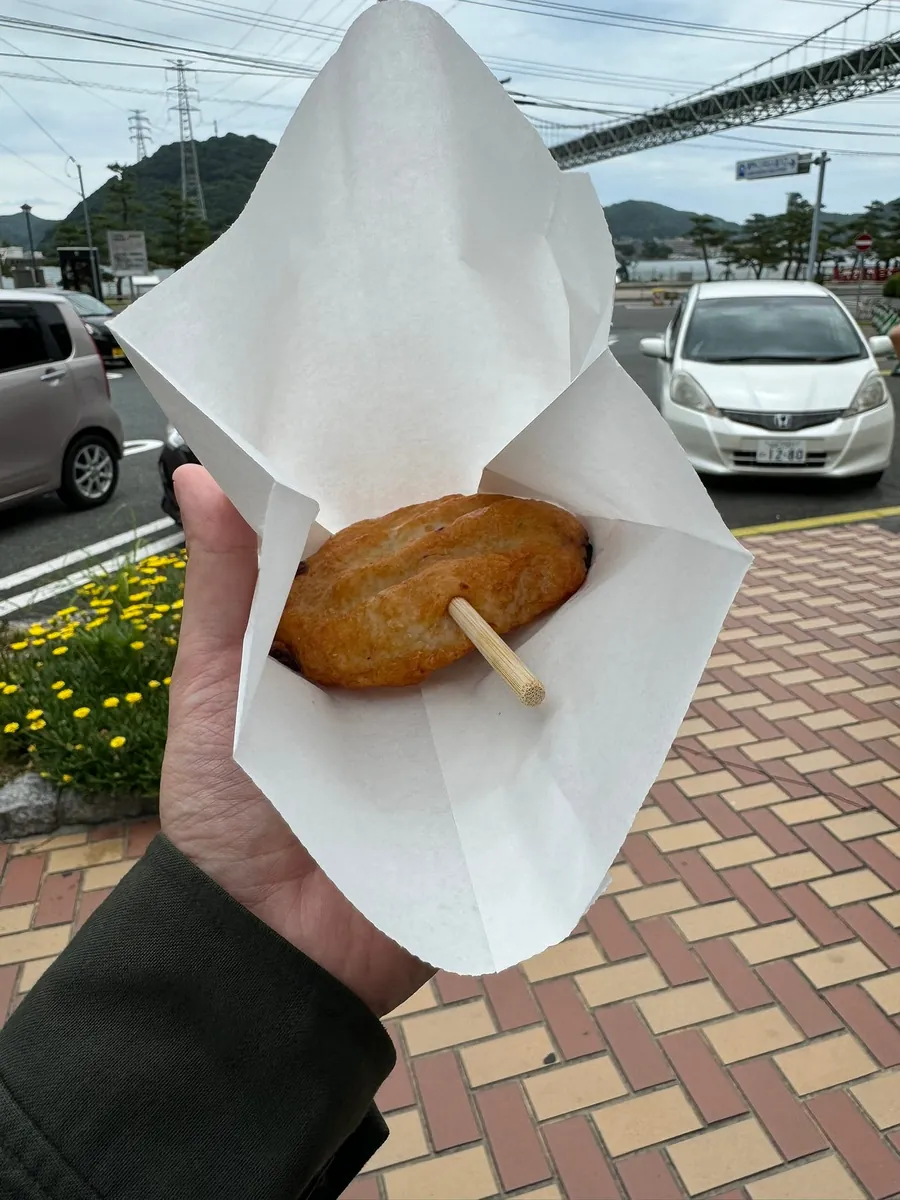
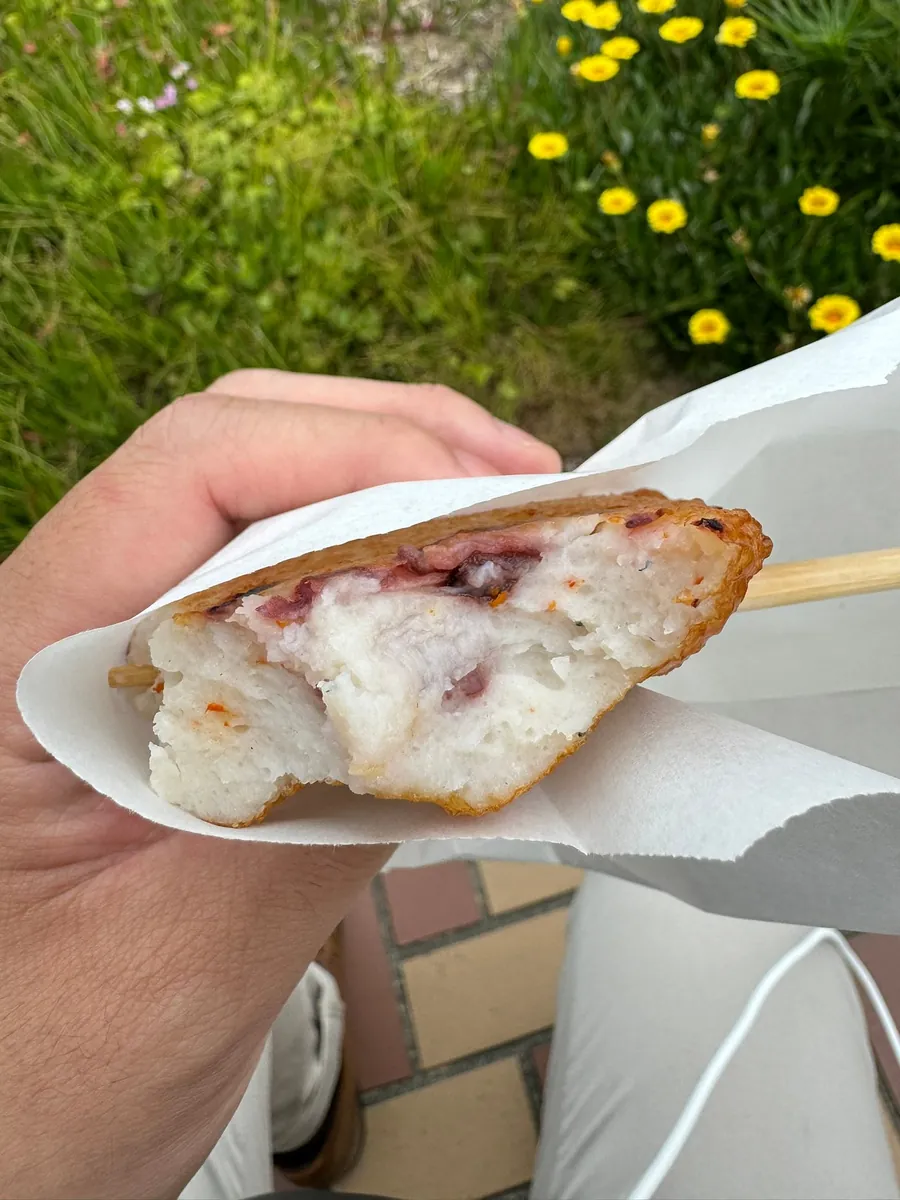
After arriving at Shimonoseki Port, there are shops selling simple snacks. I bought a takoyaki to satisfy my hunger. (The inside is chewy, the skin is crispy, and it really has octopus. Delicious!)
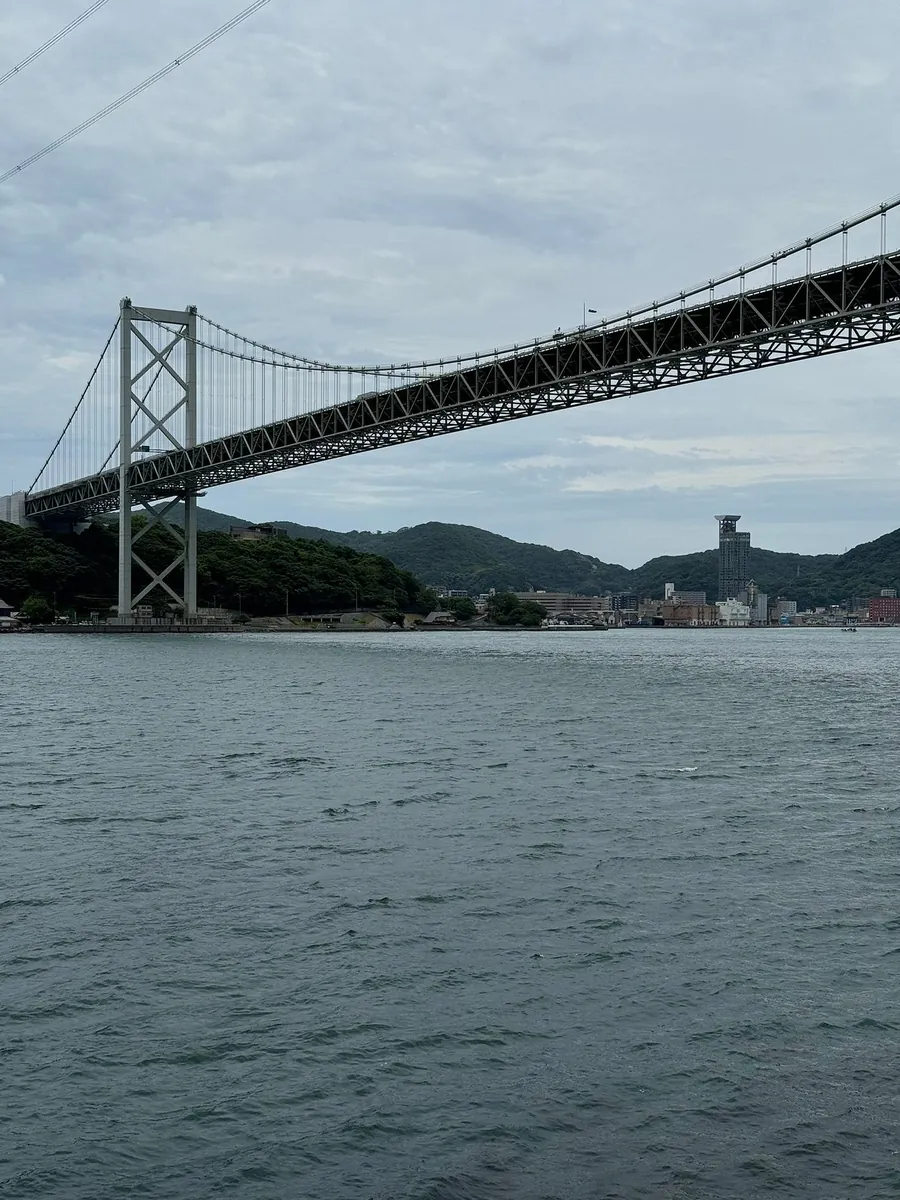
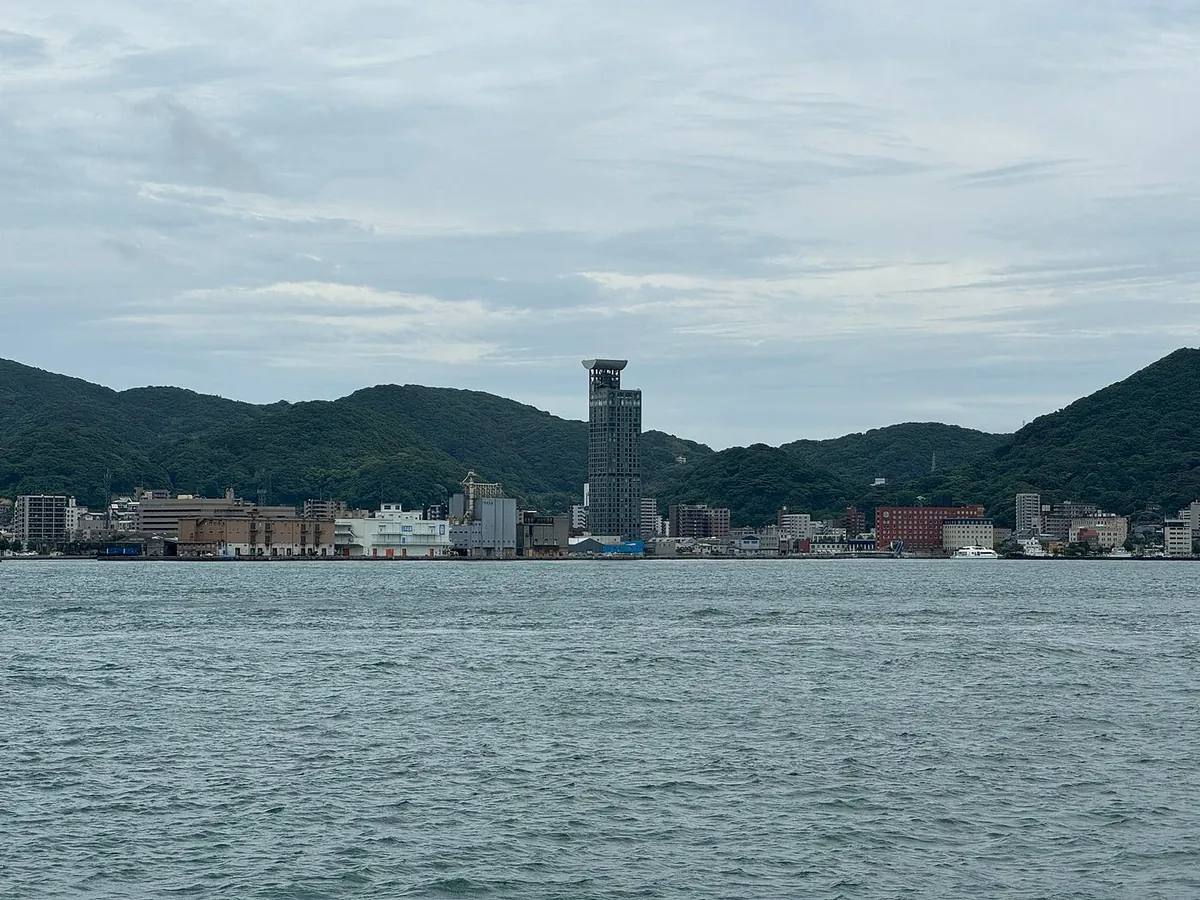
Viewing the Kanmon Bridge and Mojiko Retro Observation Room from the opposite side feels like looking at Tamsui from Bali, Taiwan.
Walked along the coast all the way to Karato Market.
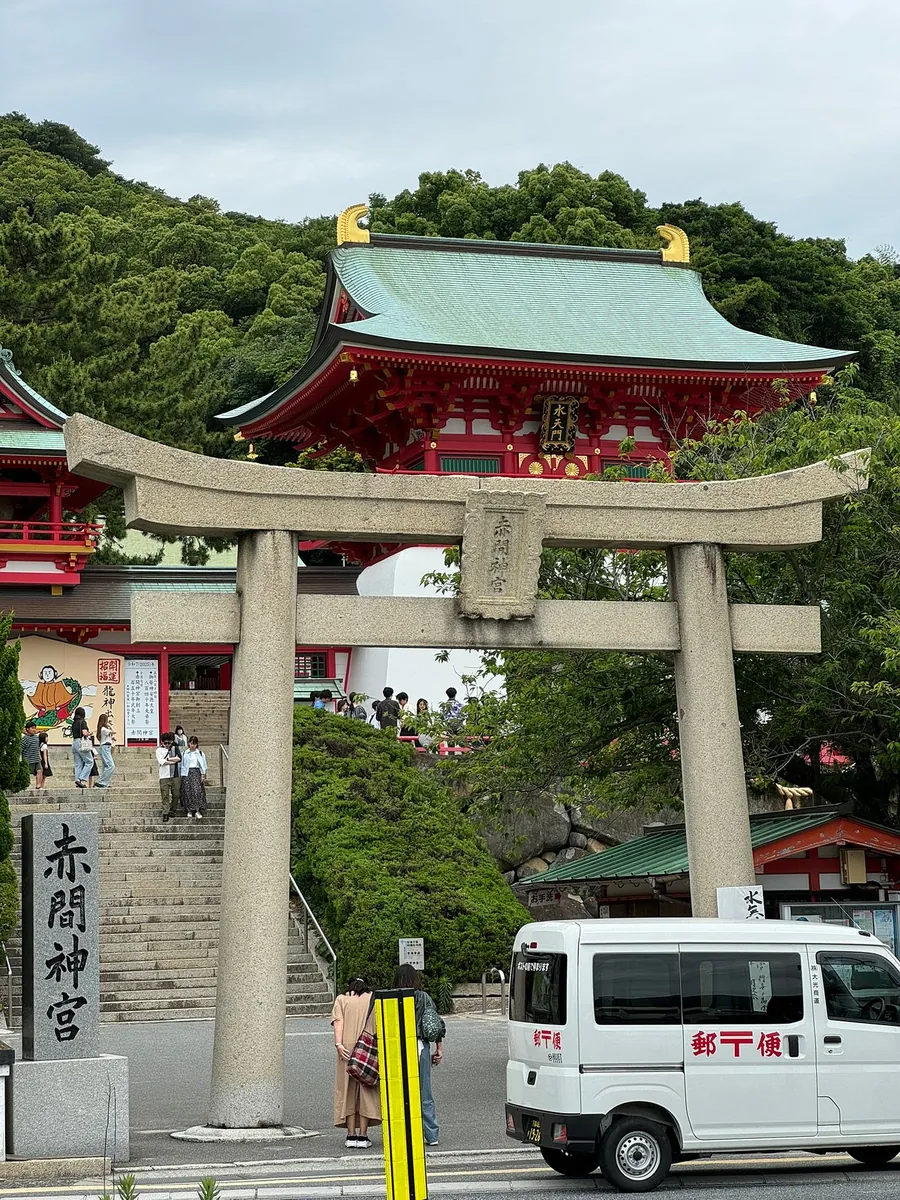
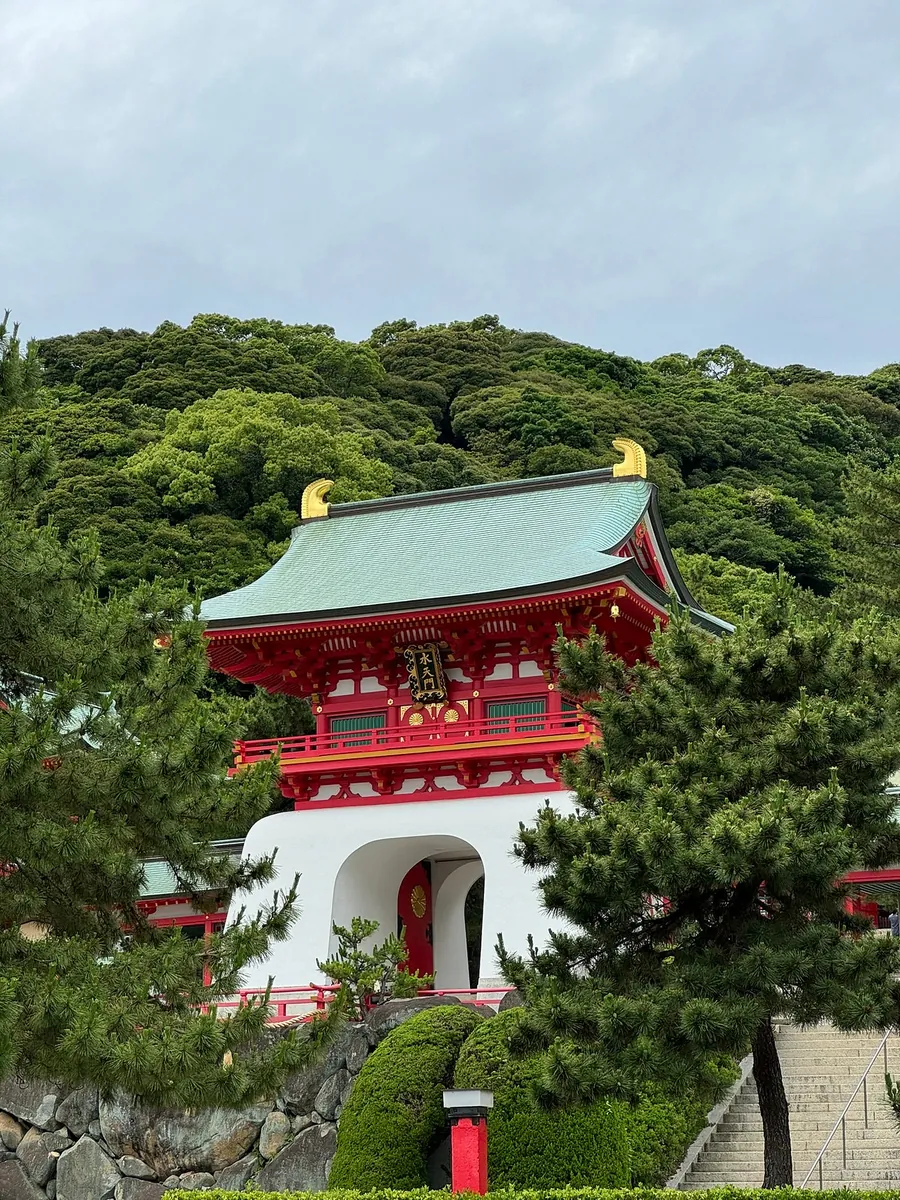
On the way to Karato Market, we passed by Akama Shrine and stopped by for a visit.
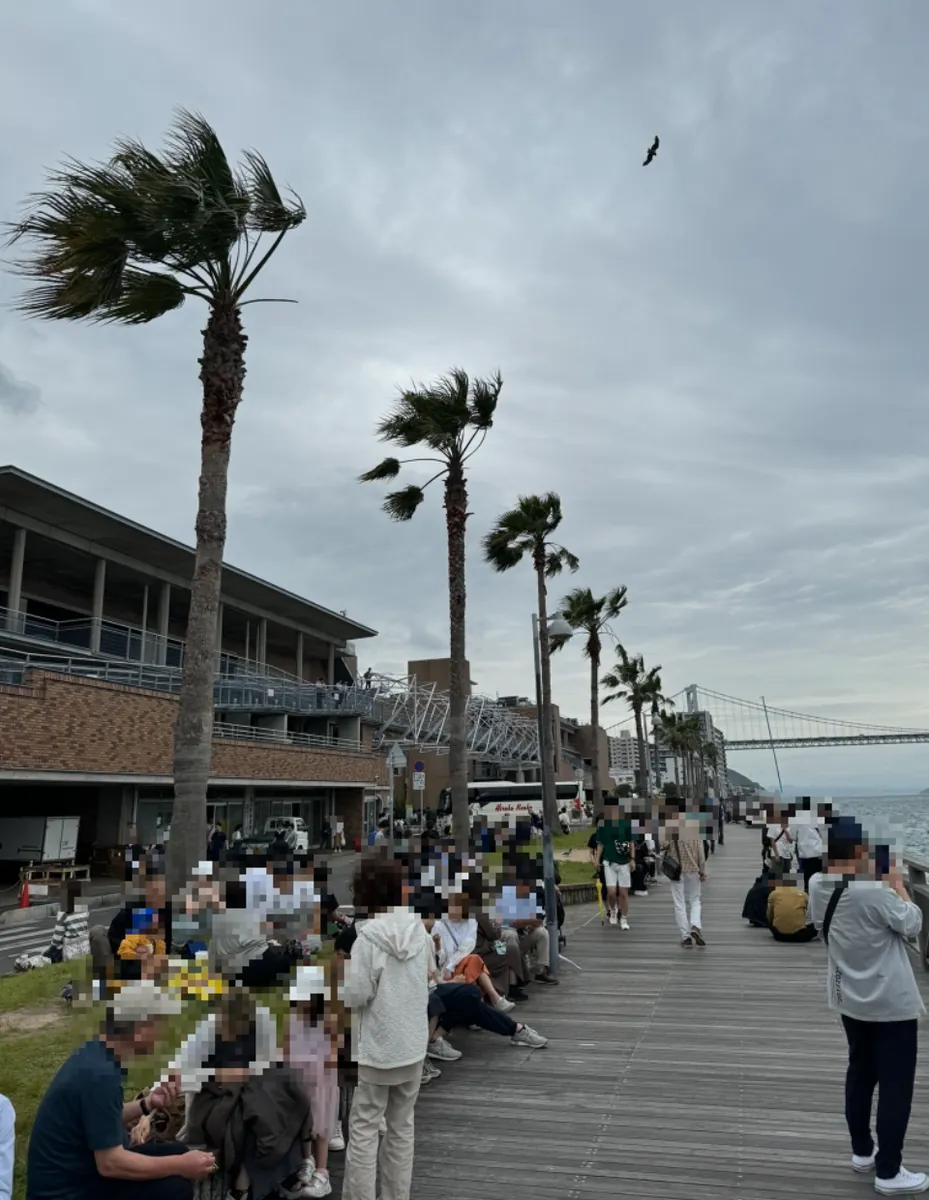
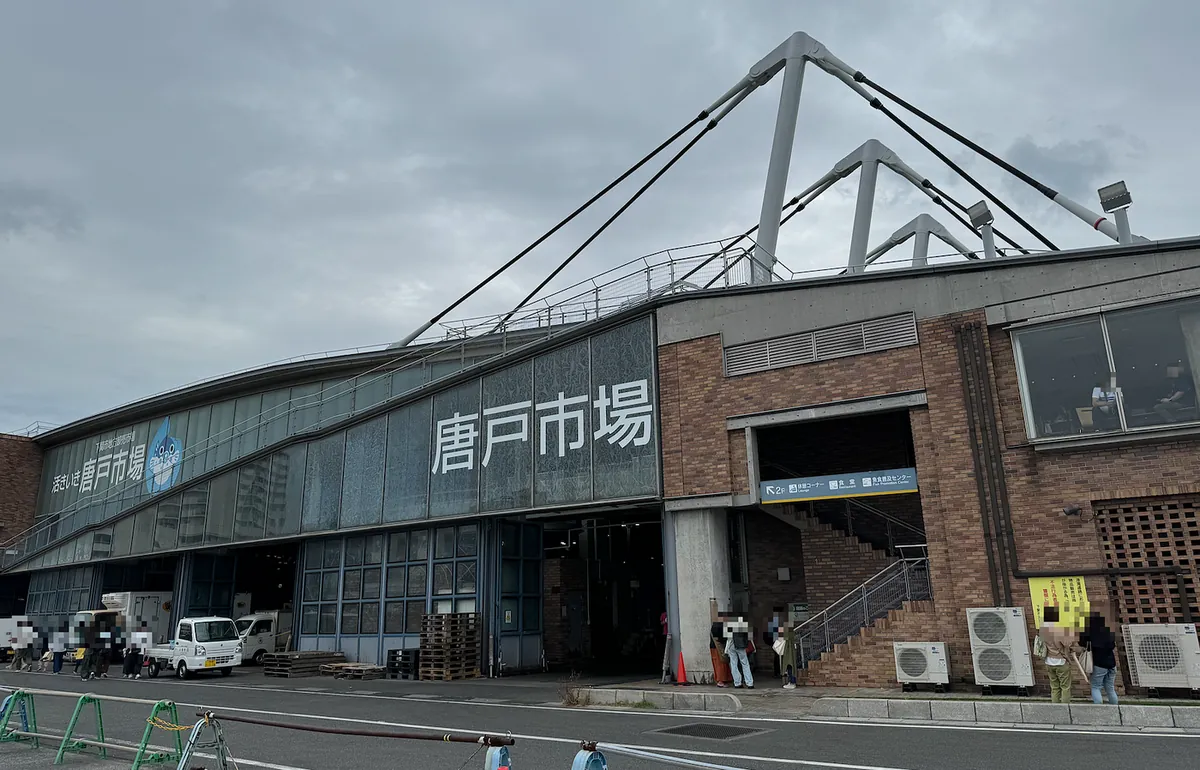
There are many people sitting by the coast outside Karato Market, having picnics after buying food. Although it’s crowded, the area remains very clean. Since I was mainly scouting the place and don’t eat much raw food, I didn’t go inside. Around noon, it looked quite busy inside.
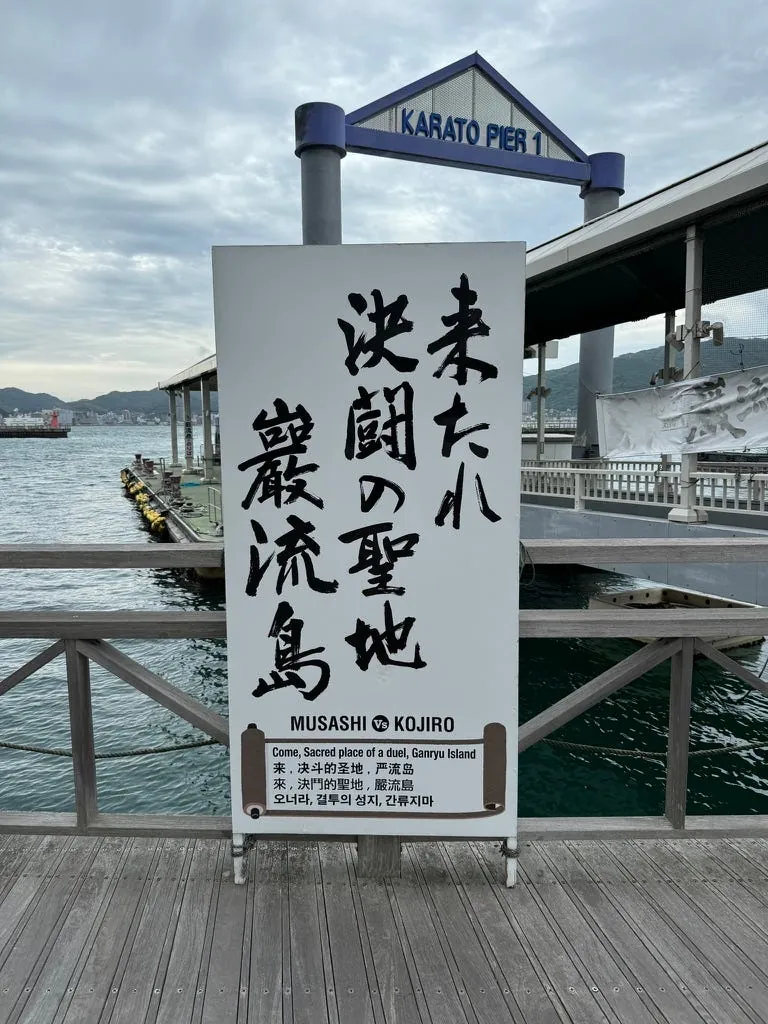
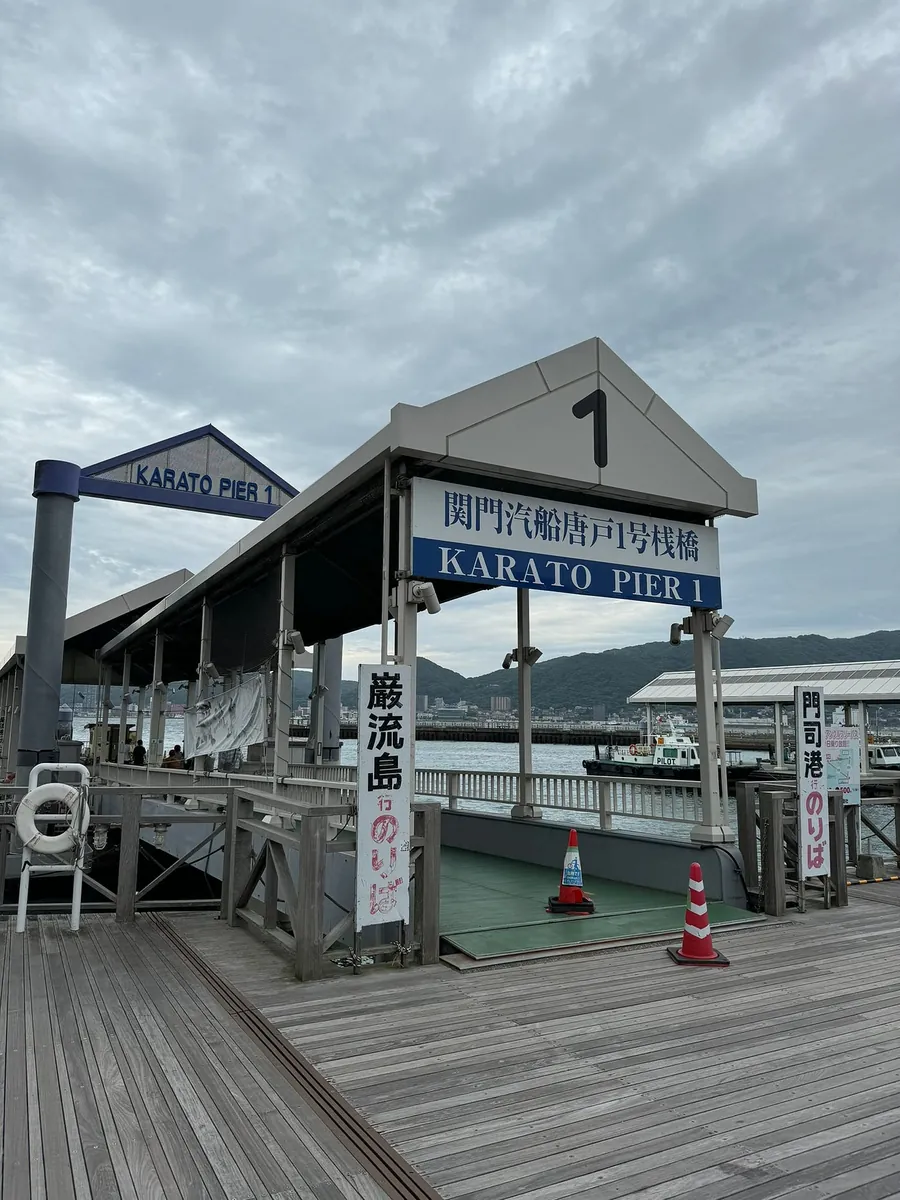
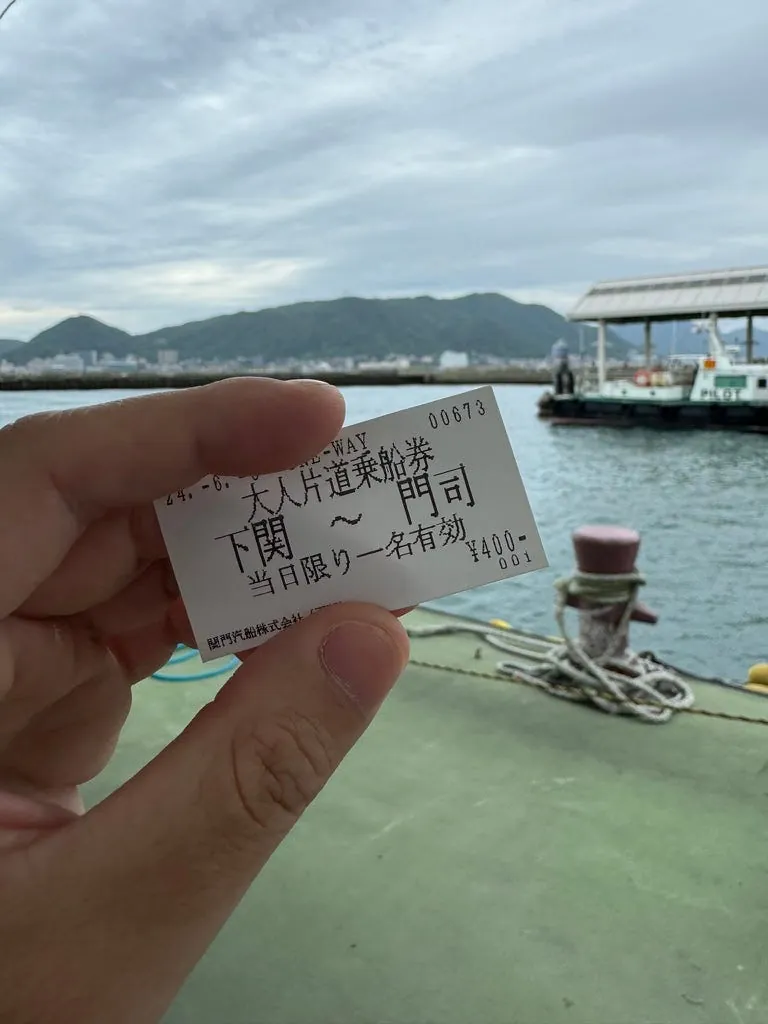
Passing Karato Market leads to the pier where you can take a ferry directly back to Mojiko. Just buy a ticket at the automatic ticket machine in the shops across the pier. If you have time, you can also visit Ganryu Island (the famous duel site!).
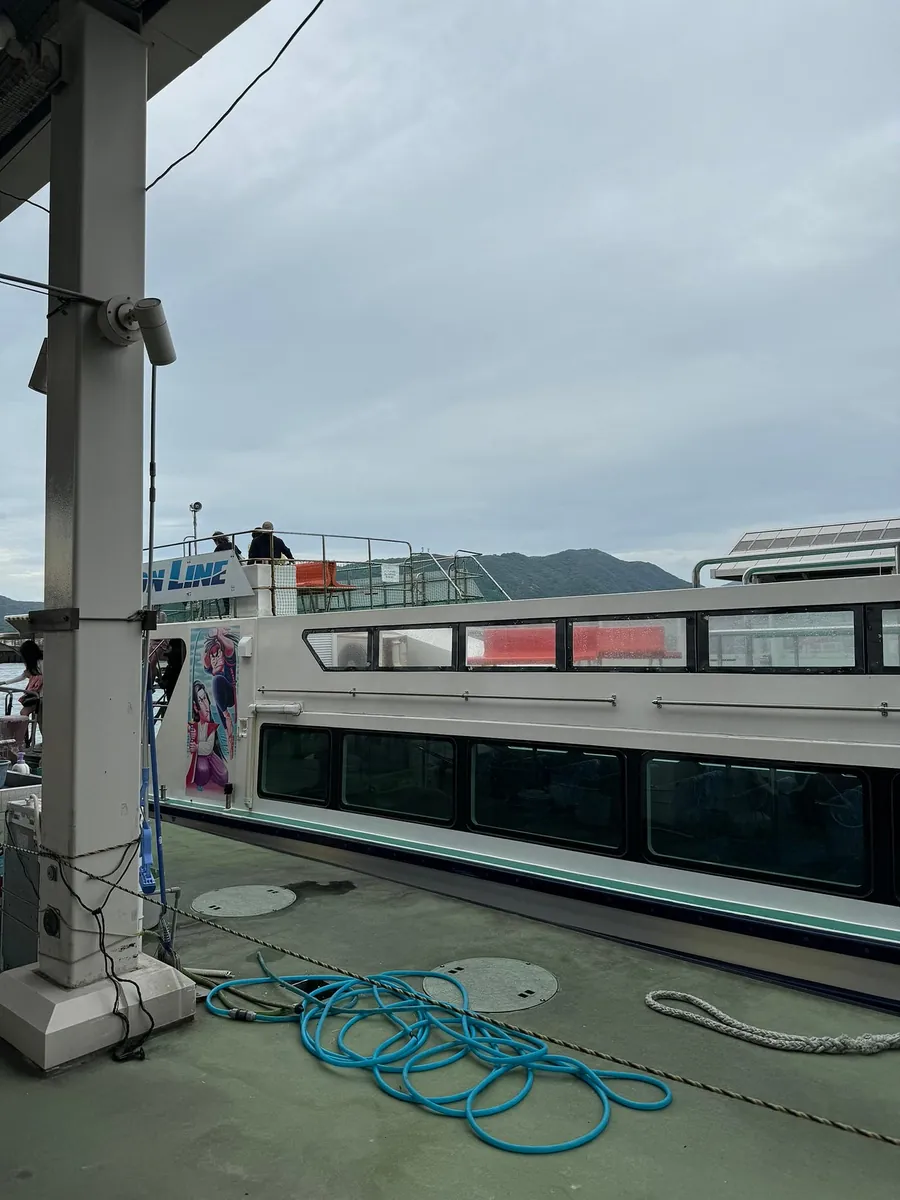
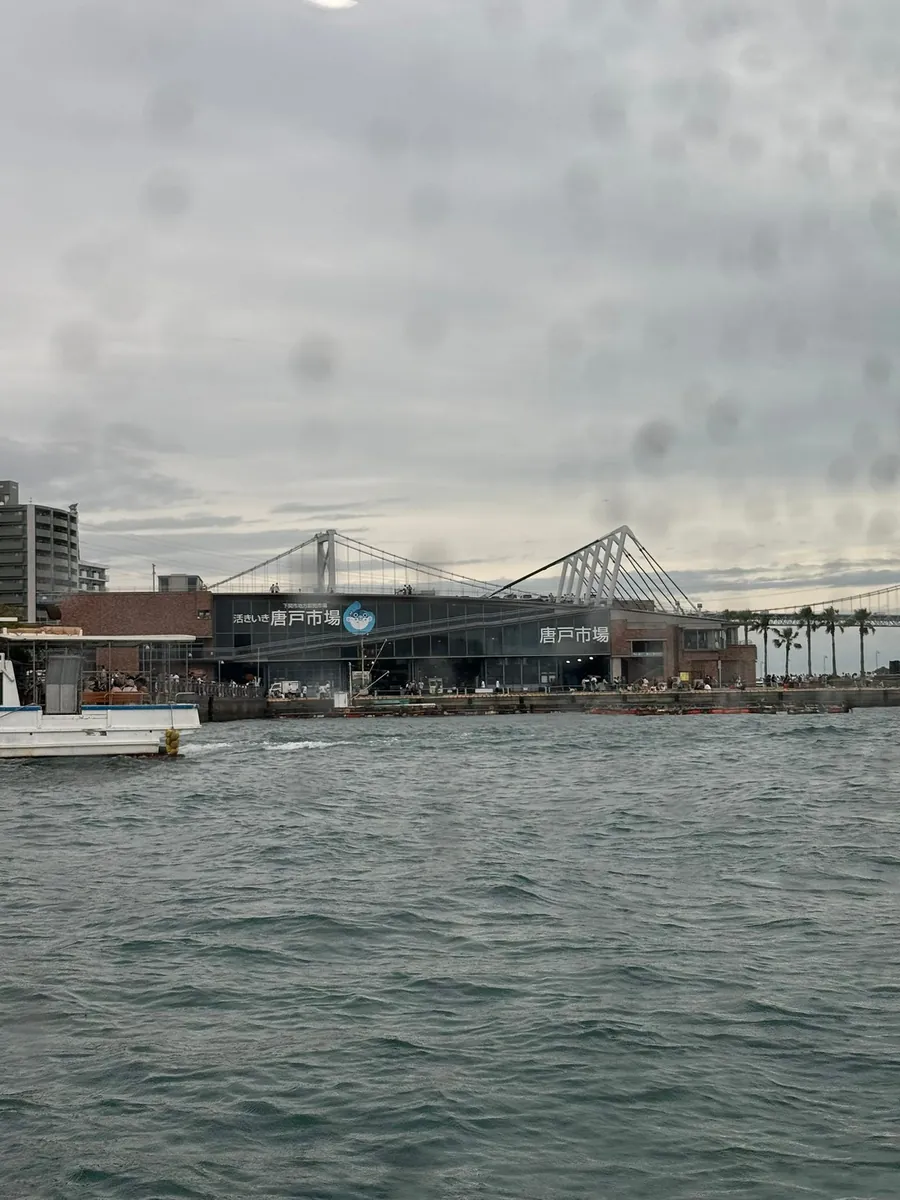
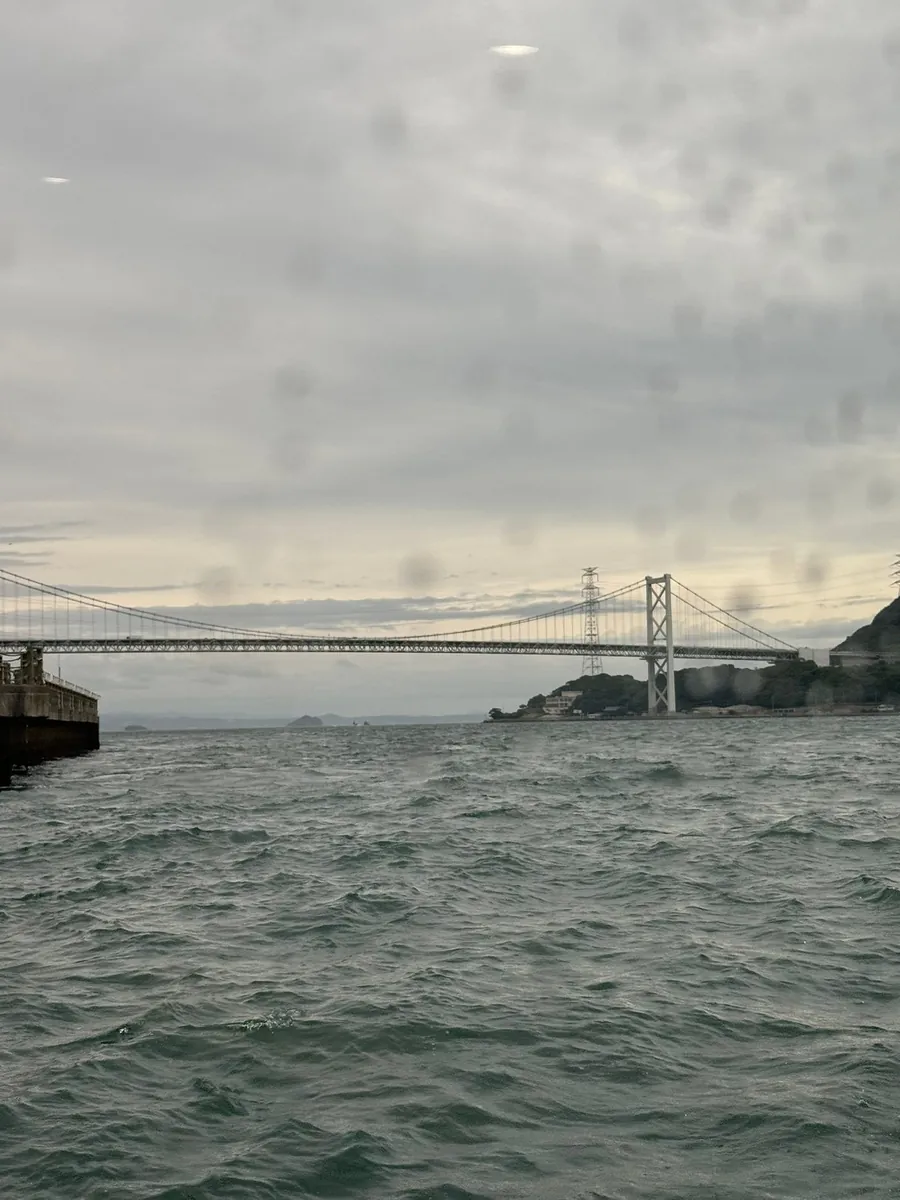
It takes about 10 minutes to reach Mojiko. (It really feels like the Tamsui Bali ferry!)
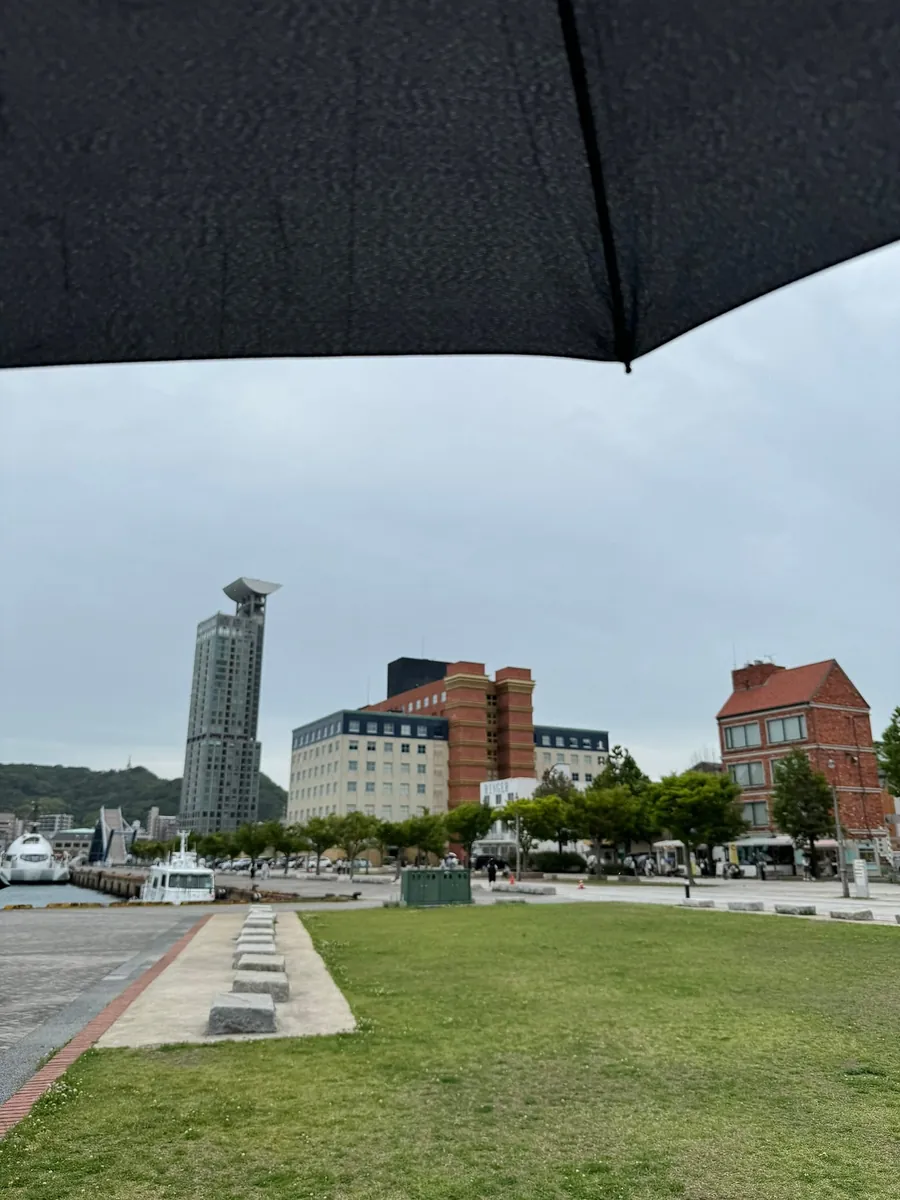
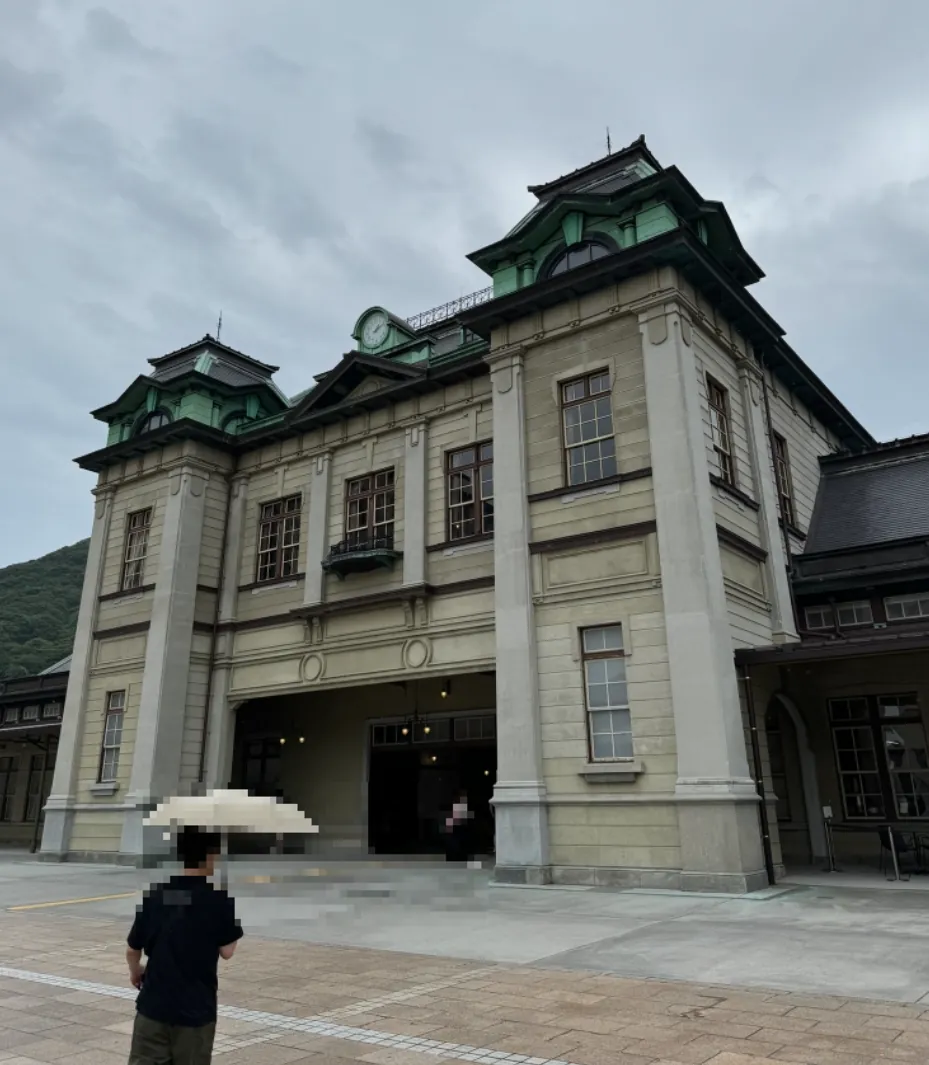
It started drizzling when we returned to Mojiko. Since we had already visited Mojiko last year, we didn’t stay long and prepared to head to the station to pick up our luggage and depart for Kokura and Hakata.
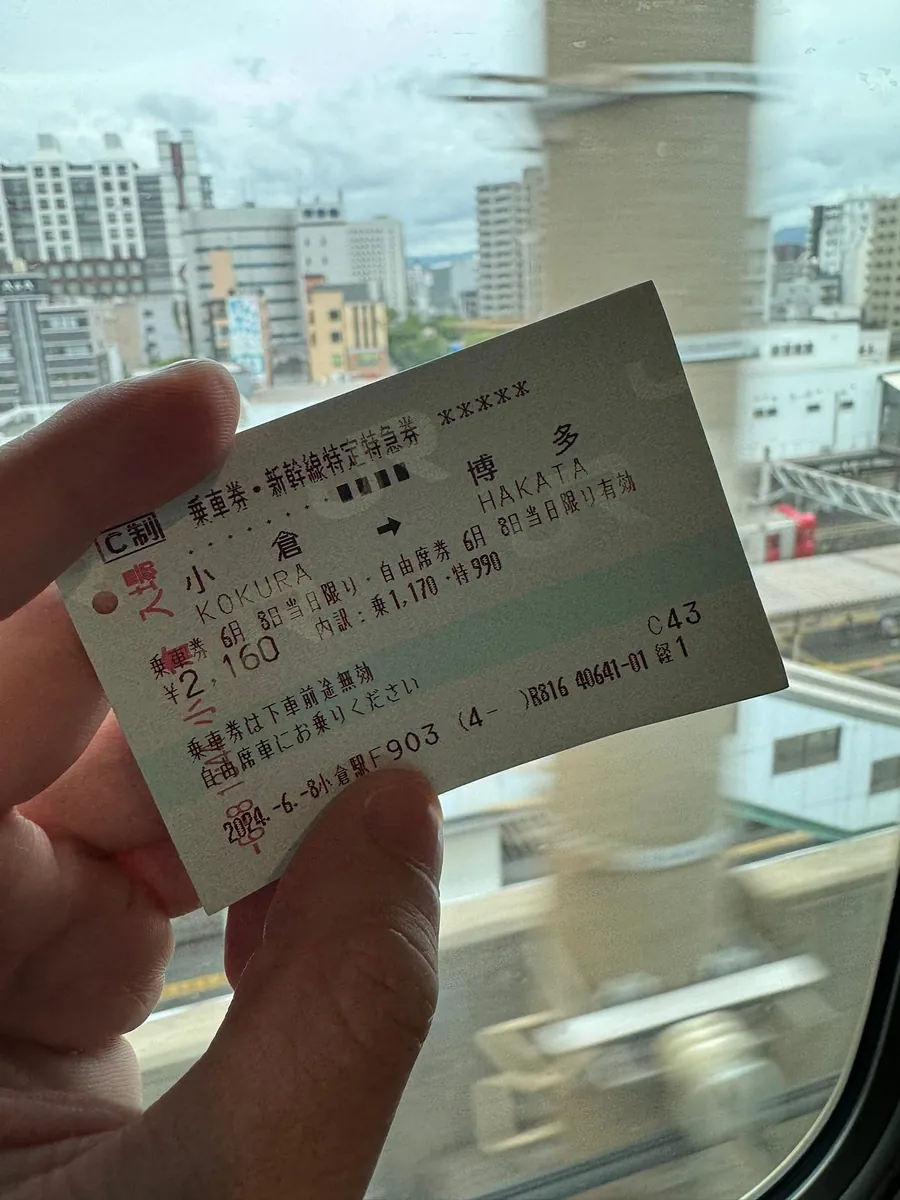
It’s around 14:00, and estimating arrival at Karatsu Castle around 4:30, every second counts. So, in Kokura, I used New Taiwan Dollars (Japanese Yen) to buy a Sanyo Shinkansen ticket for the Kokura to Hakata section, the world’s fastest at 300 km/h, taking only 15 minutes (JR Limited Express takes 45 minutes, local train takes 65 minutes).
The JR Pass for Kyushu does not cover the Sanyo Shinkansen (Kokura to Hakata section). For Nozomi and Mizuho trains, you must buy tickets separately at the Shinkansen platform. Using the JR Pass will be denied entry, and even if you manage to enter and exit, you will be required to pay a fare difference ( based on my previous experience ). ⚠️
From JR Karatsu, it takes about a 20-minute walk to Karatsu Castle. The express bus stops at Karatsu Castle-mae Bridge, so I decided to take the express bus. (Also my first time riding it!)
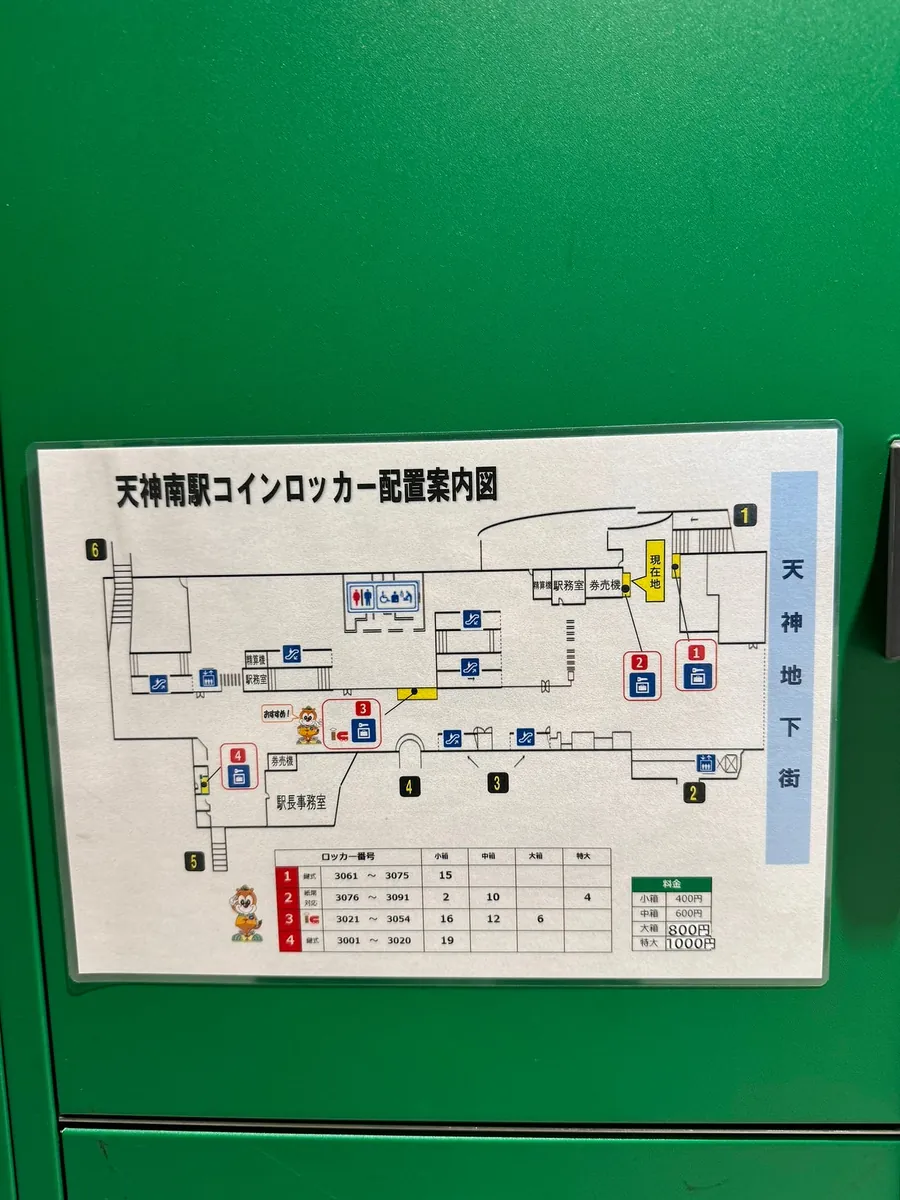
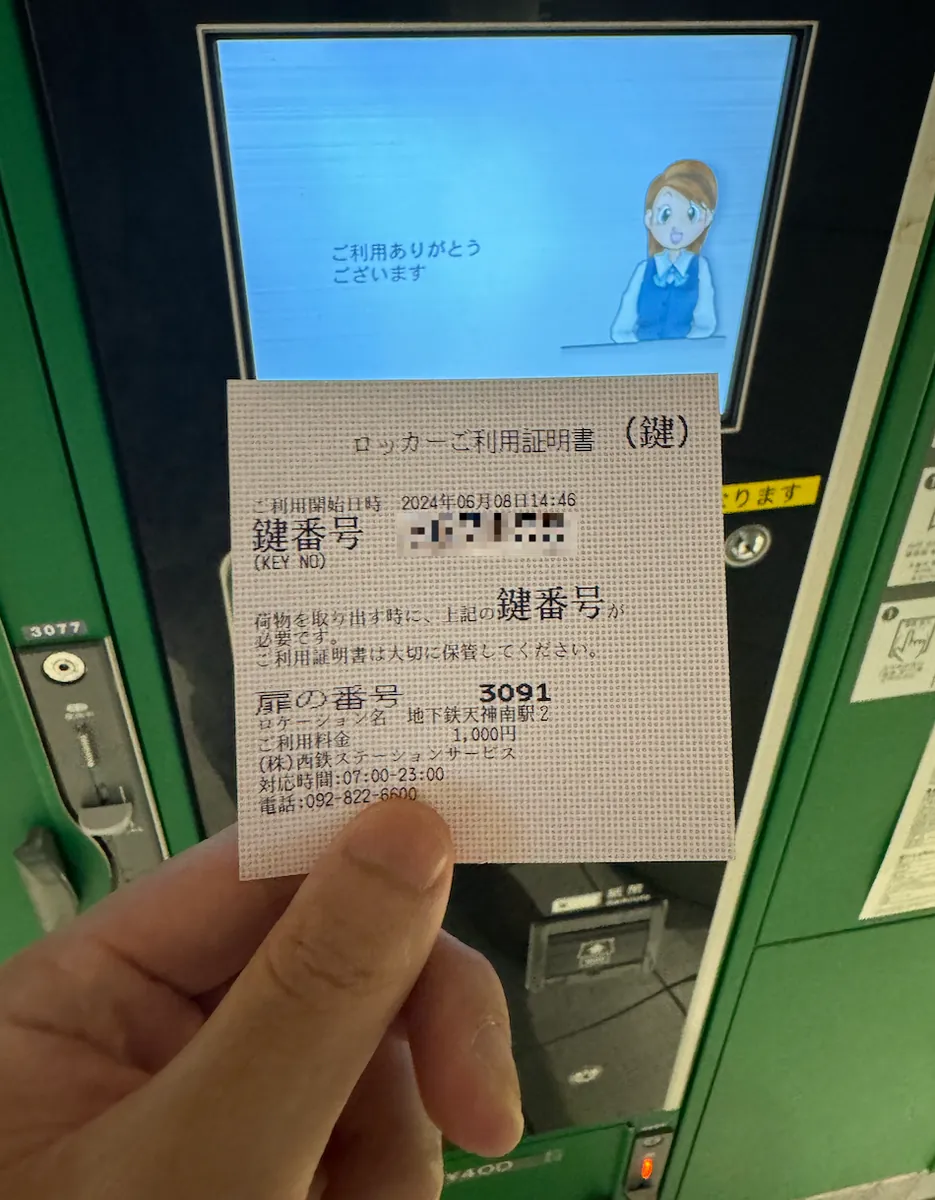
After arriving at Hakata, take the subway directly to Tenjin-Minami and store your luggage in the underground mall. (Luckily, I found the last luggage spot at number 2)
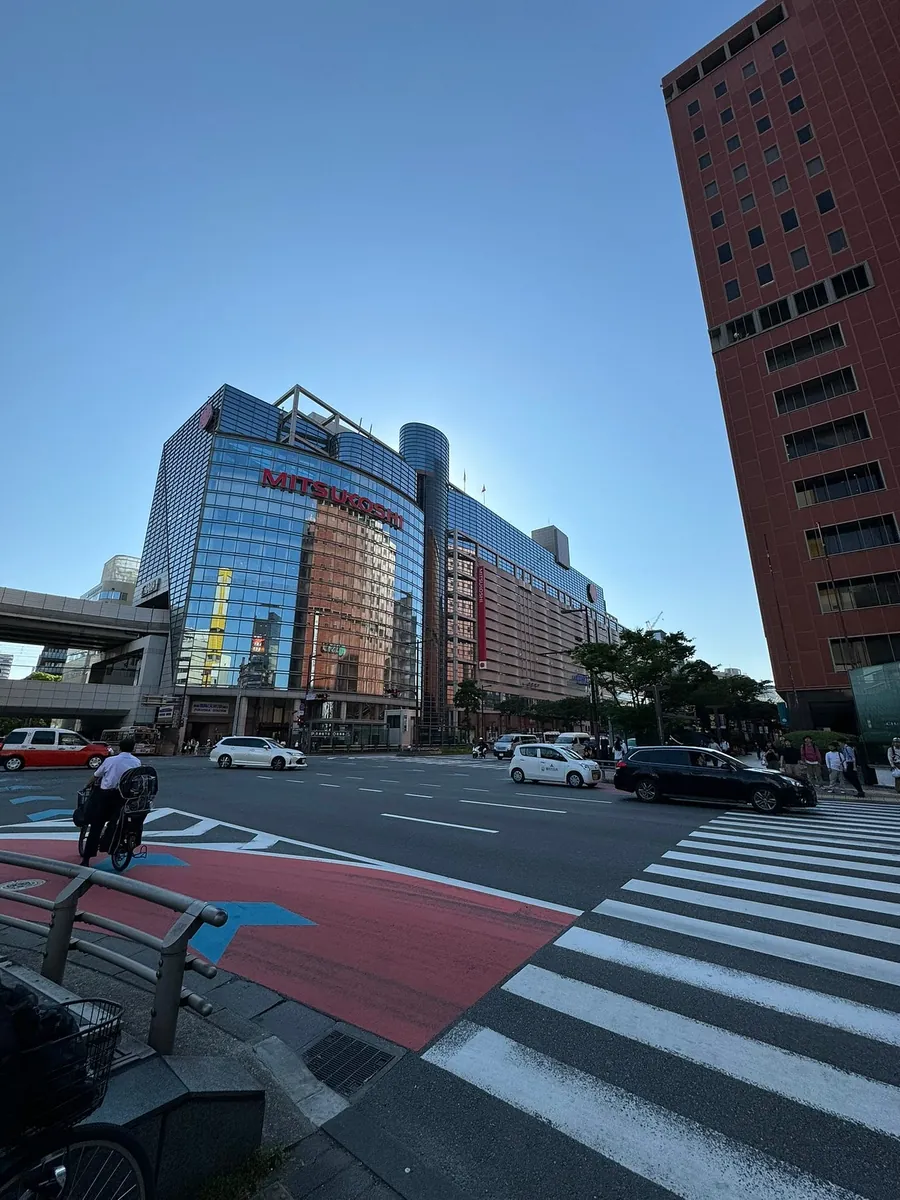
From Exit West 8 of Tenjin Underground Shopping Mall, follow the signs from Fukuoka Mitsukoshi department store to the 3rd floor of Tenjin Express Bus Terminal to reach the bus station.
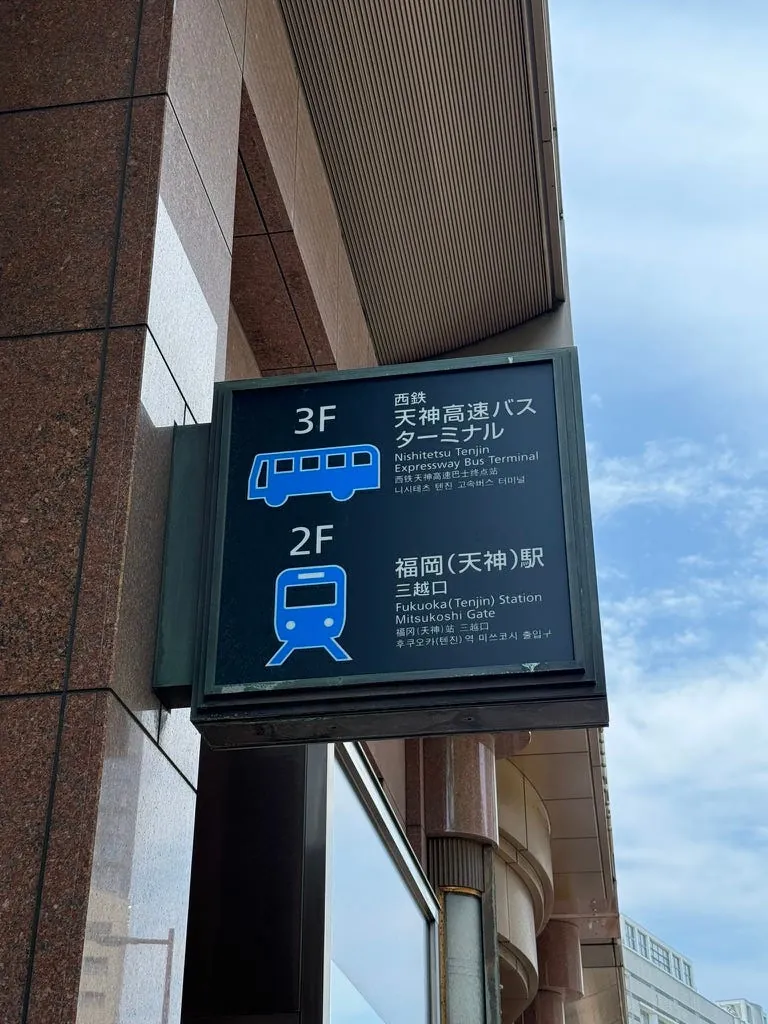
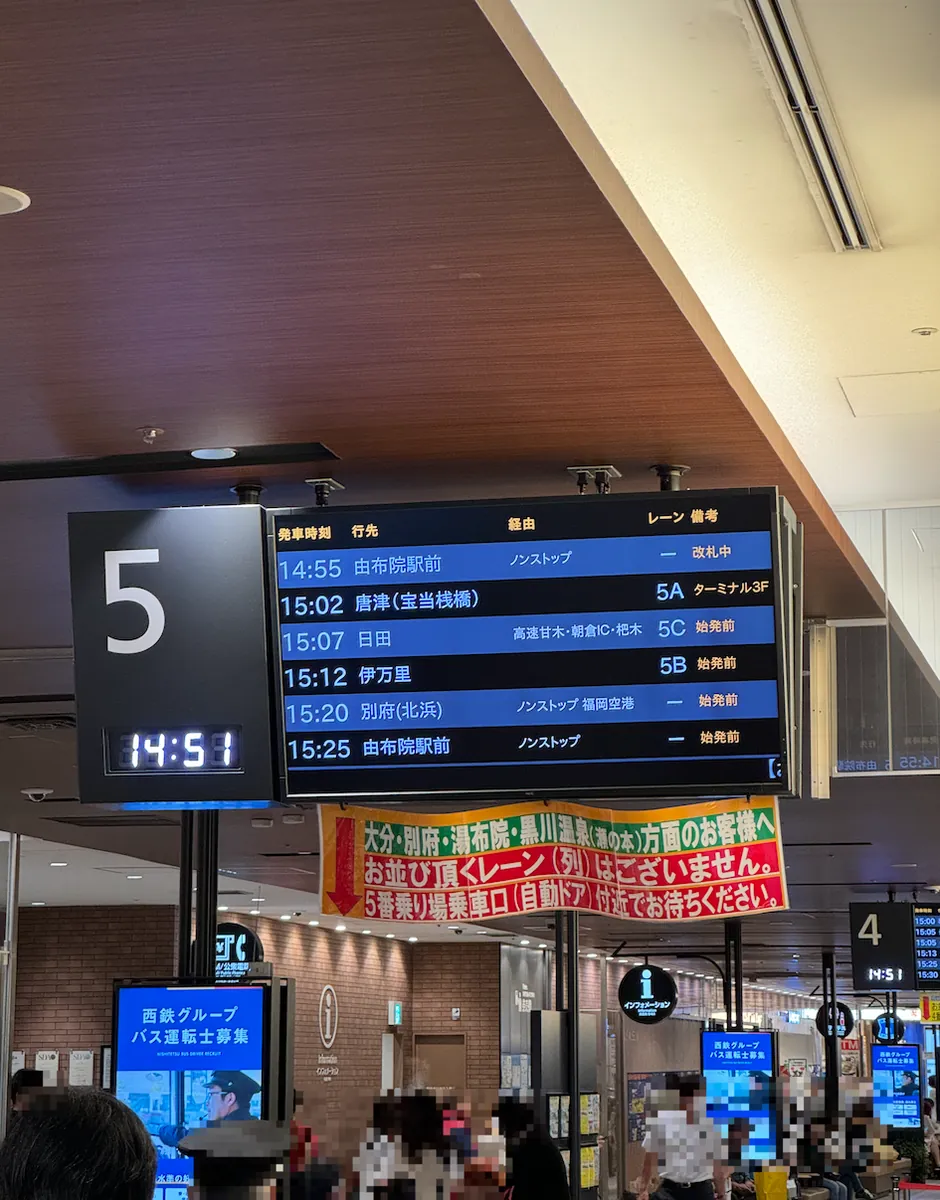
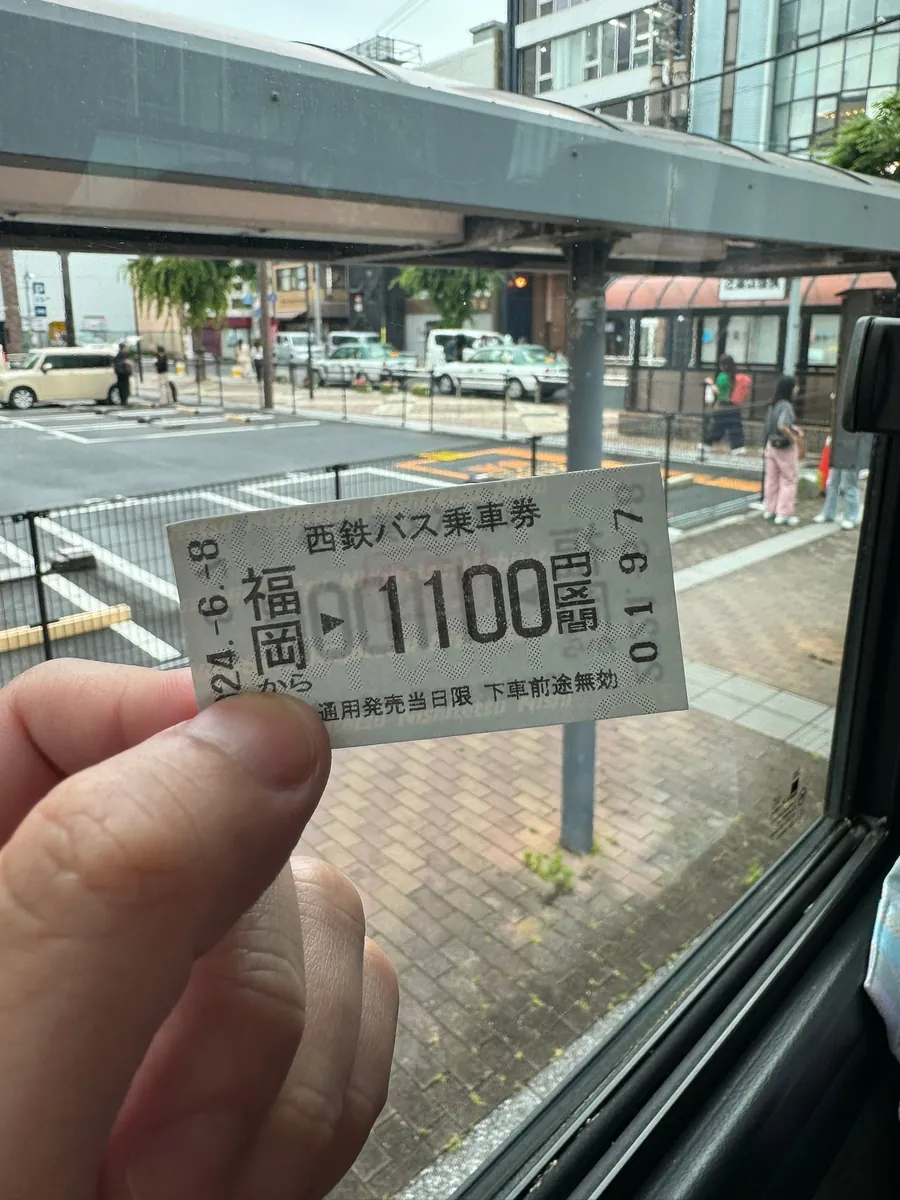
Since I was unsure about seat reservation and ticket purchase, I went directly to the counter to buy the ticket; after buying the ticket, I was very hungry, so I grabbed a bread at Starbucks and went to the designated platform to queue for the train. (I later found out that no seat reservation is needed for the train to Karatsu, and you can use a transportation card just like taking a bus; the fare is fixed at 1,100 yen regardless of the station you get off.)
15:02 Boarded the express bus to Karatsu (Botan Wharf), about 80% full.
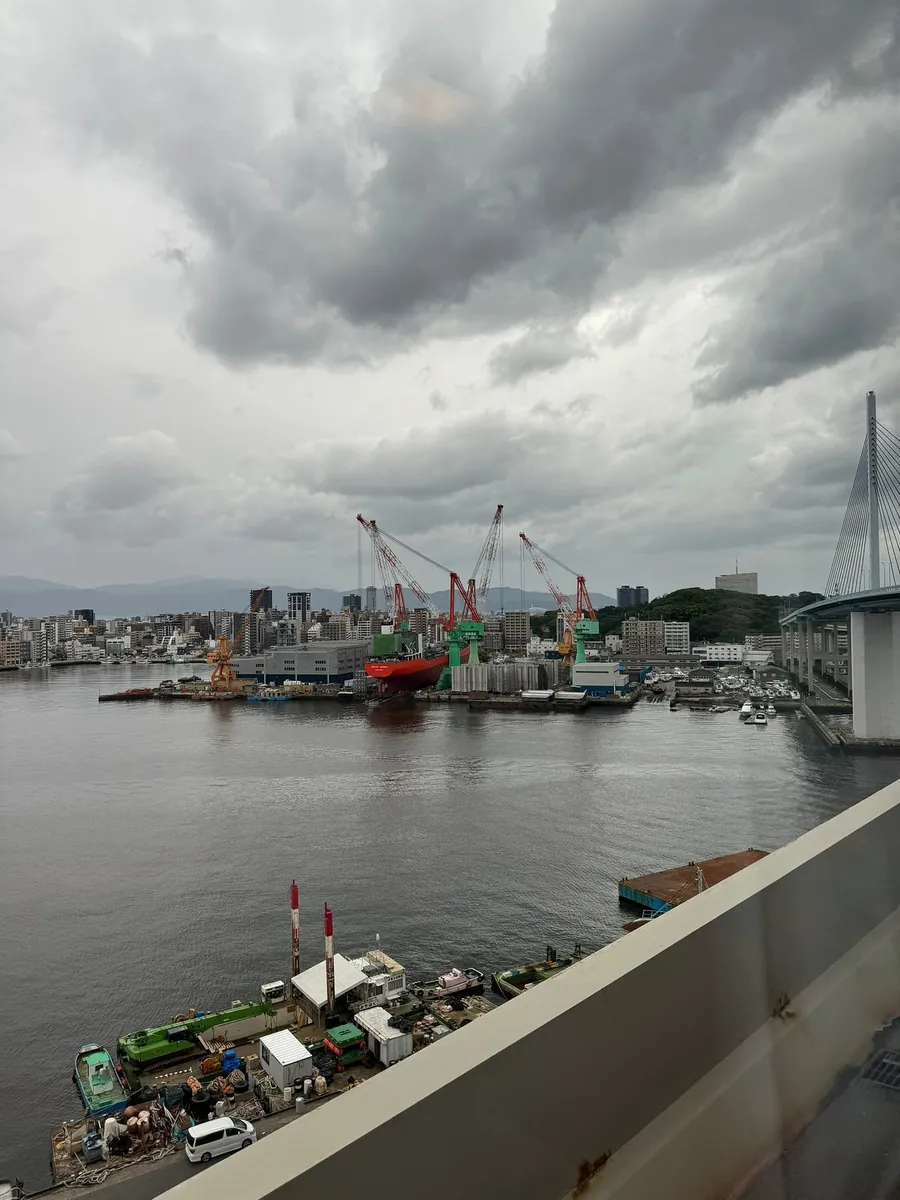
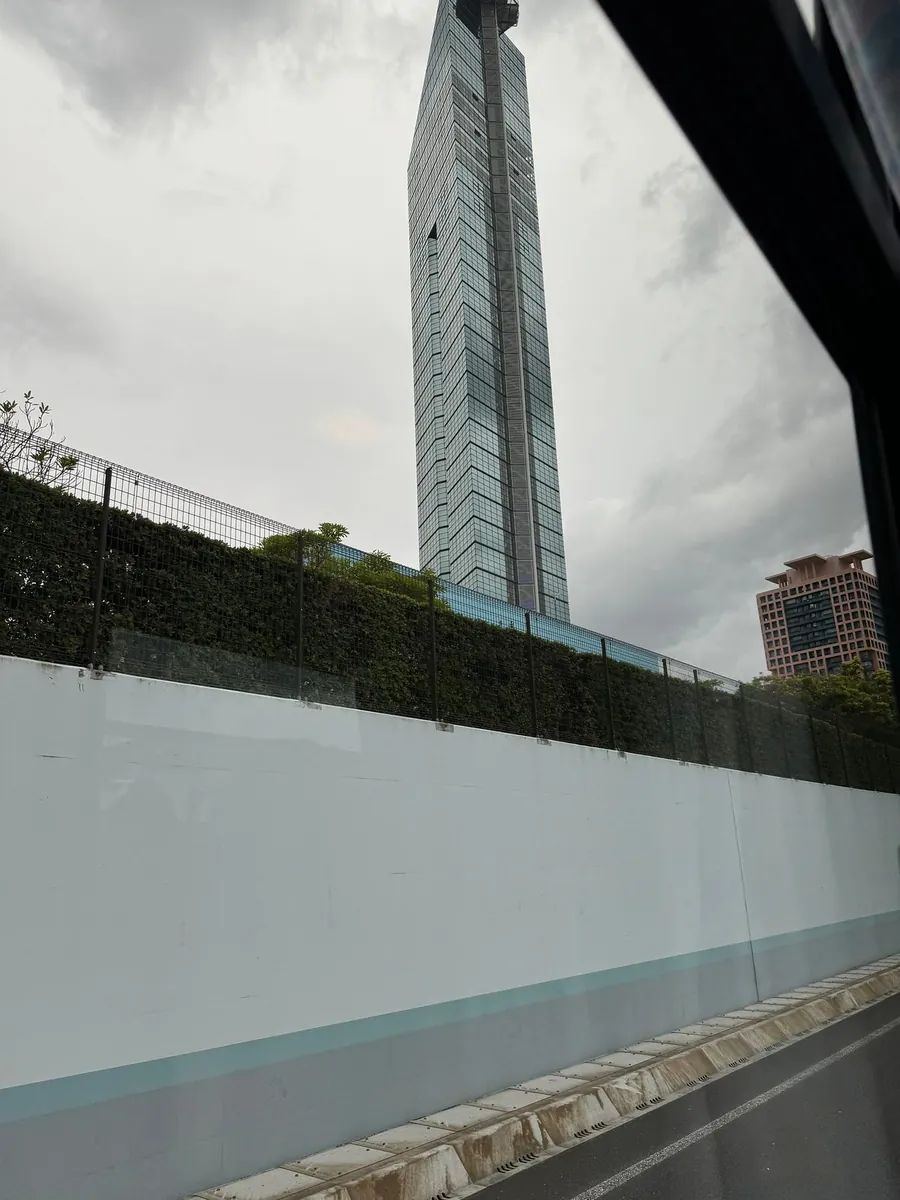
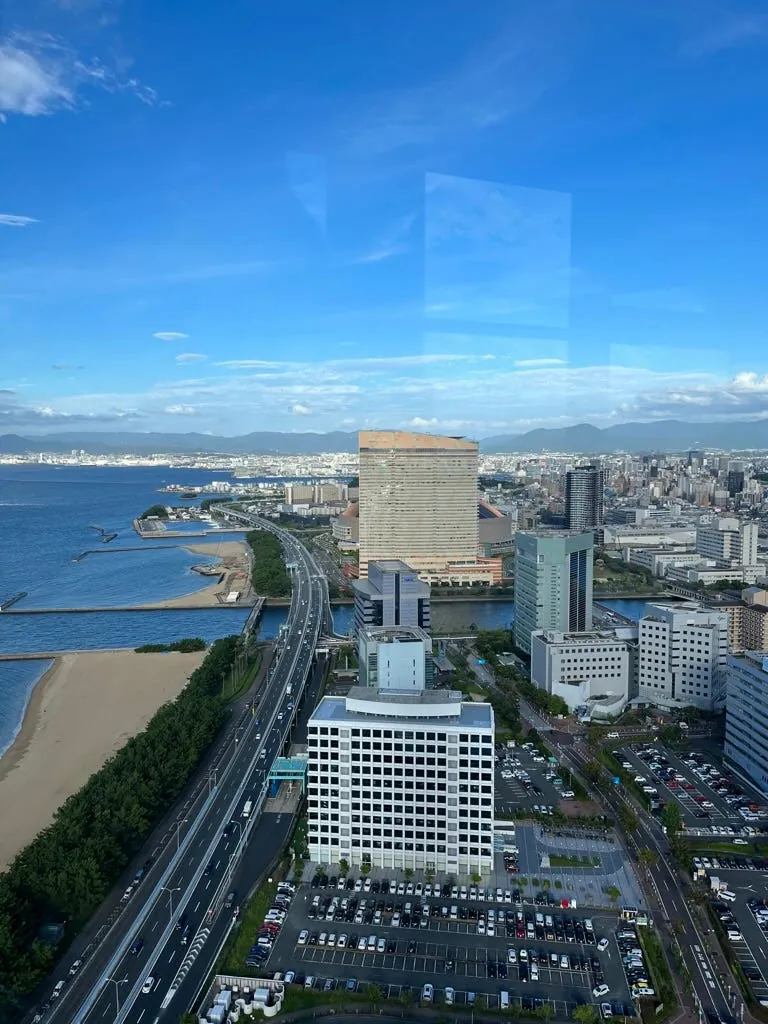
The right picture shows this road viewed from Fukuoka Tower last year. This year, it’s Fukuoka Tower seen from this road. (A kind of time-space crossover feeling)
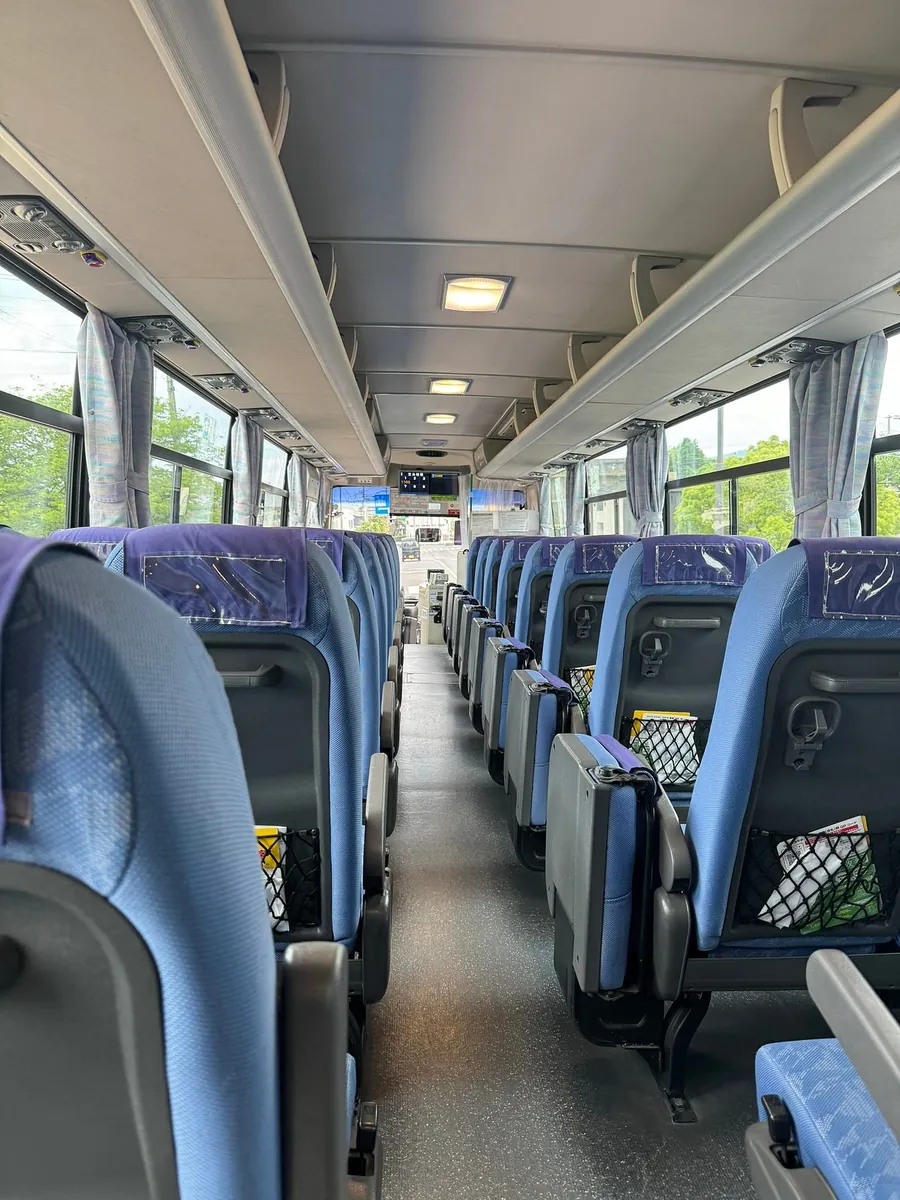
The train was mainly filled with Japanese commuters. After passing Karatsu city, I was the only passenger left on board. I was going all the way to the last stop — Bodou Pier.
Karatsu
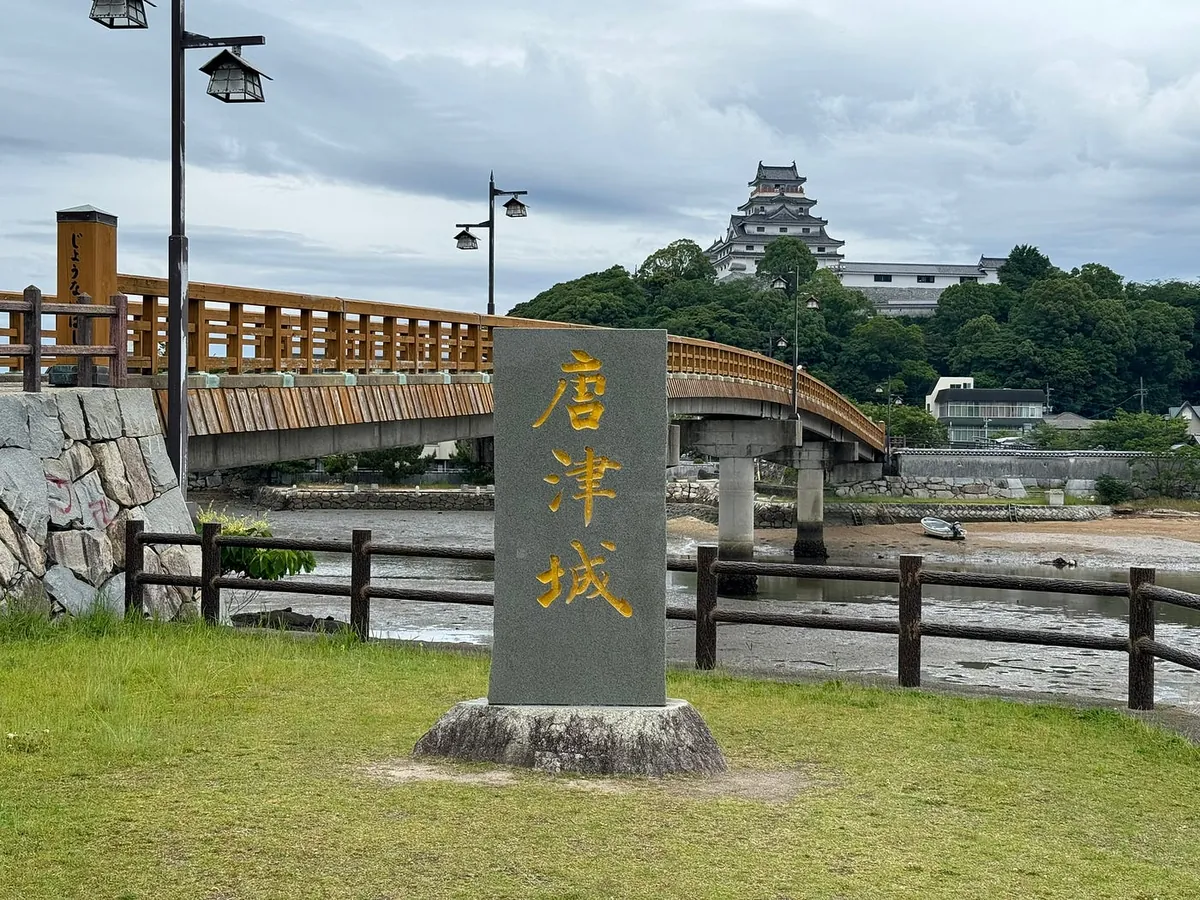
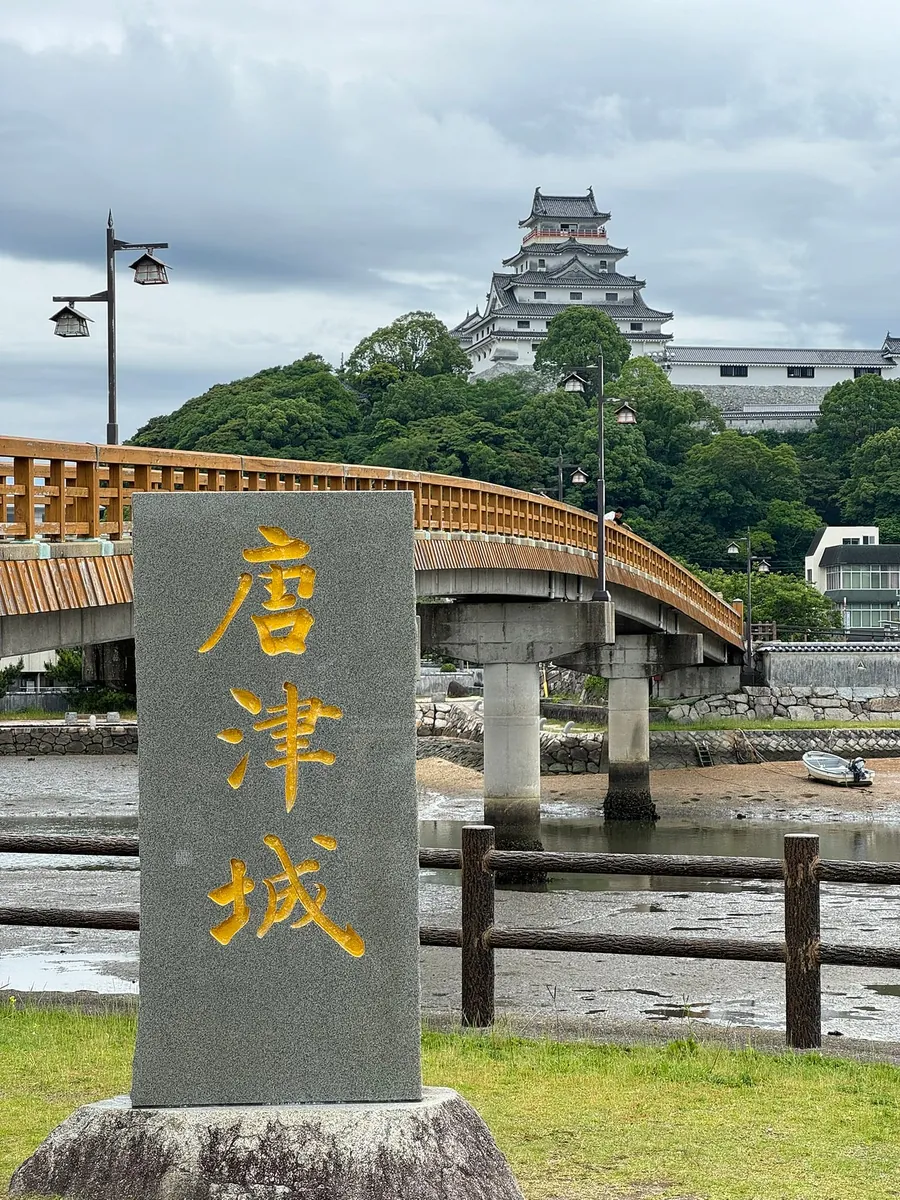
After getting off, walk a bit forward to reach Budou Pier. Continue walking back along the path to find Karatsu Castle; seeing this front bridge and rear castle view makes all the travel worthwhile.
Arrived here around 16:35, with only 25 minutes left before Karatsu Castle closes. Since I was already here, I decided to take a walk.
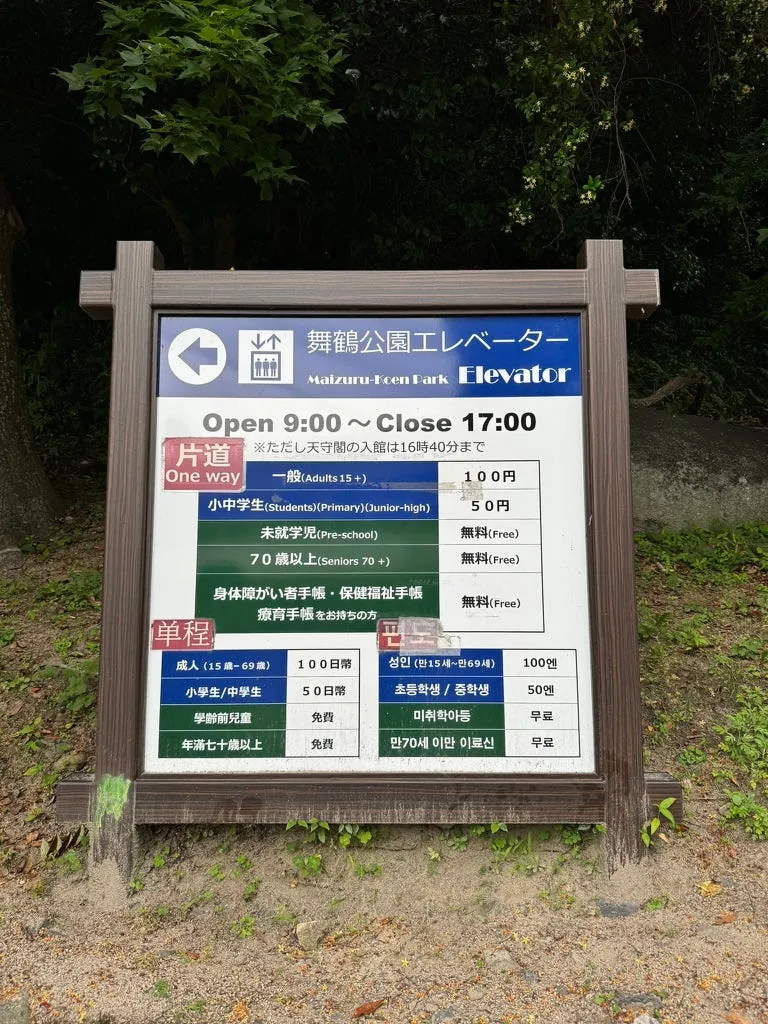
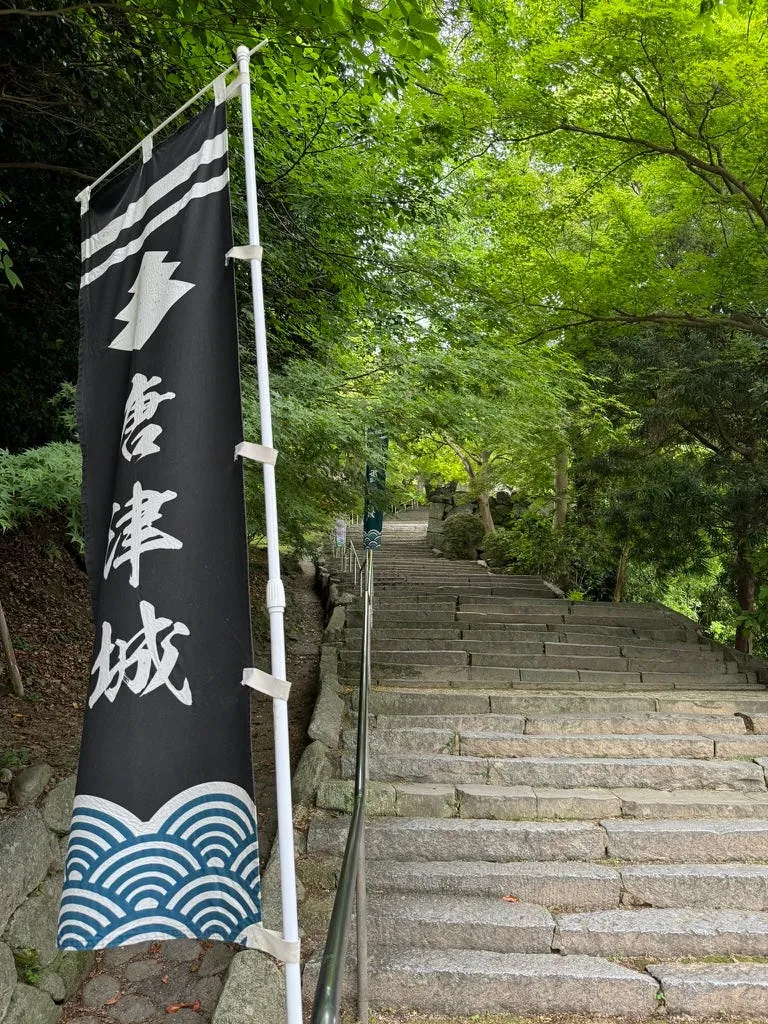
To reach Karatsu Castle, you need to walk up a slope from below. Due to limited time, we turned left and took the elevator at the nearby Maizuru Park instead.
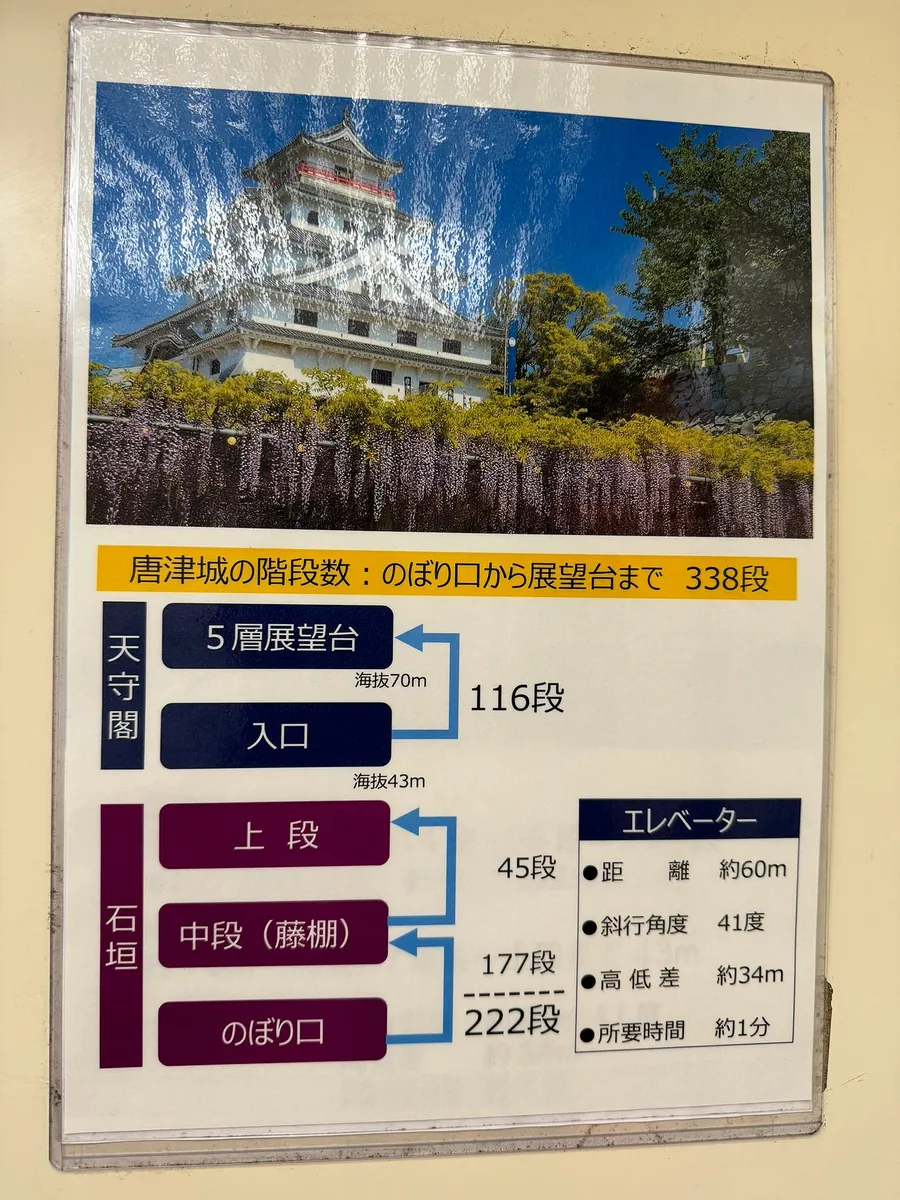
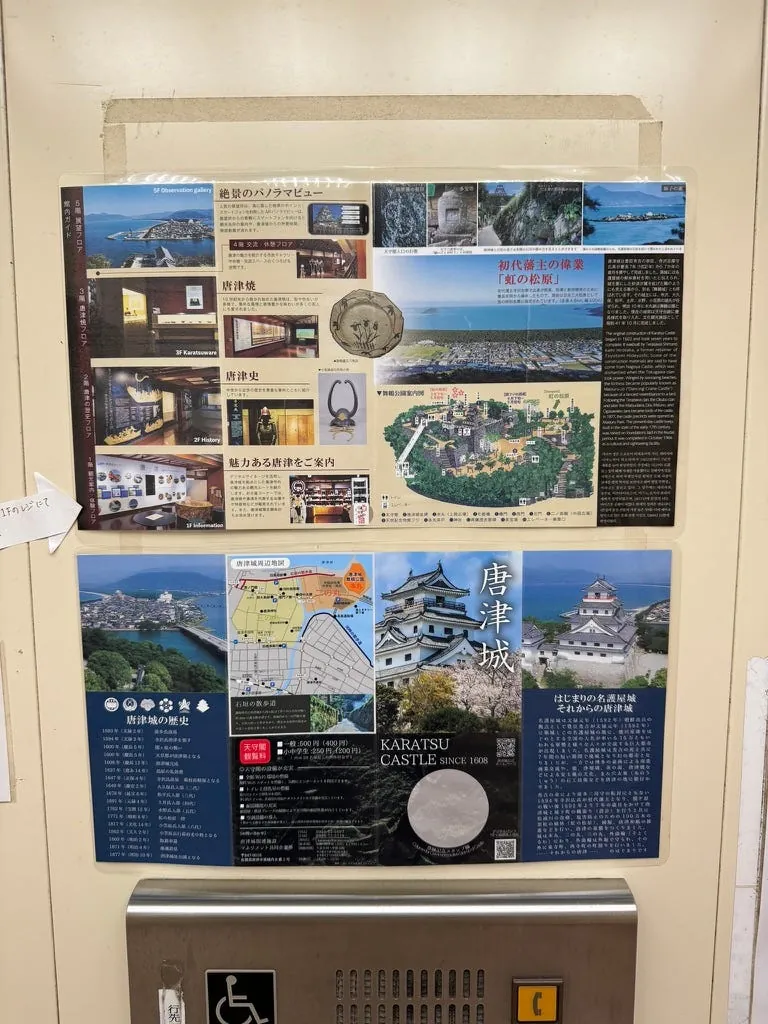
Taking the elevator costs 100 yen per ride. Buy a ticket from the vending machine at the entrance and give it to the staff.
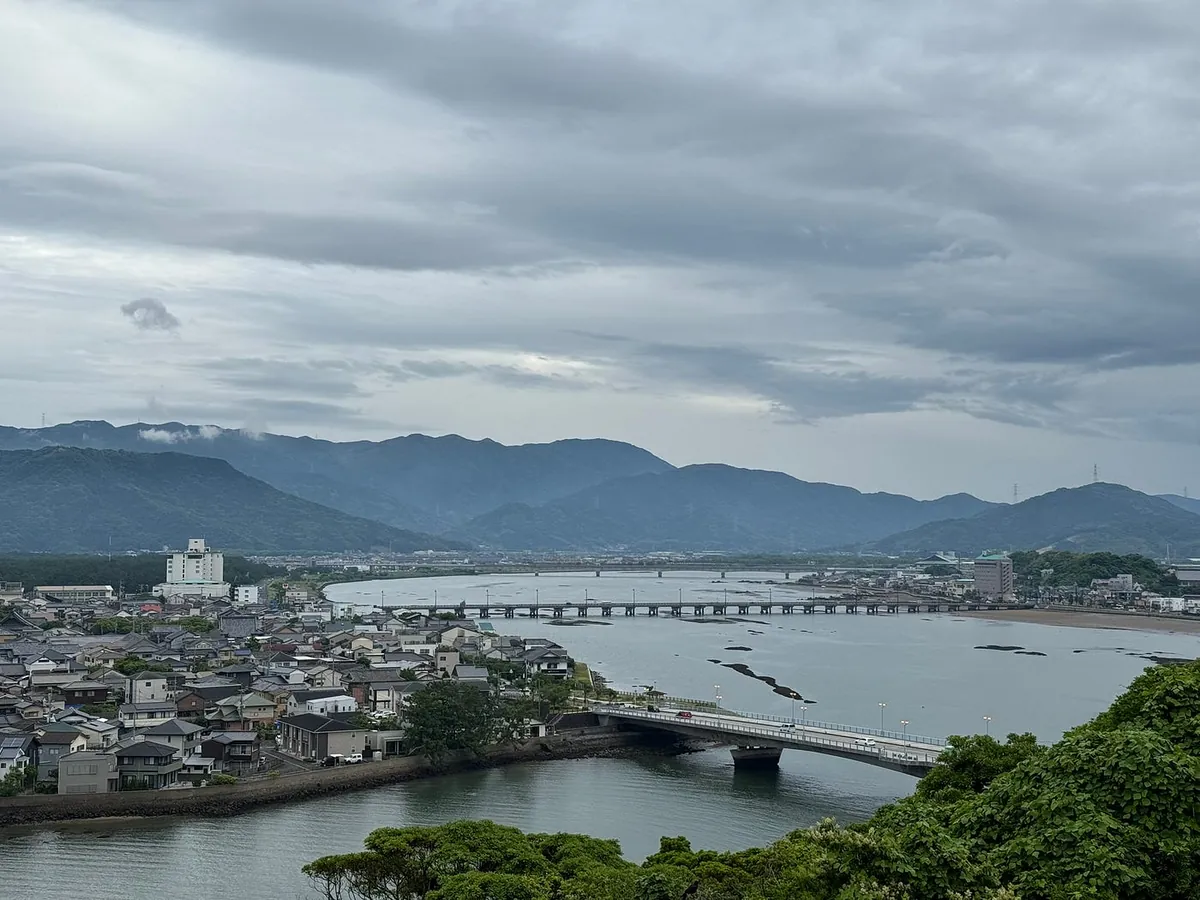
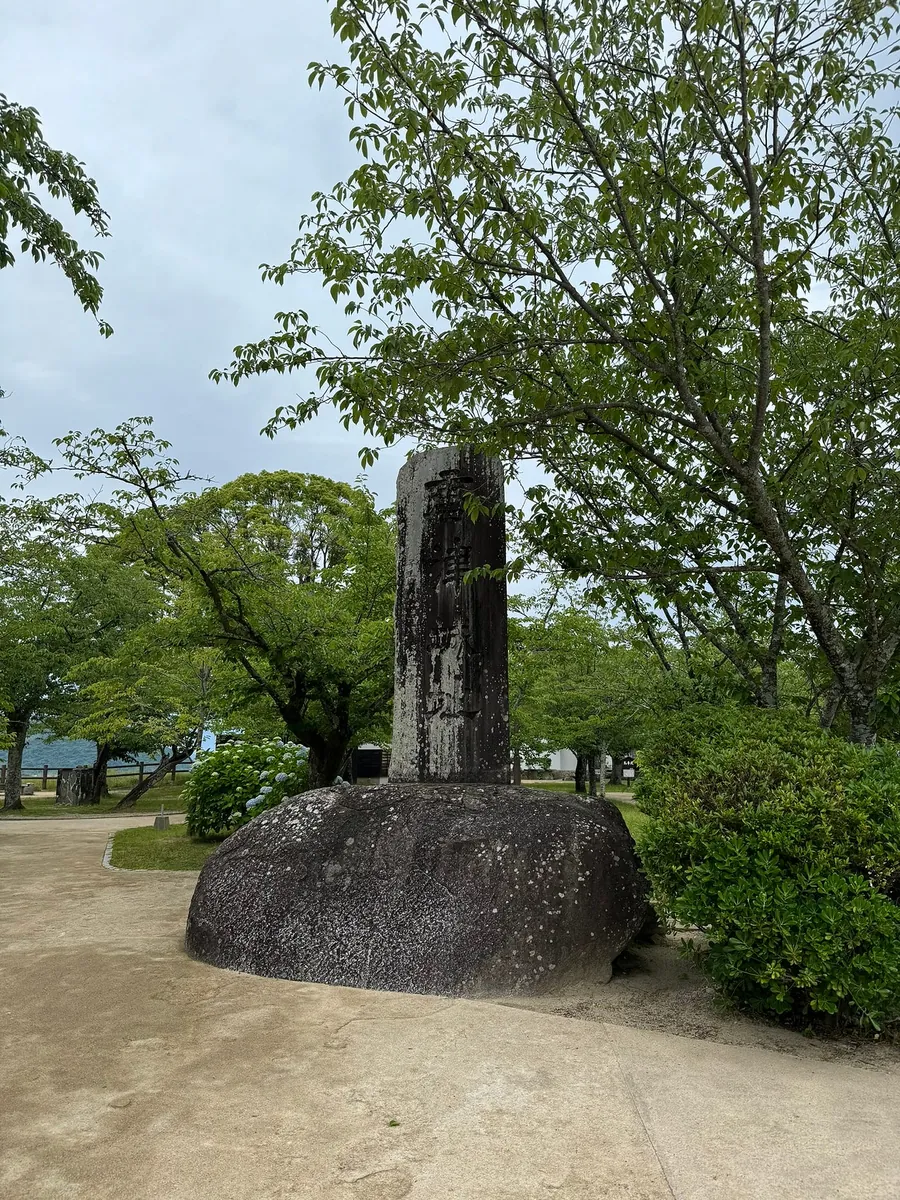
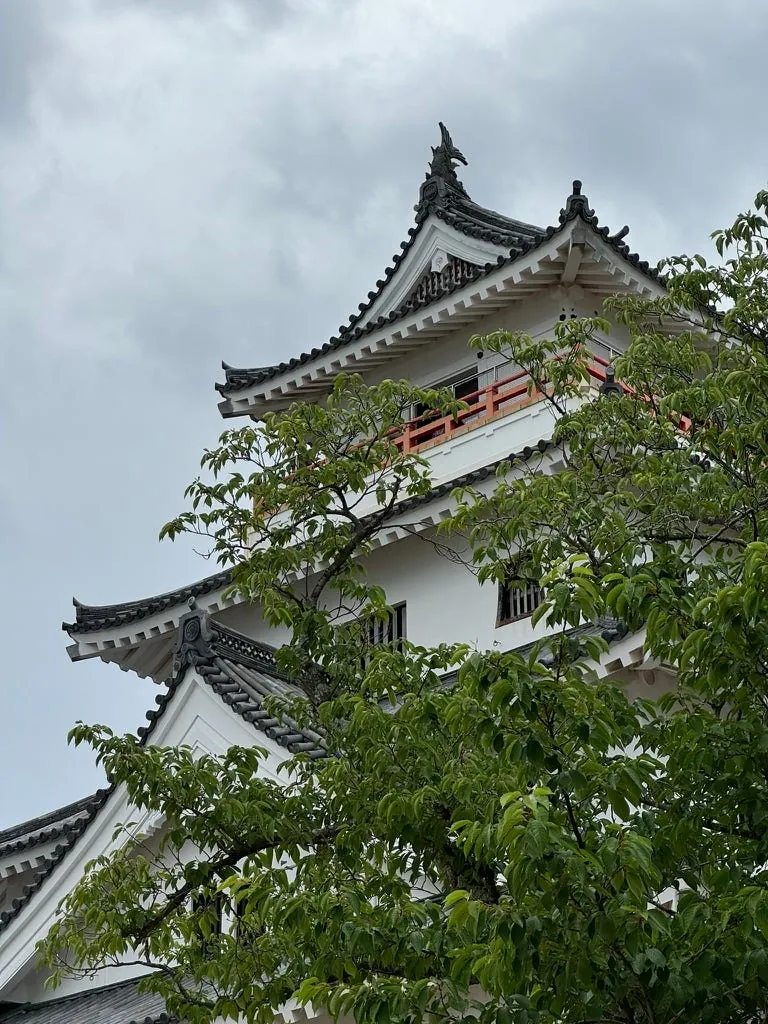
The main keep is closed to visitors; we just came up to enjoy the view and see Karatsu Castle.
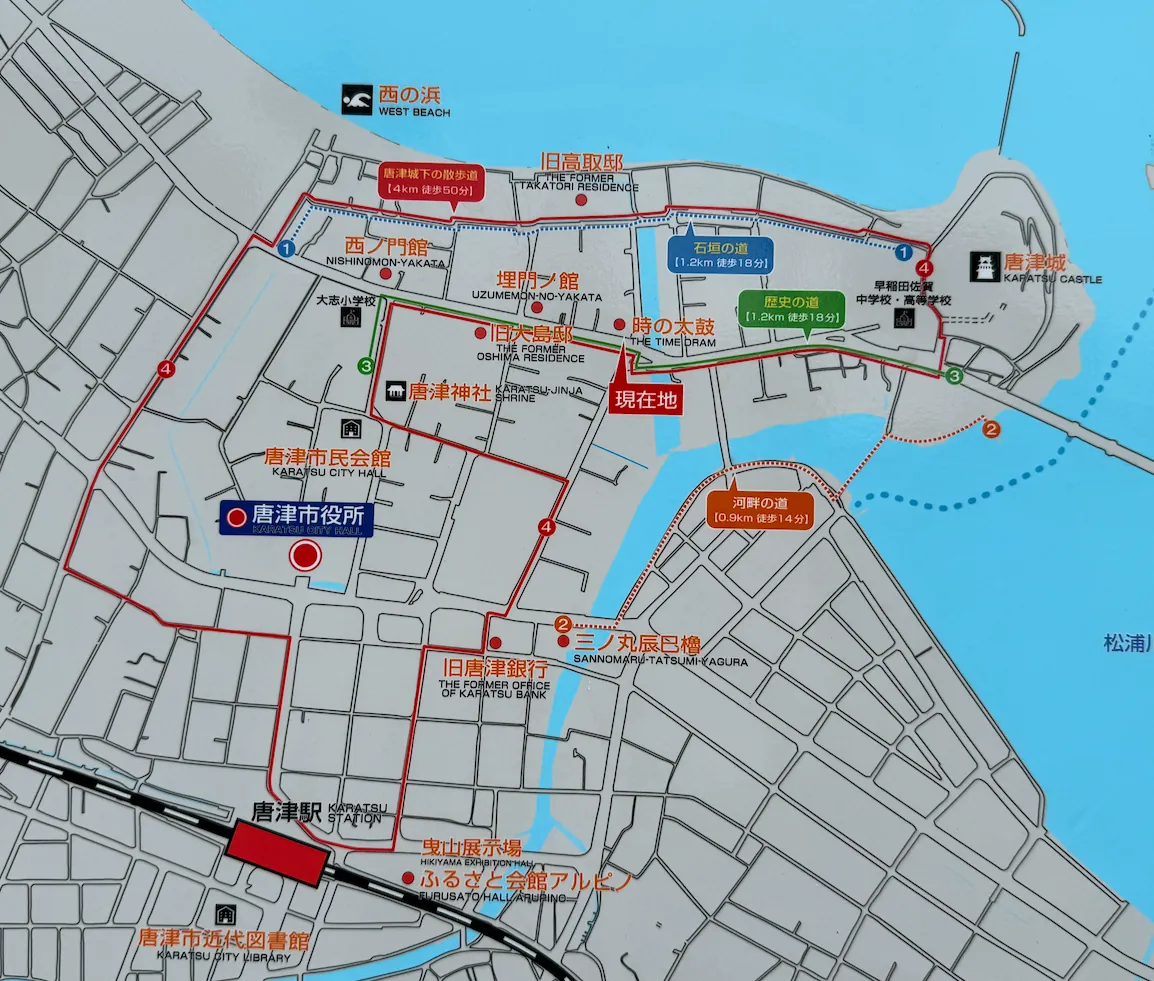
Return to the entrance before the elevator doors close, then walk back to JR Karatsu Station following the tourist map.
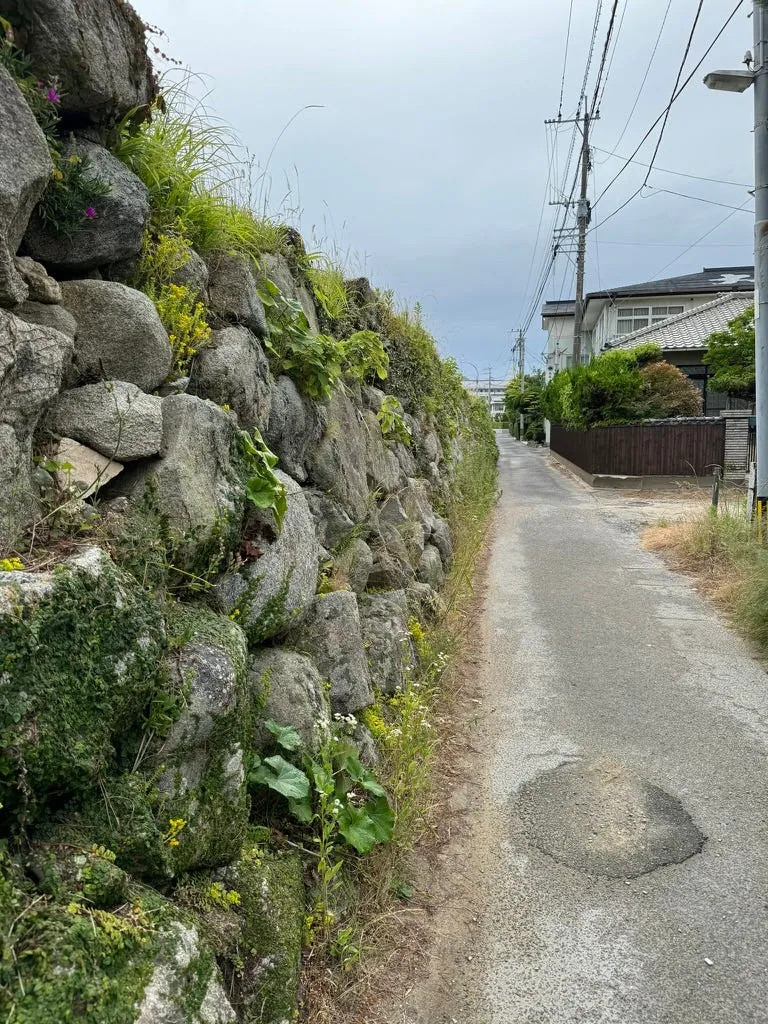
Walk along Ishigaki Road to Karatsu Shrine. (The road is sparsely populated and desolate)
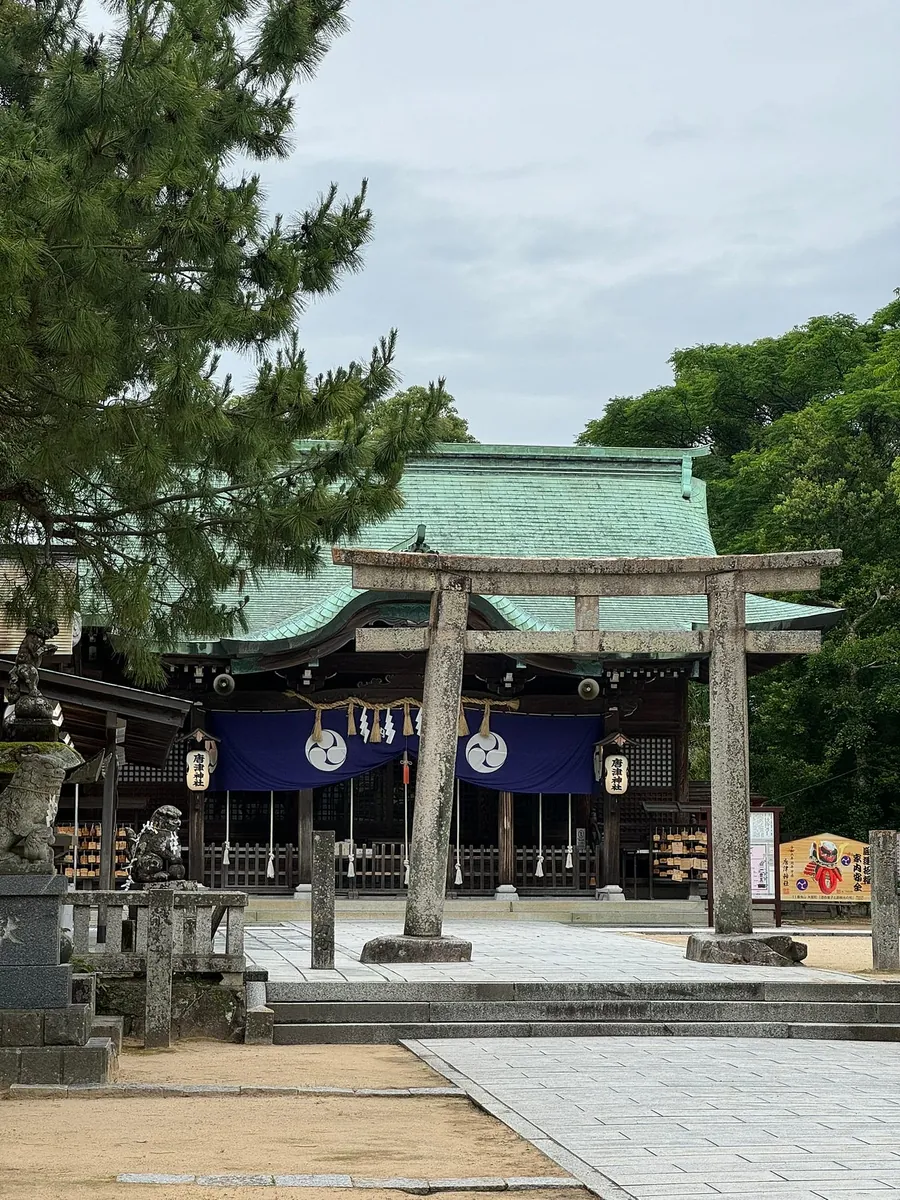
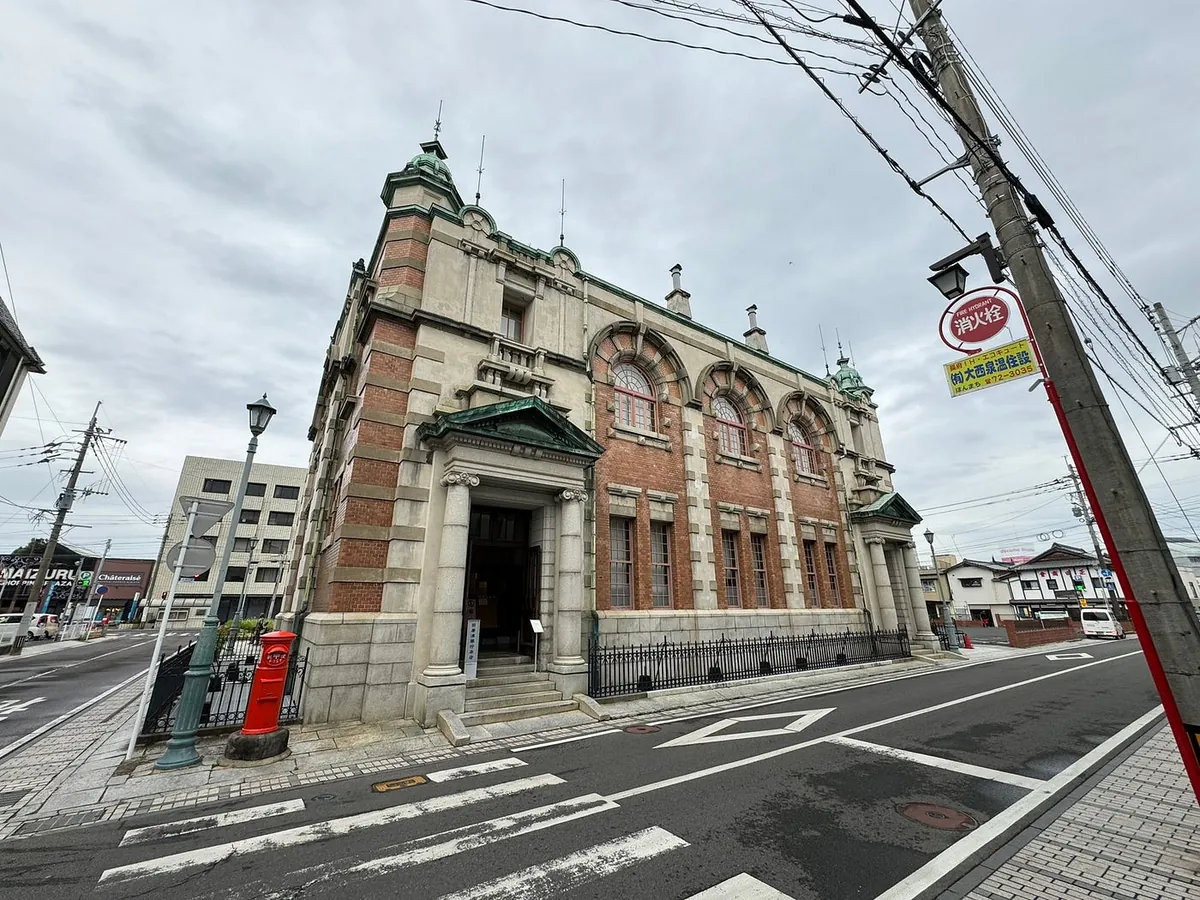
Karatsu Shrine (closed after 17:00) and Old Karatsu Bank (designed by Kengo Tatsuno, the same architect as Tokyo Station: link).
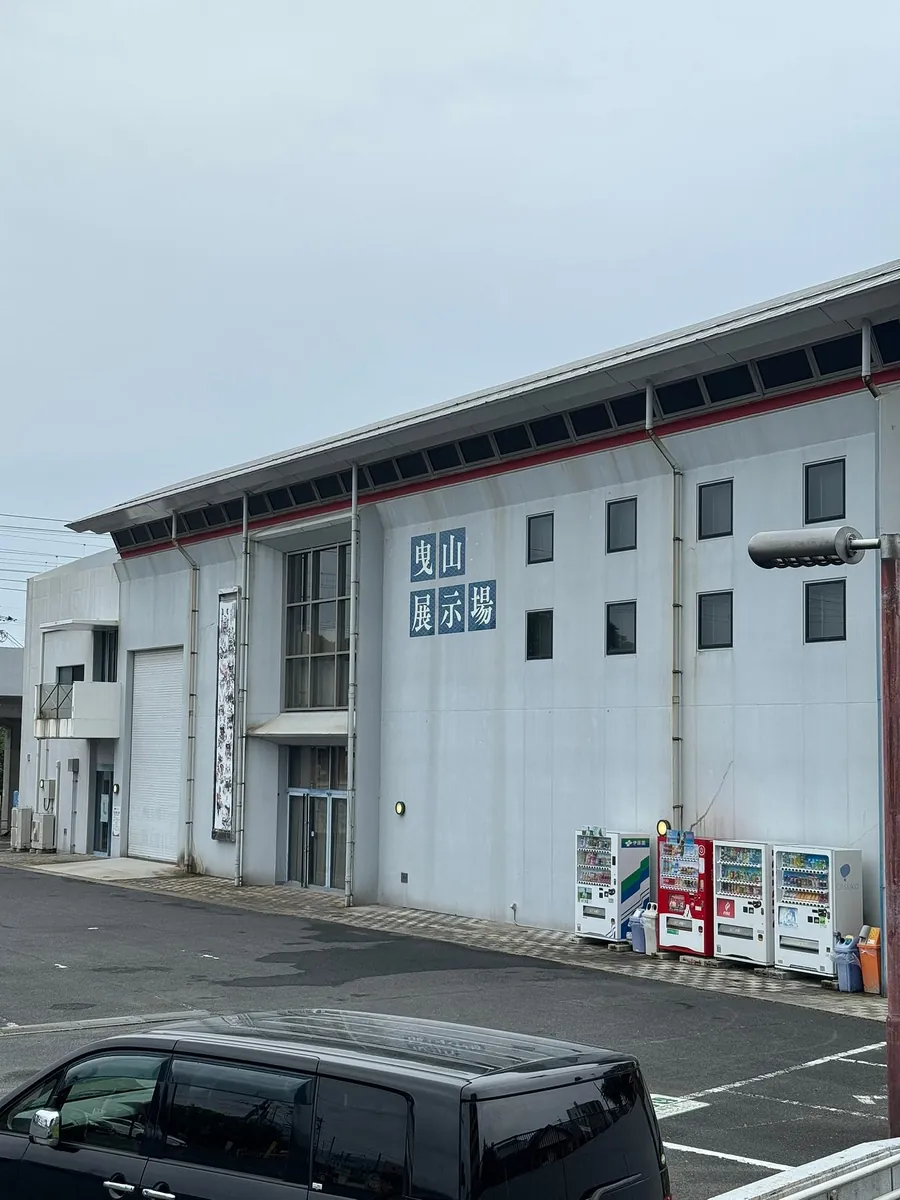
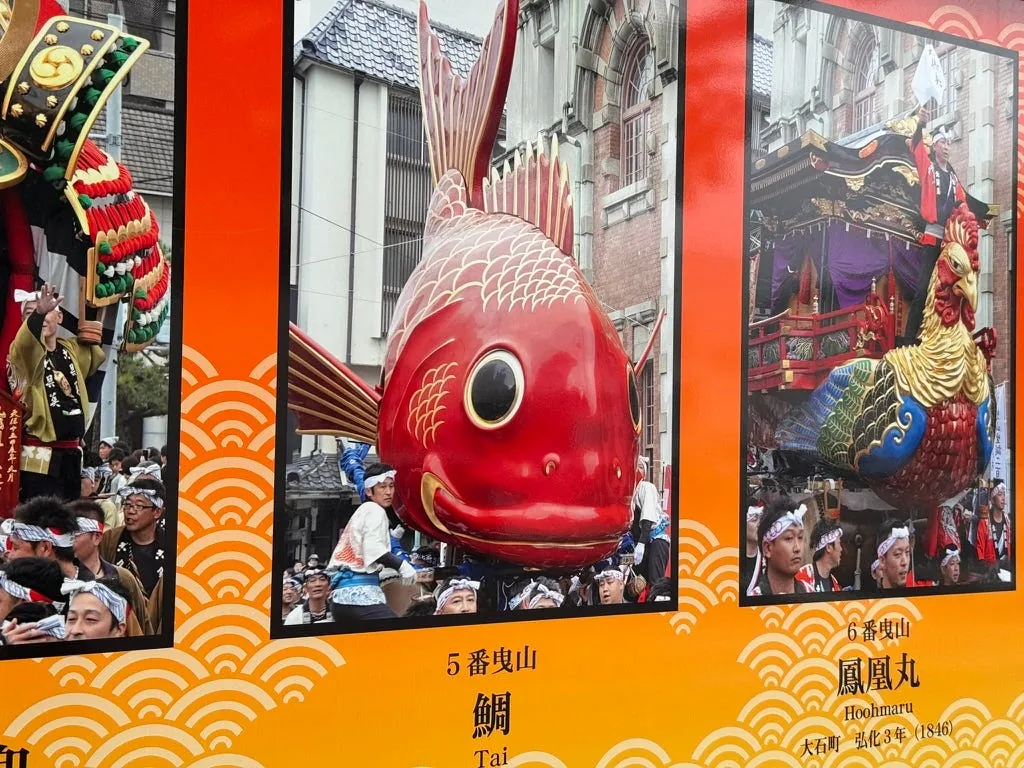
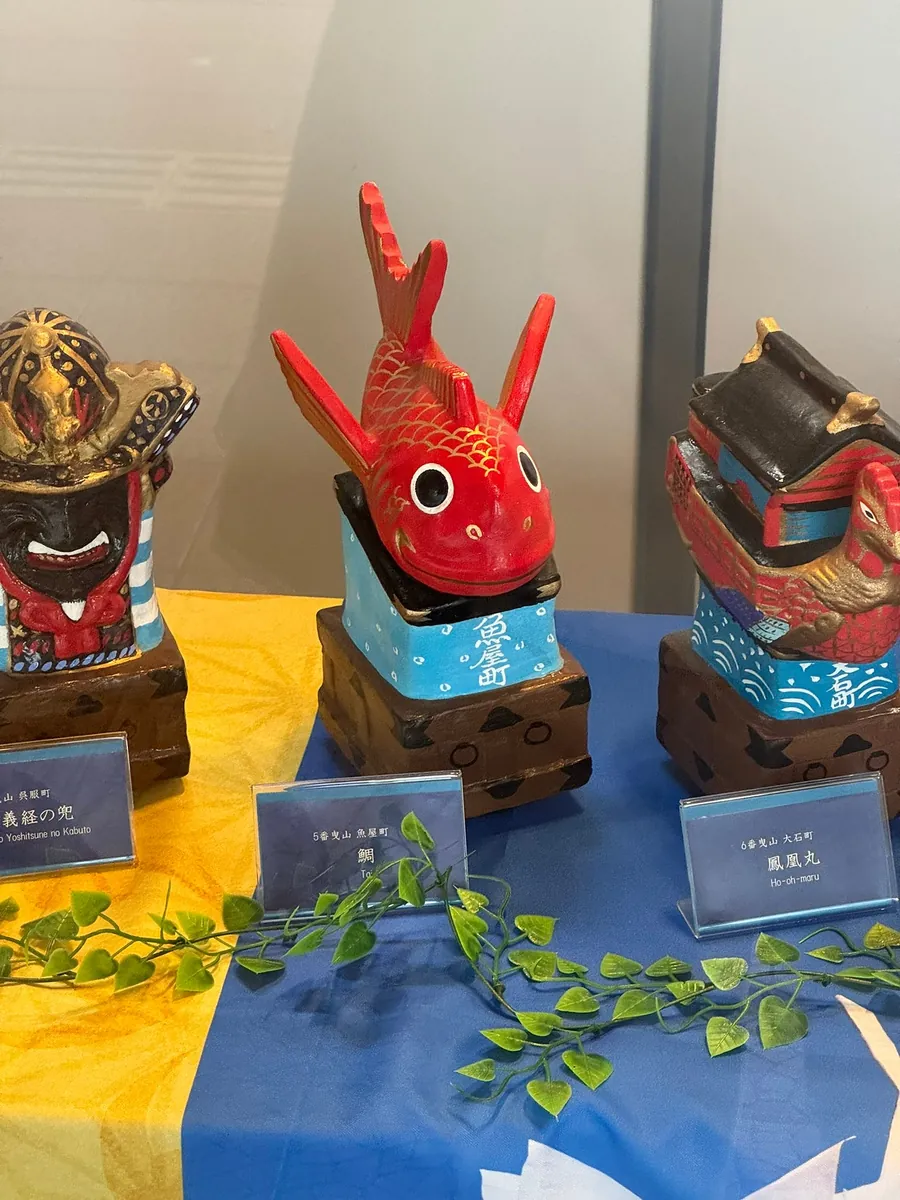
Near the station is the Float Exhibition Hall (it closes after 17:00), so you can only see small models at the station.
At Karatsu Station, take the JR back to Hakata (Tenjin-Minami); had an issue when exiting because the entry was at JR Karatsu Station and the exit was at Tenjin-Minami subway station. The staff did not recognize the JR Pass and requested a full fare ticket (JR Karatsu to Tenjin-Minami) QQ.
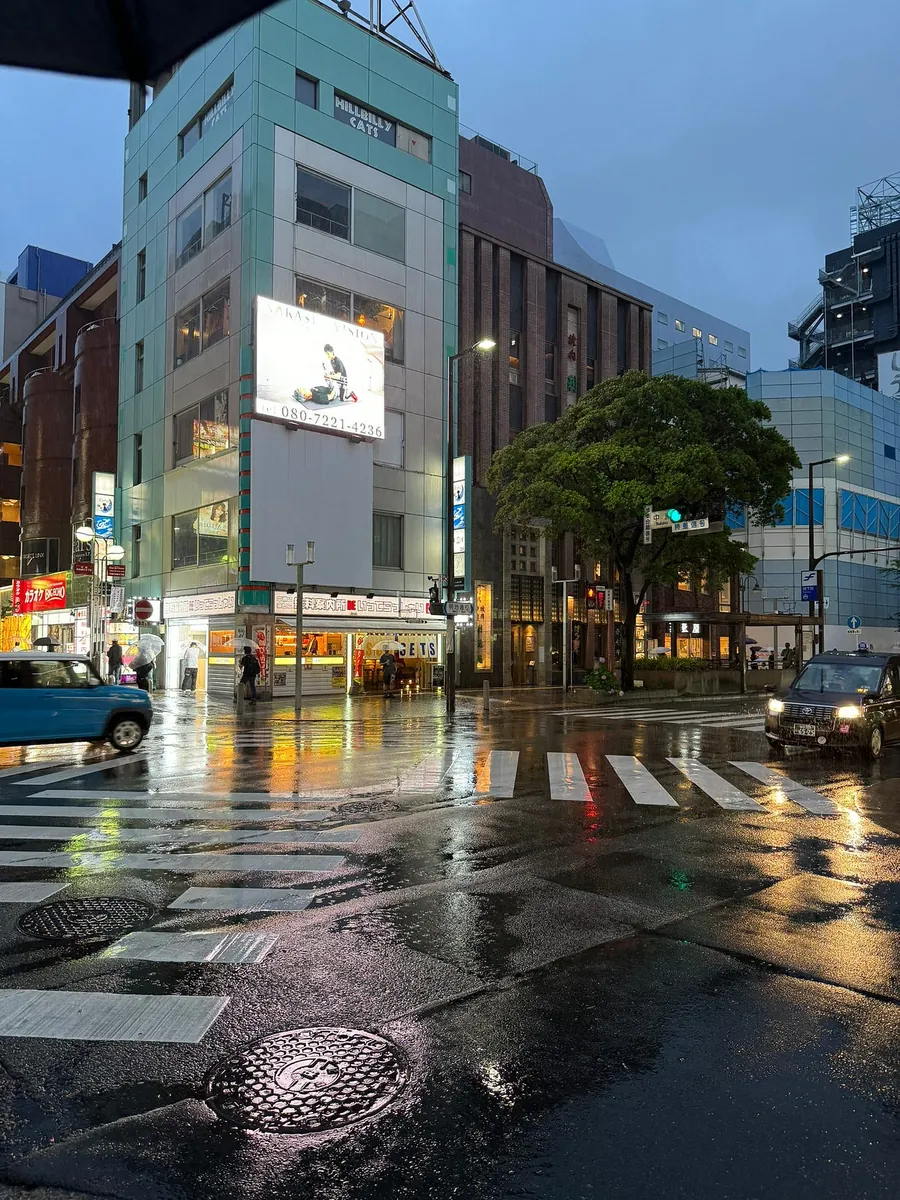
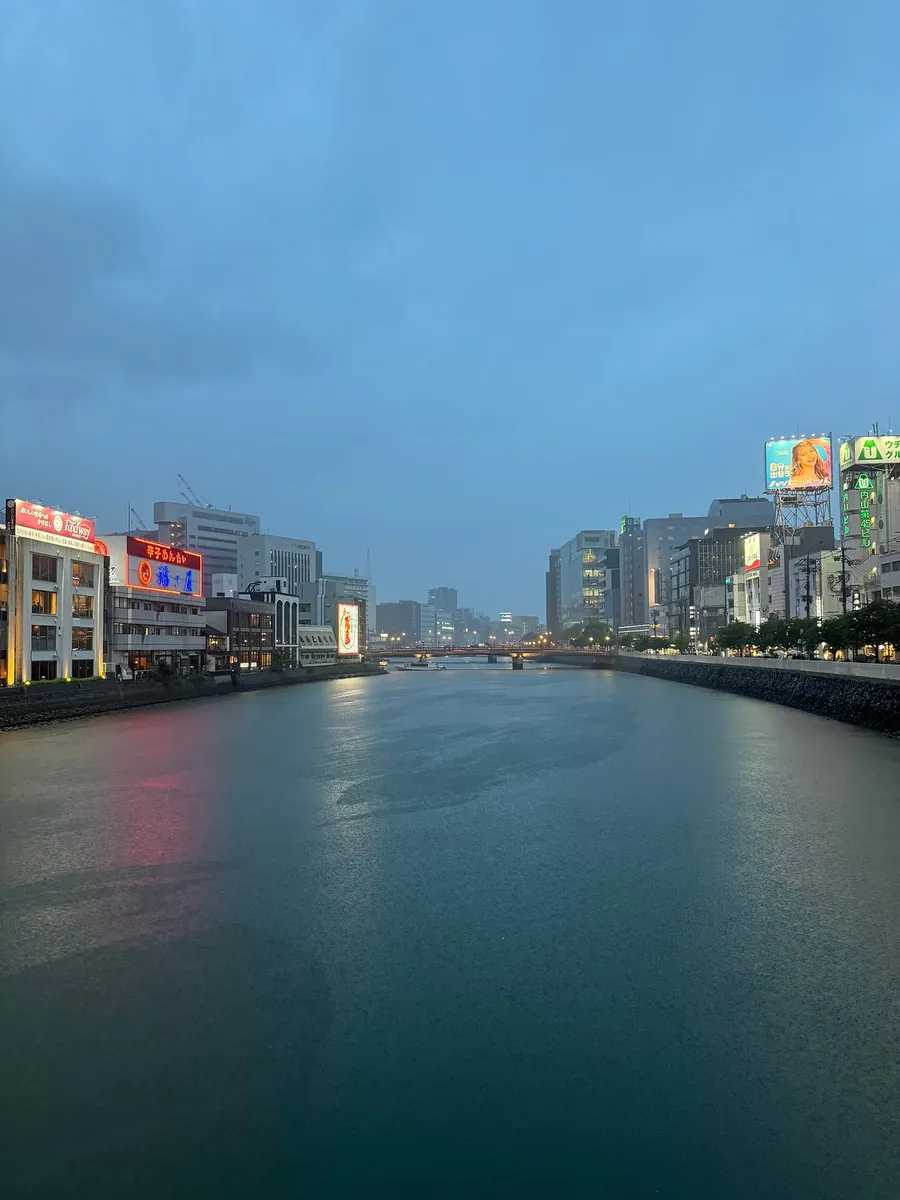
It was pouring rain in Hakata (the rain god was powerful). I casually bought a rice ball at Tenjin Underground Shopping Mall for dinner and then dragged my luggage to the hotel.
This APA has a larger space, but the overall facilities are quite old. It was also my first time staying at an APA without a unit bath, hot spring bath, or smart integration (such as checking the washing machine, Airplay…).
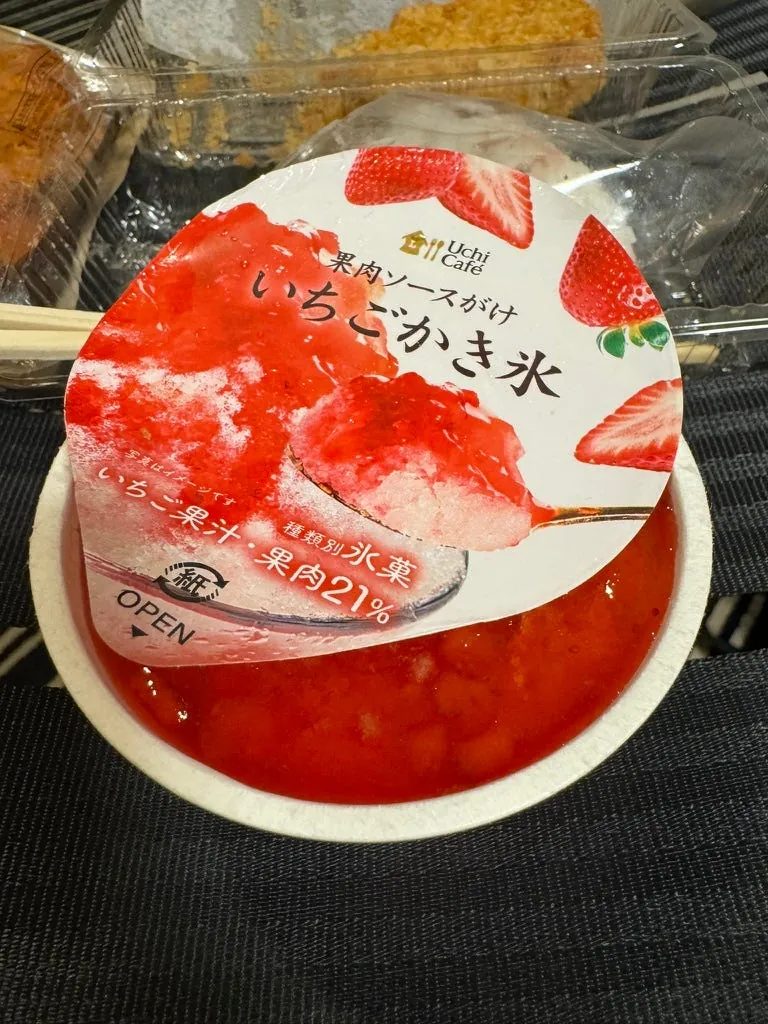
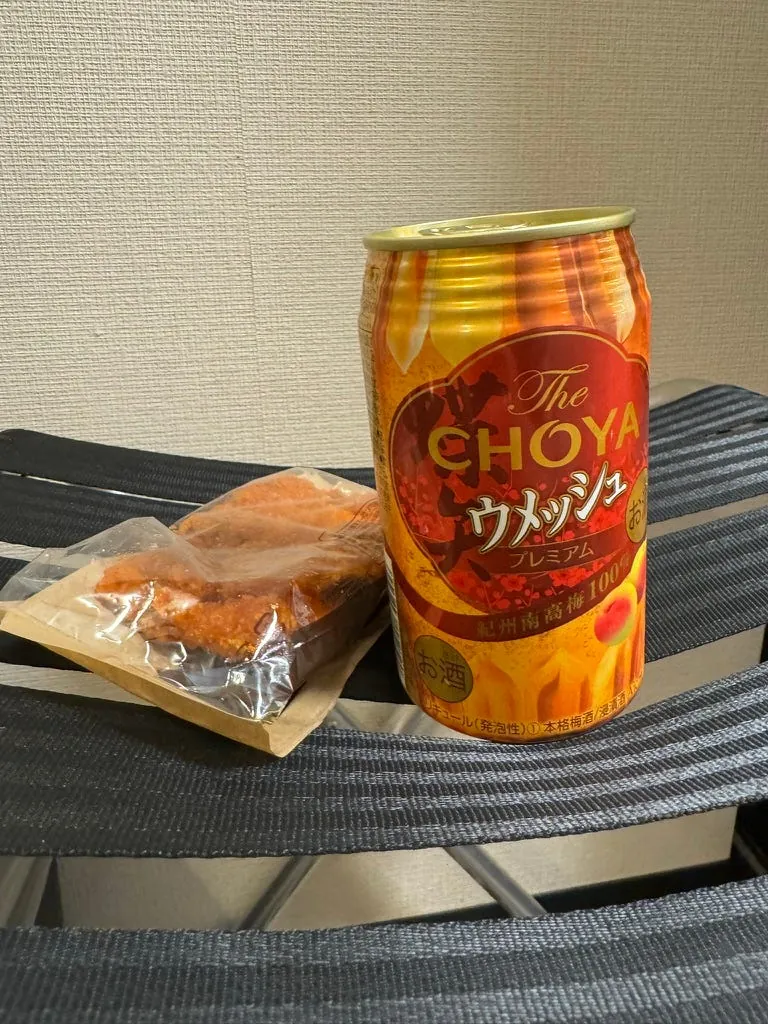
Snacks were strawberry slushies, and late-night meals were convenience store fried chicken. Qiuyah (so sweet).
End of a long day.
Day 7 Sasebo (Kujukushima Islands), Takeo Onsen
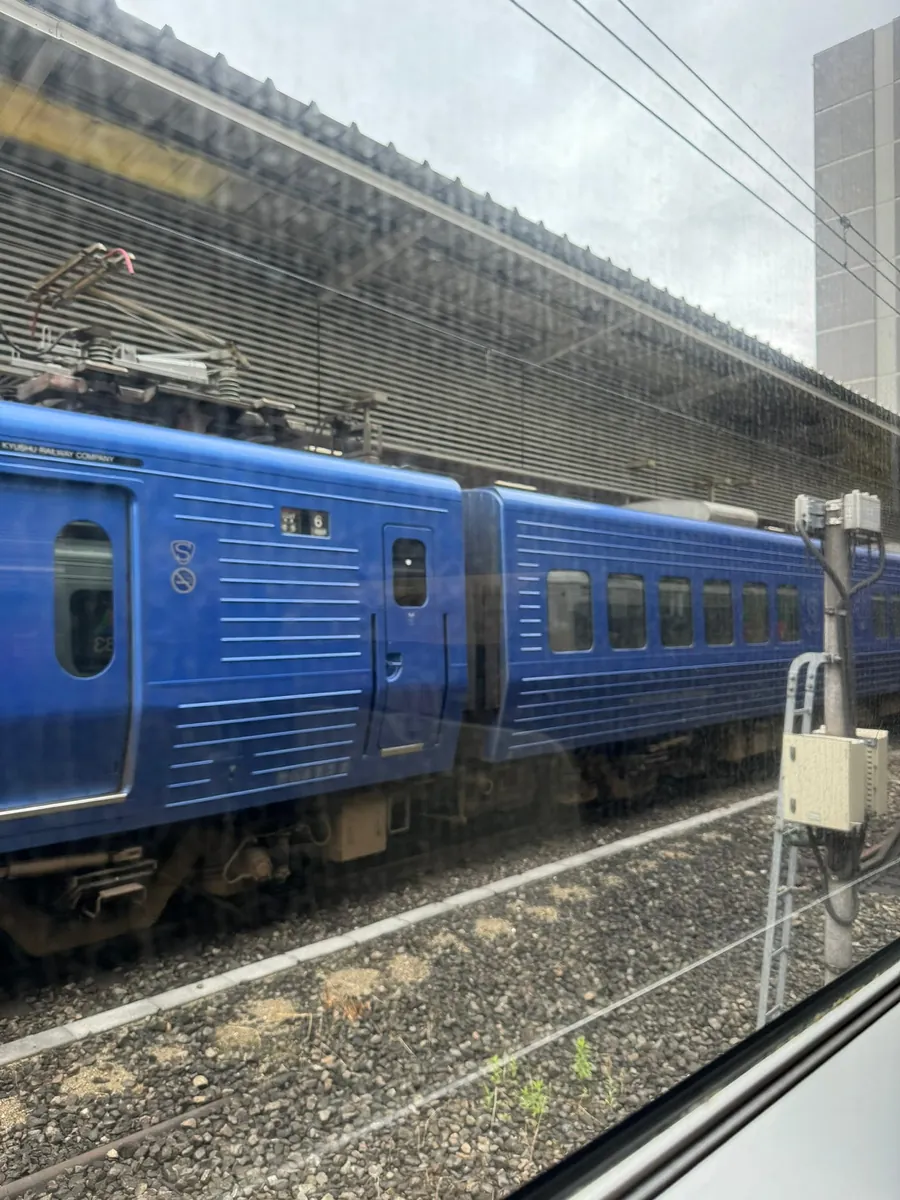
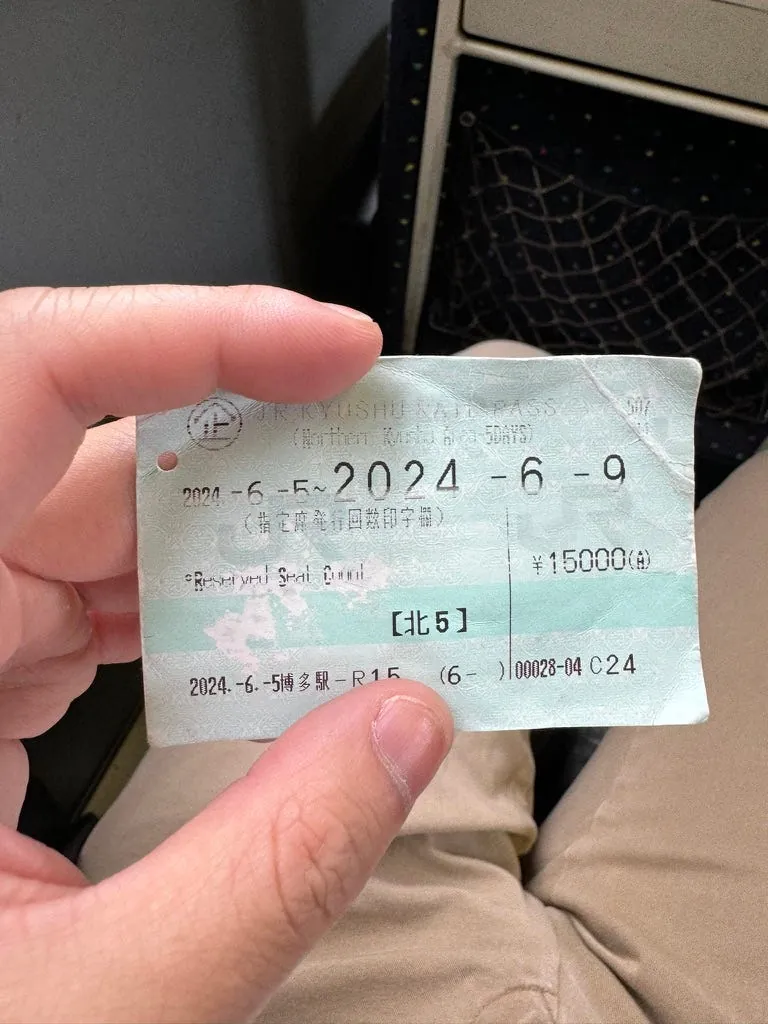
The morning was cloudy, and it was the last day of the JR Pass. Unable to change the itinerary, I had to continue taking the train to Sasebo.
The JR train ride took about an hour and a half. I recorded a segment of the JR Kyushu onboard announcement as a memory.
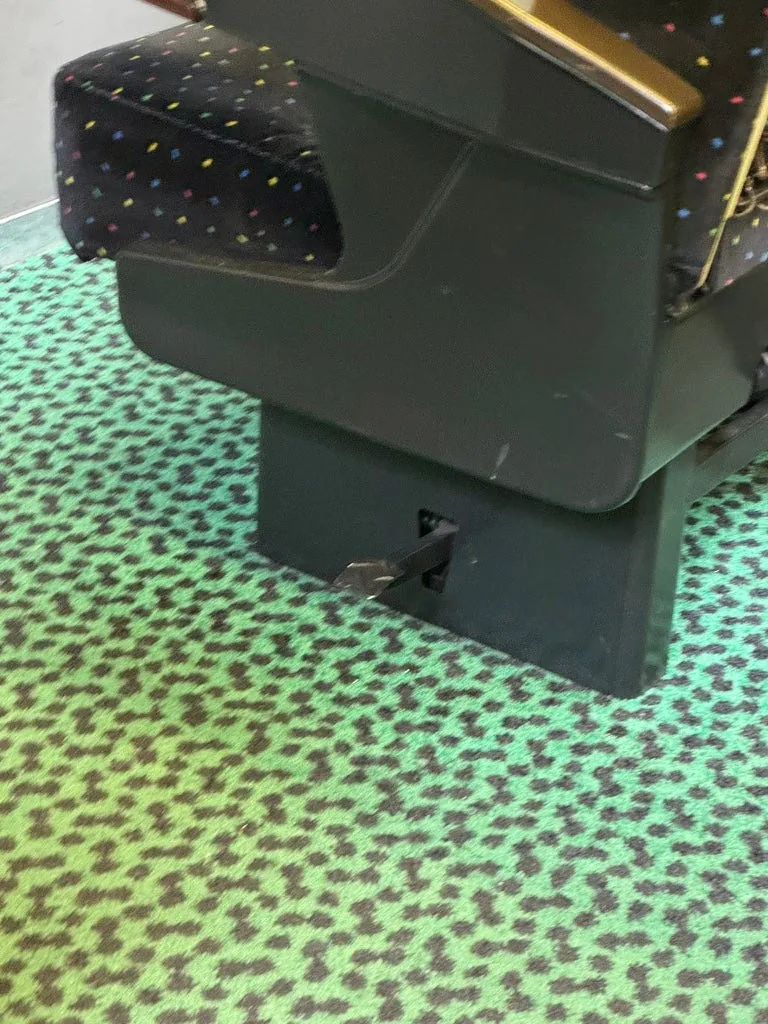
The last section from Haiki to Sasebo runs in reverse (about 10 minutes). If you are prone to motion sickness, you can use the foot lever to change the seat direction.
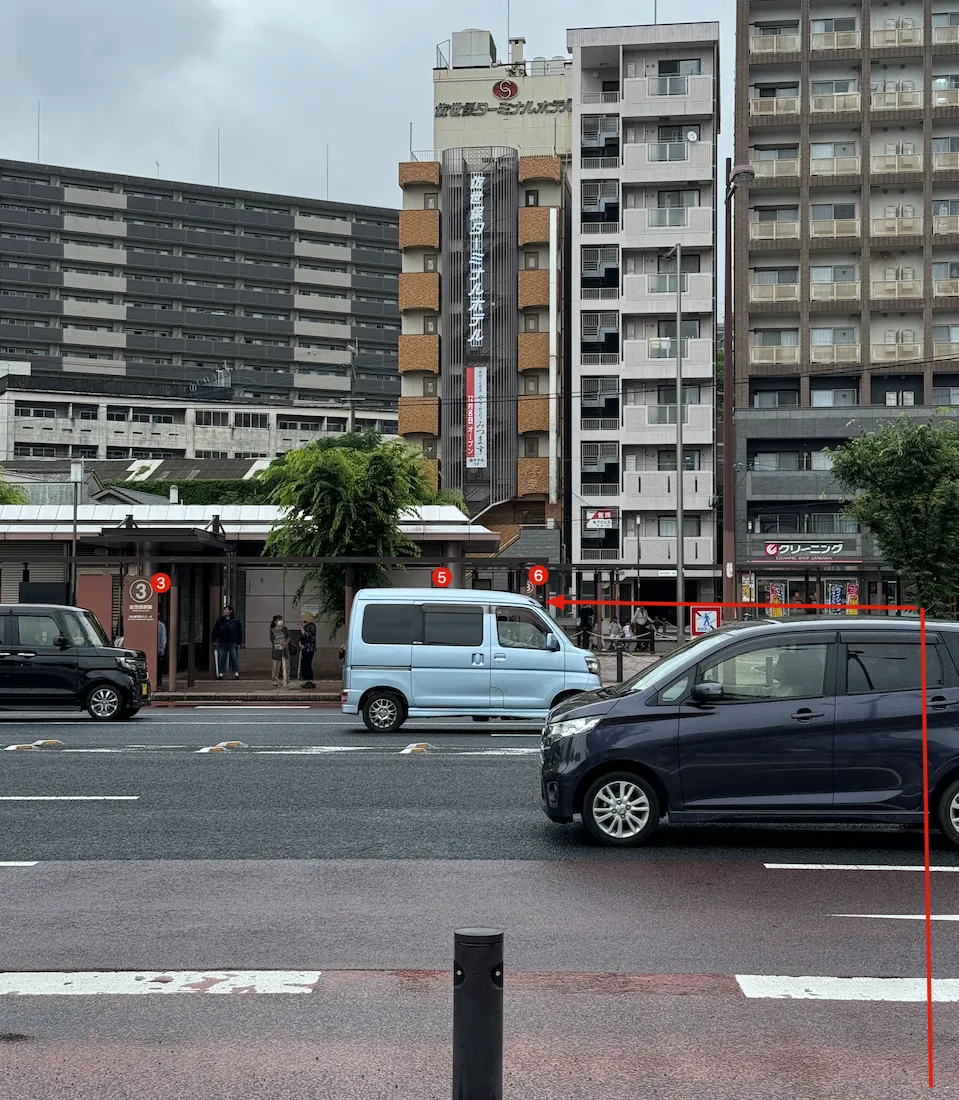
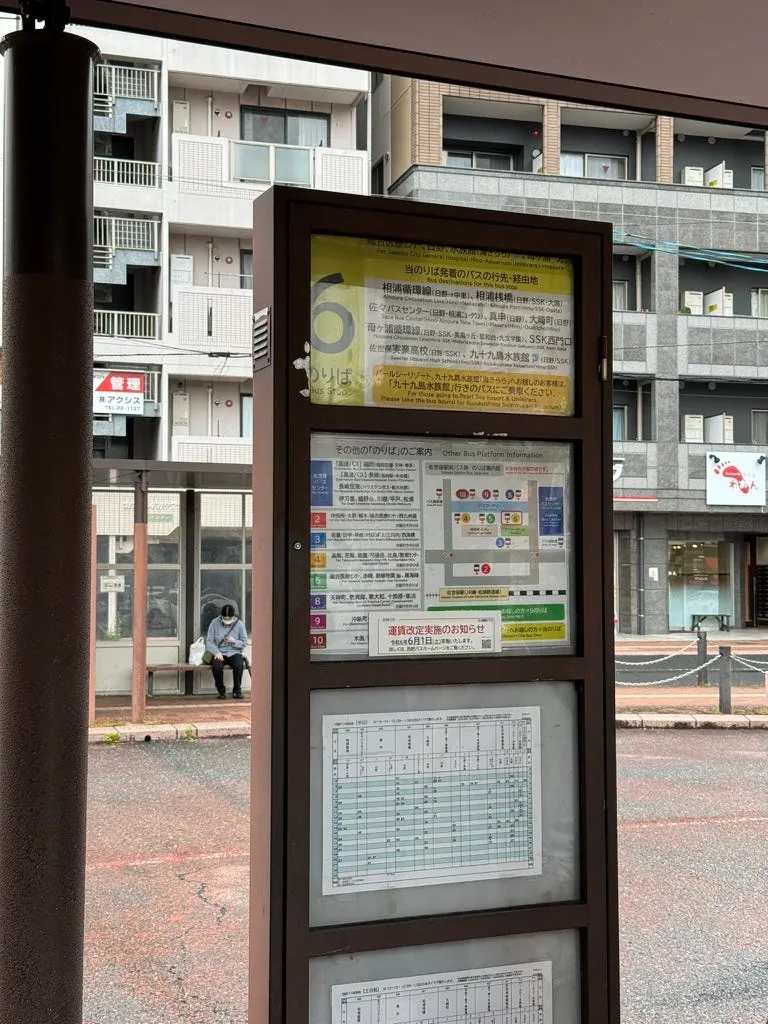
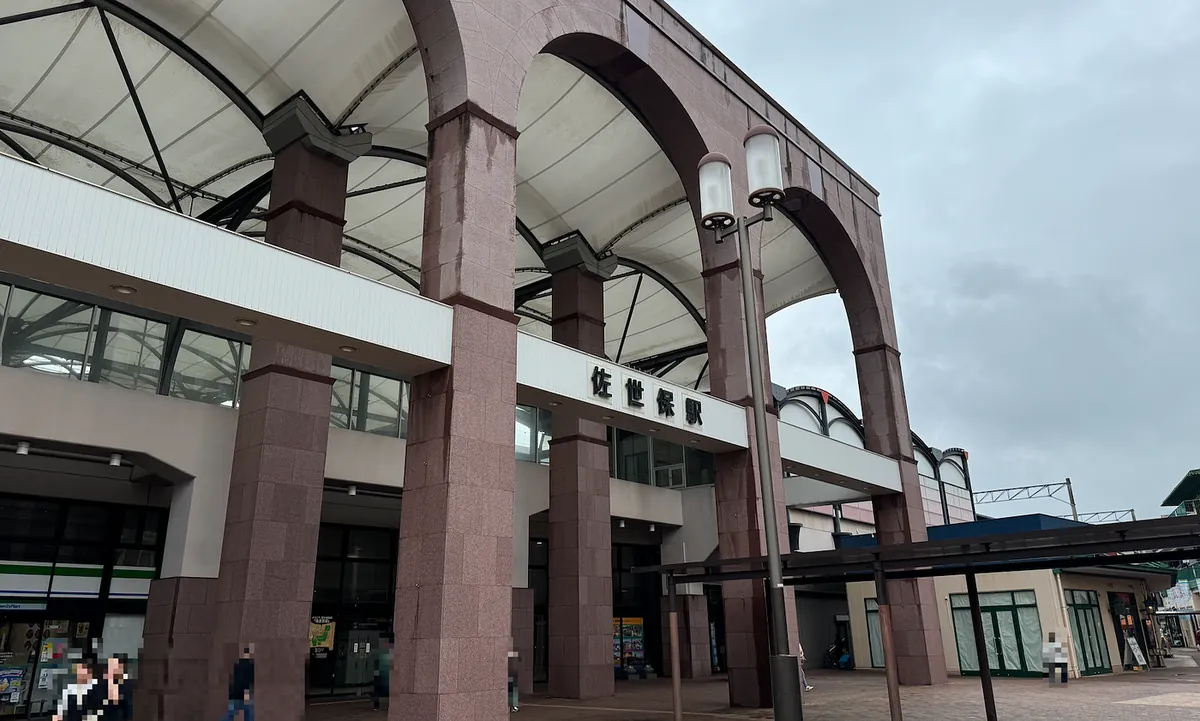
After exiting Sasebo Station, cross the street to the opposite side, then walk further back to find bus stop No. 6, heading to “Kujukushima Aquarium.”
After transferring to the bus and getting off at the Kujukushima Aquarium stop, it’s about a 5-minute walk to the Kujukushima Sightseeing Boat Visitor Center, where you can buy tickets to board the boat. (Showing your JR Pass grants a discount)
KKday Online Ticket: Japan Kyushu Nagasaki \| Kujukushima Sightseeing Boat Ticket
Kujukushima Sightseeing Boat
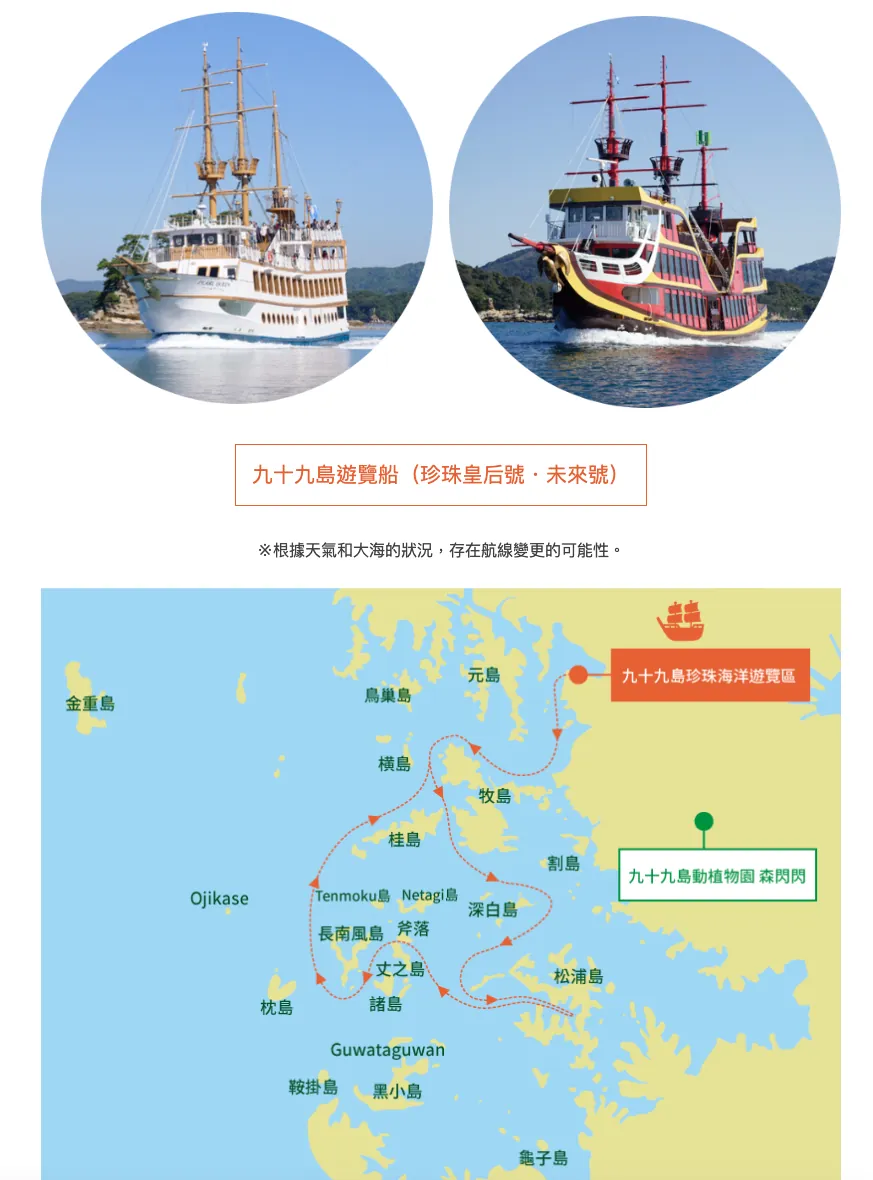
Official Kujukushima Website Information
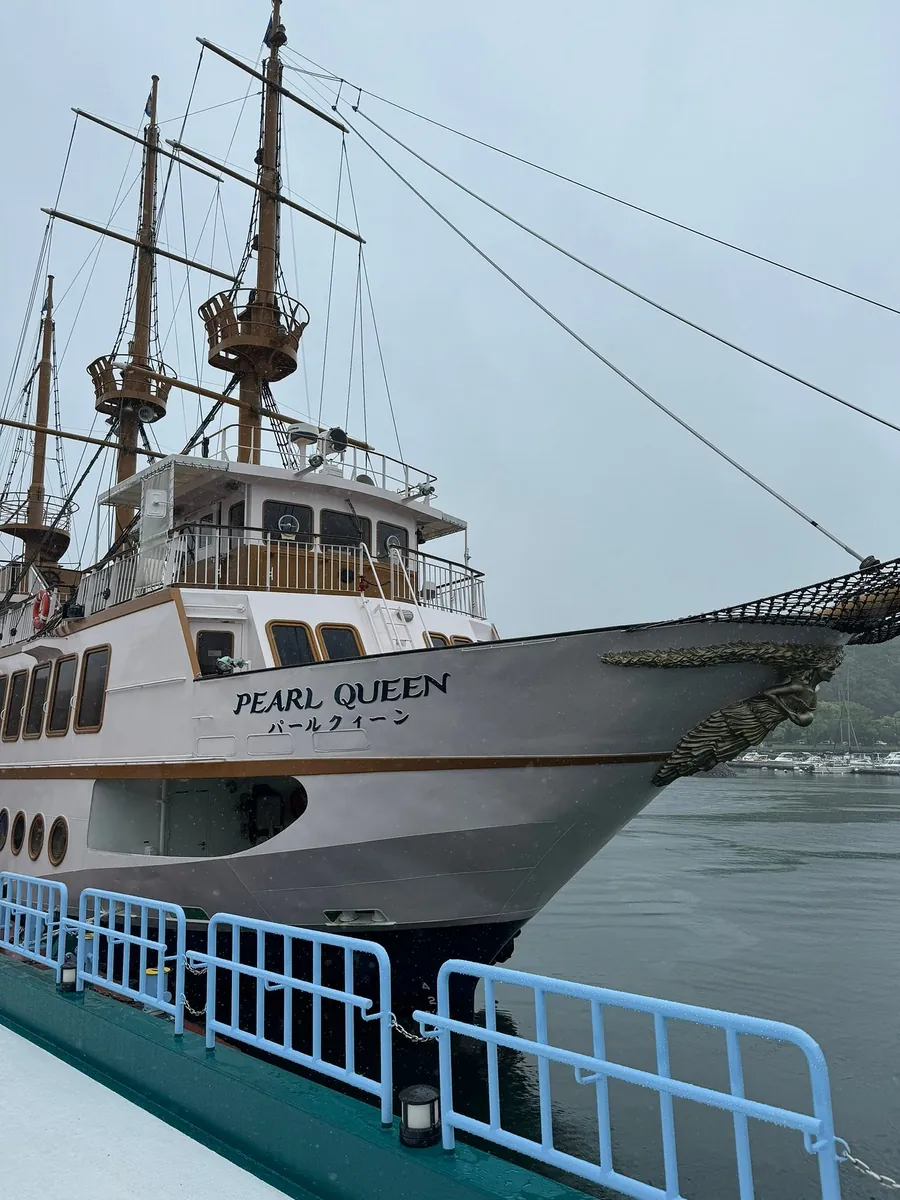
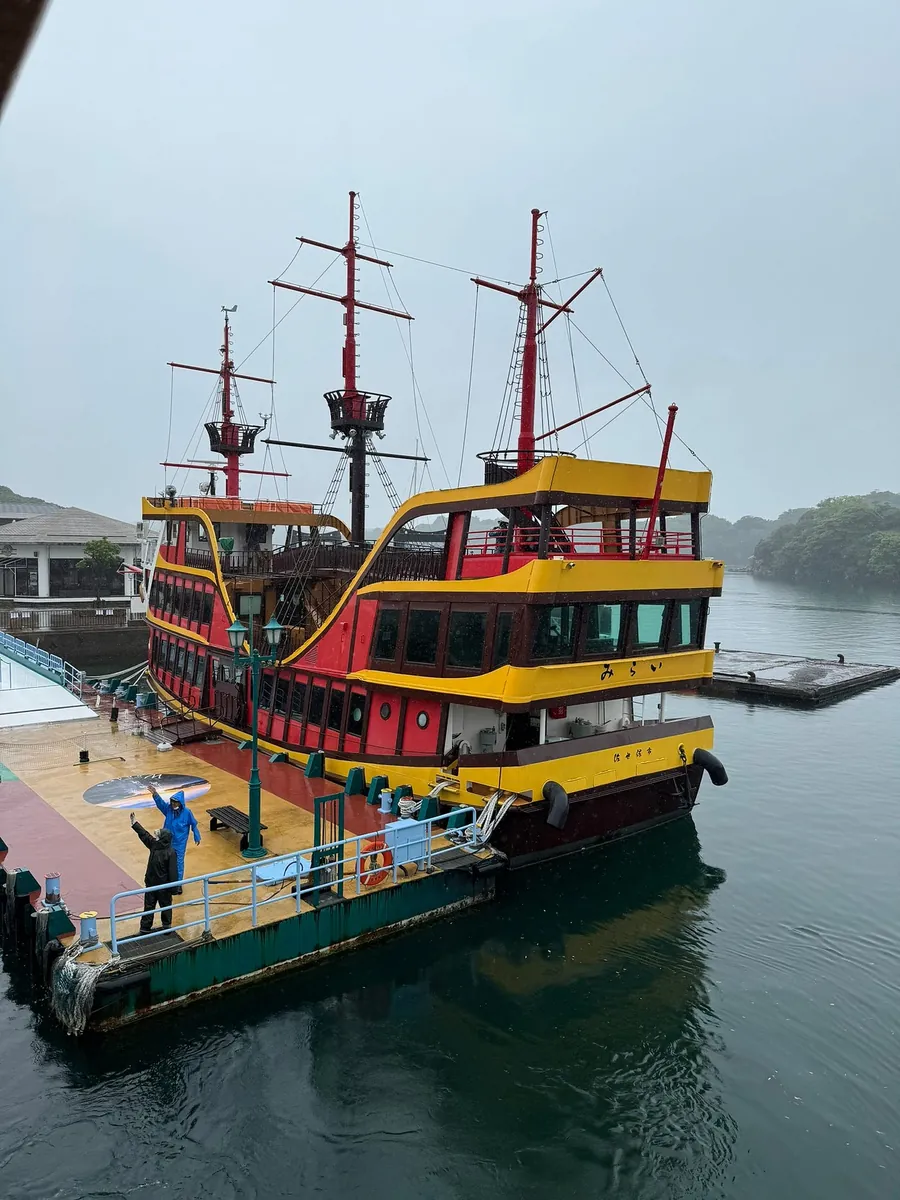
This time we took the white Pearl Queen ship on the left at 11:00.
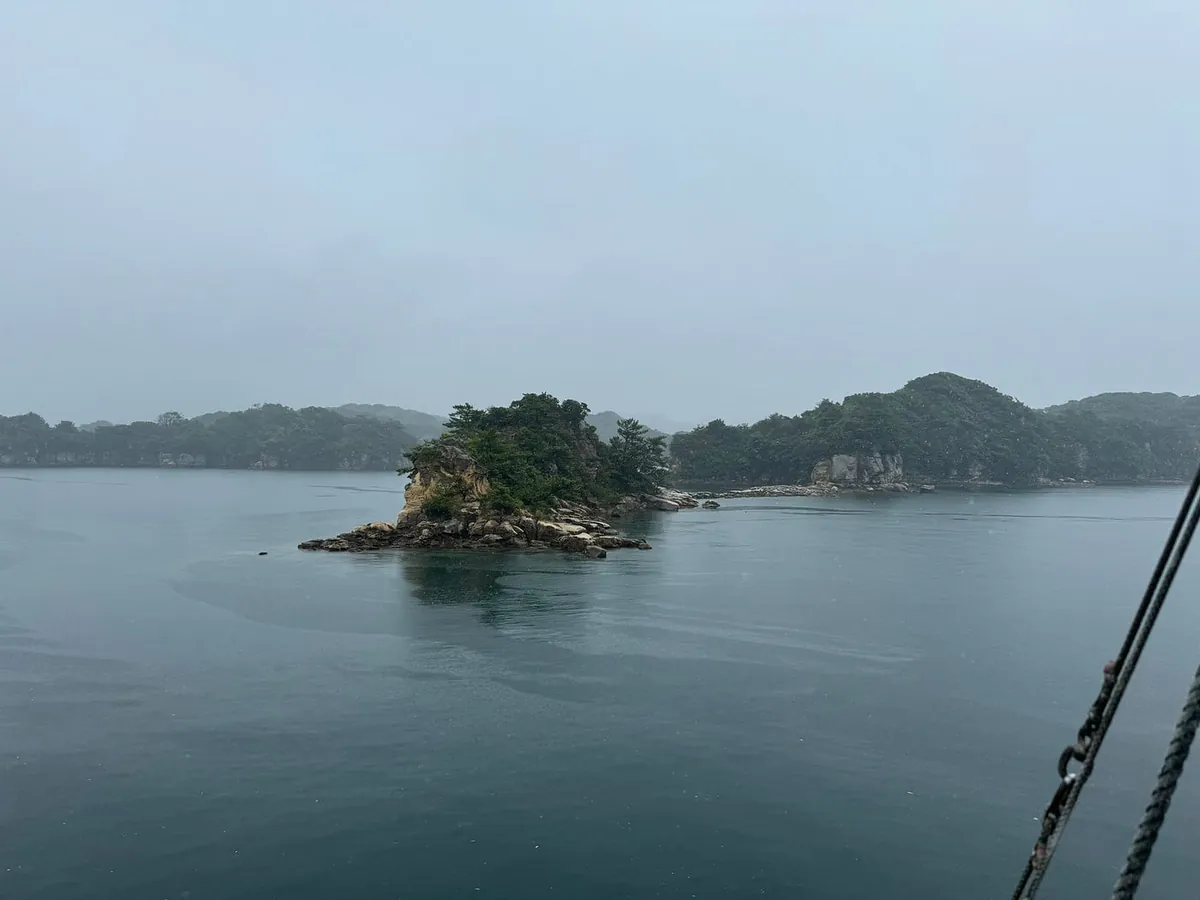
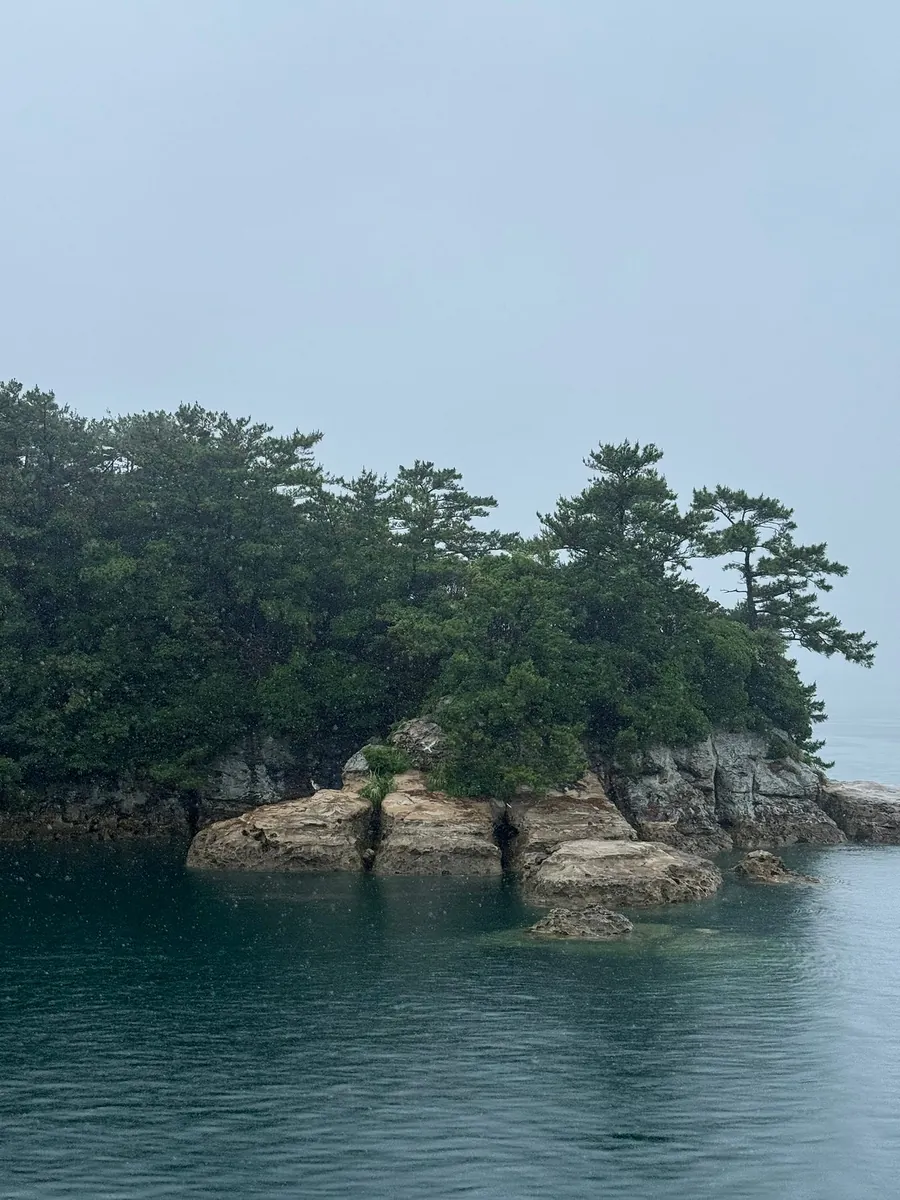
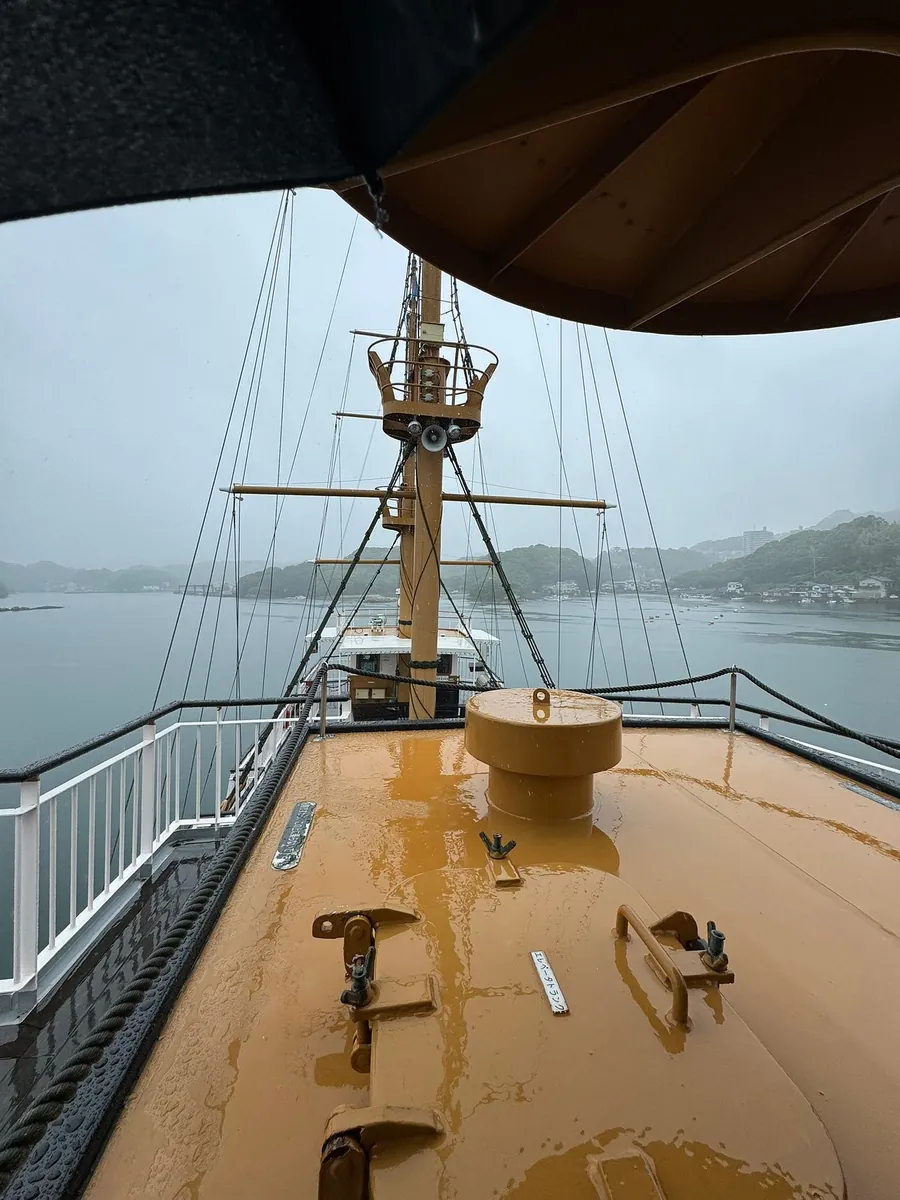
Heavy rain and bad weather, can’t be a pirate king, just holding an umbrella, feeling the wind and getting soaked in the rain.
The ship has announcements in Chinese, English, Japanese, and Korean. The trip takes about 50 minutes. There are restrooms and a vending area.
You can go up to the deck and bird-watching platform outside the cabin, but due to heavy rain and strong wind that day, we didn’t go up.
The wind is especially strong when the ship passes between the two islands, so please be careful.
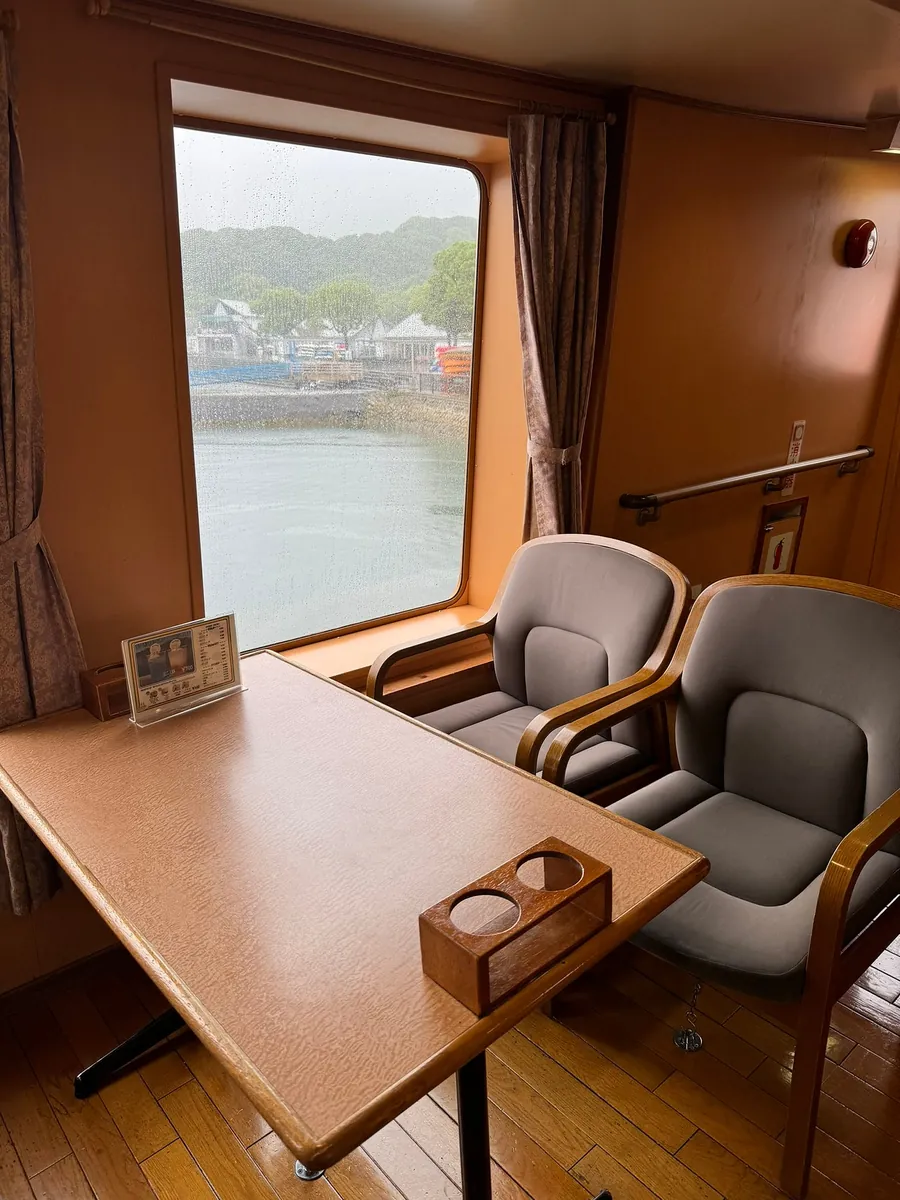
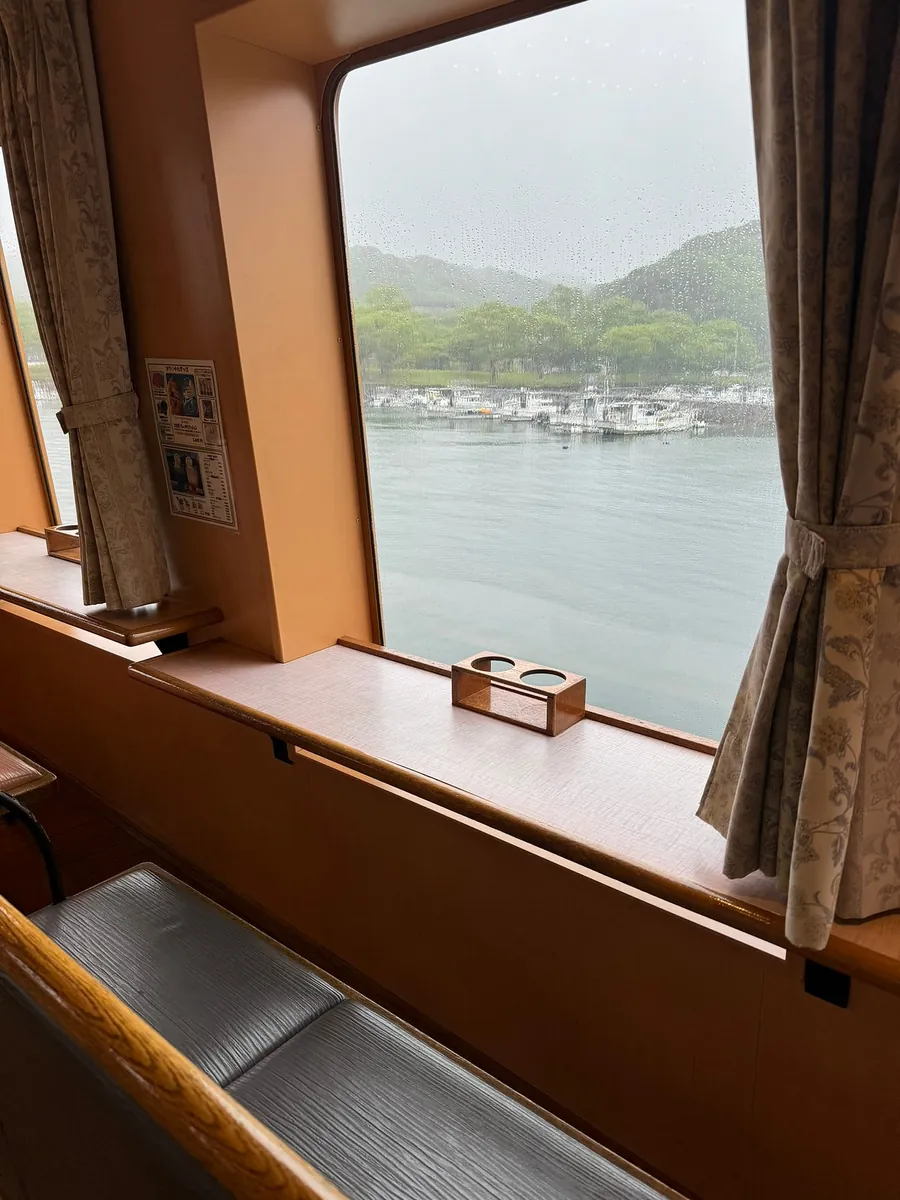
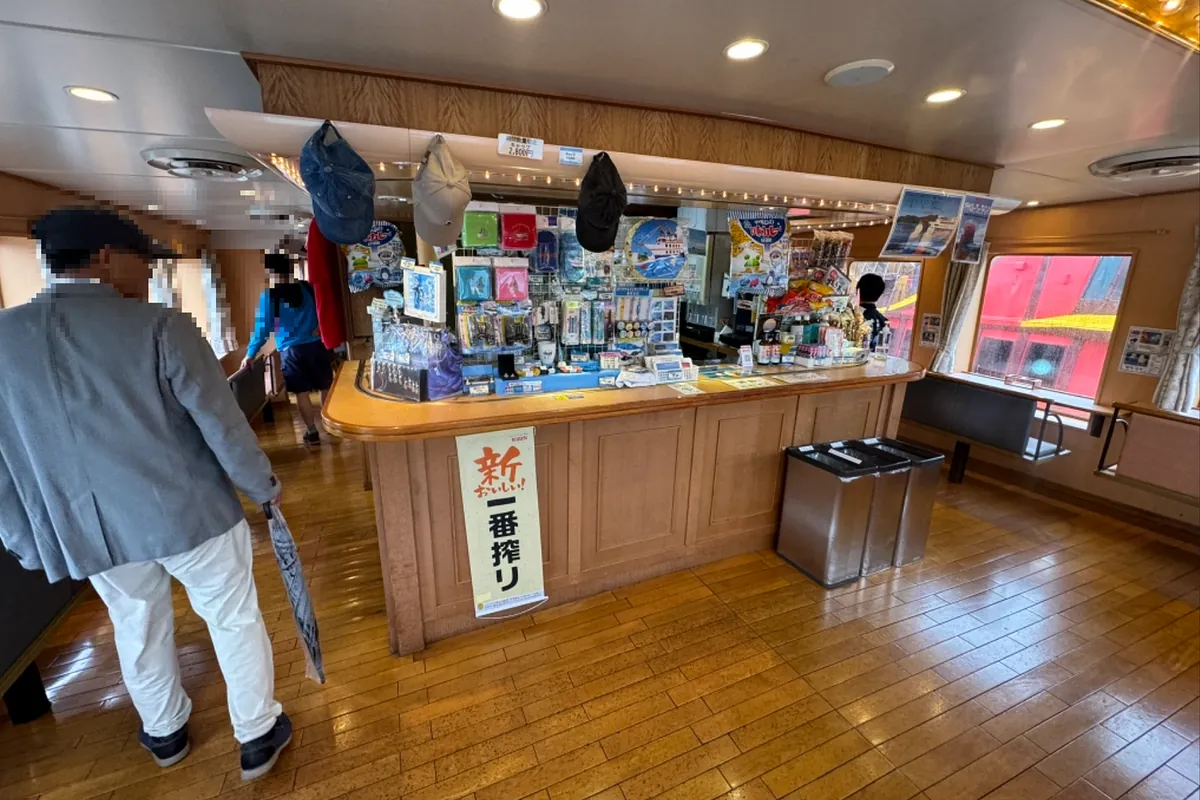
There are seats inside the cabin.
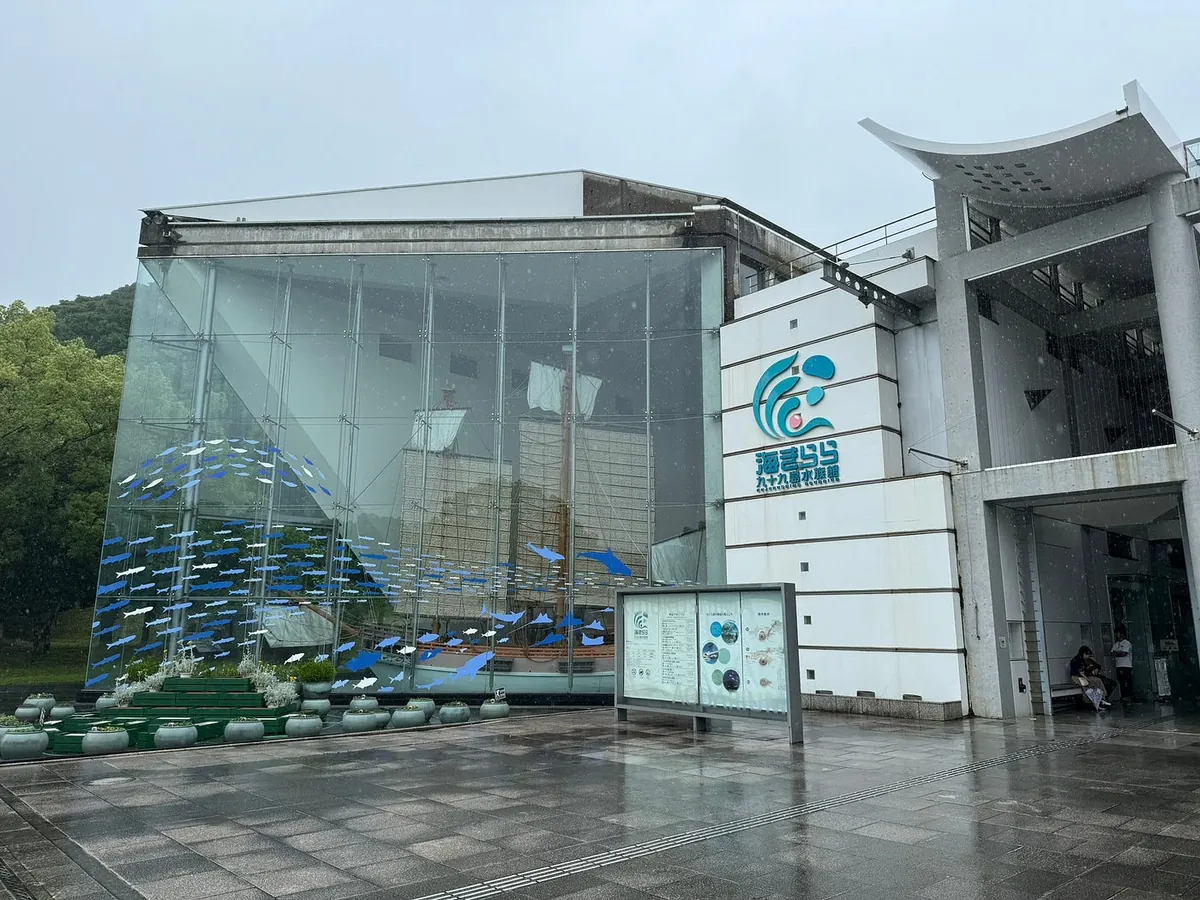
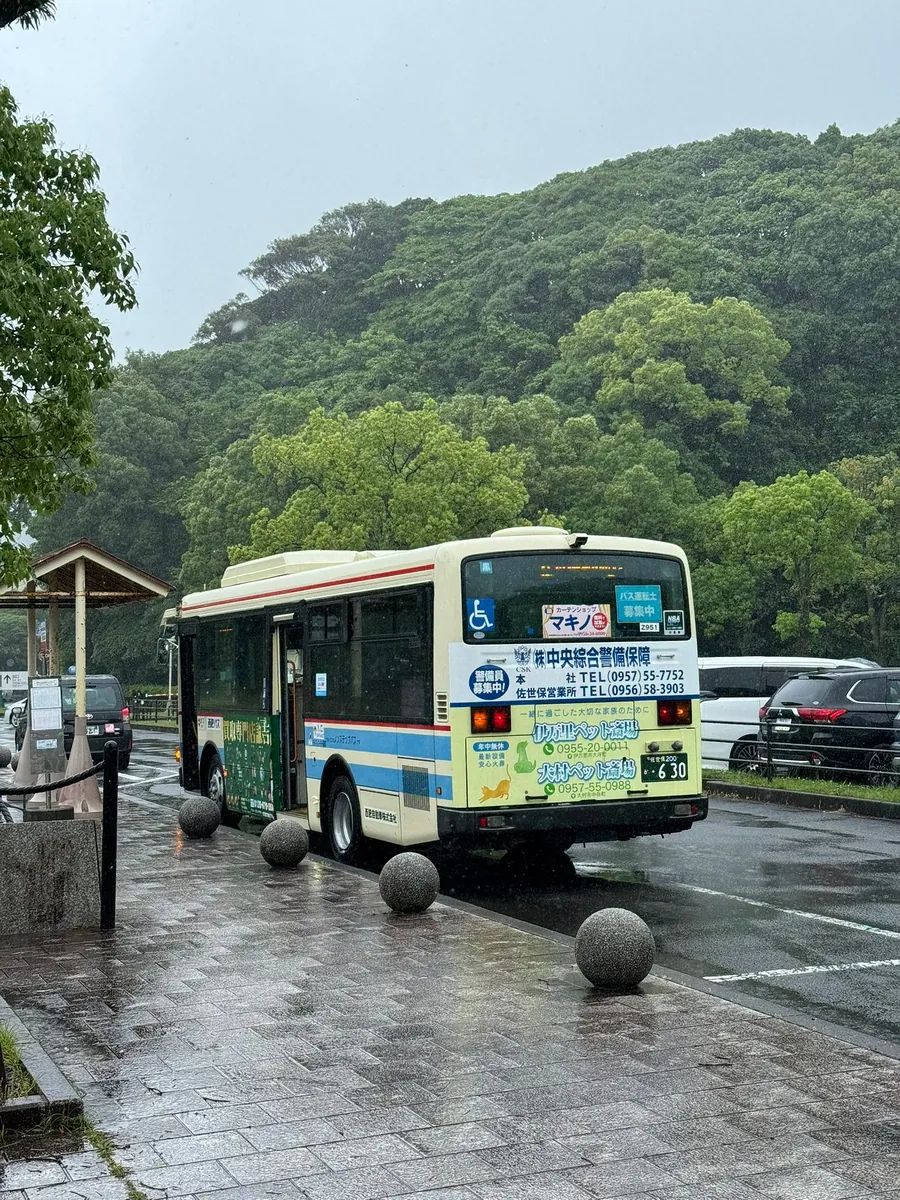
After the heavy rain tour with little to see, we headed straight back to Sasebo.
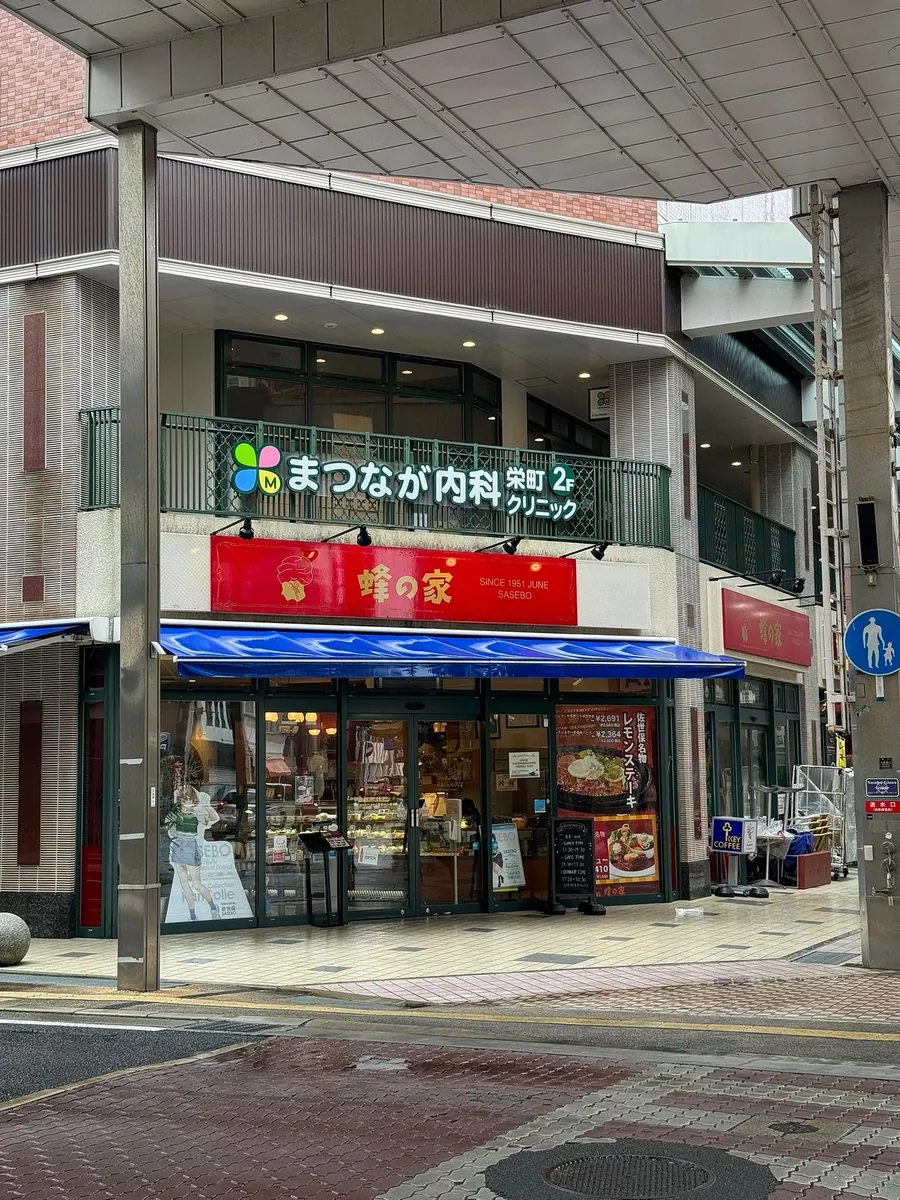
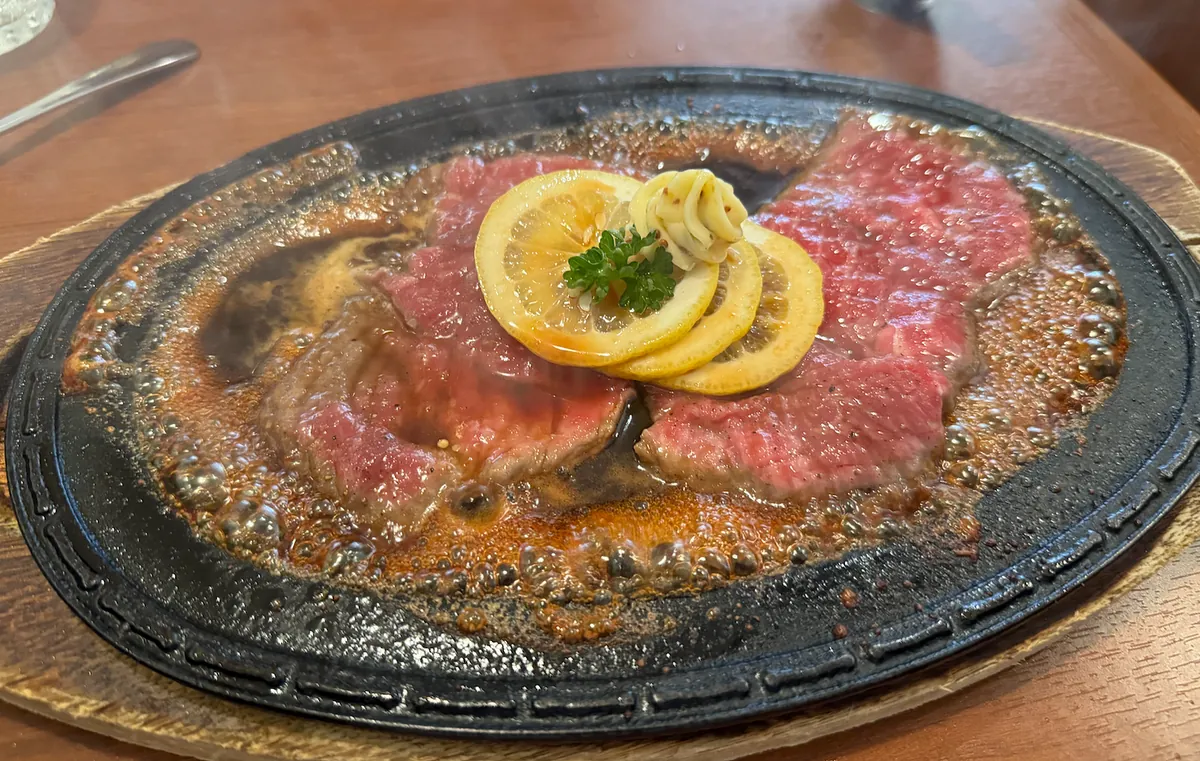
On the way back, we stopped by Honey House to taste Sasebo’s famous lemon steak.
Lemon steak consists of four thin slices of beef, sauce, lemon slices, and lemon juice. It has a refreshing taste but the meat portion is slightly small.
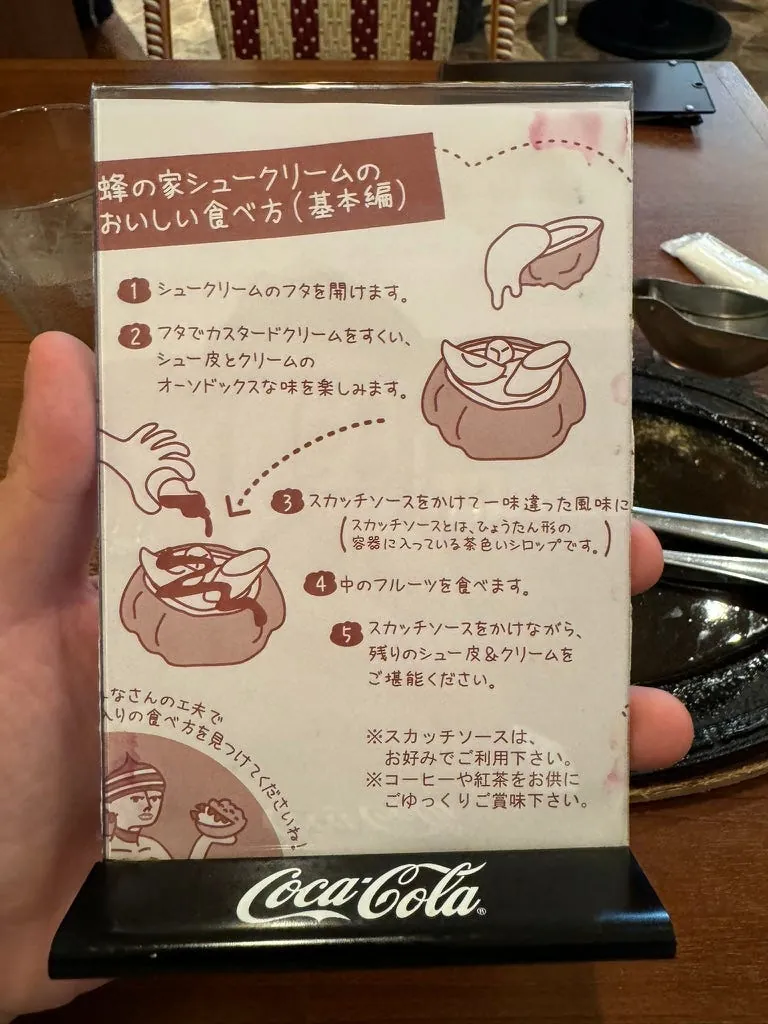
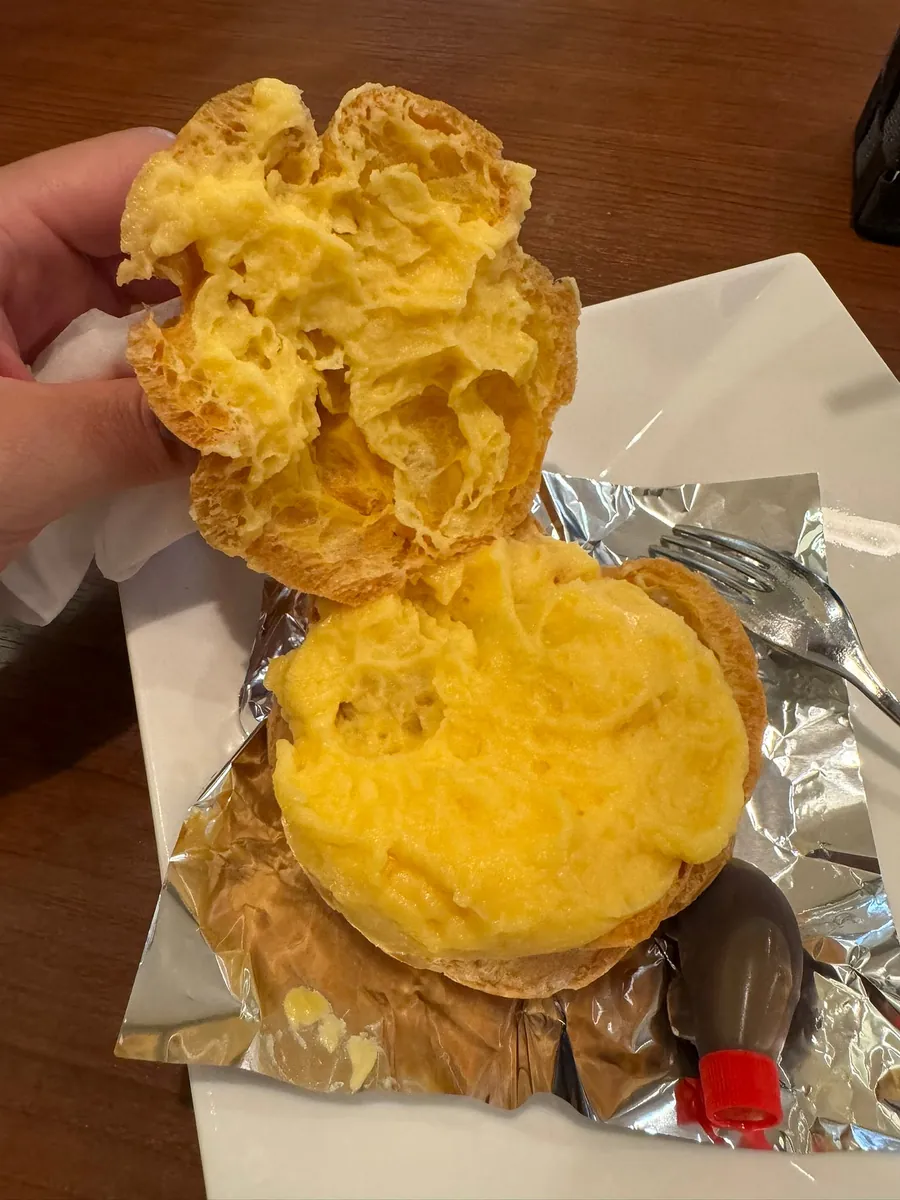
After eating, I ordered another specialty, the fruit cream puff. It was filled generously with real pieces of fruit inside.
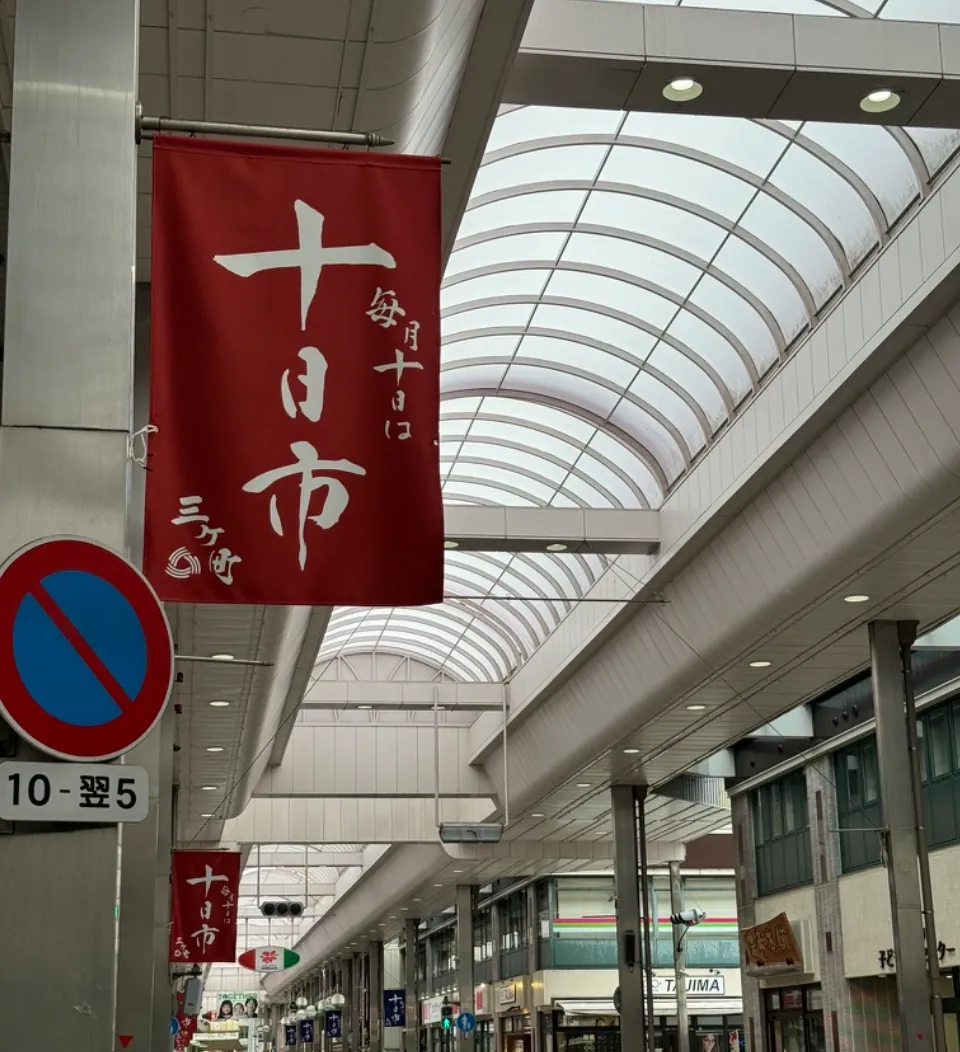
After eating, I strolled around the shopping street for a bit and then took the bus back to the station.
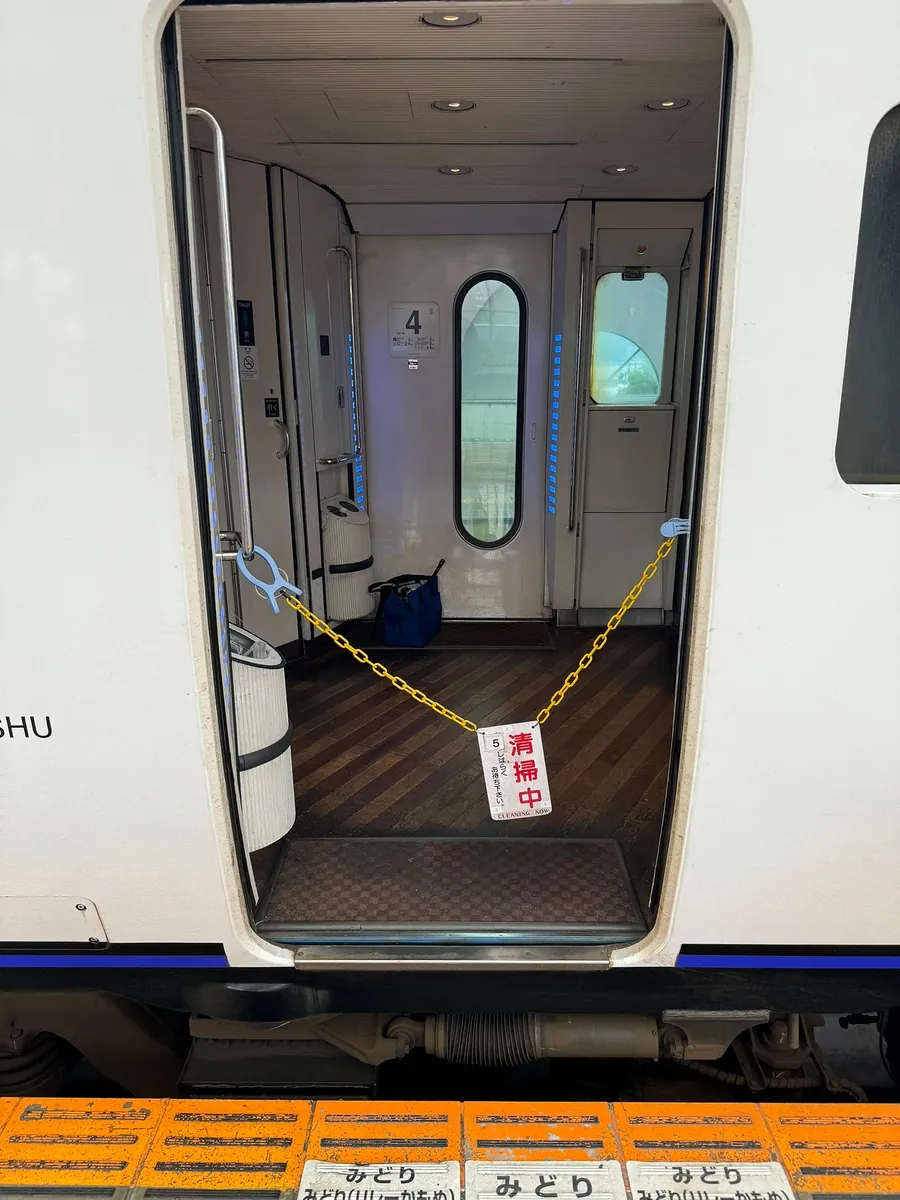
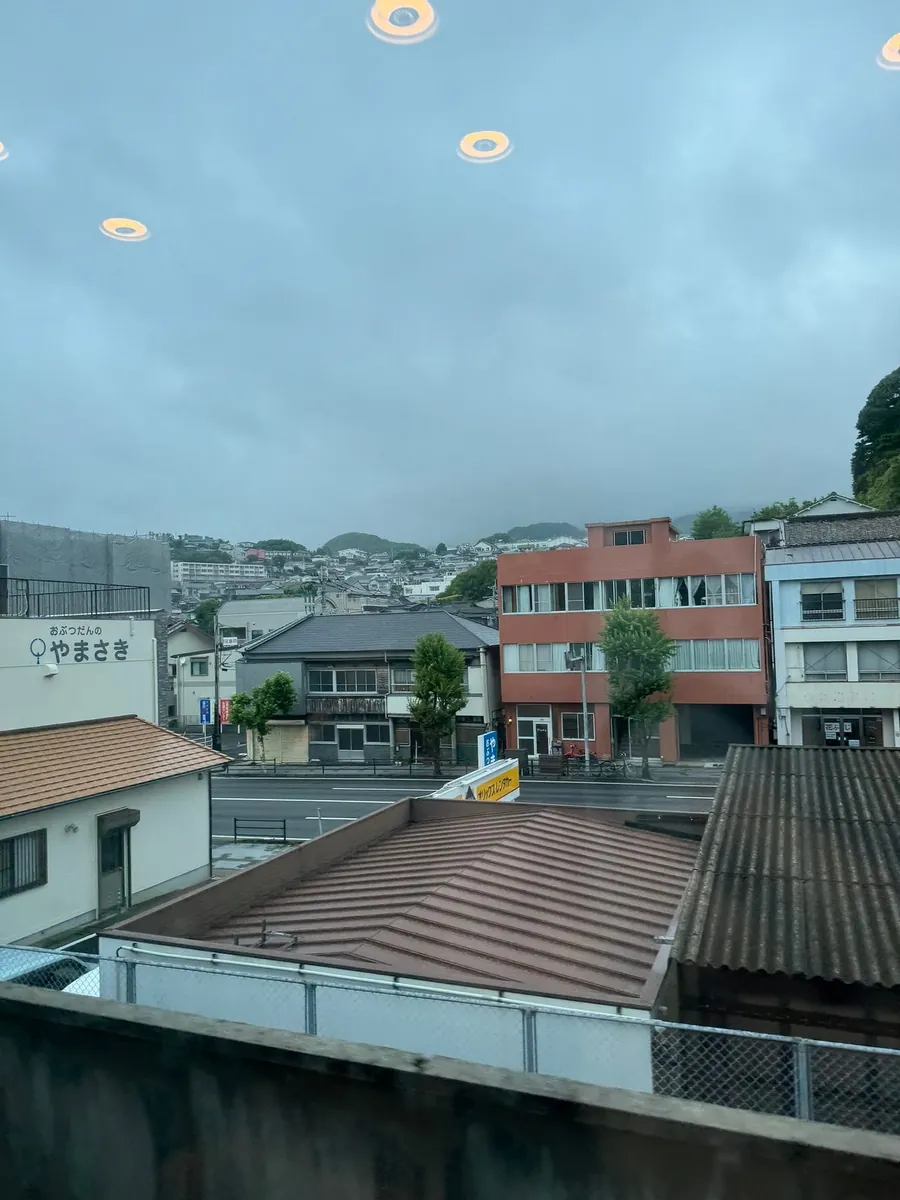
For trains heading back toward Hakata and Takeo Onsen, this is the terminal station, so you need to wait for the cleaning staff to finish before boarding. Just like on the way here, the train runs in reverse from Haiki to Sasebo.
The time is about 13:30.
You can also visit Huis Ten Bosch in Sasebo, but I didn’t specifically plan to go.
KKday Sasebo Sample Itinerary:
Japan Nagasaki \| Kyushu Huis Ten Bosch Ticket Huis Ten Bosch
Takeo Onsen
Last time when I traveled to Nagasaki, I transferred at Takeo Onsen Station and didn’t have much impression of the place. Later, I followed Takeo City Tourism IG (the official account regularly hosts events, like free firefly shuttle rides. If you plan to stay at Takeo Onsen, it’s worth following). This time, since I was passing by and had some time, I decided to check it out.
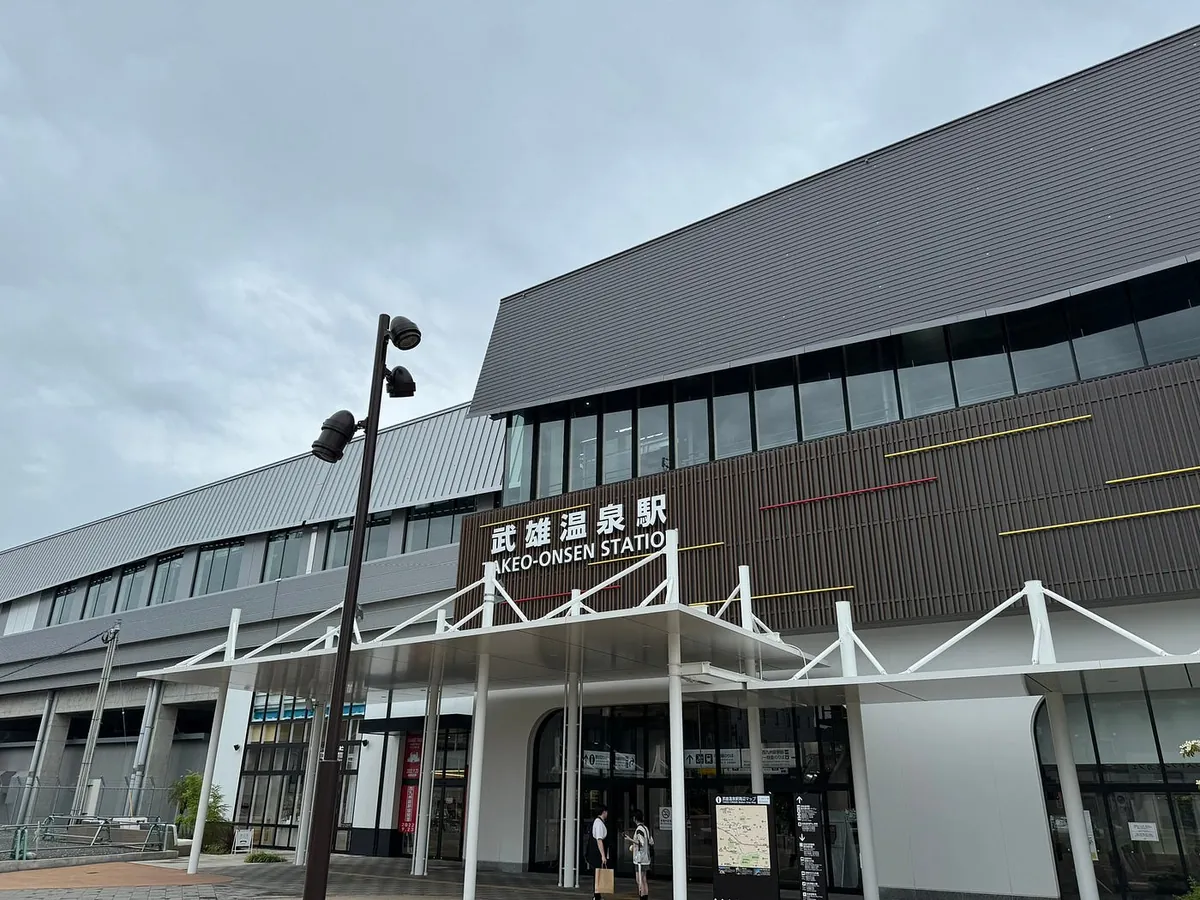
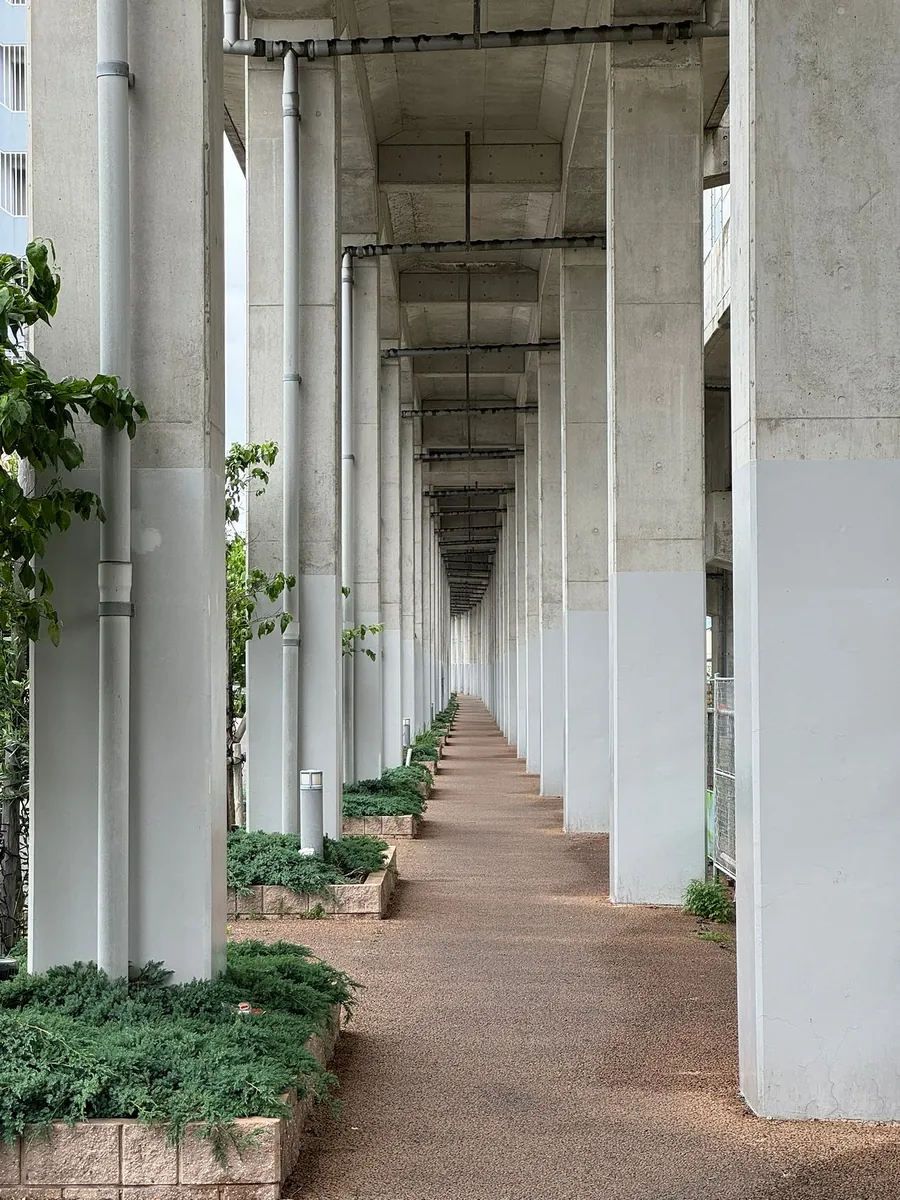
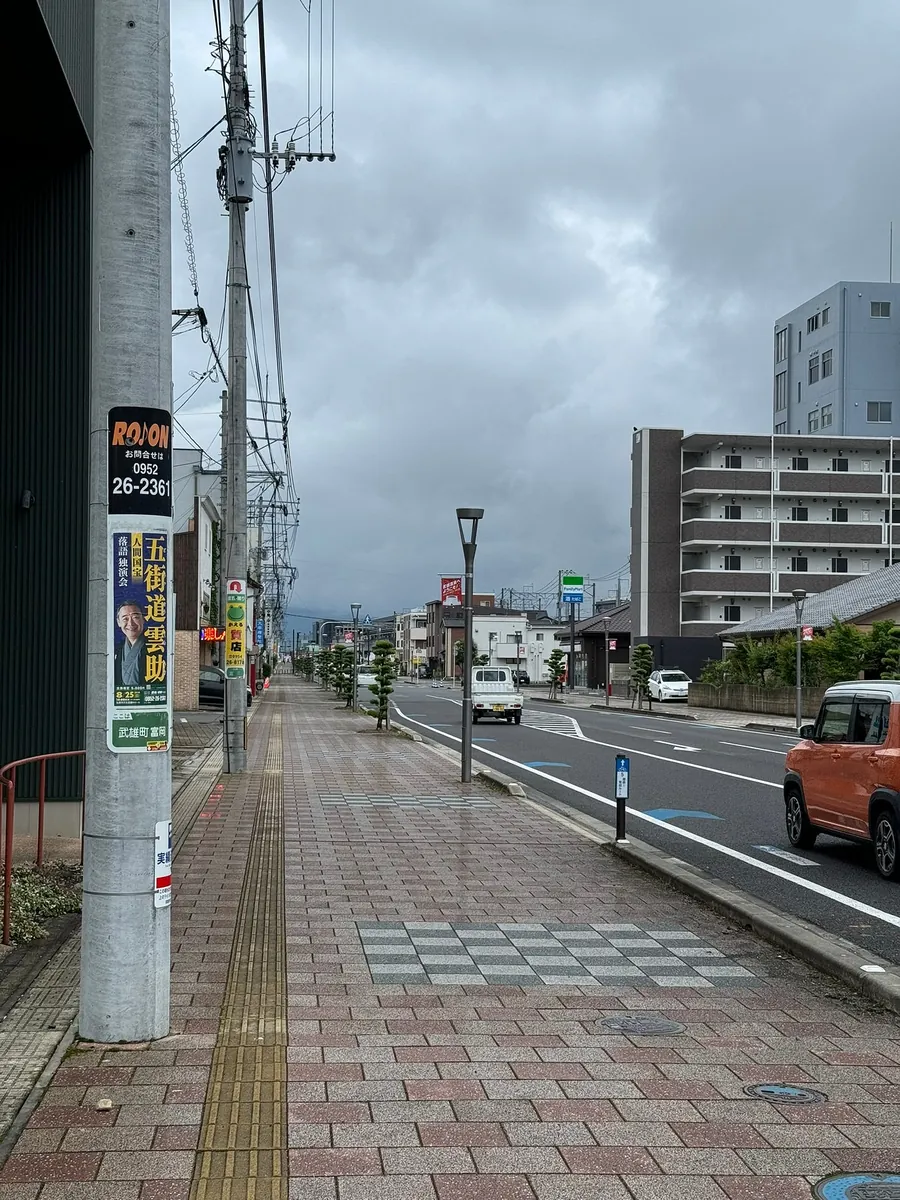
From Takeo Station (an unmanned station, no need to insert JR Pass, just exit directly), the street outside is also sparsely populated and very quiet.
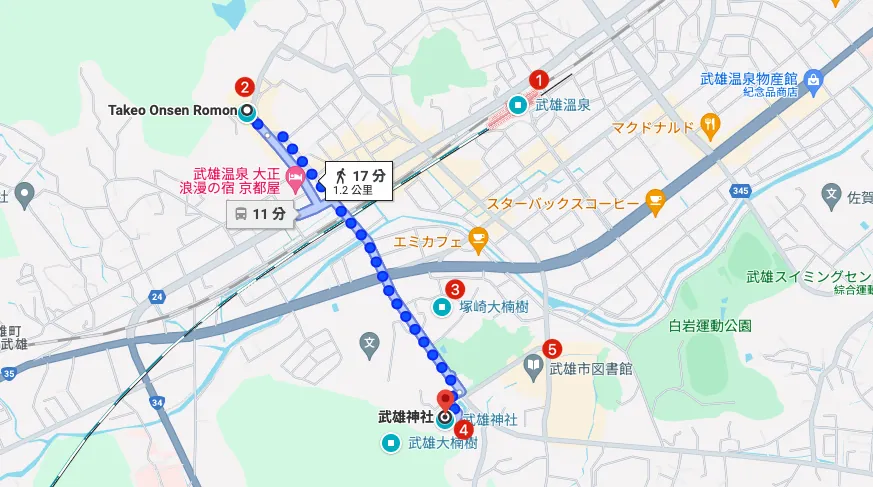
Just passing by and taking a quick look, only visiting the main spots I found. They happened to be diagonally opposite, and since bus frequency was low and I didn’t want to wait, I just walked.
First, go to Takeo Shrine. On the way, you will pass Tsukazaki Giant Camphor Tree, a small scenic spot.
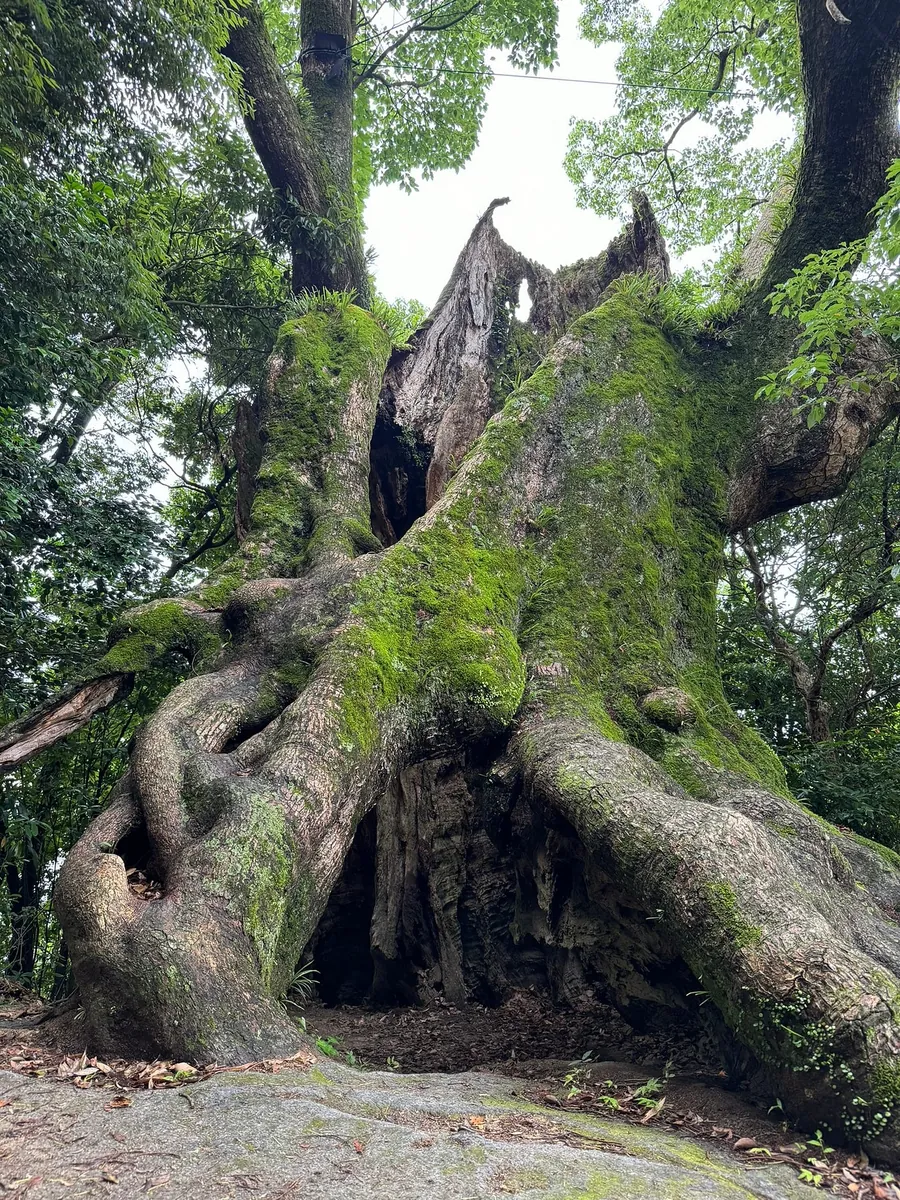
Tsukazaki Great Camphor Tree, estimated to be 2,000 years old.
Takeo Shrine
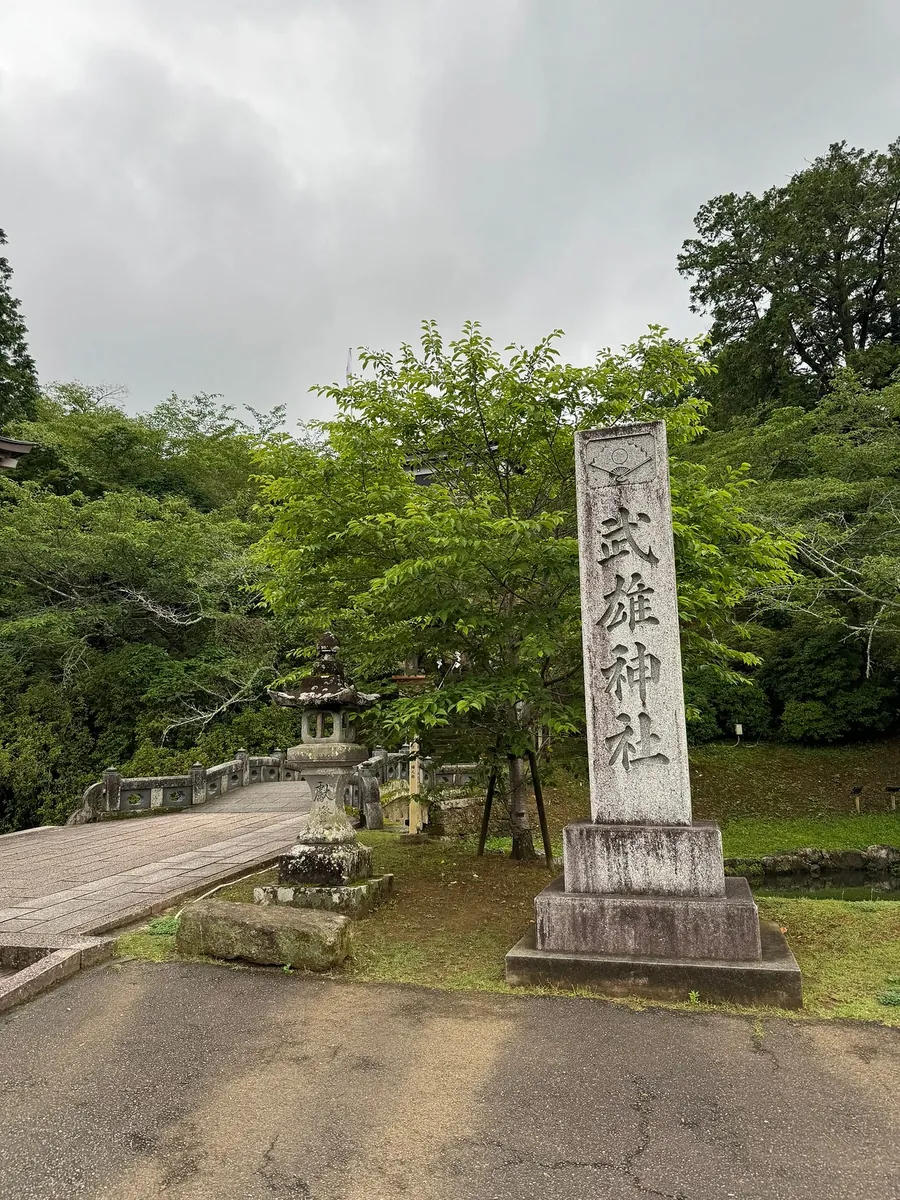
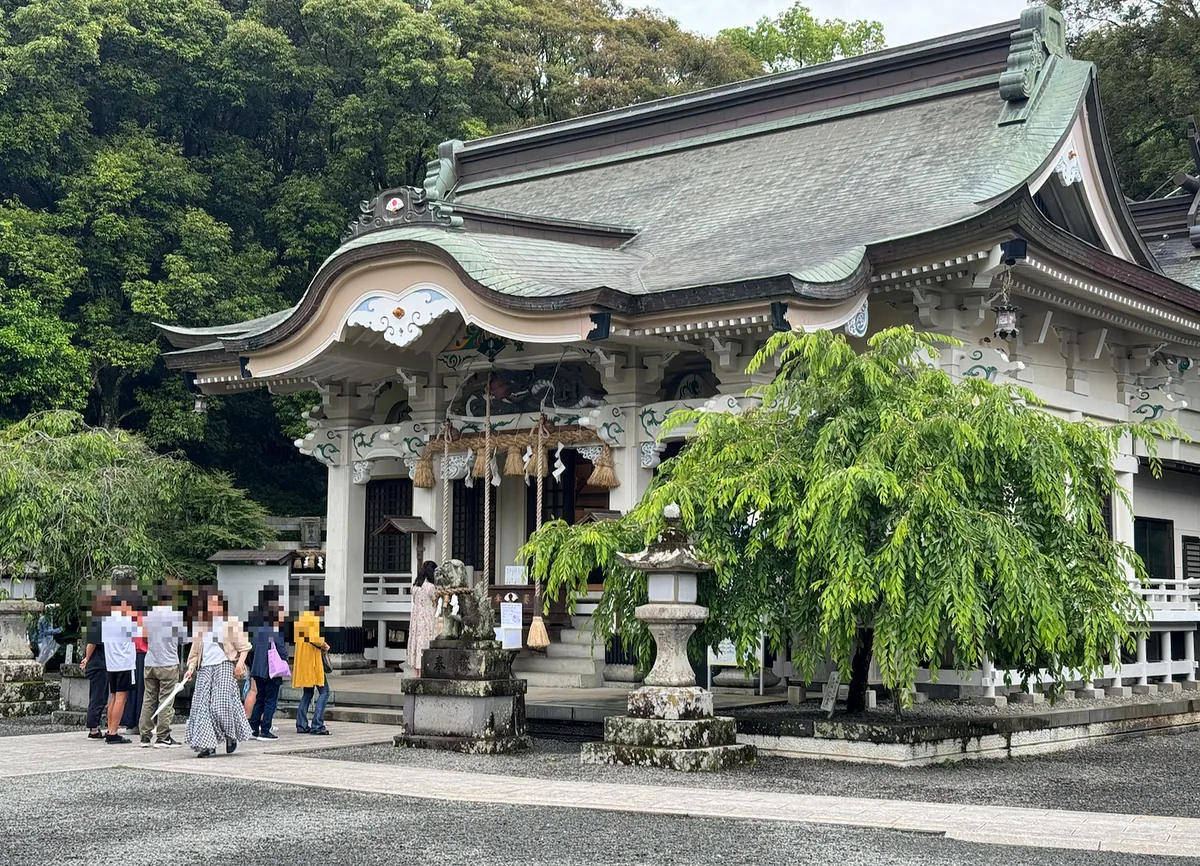
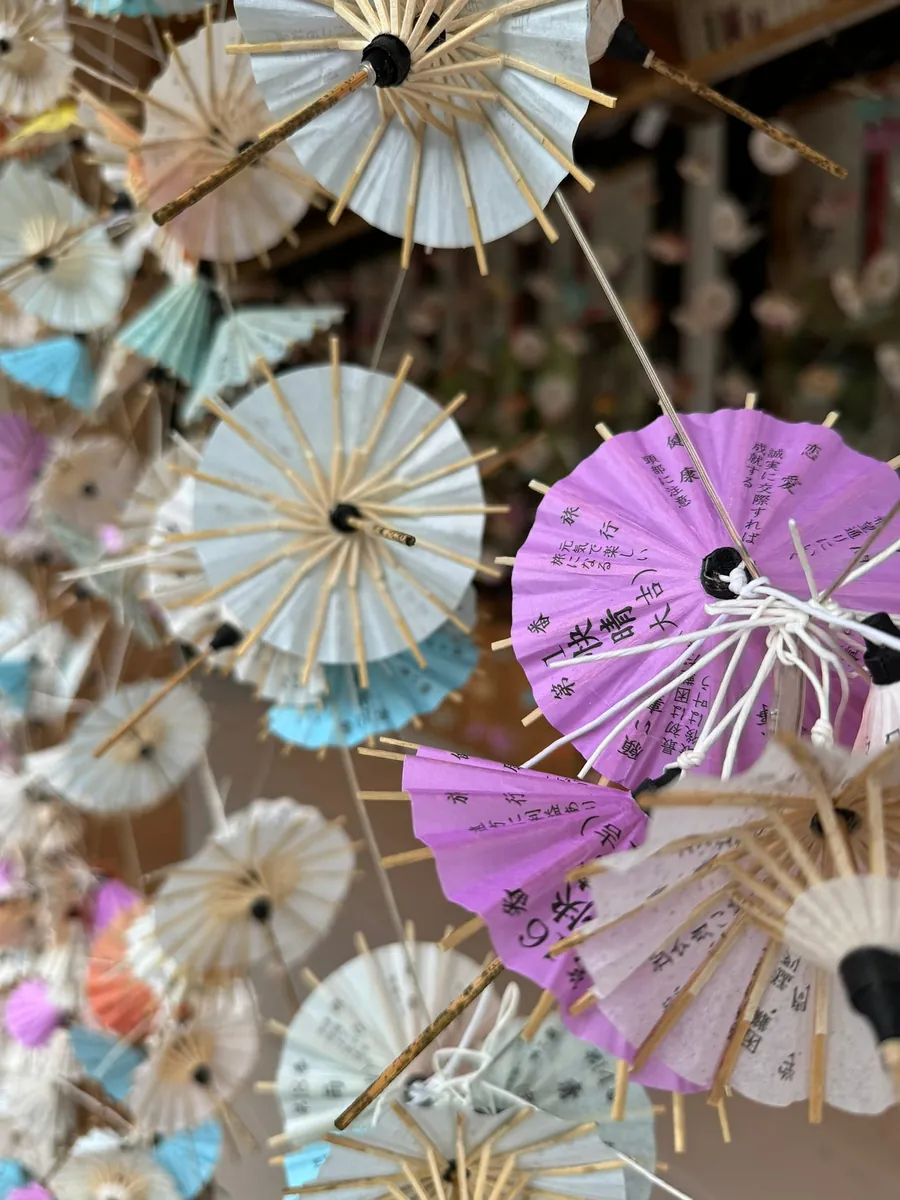
From below, walk up a short flight of stairs to take you to Takeo Shrine.
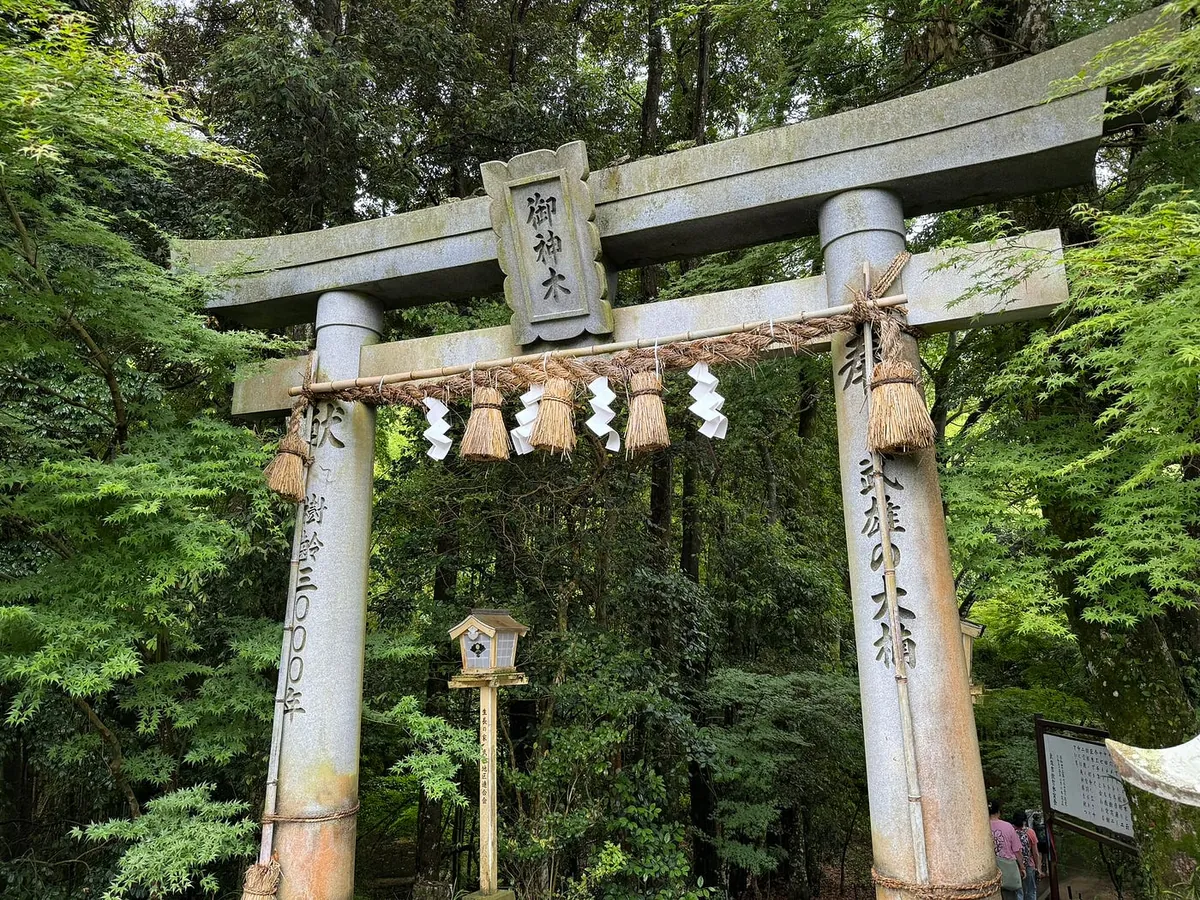
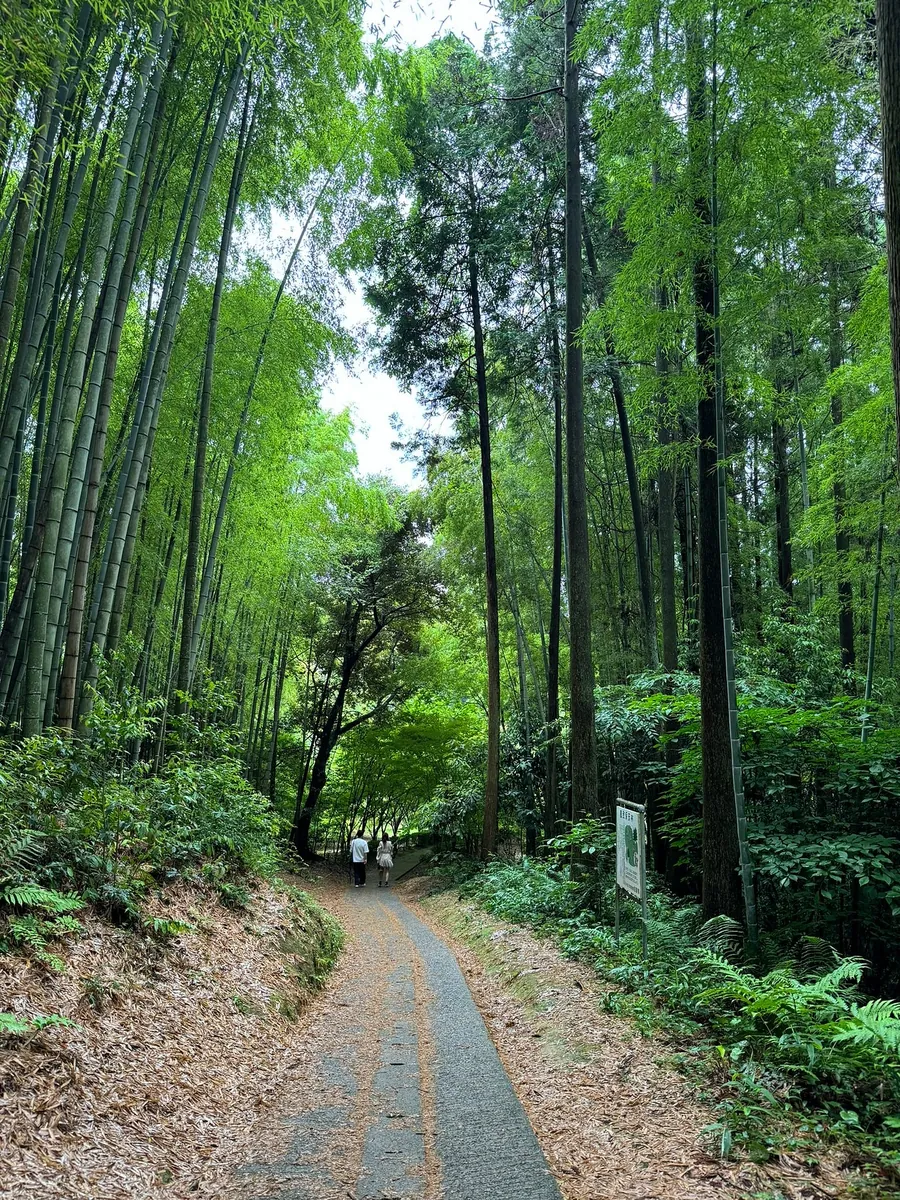
Next to Takeo Shrine, pass through the sacred tree torii and walk about 5 minutes further to see the legendary Takeo Great Camphor Tree. (Estimated age: 3,000 years)
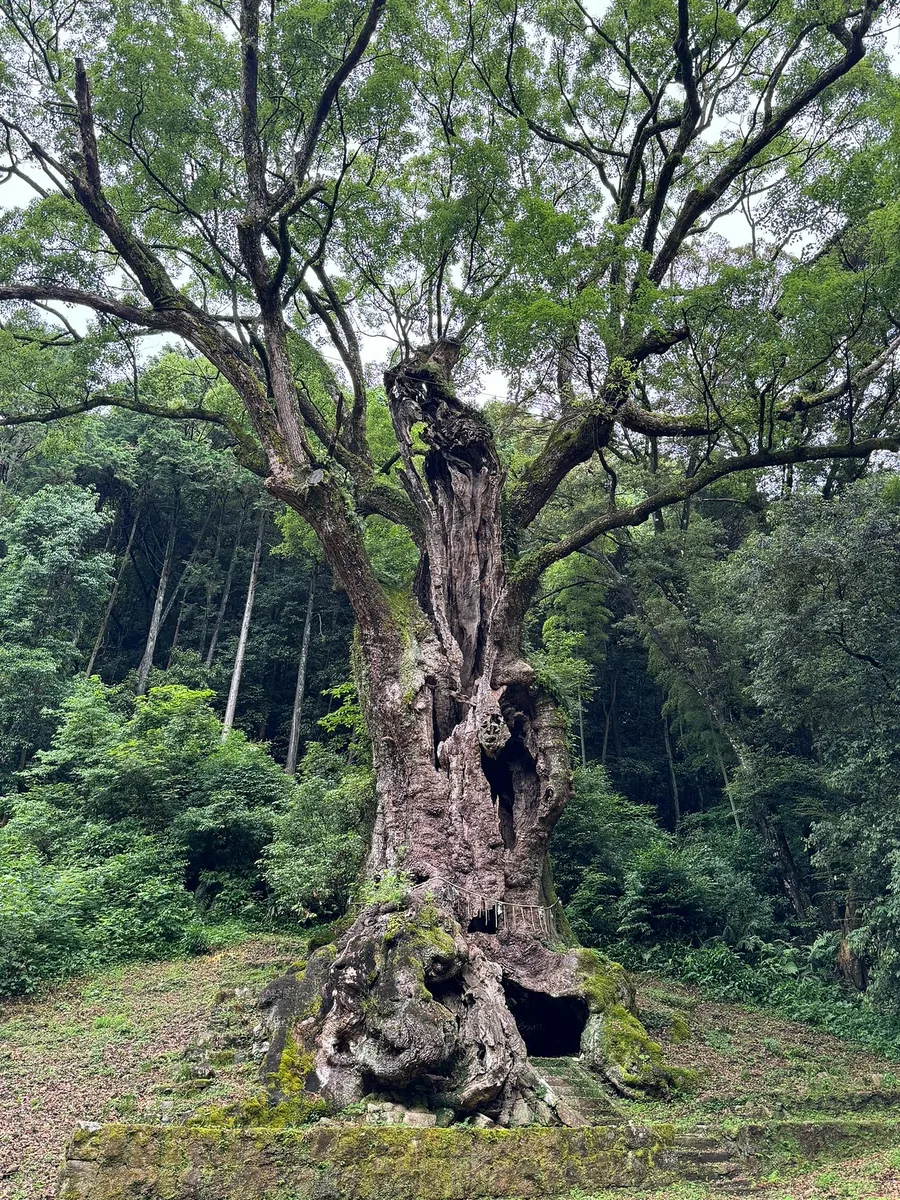
Takeo Giant Camphor Tree is fenced off, so it can only be viewed from a distance.
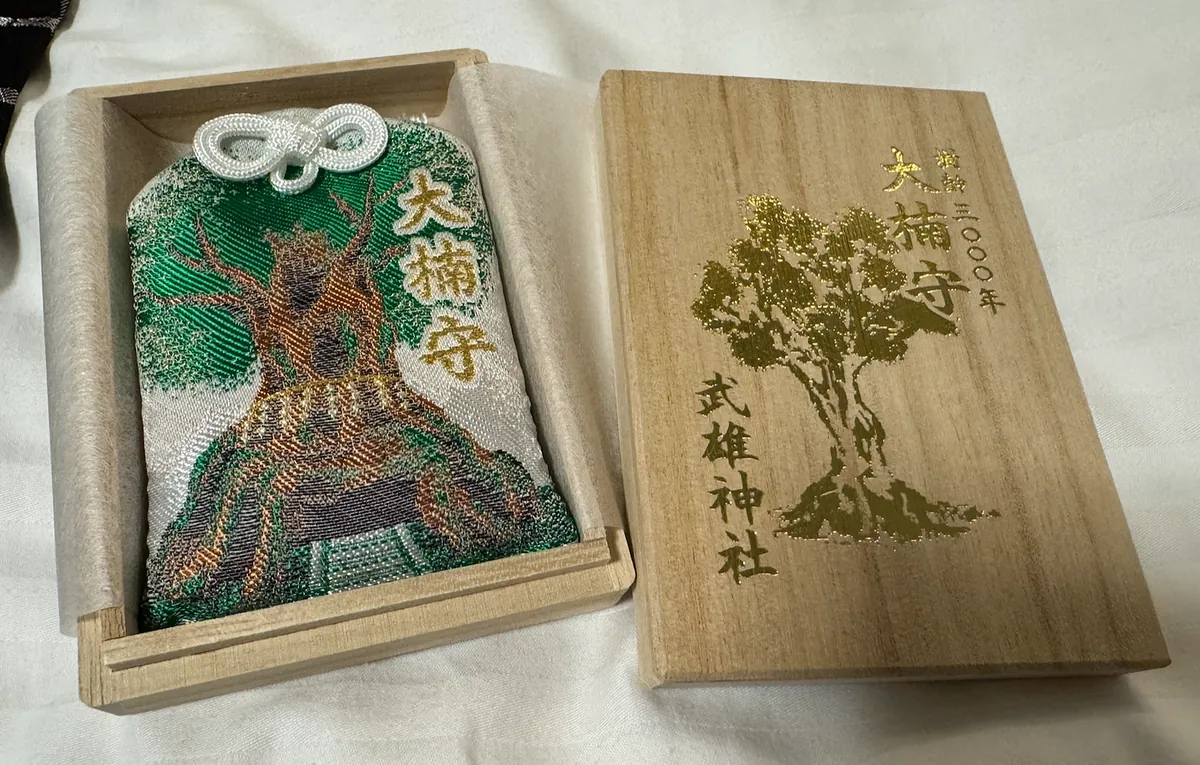
Bought a Takeo Shrine Large Camphor Amulet (1,500 yen), larger size with a wooden box.
After visiting Takeo Shrine, we walked back to see the Horai-yu gate on the other side.
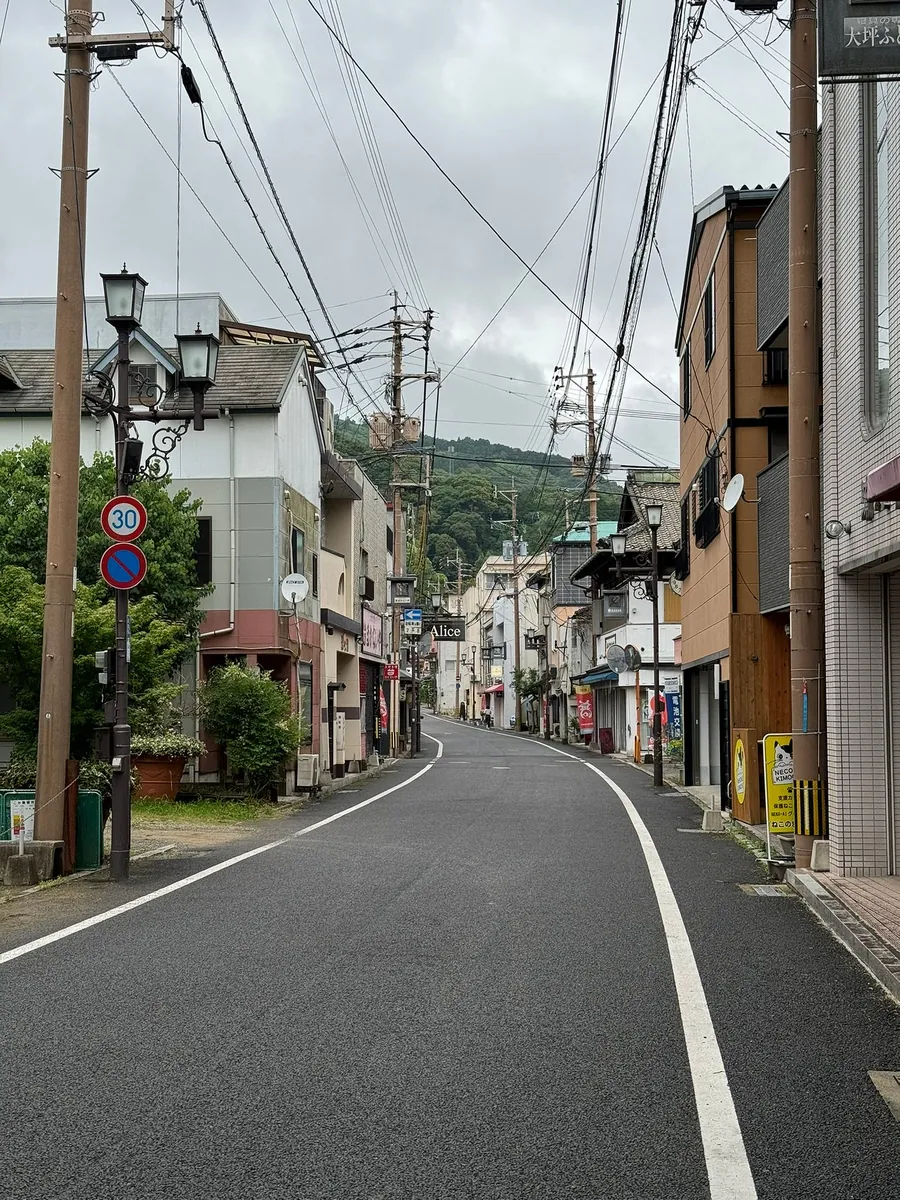
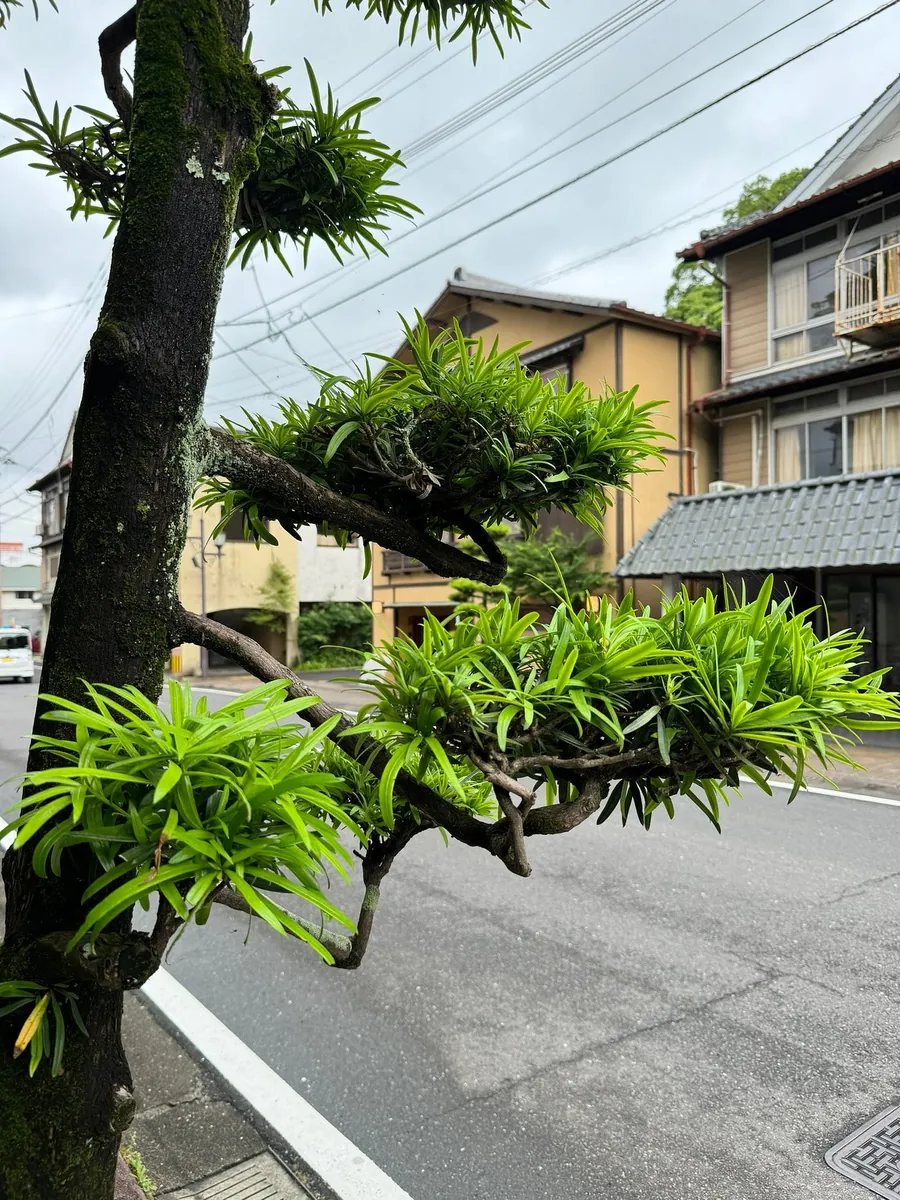
The entire hot spring street was empty, with several hot springs and hotels to choose from (not necessarily just Horai-yu). It feels like Takeo Onsen is a great choice if you want a quiet, less crowded hot spring experience in Kyushu with convenient transportation!
Horai Hot Spring Gate
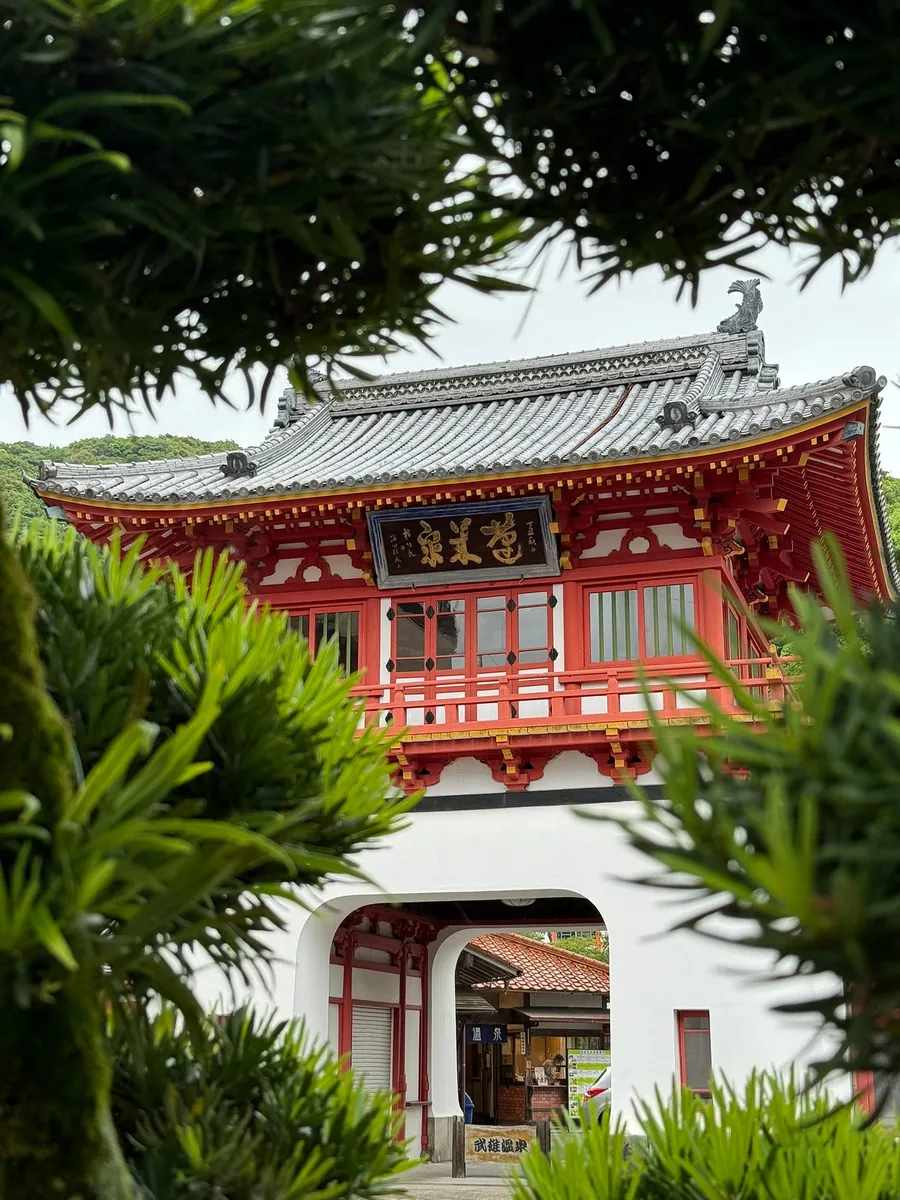
A visit here.
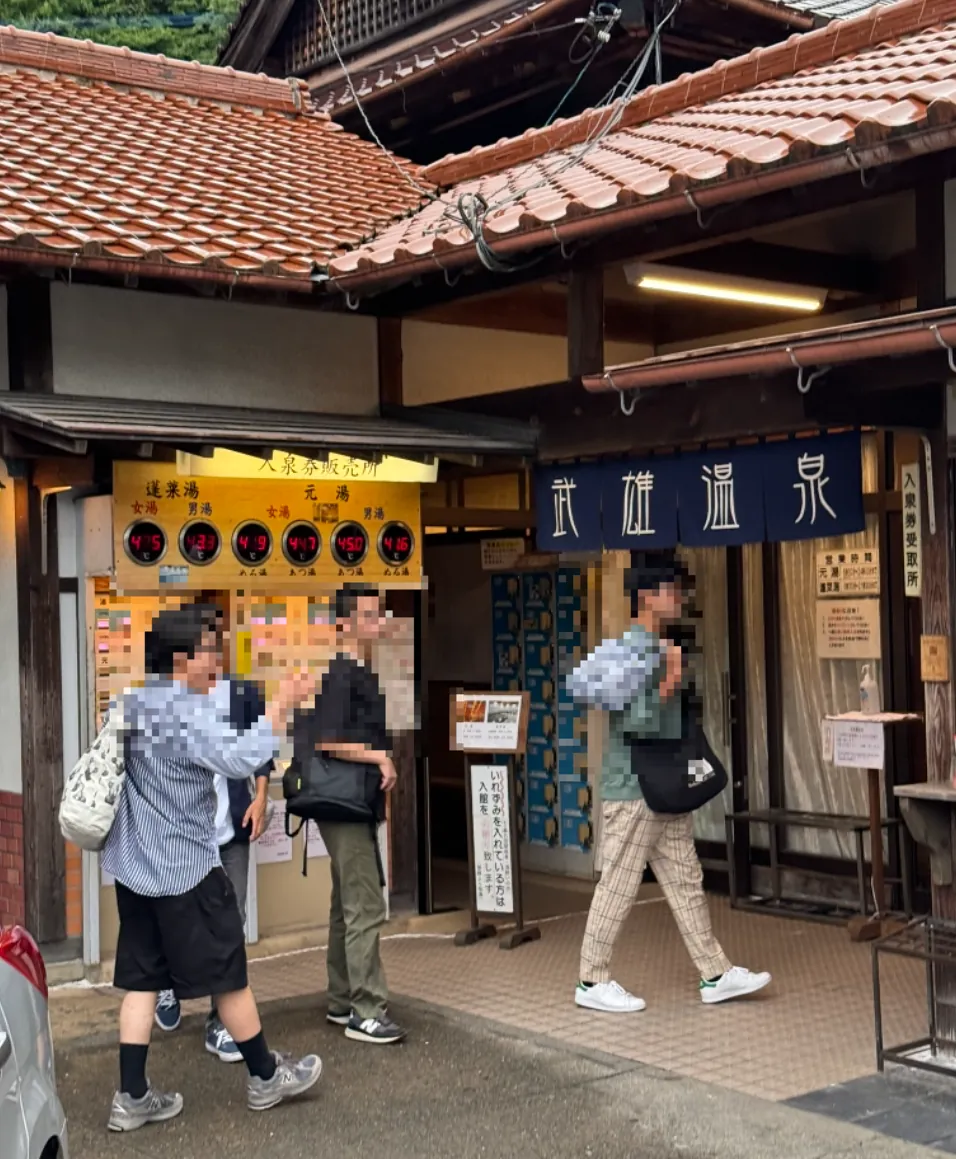
After entering the gate is the Horai Bath for soaking, and on the other side is the hot spring accommodation, Saginoyu.
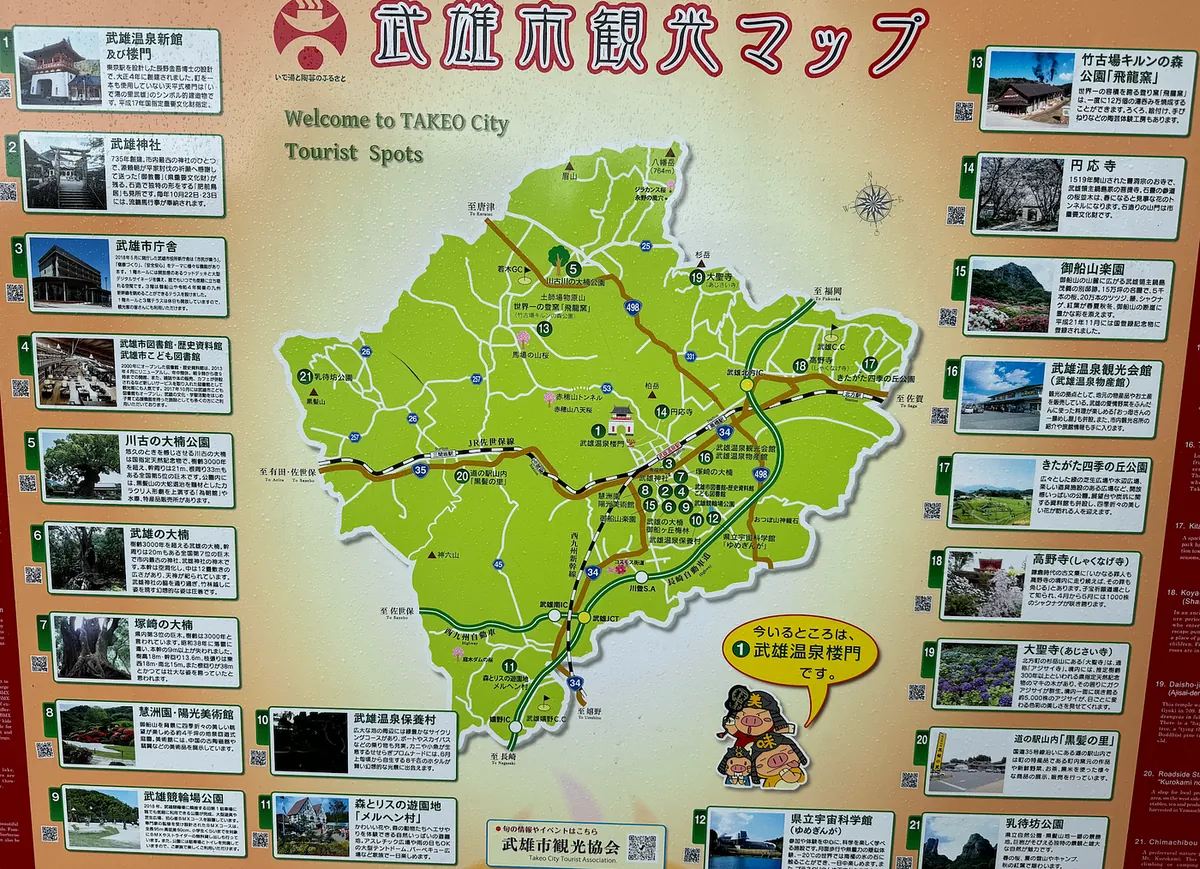
Takeo City tourist map. I found that Mifuneyama Rakuen looks nice, but it was already around 15:30, so there was no time to visit.
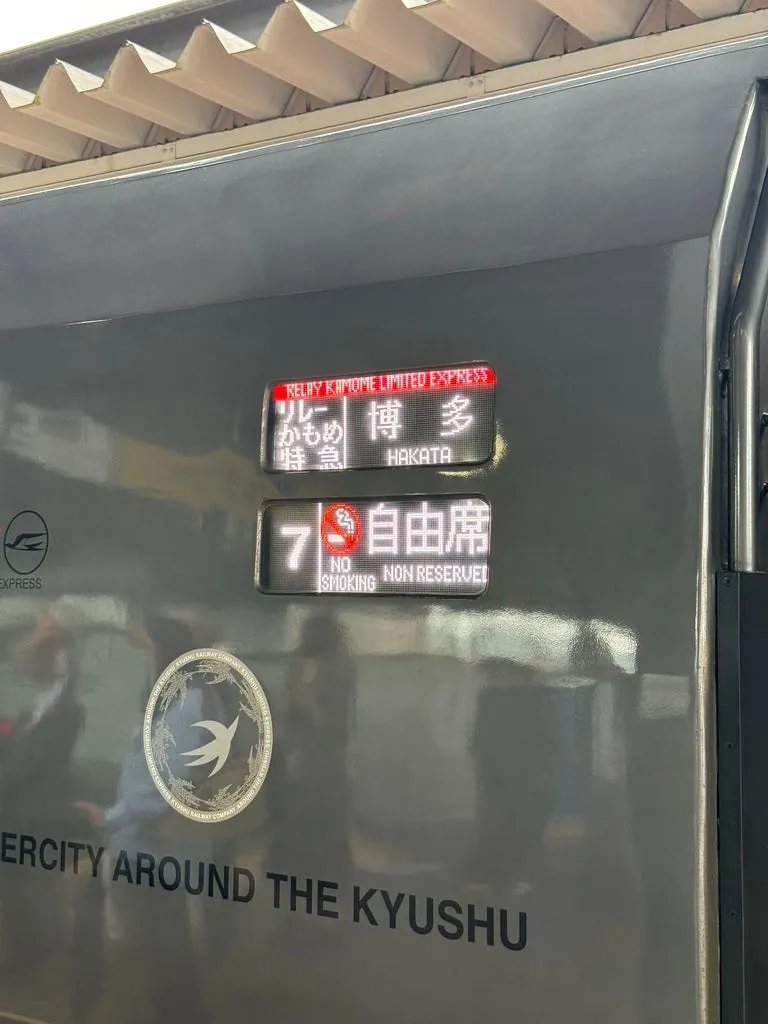
Take the limited express train to Hakata, arriving around 18:00.
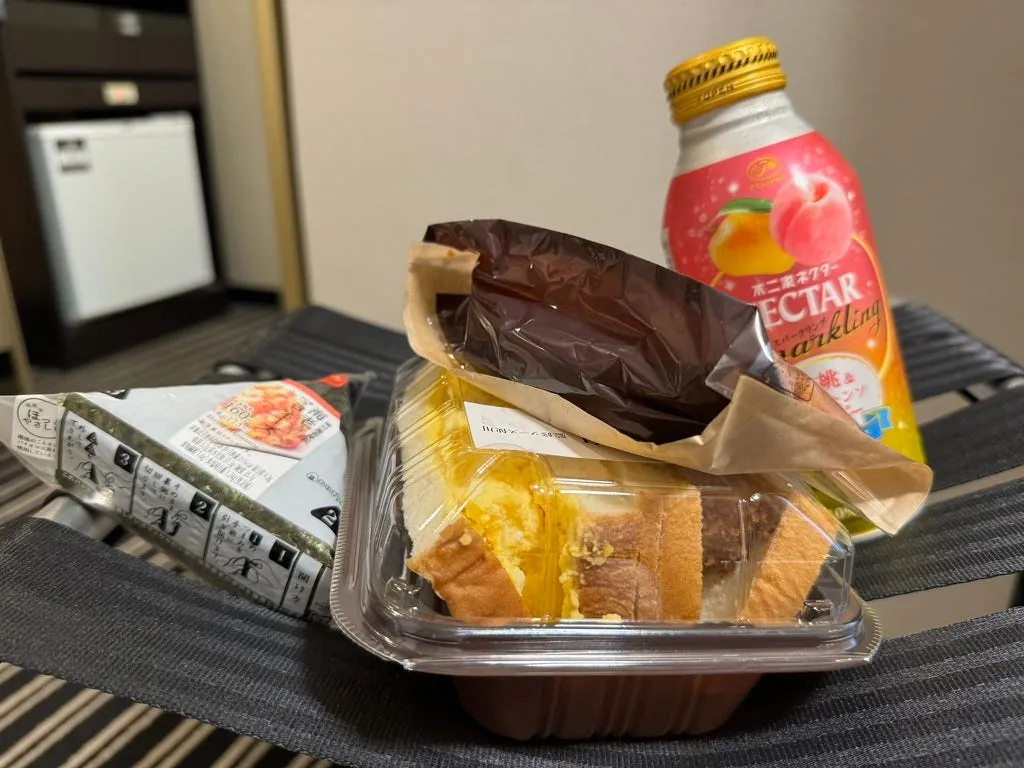
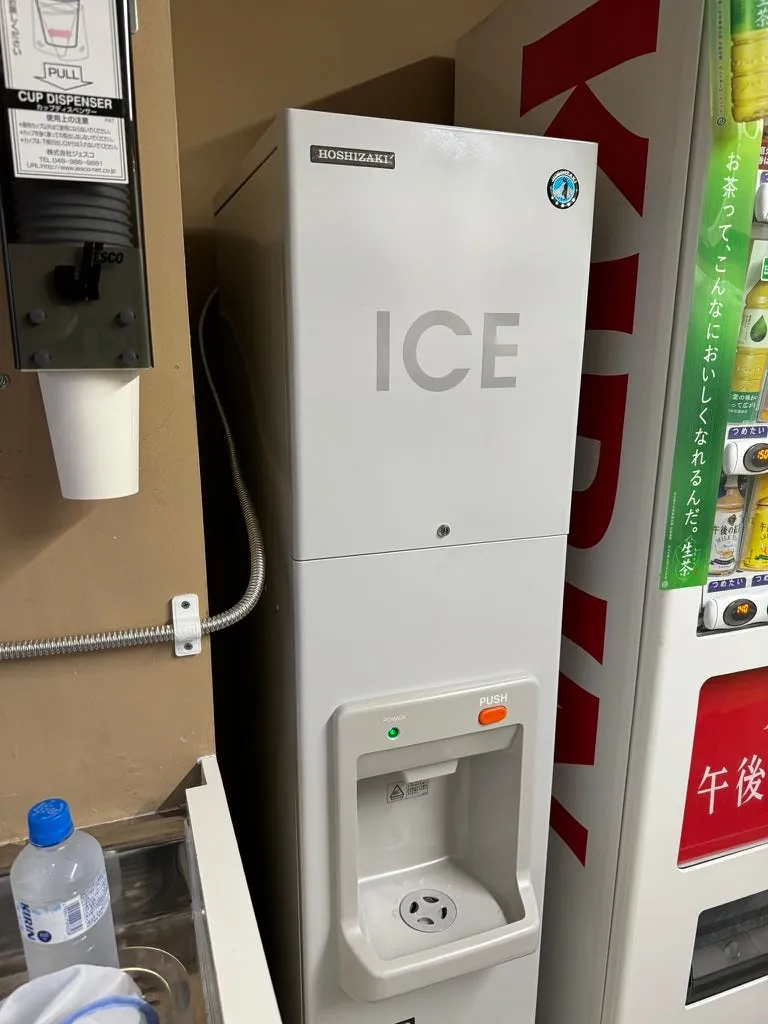
Strolling back to the hotel, dinner was casually picked up at a convenience store: rice balls, pork cutlet sandwich, and Fujiya peach soda (delicious!!). After staying many times at APA and Toyoko Inn, I finally realized they all have ice machines—so convenient!
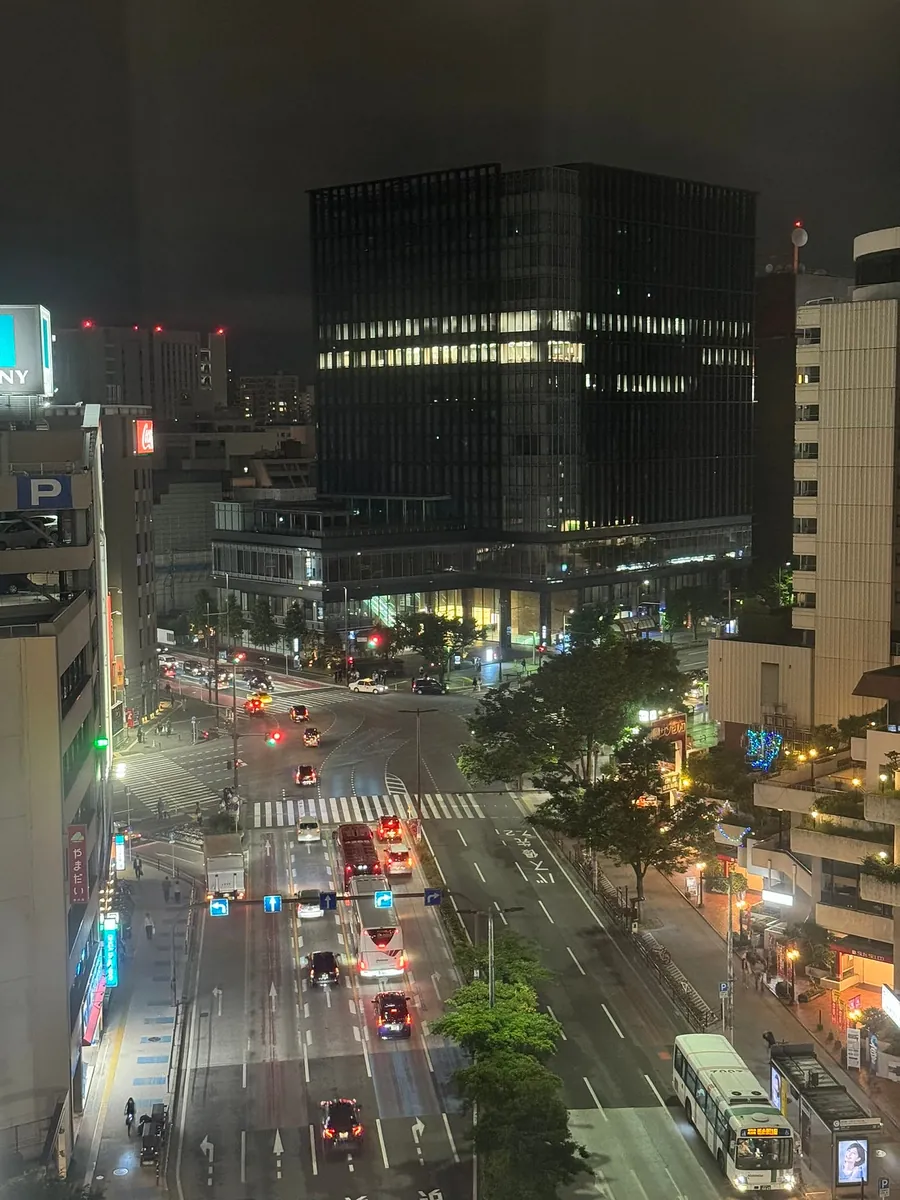
Except for the old facilities, the room size and view at this APA hotel are really good.
Day 8 Sakurai Futamigaura Meoto Iwa, Nanzoin Temple, Hakata Pilgrimage
No JR Pass available.
Sakurai Futamigaura Meoto Iwa (Wedded Rocks)
After checking out of the hotel early in the morning, I took the JR train to Kyudai-Gakken-Toshi Station.
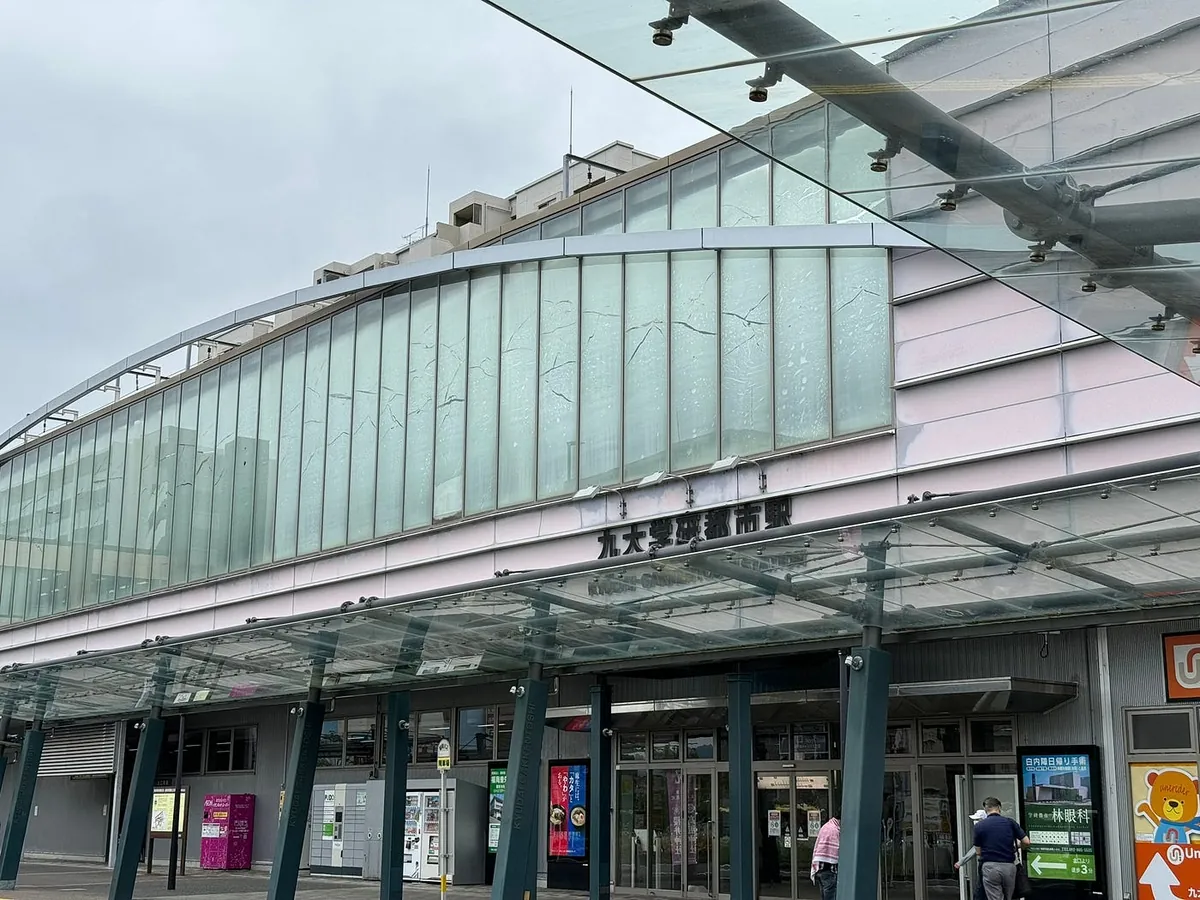
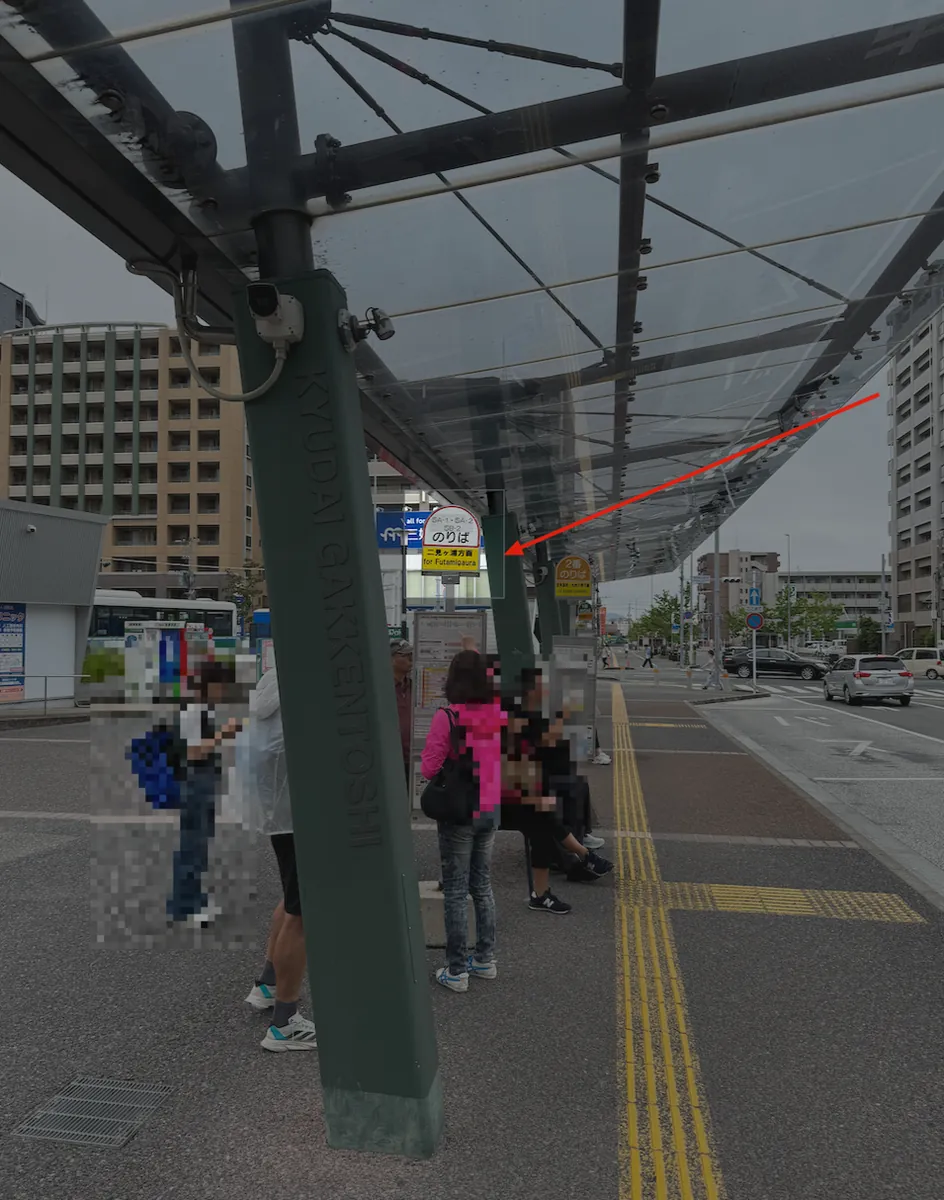
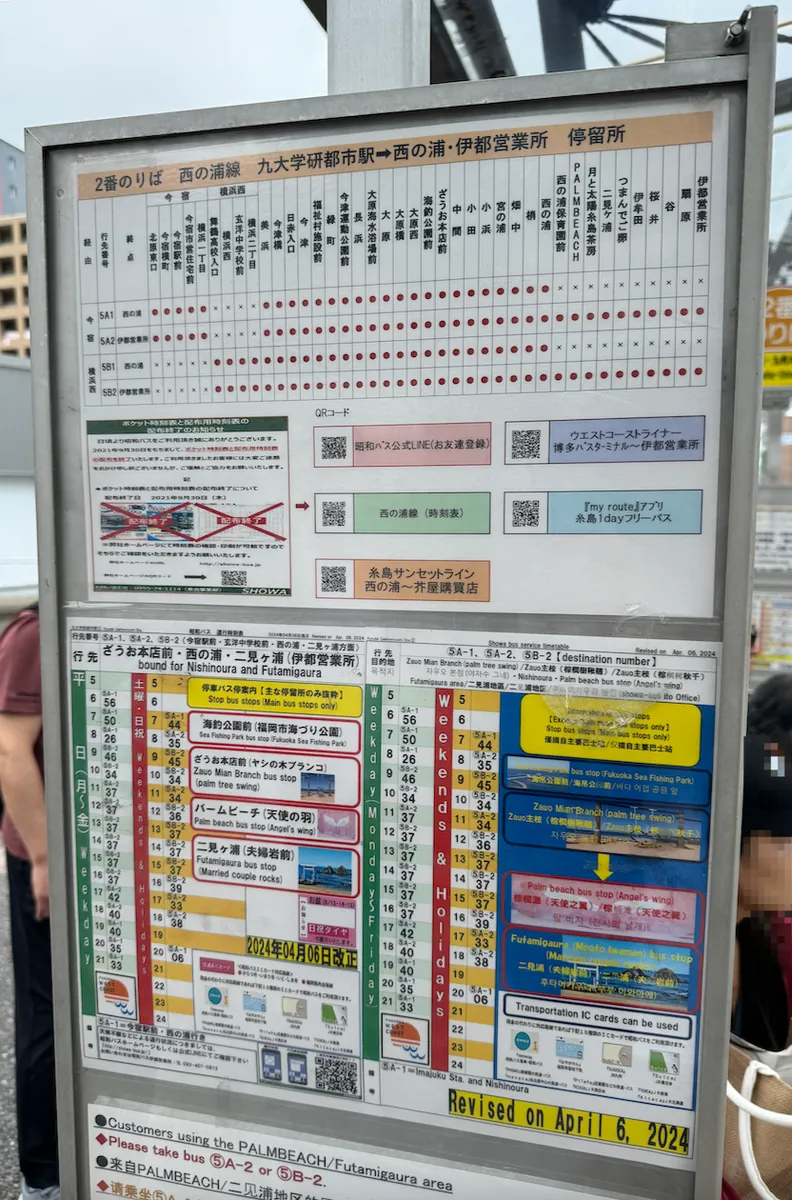
Once you exit the station, the “ Nishinoura Line “ platform is on the left, and staff are available to guide you. The ride takes about 30 minutes.
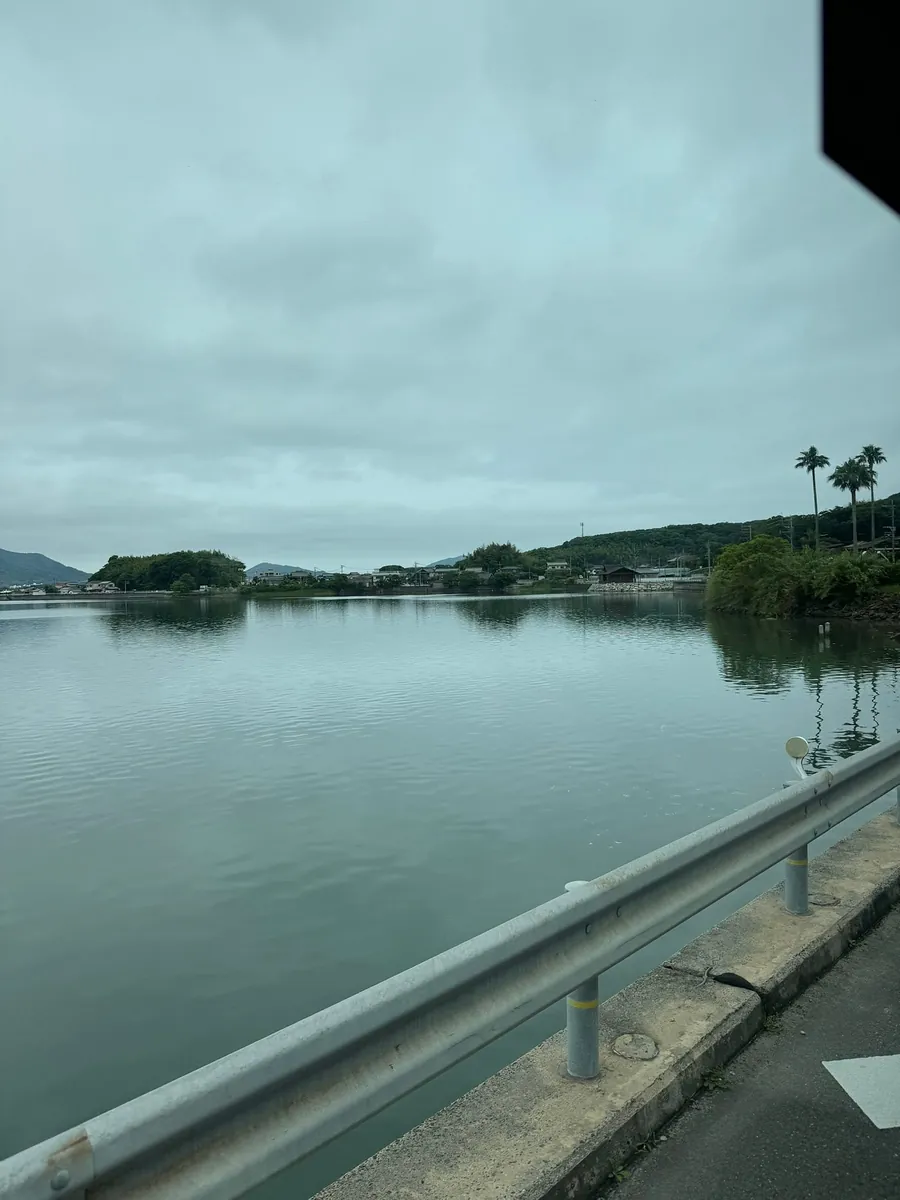
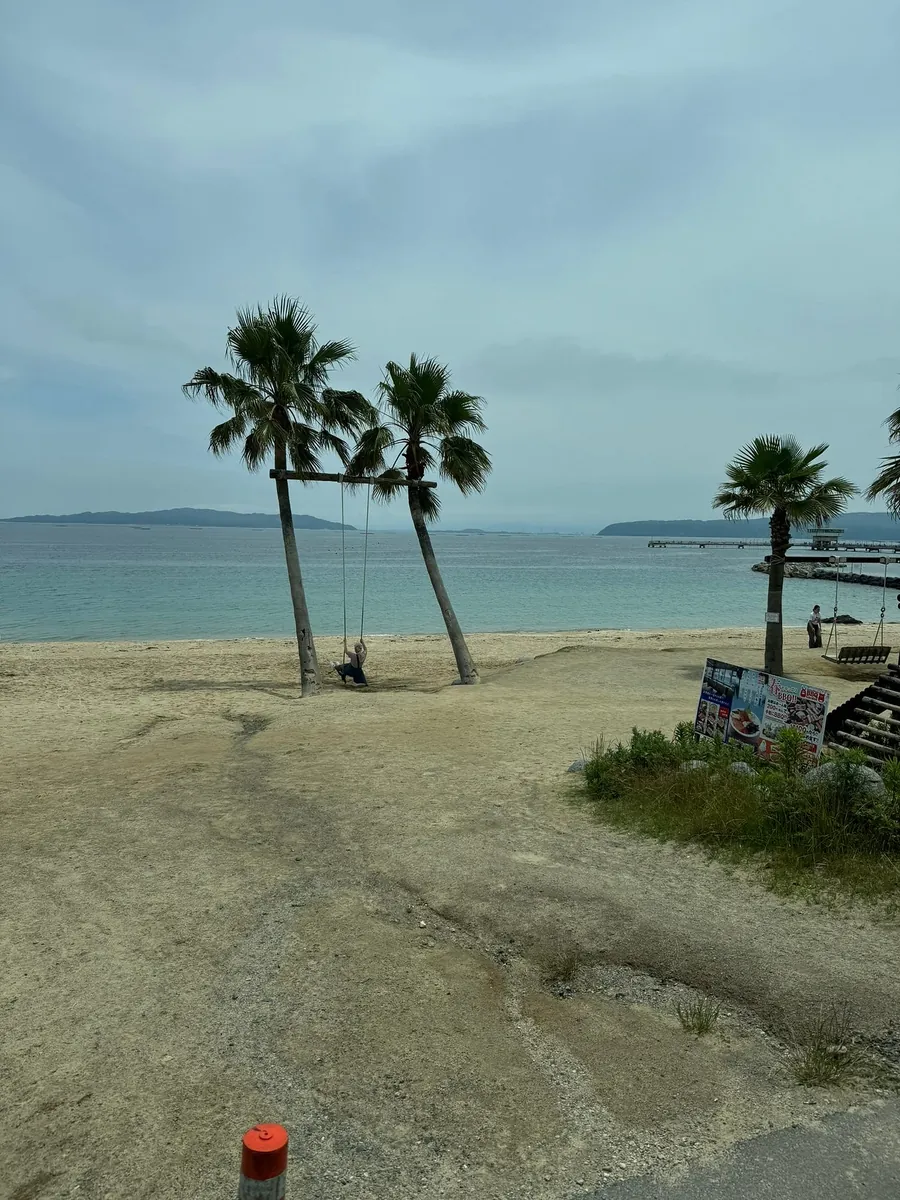
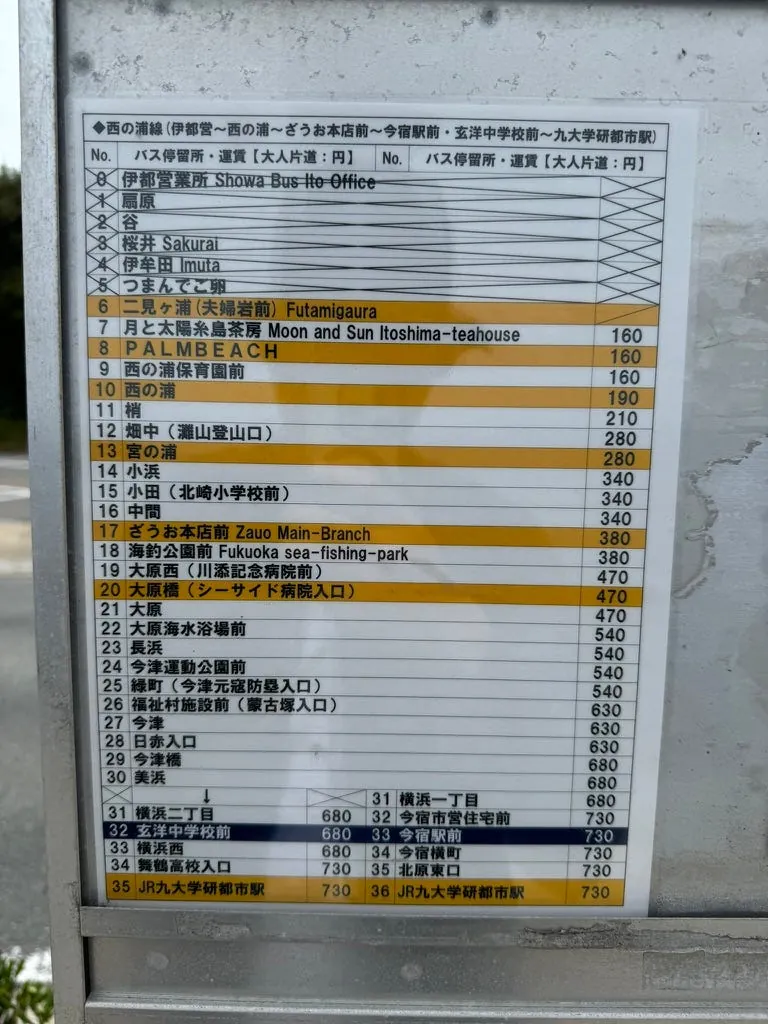
The fare is the highest bus fare I’ve ever paid: 730 yen.
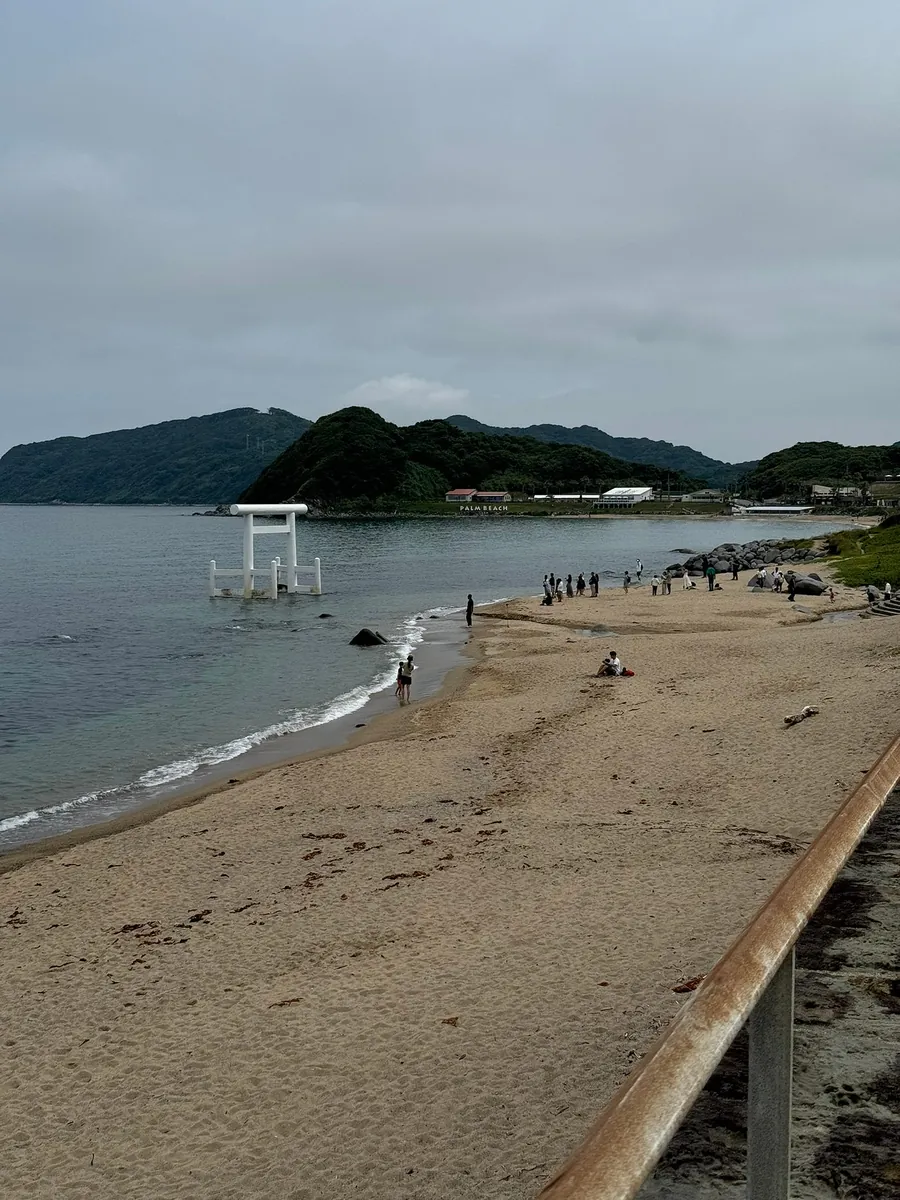
After getting off the bus, you will arrive at Sakurai Futamigaura, the Meoto Iwa (Married Couple Rocks).
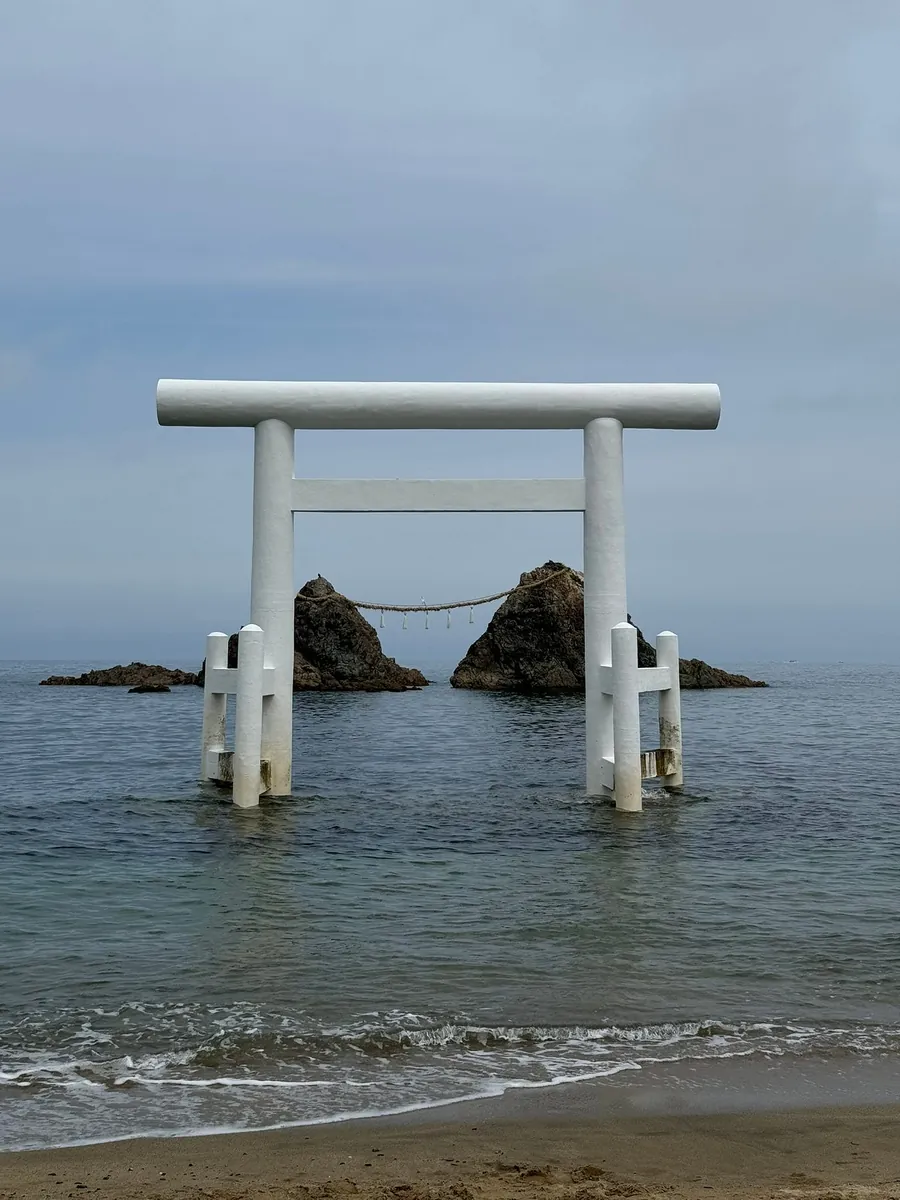
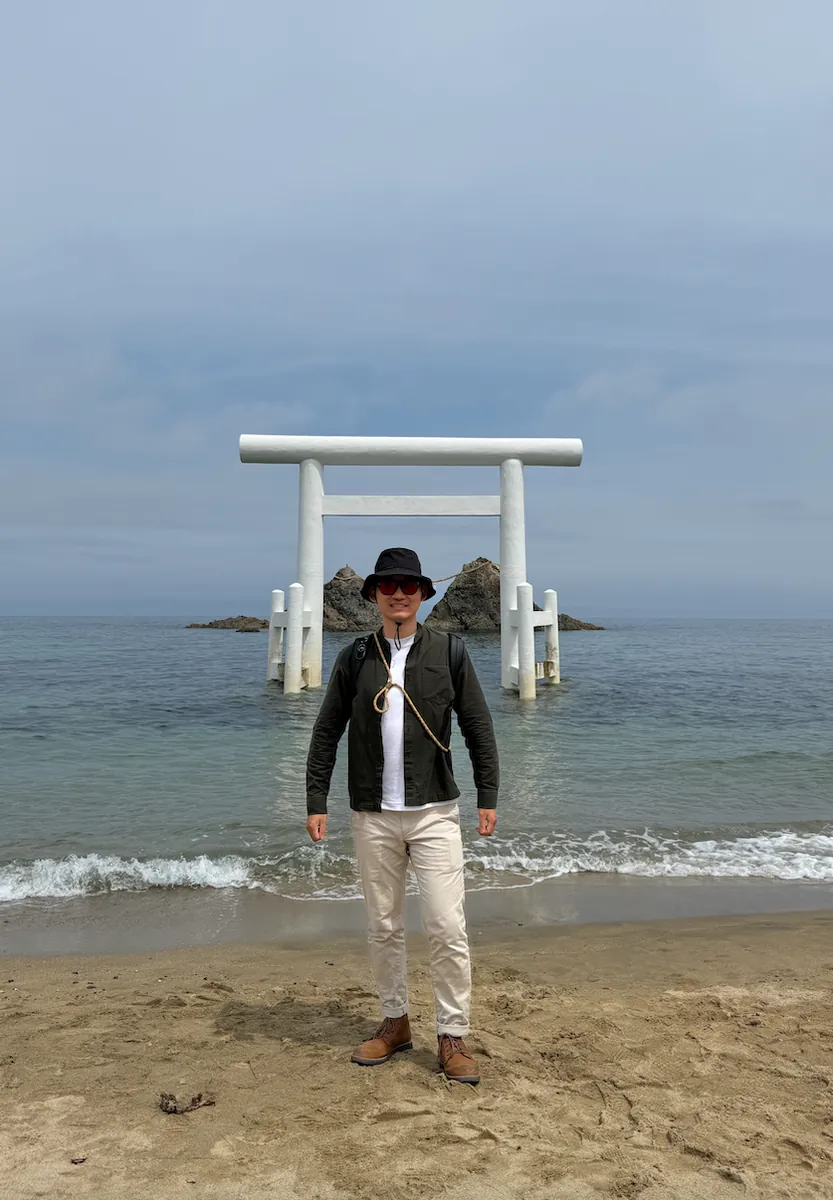
Up close, it is beautiful and very peaceful.
After finishing here, you can continue to Sakurai Shrine (famous for attracting many fans because it shares the same name as a member of the Japanese group Arashi) or go further to the Keya no Oto Sightseeing Boat (looks really cool!).
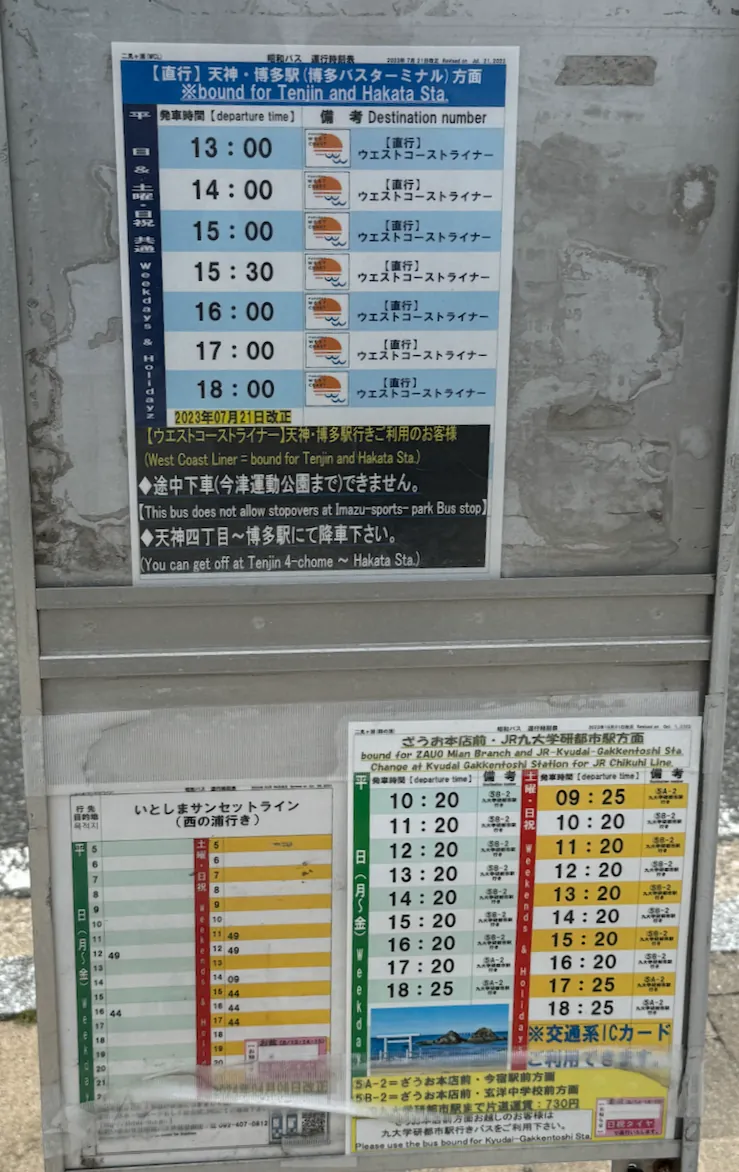
Return timetable: direct trains to Hakata run every hour in the afternoon, and trains to Kyudai-Gakken-Toshi Station run every hour.
Returned to Hakata around 12:30 PM, first went to find some food.
Revisit Hakatamiyachiku (Japan’s No.1 Miyazaki Beef Specialty Store Hakata Miyachiku) Tasting Miyazaki beef business lunch.
Business lunch offers great value (evening is a premium yakiniku set) + a social anxiety-friendly private room.
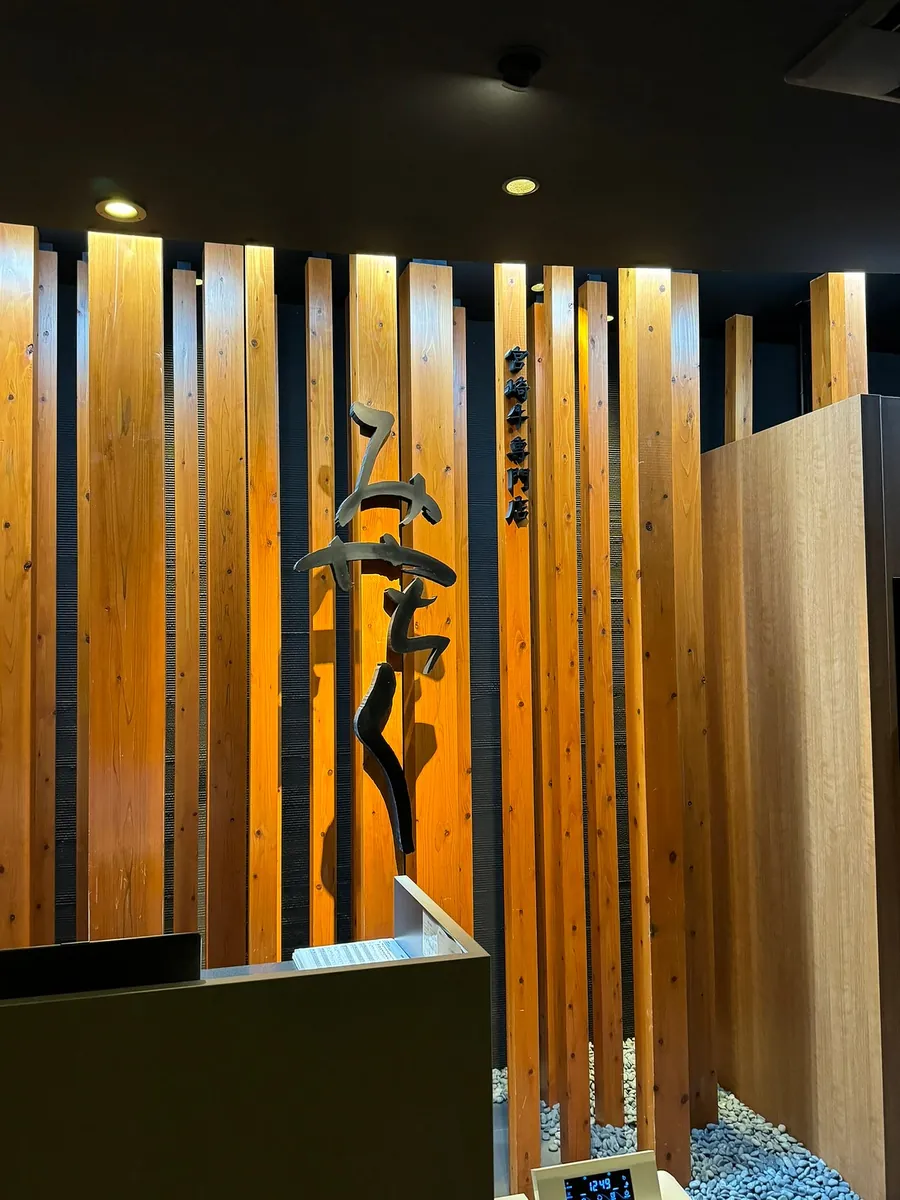
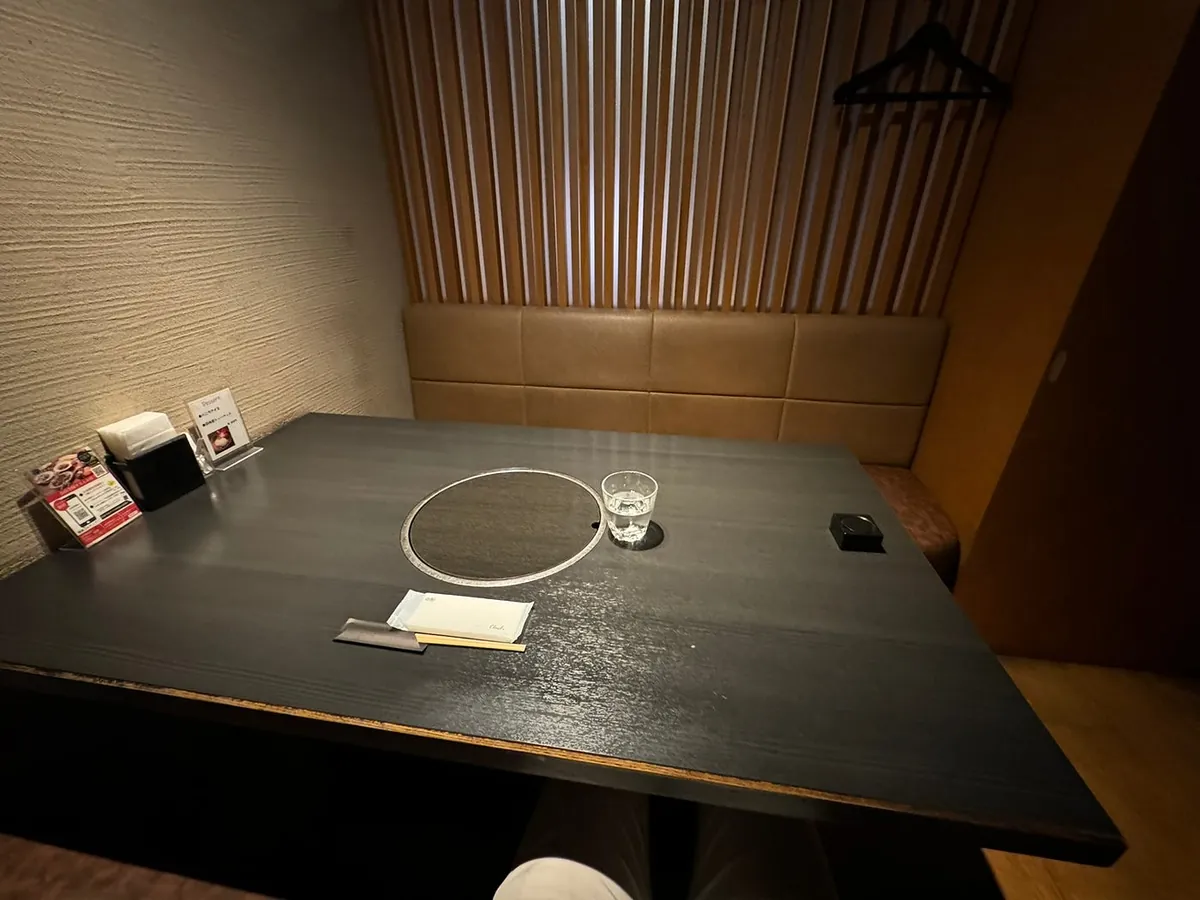
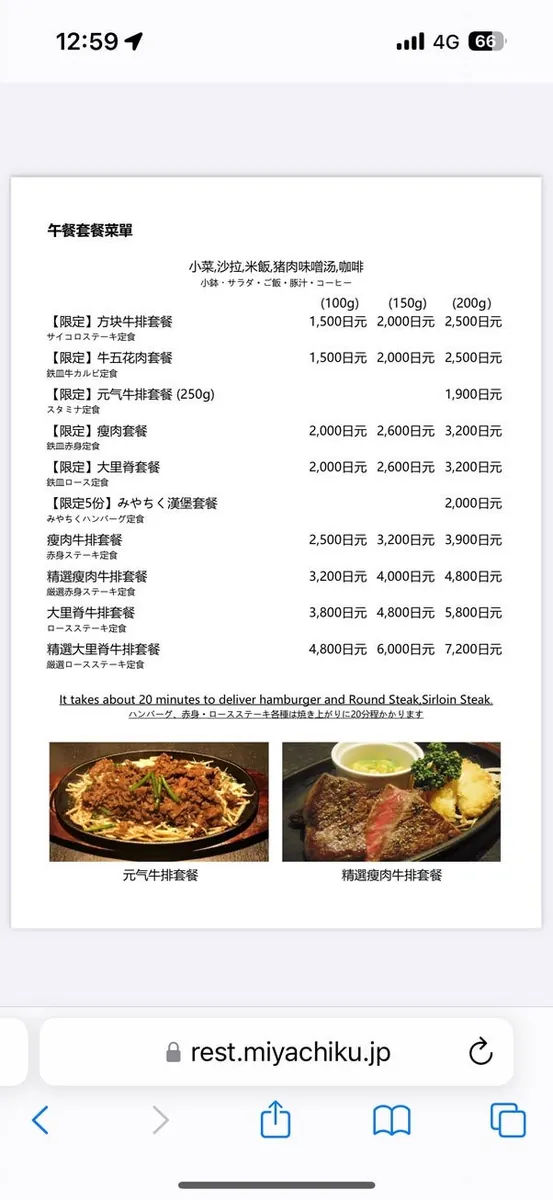
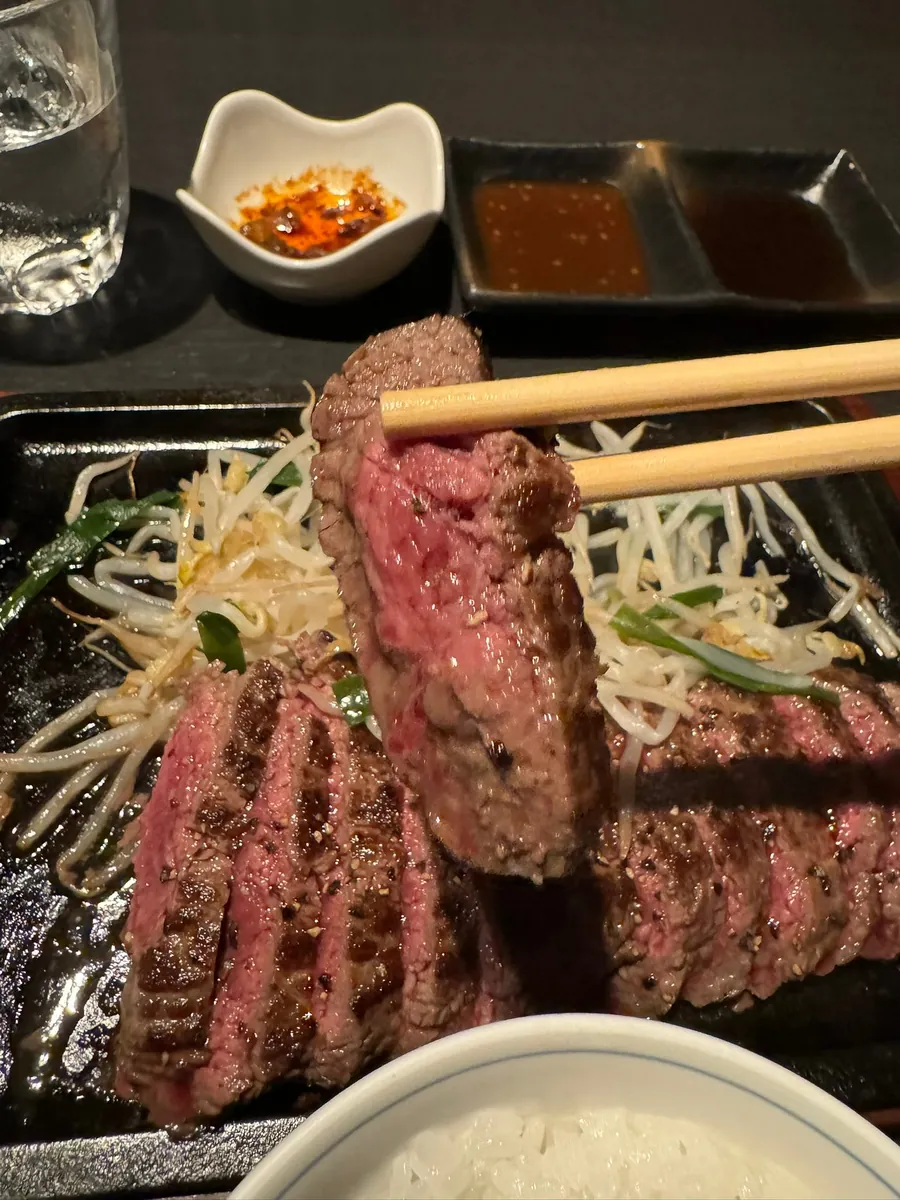
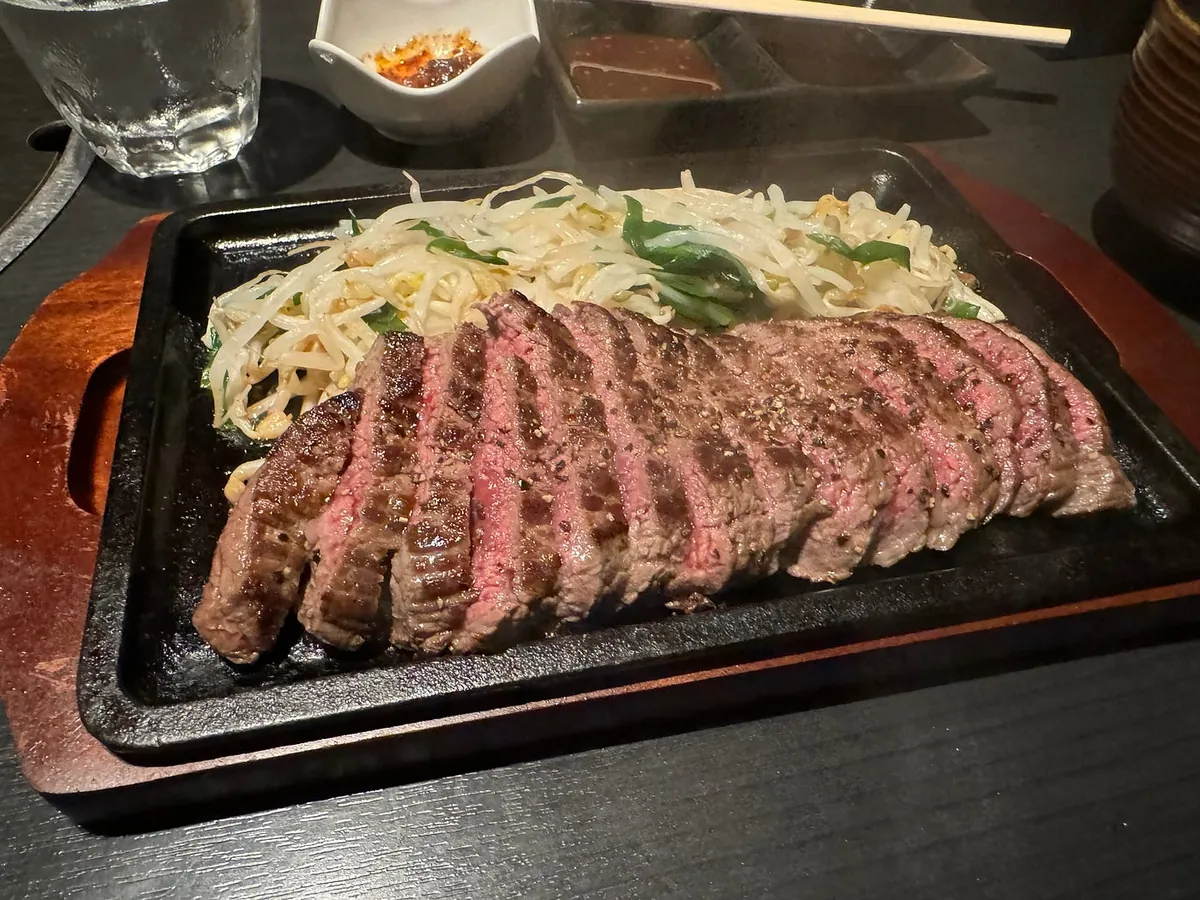
This time I ordered the lean meat set, 200g for 3,200 yen, and devoured two bowls of white rice (rice soup refills are free).
Nanzoin Temple
After returning to Hakata, take the train to Minamizo-in-mae Station.
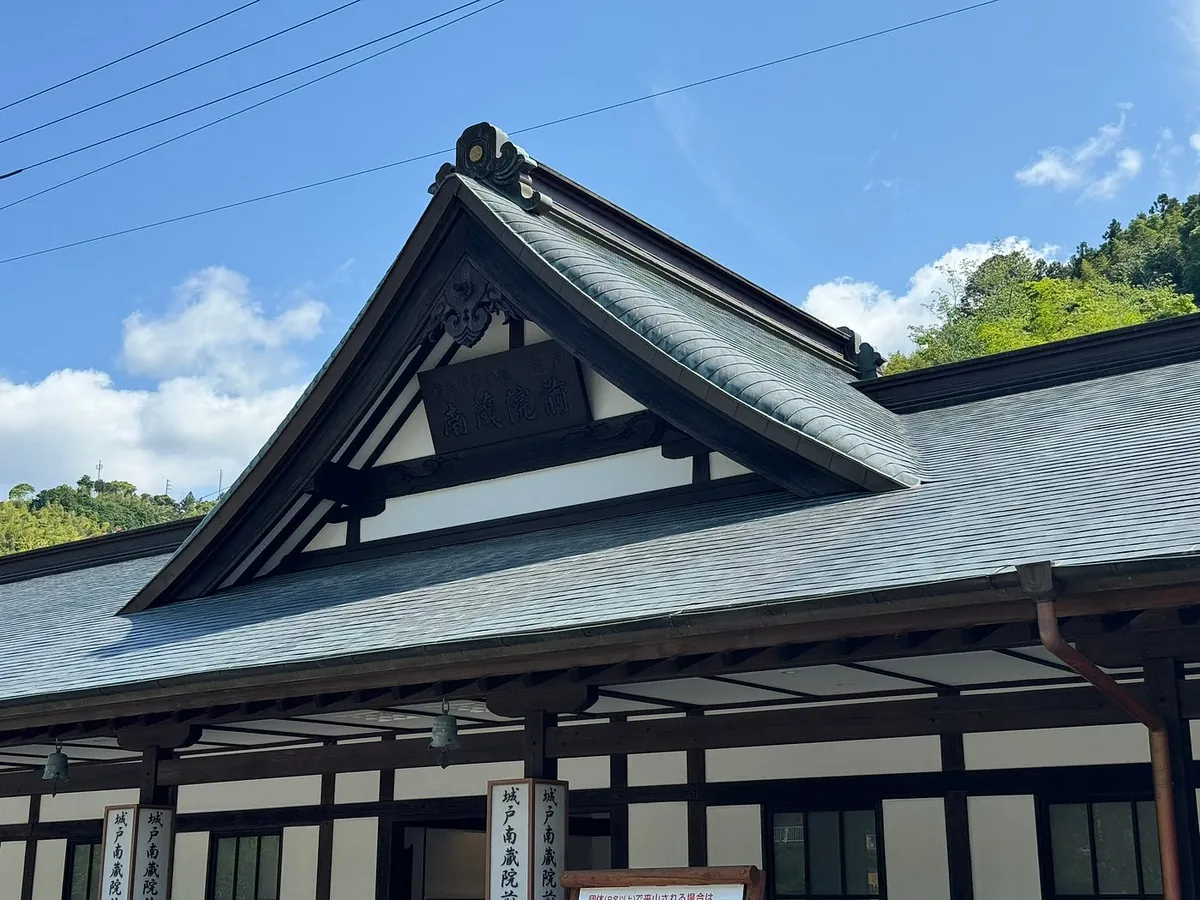
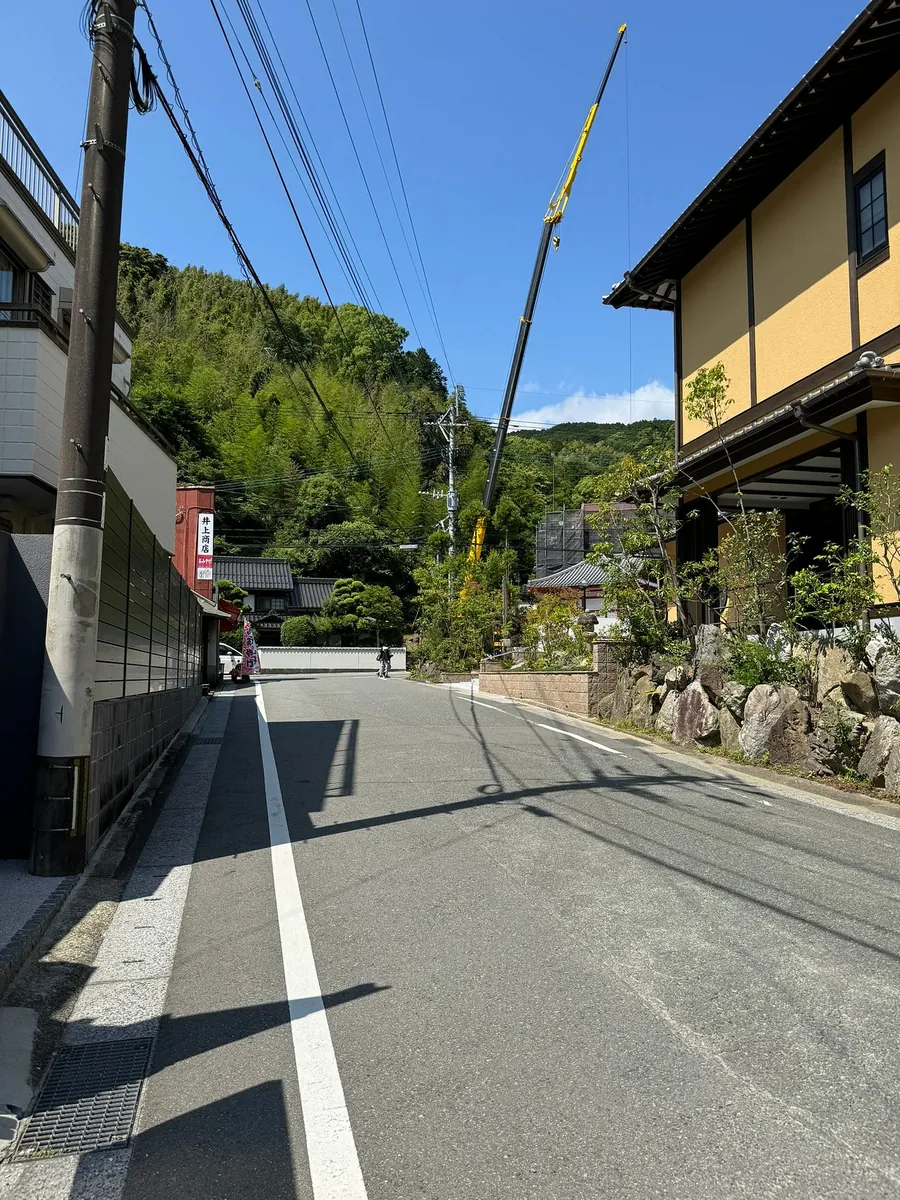
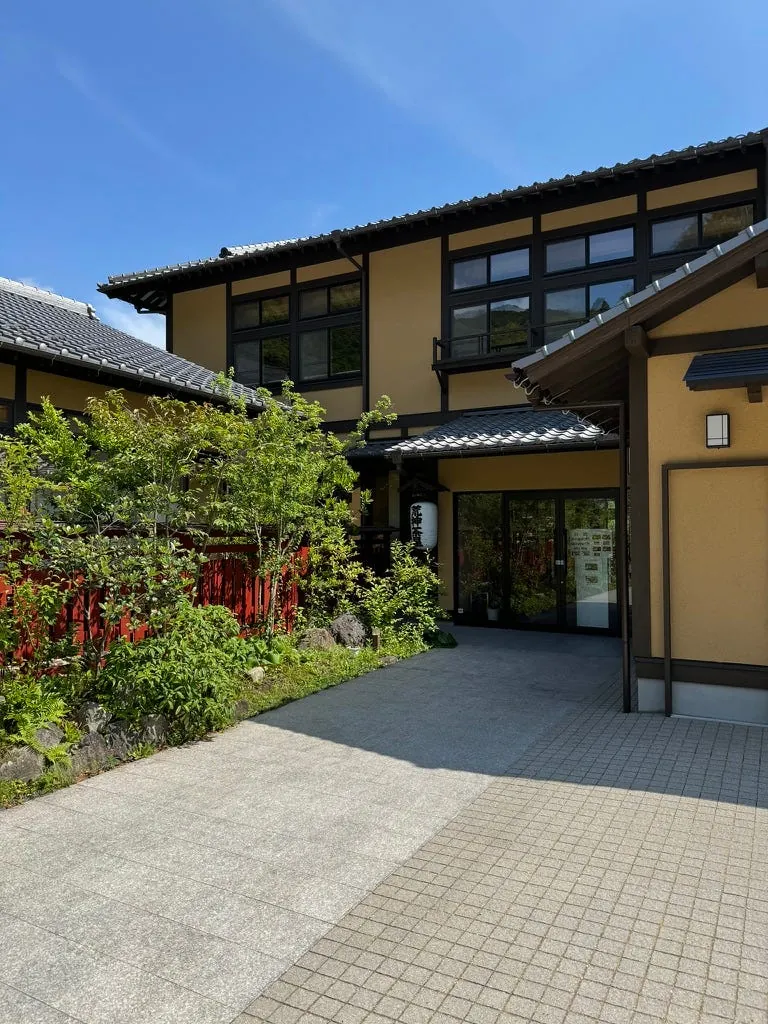
After exiting the station, walk straight ahead. You’ll pass Arajin Chaya (a place to rest and have lunch). Cross the road to reach the entrance of Nanzoin Temple.
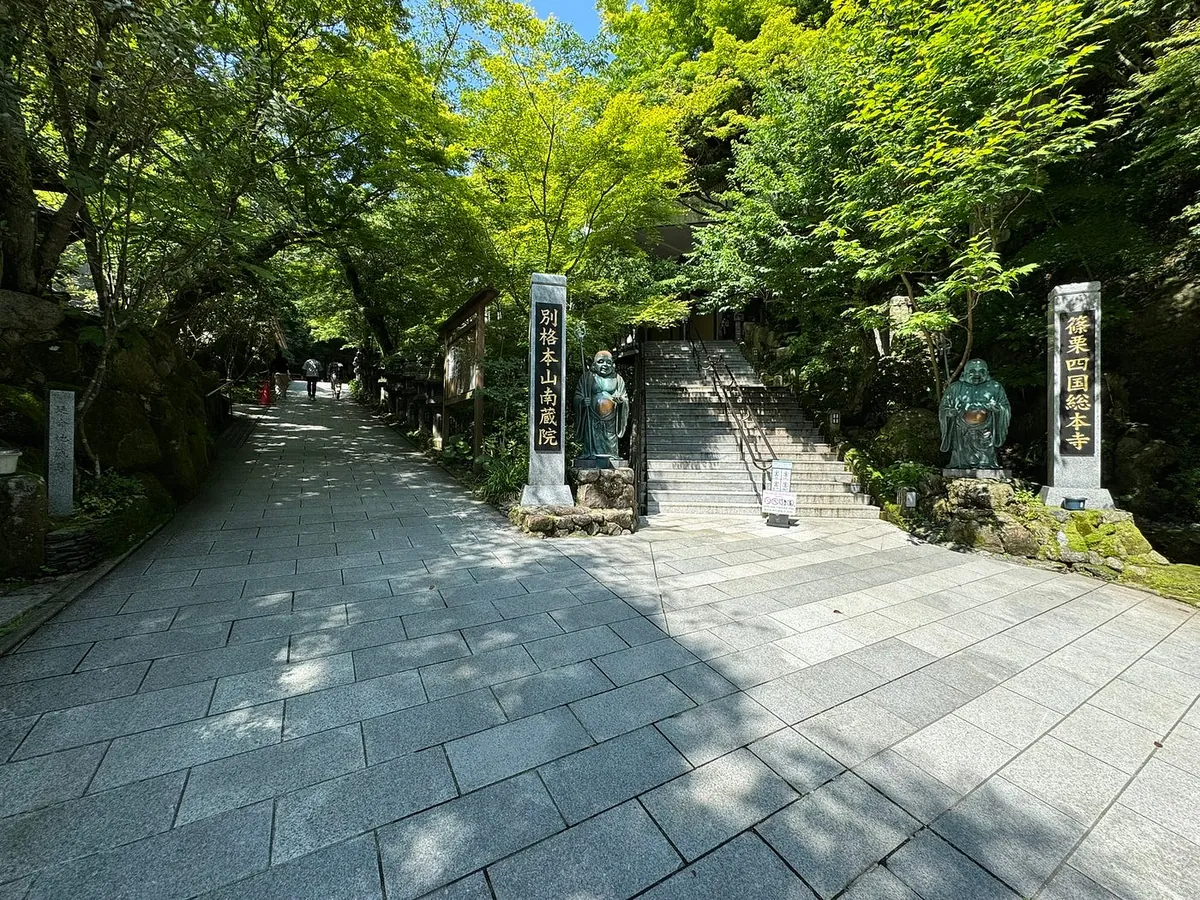
-
Walk to the right to see the Reclining Buddha; on the left, there are statues for seeking love, safety, and Fudo Myo-o.
-
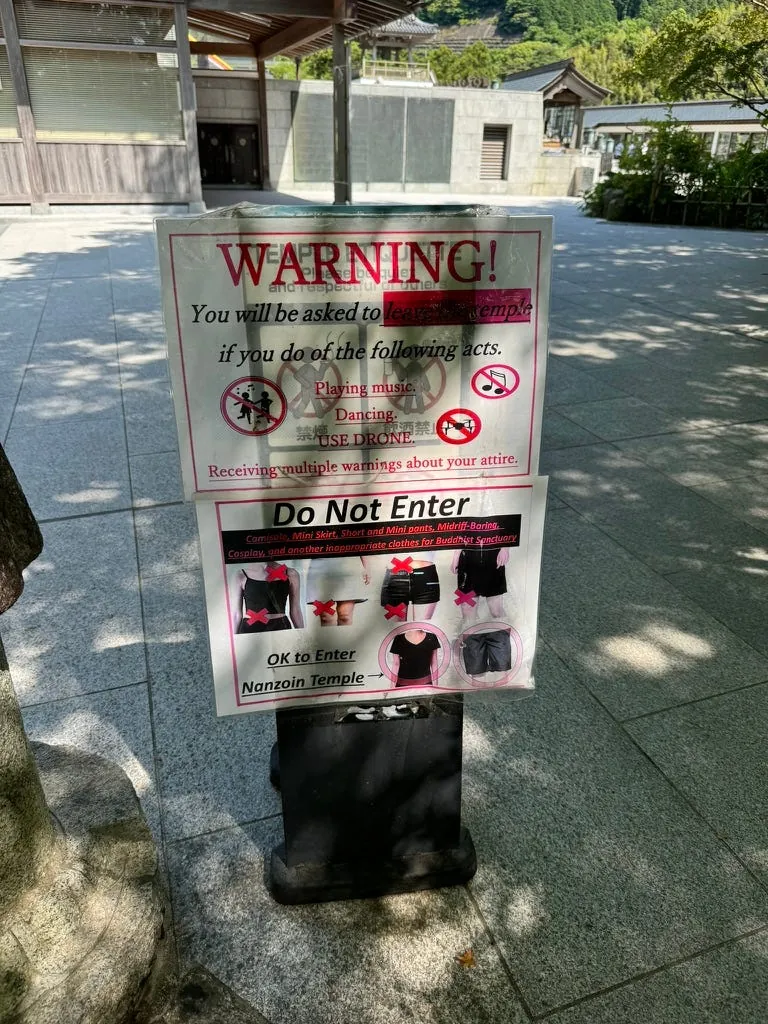
Nanzoin Temple is a private institution and also has enshrined memorial tablets, so there are many rules and restricted areas for photography that must be followed.
No short sleeves, shorts, exposed midriffs or shoulders; no playing music, dancing, or photography (e.g., the row of memorial tablets at the entrance cave, Fudo Myoo statue).
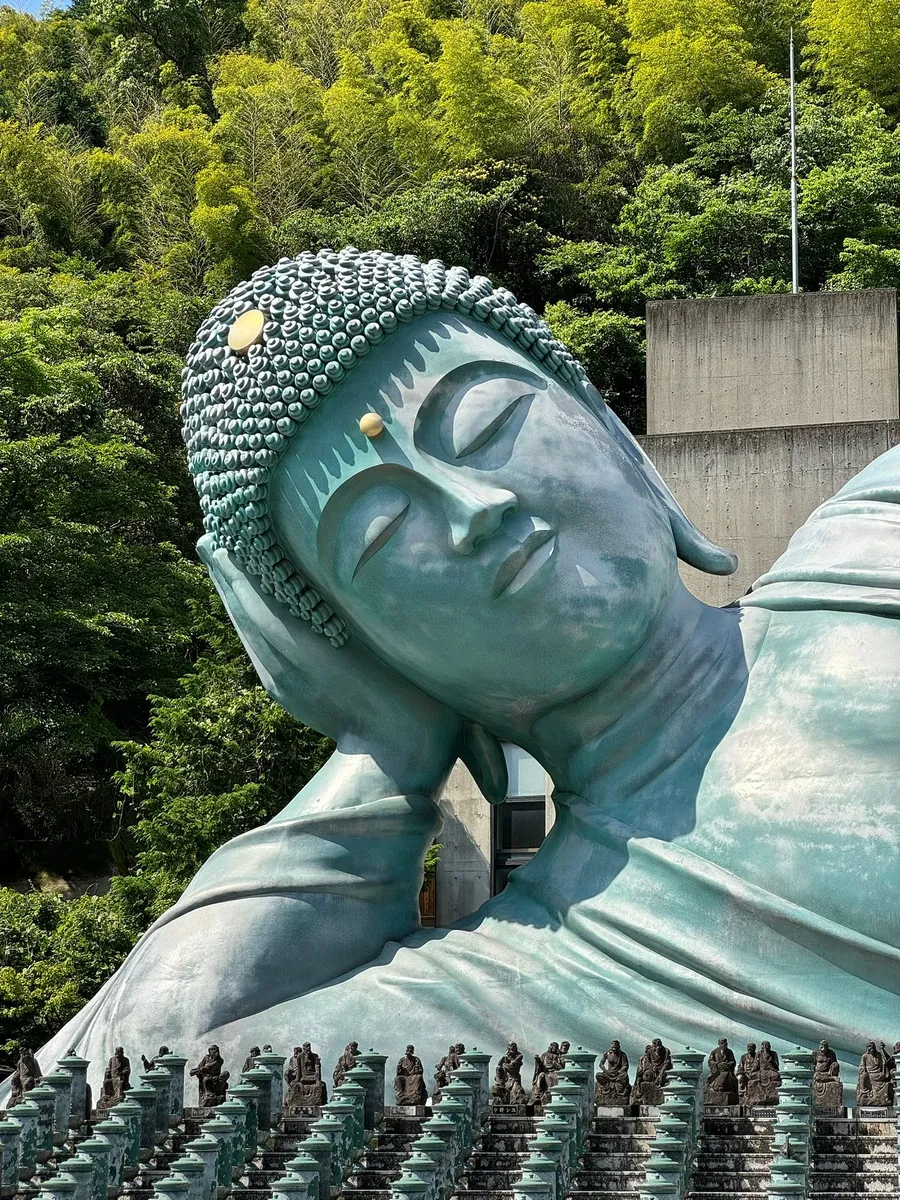
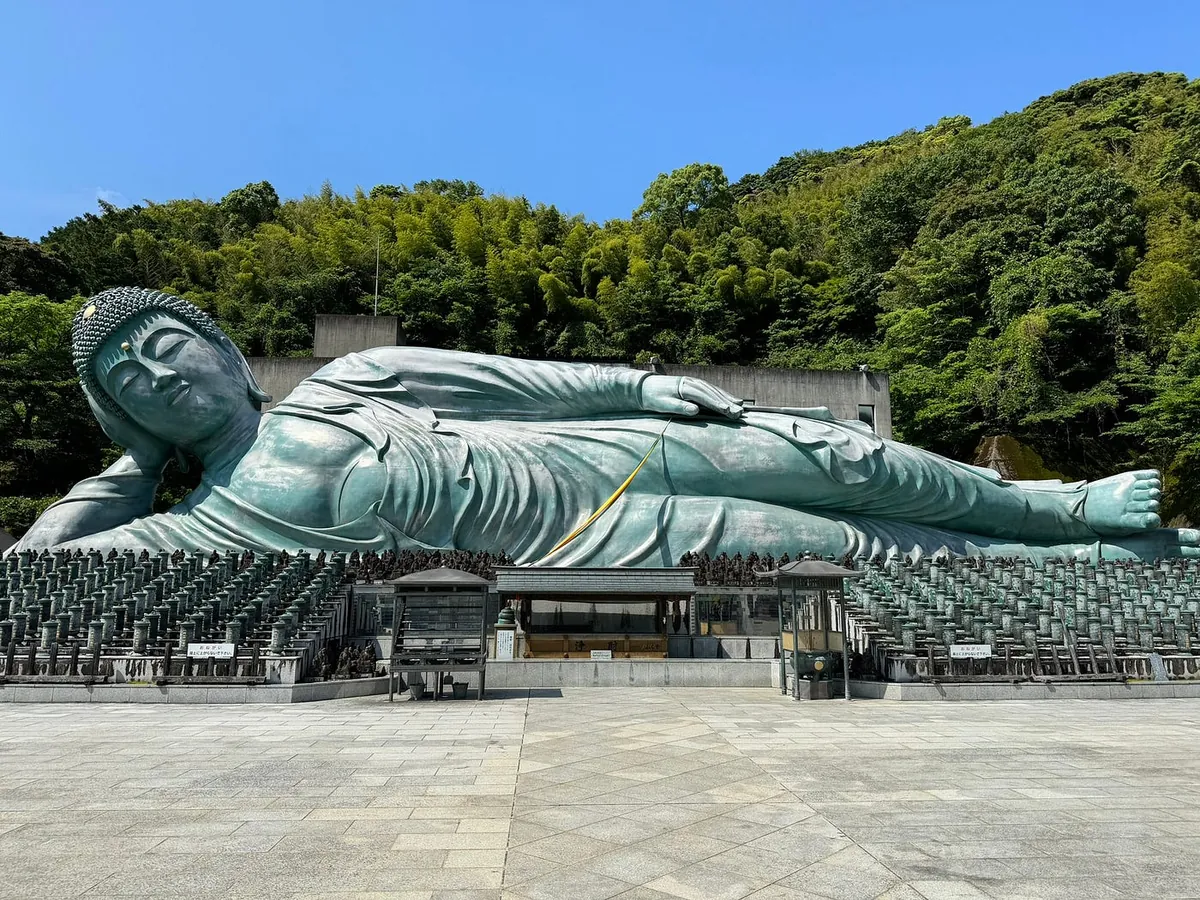
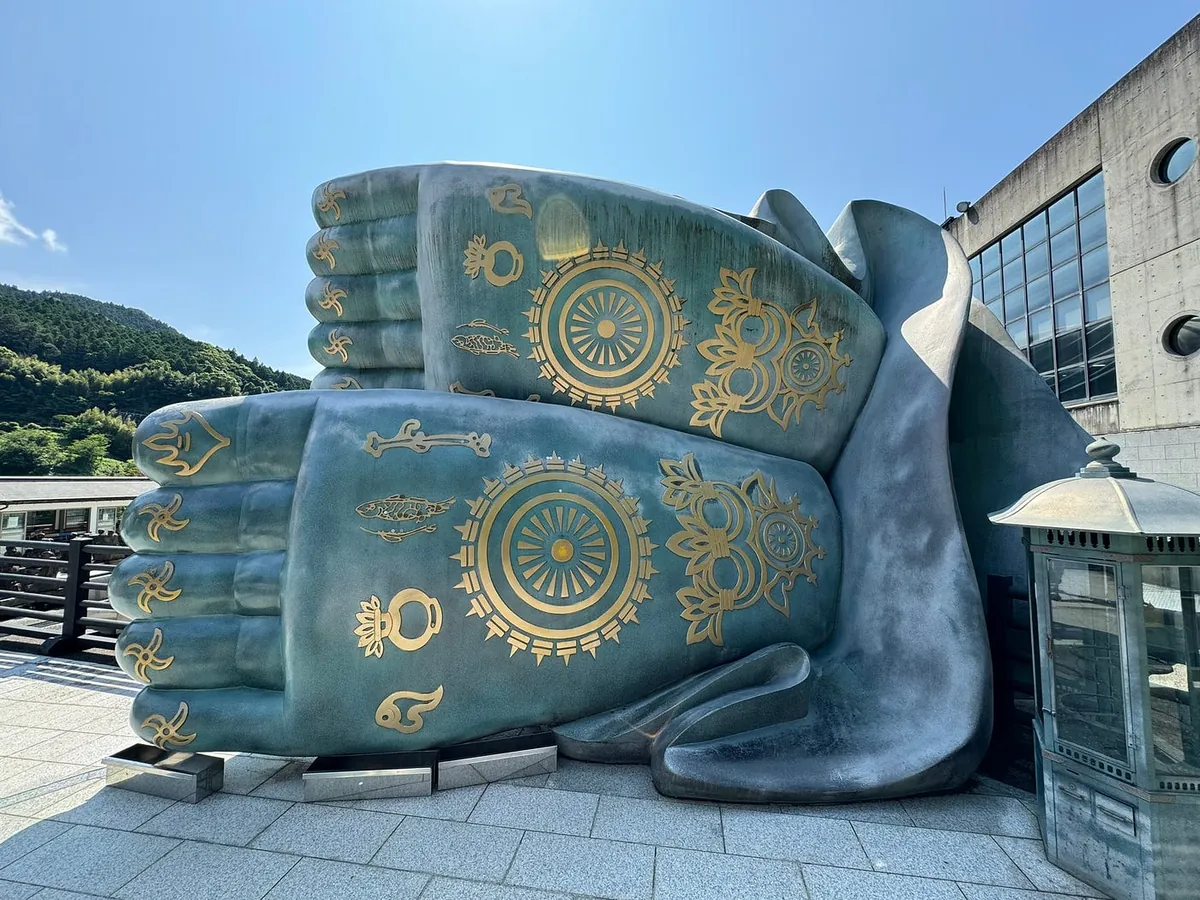
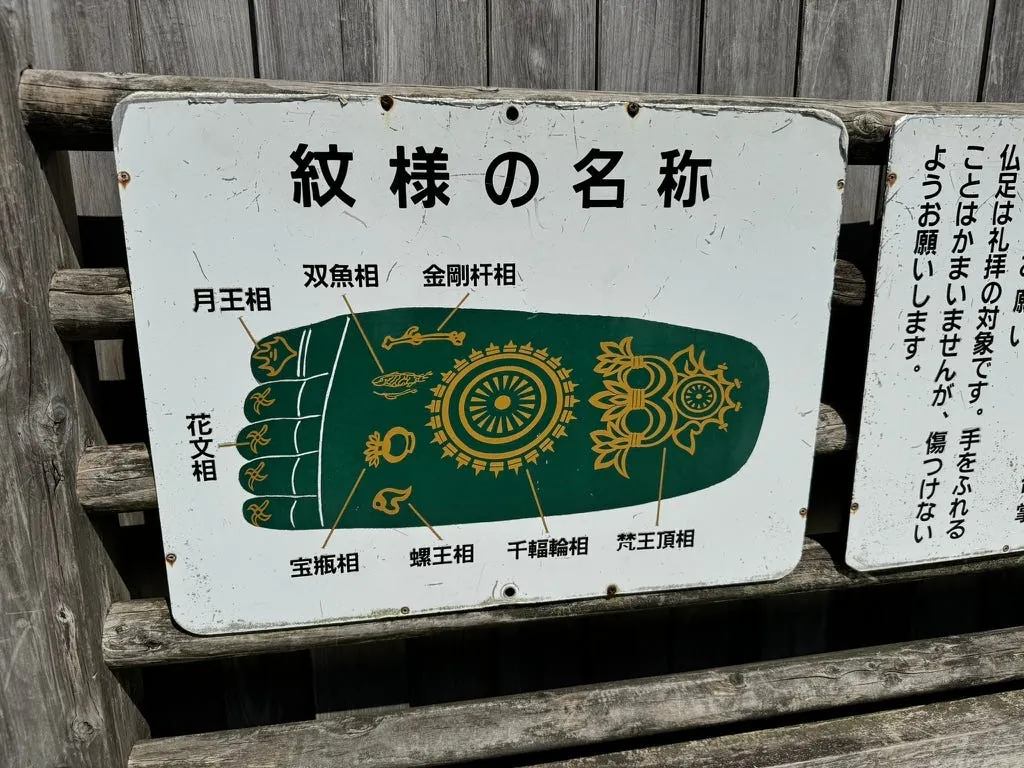
After climbing onto the platform, you can see the reclining Buddha statue. There are scriptures on the soles of its feet, making the whole scene very grand and solemn.
After the visit, I took the train back to Hakata Station, arriving around 15:40.
Hakata Pilgrimage
Adding some places I missed last time in Kyushu.
Gion — Tochoji Temple
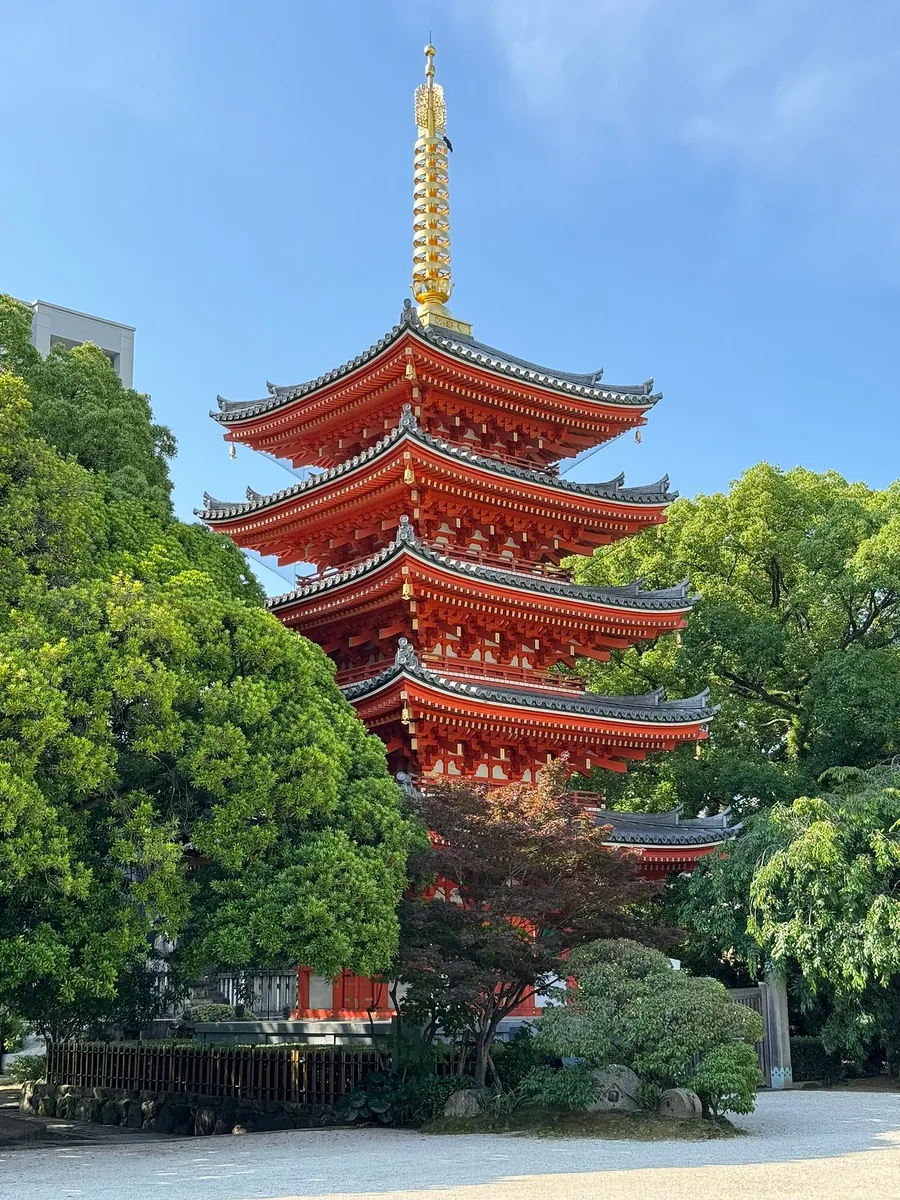
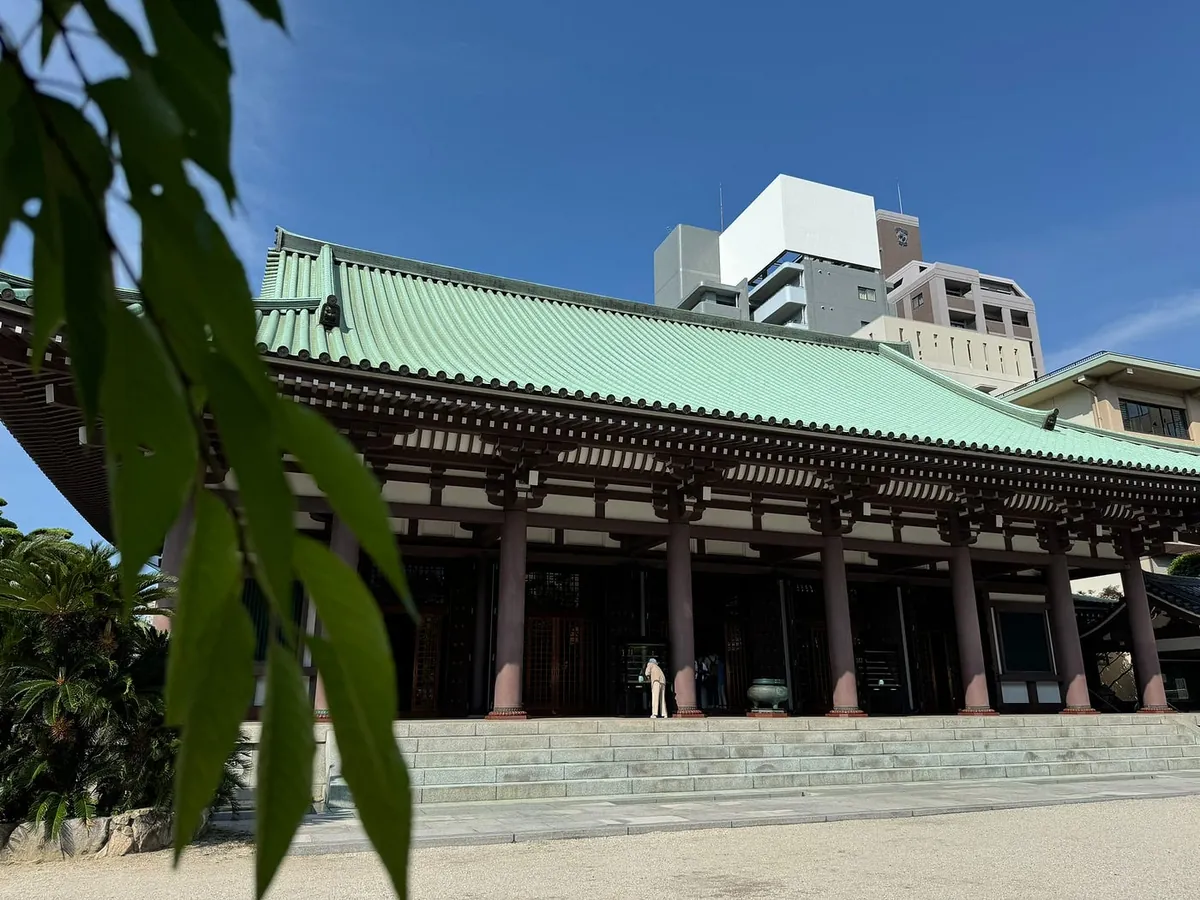
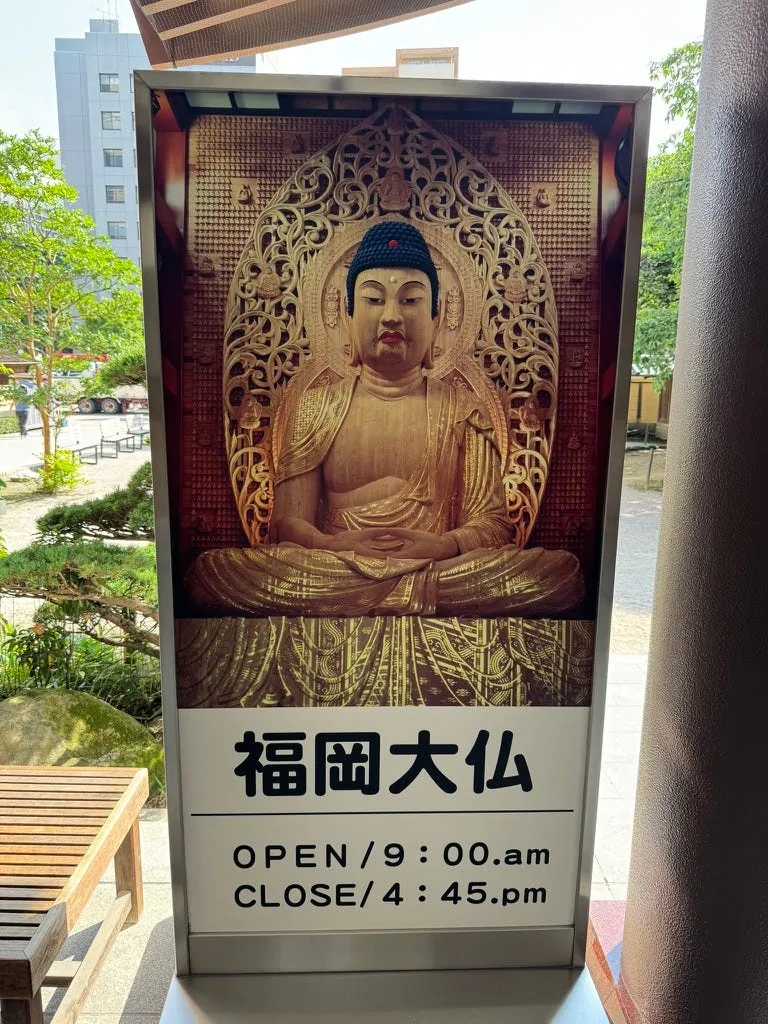
On the second floor of Tochoji Temple, there is the Fukuoka Great Buddha available for worship (50 yen).
After the visit, before dinner at 17:00 at Tetsunabe (鉄なべ) for iron skillet fried dumplings, which is still open for another hour, I went to stroll around Ohori Park.
Ohori Park
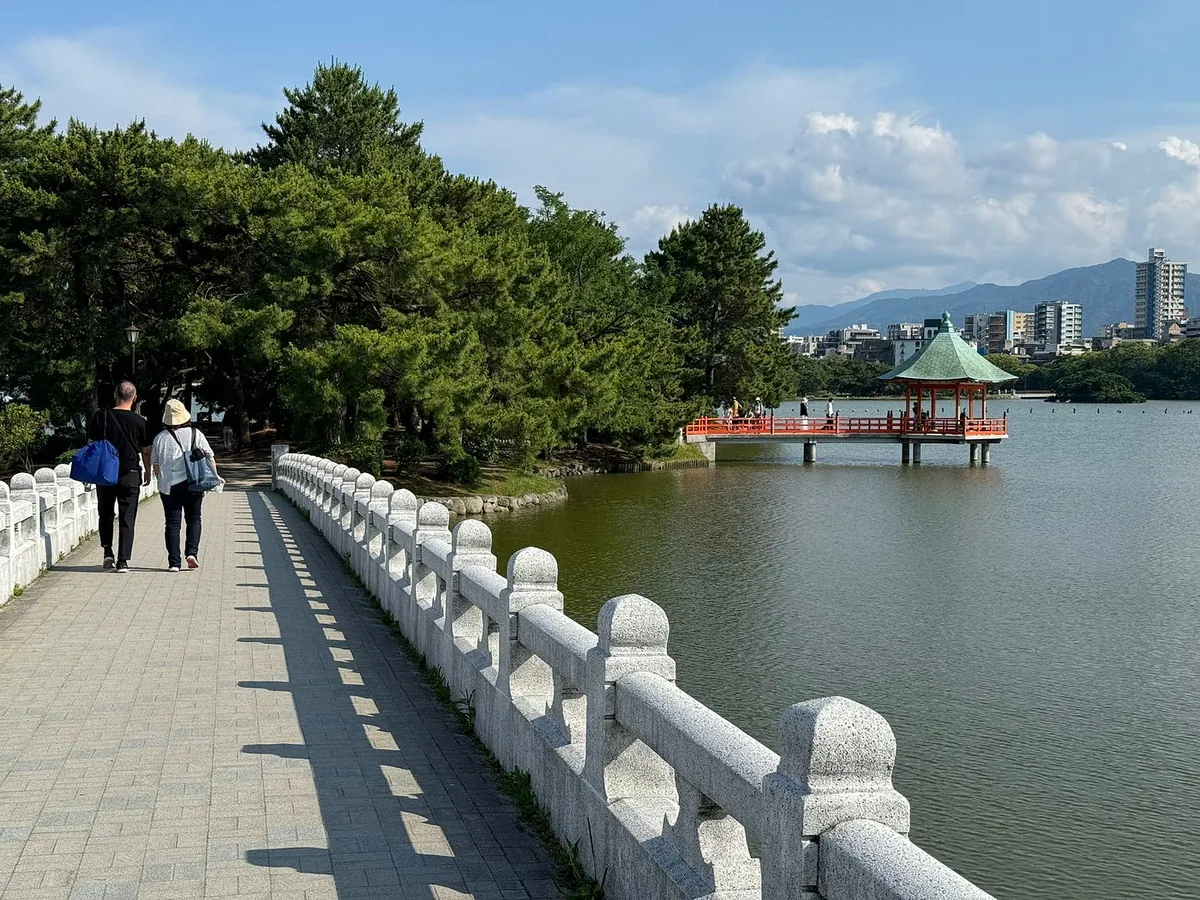
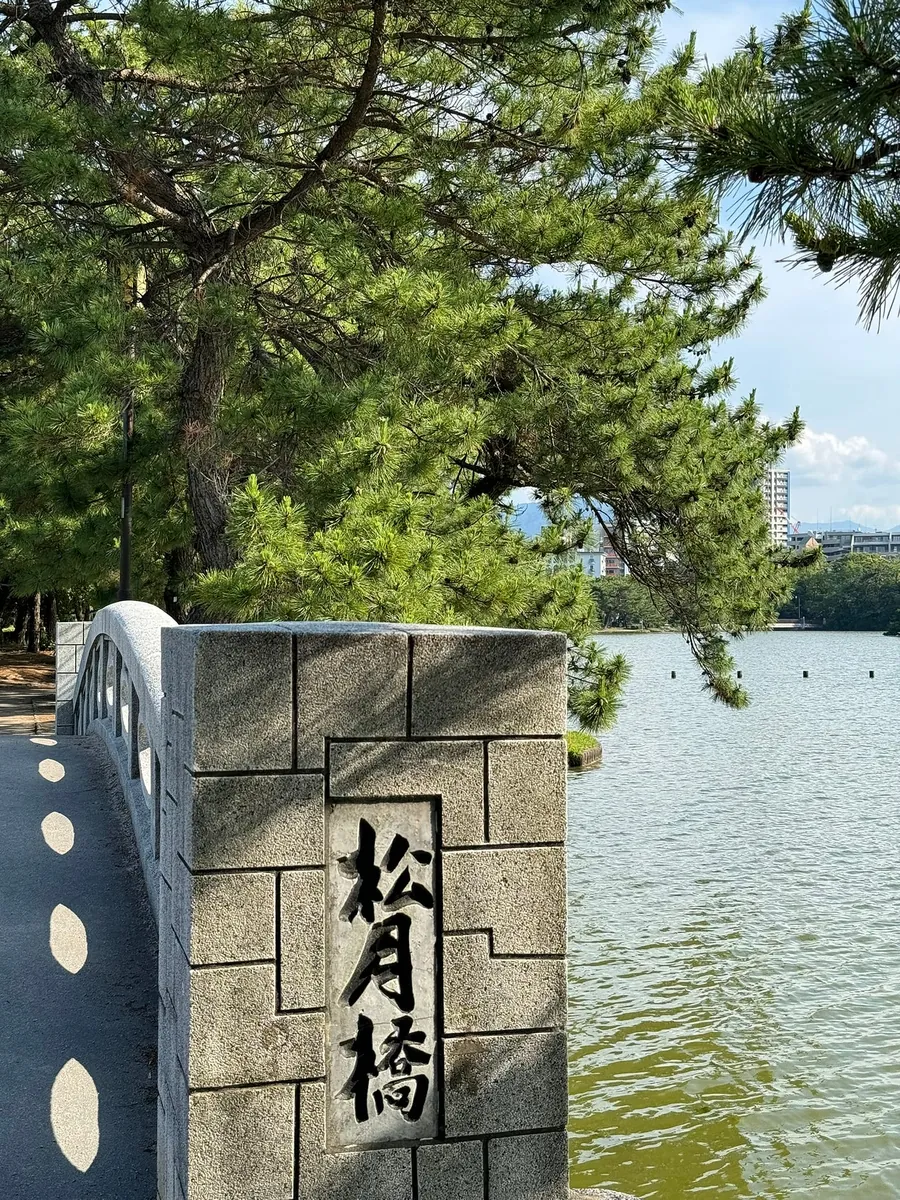
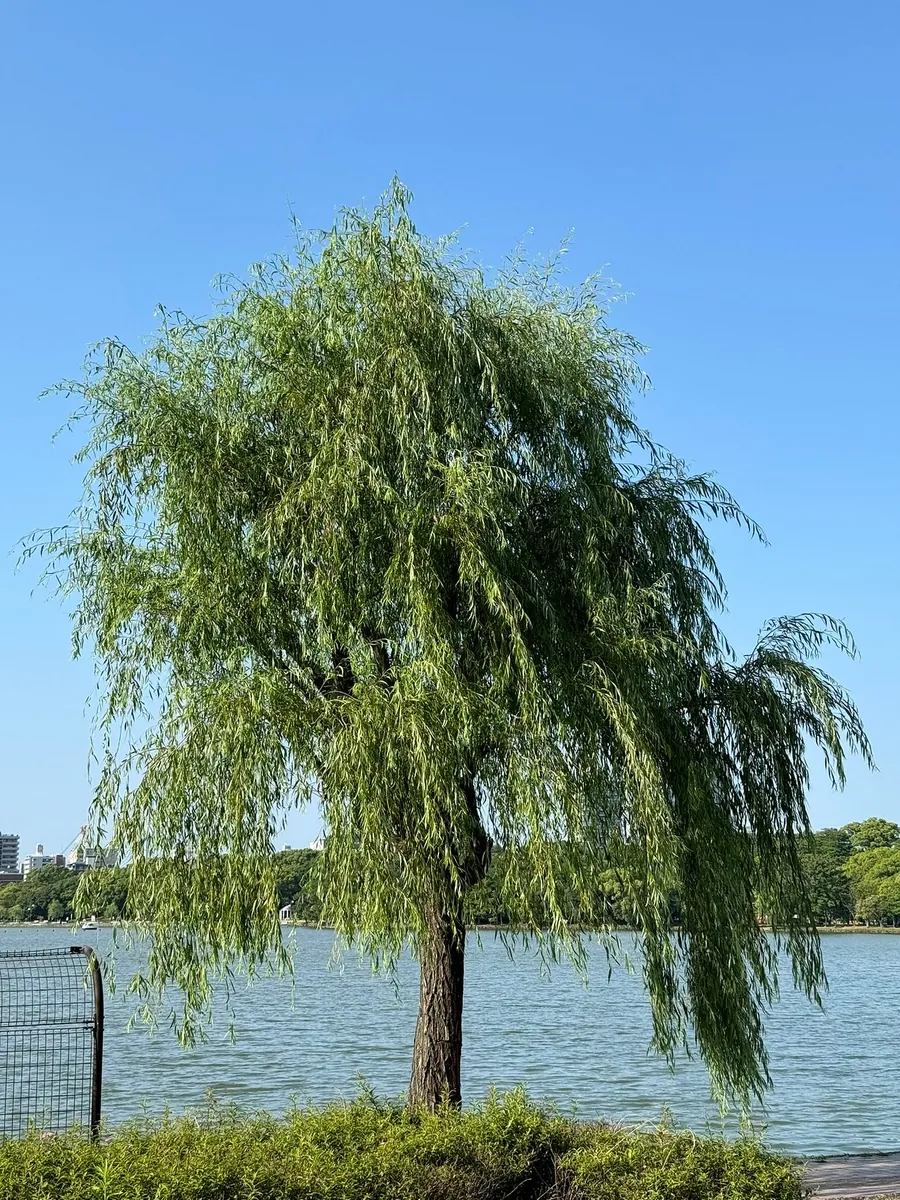
Ohori Park is very large, and it takes about 45 minutes to walk around; you can also ride a swan boat.
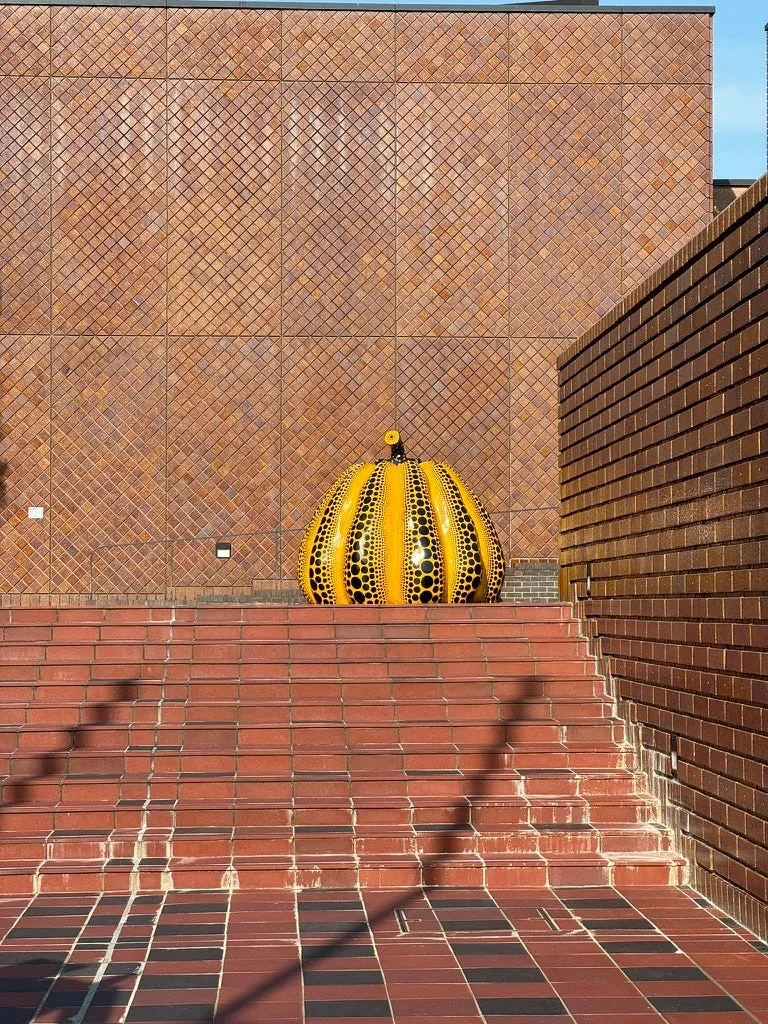
Fukuoka City Museum of Art is closed on Mondays, so you can only admire Yayoi Kusama’s pumpkin from afar.
After finishing the tour, it’s about 17:00, time to go for dinner!
Iron Pot Pan-Fried Dumplings Tetsunabe
Last time I tried the iron pan fried dumplings at 鉄なべ and still miss the crispy taste of those dumplings.
He has another branch, Iron Pan Fried Dumplings Tetsunabe Hakata Gion Branch, which I passed by a few days ago. The gate was closed with a notice saying it is under renovation and to visit the main store. (However, Google Maps still shows it as open)
Sauces and water are self-service.
The store does not support electronic payments, cash only. ⚠️
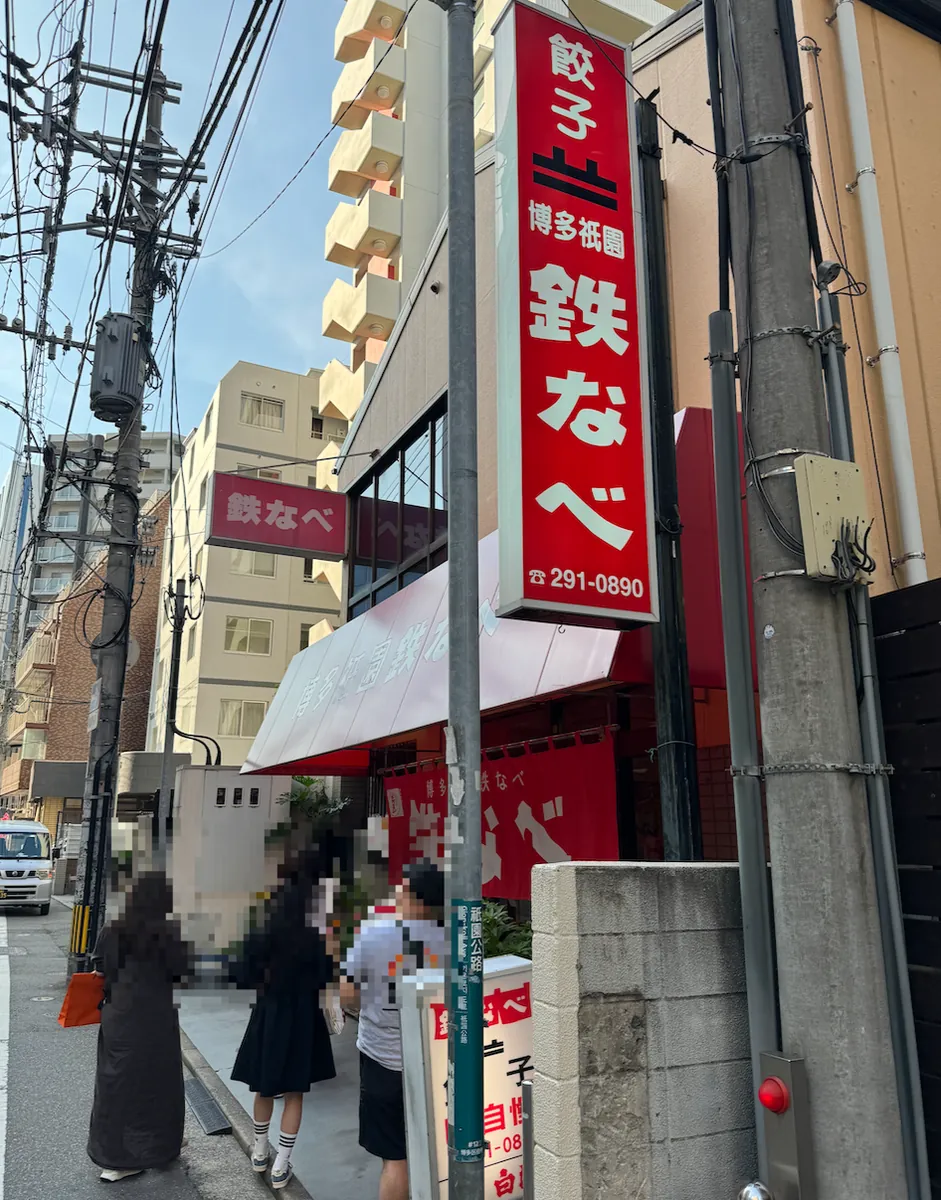
Around 17:20, seeing everyone waiting outside, the shopkeeper grandma came out shortly to welcome us in.
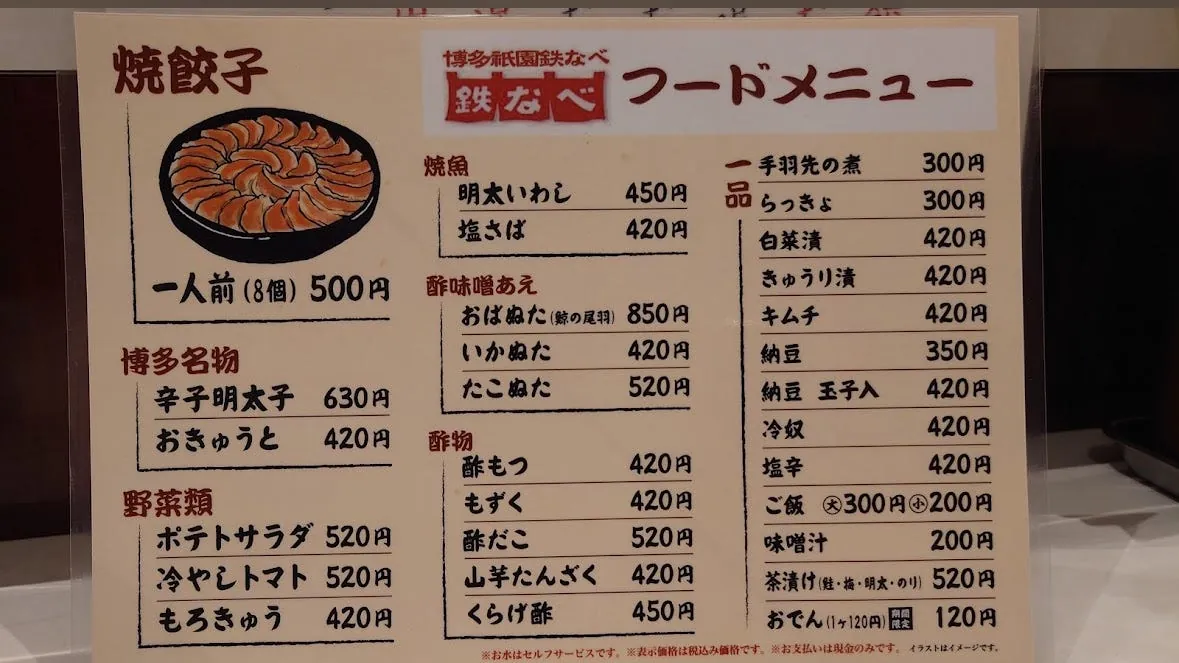
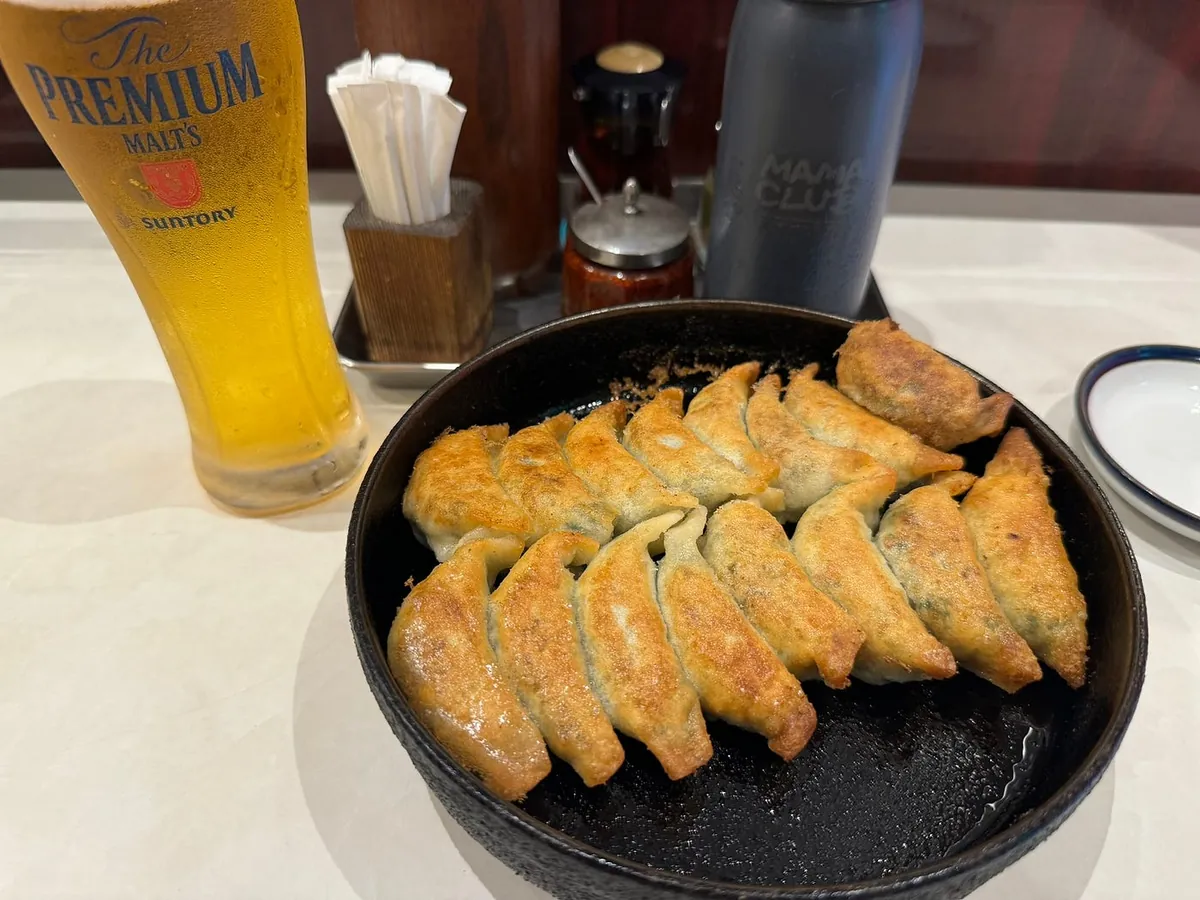
This time I knew to order two servings of pan-fried dumplings. Last time, grandma gestured that one serving wasn’t enough (I didn’t understand then). One serving has 8 pieces (500 yen), so two servings make 16 pieces. Then I ordered a draft beer to finish this round!
Pan-fried dumplings are cooked fresh to order, sizzling when served. The skin is thin and crispy, and the filling is likely chive and pork, simple and not salty, highlighting the natural flavors of the ingredients.
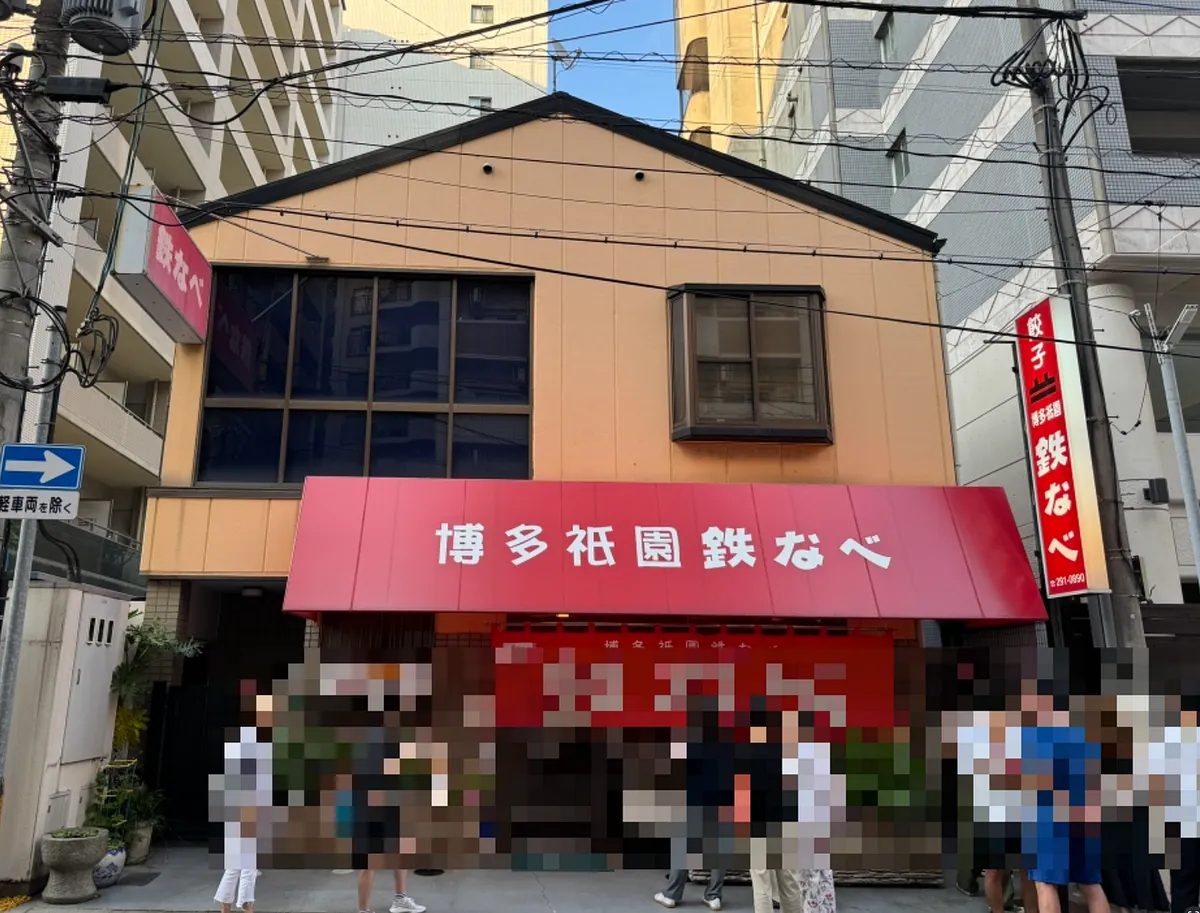
After finishing at 18:00, some people started lining up outside.
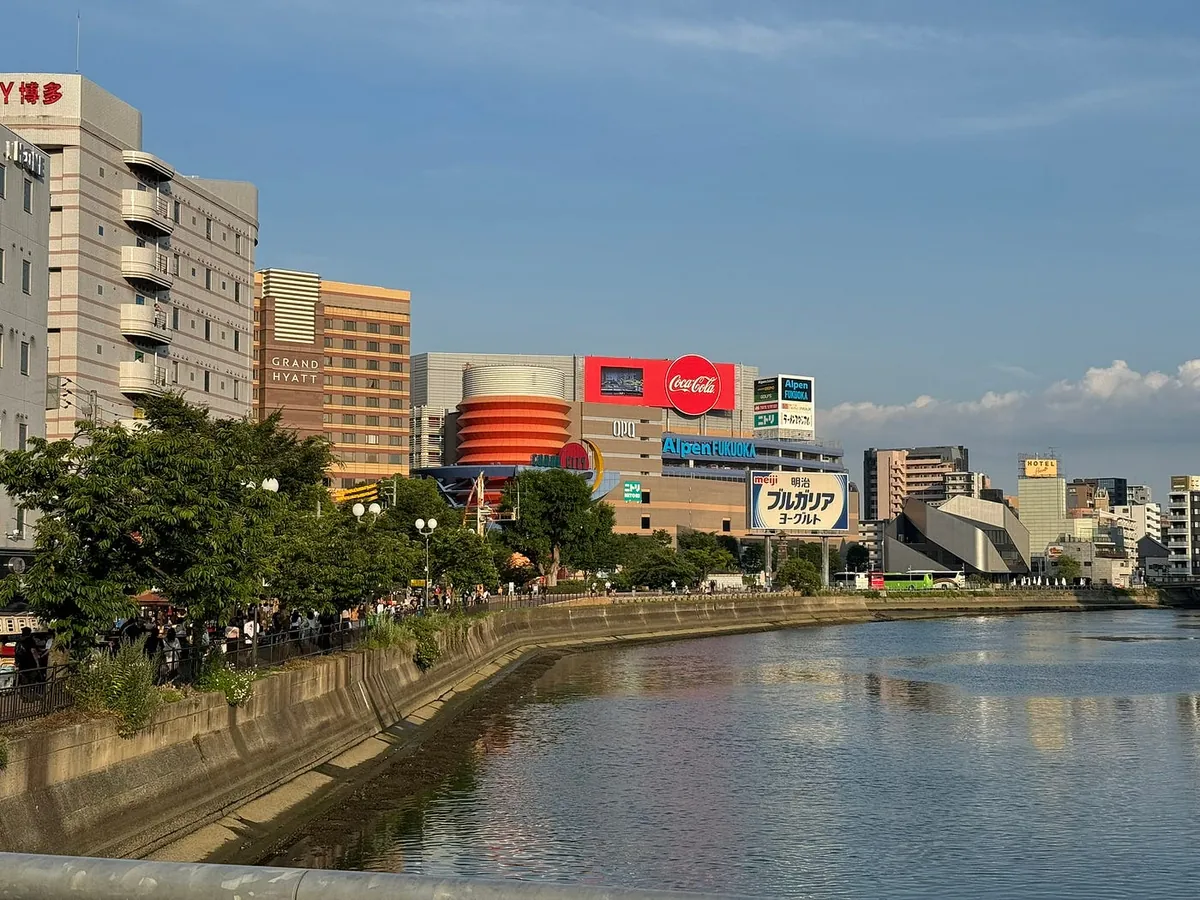
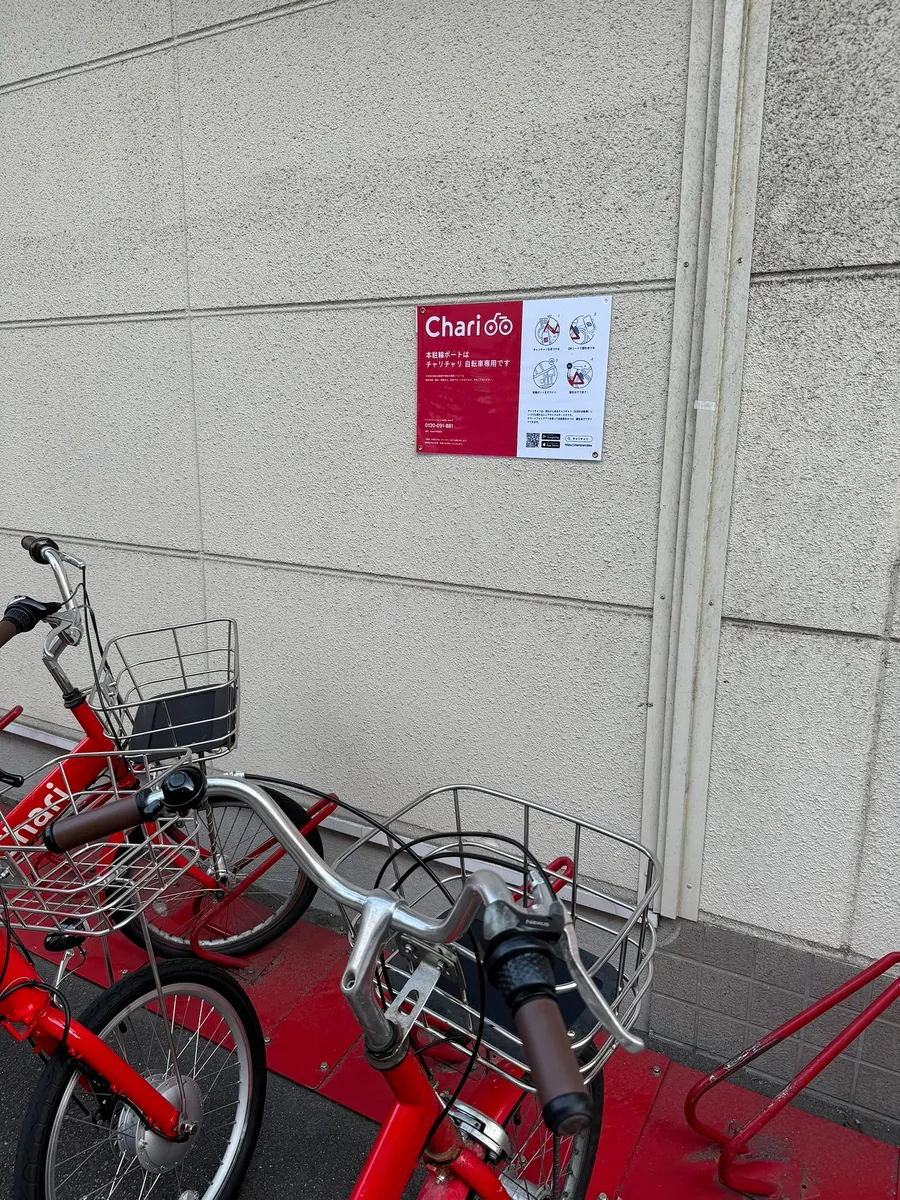
After eating, I walked back to the hotel and passed by the Nakasu food stalls being set up. This time, I noticed many more shared bikes.
Changing hotels constantly on this trip is exhausting; this hotel will be where I stay for the last three days.
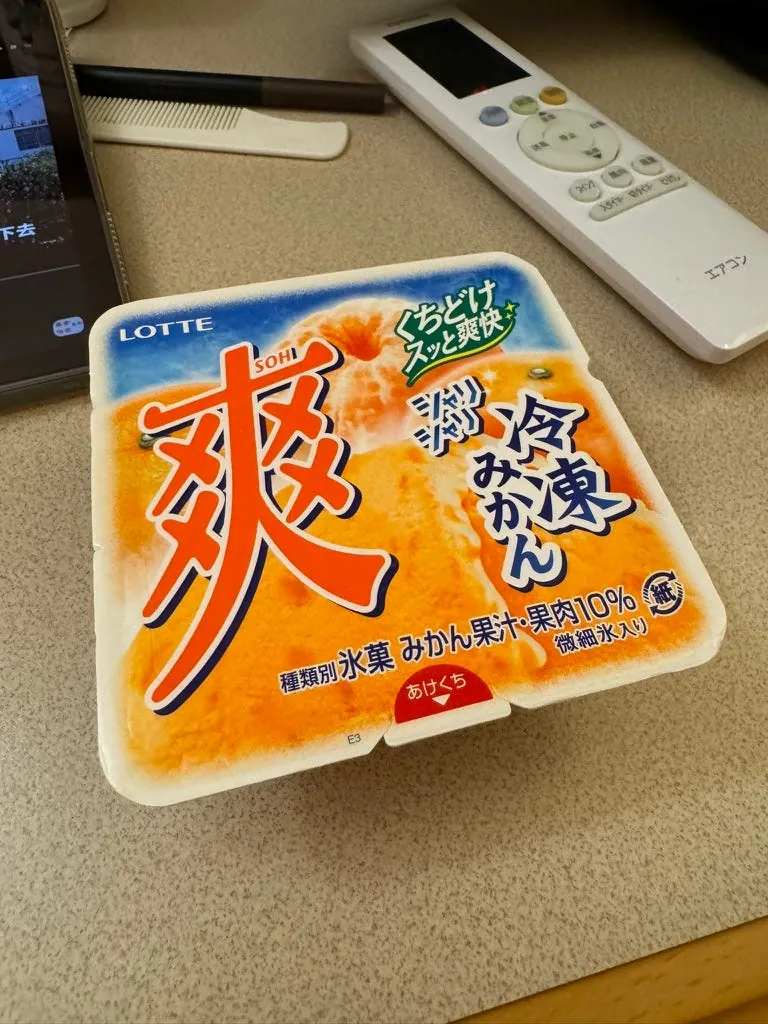
Snack ice cream, and a convenience store hot dog for a late-night snack.
Day 9 KKDAY Takachiho One-Day Tour: Takachiho Shrine, Takachiho Gorge, Ama-no-Iwato Shrine, Amano Yasugawara Cave
07:45 AM Depart for Hakata Station Chikushi Exit (Hakata Back Exit)
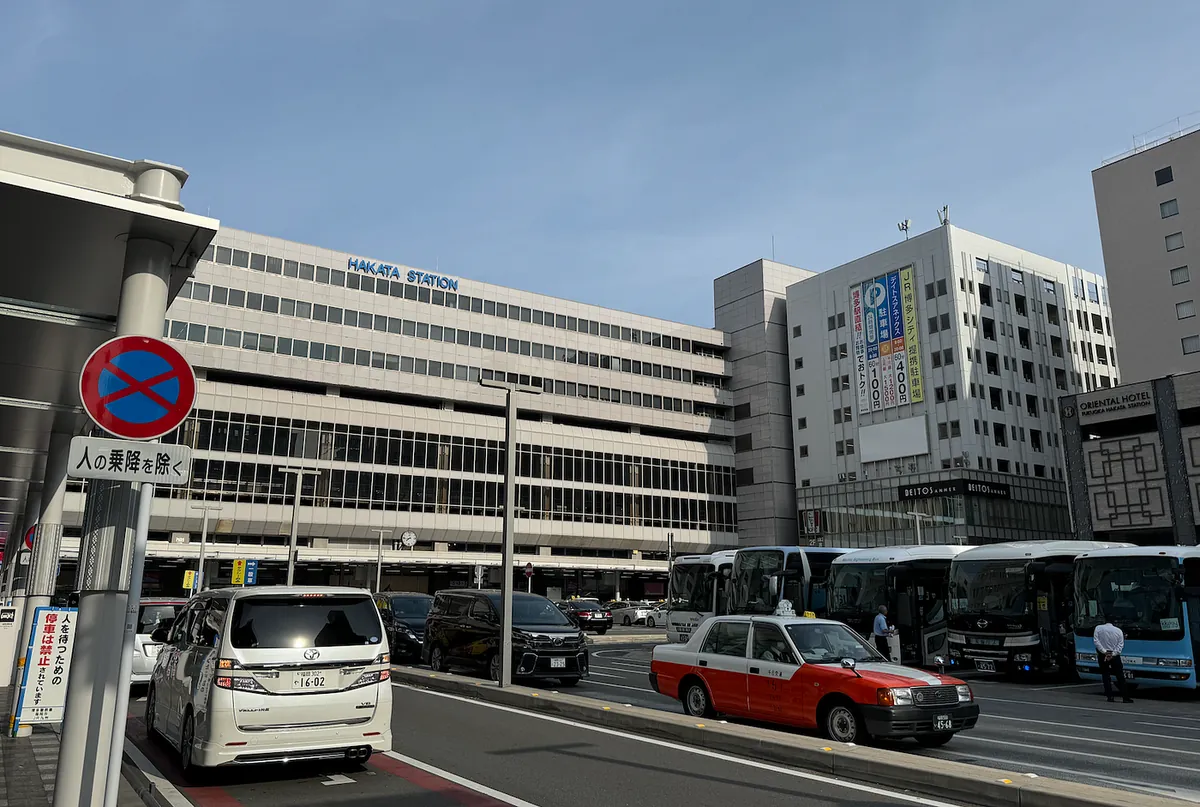
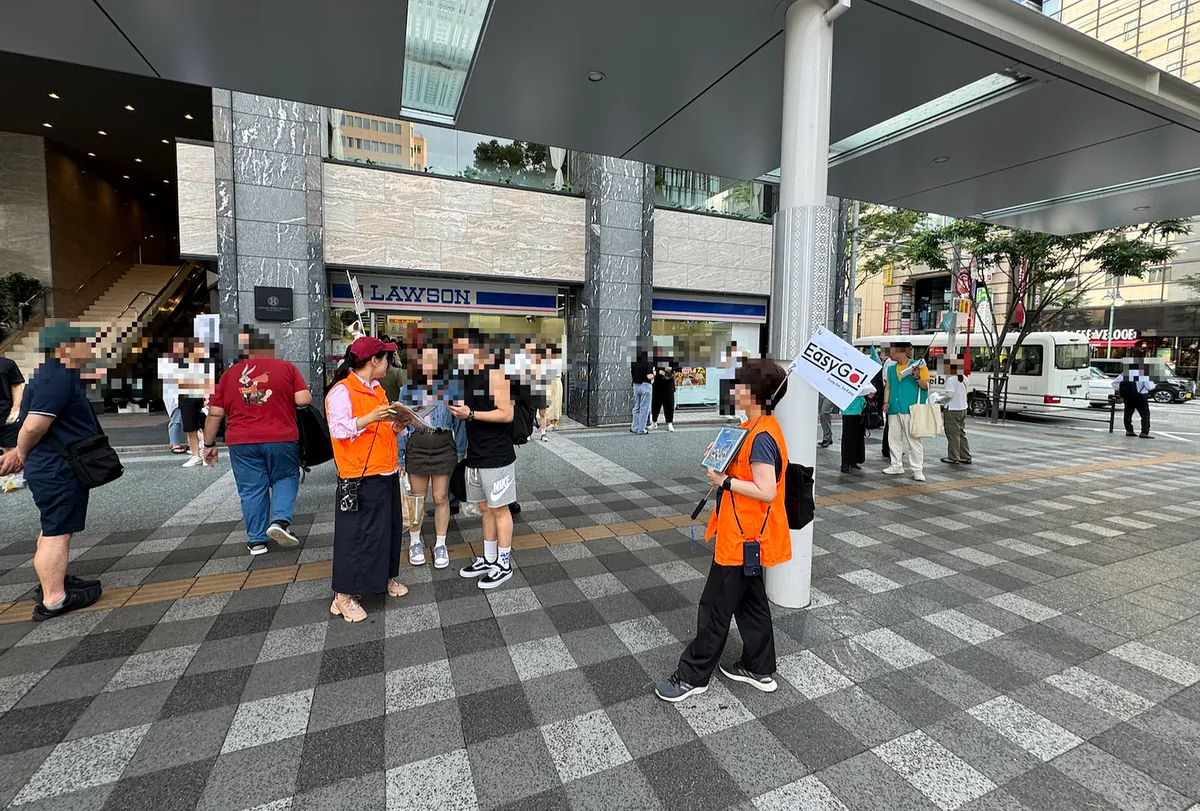
In the plaza in front of LAWSON Hakata Station Chikushi Exit Store, find the tour guide for your day trip destination. (At the same time, there will be several groups, including those led by KKDAY, EasyGo, and tours to Takachiho, Yufuin, etc.)
The tour guide (Chinese-speaking) will have a list. After you check in, they will tell you the bus number. Remember the bus number, and you can board the bus directly.
Seats are assigned on a first-come, first-served basis. If you have special needs (such as motion sickness), please notify the tour guide.
08:00 All passengers on board, depart
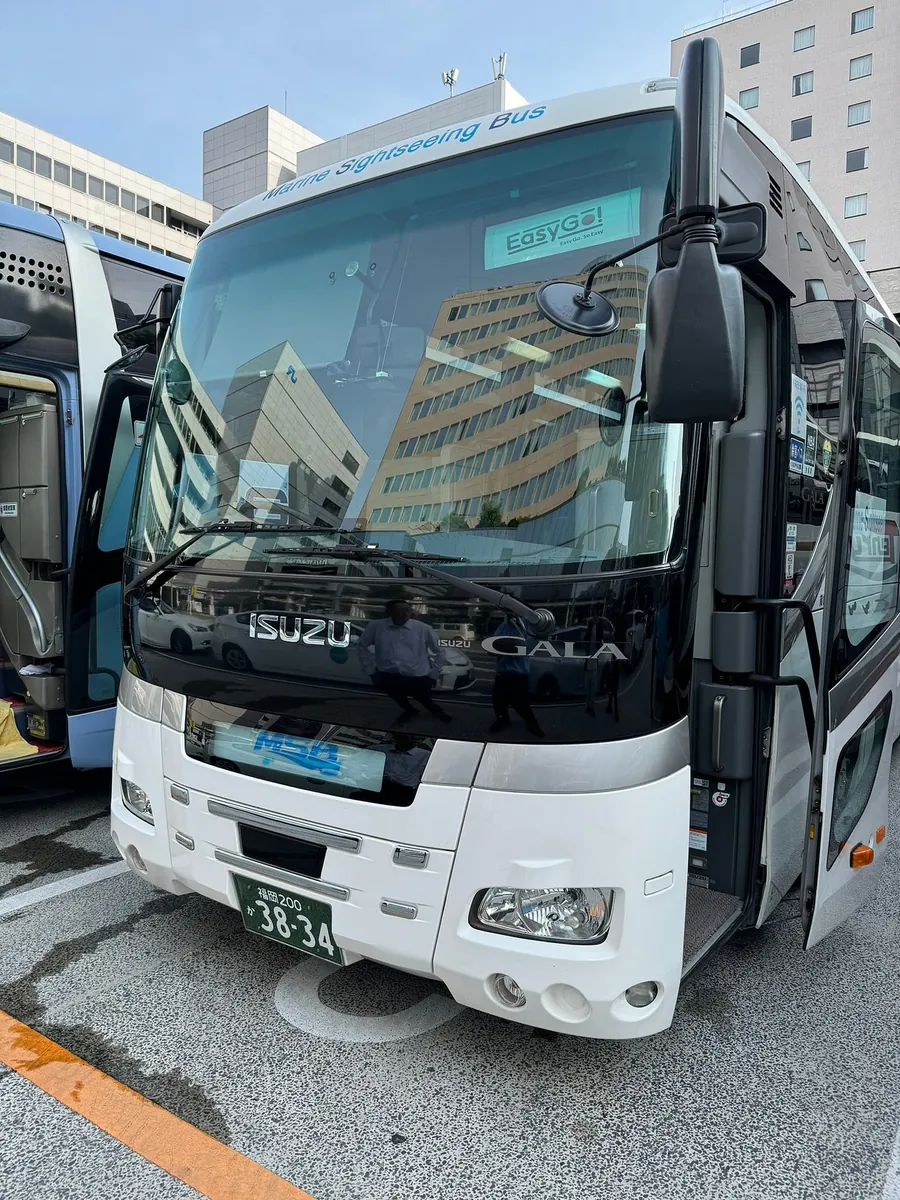
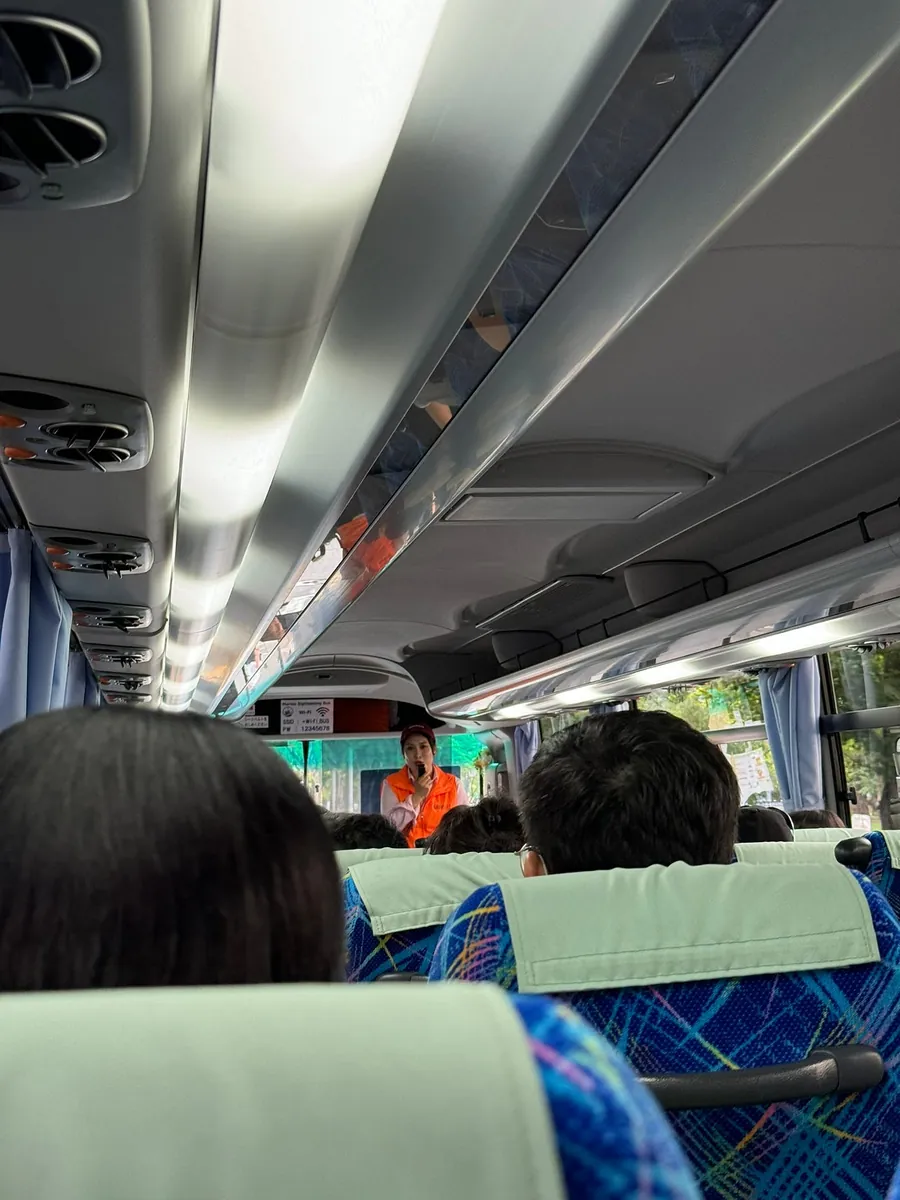
-
Tour Guide Self-Introduction (Ishinan) - Chinese, English, Japanese
Chinese:
大家好,我是石楠,這次很高興能成為大家的導遊。希望能帶給大家愉快又難忘的旅程。English:
Hello everyone, I am Ishinan. I am very happy to be your tour guide this time. I hope to bring you a pleasant and memorable trip.Japanese:
皆さん、こんにちは。私は石楠です。今回、皆さんのガイドを務めることができてとても嬉しいです。楽しくて忘れられない旅にしたいと思います。 -
Itinerary introduction: The guide mentioned that the Takachiho day tour is the longest and most challenging among all full-day tour options XD
-
There is WiFi on the bus (but it is not very stable)
-
Always fasten your seatbelt ⚠️
-
Most participants are Taiwanese.
-
Introduction to Takachiho Shrine and inquiry about boat reservation availability
- It takes about 3 hours to reach the first stop, Takachiho Shrine.
About Takachiho Boat Riding
Takachiho boating requires reservation three days in advance, with limited slots per time period *⚠️_
The boat ride is short, taking about 30–45 minutes round trip. Lunch should be finished around 12:00, and the Takachiho tour ends around 13:20. We need to regroup and head back then.
There are 3 groups in our party with reservations.
Therefore, if you want to book a boat tour for the day trip, 12:00 / 12:30 would be a more suitable time. ⚠️
After lunch, you will need to walk to Takachiho Gorge. If you have booked a boat ride or feel physically unable to walk, the guide has arranged a shuttle bus to take you directly there, saving time.
The actual arrangements are mainly through KKDAY. It is recommended to check with the official sources before booking to avoid any issues. ⚠️
9:20 Rest at the rest stop
Due to the long drive, we will stop at a rest area for 10 minutes to allow everyone to use the restroom and stretch their legs.
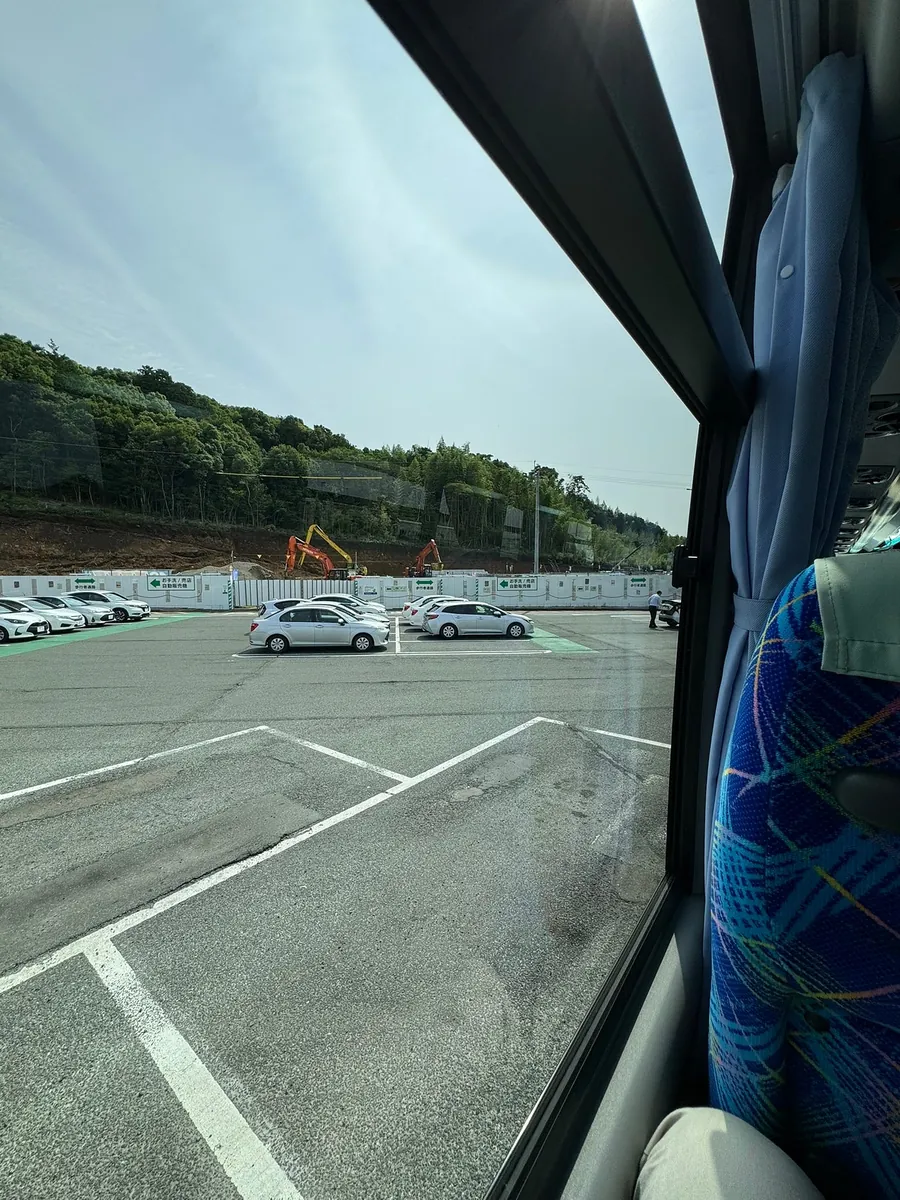
10:50 Arrive at Takachiho Shrine
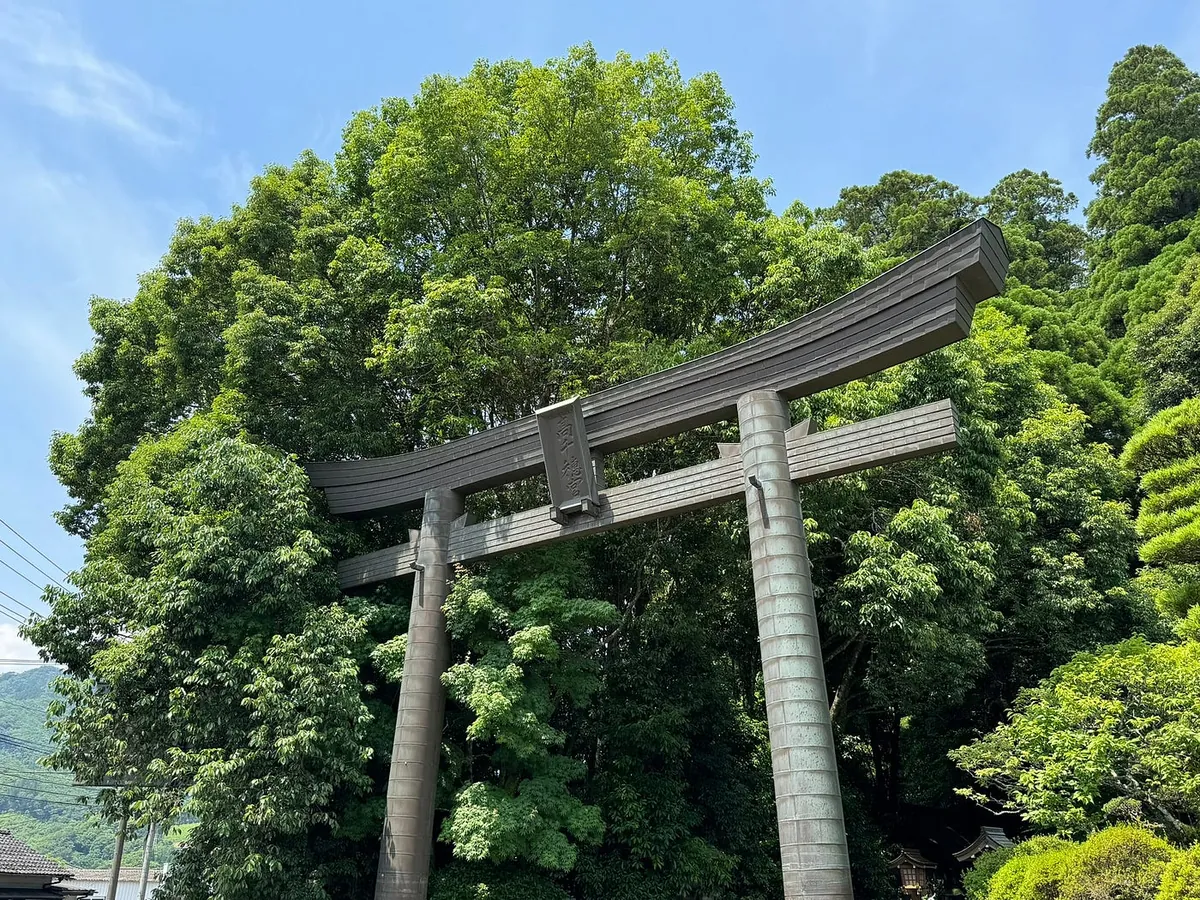
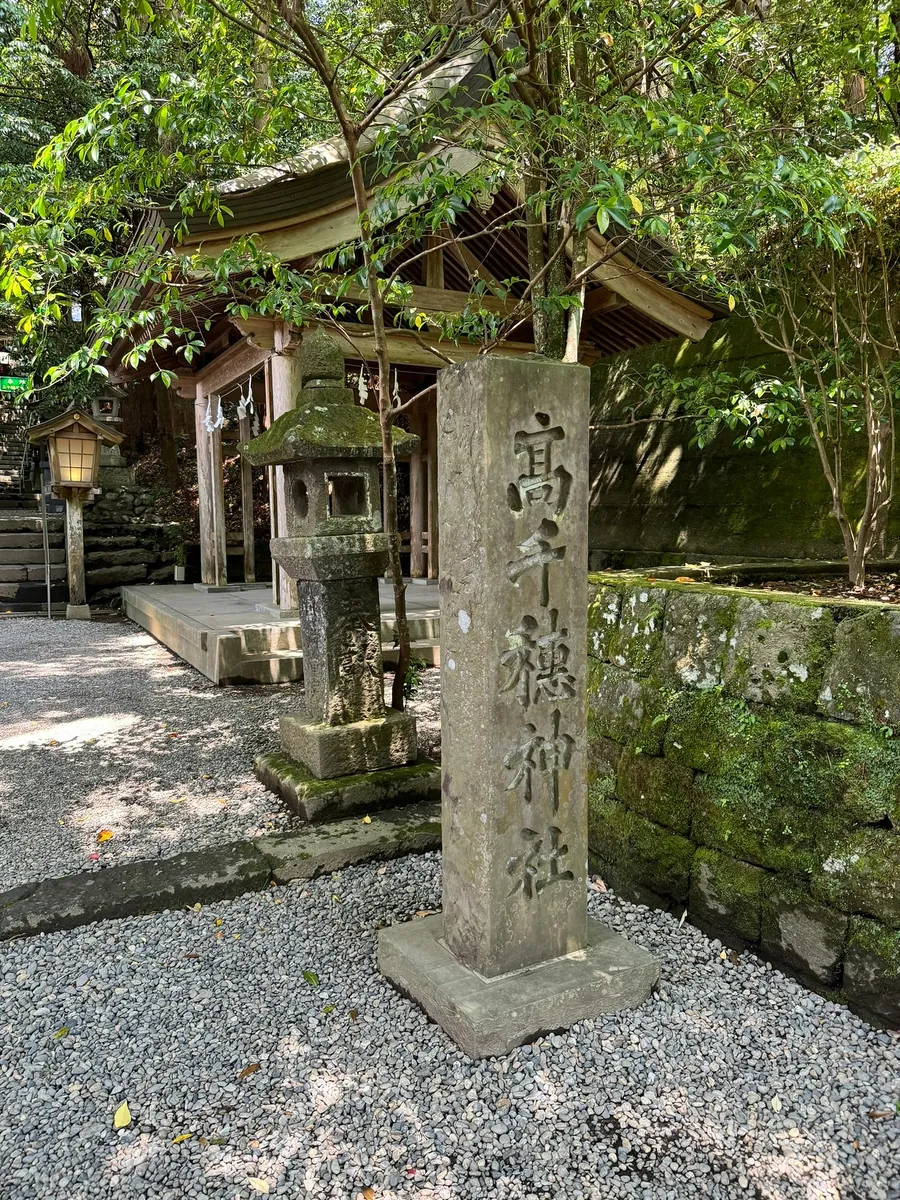
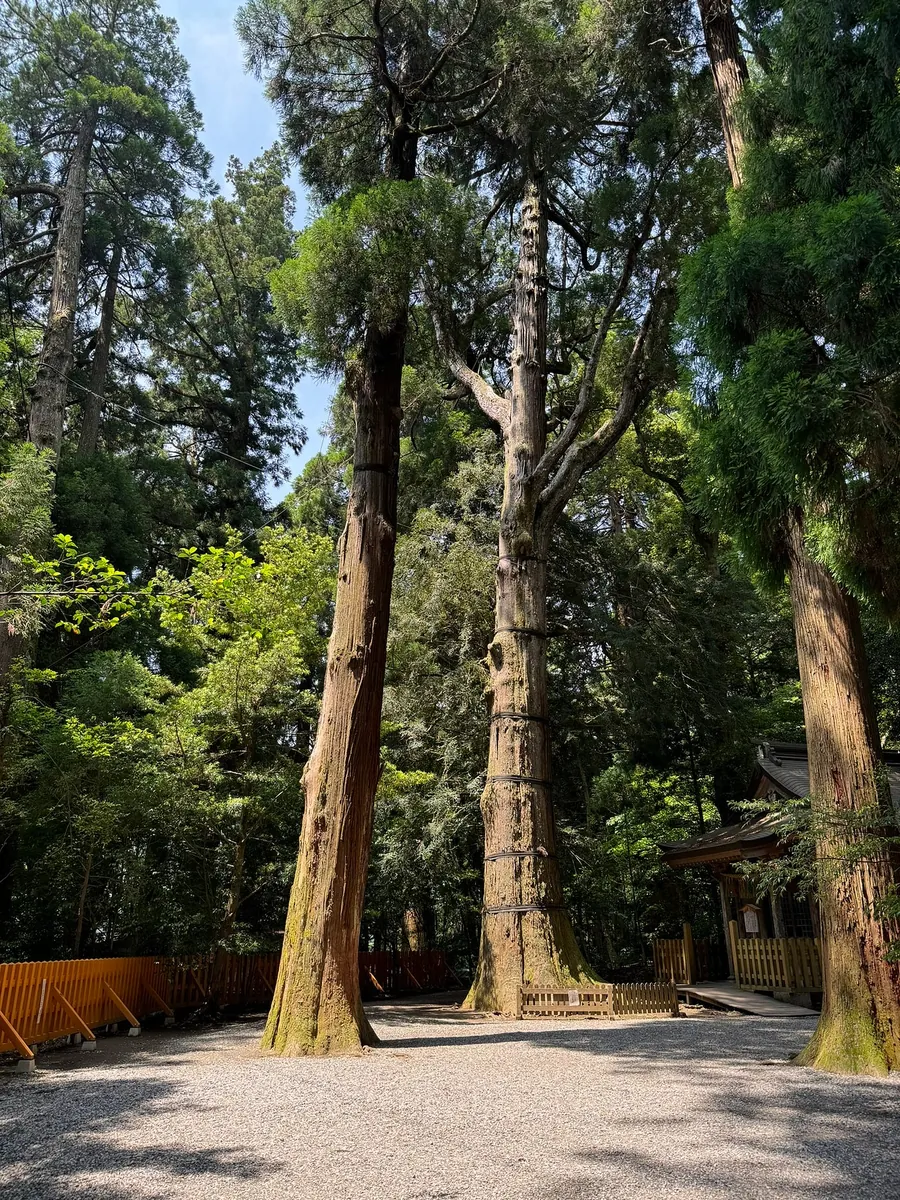
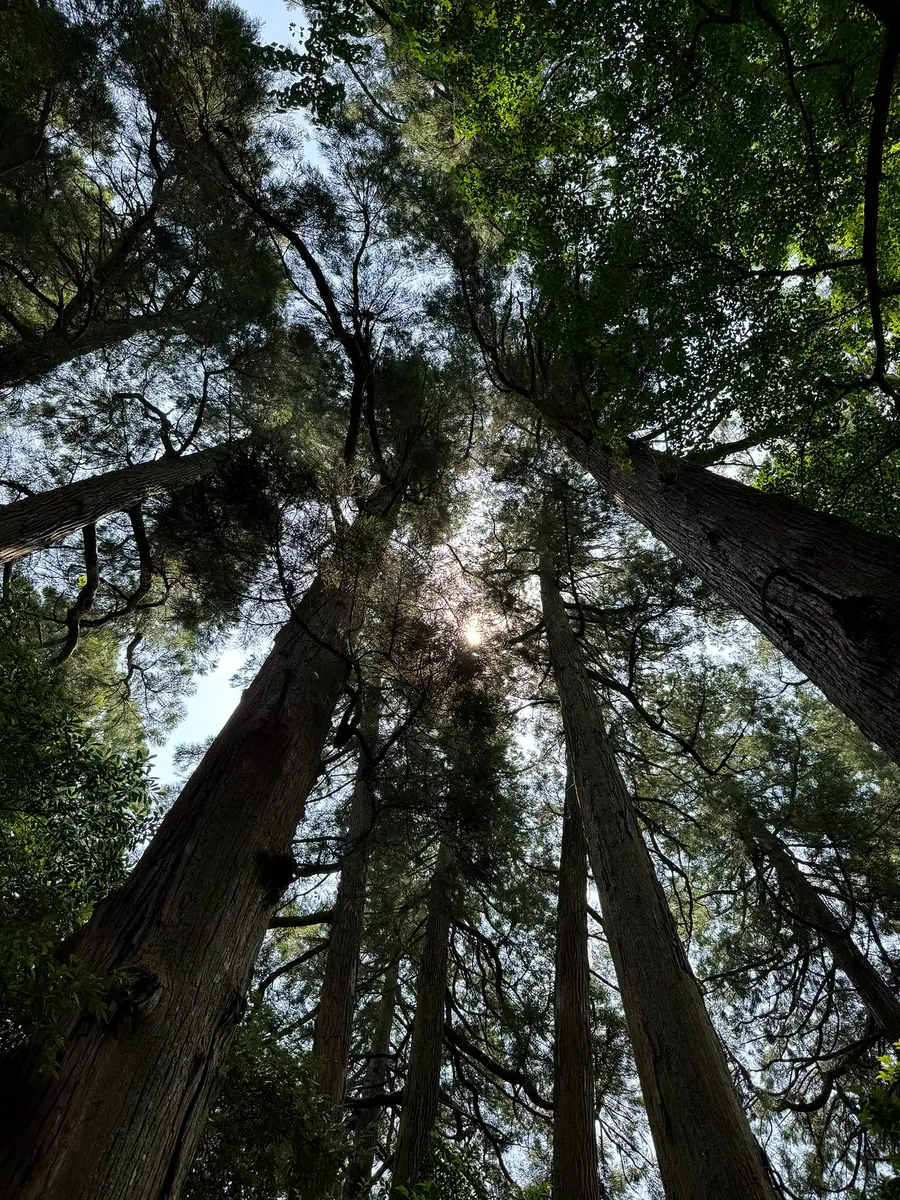
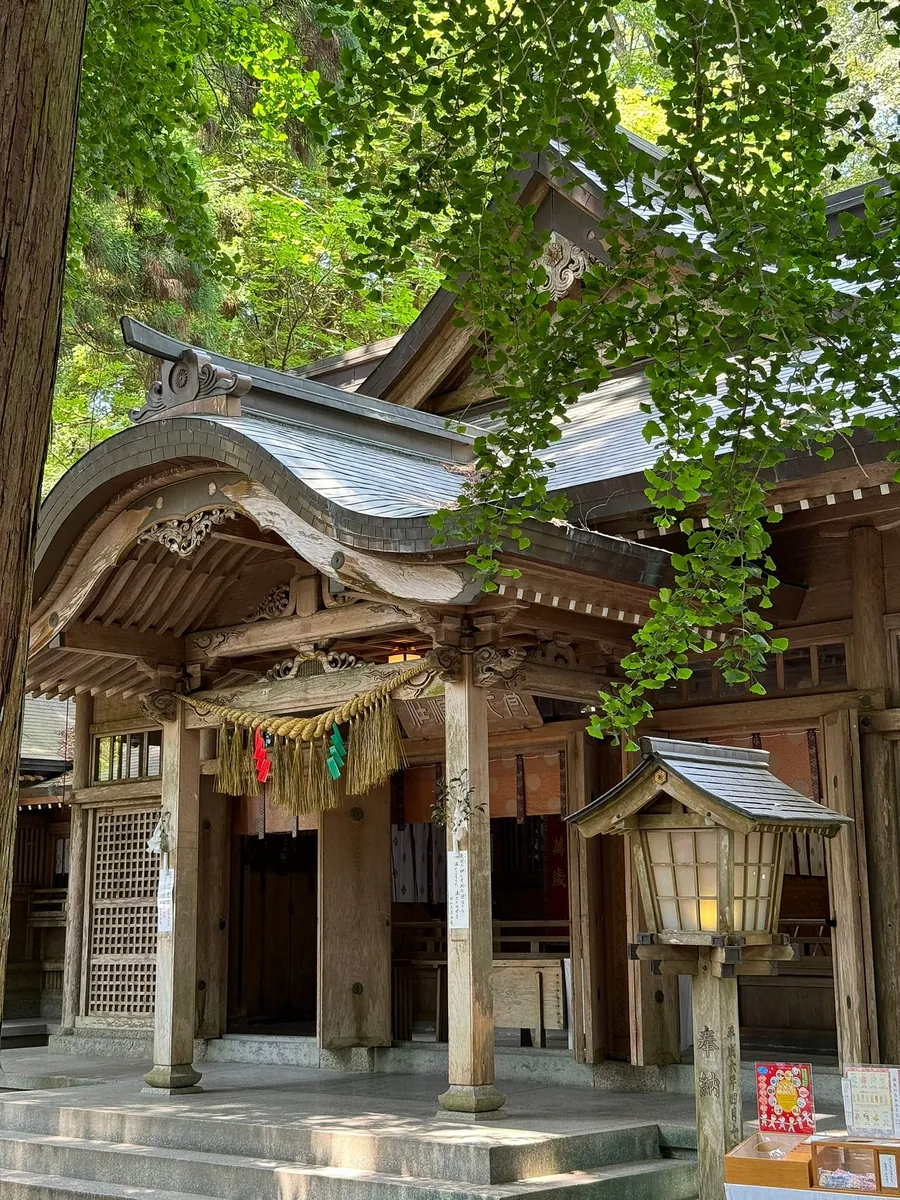
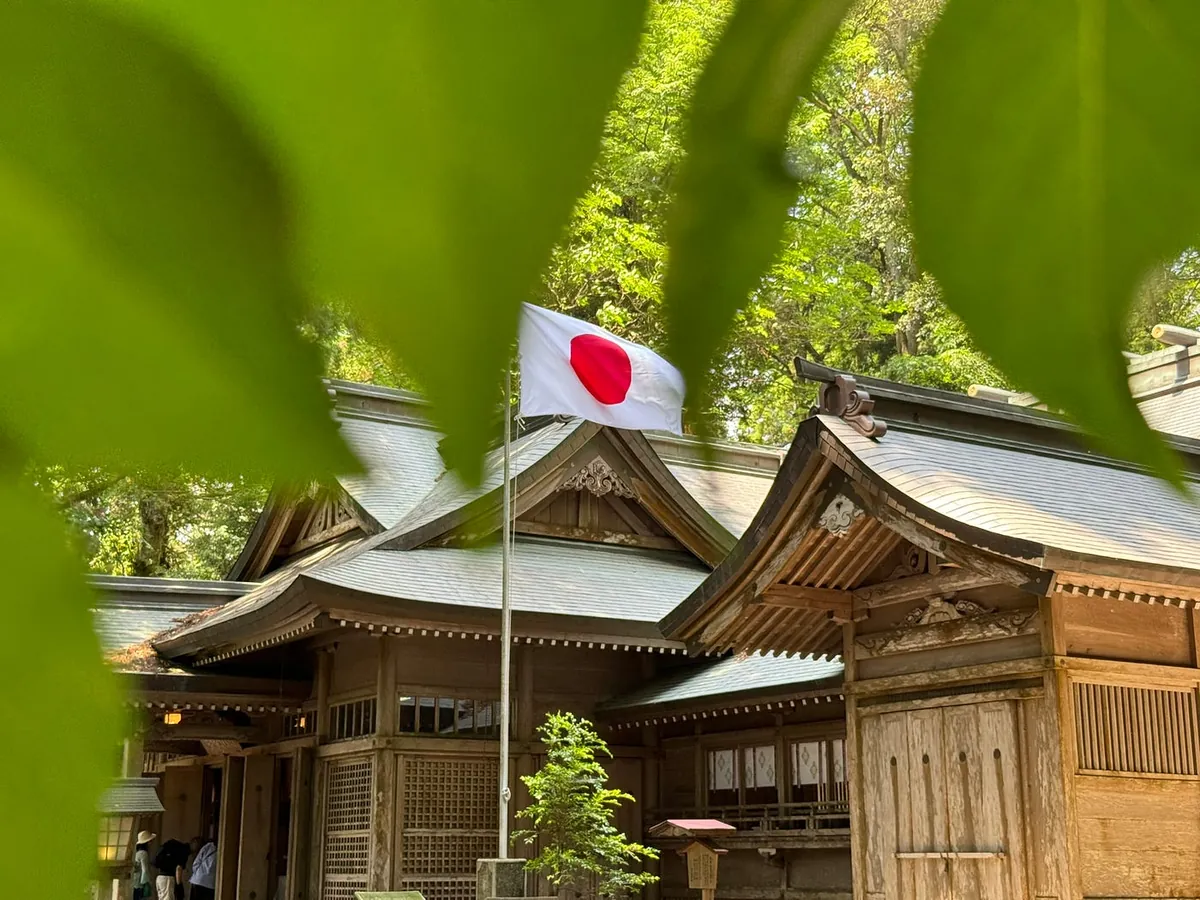
Takachiho Shrine is completely surrounded by sacred trees, giving off a peaceful and refreshing atmosphere.
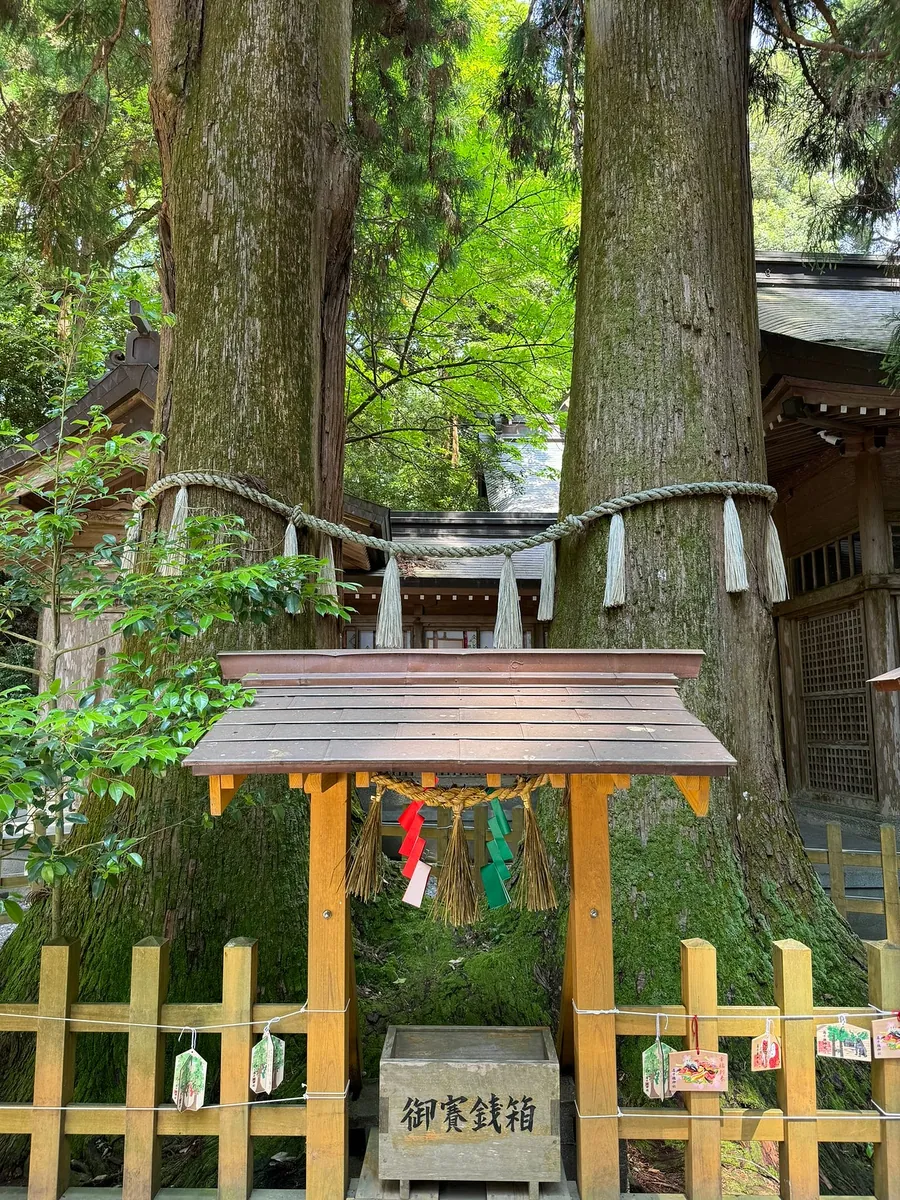
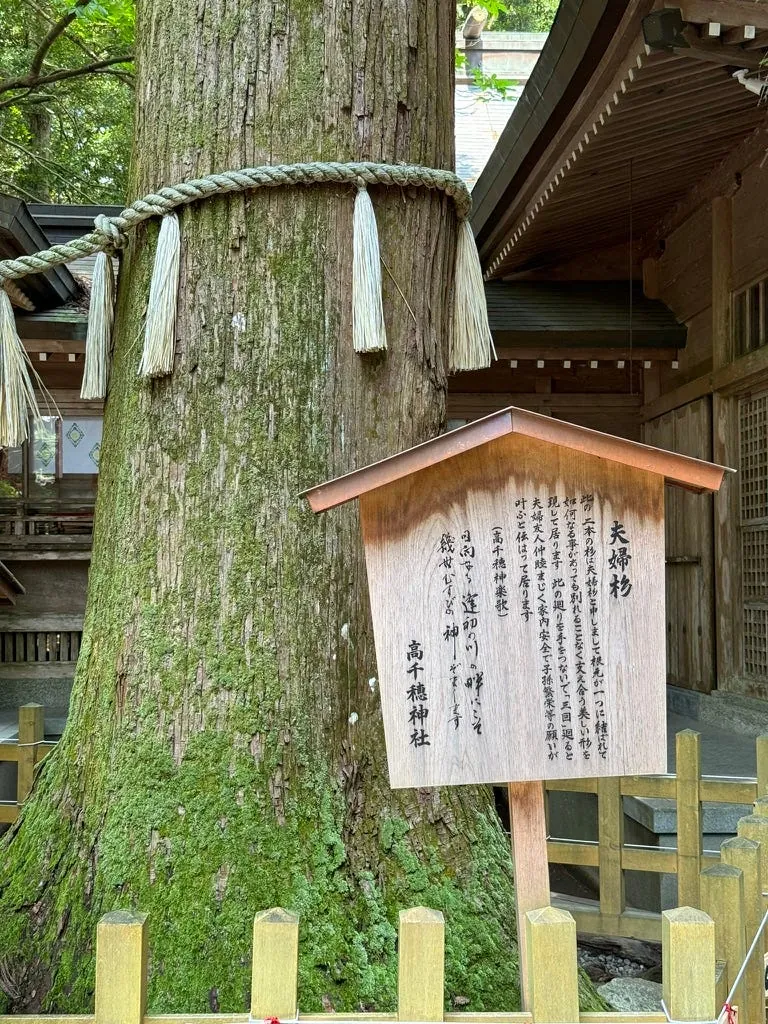
Meoto Sugi (Married Couple Cedars) , the guide mentioned on the bus that if you come with family, couples, lovers, or friends, you can hold hands and walk around the tree three times to pray for blessings.
Around 11:20, return to the meeting point and get back on the bus.
11:30 Lunch Takachiho Cuisine Kagura Inn
After visiting Takachiho Shrine, we went nearby for lunch.
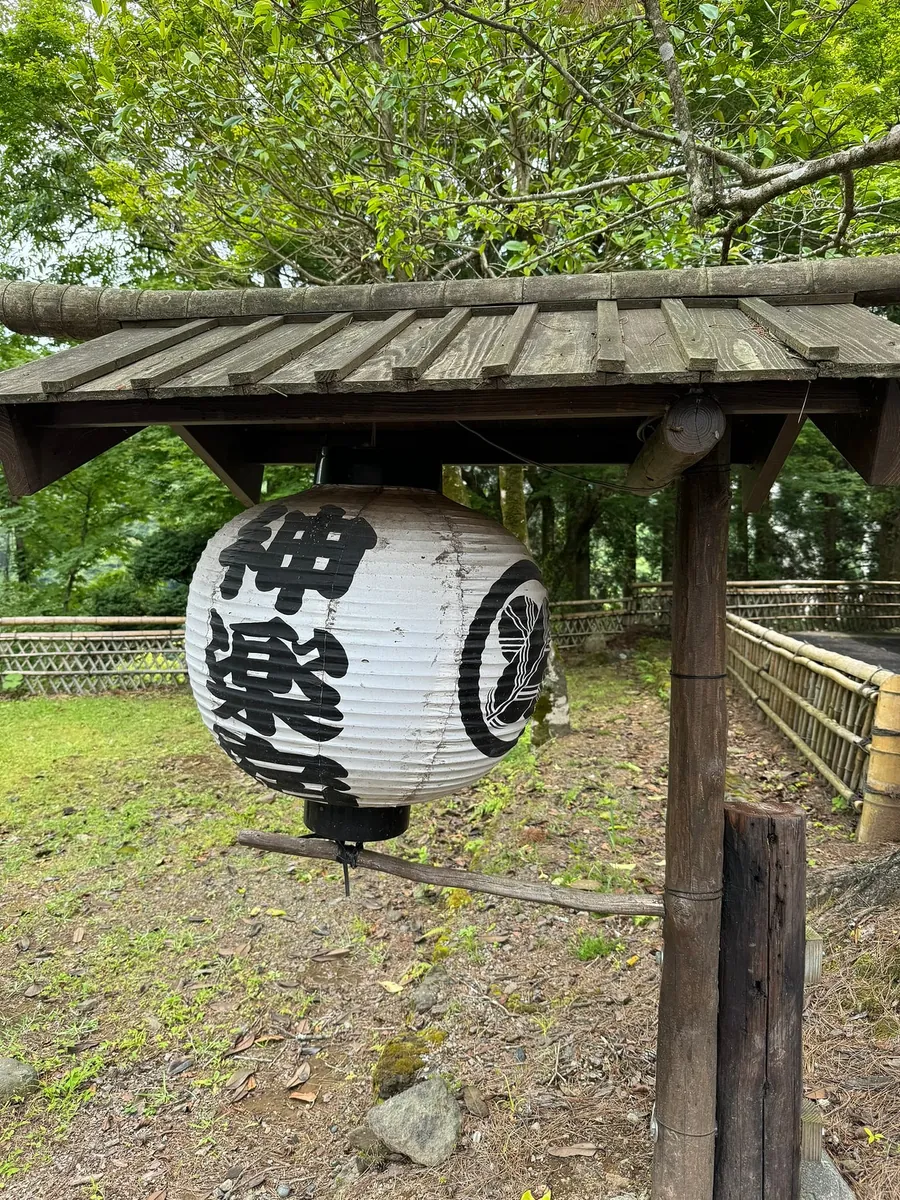
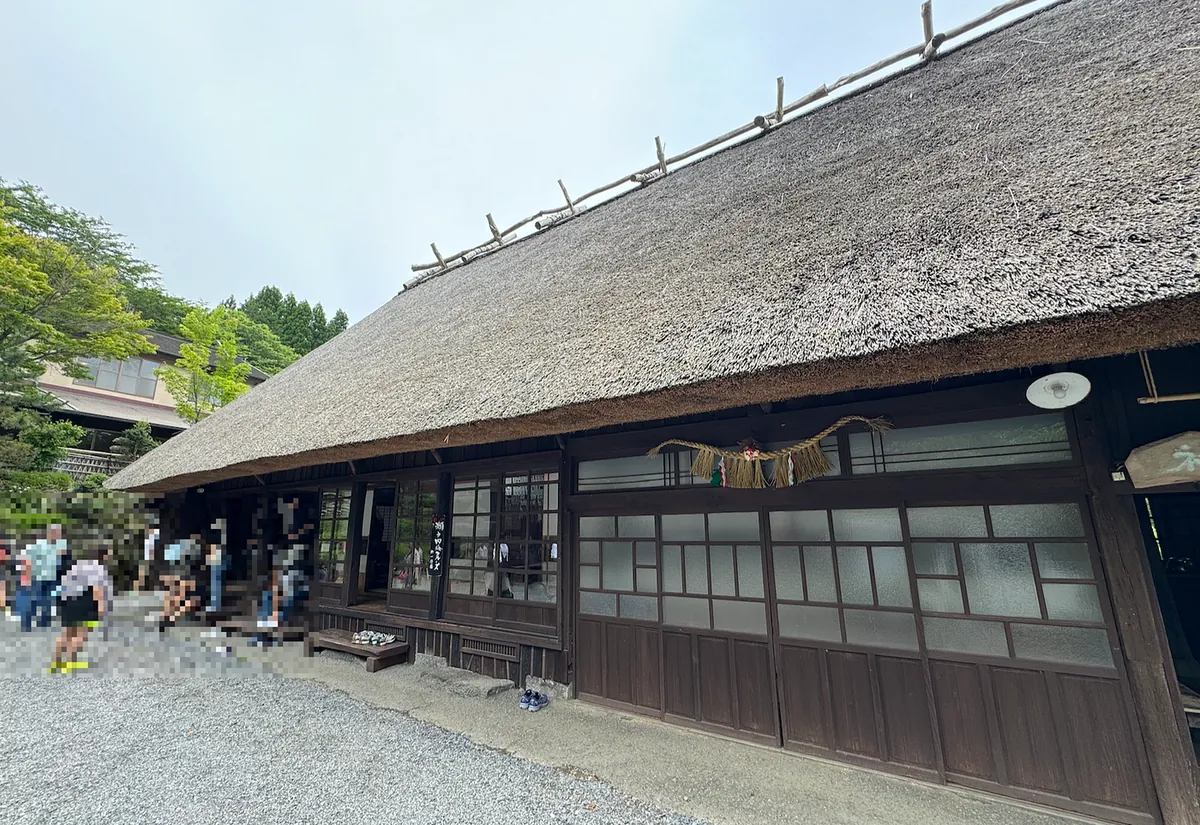
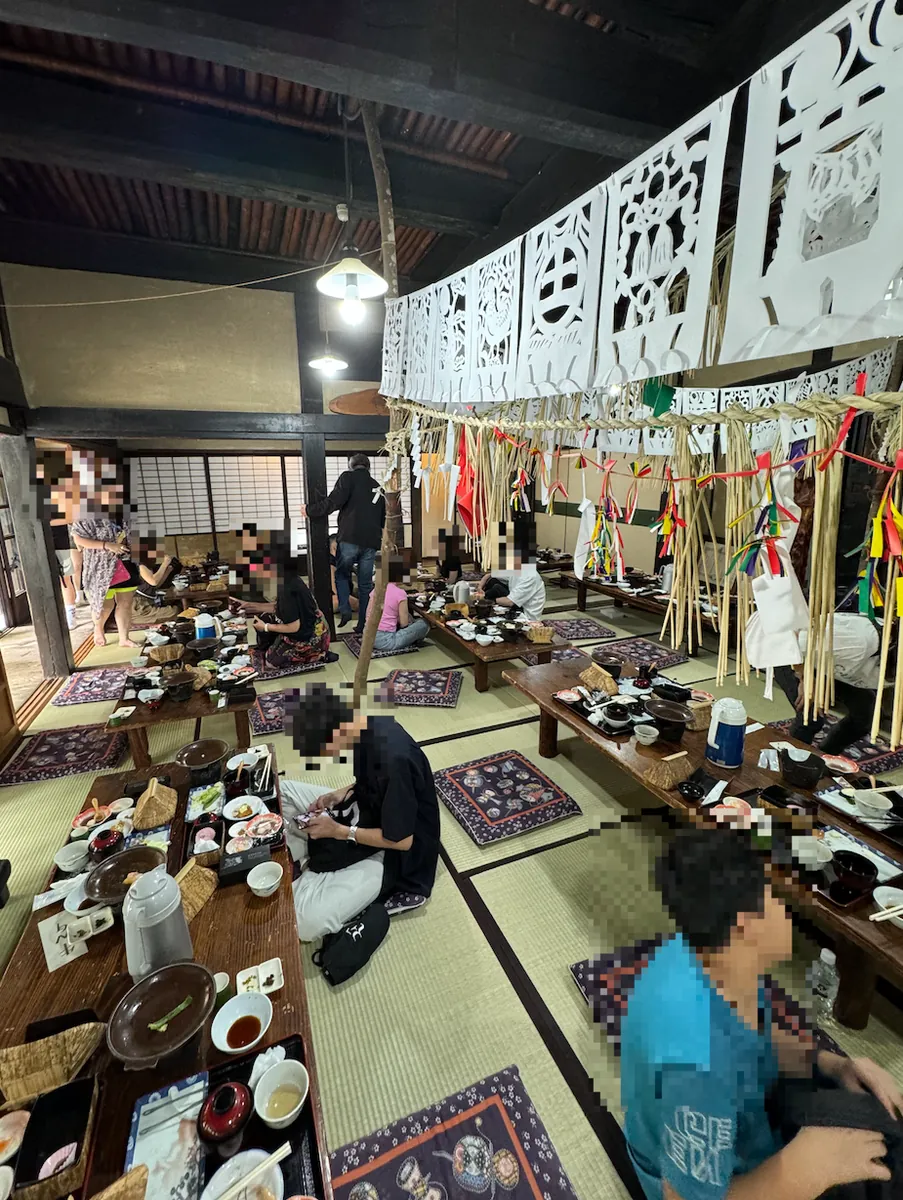
Slippers are required. Overall, it feels like a Japanese restaurant mainly catering to tour groups, but this was my first time experiencing a Japanese-style restaurant.
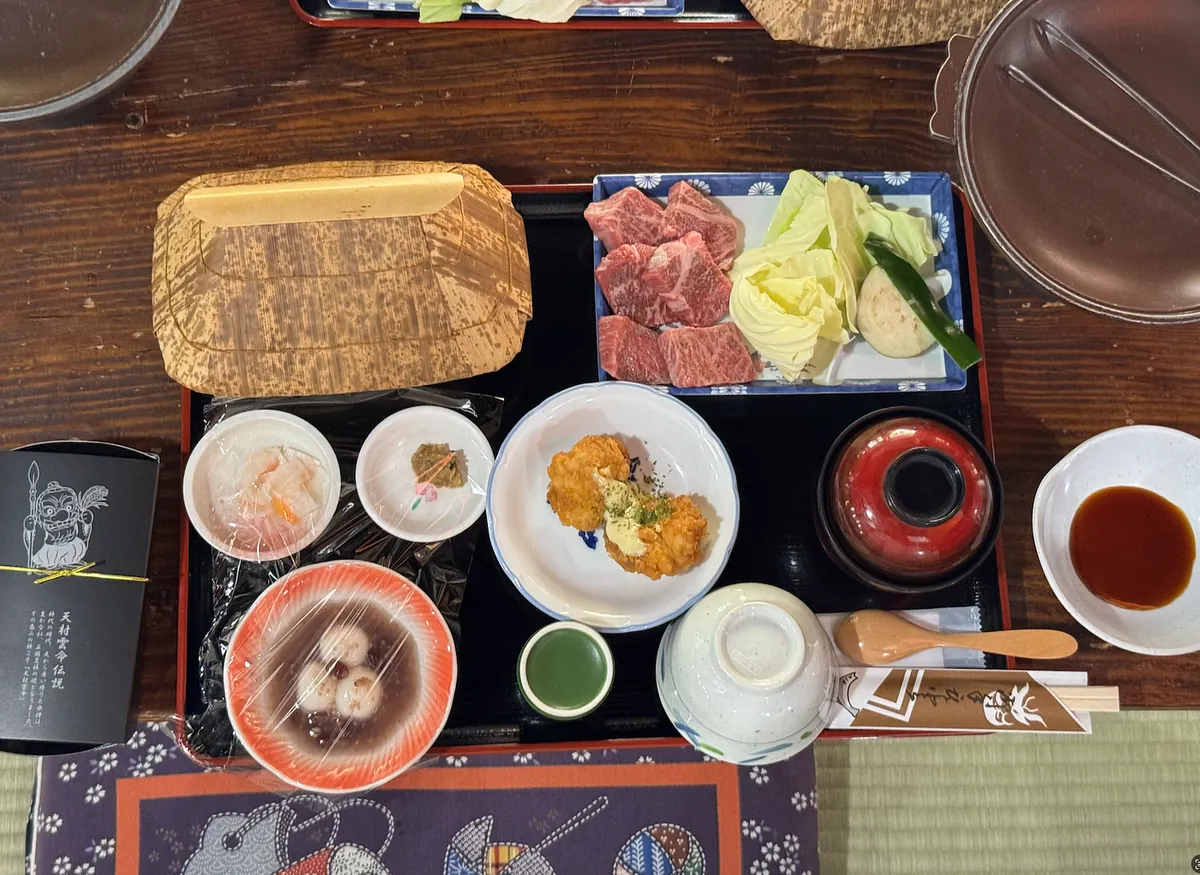
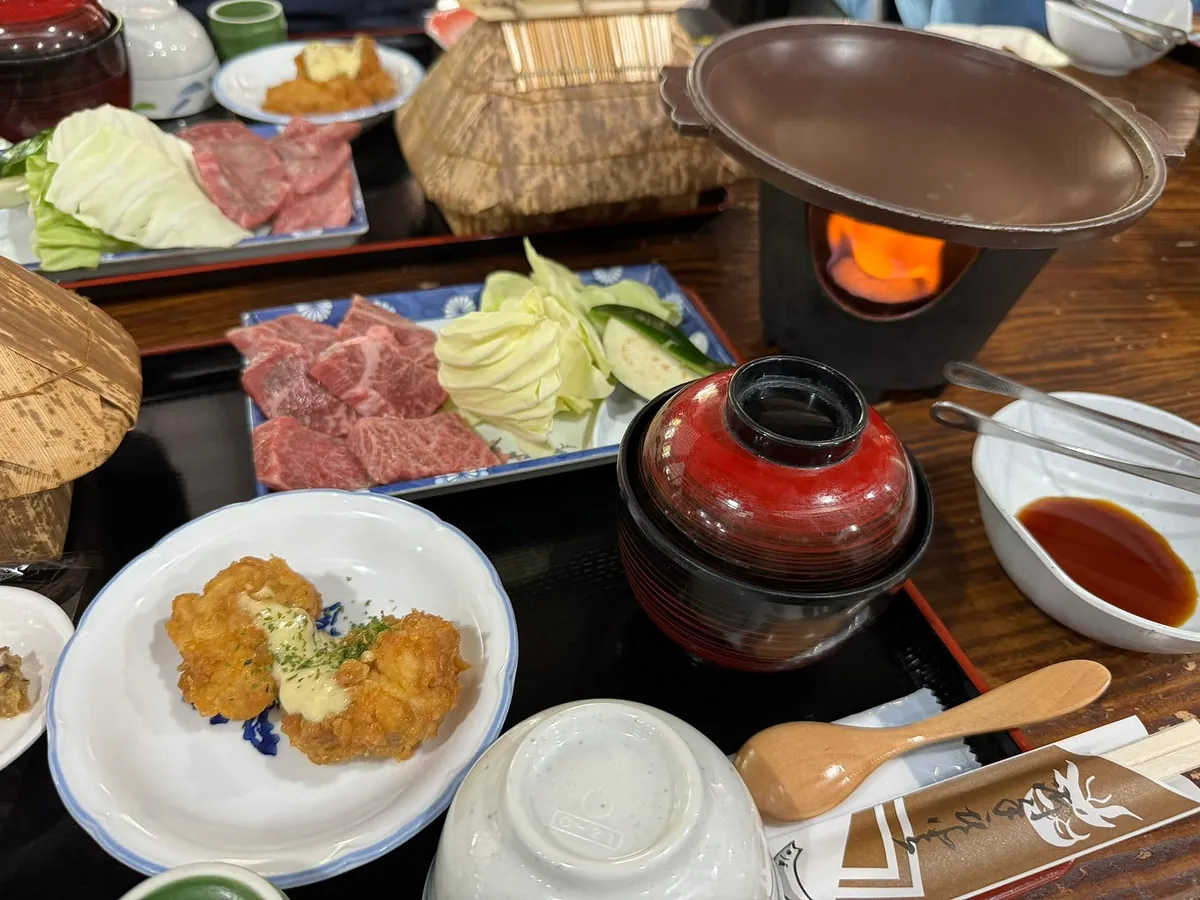
The overall meal was mediocre to below average, possibly due to the large group. Most dishes were cold, and the meat quality was just so-so.
12:15 Start hiking to Takachiho Gorge (downhill all the way)
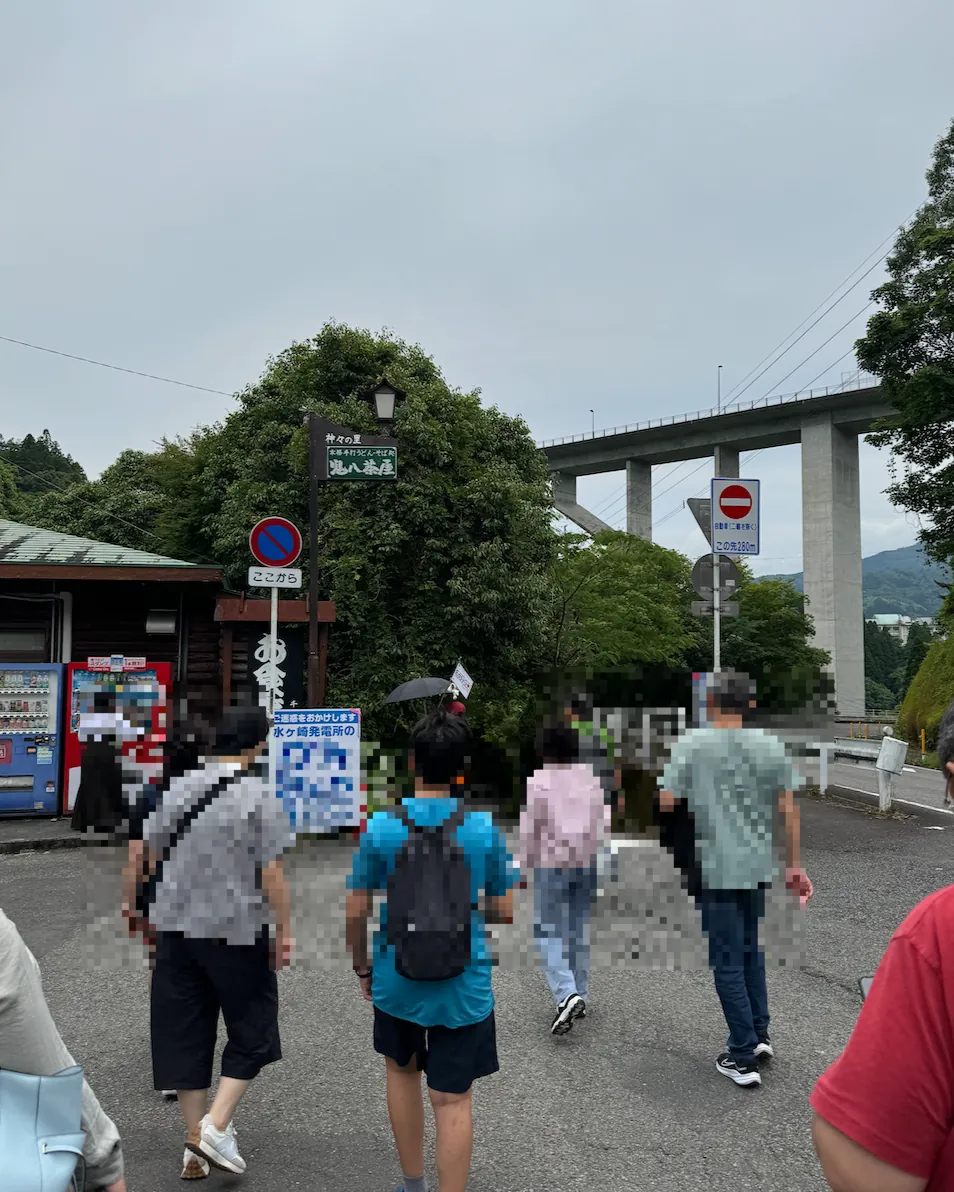
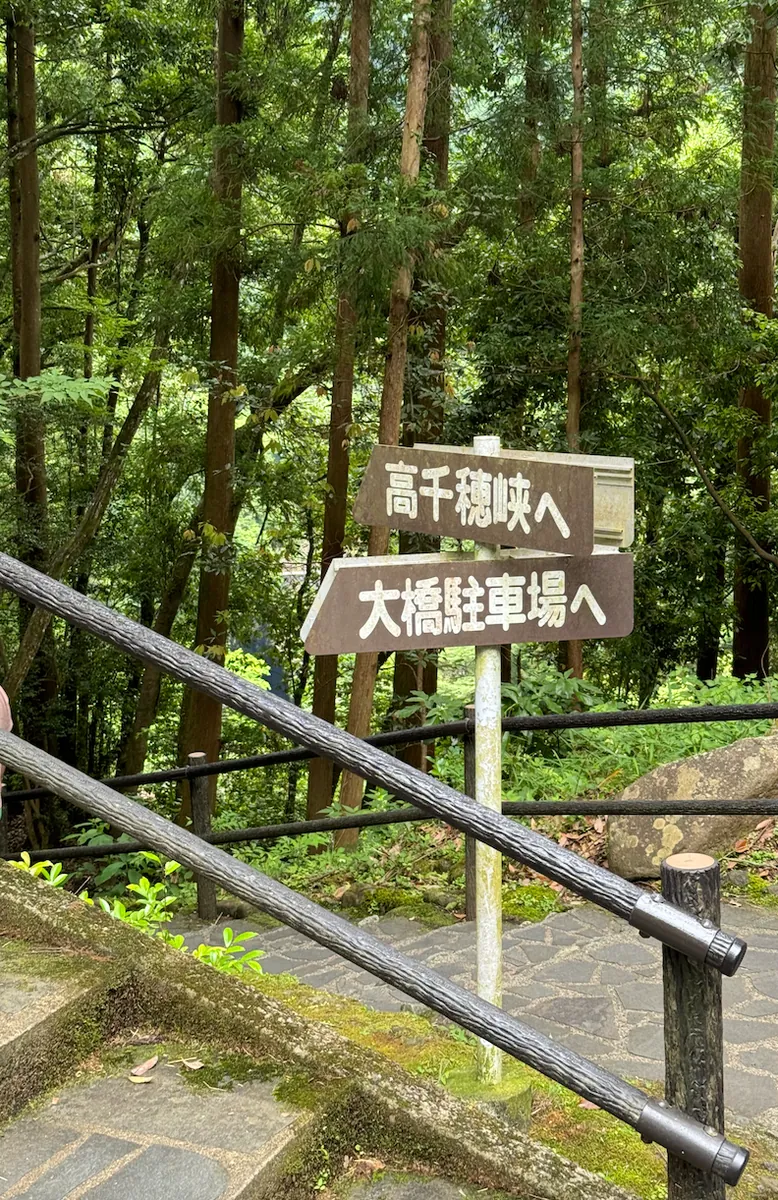
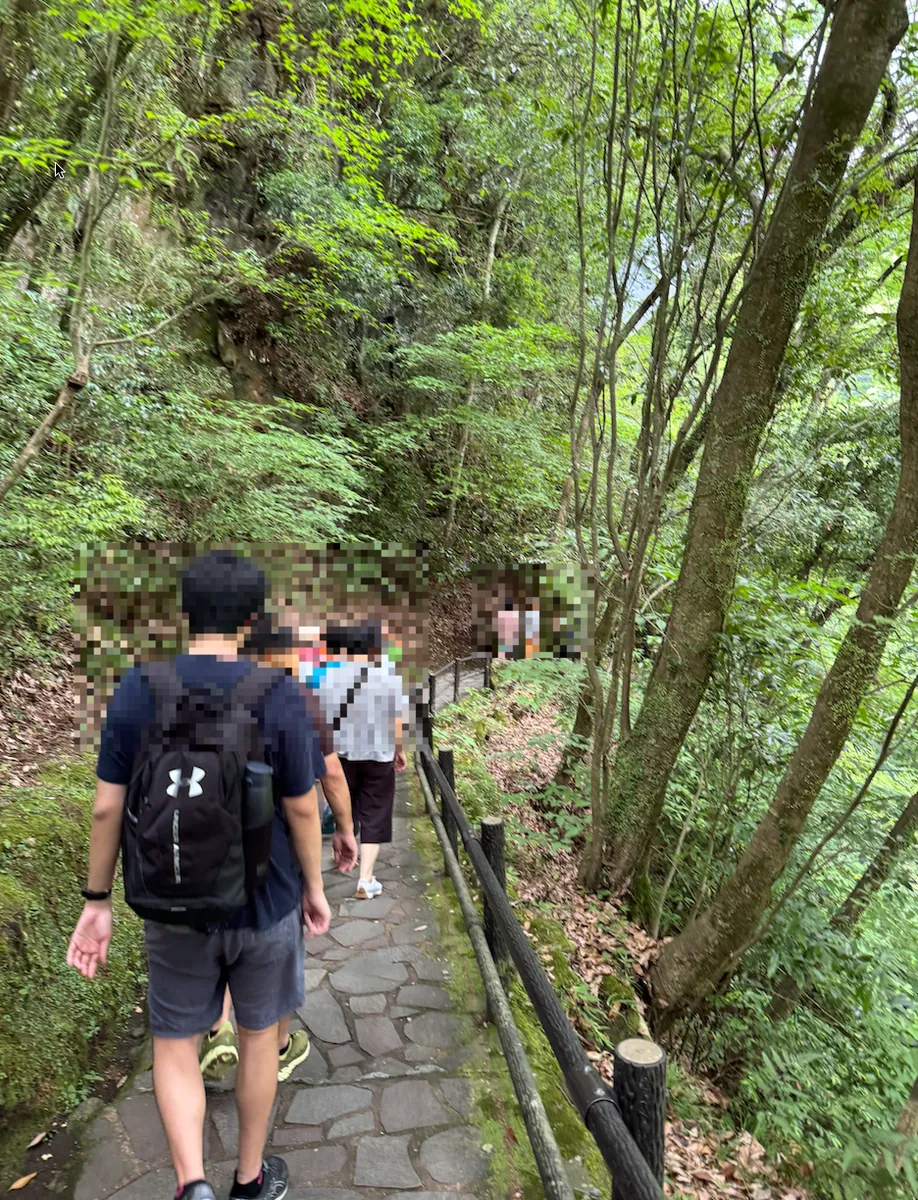
After finishing the meal, we followed the guide on foot down to Takachiho Gorge.
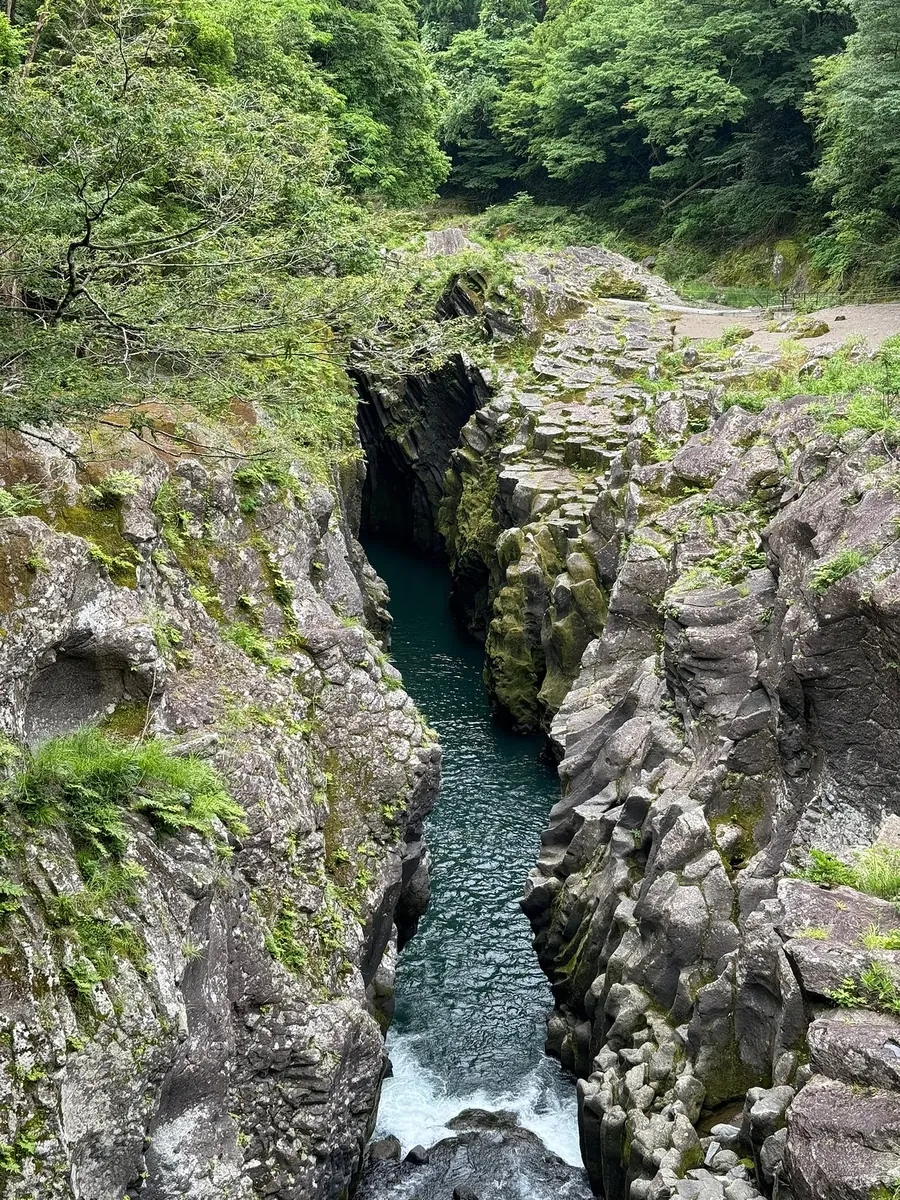
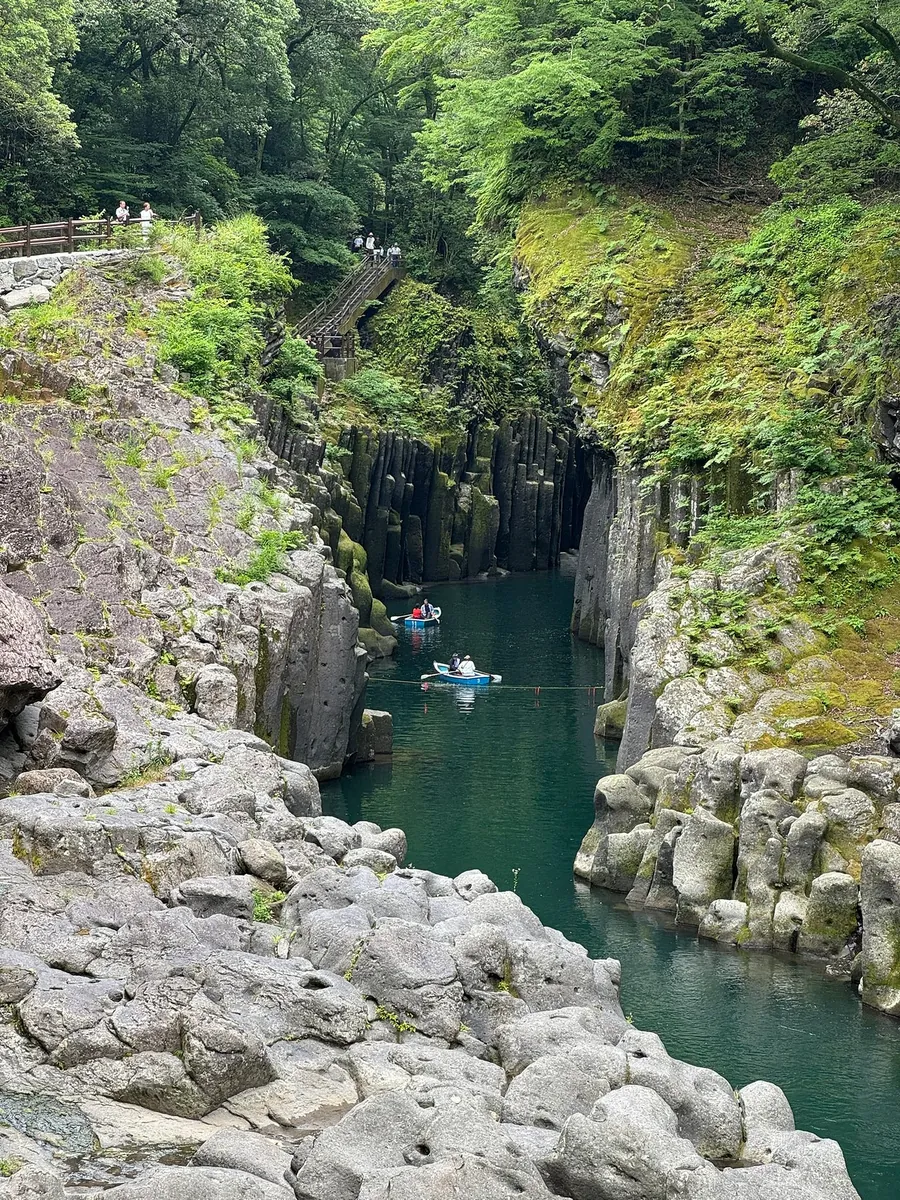
About a 20-minute walk on the trail leads to Takachiho Gorge, where you can see the end of the gorge (the boat turning point) from this angle.
12:45 Arrive at Takachiho Gorge
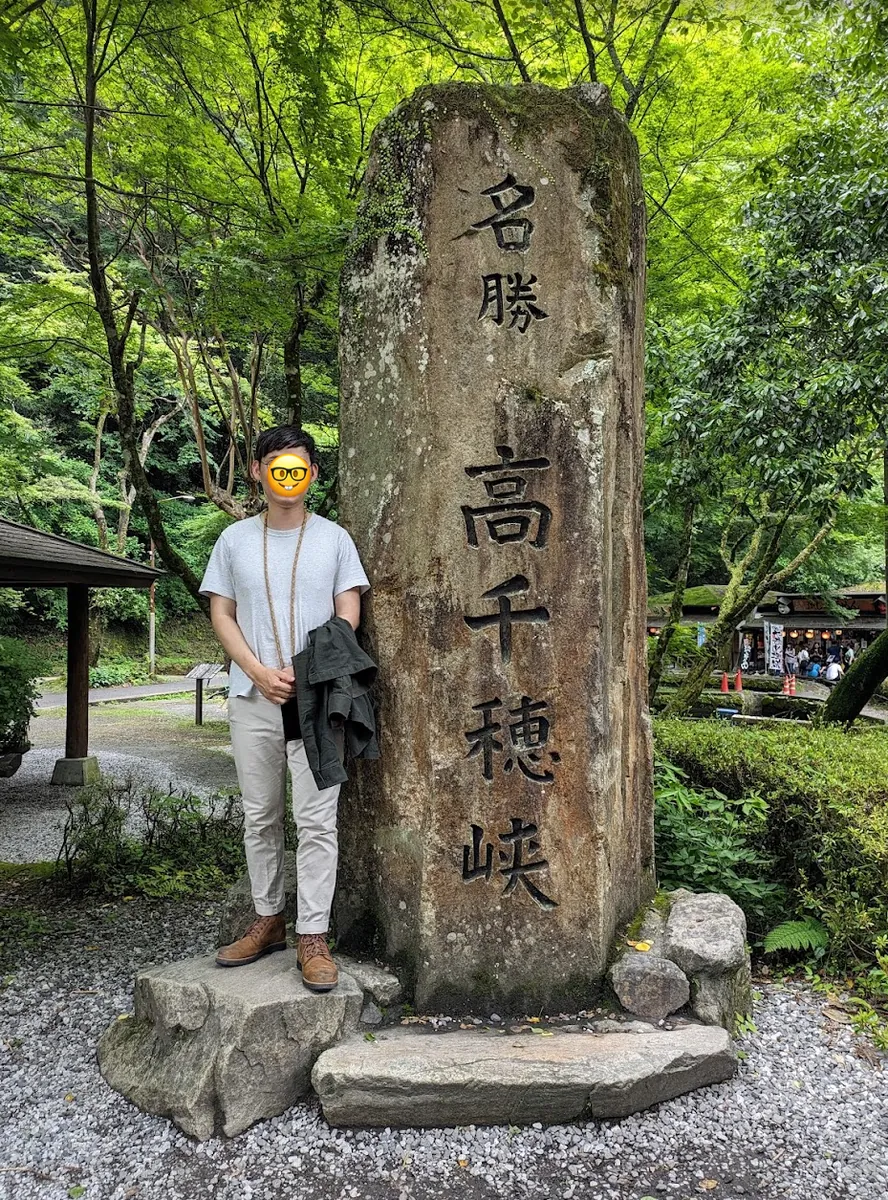
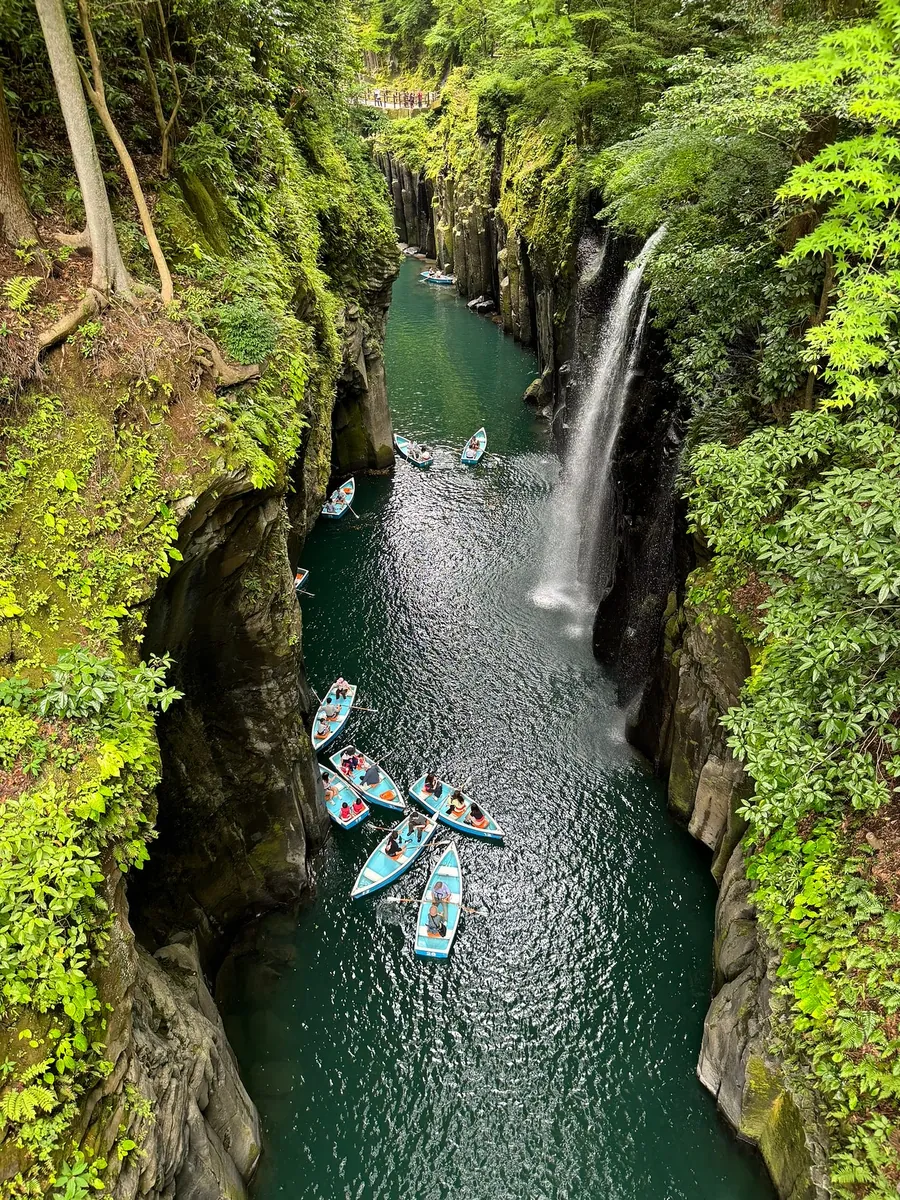
Looking back from the bridge at Takachiho Gorge, you can see the ancient path we just walked and the boat below.
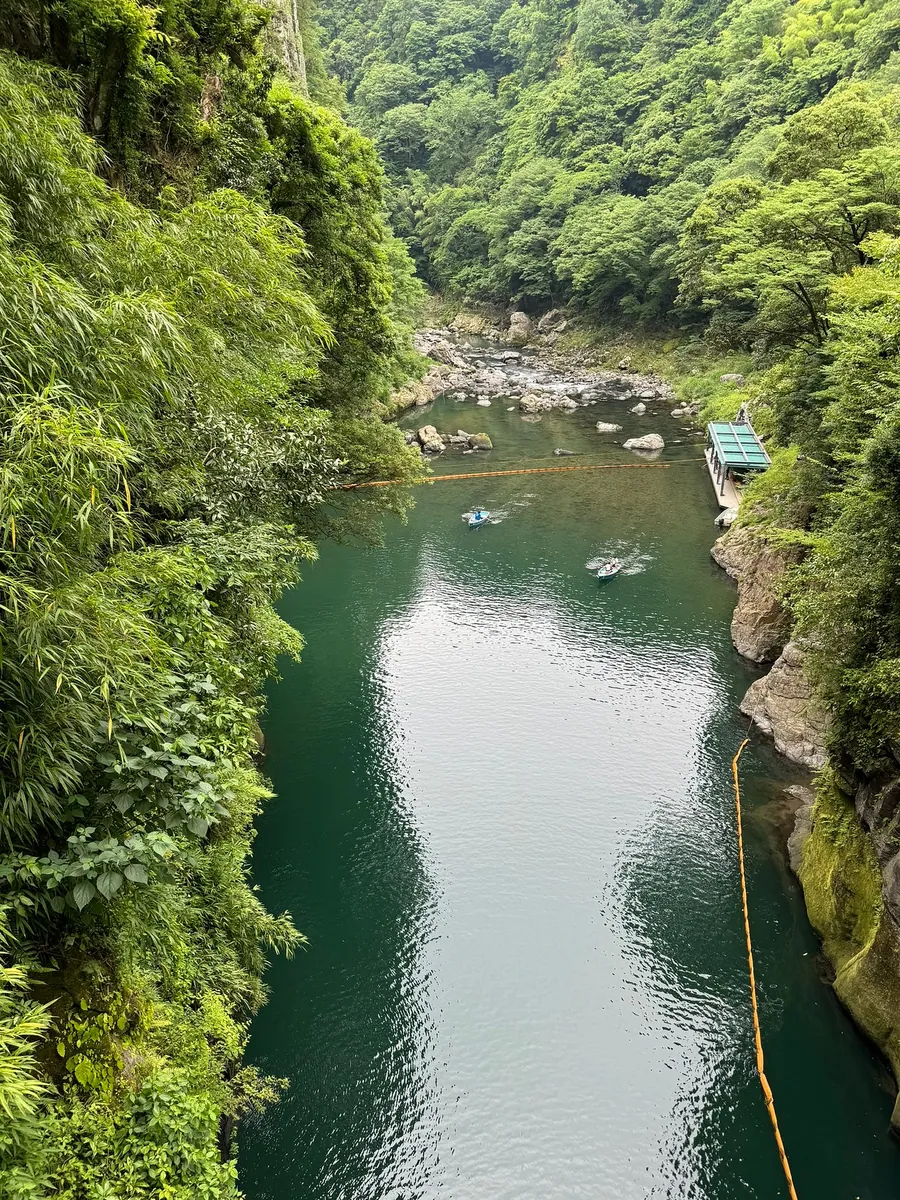
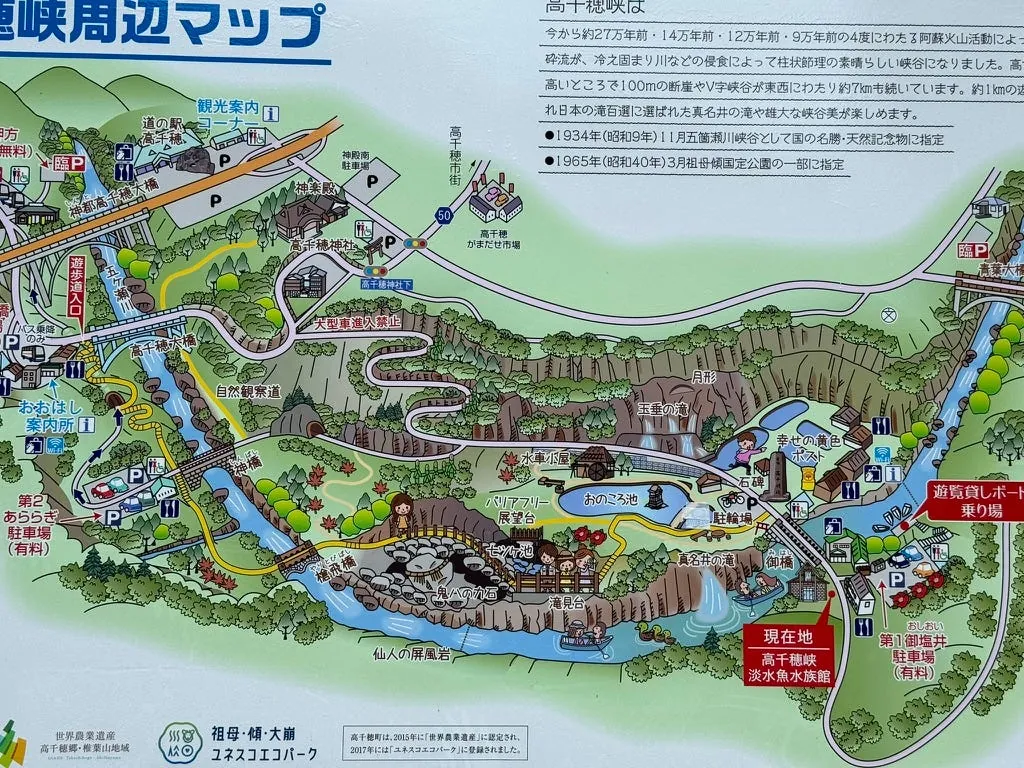
Boat dock, just go under the bridge. The total length (up to the stop line I just saw) is about 250 meters.
There is a small park and shopping street where you can enjoy ice cream or snacks to recharge.
13:20 Regroup and return to the tour bus
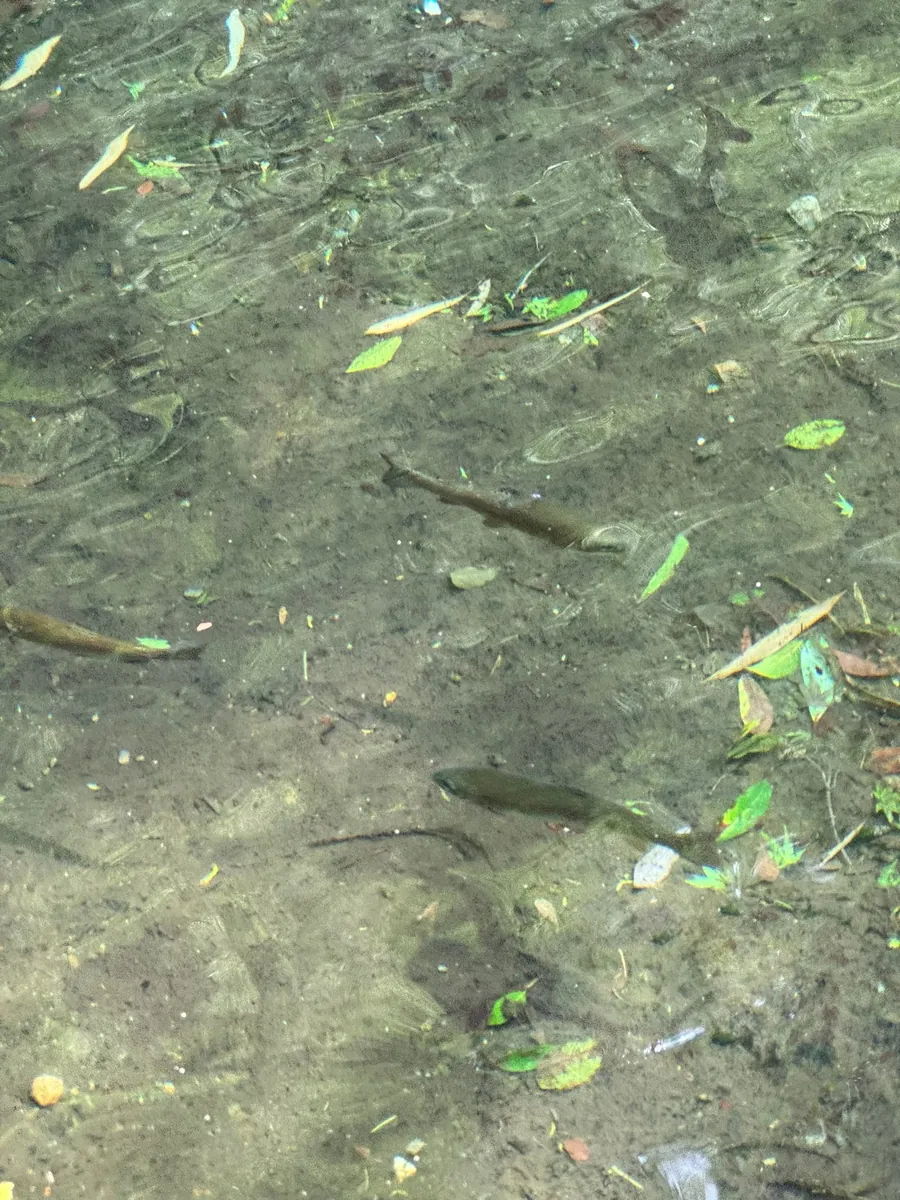
Around 13:45 Arrive at Ama-no-Iwato Shrine West Main Shrine (Check information for other activities during cherry blossom season)
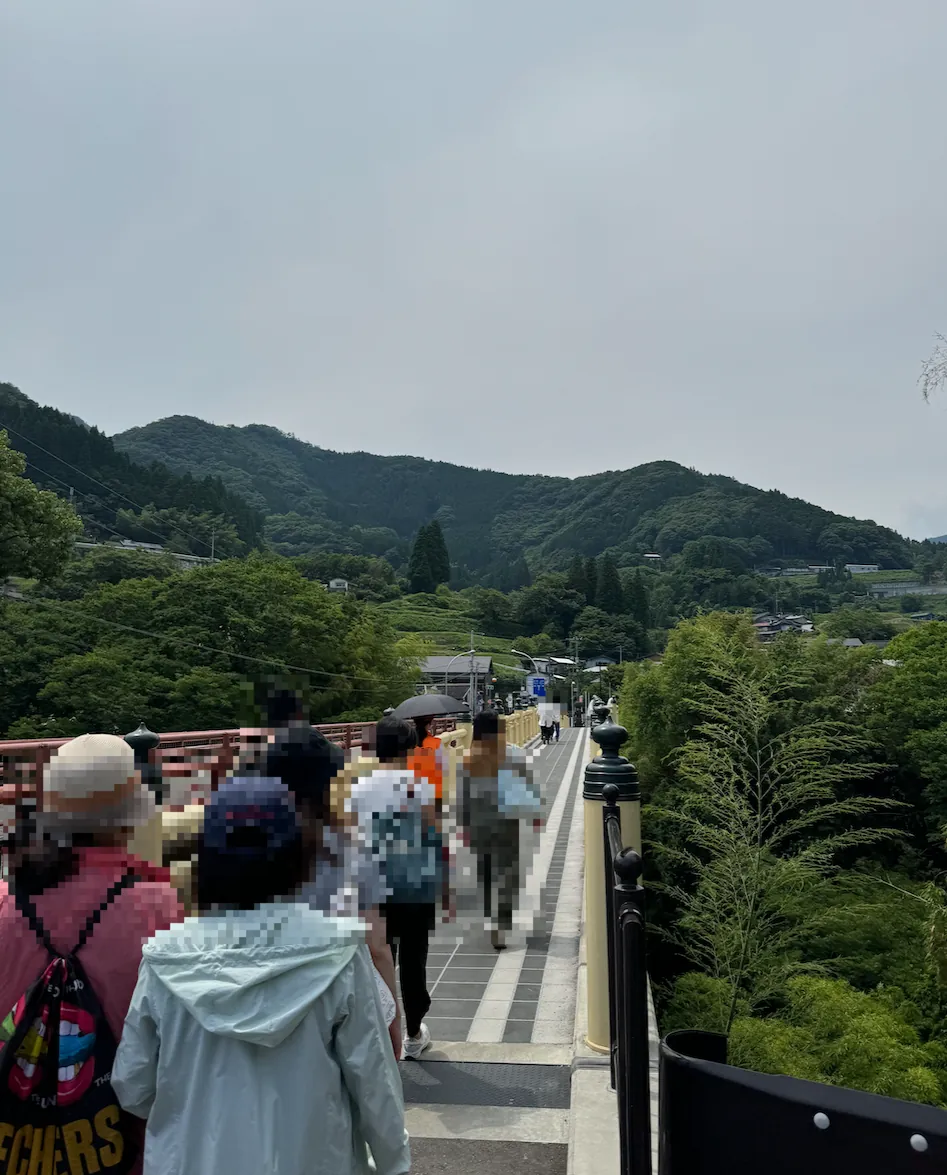
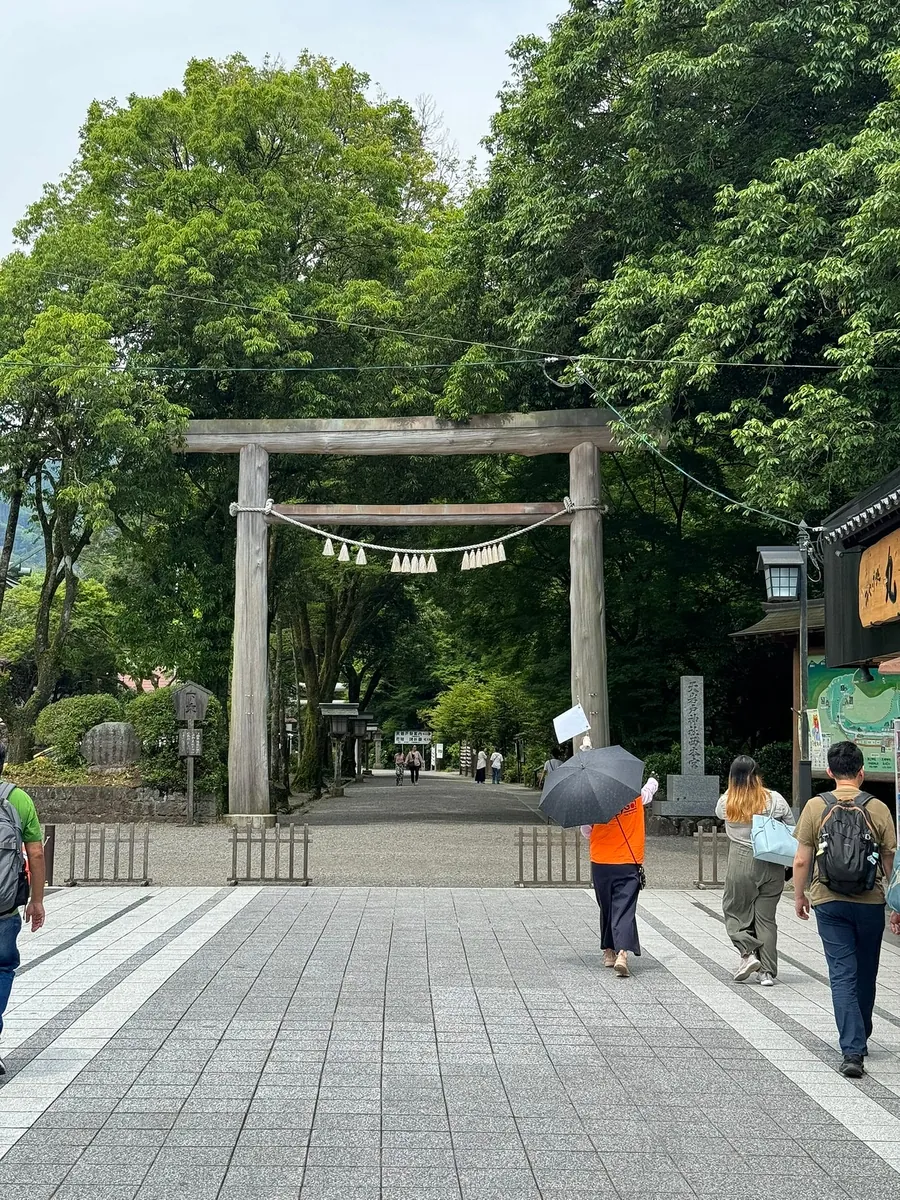
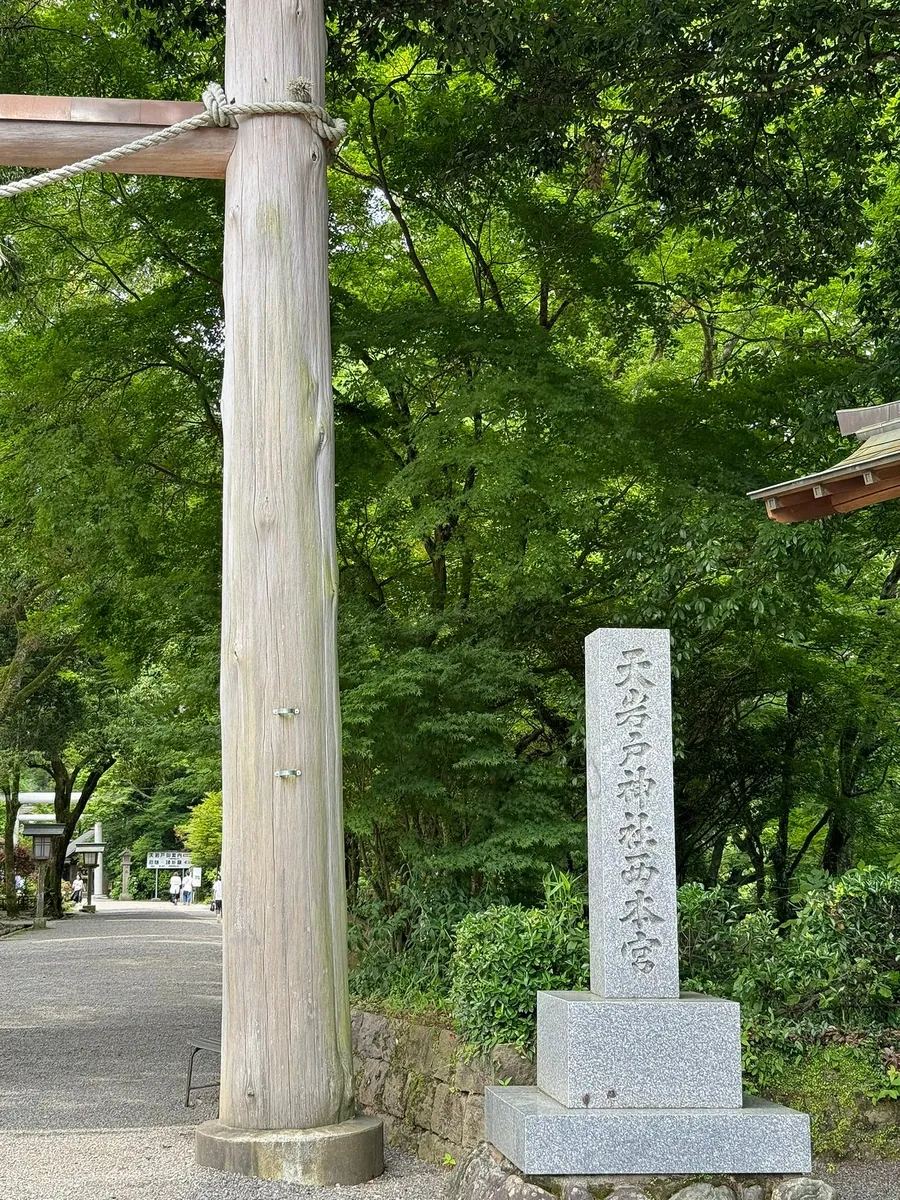
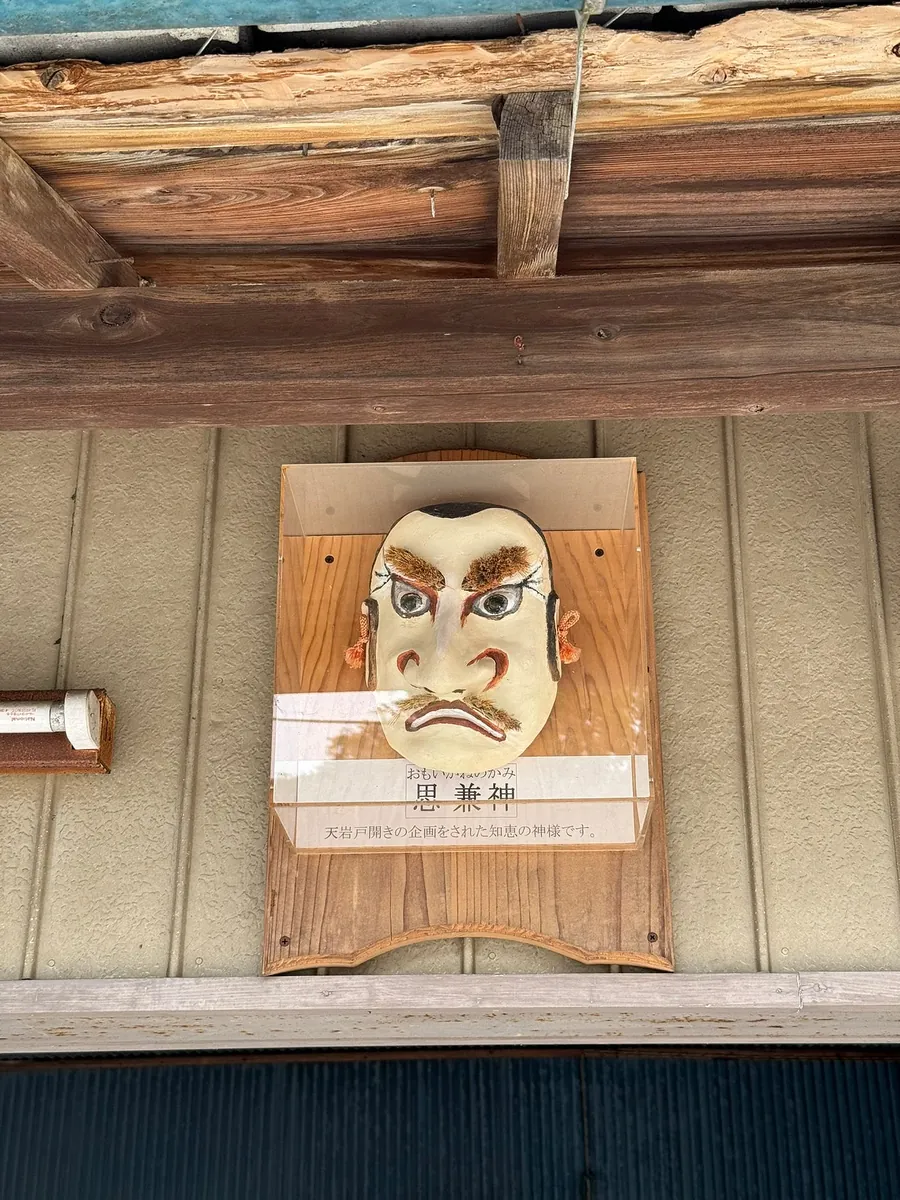
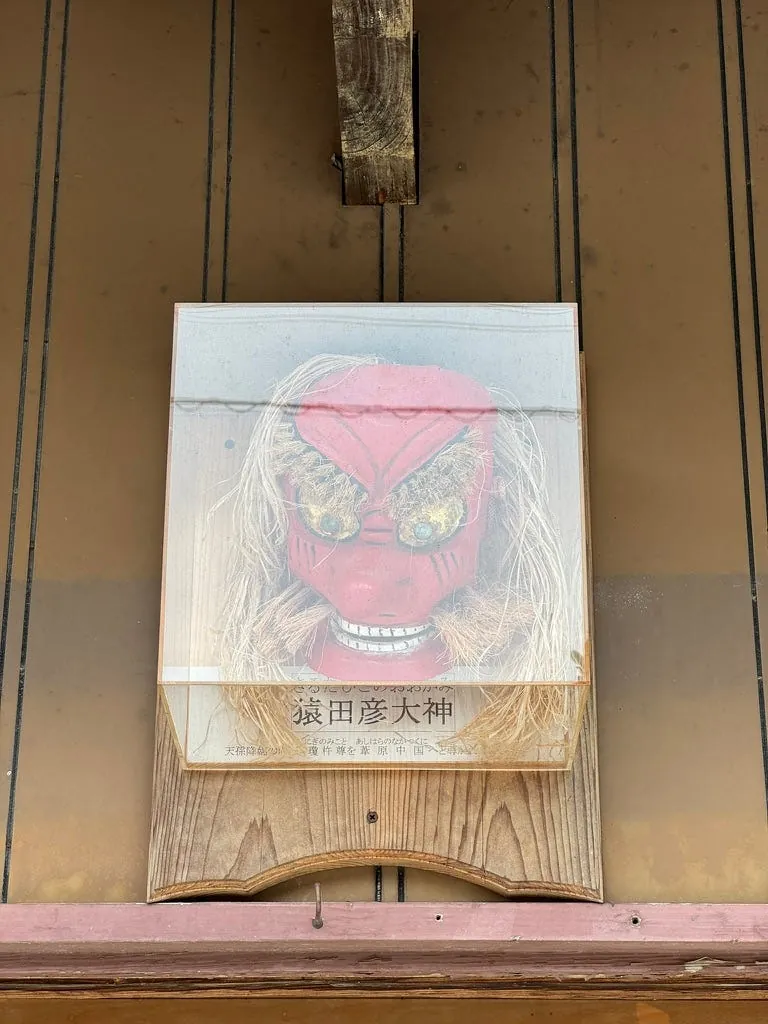
After getting off the tour bus, walk about 5 minutes to Ama-no-Iwato Shrine West Main Shrine. Different divine masks are hung at the entrances of shops along the shopping street.
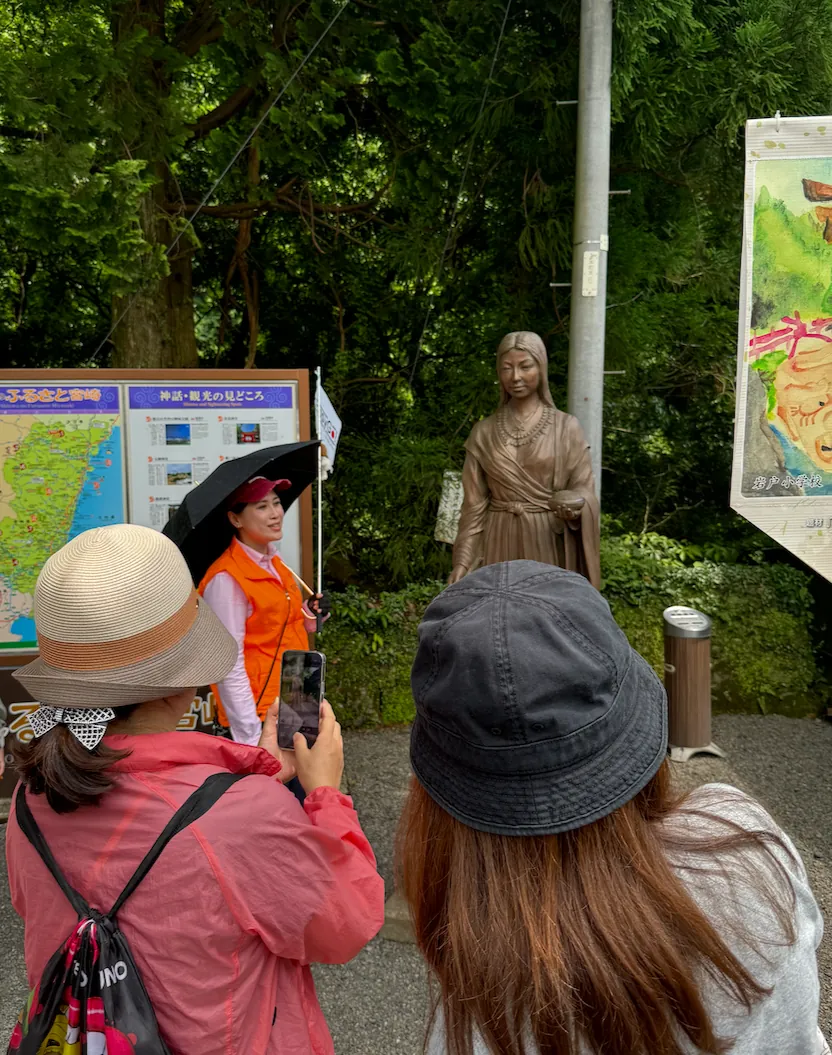
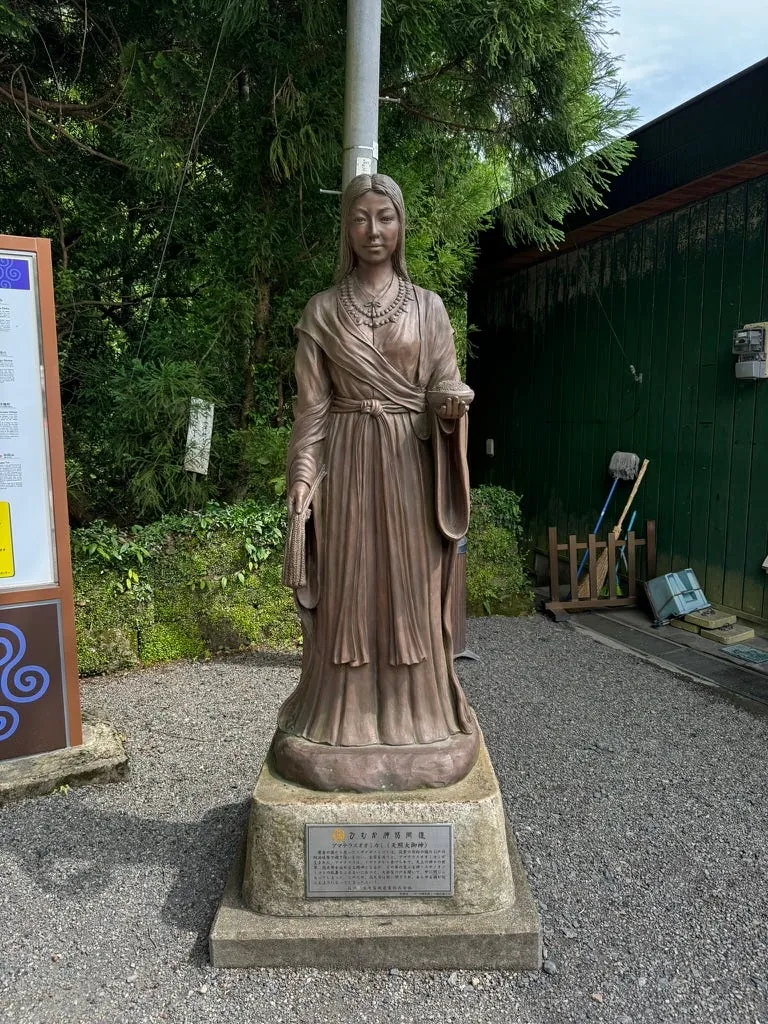
The tour guide will also share the story of Amaterasu on the bus.
You need to walk a short distance to reach Amano Iwato. The guide agreed with everyone to walk together to Amano Iwato first, then everyone can explore freely on their own (or follow the guide back directly).
Around 14:00 Walk to Amano Iwato Cave
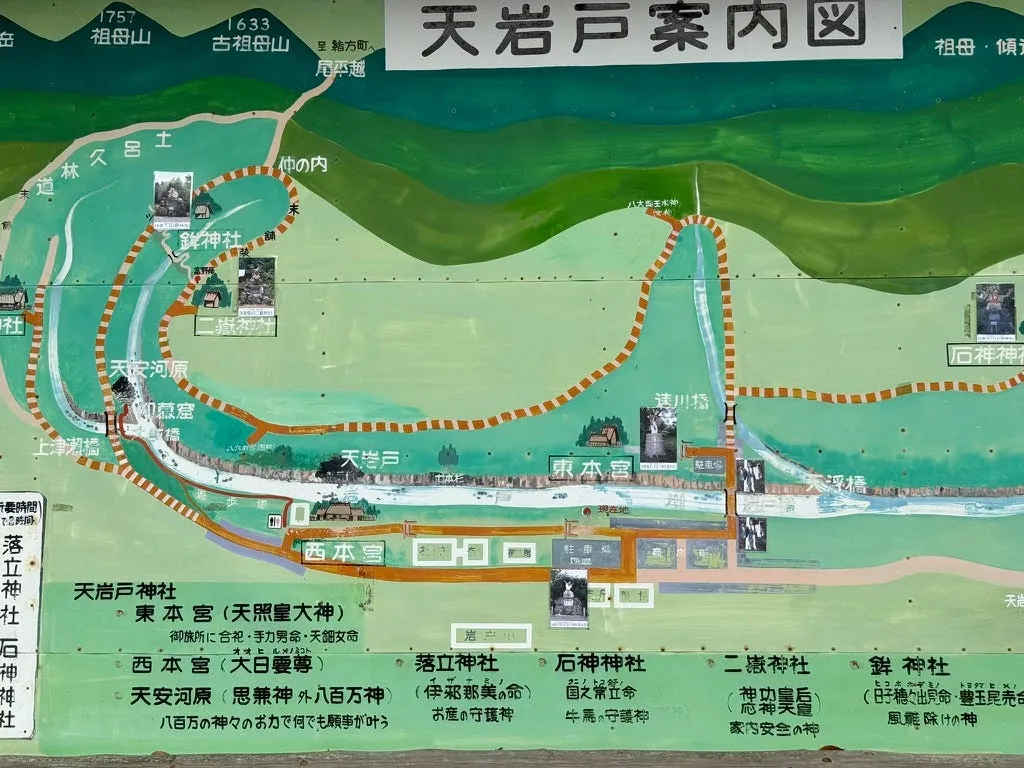
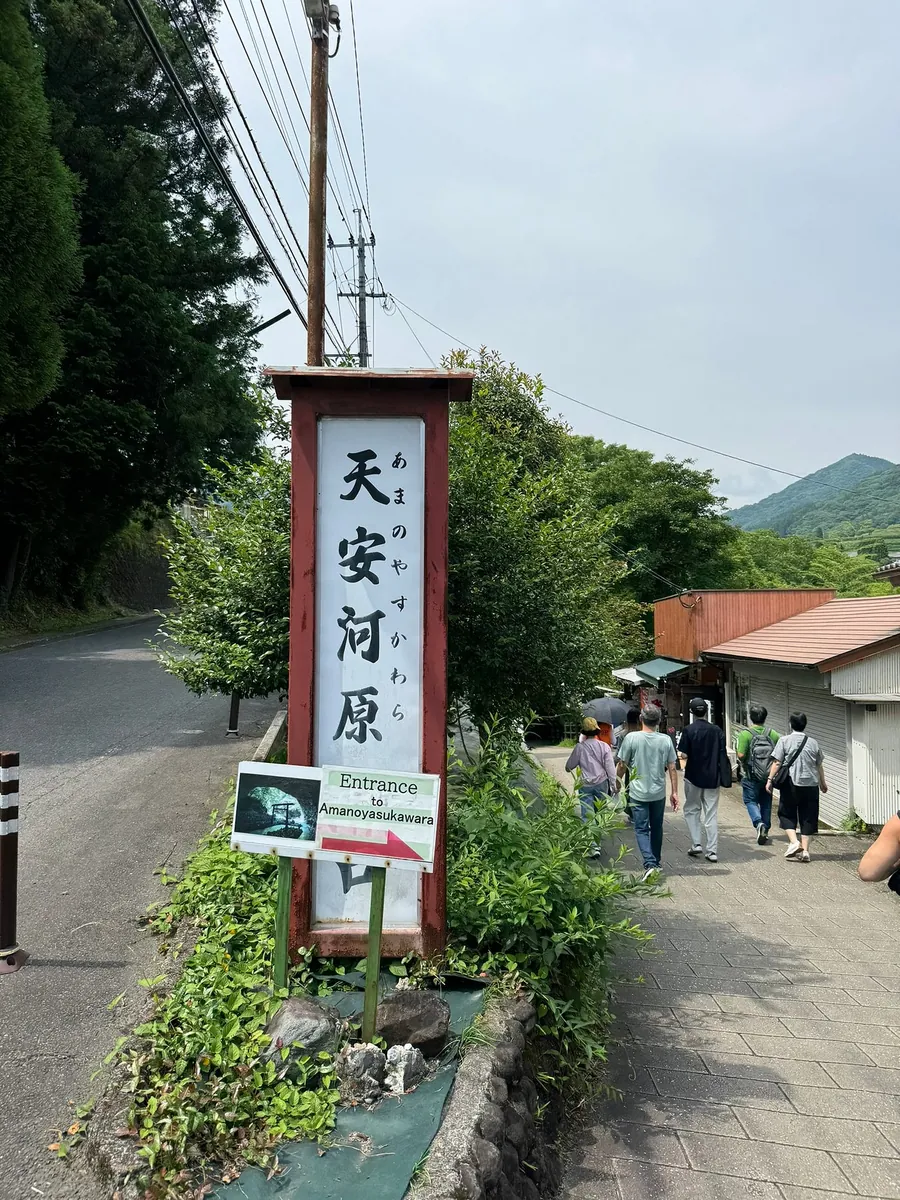
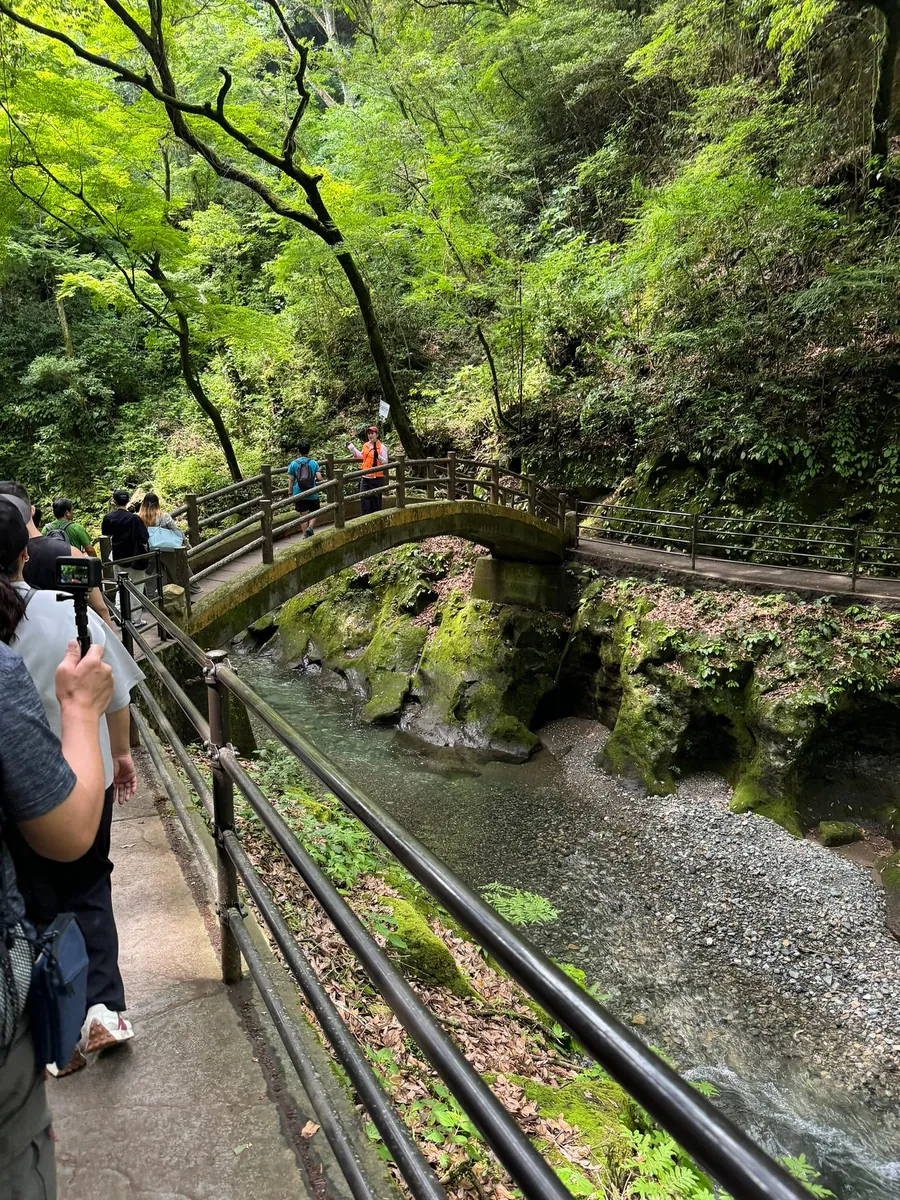
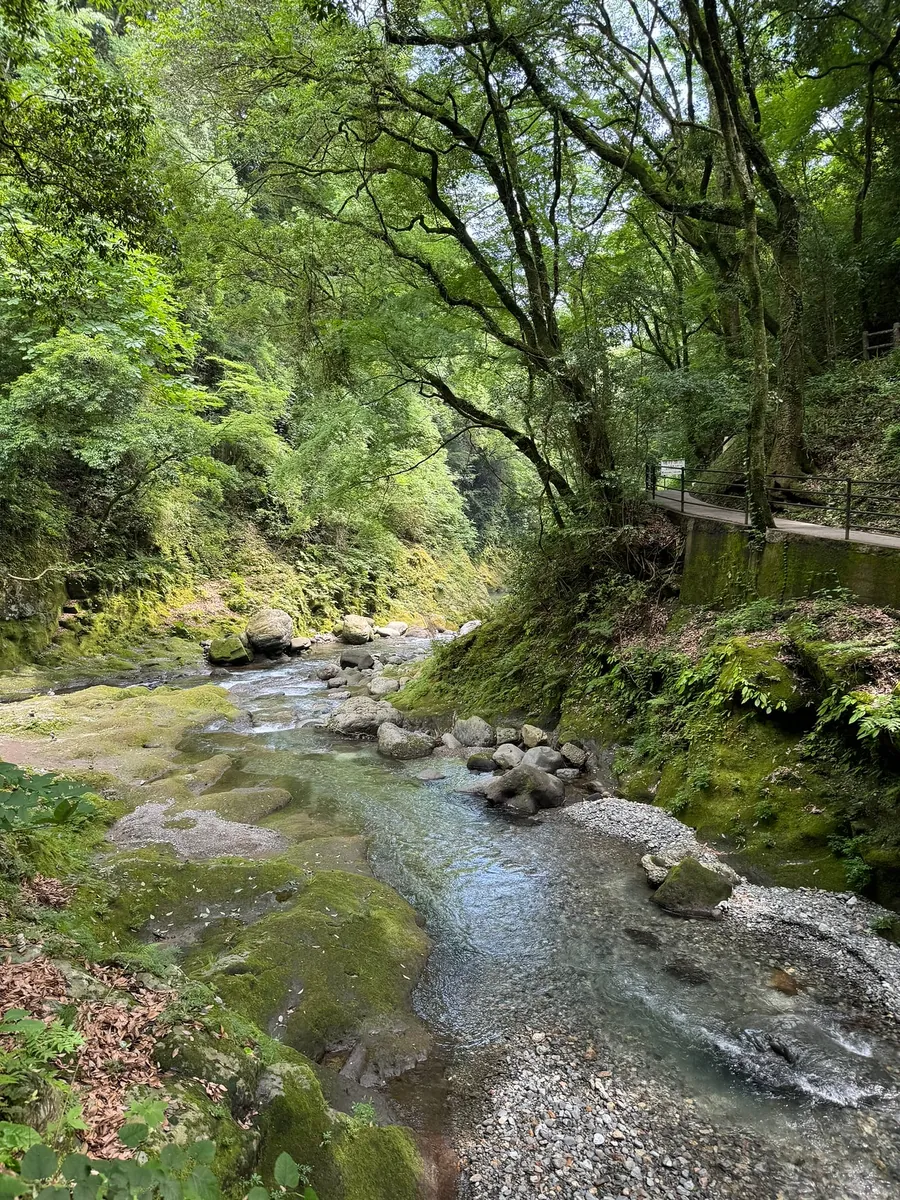
Around 14:15 Arrive at Amano Iwato River
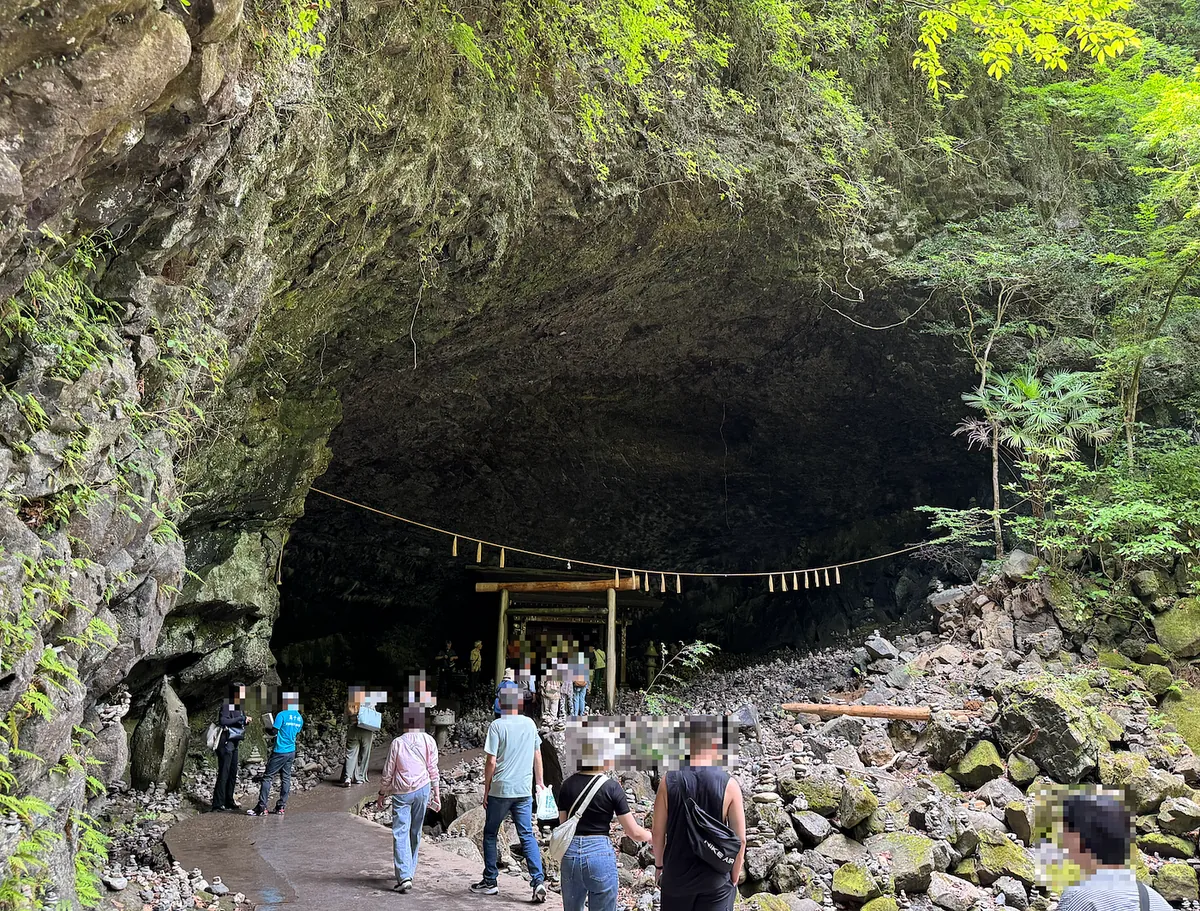
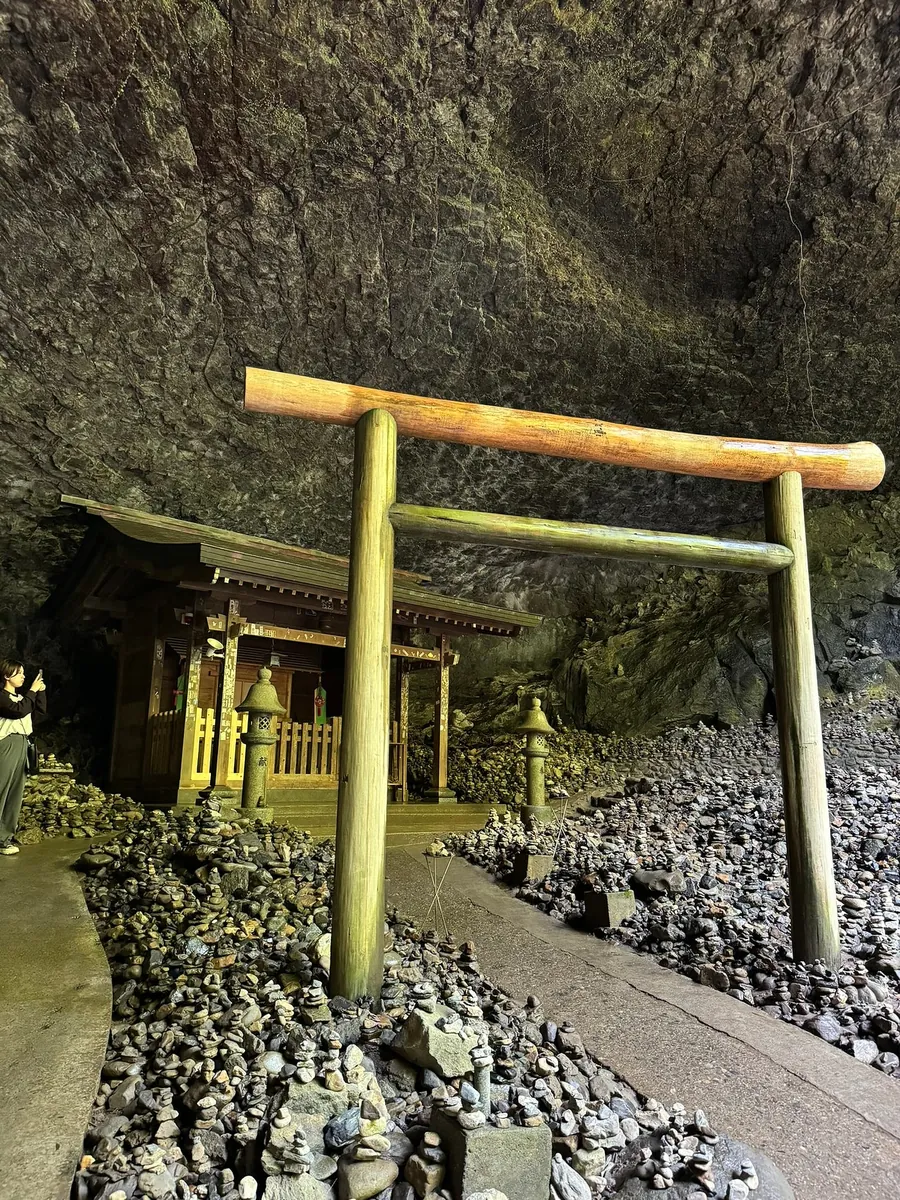
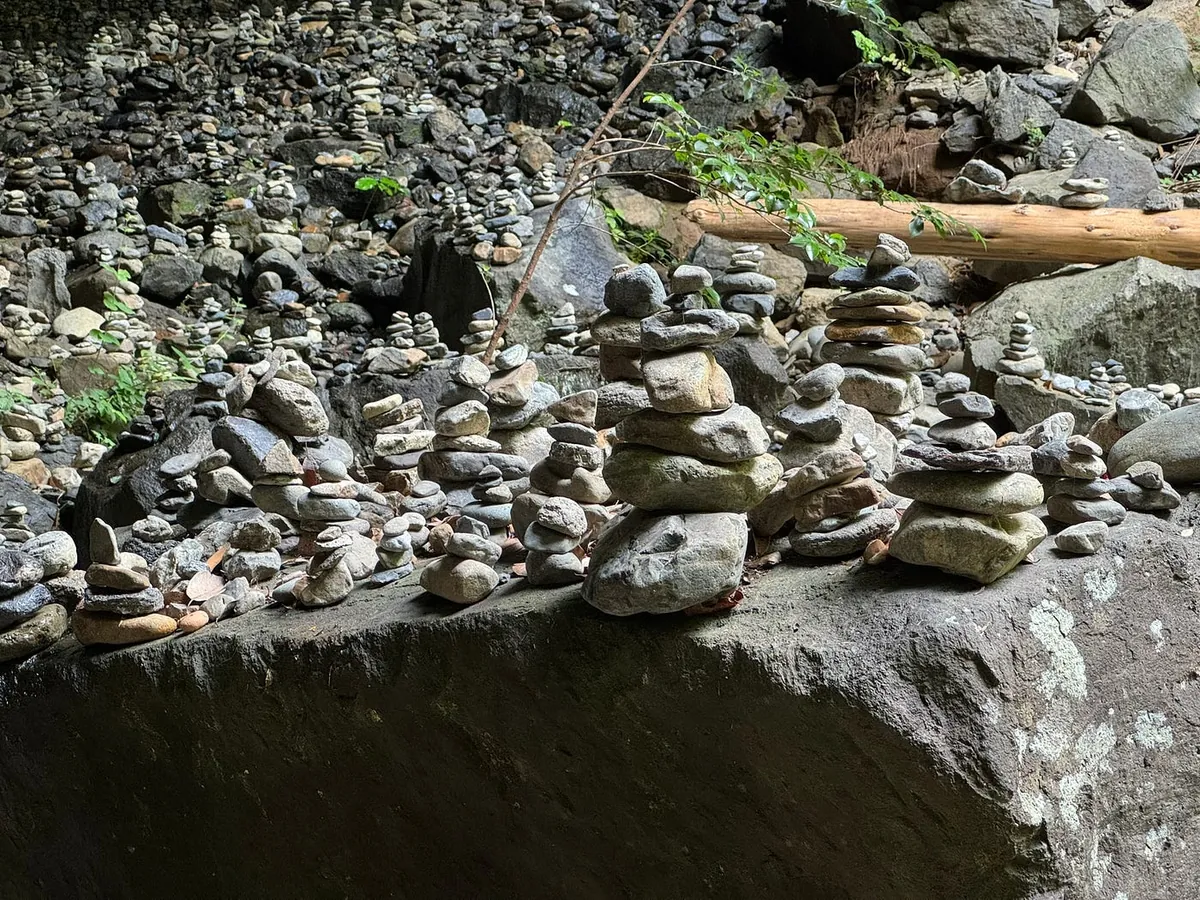
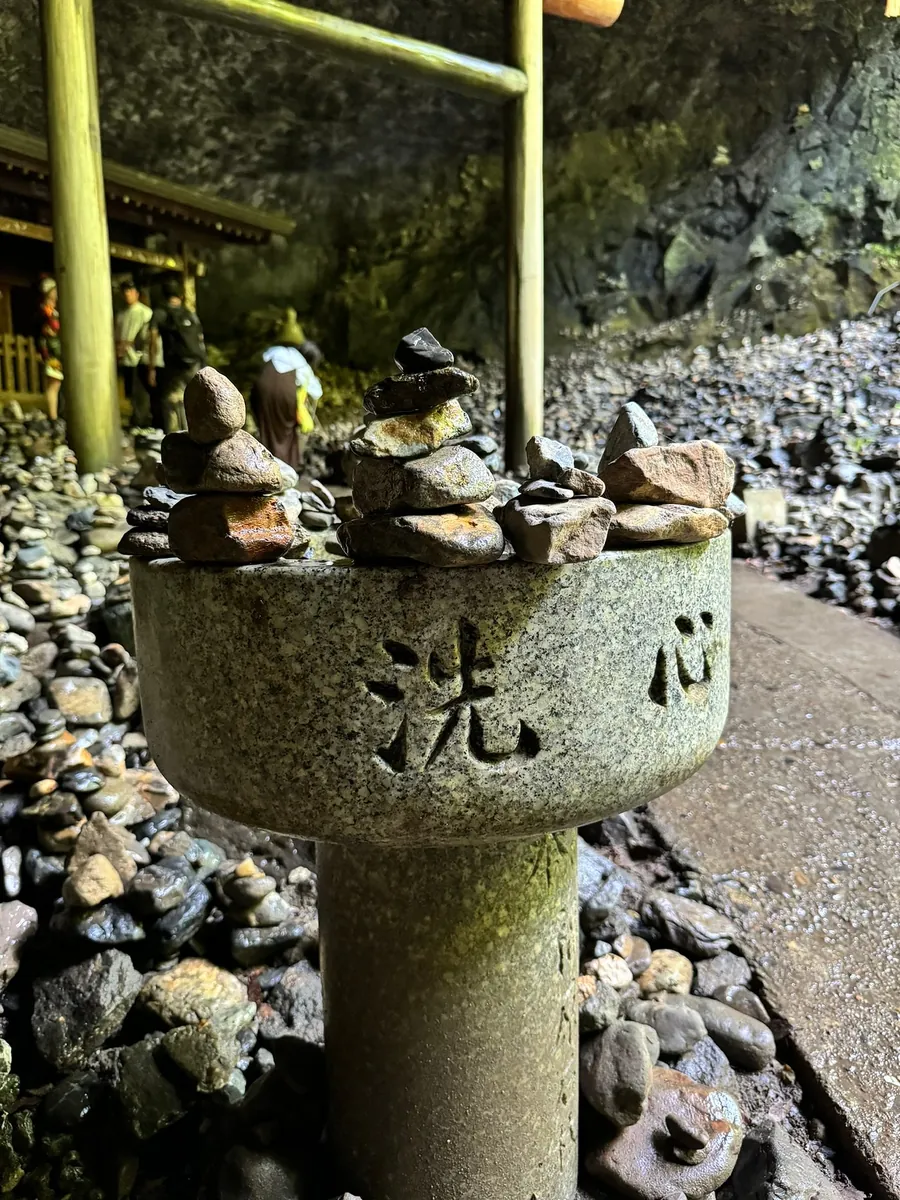
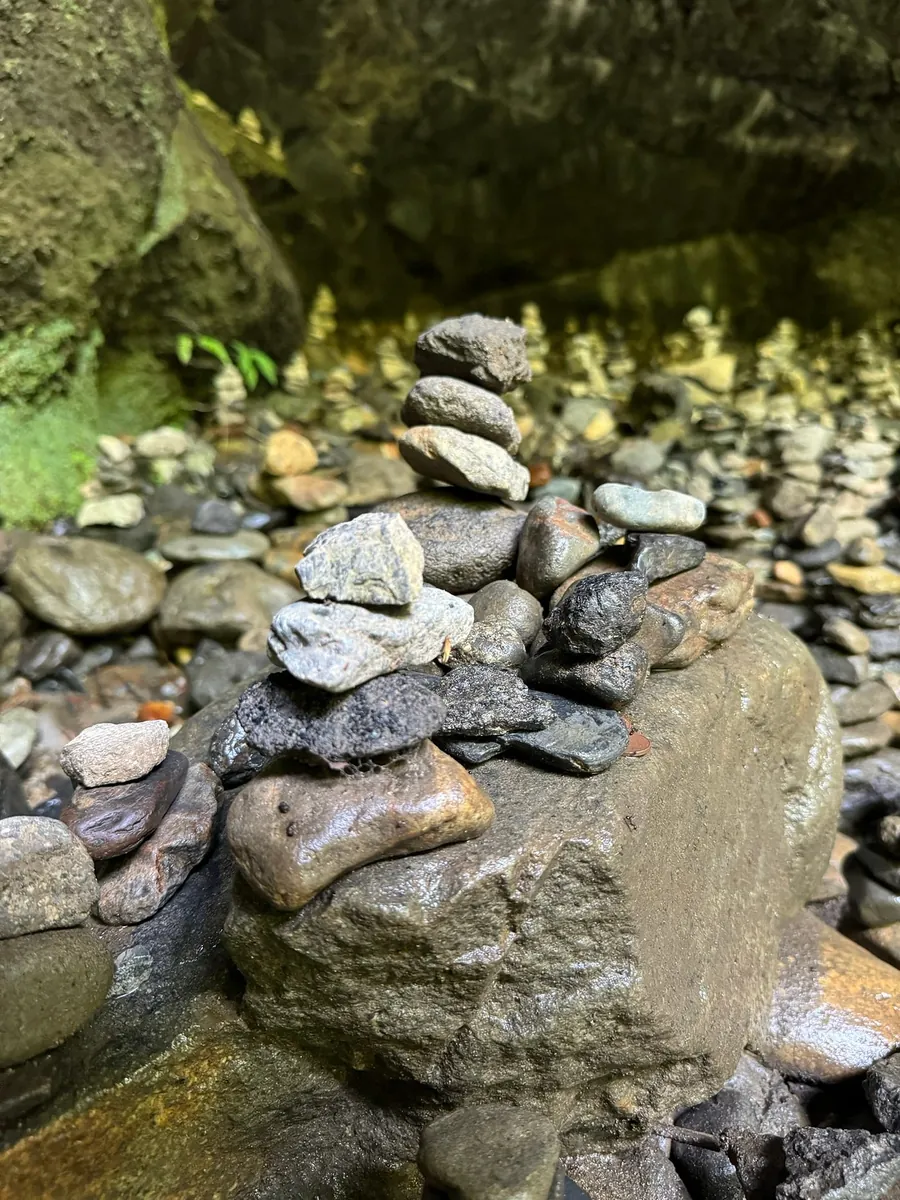
Amano Iwato Cave is where the sun goddess Amaterasu once hid; the shrine’s torii gate is surrounded by stones left by worshippers.
On the way back from the shrine visit, we passed by an ice cream shop.
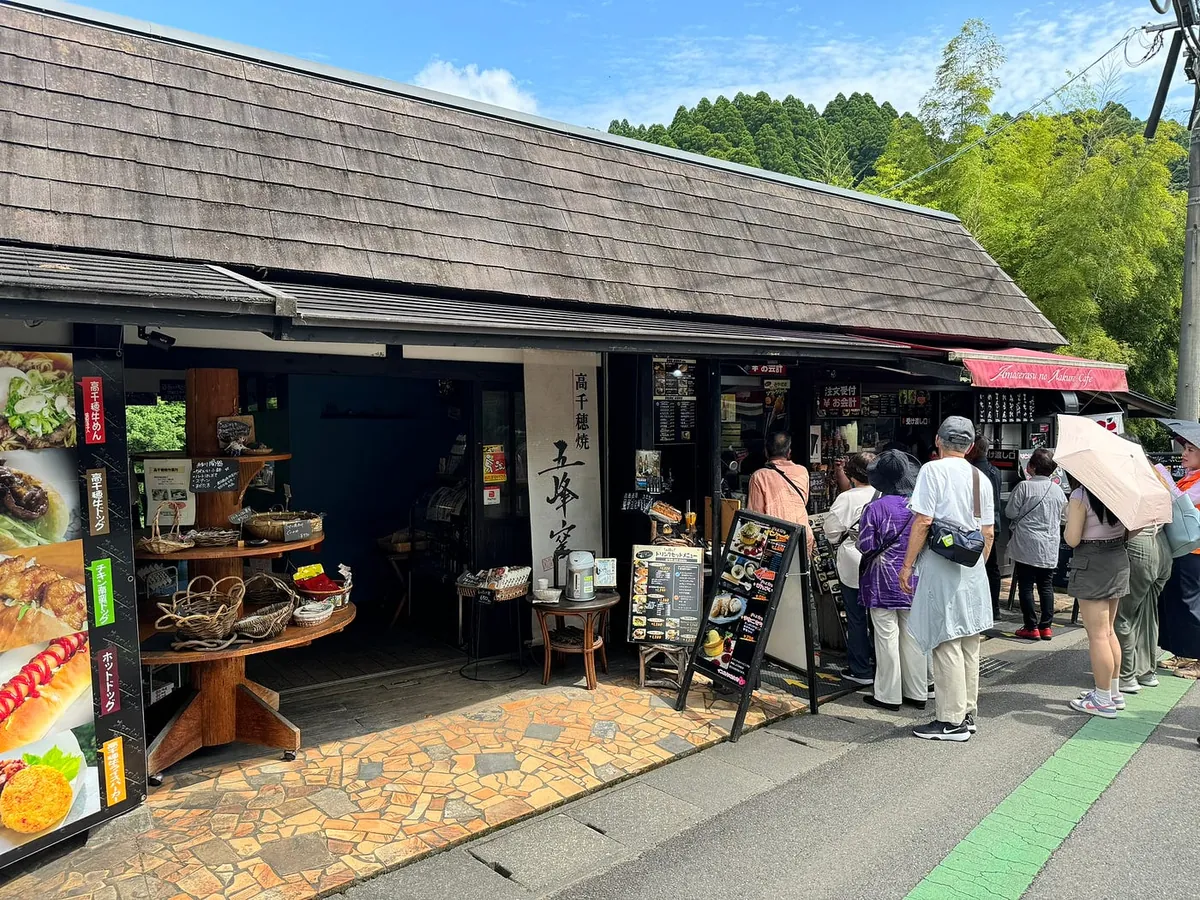
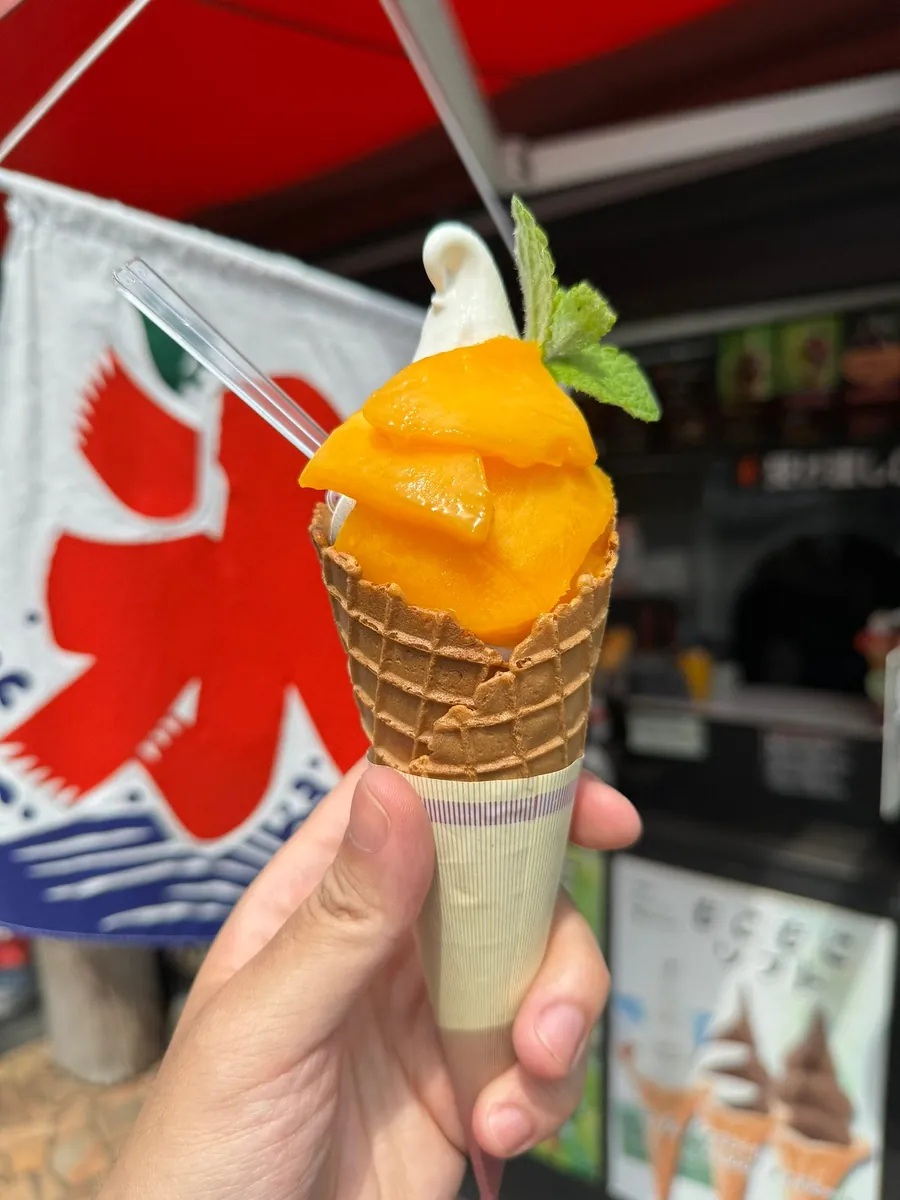
Everyone was lining up here for the ice cream, so we also tried the local Miyazaki mango ice cream (900 yen). The guide said Miyazaki mangoes are premium, but honestly, Taiwanese mangoes still have a stronger mango flavor.
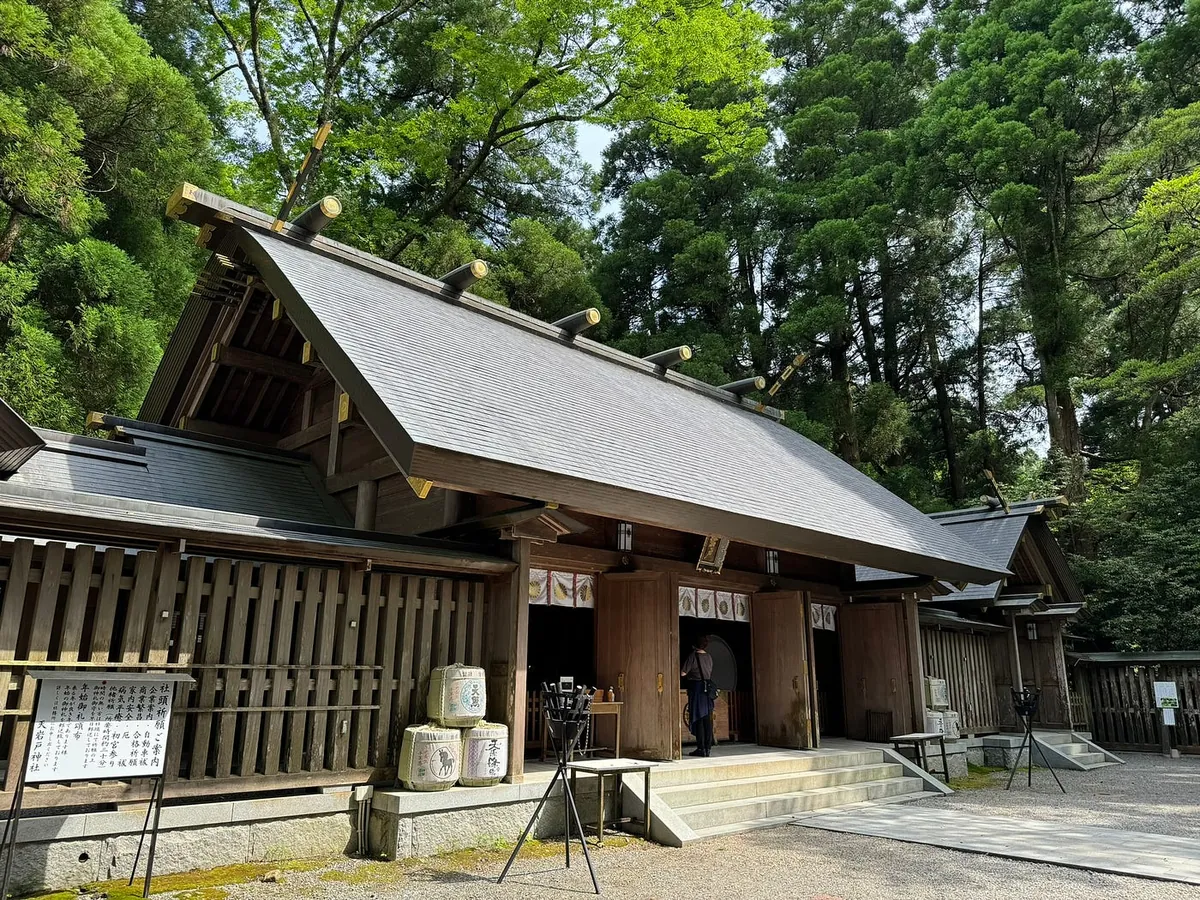
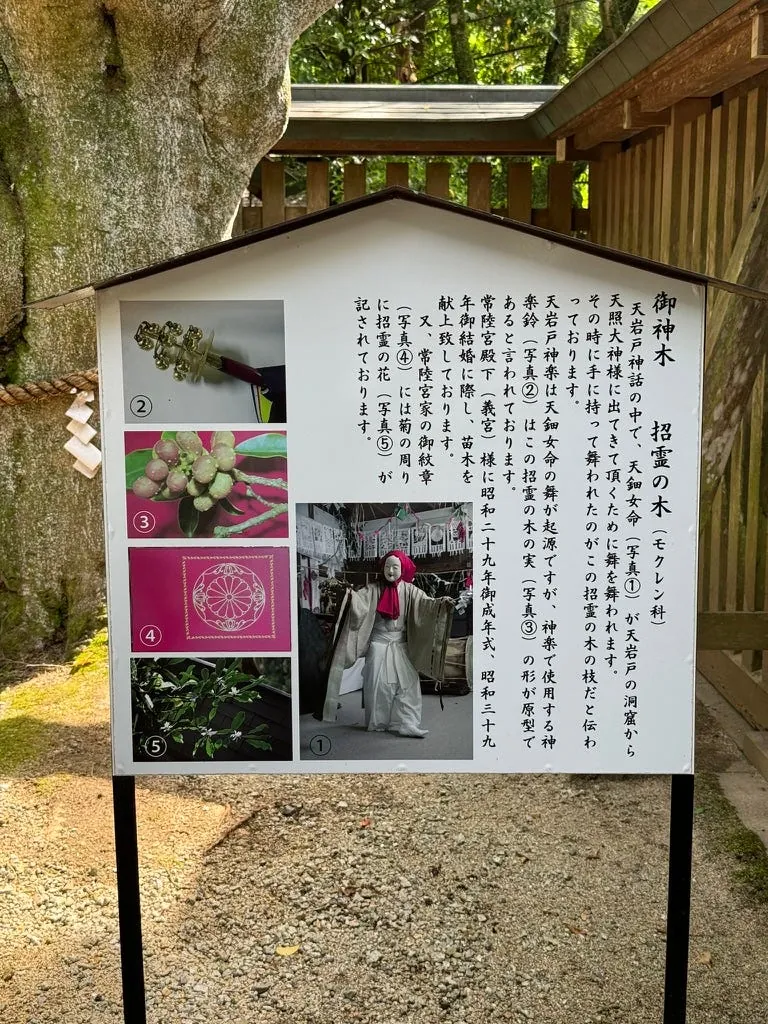
After resting, slowly walk back to visit Amano Iwato Shrine.
Around 15:10 Gather for Return Trip
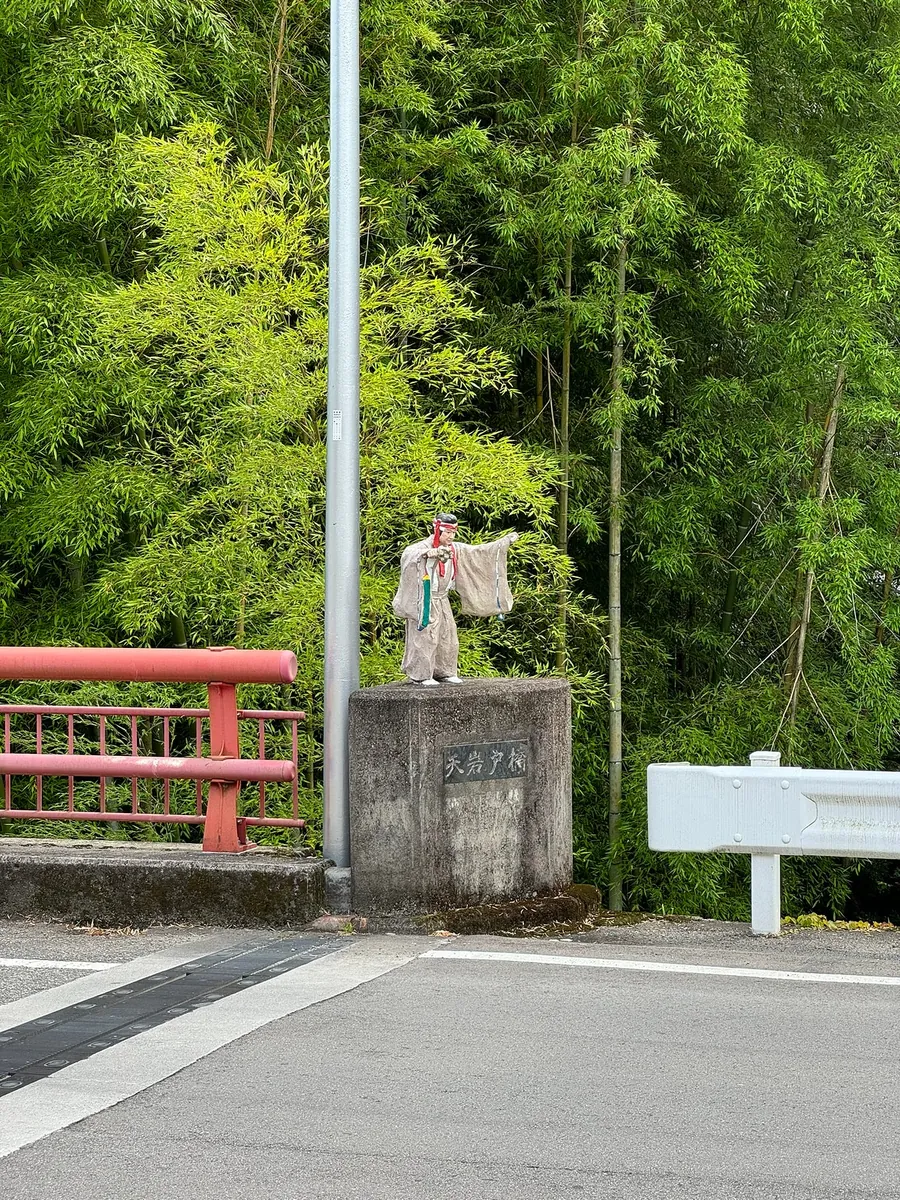
After finishing the last activity, it was already past 3 PM, and it was time to start the return trip (still a three-hour drive back to Fukuoka).
Around 16:40 Stop at Rest Area
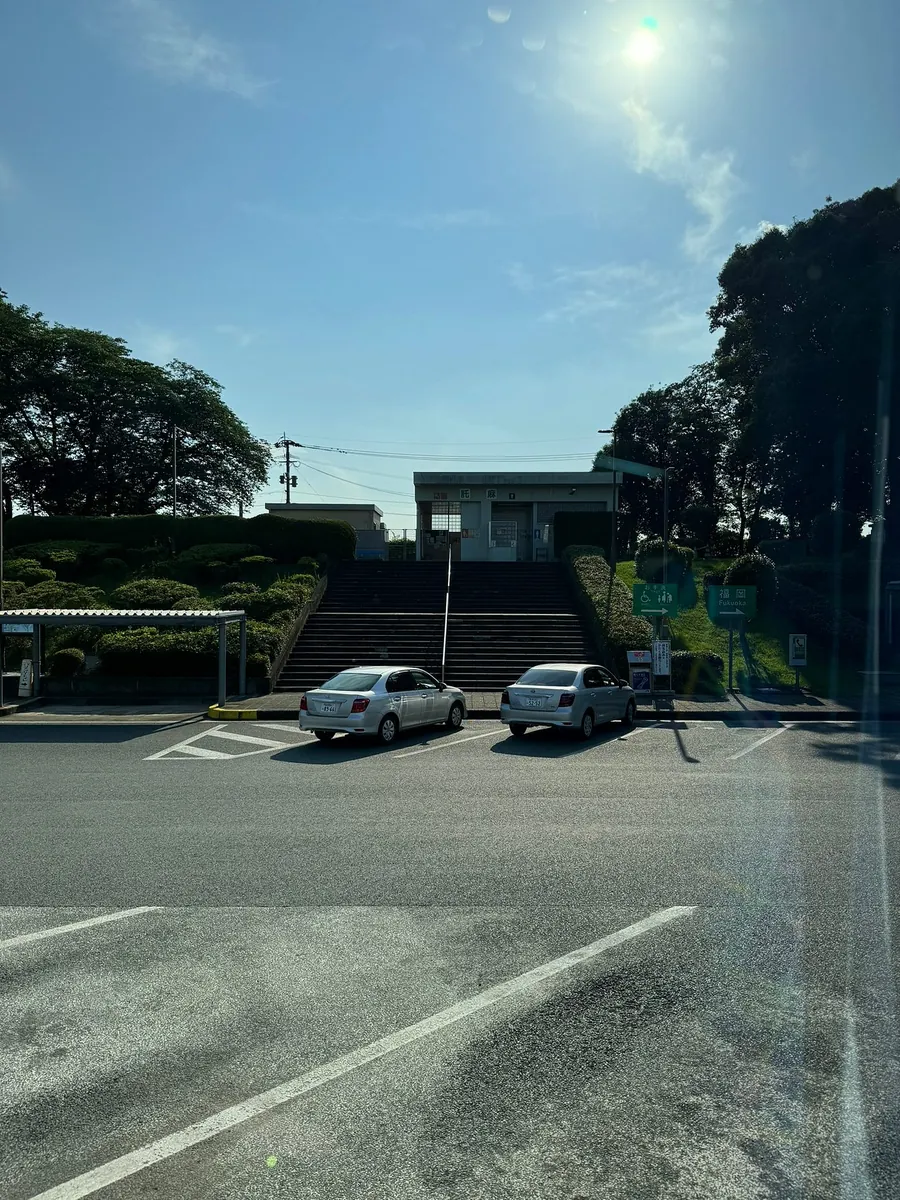
The return trip will also stop at rest areas for everyone to use the restroom and stretch.
Around 18:00 Return to Hakata Station Chikushi Exit (Hakata Back Exit)
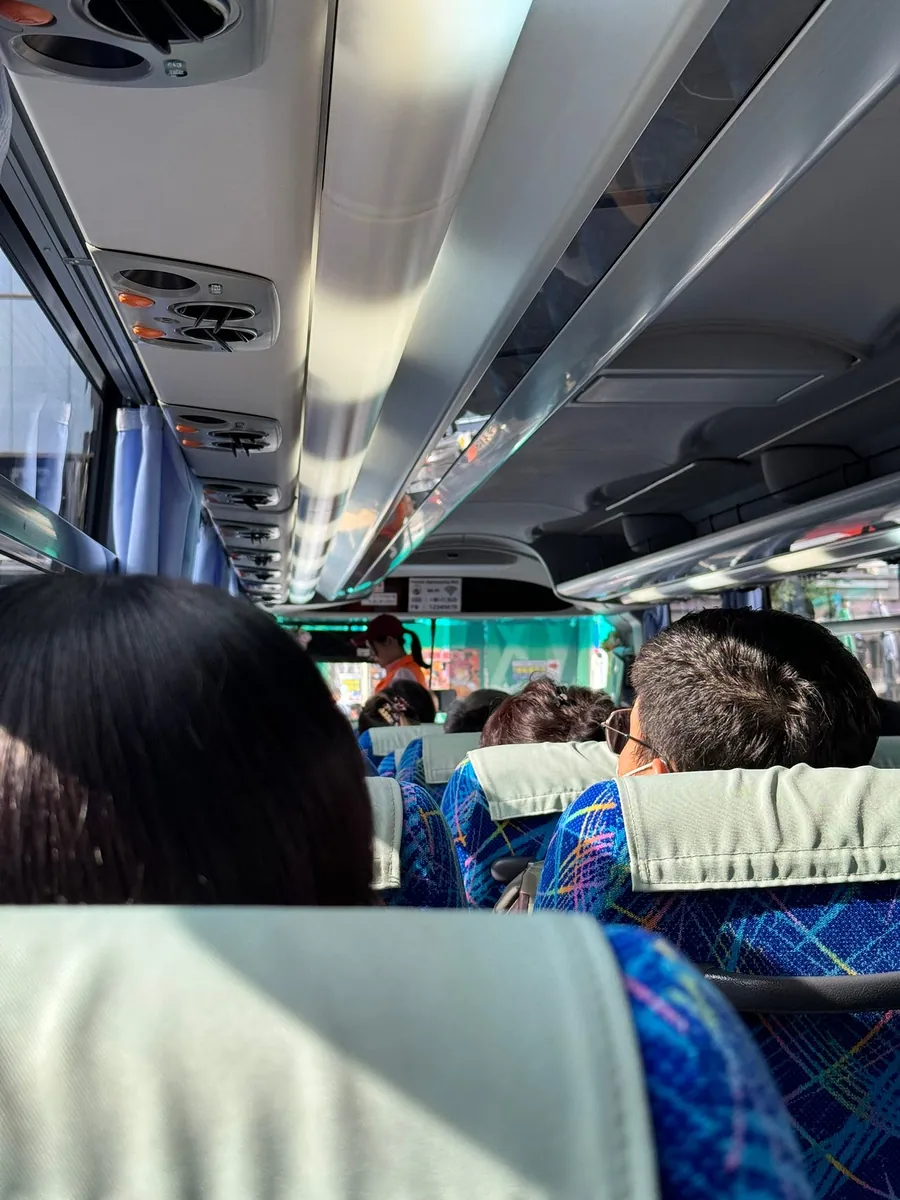
The trip ended smoothly. Thanks to Shinan for leading and arranging the itinerary 👏👏👏👏👏.
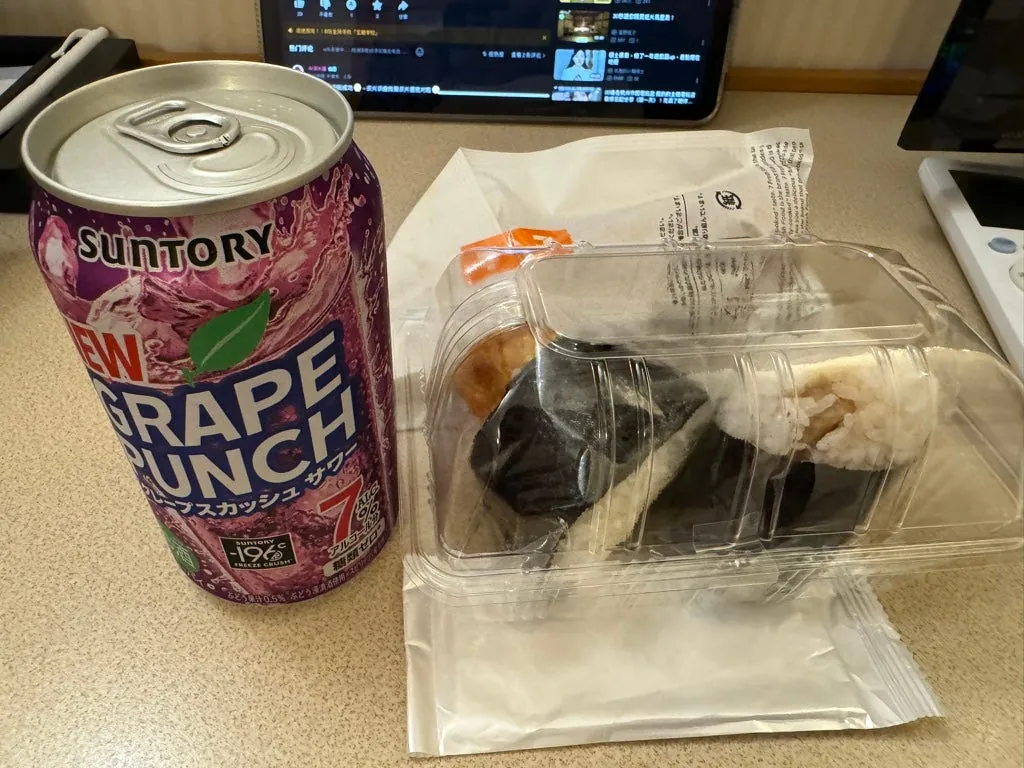
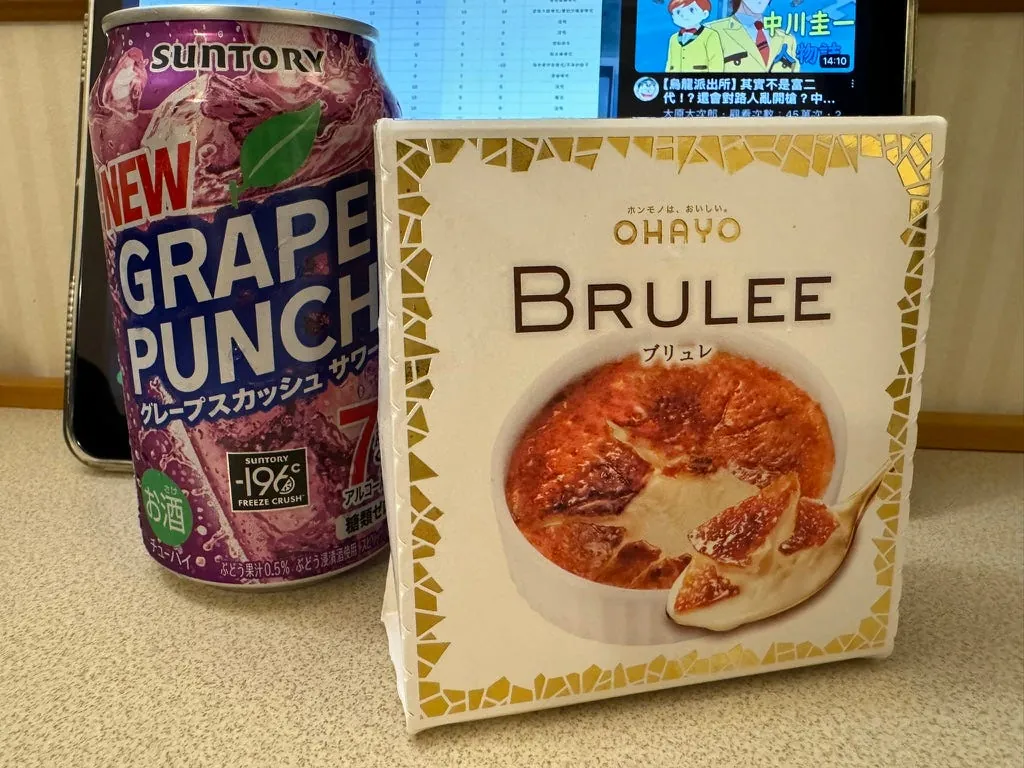
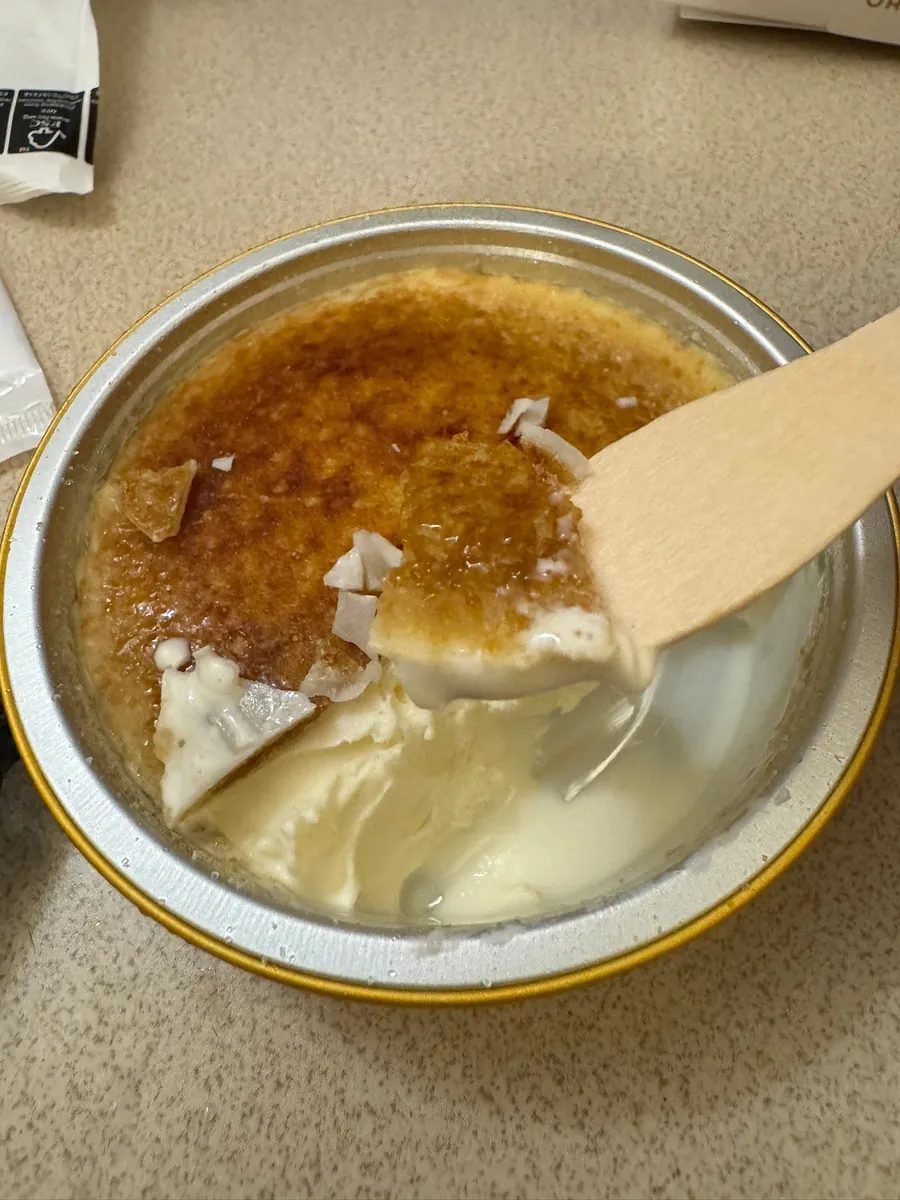
For dinner, I casually bought a convenience store hot dog and a rice ball from Tenjin Underground Mall that I had on Day 6. The new grape-flavored Suntory is delicious!! For dessert, I had a BRULEE.
Good night.
Day 10 Shopping in Hakata, Shopping in Tenjin, Watching Baseball at PayPay Dome
The sightseeing itinerary in Kyushu is almost complete, leaving nearly two days for shopping and strolling.
In the morning, we first went to Don Quijote (24 hr) for some quick shopping. The Tenjin Main Store is very large, with several floors to explore.
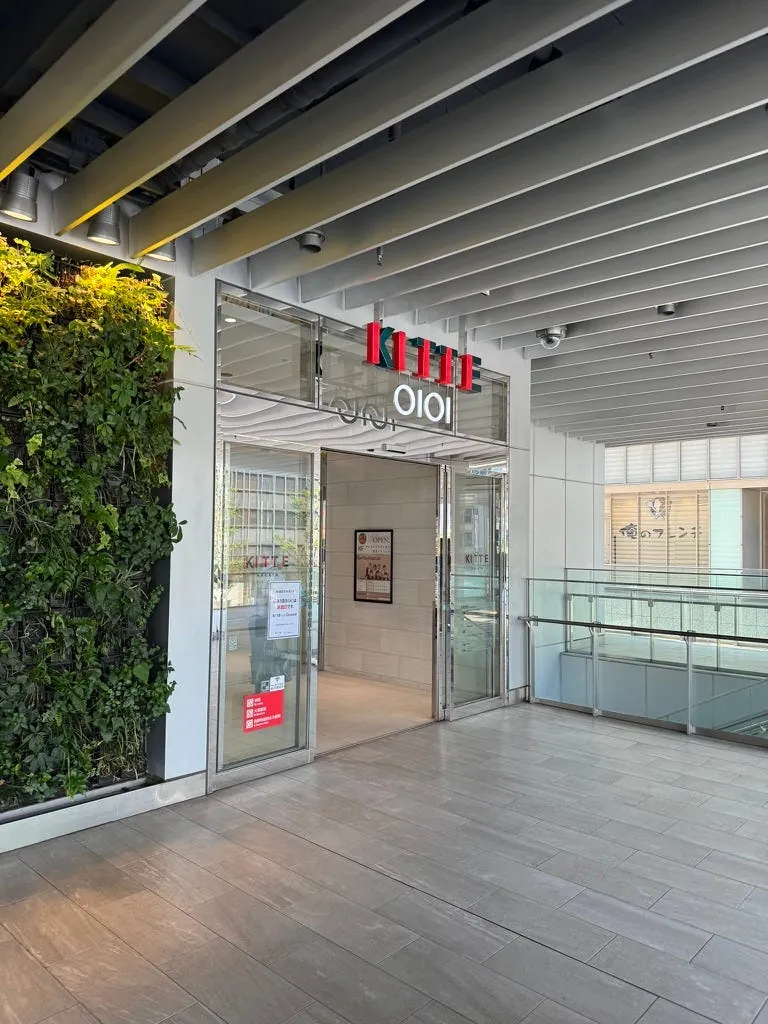
Near noon, I visited the department stores at Hakata Station to browse, buy souvenirs, Fukuoka sake, Fukusaya Nagasaki Castella, Kokura Meigetsu rice crackers, and more.
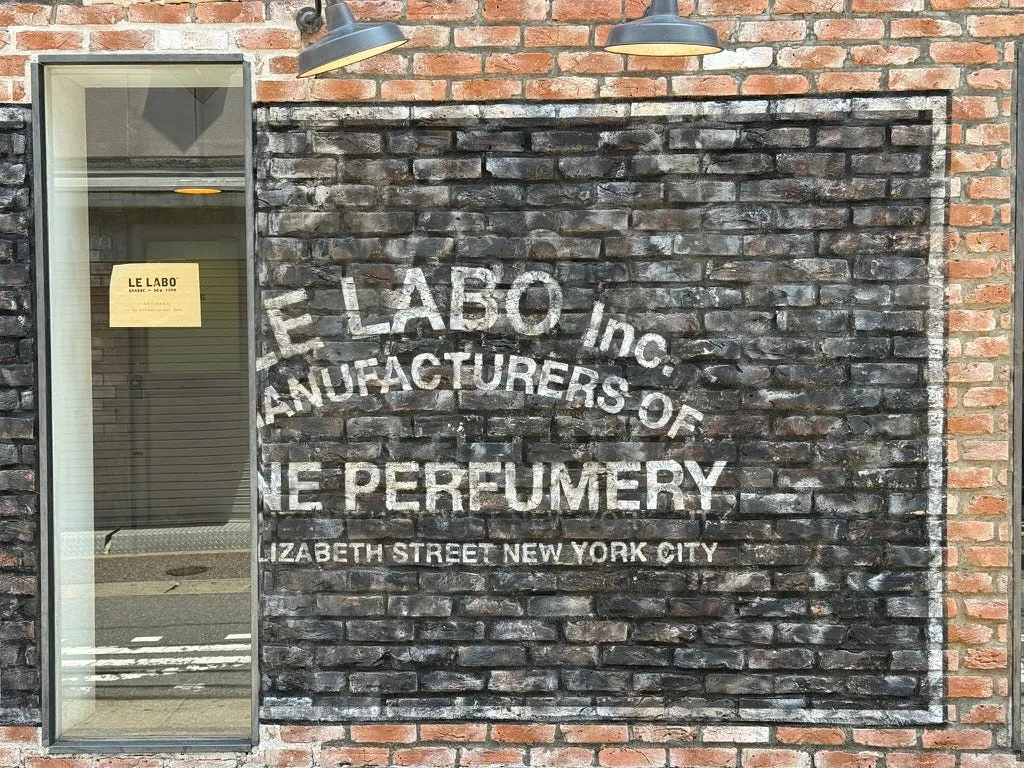
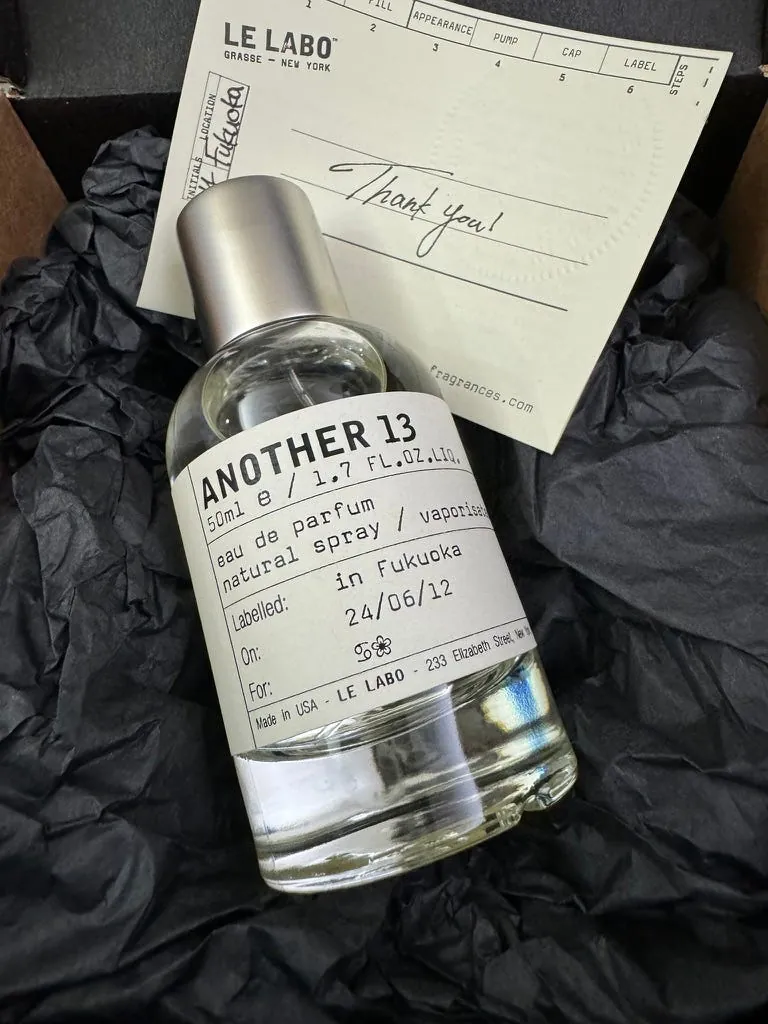
In the afternoon, return to the Tenjin area, Tenjin Underground Shopping Mall, Le Labo, Iwataya Department Store, Mitsukoshi Department Store, and more (there are many department stores around Tenjin).
Le labo Another 13 just ran out and restocked, this time I bought 50ml (about NT$5,800 after tax refund).
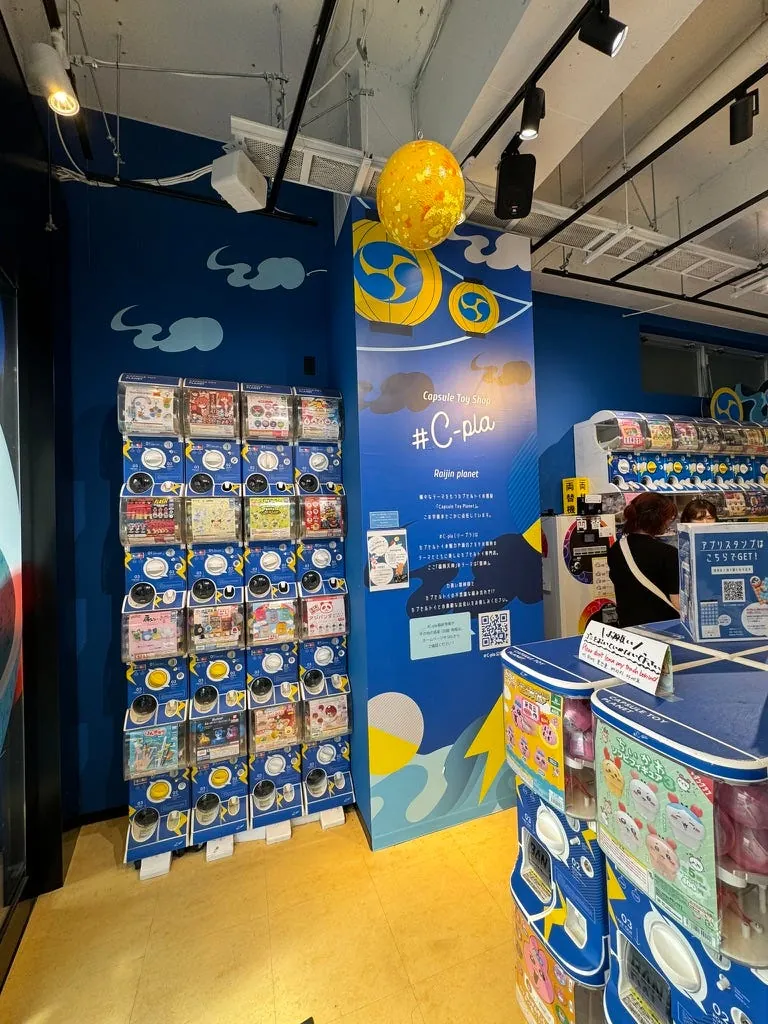
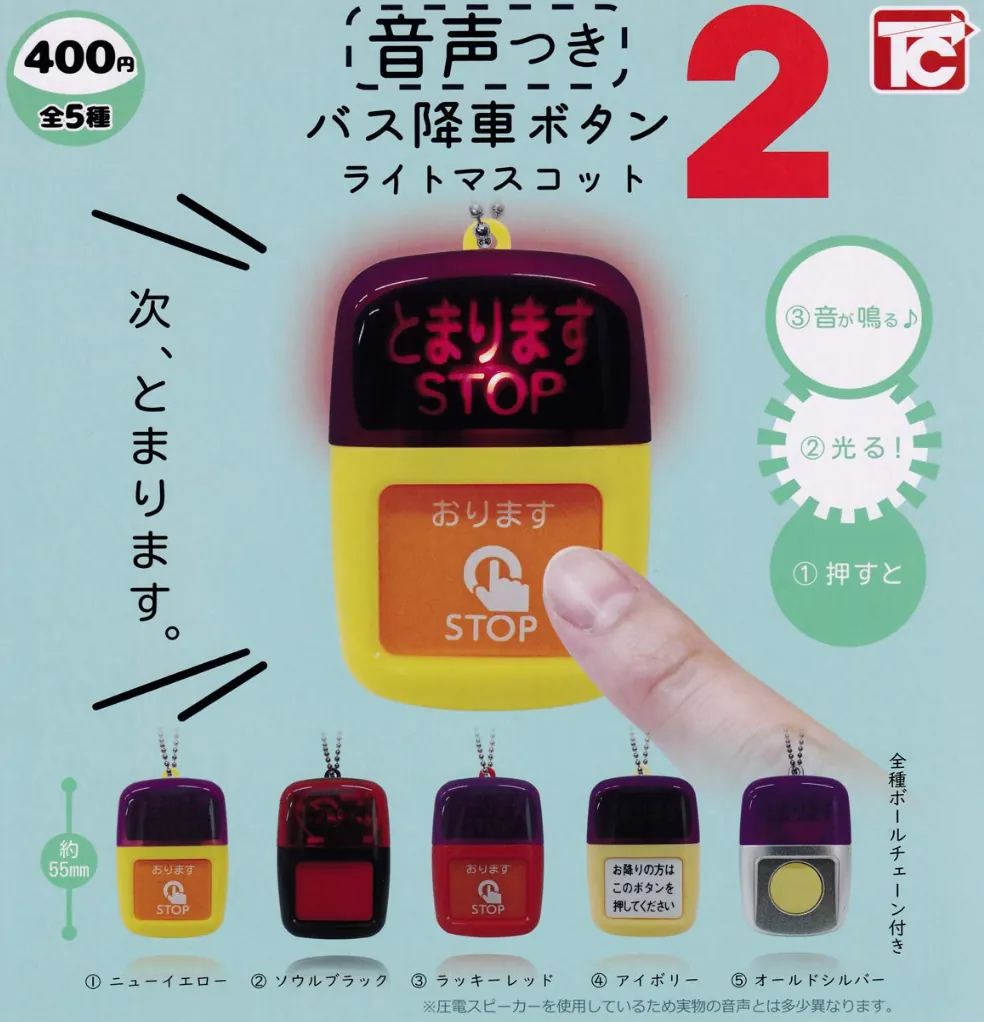
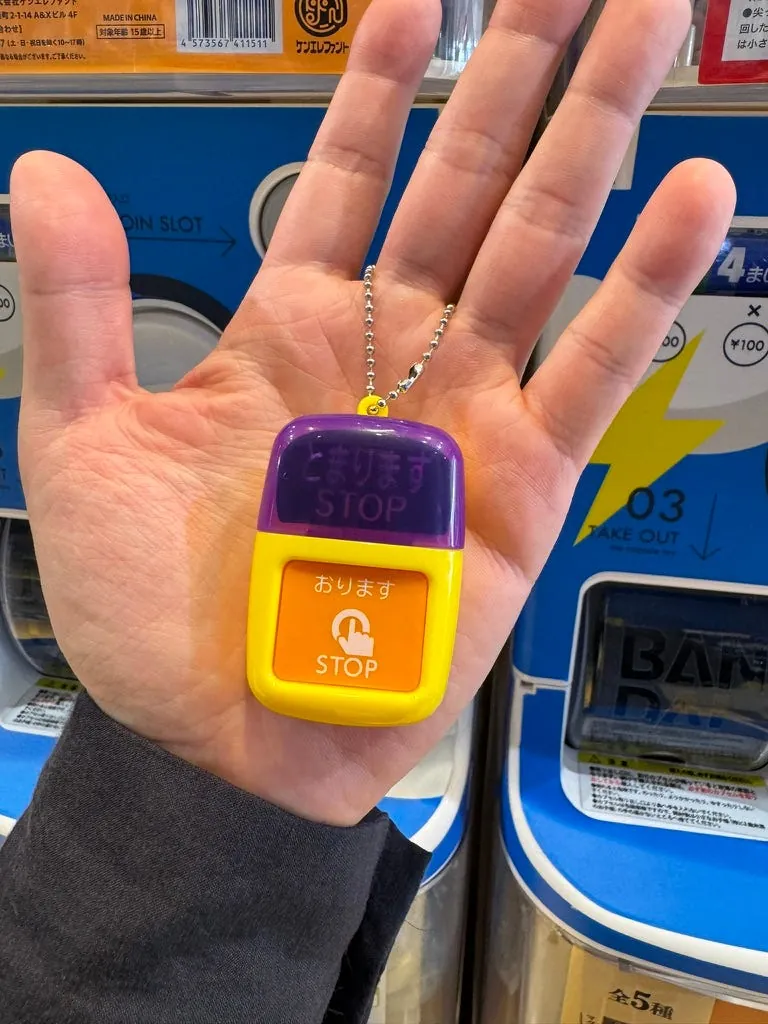
At Tenjin C-pla, I found a fun bus stop button XD
Pressing it makes a sound XD.
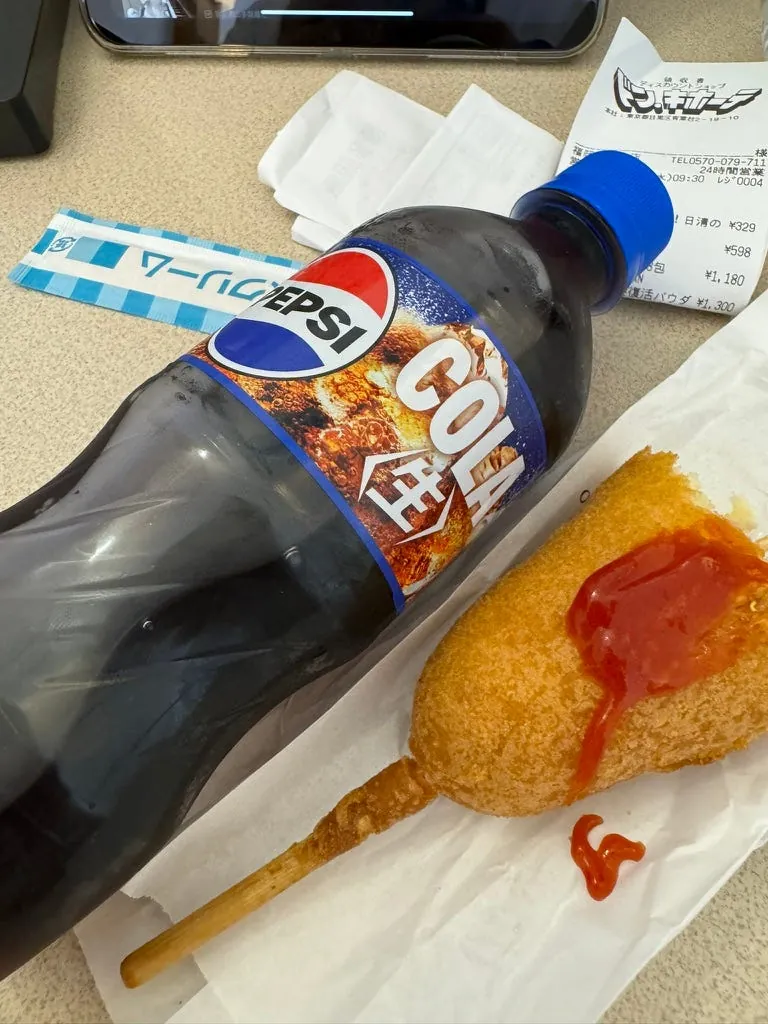
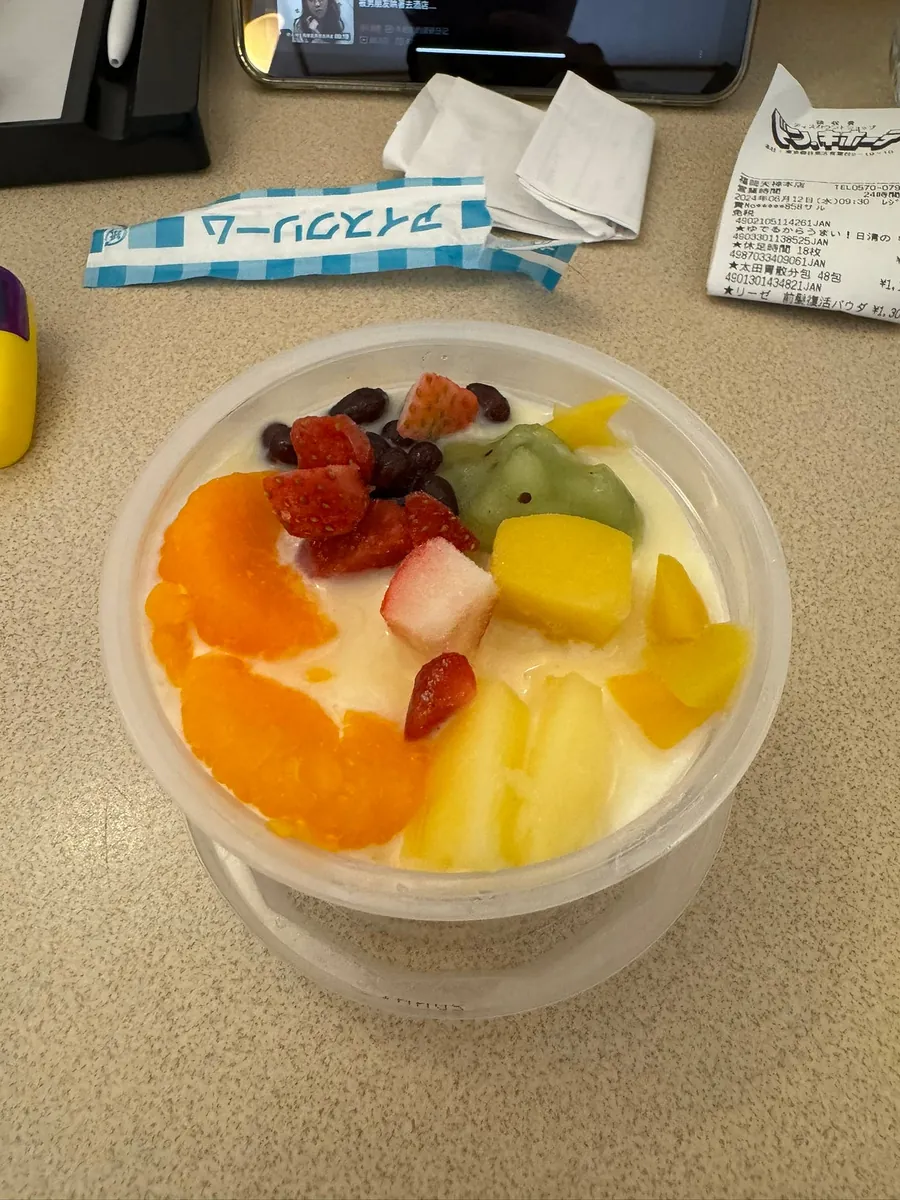
Carrying our loot back to the hotel to rest, having a hot dog and dessert along with a must-drink in Japan! Fresh Cola!
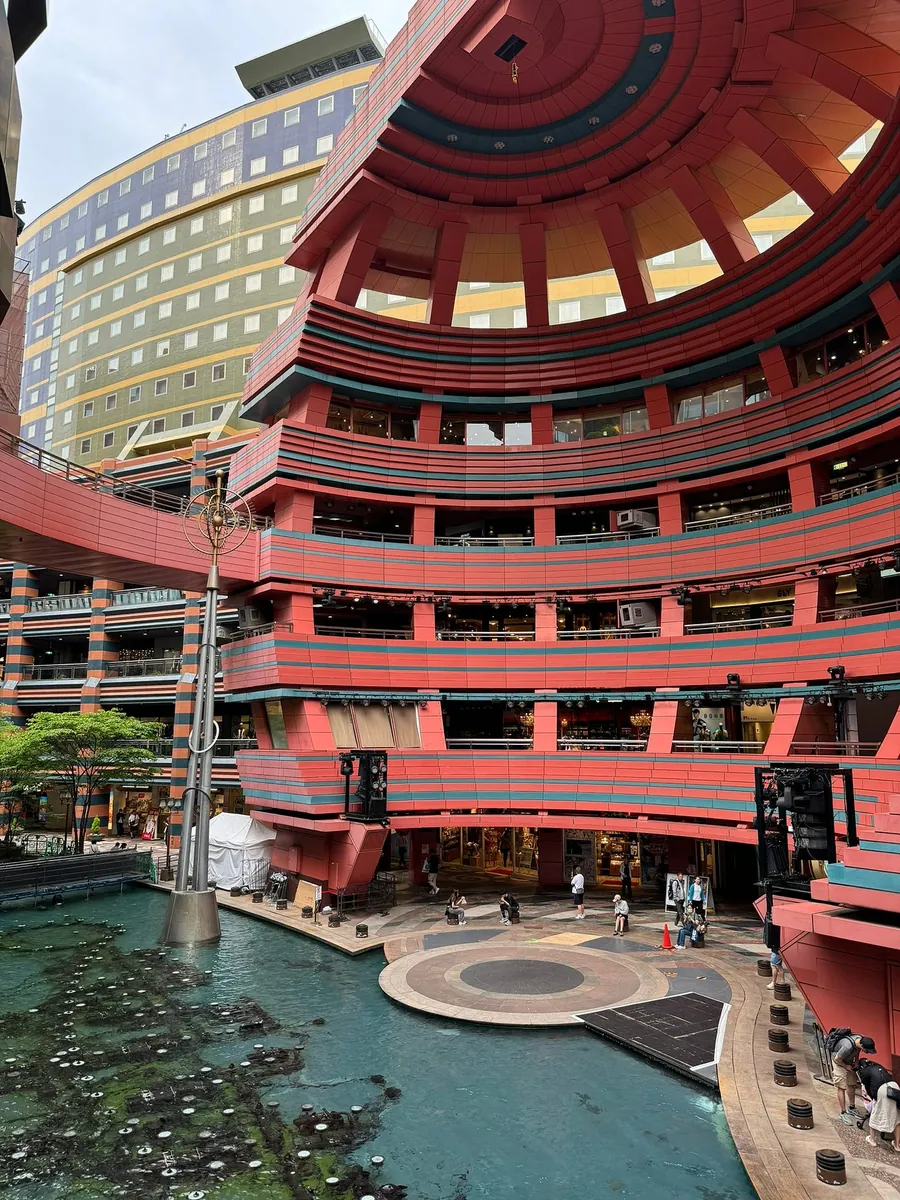
Canal City Hakata
After a short break, head out again and arrive at Canal City Hakata at 16:30.
Mainly went to his huge capsule toy department store in B1.
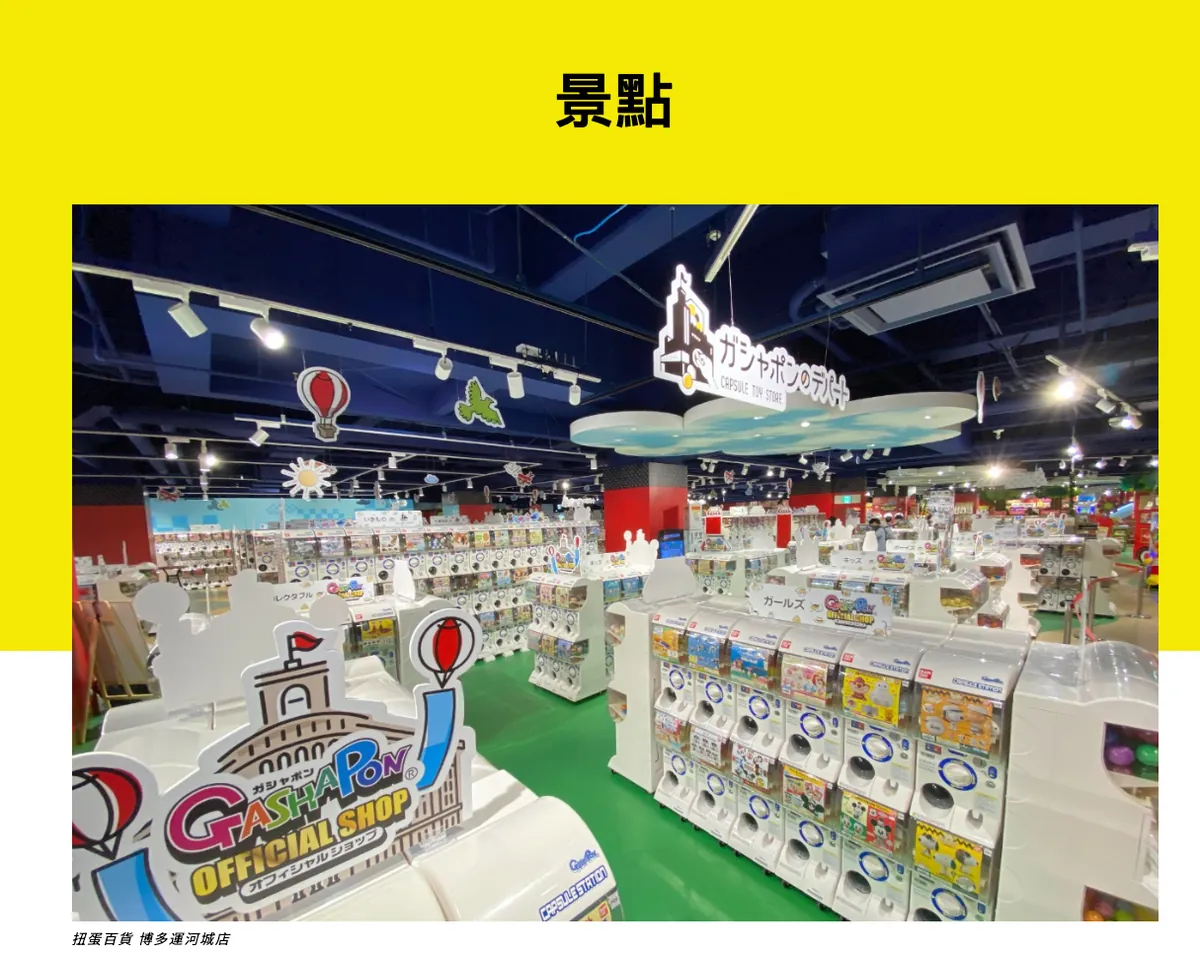
https://gofukuoka.jp/zh-tw/spots/detail/196050
After shopping, head to Hakata Station.
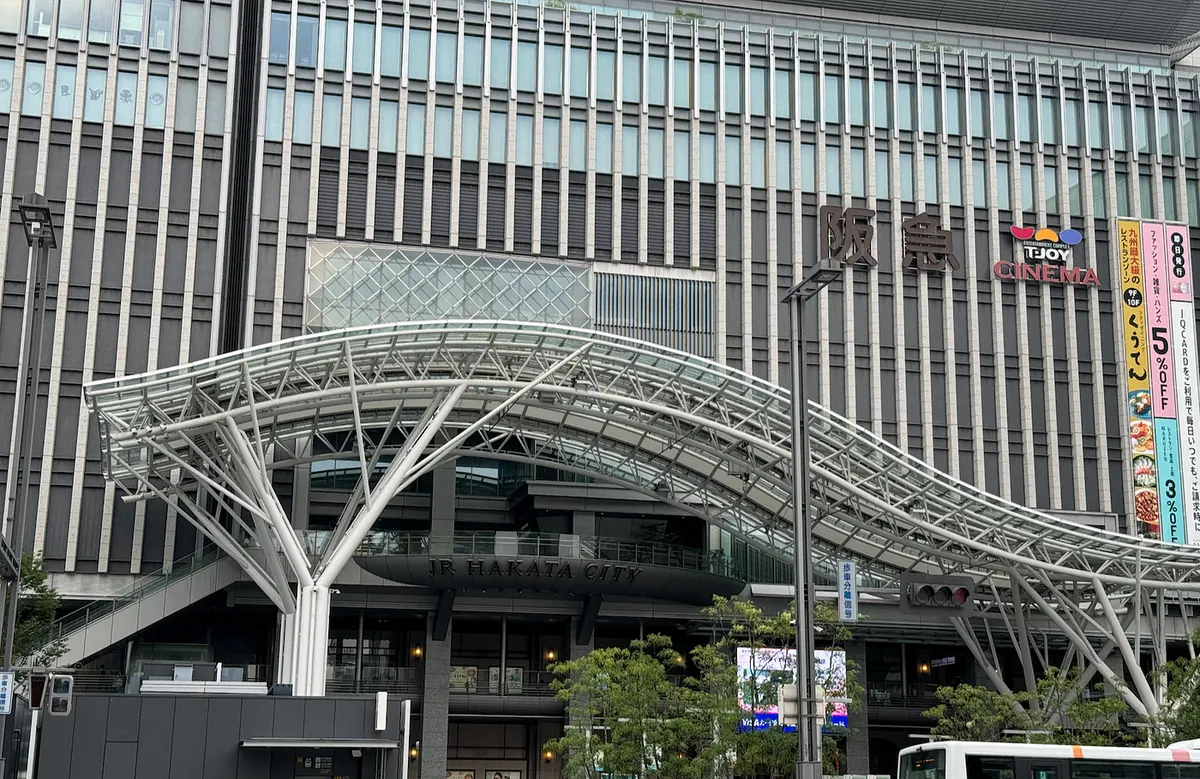
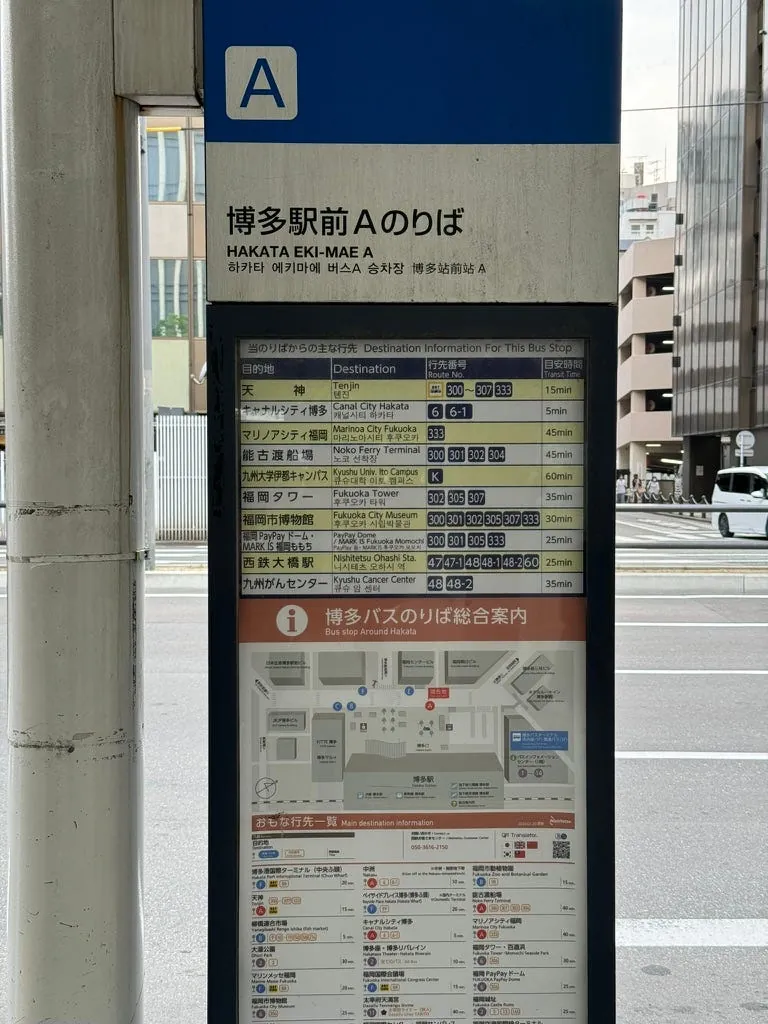
Around 17:30, take a bus from Hakata Station to PayPay Dome. Watch the baseball game at 18:00.
Fukuoka SoftBank Hawks Game @ Fukuoka PayPay Dome Stadium
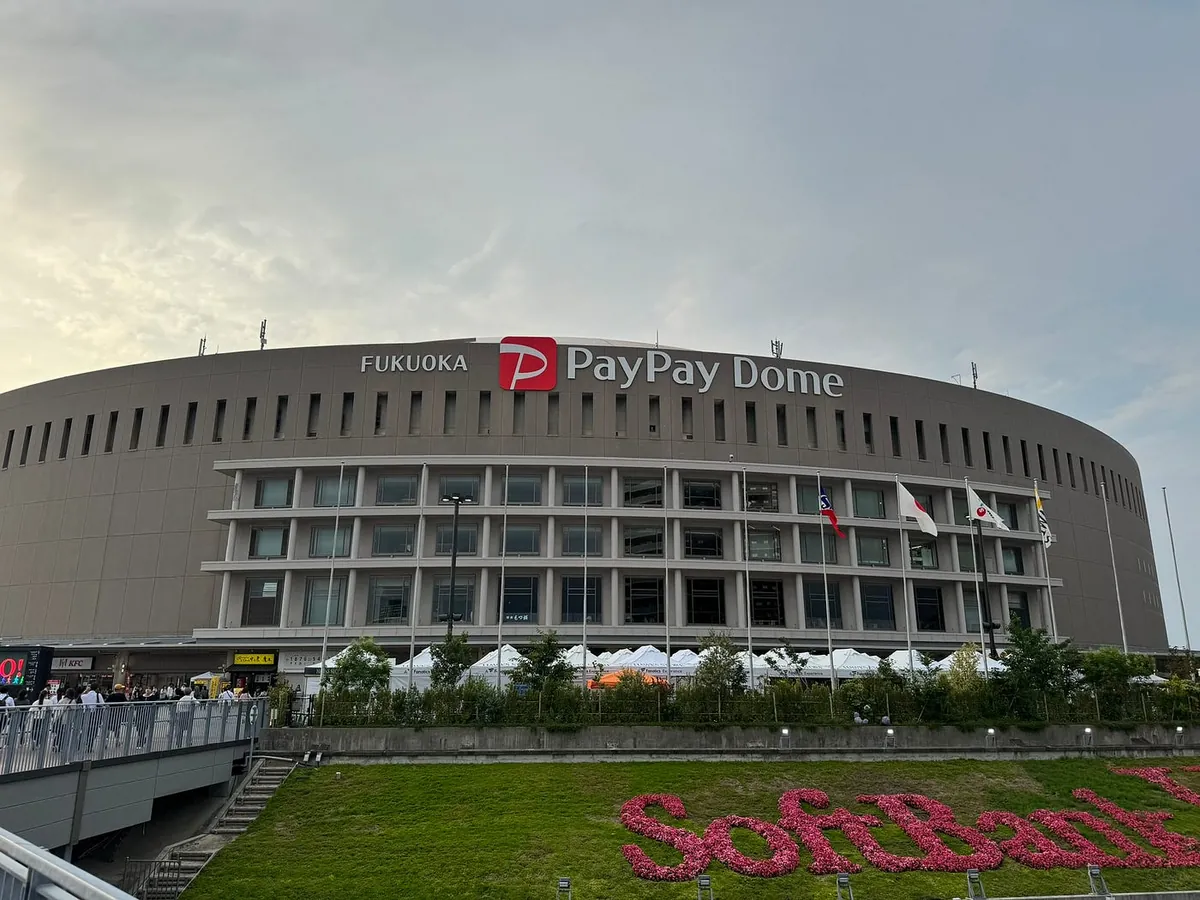
Today’s matchup: Fukuoka SoftBank Hawks vs. Tokyo Yakult Swallows
Some Entry Rules Reminder : Backpacks must be opened for security check; no outside food allowed, but one bottle of tea or drink is permitted; no outside alcohol allowed; alcohol and food are sold inside; if you leave and re-enter, remember to get a re-entry permit.
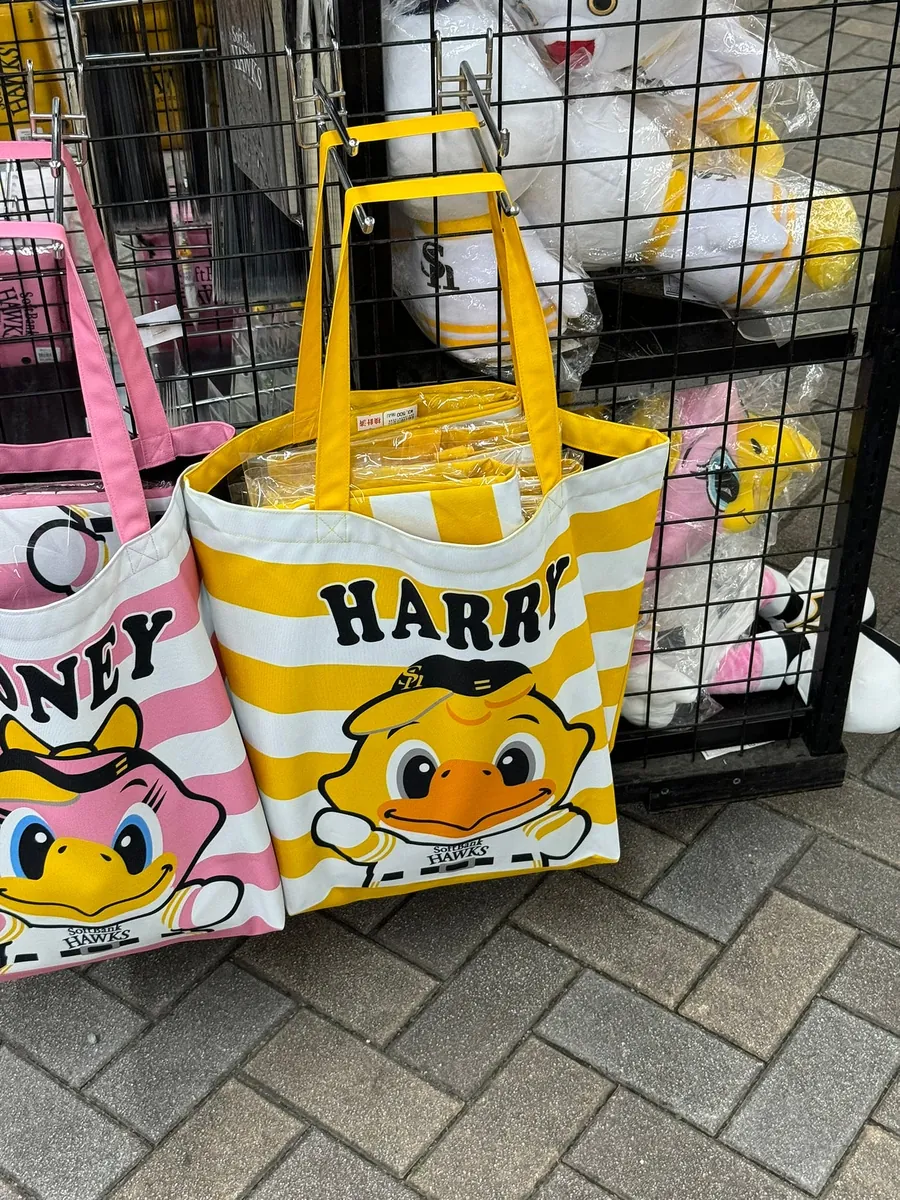
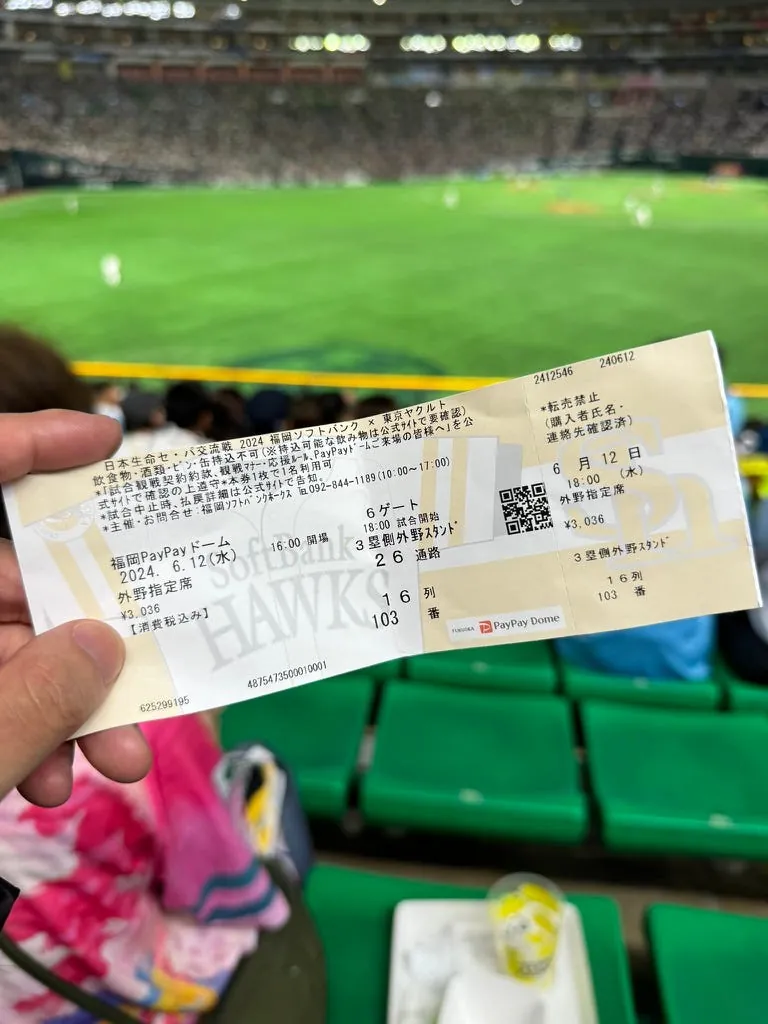
The mascot of the Fukuoka SoftBank Hawks is named Harry, so of course, I had to watch a game and show my support.
Last time I sat in the more expensive infield home plate area, this time I wanted to try the cheapest seats just to experience the atmosphere. I originally thought there would be free seating, but all seats were reserved. So I chose a spot on the last row by the edge on the outfield side for easy access (the outfield seats don’t have backrests, which makes it easier to get in and out).
I can’t help but admire the professional sports culture in Japan. On weekdays at 6:00 PM, the stadium with about 40,000 seats is almost full. When choosing seats, there are no entire empty rows or spots at the edges or corners.
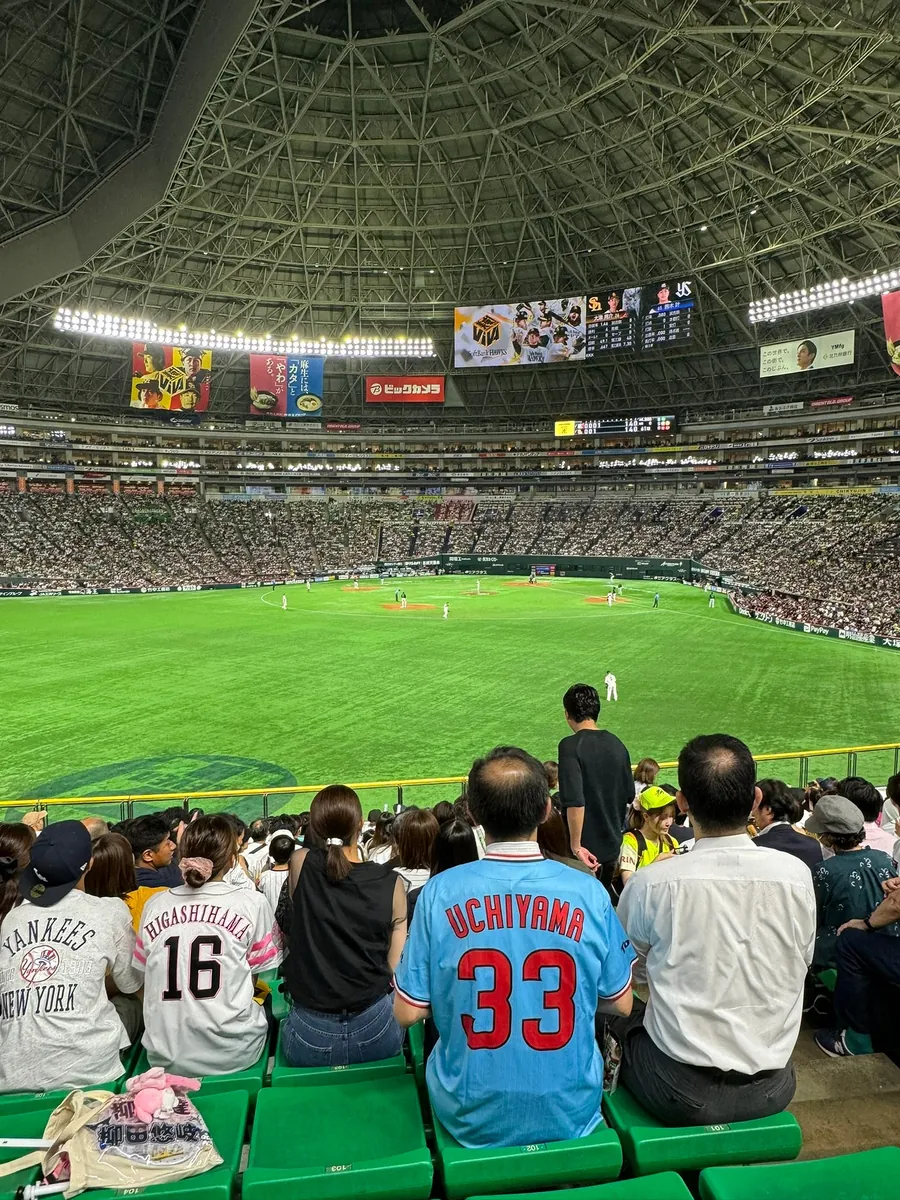
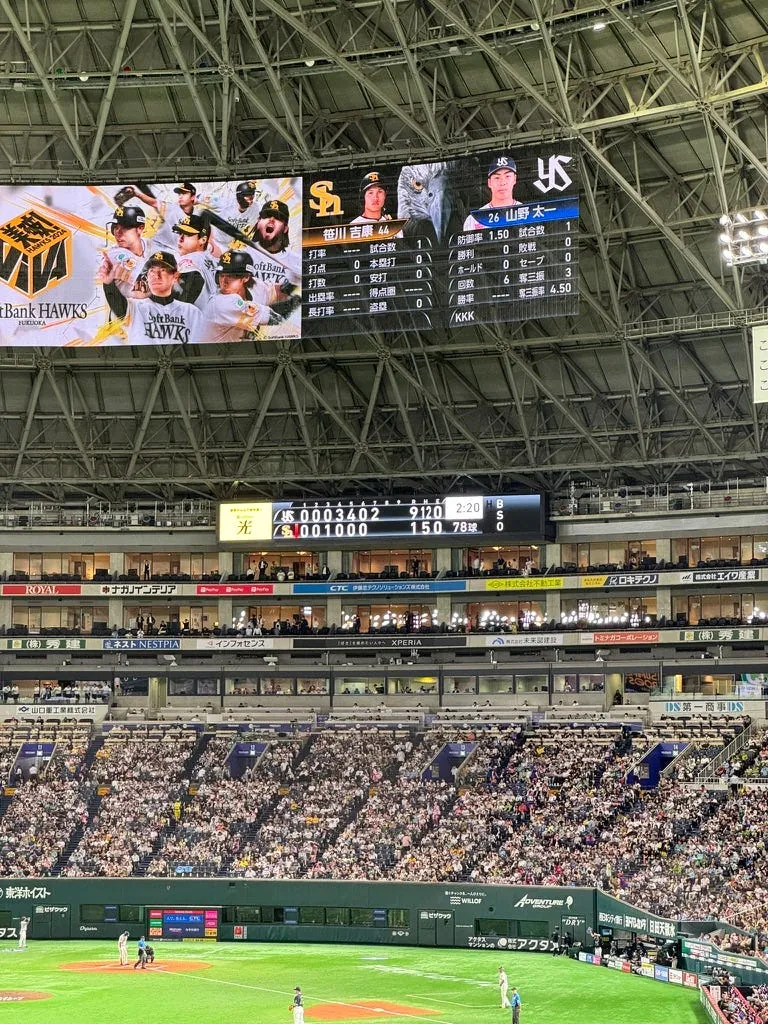
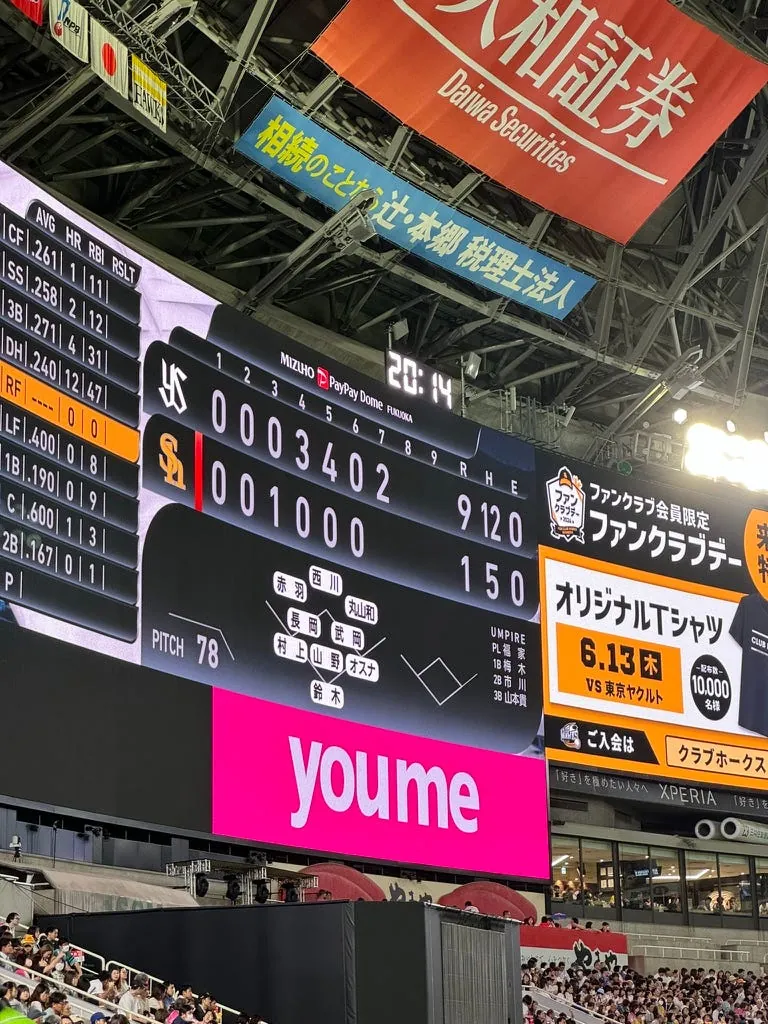
The view and distance are much worse compared to last time.
This time, we lost badly with a final score of 9:3. There were no fireworks, but we witnessed the cheering activities of both teams. (Fukuoka SoftBank Hawks’ balloon cheer and Tokyo Yakult Swallows’ umbrella dance cheer)
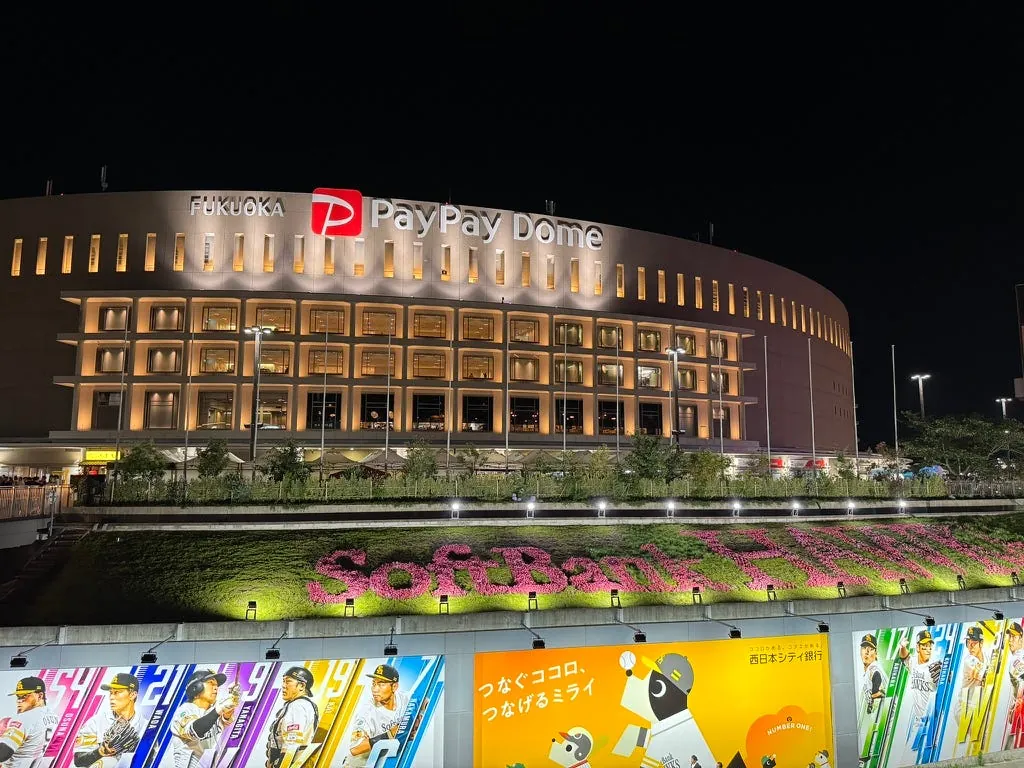
After about 7 innings, the score was already 9:1, and people started leaving one after another. I didn’t watch until the end.
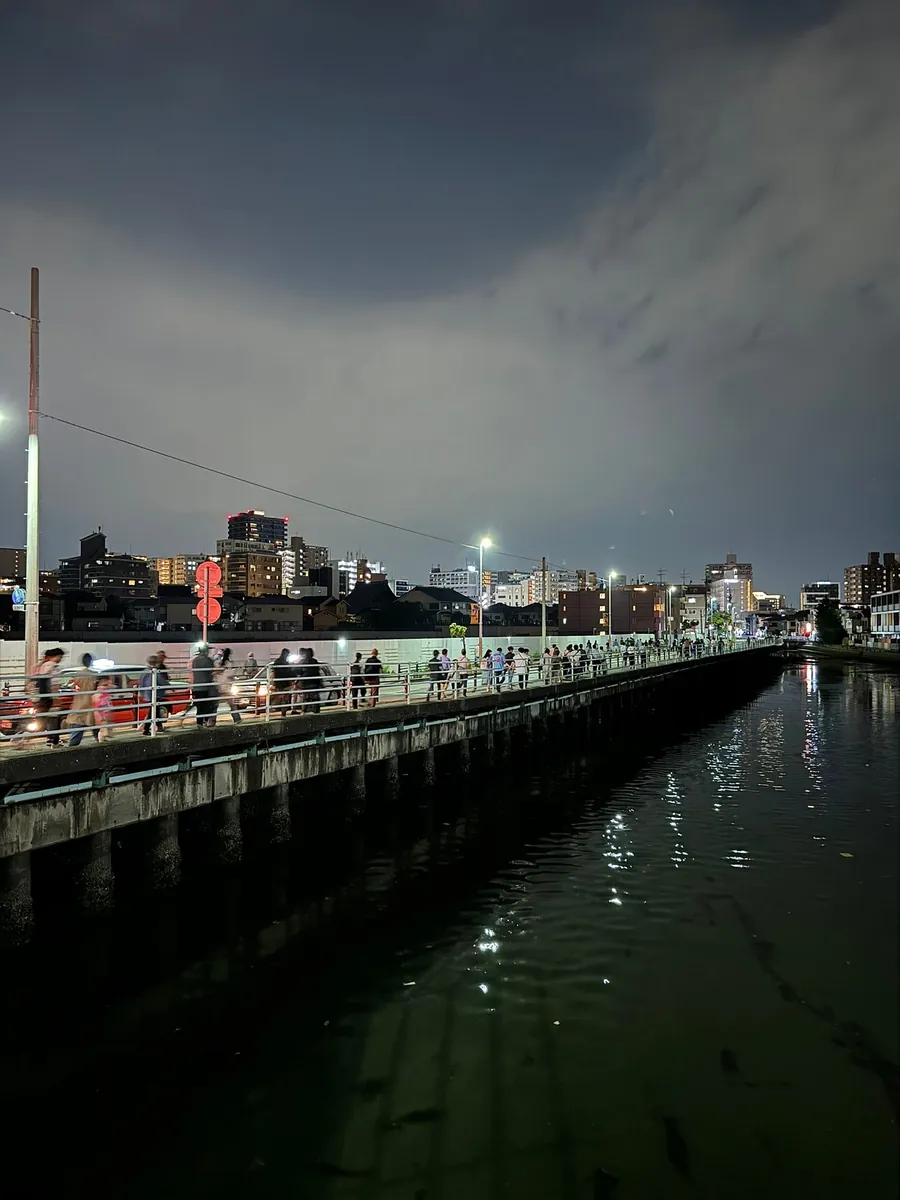
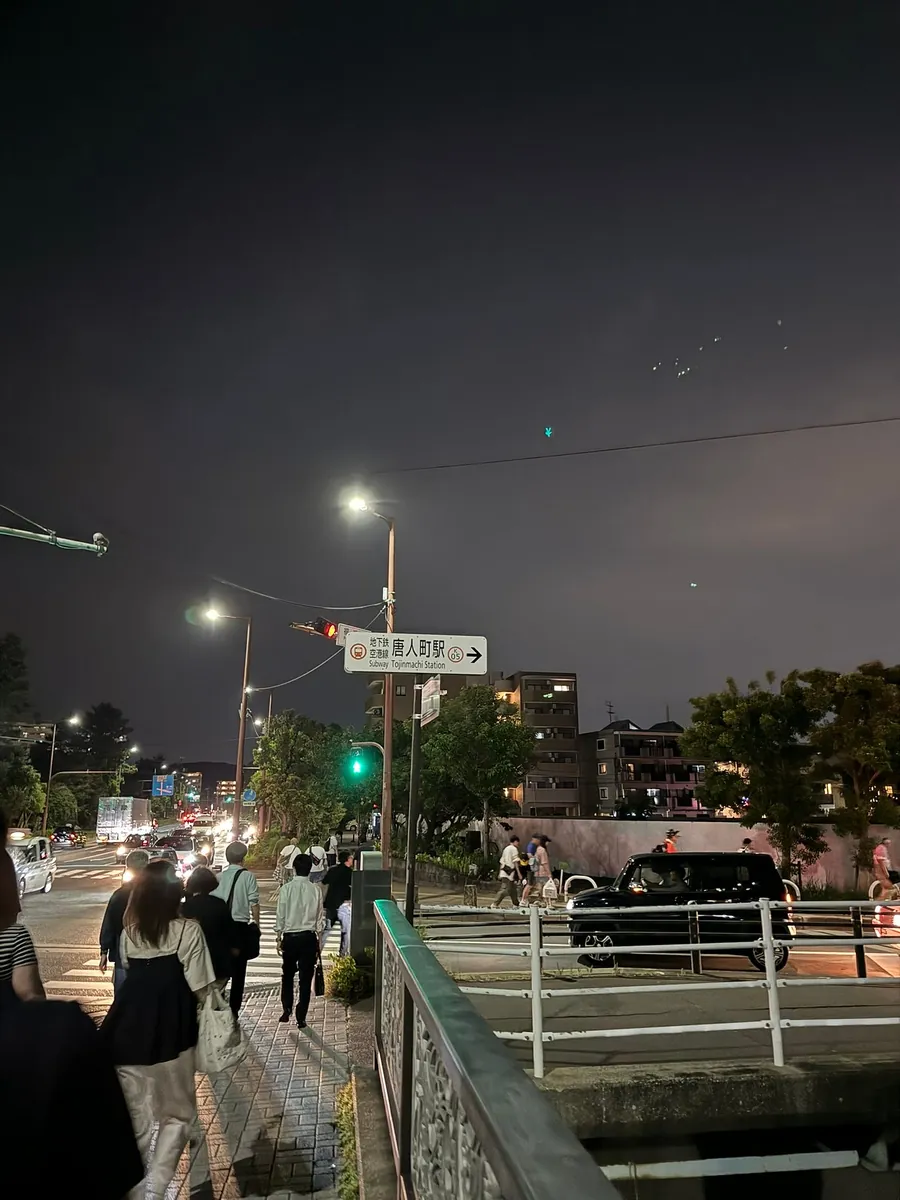
The bus stop was also crowded with people. Just like last time, I followed the crowd and walked back to the Tojinmachi subway station. (About 15 minutes)
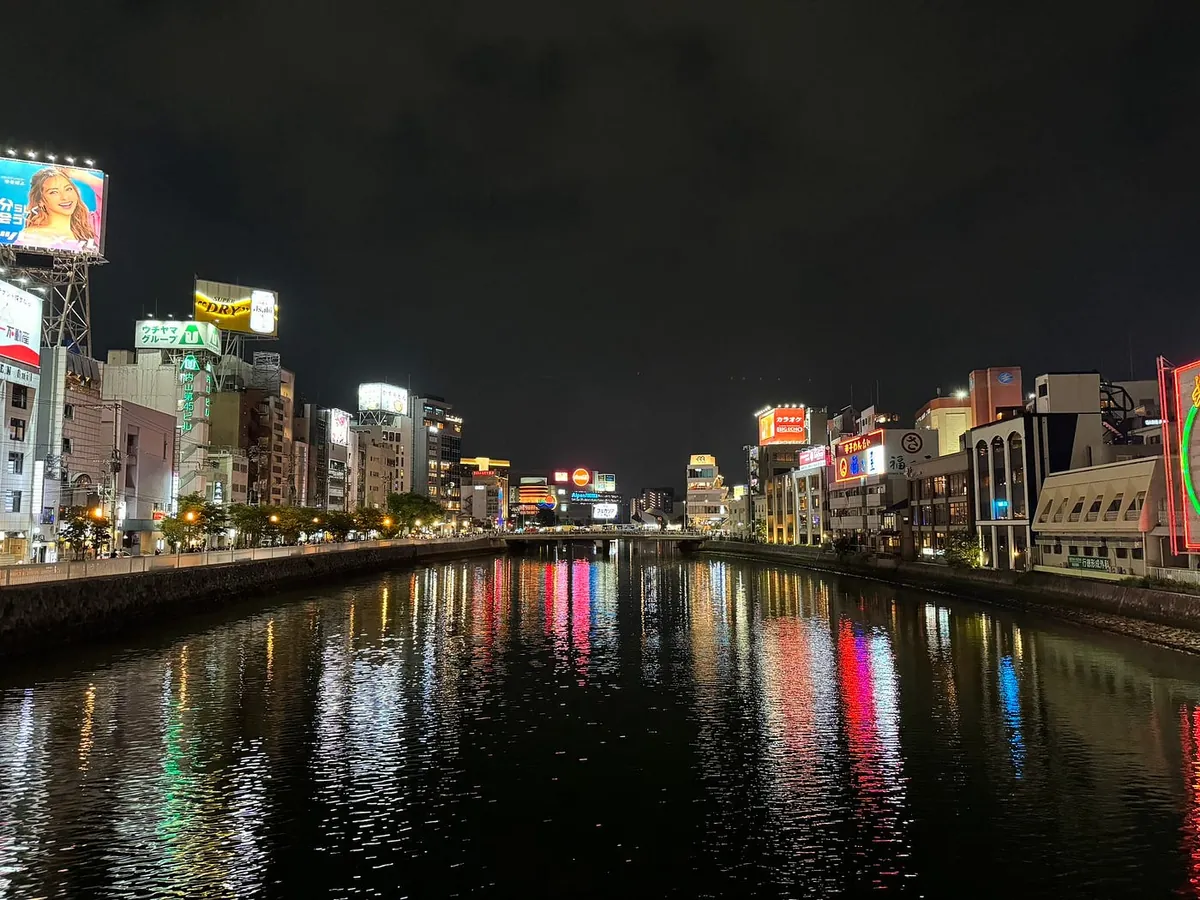
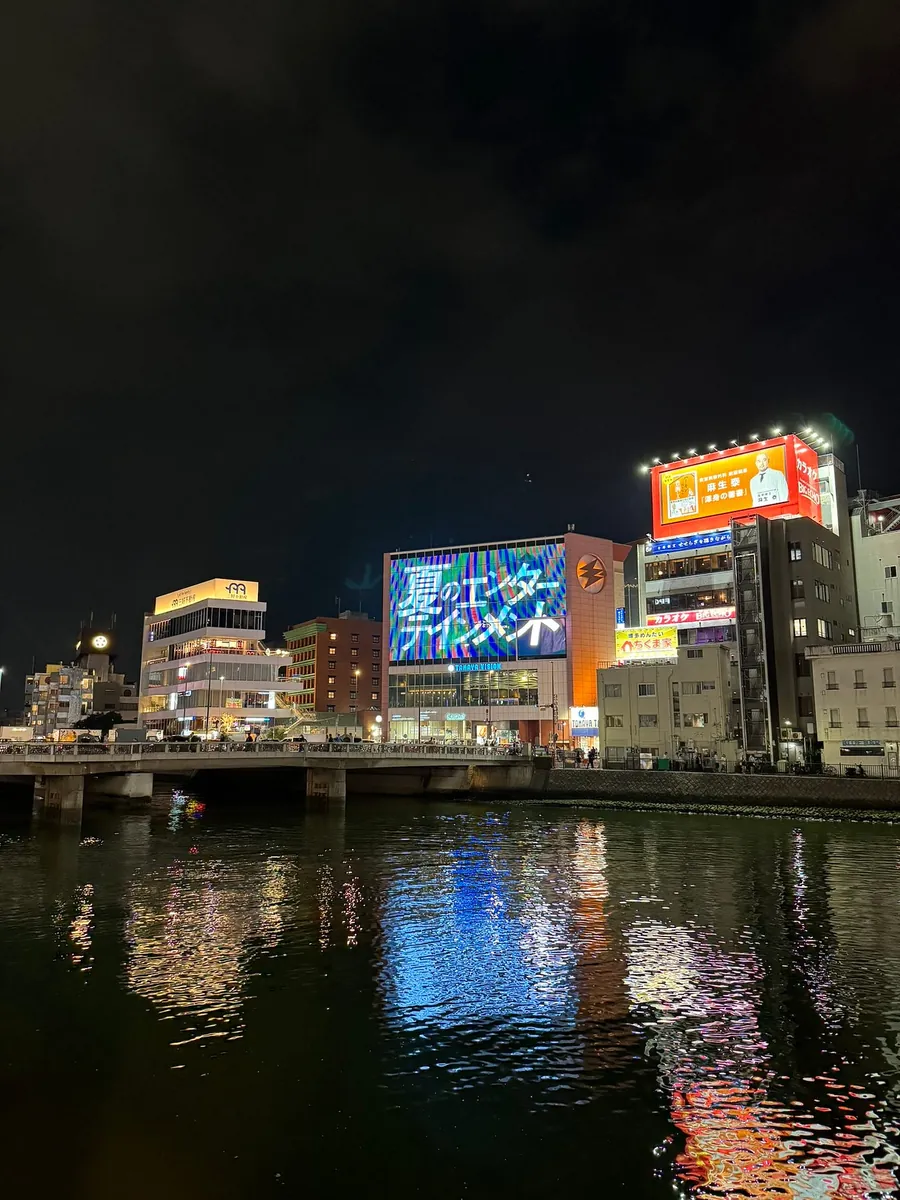
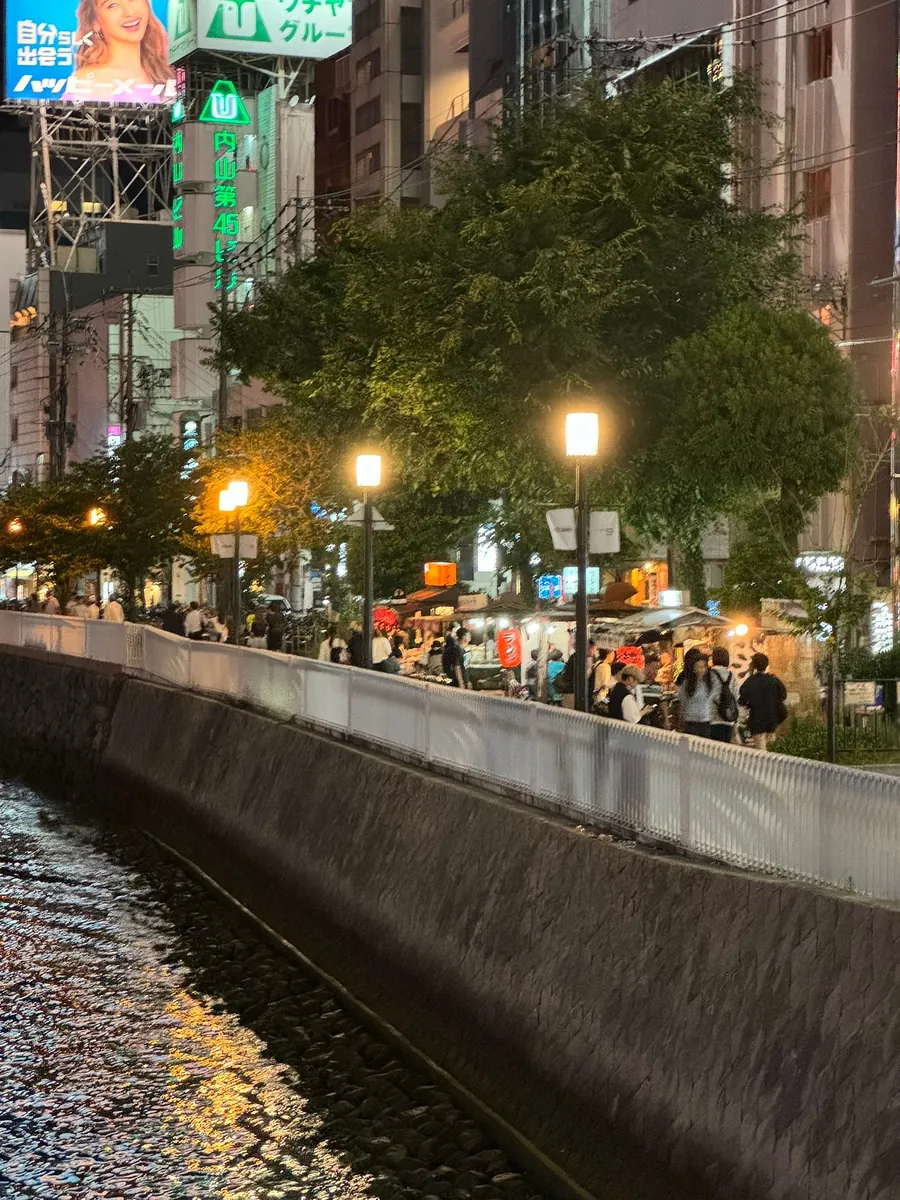
Before resting at the hotel, I deliberately stopped at Nakasu Yatai in the corridor to catch the last night view before leaving Fukuoka.
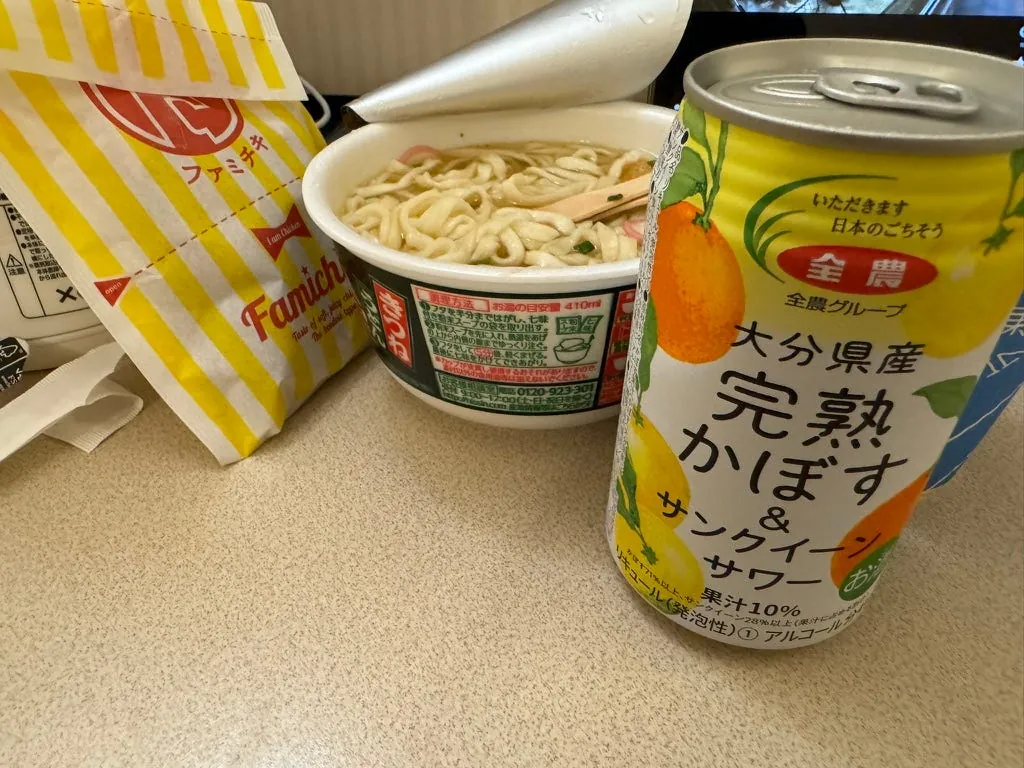
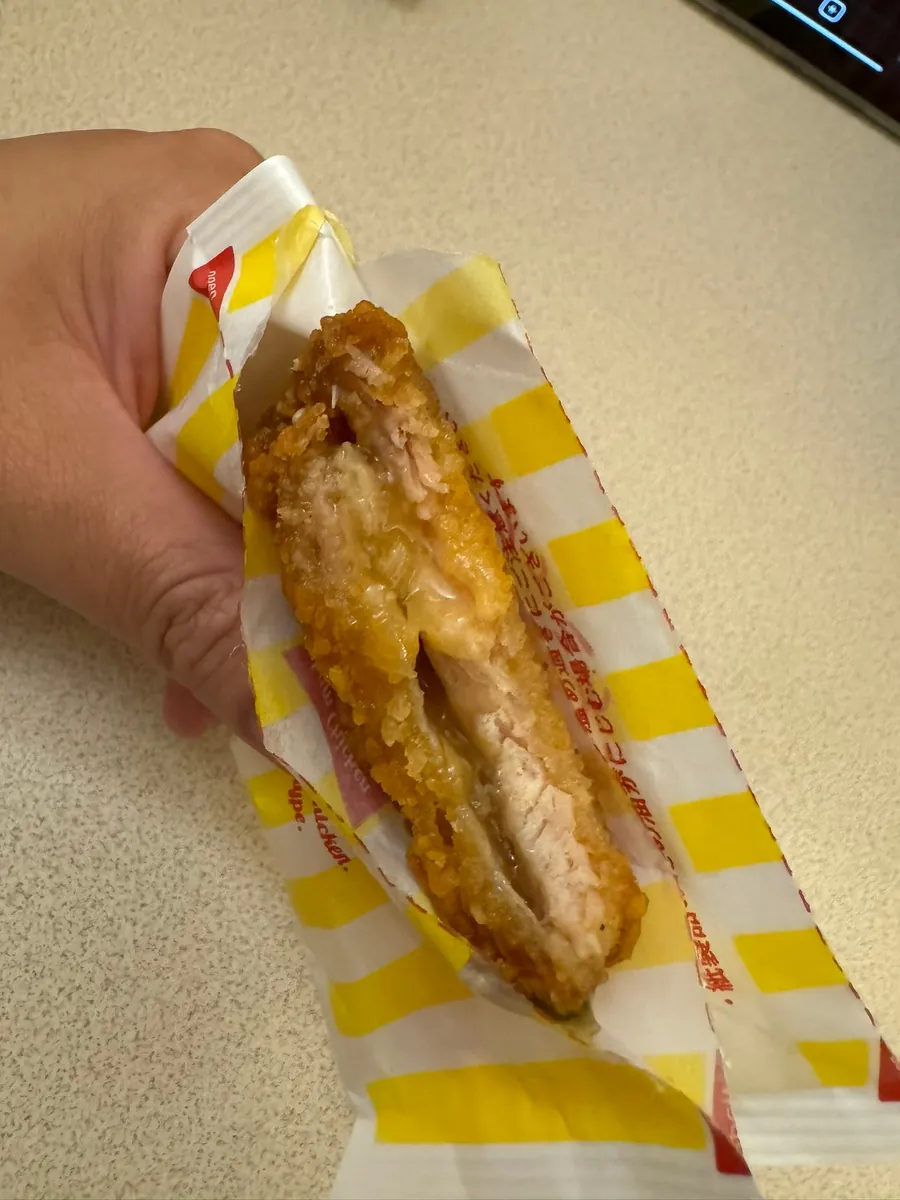
Late-night snack: Nissin Donbei Inari Udon (first time trying it after so many days), fruit wine from Oita, and convenience store fried chicken (juicy and delicious).
Day 11 Lalaport, Shopping in Hakata, Shopping in Tenjin, Return Trip
Unknowingly, it’s been 11 days abroad, and I’ve started to miss Taiwan’s delicious food. With a 9:00 PM flight, there’s still plenty of time to wander around.
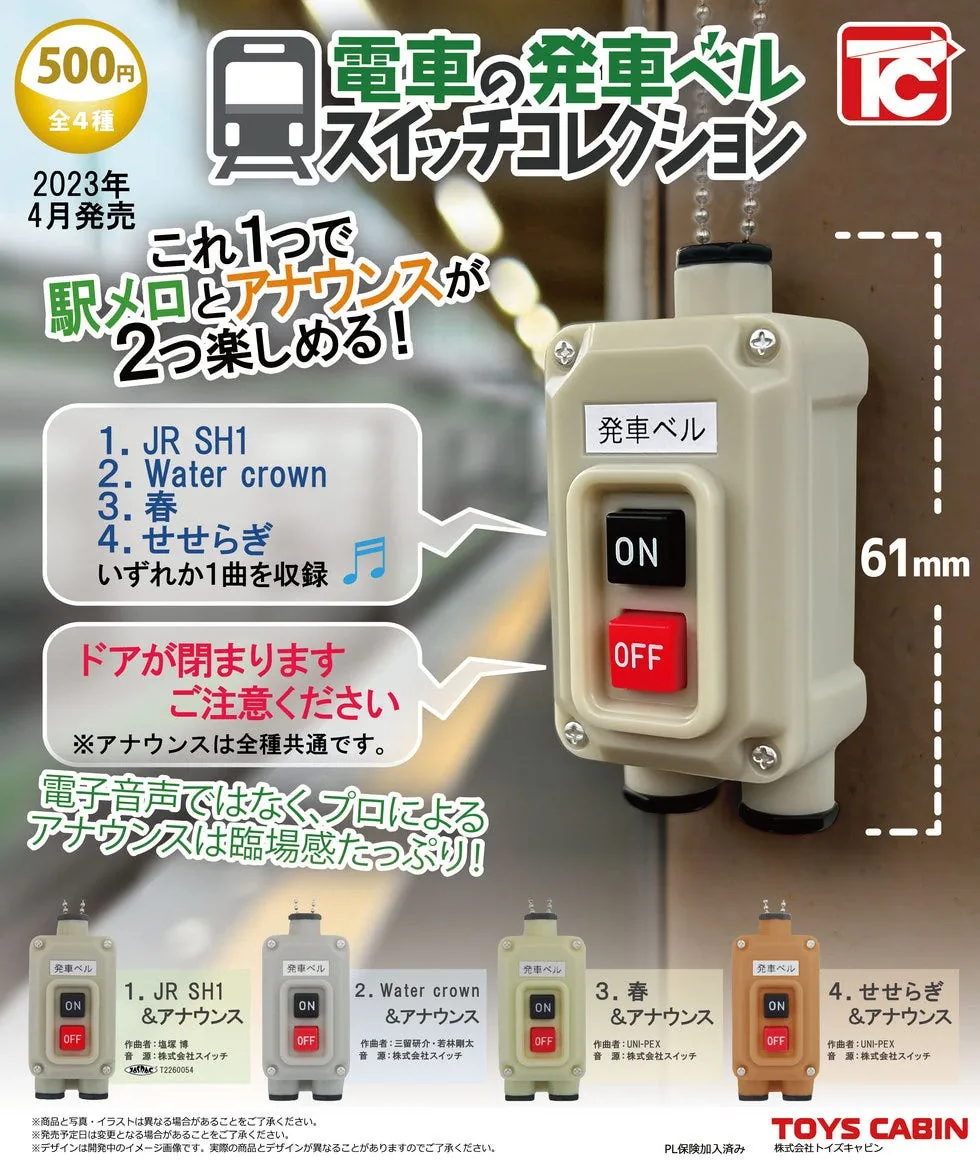
https://toyscabin.com/product/20221201_546.php
Most of the main souvenirs have been bought and packed. Today is just a casual stroll to find the tram gacha. (In the end, none were found. According to the stores provided by the manufacturer, all in the city are sold out.)
Lalaport
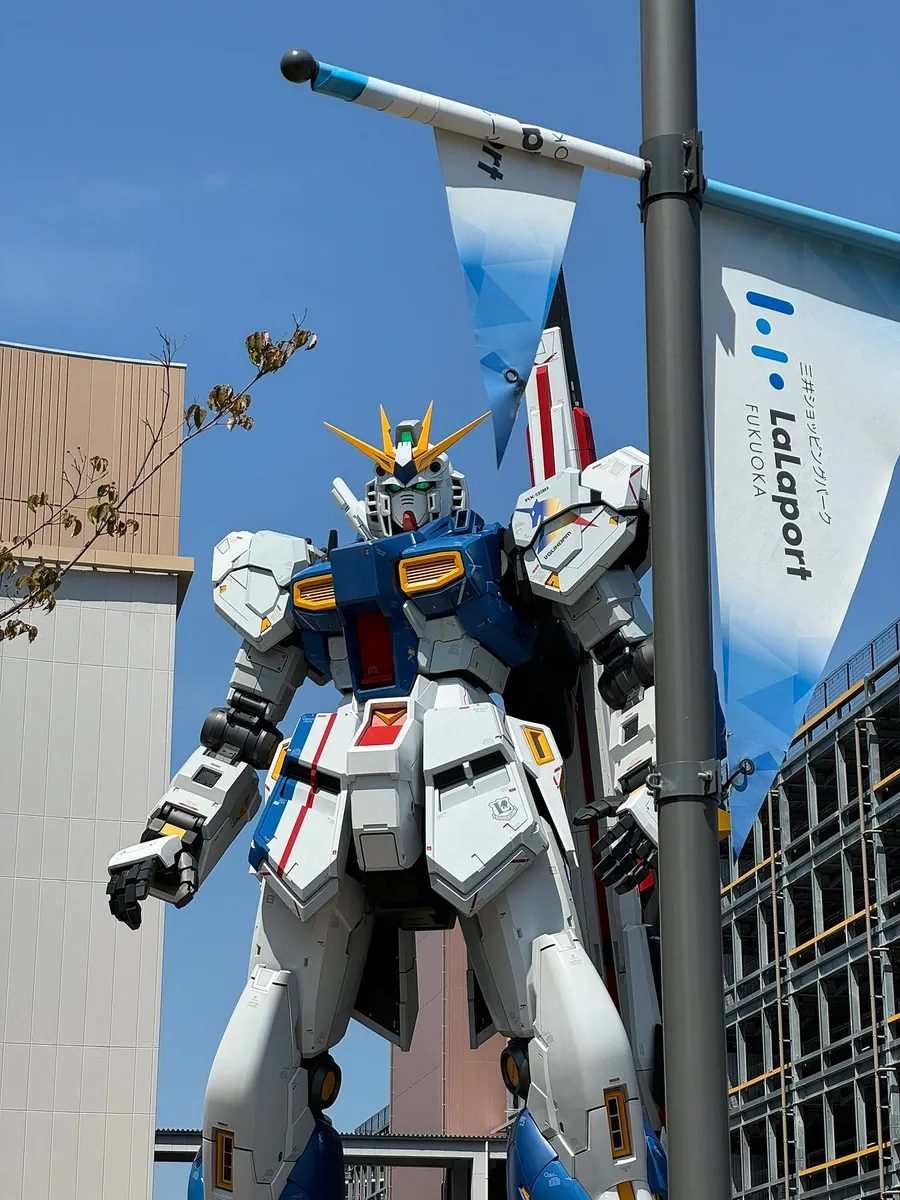
No plans in the morning, so I went to browse Lalaport (opens at 10 AM).
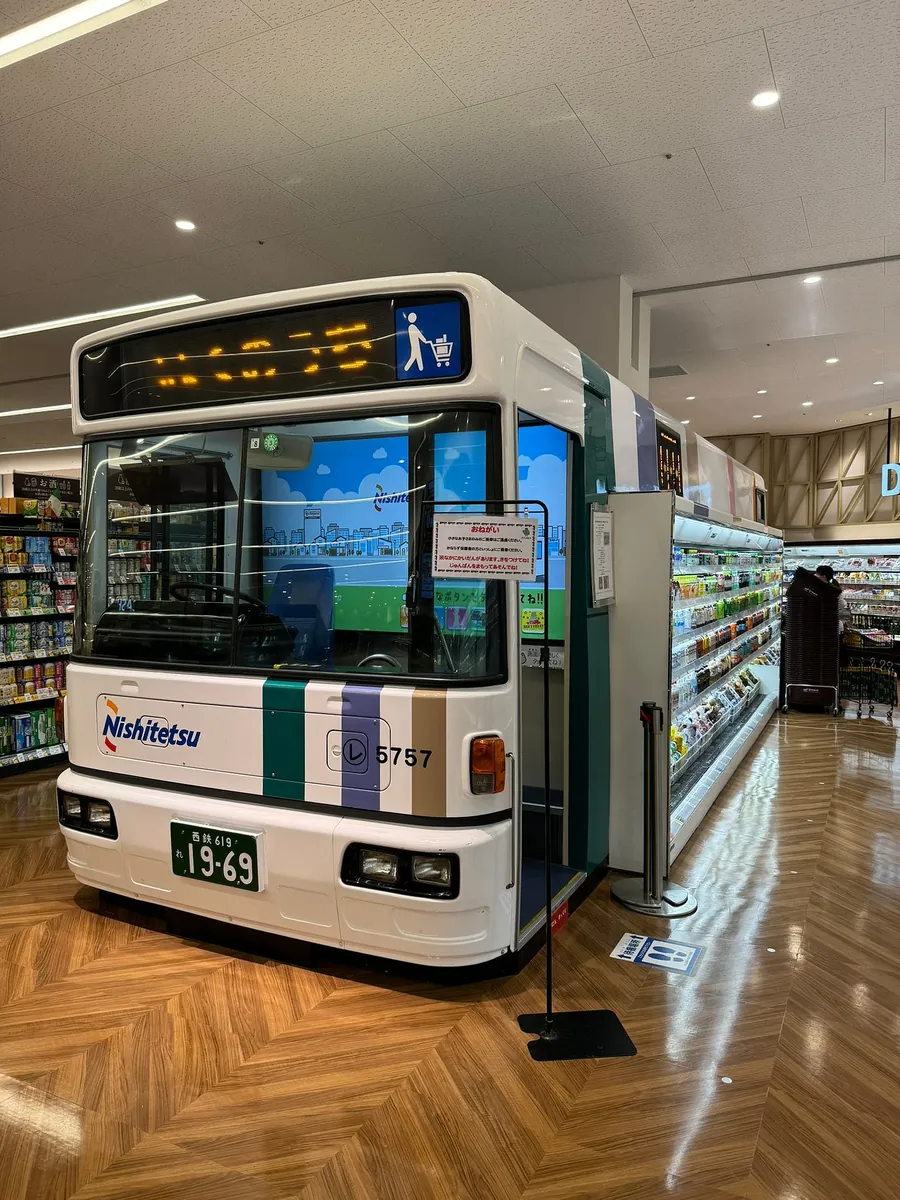
On the first-floor supermarket, there is a drink cooler made from a Nishitetsu bus, which is really cool XD.
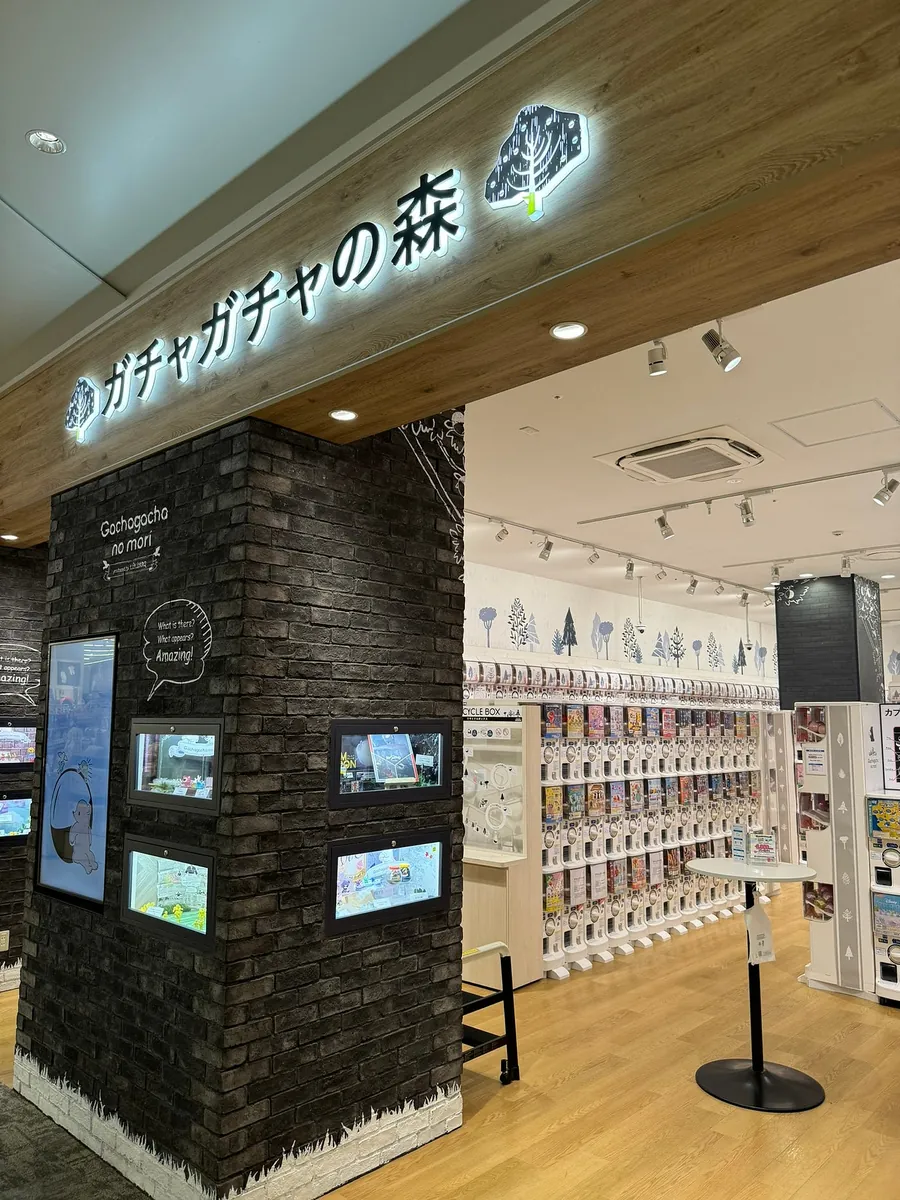
Mainly came to the third floor ガチャガチャの森 and the Pon! area under the first-floor escalator to see if there were any gacha capsules I was looking for. (None)
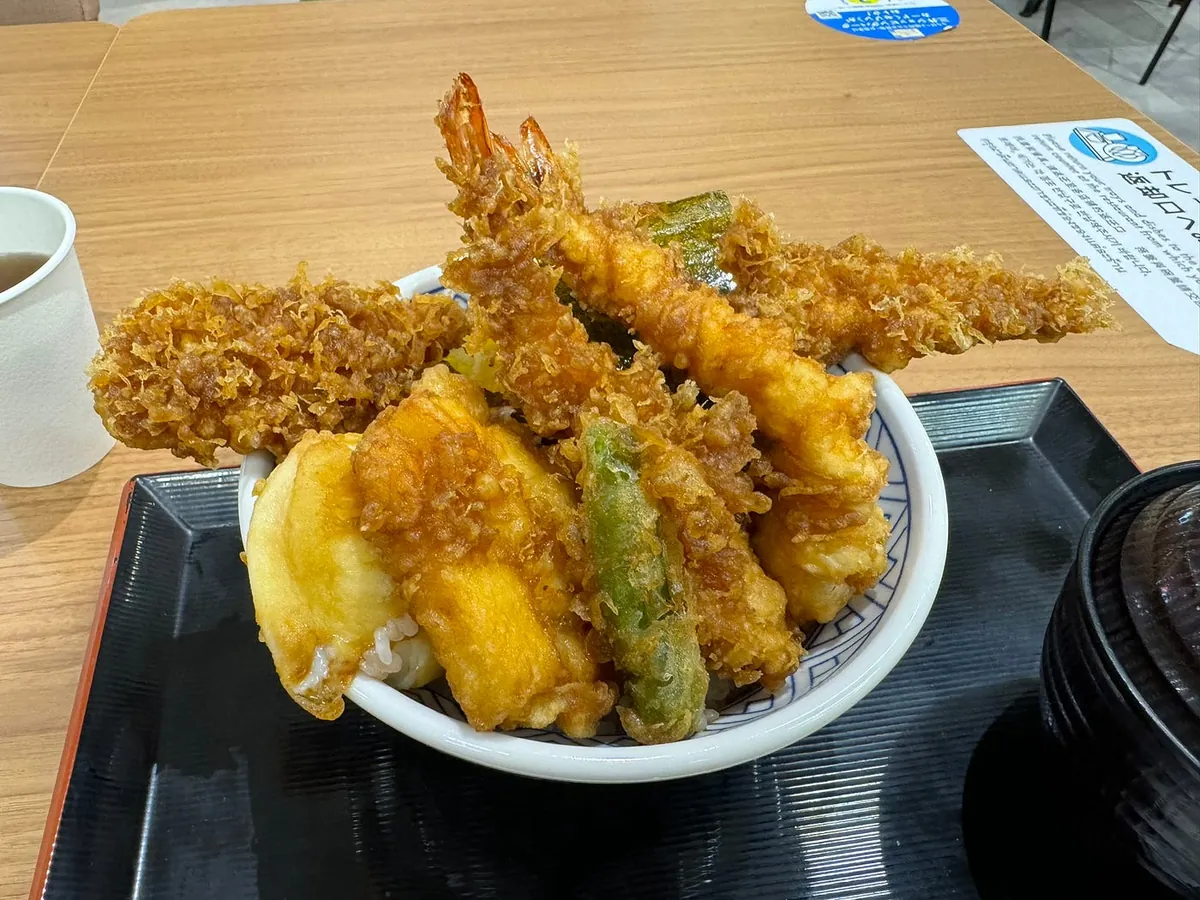
As it was almost 11 o’clock and I hadn’t had breakfast, I ate a seafood tempura rice bowl at the food court on the third floor (found it quite salty).
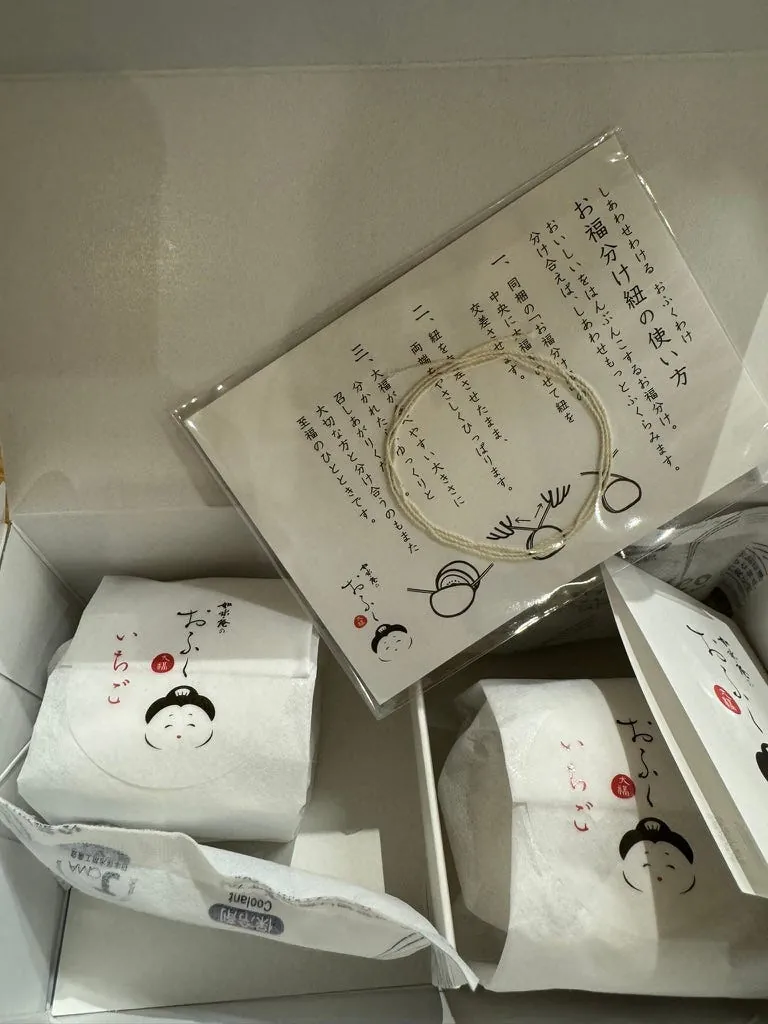
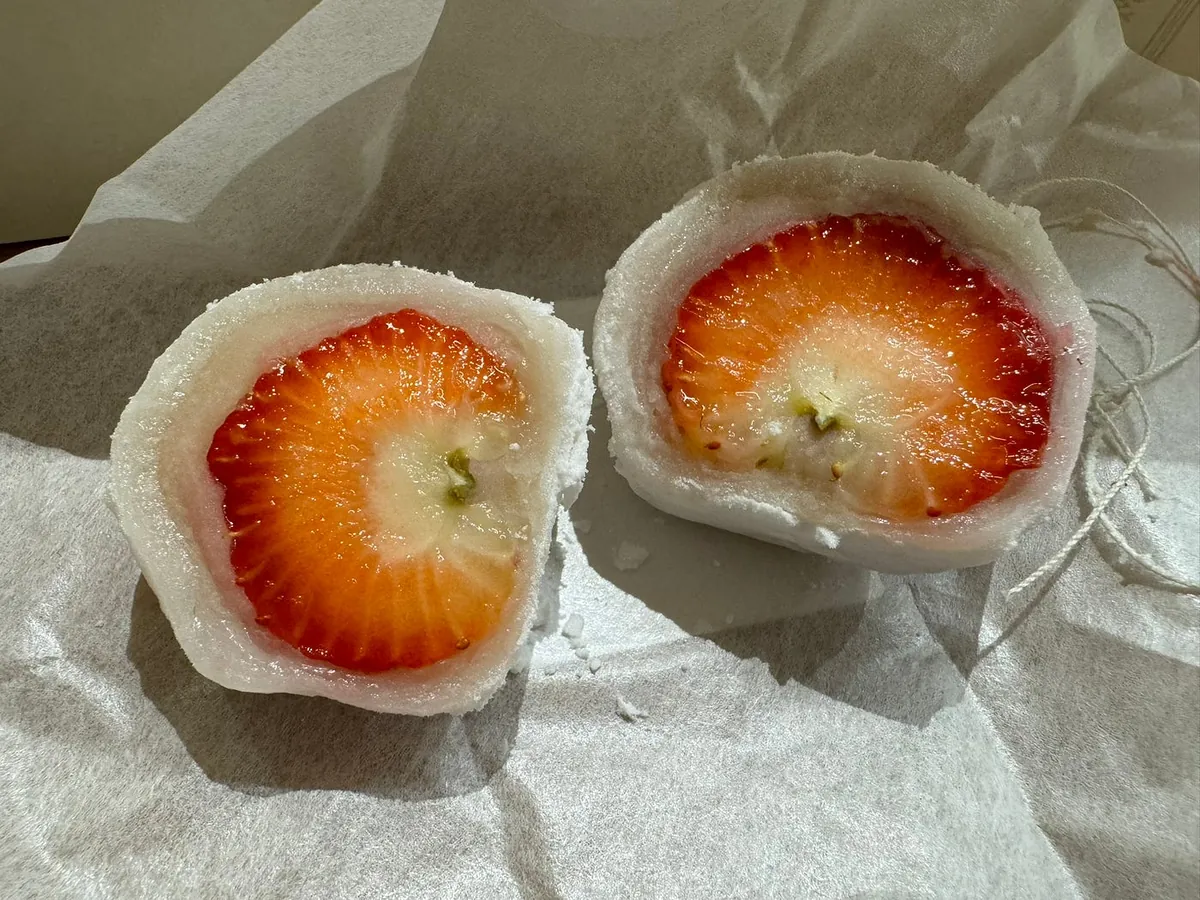
Then go back to the first floor to buy Rusuian’s strawberry daifuku to refresh your palate.
Couldn’t find the gacha machine I wanted, so I left Lalaport and returned to Hakata Station. Pon! is also inside 1010, but still no luck.
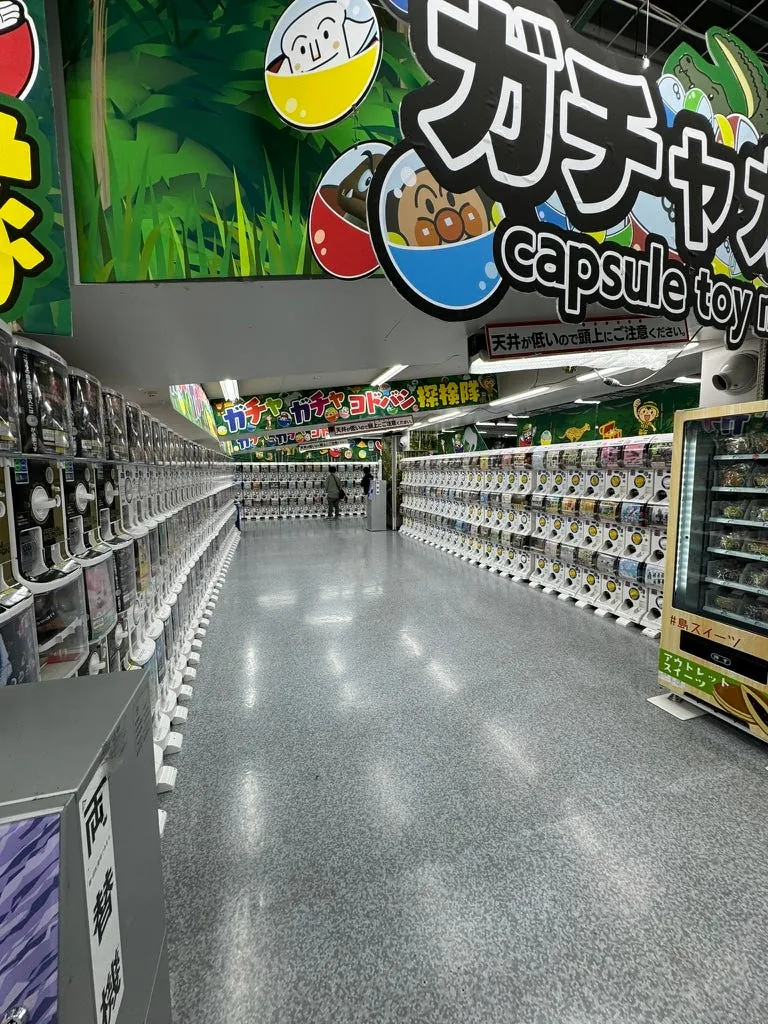
I couldn’t find it even after looking in the gacha capsule toy area at Hakata Yodobashi.
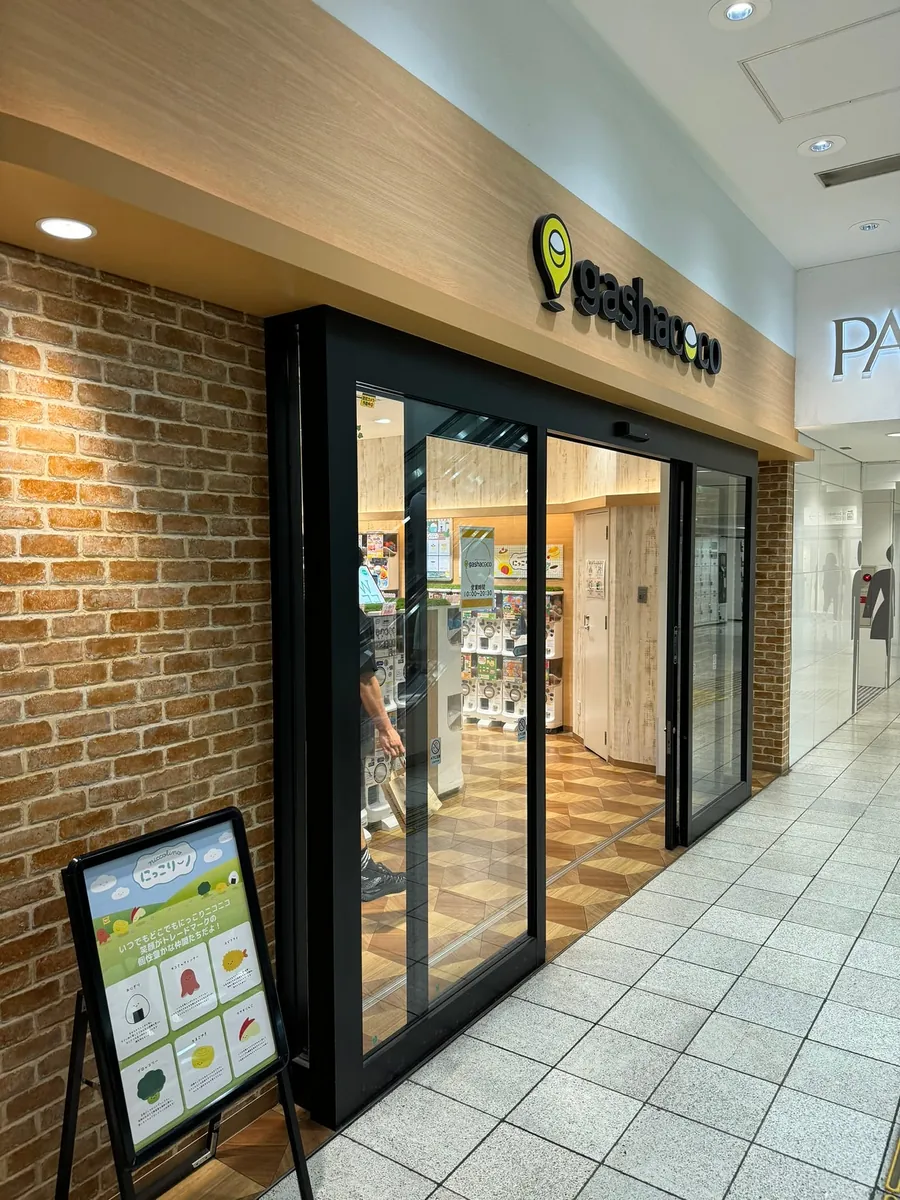
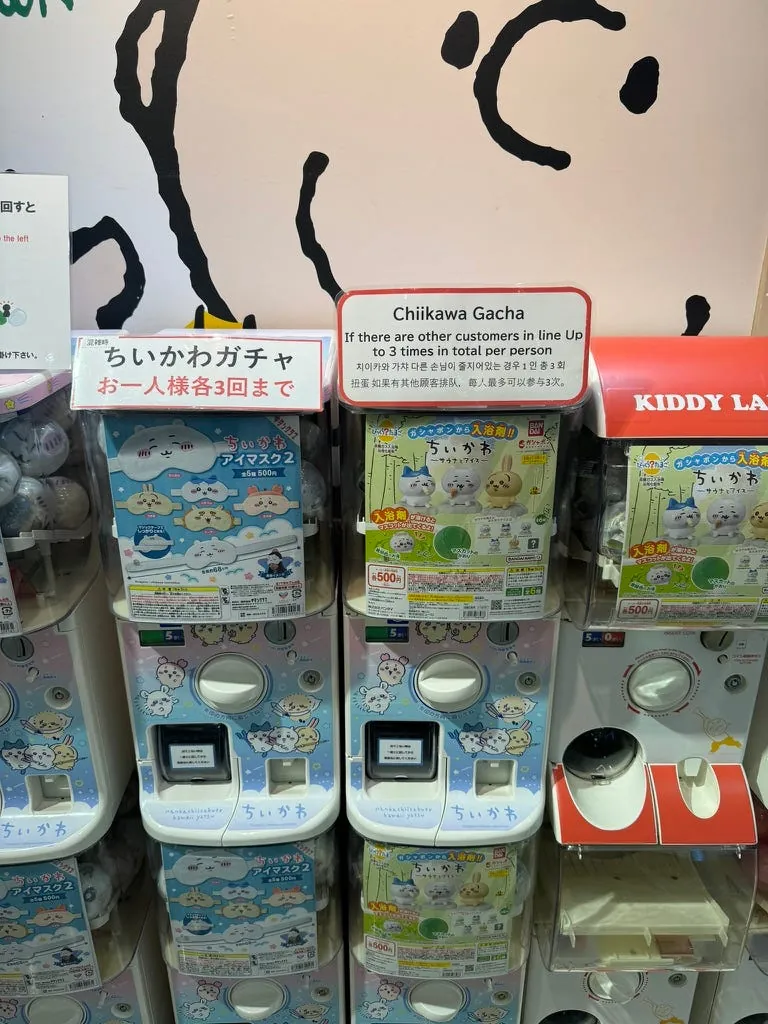
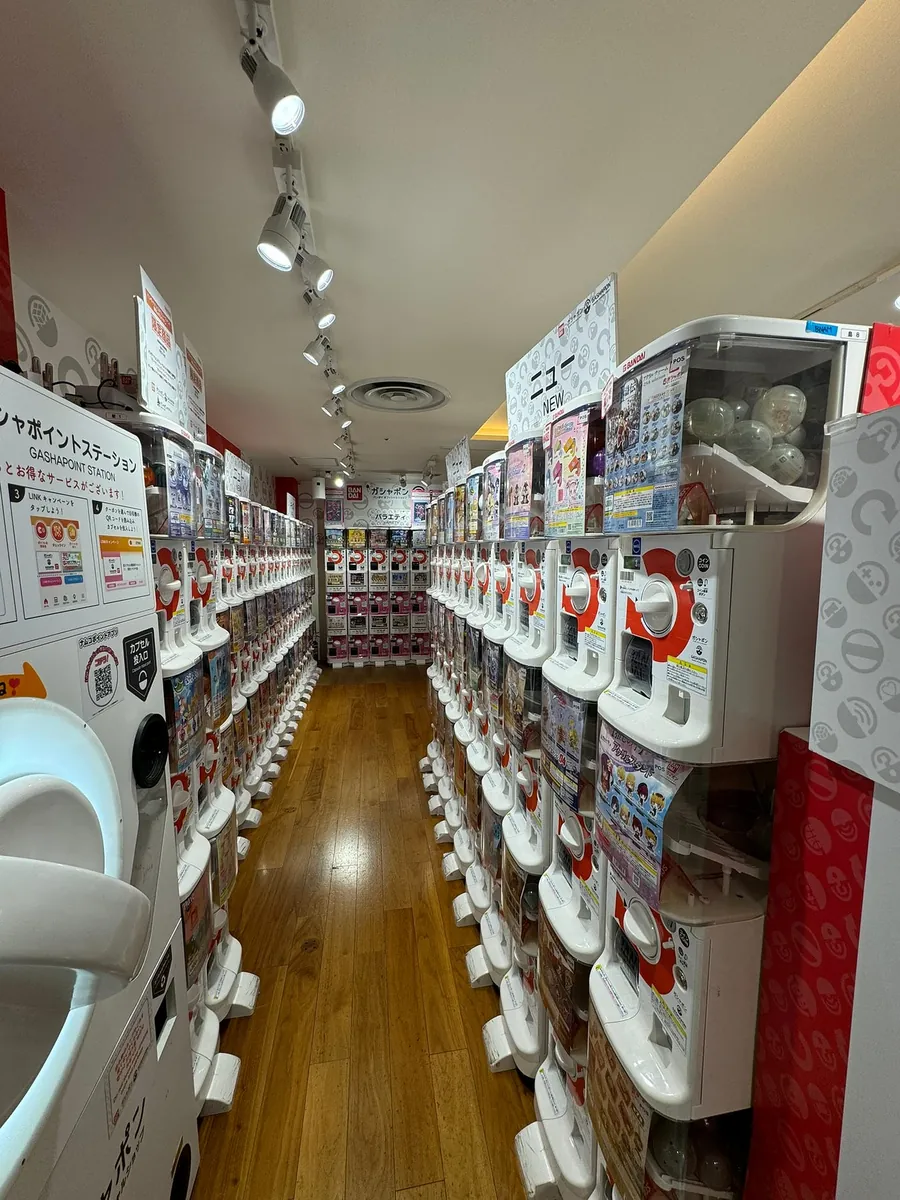
After failing in Hakata, I returned to the capsule toy shop in the Tenjin area to search, but still had no luck.
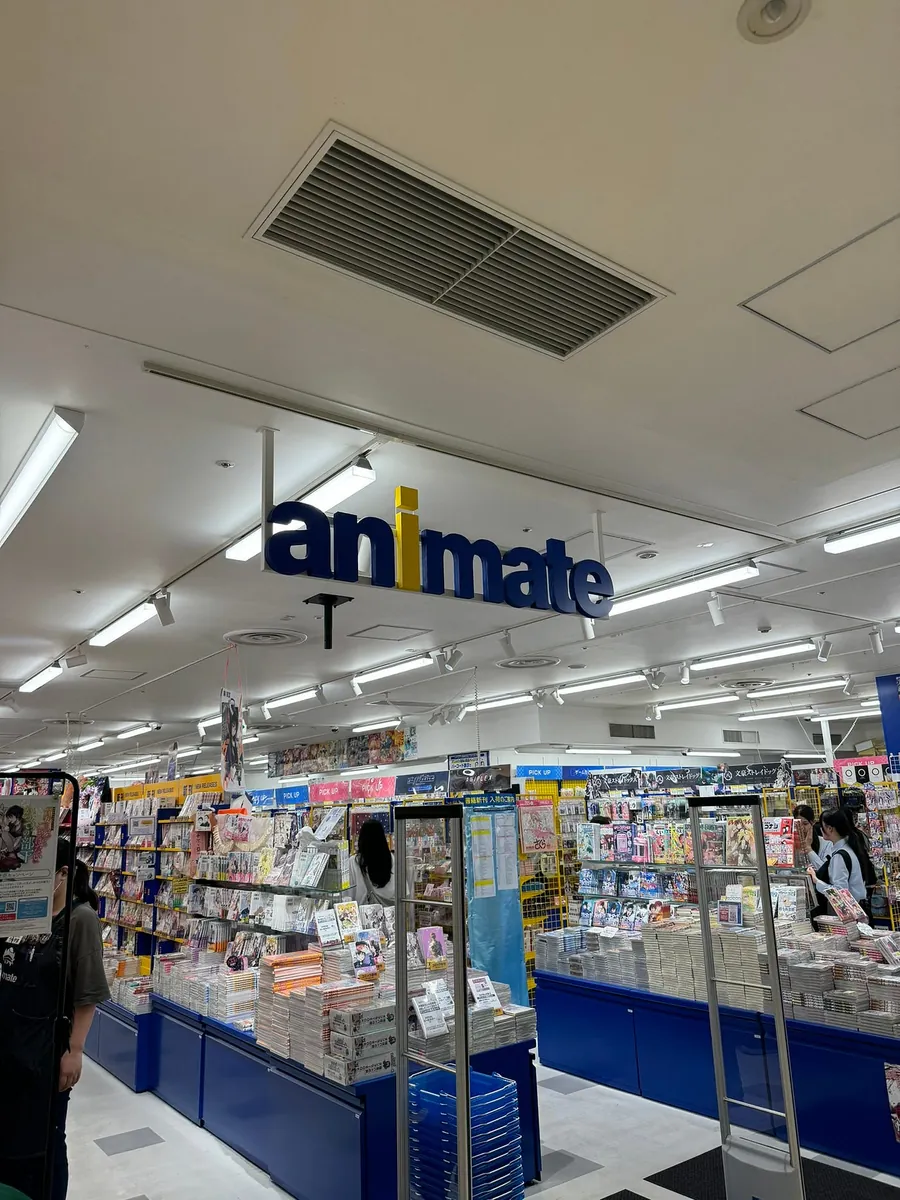
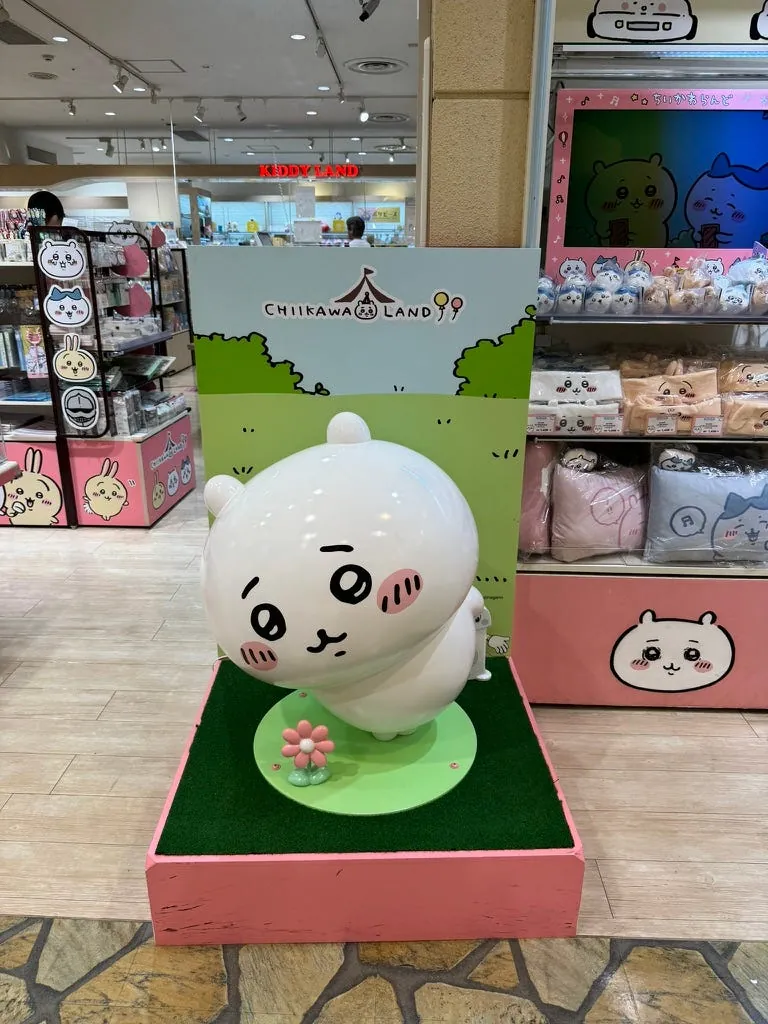
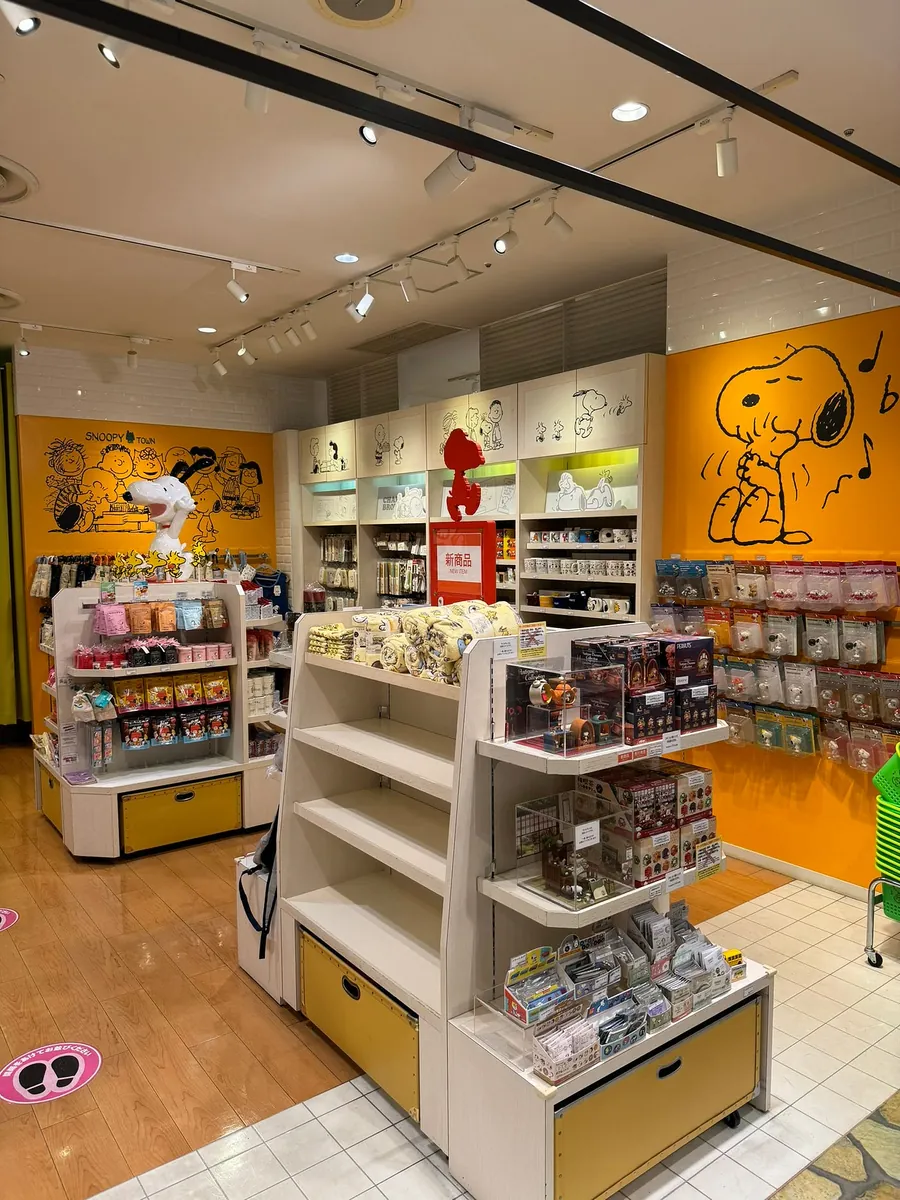
Finally gave up and went to browse Animate and Kiddy Land upstairs (they have lots of IP merchandise).
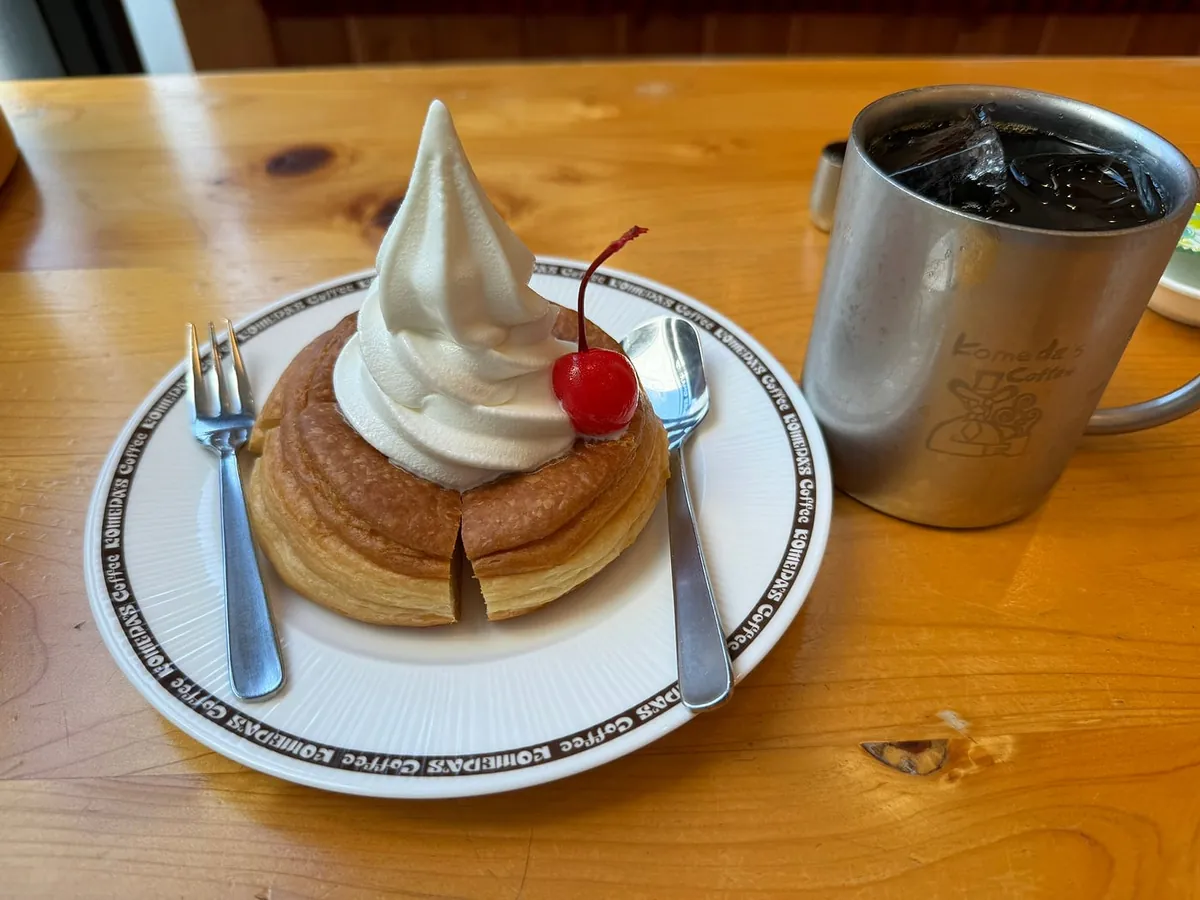
Around 4:00 PM, the trip was coming to an end. Finally, I sat at Komeda Coffee to enjoy some dessert and coffee while resting.
Around 17:00, I went back to the hotel to pick up my luggage and slowly headed to Fukuoka Airport. I thought the subway would be crowded after 5 PM, but it was actually not very busy.
Walking from Tenjin Minami to Tenjin is quite far, and it takes about 15 minutes with luggage.
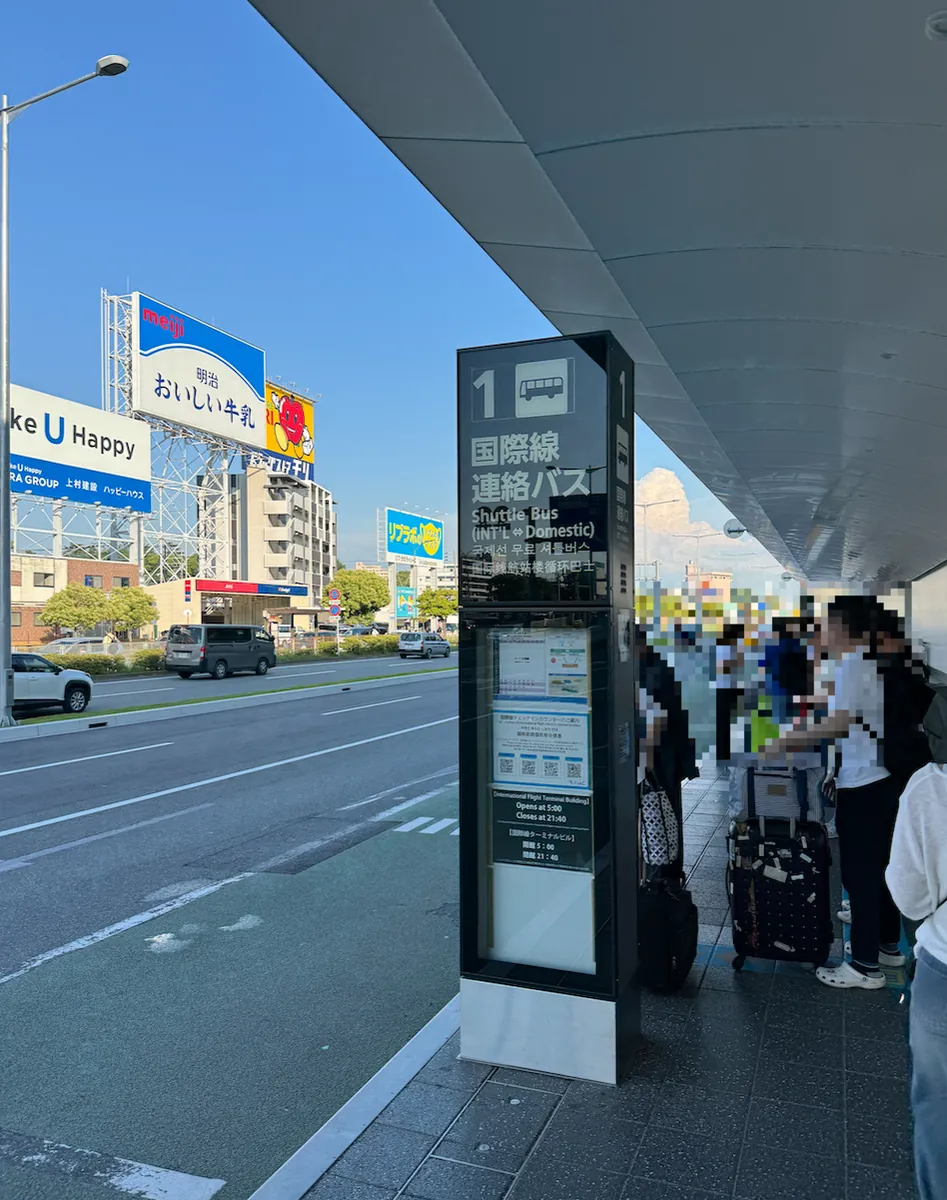
Take the Airport Line to Fukuoka Airport Station (Domestic Terminal), then transfer to the free airport shuttle bus to the International Terminal.
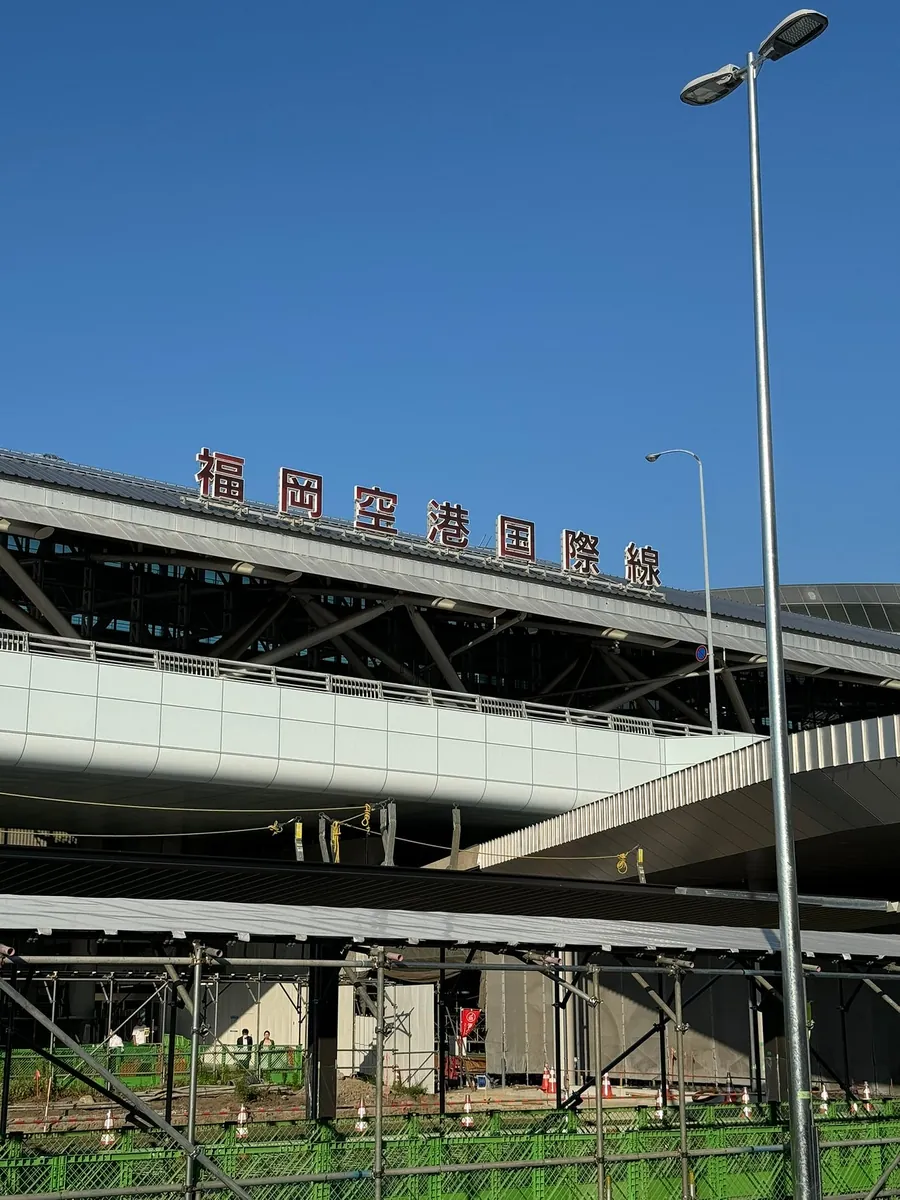
The shuttle bus runs frequently, about every 5–10 minutes, and the ride takes around 10 minutes. After getting off, you still need to walk to the 3rd floor departure hall. Conservatively, it takes an additional 30 minutes from the airport subway line to actually reach the international terminal.
Fukuoka Airport is under renovation, making it a bit chaotic.
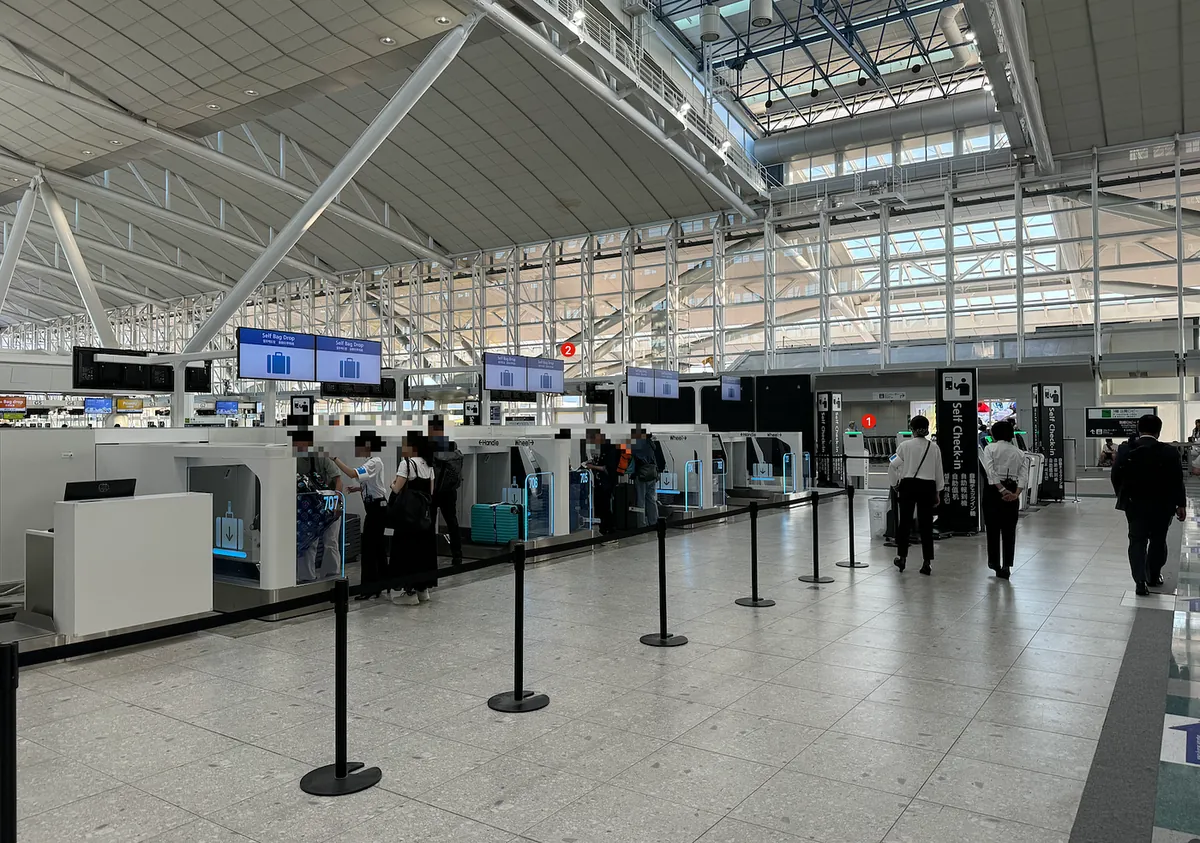
It was still too early to go to the airport, and the counters were not open yet. The ground staff guided us to first use 1 self check-in and then 2 self baggage drop-off. They assisted us along the way; the baggage drop-off was completed quickly (this time only 17 Kg).
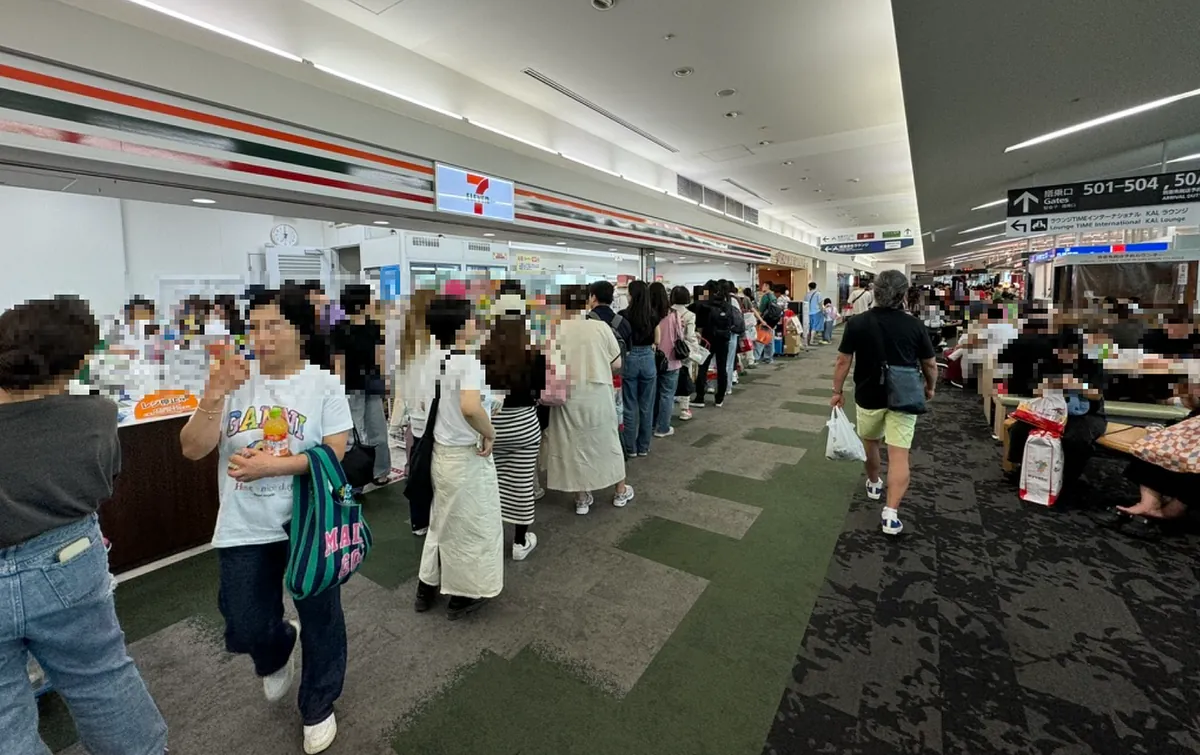
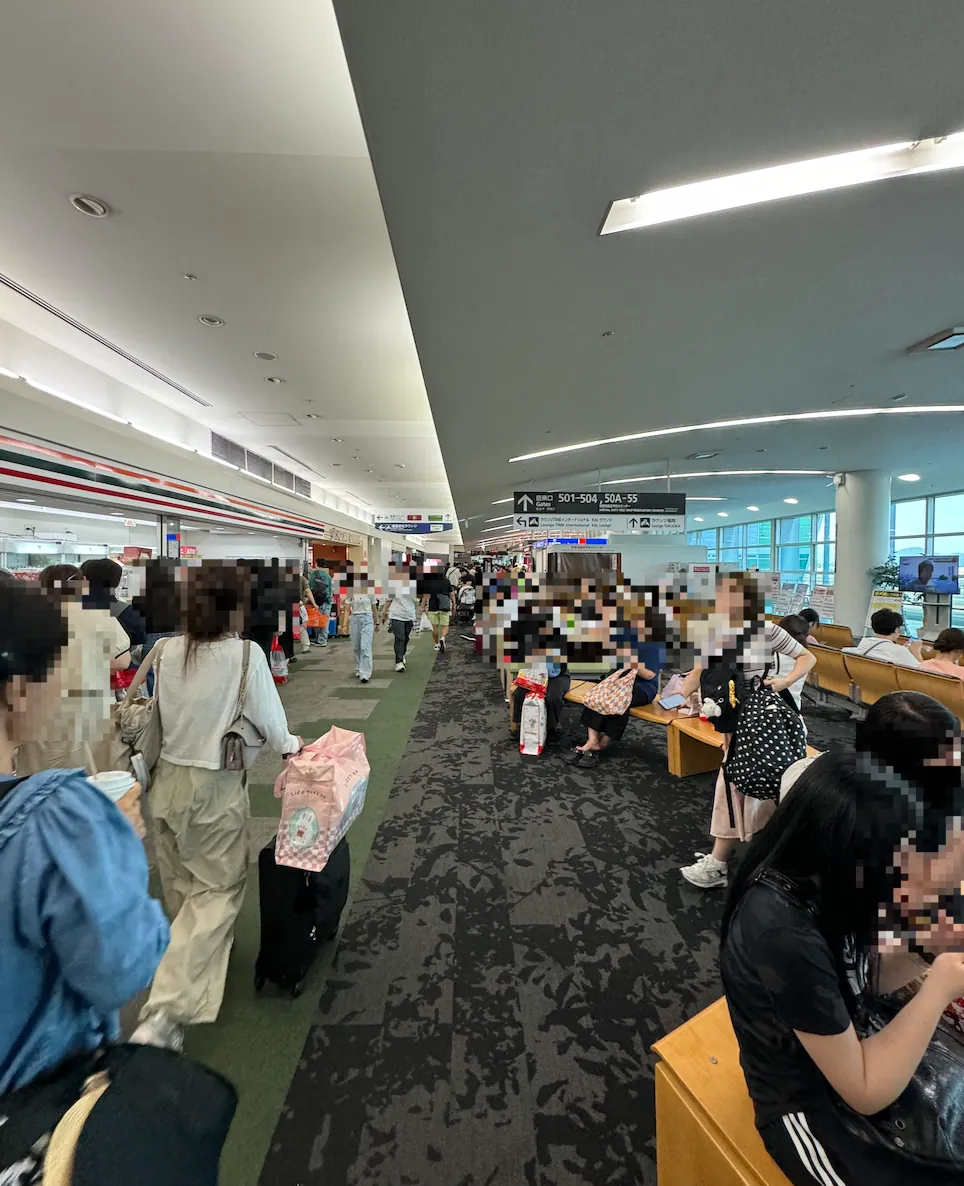
Started waiting for the flight around 18:30.
The departure lounge at Fukuoka Airport is long and narrow, very crowded and chaotic. (Not sure if it’s because of ongoing renovations and too many flights waiting to take off).
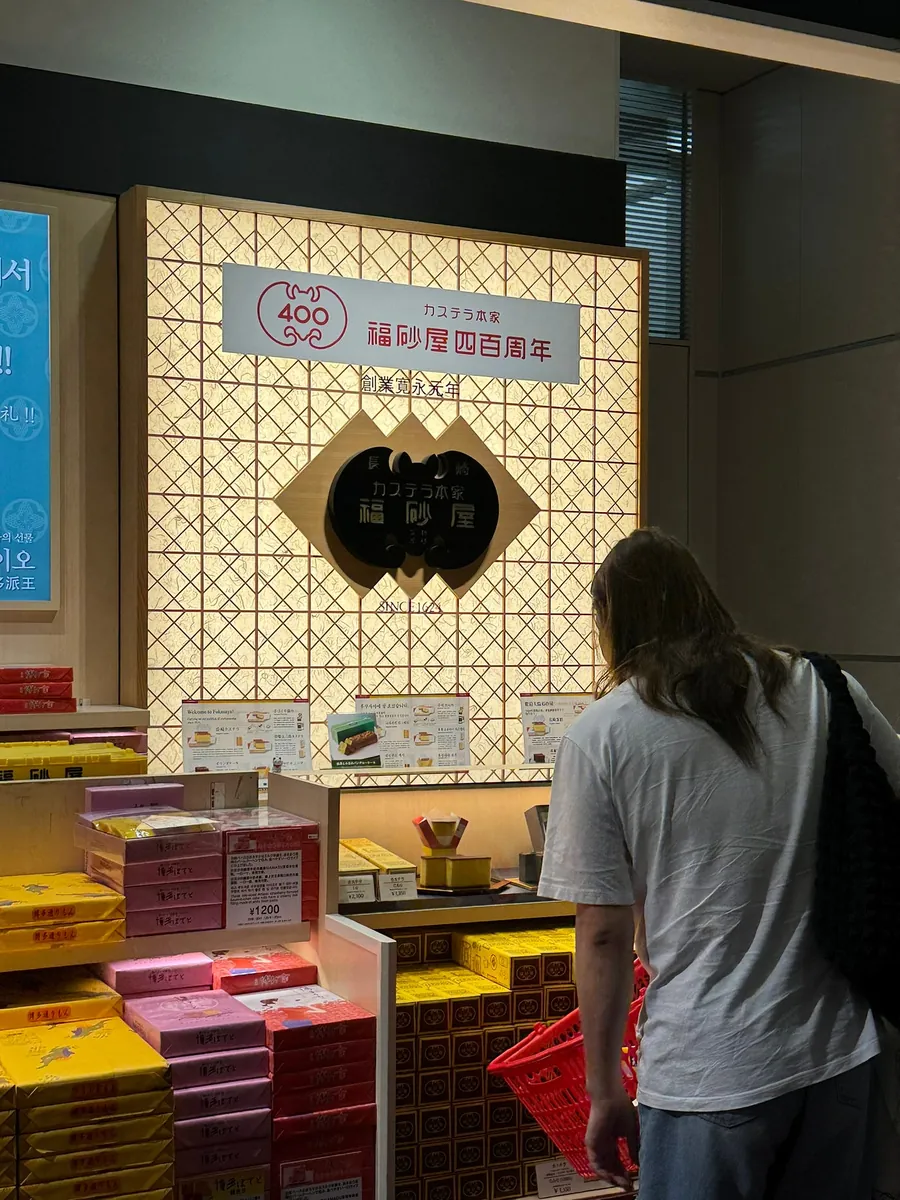
The duty-free shops for luxury goods and cosmetics are quite complete, and the staff all speak Chinese. There are also souvenir shops (this place has Fukusaya Nagasaki Castella). There is only one duty-free shop for tobacco and alcohol, which requires lining up. As for food and convenience stores, they are extremely crowded with long lines.
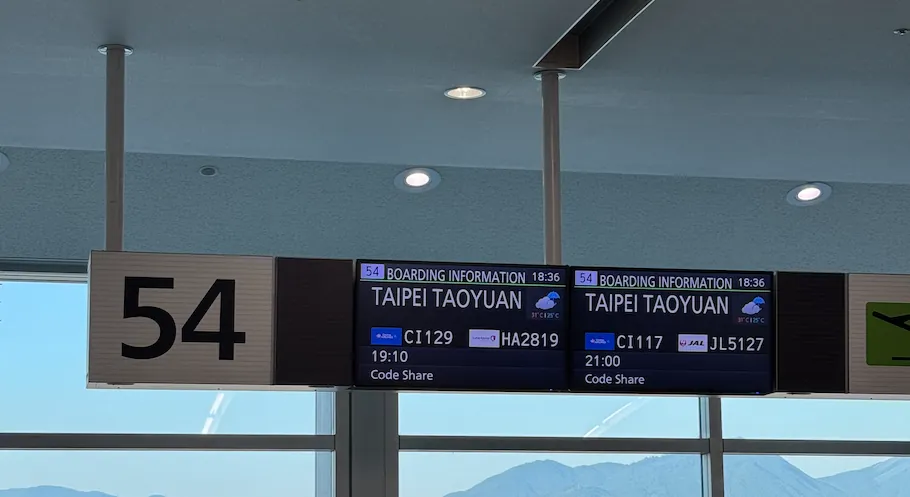
Special announcement for the previous flight CI129 at 19:10: Please follow China Airlines’ rule of carrying only one piece of hand luggage. Extra bags require an additional purchase (this flight looks fully booked).⚠️
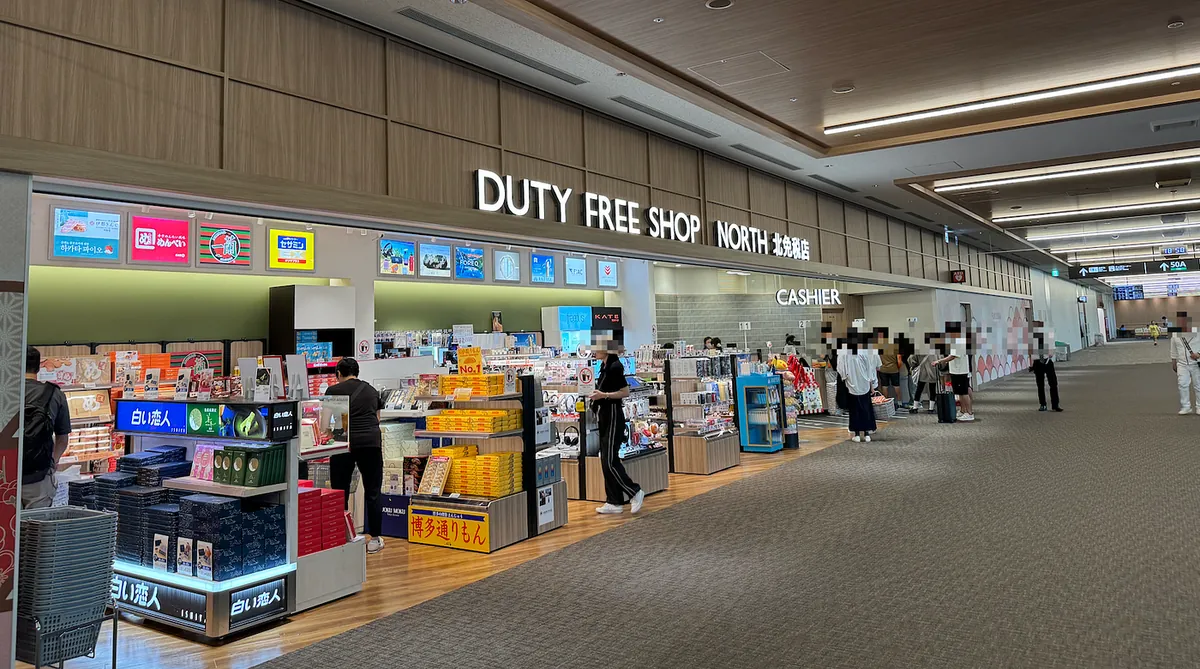
Later, feeling that this area was too noisy and chaotic, we walked north toward 501–504, where there were fewer people; there was also a café and light meal shop to eat.
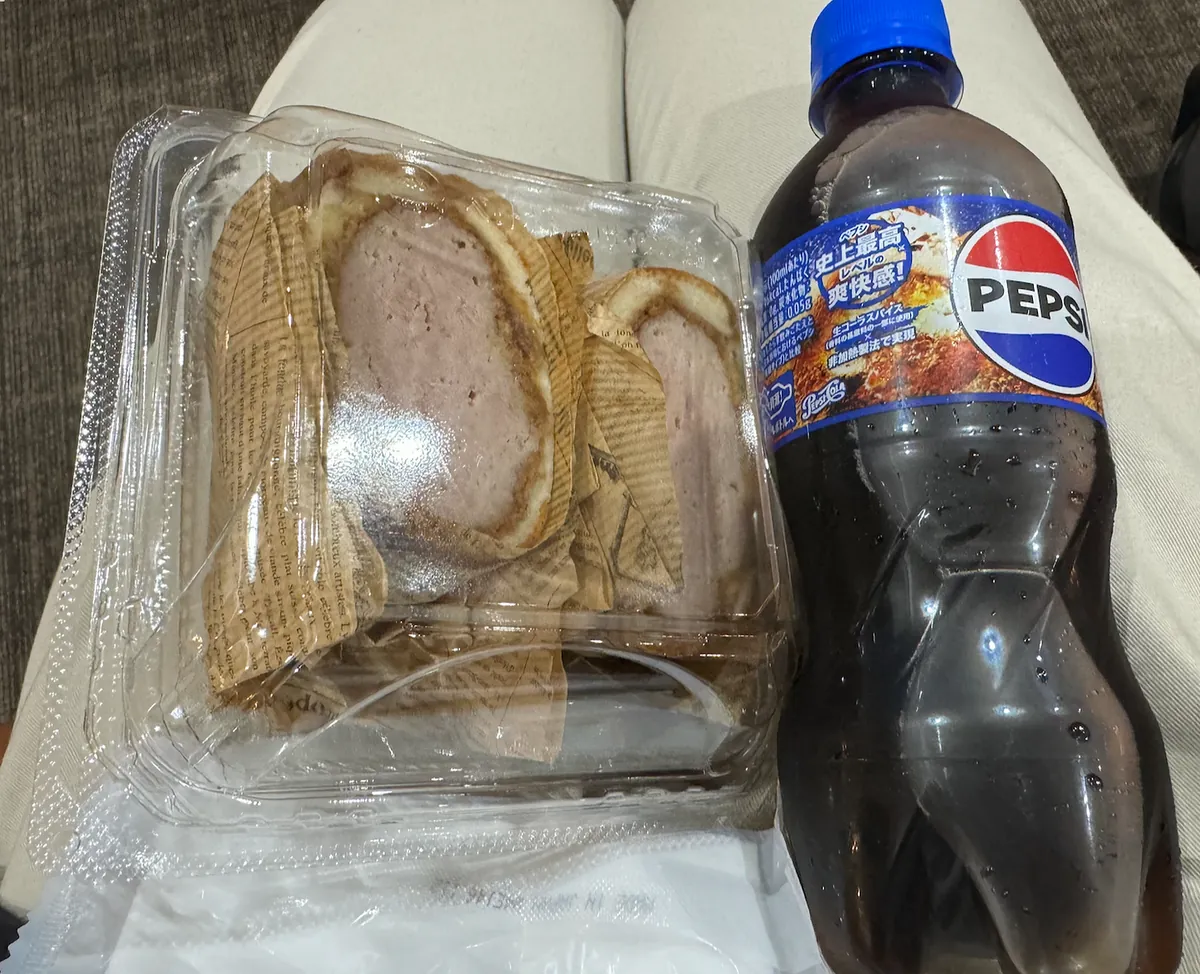
Simply buy a pork cutlet sandwich and grab a few cans of draft cola and peach water to bring back to Taiwan.
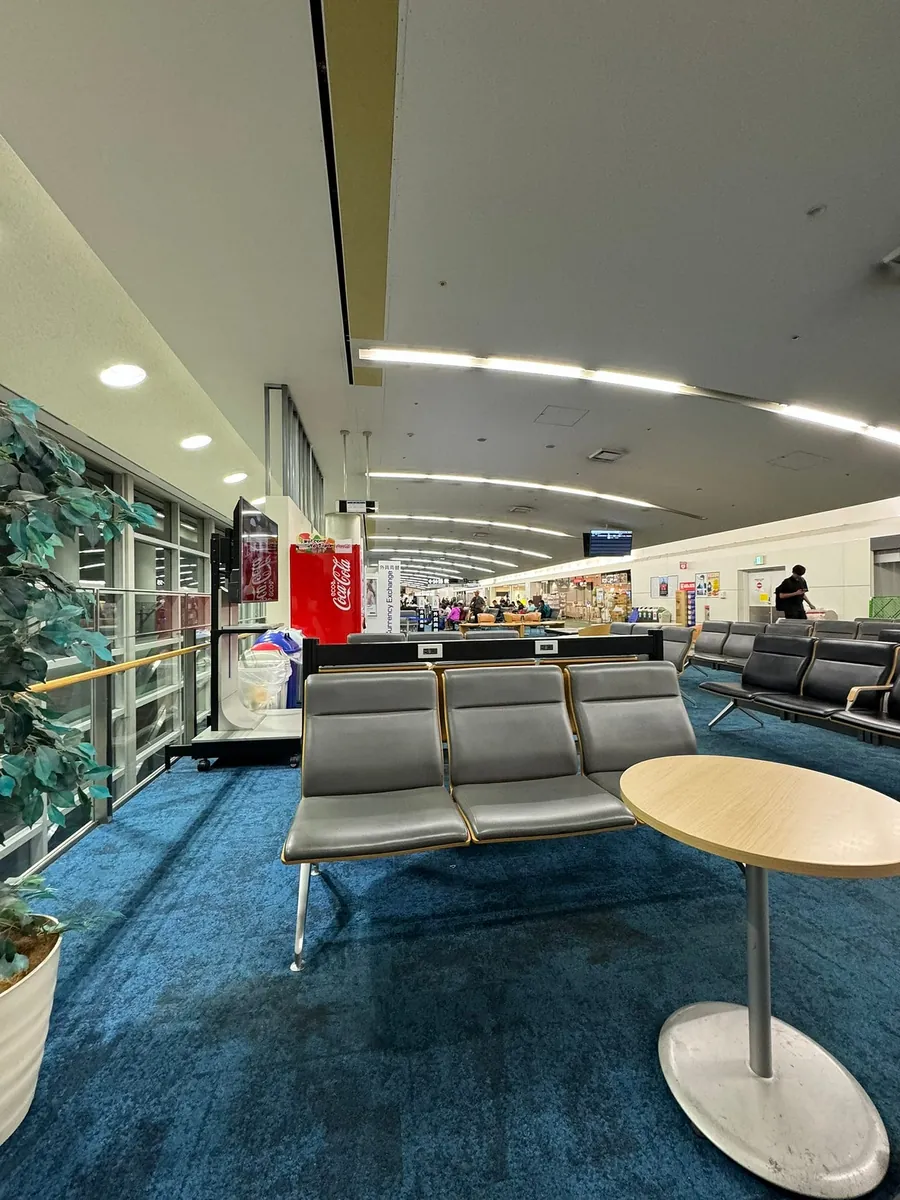
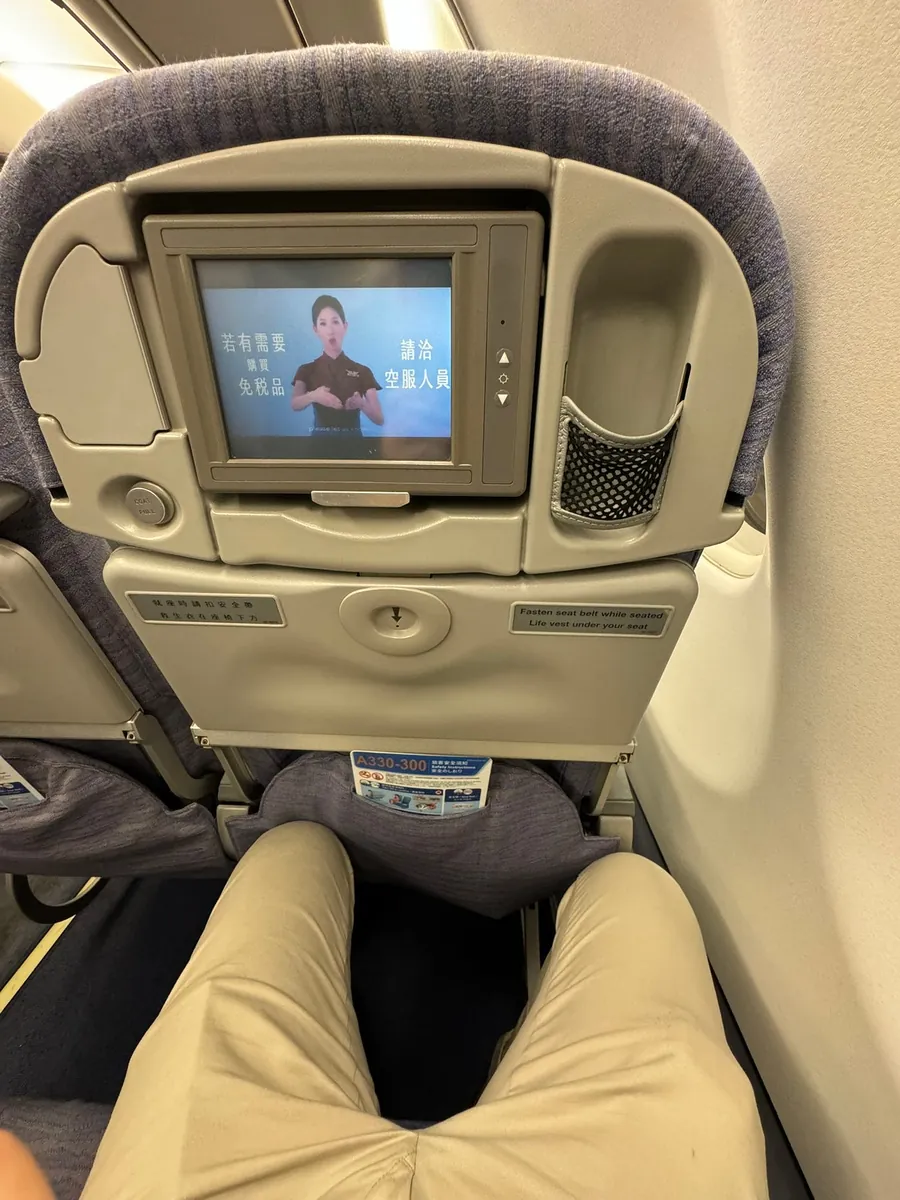
Boarding started around 20:30. This flight did not have a strict rule about carrying only one piece of hand luggage (but I had already packed everything into one bag). At 21:00, we prepared for takeoff, and the plane took off at 21:09. The aircraft was an A330–300 with older equipment.
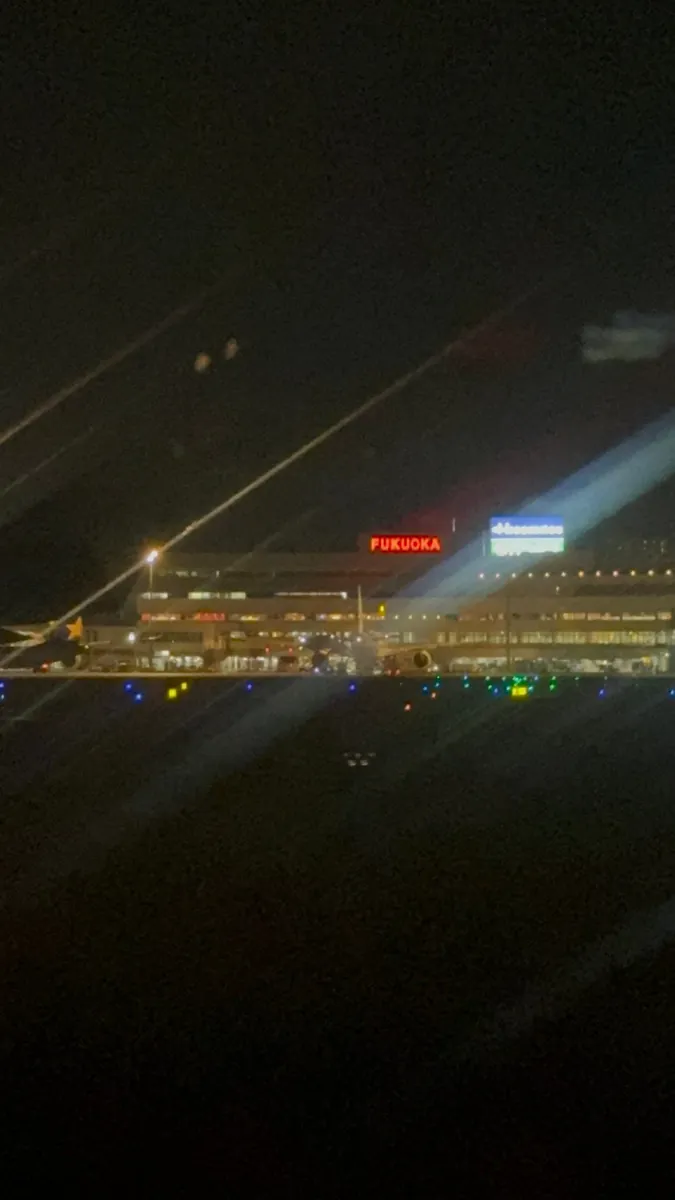
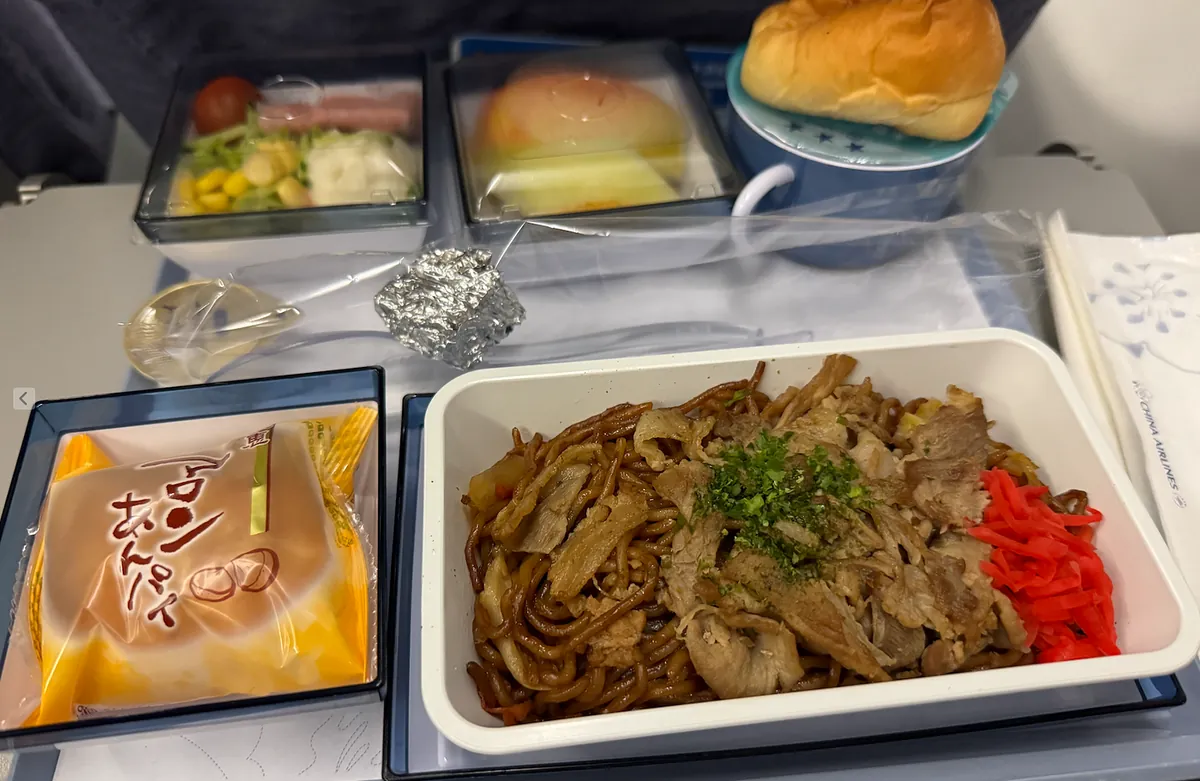
Goodbye Kyushu, goodbye Japan. The airplane meal was ginger pork fried noodles, not very good, but the fruit included cantaloupe!
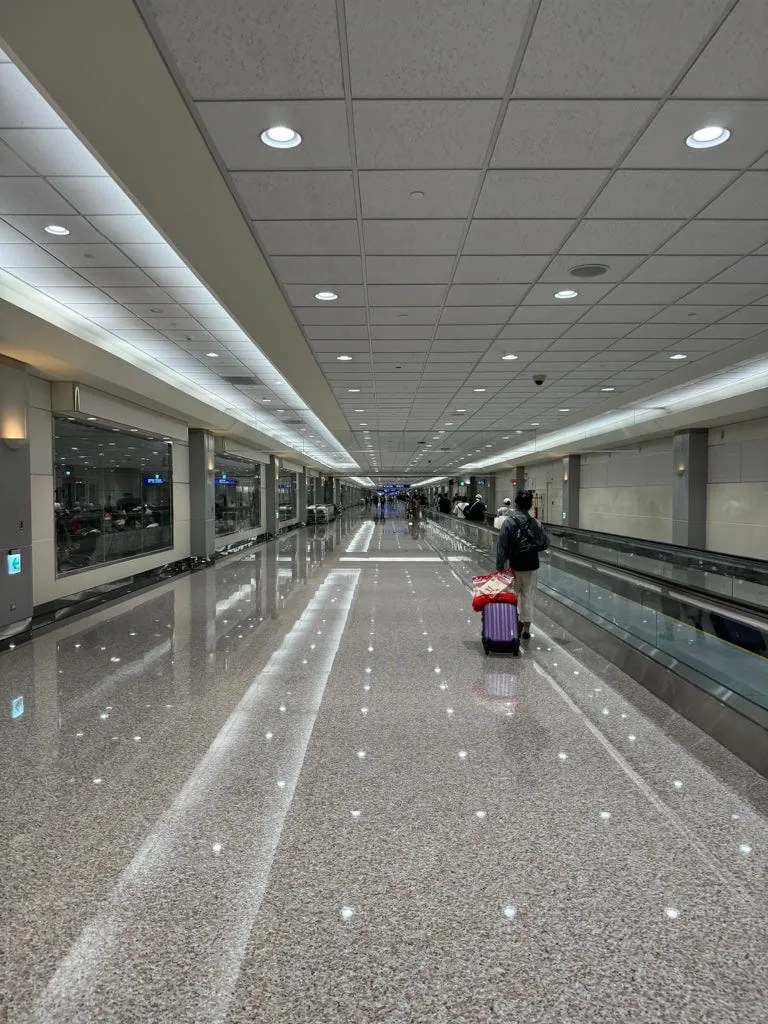
The flight experienced turbulence and was quite bumpy. We landed safely in Taiwan about 30 minutes late, arriving close to 11 PM (scheduled time was 10:25 PM).
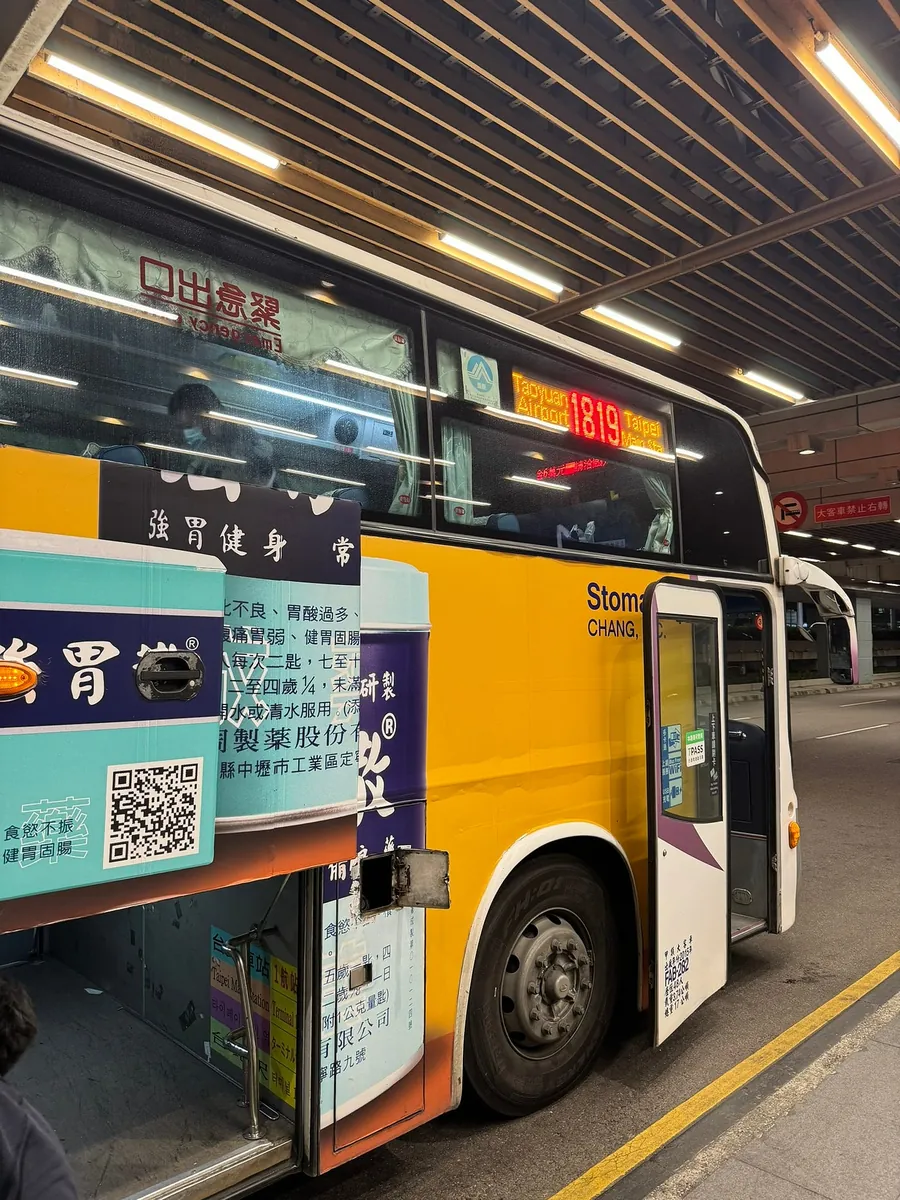
Afraid of missing public transportation and having to run all the way, I missed the airport MRT but luckily caught the bus in the end. Otherwise, I would have had to take an unsafe unlicensed taxi back to Taipei.
Route 1819 , my god, it takes about 55 minutes to Taipei Main Station.
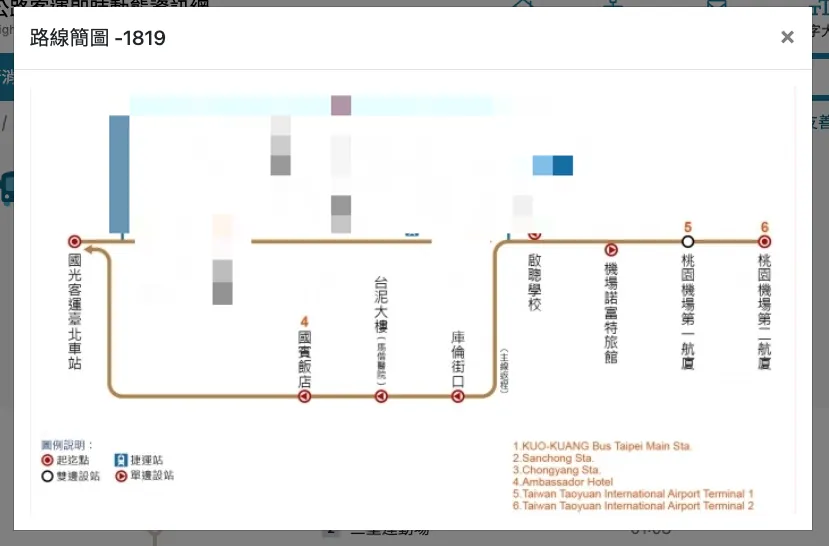
The mid-route stops are shown in the above image. If you want to get off midway, you must inform the driver when loading your luggage. He will separate your bags; otherwise, all luggage for Taipei Main Station will be stored together, and you won’t be able to retrieve your luggage if you get off midway. ⚠️
Around 00:00 on 6/14, returned to the cozy home, ending this 11-day trip.
The daily average steps were around 20,000, with a maximum of 27,000 steps.
Souvenirs
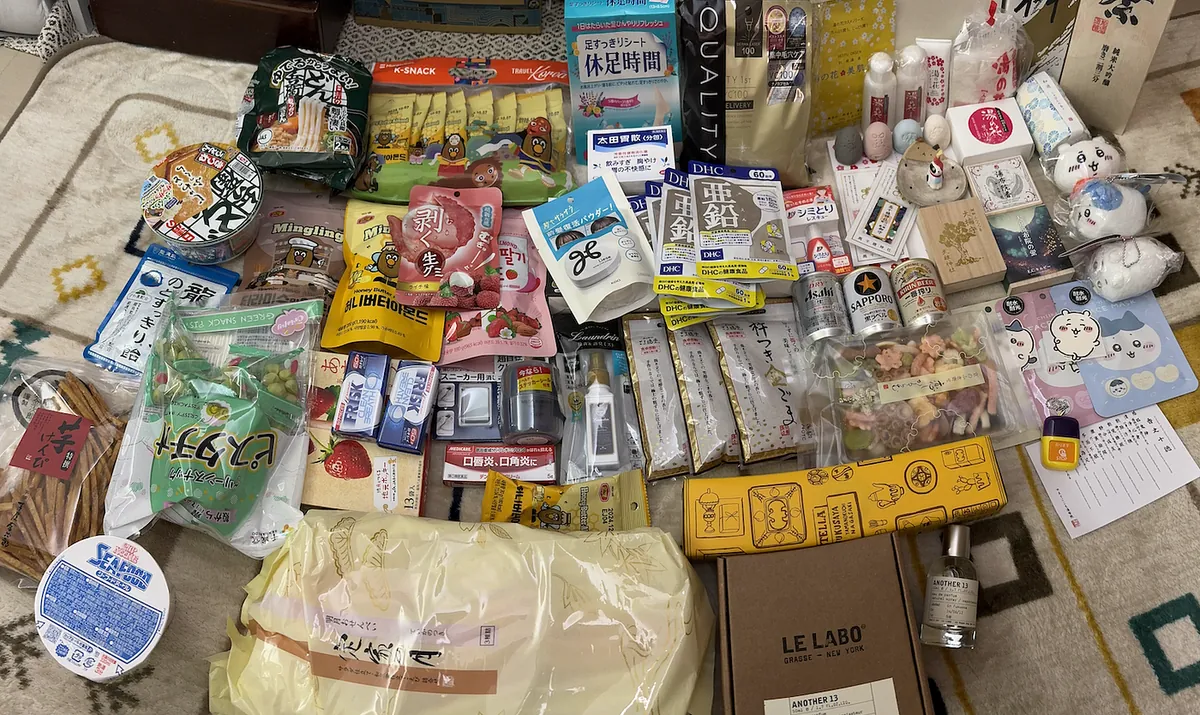
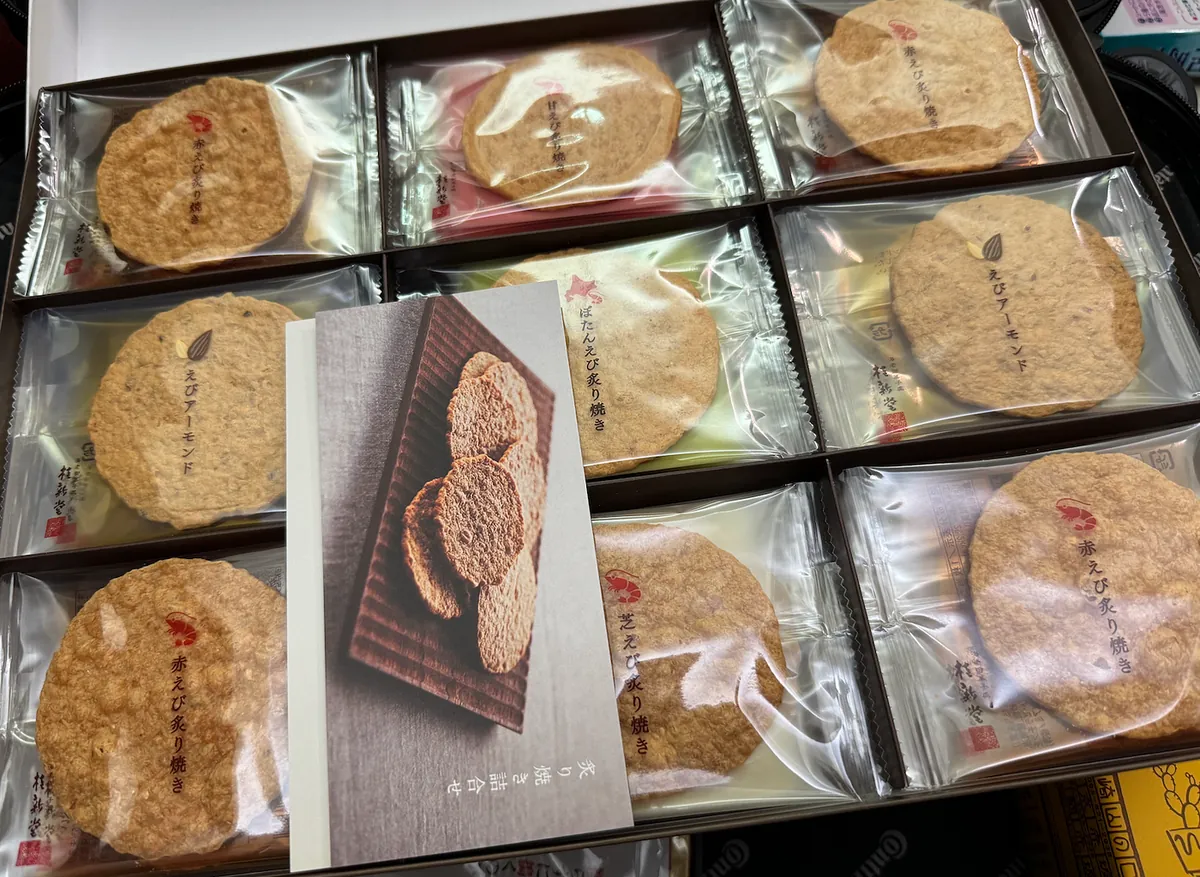
The box on the right was missed in the photo; it’s shrimp crackers I tried and liked at the department store food street in Hakata Station.
Small Souvenirs Collected from Various Parts of Japan
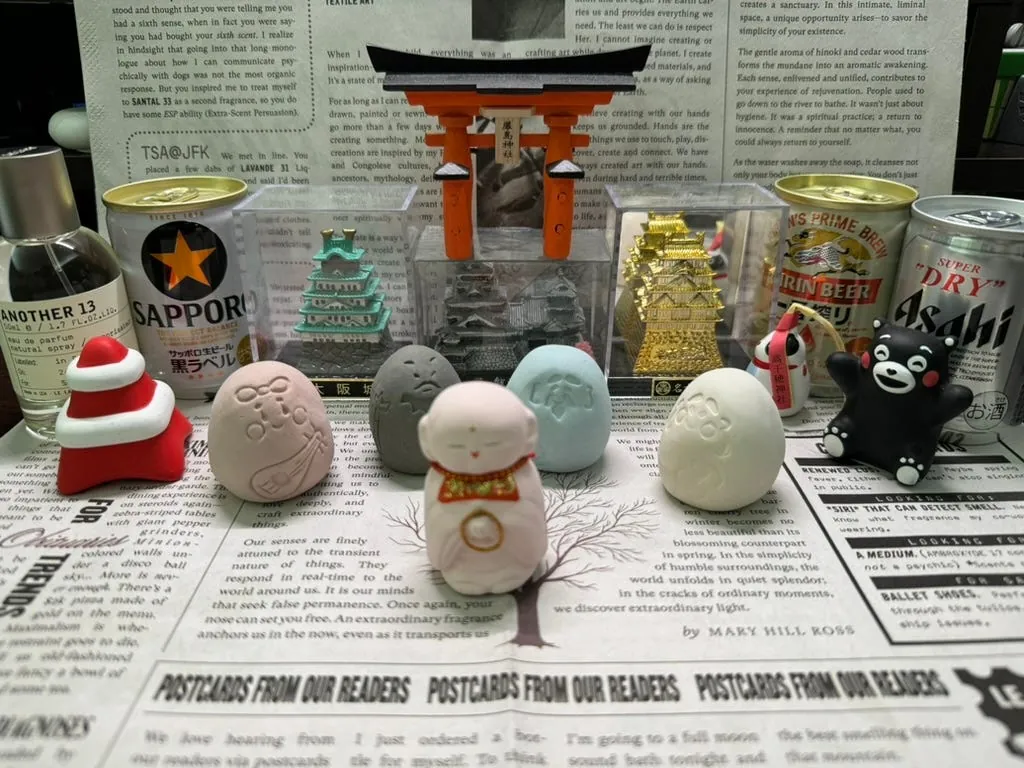
This time, added four of the Seven Lucky Gods statues, mini beer, and Takachiho (dog) Year of the Dog amulets.
The background newspaper was a gift with the purchase of Le Labo.
Finally, thank you for reading my travel journal; also thanks to my travel companion James.
Inspiration for the Next Trip
-
Southeast Asia
-
Landing in Kagoshima, southern Kyushu -> Oita -> Sunflower Ferry -> Kobe -> Himeji Castle -> Amanohashidate -> Return from Nagoya Airport
-
Tohoku Region, Sendai
KKday Promotion
-
Japan JR PASS|Kyushu Area Rail Pass|Northern Kyushu & Southern Kyushu & All Kyushu|E-ticket
-
Japan Nagasaki \| Kyushu Huis Ten Bosch Ticket Huis Ten Bosch
-
Japan Fukuoka \| Hakata Port - Busan Port Cargo and Passenger Ferry “New Camellia” Camellia Line
-
Japan eSIM Card|Daily High-Speed, Total Data, Unlimited Data Plans
More Travelogues
-
[Travelogue] 2025 Busan, South Korea 8 Days 7 Nights Free Travel
-
[Travelogue] 2024 San’in Region Shimane Izumo Matsue Tottori Himeji Osaka Kobe 7-Day Solo Trip
-
[Travelogue] 2023 Kyushu 10-Day Solo Trip ⭐️ (Kyushu Part 1)
-
[Travelogue] 2023 Tokyo 5-Day Free Trip
-
[Travelogue] 2023 Kansai 8-Day Free Trip
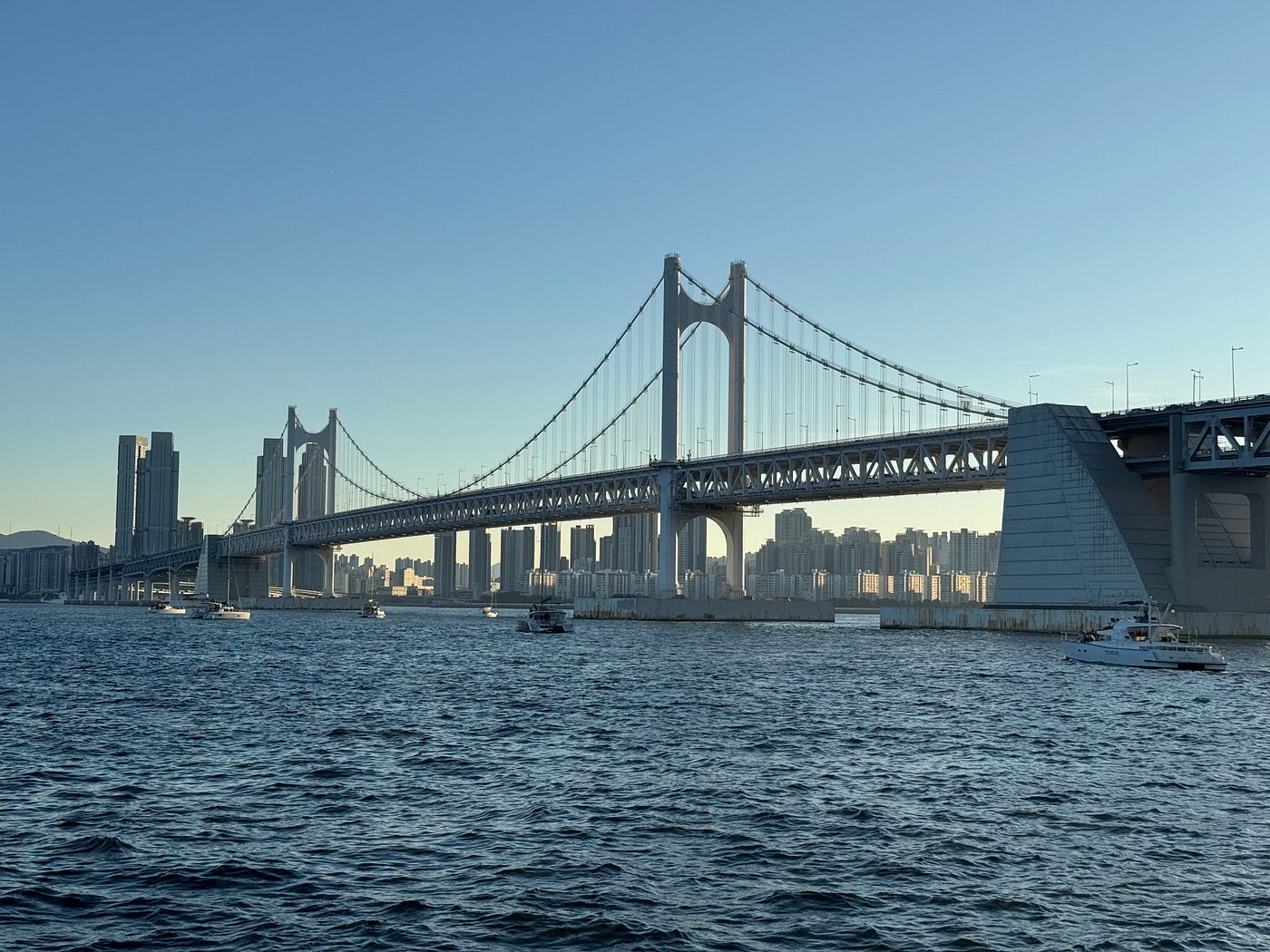
Comments